Tuesday, November 10, 2009
making news: a lived Christian faith
Monday nite news. TV 3. A quirky story about a man who finds $20,000 in a lamp up for auction.
And then in the final 5 seconds comes the question: what set of rules shape that sort of behaviour? And the camera pans to the mans T-shirt. WWJD. Check it out.
Great example of a lived Christian faith!
Monday, November 09, 2009
film reviews: Four holidays, Doubt, Gran Torino, Pink Panther 2
I’ve fallen badly behind in posting on the blog my film reviews. The assignment: 500 words, monthly, offering a Christian perspective on contemporary film, paid, for Touchstone (Methodist) denominational magazine. Here are my 2009 reviews for the year to date.
Four Holidays. As we light Advent candles, so does Hollywood, trying to dazzle us, not with hope, peace, joy and love, but with Bad Santa (2003), Polar Express (2004), Deck the Halls (2006) or Fred Claus (2007). This year’s Christmas cracker, Four Holidays, gave little bang for its buck … for more.
Doubt. Doubt has always suffered an uneasy existence among people of faith. Even after the resurrection of Jesus, the disciples of Jesus are divided between worship and doubt Matthew 28:17). For Frederick Buechner, “Doubt is the ants in the pants of faith, it keeps it alive and moving.” Yet the space between pants and skin is never for the faint hearted. In this space enters Doubt … for more.
Gran Torino. In the downhill journey to Easter, a central figure is Caiphas, the Jewish high priest, who announces that it is better that one man die for the people than that the whole nation perish (John 11:50). Such understandings, of the power of sacrifice to ensure community transformation, are ingrained in Christian faith and make Gran Torino a gritty contemporary exploration of these themes in our world today … for more.
Pink Panther 2. The Pink Panther is back, and the return is welcome … for more.
stars from our Grow in Parikaha peace service
Great night at Grow last night. The theme was Grow through local peace stories and we kicked off with the Parihaka story. (Tuahawi and Taroro coming up in future weeks!). Mark Grace was a star, speaking really well, weaving his story, the Bible story and the Parihaka story together.
Those gathered were all stars, with some excellent table sheet interaction. God was a star, with stories that affirmed God’s Spirit alive and well at Parihaka.
And the playing of this fantastic video was also a star. They need to produce a youtube clip for the Parihaka Peace Festival 2010, with Tiki Taane or Dallas Tamaira (Fat Freddy’s) trumping that little Irish-man (Bono the Vox).
Sunday, November 08, 2009
communion anabaptist style
Worship. Which I often define as all that we are responding to all that God is. It includes our bodies, our seating relationships, our words of prayer. Today we continued our series on Turning points in history and the focus was the radical reformation. Especially given that the Baptists are 400 years old this year.
A perfect time to rearrange our church seating, swinging some of the pews into a “U” shape. So that we took communion looking at each other, at the body of Christ, rather than the person at the front. Lots of positive feedback on this very simple change in our church architecture. An embodied realisation that we gather as human people.
A perfect time to pull out this communion liturgy written by Balthasar Hubmaier, an early Anabaptist theologian. I pulled out some phrases I considered noteworthy and invited us to pray them together.

Brothers and sisters, If you will love God before, in and above all things. Response: I will
If you will love your neighbour and serve with deeds of love. Response: I will
If you will make peace and unity and reconcile among yourselves. Response: I will
If you will love your enemies and do good to them. Response: I will
So eat and drink with one another in the name of God the Father and the Son and the Holy Spirit. May the Lord impart to us his grace. Amen
Note the fascinating progression in the theology of this communion prayer: -> God -> neighbour -> church community -> enemies. At times Baptists are considered functional pragmatists. These words suggest in fact a deeply relational and missional theology, expressed in the acts of worship and engaging the reality of everyday life. It sounds quite contemporary for a prayer written over 400 years ago!
Saturday, November 07, 2009
reading our R-rated Bible
The Bible has some appalling moments: R-rated stories of violence and violation. In preparing for worship for this Sunday, the Lectionary reading suggested is Isaiah 24. To use that text then demands almost a sermon in explanation. However doing a sermon (thus making 2 for the service) was not the task given to me as curator of worship this Sunday. Instead, I chose use the Psalm of the day as the Lectionary reading. And felt guilty all week. Then read this from Maggi Dawn.
Pretty often I edit our lectionary very liberally on the basis that the unthinkable, unimaginable horror stories in scripture should only be read in services where there is an adequate space to address them, and when it’s a read-sing-pray service, the readings have to be selected appropriately. That’s not at all the same thing as editing out the dodgy bits – it’s about choosing when and where they are read, with the possibility of addressing the strange and difficult readings.
So that’s two options for dealing with the R-rated:
1. edit when there’s little time
2. make time to deal with the tough texts. Like I hope we at Opawa have tried to do with our Bible days this year. As we start a new Bible book, we offer a 2 hour Saturday seminar on tools for reading that book and how to deal with the tough texts. The feedback has been very positive over the year and we’ll continue the pattern in 2010.
Maggi has a great 3rd suggestion, changing the congregational response. Rather than “Thanks be to God”, she suggests: “This is an outrageous story to our ears – what does the ancient text have to tell us about what they thought about God then, what we think now, why we still read it at all?” I like. It allows us to be honest. It names the two horizons – that ancient world and our world. It affirms that this text is important enough to keep reading and in a way that invites curiousity and question, not outright rejection.
So that’s 4 options:
1. Steve Taylor’s choose the easier reading
2. Maggi Dawn’s keep but edit the hard bits
3. Opawa’s offer Bible days
4. Maggi Dawn’s change the congregational response.
What do other reader of the Bible text do when they hit the R-rated bits?
Growing in unpeace stories: an updated response to Hone Harawira
Updated: Hone has apologised. This includes in relation to my point 1, in which he adds a very helpful nuance, specifically that of “colonisers.”
“He should have instead referred to what European colonisers had done … He accepted his language had damaged Maori-Pakeha relations and he apologised for demeaning women. The controversy had damaged his credibility and he would be doing “serious bridge building” with his caucus.”
And he commits himself to bridge-building. I honour that sentiment in him. Now will Pakeha, and the media, give him the space to move and grow?
Public disclaimer: I have been very tempted to vote for the Maori Party at the last two elections. I felt that the Foreshore and Seabed legislation was an injustice, a misuse of political power and a disgrace to New Zealand’s commitment to the Treaty and that we needed a Maori voice in Parliament, not hobbled within a larger party.
So it’s interesting to hear the following Maori party opinion on my voice, culture and ethics.
“Gee Buddy, do you believe that white man bullshit, too, do you? White motherf***ers have been raping our lands and ripping us off for centuries and all of a sudden you want me to play along with their puritanical bullshit.”
So wrote Maori political party member Hone Harawira recently.
Well yes, at Parihaka (which we remembered on this blog only a few days ago) white men did. It was a sad and shameful day that I wish it had not happened.
But Hone do you really think that the best way to move the discussion forward is to
1 – Lump me and my white friends today in with that story? You run the risk of connecting me to history solely by skin colour. And that’s racism isn’t it?
(When I seek to grow people in peace through mediation techniques, I suggest a groundrule, that we stick to the issue, that we play the ball, not the person. That includes racist cultural comments)
2 – Assert that a historic wrong by one culture gives another a culture a right to different codes of behaviour? If you don’t like the codes (in this case being sent to work in Europe on political business and using a day to be a tourist in Paris), by all means protest the codes. But do that before you go. Not after you’ve been caught.
(When I seek to grow people in peace through mediation techniques, I suggest a groundrule, that we deal with issues one at a time. If you have concerns with history, we seek to listen to each other around history. If you have a concern with puritanical ethics we seek to listen to each other around ethics. If you have a concern with how the relate together, we seek to listen to each other around all three. But jumping from issue to issue is rarely helpful.)
3 – Hone, the city of Paris was built partially on French colonial pillage. So it seems quite rich for you to enjoy the Parisian pillage, and then protest the pillage upon return?
(When I seek to grow people in peace through mediation techniques, I suggest there are times to apologise, not just with words, but by outlining ways that the person will act in the future to ensure the behaviour is not repeated. What could look like in this situation Hone, so that you and I can move on, so that we are not forever referring back to this moment in history, so that I can have confidence to vote for your party in the next election?)
Wednesday, November 04, 2009
Parihaka day: Growing in local peace stories
We need to be blessed by peace stories and peacemakers. Desperately. Even more, we need to be blessed by local peace stories and local peacemakers. Hearing allows us to grow in peace. So join us
Sunday, 8 November, 7-8:20 pm, Opawa Baptist Church foyer, part of our Grow service.
Mark Grace, Tertiary Students Christian Fellowship will share some of his life story. It includes growing up Pakeha, becoming a Christian and as an adult starting to discover his Maori roots. Including a local Kiwi peace story, the events at Parihaka between Maori and Pakeha. A local peace story over 100 years old, that has grown, blessed and challenged his understanding of Christian faith.
Updated: For more on Parihaka here’s something I wrote for radio a few years ago (more…)
death and dying: contemporary trends and Christian life
A fascinated opinion piece by theology professor, Tom Long in the New York Times. It’s on cultural trends in funerals. I have just finished a course on reading contemporary culture. We look at cultural icons – at Nike shoes and play stations – and the implications for being human today. How then to live, and to live life to the full (John 10:10)?
Reading Long pushes me to think about another dimension of contemporary cultural change, that of recent trends in the funeral industry.
For the first time in history, the actual presence of the dead at their own funerals has become optional, even undesirable, lest the body break the illusion of a cloudless celebration, spoil the meditative mood and reveal the truths about grief, life and death that our thinned-out ceremonies cannot bear.
The context of course, is Halloween, that day in which a society faces death by dressing up and trick or treating. Long surveys contemporary funeral practices. Such as increasingly gaudy coffins. And the trend to no longer accompany the body to the crematorium or graveside, but instead to let the body be driven, while the cup of tea is poured back at the church.
Long concludes
“Show me the manner in which a nation cares for its dead, and I will measure with mathematical exactness the tender mercies of its people,” William Gladstone, the British statesman, is said to have observed. Indeed, we will be healthier as a society when we do not need to pretend that the dead have been transformed into beautiful memory pictures, Facebook pages or costume jewelry, but can instead honor them by carrying their bodies with sad but reverent hope to the place of farewell. People who have learned how to care tenderly for the bodies of the dead are almost surely people who also know how to show mercy to the bodies of the living.
It brought to mind a similar conversation with a New Zealand funeral director a few years ago, alarmed at industry trends in which families are being encouraged not to accompany bodies to the place of burial. And the contrast between Pakeha funerals and Maori funerals, in which the body stays at the house and on the marae for a number of days. And how it allows a different type of grieving, a greater acceptance of death, a wider range of emotions, a greater relational connection.
And the contrast with that common euphemism “passed away.” So easy to use weasel words that mask the reality that life matters and things hurt when what matters becomes broken.
The church has many options for doing mission today. They include helping people face death with honesty, reality and Christian grace.
Tuesday, November 03, 2009
a genuine Salvation Army trumpet call? updated with resources
I am with a group of Salvation Army leaders today. Flying up to Wellington, then driving to Masterton. Then speaking for 3 sessions, on mission, change, leadership. Then driving back to Wellington, and home for a (late) dinner.
It is the fourth time I’ve been with a group of Salvation Army leaders here in New Zealand speaking in areas of mission and change. I have yet to see a genuine trumpet and a real uniform! But I remain hopeful.
The best thing is that this group has requested a copy of my The Out of Bounds Church?: Learning to Create a Community of Faith in a Culture of Change
Updated: For those interested here is a summary of my sessions, the questions raised and the booklist that was missed off the bottom of my notes. Duh! (more…)
Monday, November 02, 2009
Why are americans so hung up about megachurches?
Among those surveyed in the 2009 Congregational Economic Impact Study, 40.5 percent of the congregations reported an average weekly attendance of between 101 and 300 people. Only 3.5 percent of surveyed congregations indicated an attendance of more than 1,000 people. Here.
We live in a world fascinated by size. It feels like an enormous amount of church health and growth literature is directed at wanting to be large in church size. Yet, based on the above, only 3% of the US church scene has been mega-up-sized, while nearly half of the US are 100-300 congregations.
To make an analogy, it feels to me like we’re walking around our young people, telling them that 7 feet or mensa intelligence is the new norm, the aspirational goal they should all feed on, read on and grow to. And we’d call that dumb and unfair.
Wouldn’t we?
turning points: martin luther, reformed? or reforming
The second video in the Turning points in Christian history sermon series is now available online. (The first in the Turning points series – on monasticism, mission and discipleship is here).
The aim of the Turning points series is simply to ask what we can learn from what God was up to in history. I’ve been surprised and encouraged by the feedback, folk at Opawa requesting sermons, a whole different set of people engaging with my sermons. I think there’s something about it being a bit different, in thinking and approach, that is appealing.
In summary the sermon outline is as follows:
1. Introduction to Martin Luther
2. Impact of reformation
-positive attitude to world
– vocation for all
– emergence of sciences
3. Reformation as reformed? Or reforming?
4. Application – a challenge: What would Luther bang on our church today? With 6 suggested theses.
For those who want to read further, these are the books I found most helpful:
Reformation Thought: An Introduction
Turning Points: Decisive Moments in the History of Christianity
Brazos Introduction to Christian Spirituality, The
Reform and Conflict: From the Medieval World to the Wars of Religion, (Baker History of the Church)


Saturday, October 31, 2009
WWLD? What would Luther bang on Tamaki’s door? updated
Today is Reformation day. On October 31, in 1517, Luther nailed his 95 theses on to the door of Castle Church.
1. When Jesus said “repent” he meant that believers should live a whole life repenting
2. Only God can give salvation – not a priest.
3. Inwards penitence must be accompanied with a suitable change in lifestyle.
4. Sin will always remain until we enter Heaven
… and so on: 95 soundbites of opinionated faith, nailed on the door of Castle Church. Why Castle Church? It was the site of Europe’s largest collection of church artifacts, and for some years, had been charging people to view the relics, making money out of religious desire.
So today, some 492 years later, I wonder what Luther would nail on the door of the church today?
Well, before I pick out the splinter from the eye of another, let me look at the log which is my own door. I wonder what he would nail on Opawa’s door?
Perhaps
1. Perfect love casts out fear?
2. Seek a new senior pastor based on the needs of the whole church, not your own concerns?
3. Keep the focus on people projects not building projects?
4. Remember you still have not found what you are looking for (Philipians 1:6)?
Updated: Ok, here is what I eventually “banged on the Opawa door”/ ie preached on Sunday morning.
For reforming Opawa as a church in transition today
- Choose a new pastor based on the needs of the whole church, not your own individual desires.
For reforming the church in general
- Recent arrivals to the church are as important as longer term inhabitants. And just as important are people who are not yet with you.
- Non-Christians, new Christians, long term Christians. All of you are sinners. So walk gently and generously with each other.
- Being encouraging and expressing thanks is normal Christian behaviour.
For reforming us as individuals
- Non-Christians, new Christians, long term Christians. All of you are loved by God. So accept that love as righteousness. Grow out of love, not fear.
- Live out of your unique fingerprint. So you can’t be the same Christian as the person beside you.
So, with tears in my own eyes, I now wonder what Luther might nail on Brian Tamaki’s church door?
1. You can’t charge people to buy your relics, your T-shirts and DVD’s?
2. You need to encourage people to think about the Bible for themselves?
3. You need to be more co-operative toward media organisations like TV 3?
4. Yes you need first-fruits offering, but to be Biblical, uou need to give the first fruits offering, (see James Hardings comments here) to the priests who have no income producing land of their own. So that’s not you Brian, because you have your own income-producing land, your own gym and house.
5. ?
worship with? or without you?: worship, community and u2
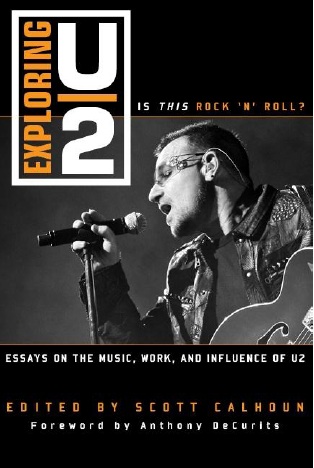
Great nite (for me anyhow), at last nite’s evening on U2, with what felt like a really good conversation rolling through the discussion time after. It is so much fun (for me anyhow) thinking missiologically and theologically about something that I love! Thanks to Laidlaw College and Opawa for the opportunity.
What I did was develop and extend my October conference paper. Here is some of my last section, titled: Applications for preaching and worship:
Worship as the awakening of communal memory. We tend to turn up to worship as individuals. So do fans at a concert. The songs awaken individual memories. (As in this video of the crowd at a Glasgow 360 concert. Look at the faces, lots of people with awakened communal memories!) Yet U2 also work at creating communal memories, as they namedrop a place, as they reference shared world events (recent examples would be space station, or Michael Jackson’s death). What does it mean for our worship to deliberately create communal memories? For example, lighting a candle to stand with those who grieving. Or the crafting of worship in relation to public holidays, for example recently here in New Zealand, Labour Day to awaken communal memory as to the rhythm of work and leisure.
The purpose of worship. Reading a live concert as an act of installation art offers a definition: the crafting of a space in which people can look at themselves. Seeker sensitive worship told us to ditch the heavier stuff, yet at a U2 concert we find a band playing to thousands of people and inviting them to engage with them in moments of pray (recent examples are for Aung San Suu Kyi) and lament (recently for Iran) and to join social justice (recently for One campaign). These are contemporary expressions of ancient Christian disciplines. In so doing, U2 are inviting people to look at themselves in relation to the world around. Which sounds like a very worthy purpose of worship, for people, in light of the Christian story, to look at themselves in relation to the world around.
Friday, October 30, 2009
a Friday reminder: an evening on u2: for Christchurch fans
The world’s biggest band offers an intriguing case study in contemporary communication.
➢ How to play “old” songs in a new millennium?
➢ How to speak prophetically through changing times?
➢ How to connect across generations and cultures?
Steve Taylor presented a paper “The evolving live performance of U2’s Bullet the Blue Sky” at the first ever U2 Academic Conference, held in USA in October 09.
At AN EVENING ON U2, Steve will:
• Present his paper
• Demonstrate with live concert footage
• Suggest implications for worship and preaching today
7:30-9pm Friday 30 October, auditorium of Opawa Baptist Church, cnr Hasting St East and Wilson Road, Christchurch. Open to anyone. This evening is brought to you by Laidlaw College and Opawa Baptist.


 )
)