Monday, August 31, 2026
out of the box Moses and the burning bush story
Some more OutoftheBox storytelling on Sunday.
The lectionary reading was the Moses and the burning bush story from Exodus 3. It’s a story bound up with Presbyterian history and identity, so worth centering during the worship service.
About 2 years ago, I began using an OutoftheBox story in regular church services. OutoftheBox is a tool that offers people the time and space to wonder and to play with their head, heart and hands. Stories are told visually on a circle of cloth or in sand creating a focal point for deep reflection and discussion.
I use OutoftheBox during a “Children’s talk” slot. We don’t have many children and they are not always present. OutoftheBox works no matter who is present. When children are around, it allows generations to be curious together, sharing thoughts and feelings. It doesn’t presume Bible knowledge or Christian faith, which makes space for people to participate whatever their personal beliefs or values.
I have a wee camping table. I ask if people are ready for a story. I carry the camping table down the aisle and invite people to make themselves comfortable.
The feedback has been positive. There have been some fascinating insights, particularly from children. There is a gentleness that emerges. It gives people voice and allows a shared meaning making.
On Sunday, after chatting with the OutoftheBox folk on Facebook, and with their encouragement, I adapted the OutoftheBox story called Footprints.
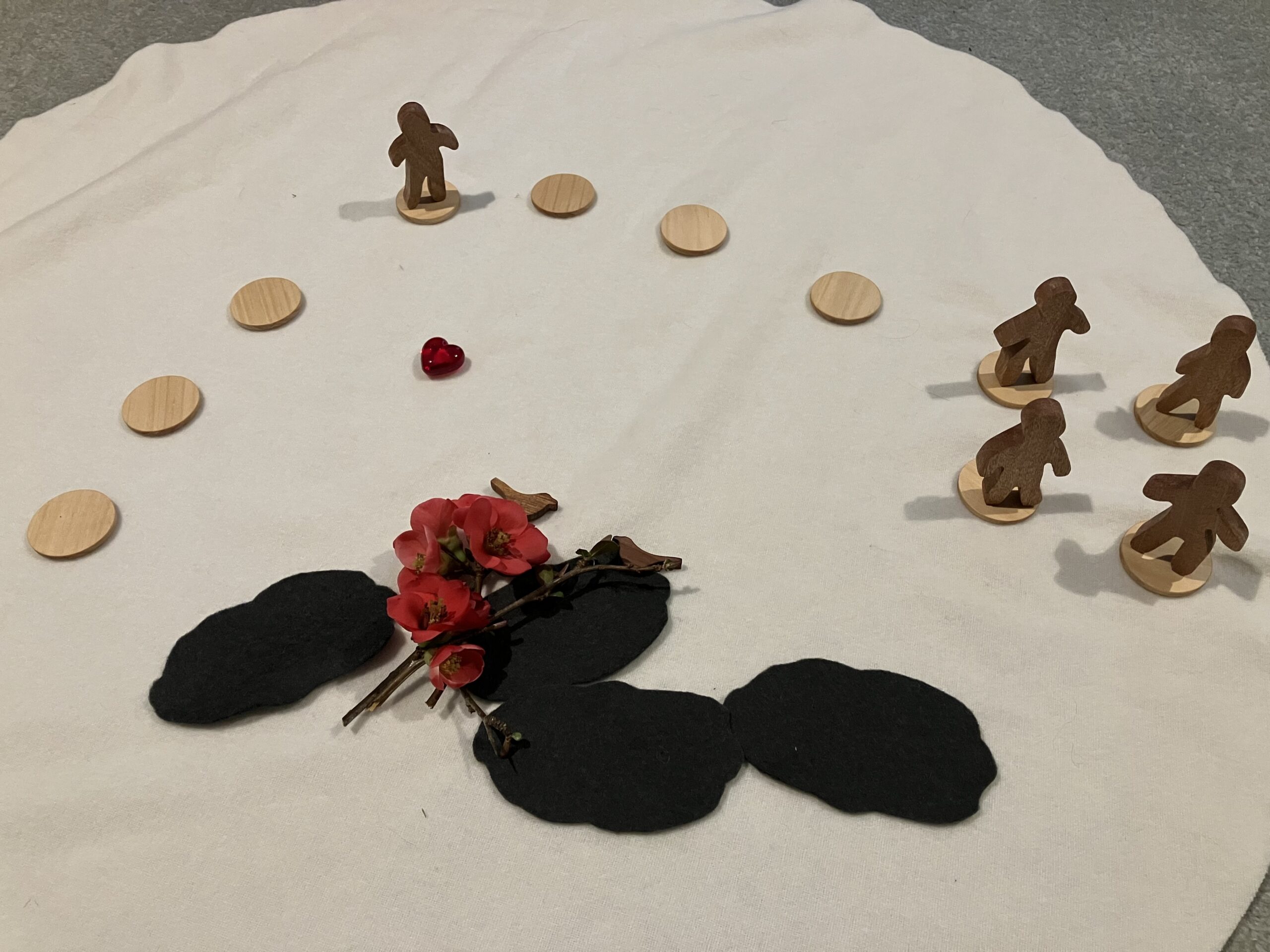
First, I changed stream for rocks and trees for bushes. Rather than blue water and green trees, the colour palette was grey and red.

Second, I used some flowers from the garden. The red against the brown in the middle of winter is quite stunning. It’s almost a burning bush. The flowers now sit beside me on my work desk and will journey with me through the working week, reminding me of surprise and grace.
Sunday was a combined church service, so there were bound to be people from other church traditions who might be unfamiliar with OutoftheBox-ing. So I was quite nervous, in case it flopped amongst strangers.
But as you might gather from the look on my face, things went well. For privacy reasons, I’ve cropped out the face of a child, leaning on a pew, listening so intently.

On Sunday, people shared about the courage to journey and the sadness of being lonely. They liked the invitation to listen and were struck by what it means to listen to nature and feelings. They connected the modified Footprints story with Psalm 23 and Jesus in the wilderness.
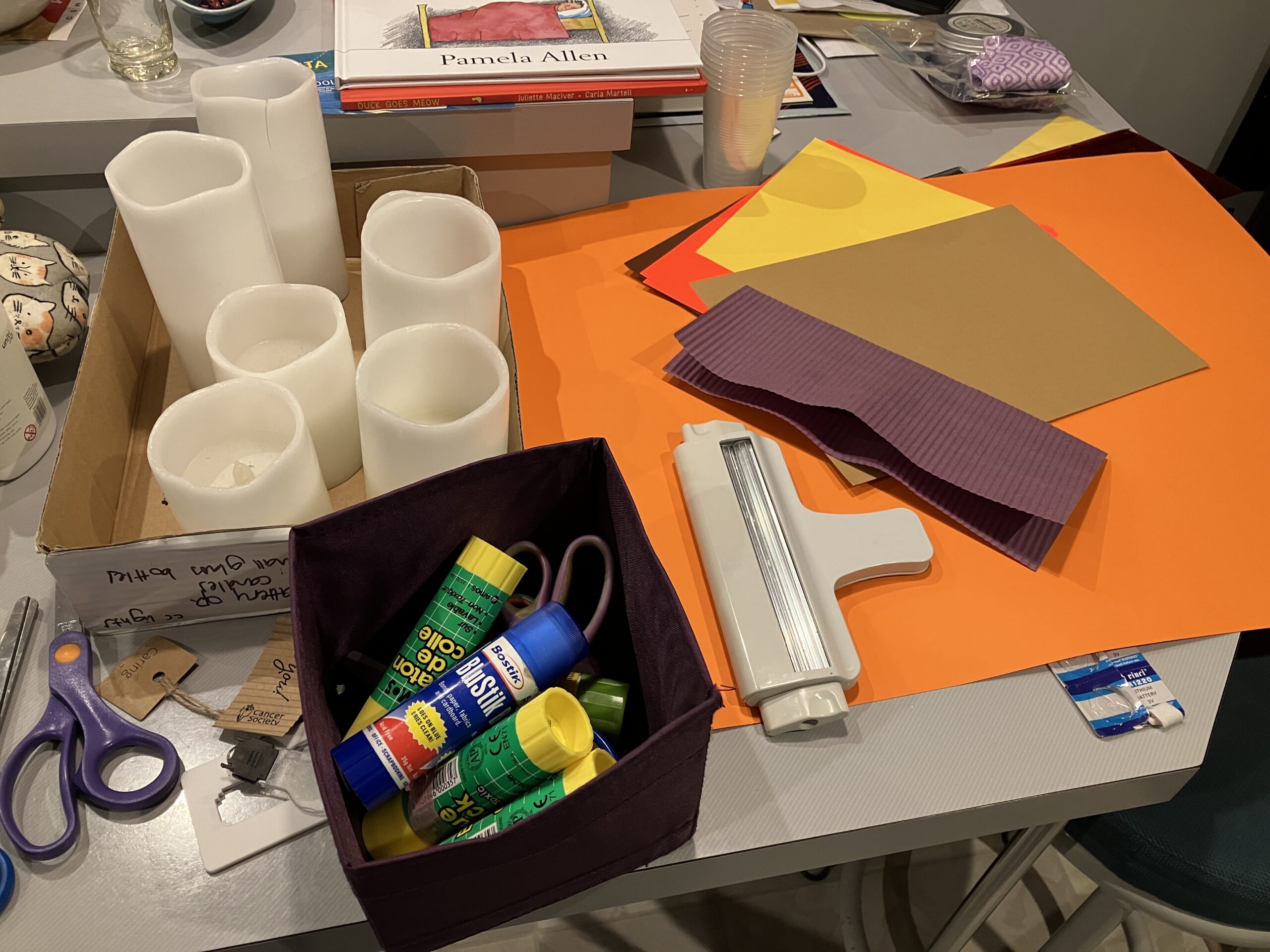
During the sermon, the children made a burning bush, placing coloured cellophane around an electric candle. These were brought to the front as part of the offering, turned on and placed in the middle of the objects as we began to pray for others in our community.
Friday, August 14, 2026
first issues of Colloquium from 1967

Monday, August 10, 2026
research as marathons and sprints
Some research is like a marathon. There are months involved in co-designing the research design, making connections, seeking participants and writing up results.
This particular 2026 research project has been the opposite. It’s been a sprint, from the moment the funder contacted the team at AngelWings Ltd just before Easter until the report was done. Over a 13 week period, there were 99 interviews, an average of 7 per week. Some of the groups the funder wanted to hear from were hard to reach and required “double introductions” – connecting with a denomination and gaining confidence in the project in order for them to pass on an invitation.
Over the last few weeks, the pace has changed, from sprint to gentle warm down. There has been the verbal presentation to the funders. This needs to occur once the written report is digested. Which is then followed by agreeing on a public summary of results and a thanking of participants. All of which takes time and feels like a slowing walk at the end of a period of intense (sprinted) exercise.
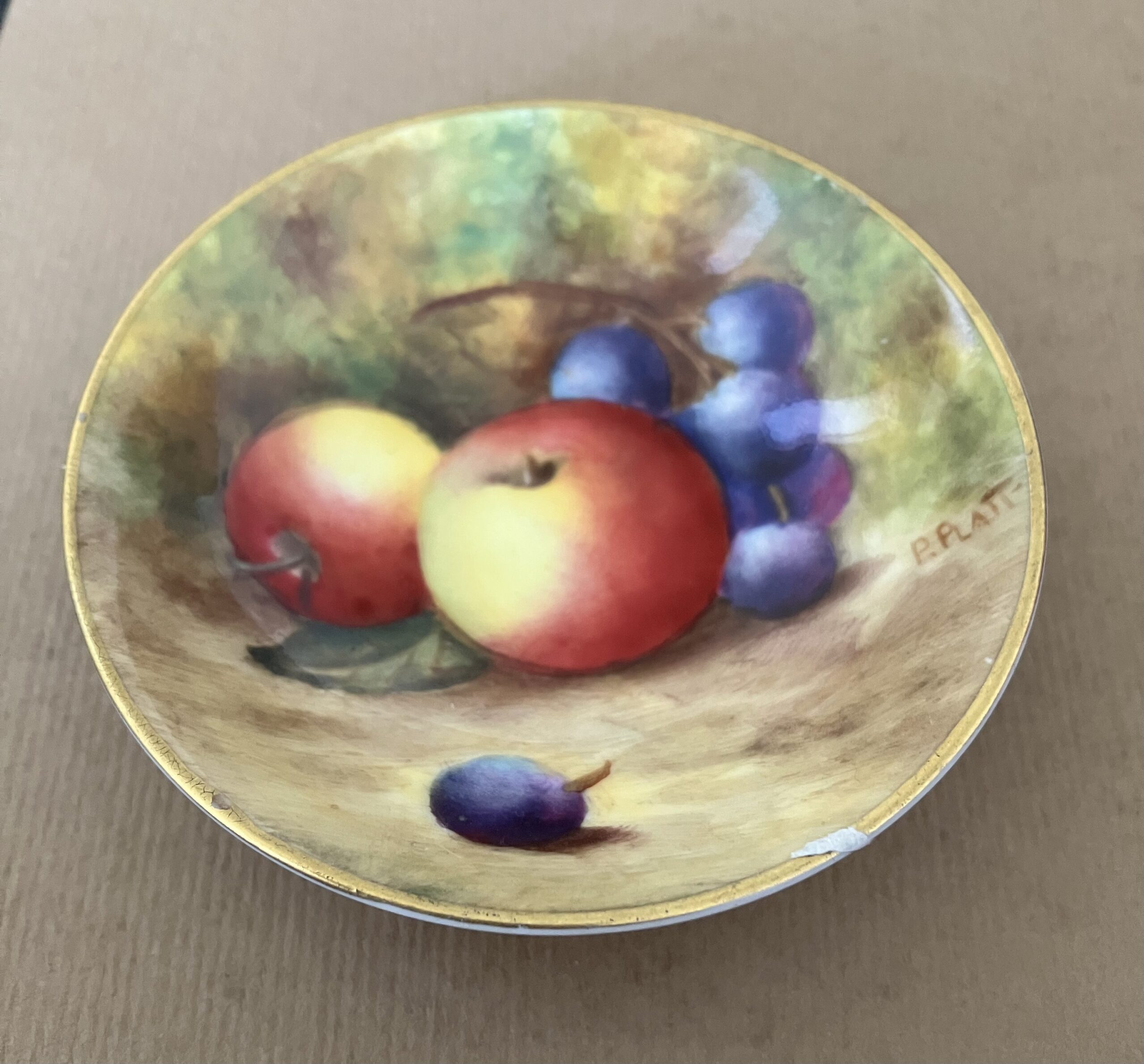
But the slower pace has allowed some time to wander the second hand shops and choose an ending symbol. I’ve written before about the importance of marking the end of a major research project and how I look for an object, generally in a second-hand shop, that symbolises the project.
i do this because I want to make visible the work done – in this case the work of finding people to interview, including groups that are harder to reach, the craft of turning hours and hours of interviews into themes with supporting quotes and the developing of findings.
I choose this object for this particular research project because of the colours – the reds and purples of the fruit in the bowl. I also choose it because fruit in a bowl is the result of hours of work – pruning in winter, weeding in spring, watering in summer, fighting birds in the autumn. And this particular project has the potential to yield fruit for the next few decades and the research played a key role in guiding decision-making around where and how to investment.
Which is research worth sprinting for. And fruit worth savouring as the project ends.


 )
)