Wednesday, March 23, 2011
can mission be embedded into the worship DNA? a 2nd proposal
This is a further post on the topic: can mission be embedded into the worship DNA? a proposal.
In an ideal world, worship moves as a spiral between gathered and scattered, scattered and gathered.

I imagine two circles. Some worship I experience is simply gathered – you go round and round in a circle with no evidence that life outside Sunday, outside the church building exists. Some worship I experience as simply scattered – the call to live in the world, as individual salt and light, with no connection to the people of God gathered. What I suggest is that the two circles – gathered and scattered – overlap, with a continuous flow.
Whether you start with gathered, and then are sent into the world to be the hands and feet of Jesus, or whether you find yourself the hands and feet of Jesus and return to share those stories with the community of God, the hope is a rhythm in which the people of God gather to scatter, scatter to gather.
In my first proposal I sketched a way that over time, over a month, a community might structure itself to embody this flow between gathered and scattered.
In this second proposal, I suggest a way this could happen weekly. This is based on deciding that the places we are salt and light are the primary places in which we are Christian. In other words, to be Christian is to be scattered.
Then, when we gather, we want the stories of us being in scattered in mission, of us being the hands and feet of Jesus, to shape our gathered worship.
The suggestion is that we use the standard pattern of worship
- Call to worship
- Thanksgiving
- Confession
- Word – hearing
- Word – engaging
- Communion
- Prayers for the world
- Benediction
and invite the focus to be on the community sharing stories that are arising from our scatteredness. In other words – what have we seen that makes us thankful? what have we experienced that sends us to confession? what in our scattered context makes the Word alive among us? what from the newspapers is causing us to pray?
When people gather, worship moves through this regular pattern. People simply share the stories. This could be impromptu, or it could be decided prior, or it could be a mix of both. Some sort of shared words could be used to nest individual stories in the work of the worshipping community. For example, after each thanks story is shared, then everyone together says – Thanks be to God. Or words from the Lectionary Psalm are read together after stories for confession have been shared.
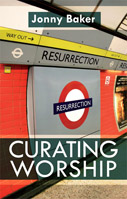
It will probably mean less of a need for a worship leader as song leader (although songs could still be sung) and more of a need for worship leader as curator – a person to welcome, enact the call to worship, offer the benedict, who make sure enviroment works, and to link, where necessary between the segments. (Mark Pierson’s The Art of Curating Worship: Reshaping the Role of Worship Leader
This second proposal is using the established gathered worship liturgy of the church, but is making the focus of gathered worship the stories from the scattered lives-in-mission. It is refusing to let worship be about gathering, nor letting scattering have no communal resourcing. Rather it is “lightening” existing gathered worship by orientating it around the stories of the people of God in life.

Tuesday, March 22, 2011
Is the effects of sin like stepping in dog sh*t?
(This is another entry in dictionary of everyday spirituality, under the heading S is for sh*t).
Ok, I know it’s a bit graphic but I wondered today if sometimes sin is like stepping in dog sh*t.
You can clean it off, but the effects, like the smell seem to linger.
Or more sadly, you step in it. But over time, you seem to grow used to the smell. Others notice and sniff. But it’s on your shoe and so it remains hard to detect. It’s in the room, it changes the atmosphere, but it’s hard to get rid of.
And sometimes pastoral ministry is about dealing with the smell. Perhaps actually sitting with someone long enough to find it and name it clearly. Sometimes actually finding the water and scrubbing it off. Sometimes helping them find a new set of shoes.
(Anyone still keen on being in pastoral ministry?)
Not pleasant, but a quiet sense of achievement at days end.
Sunday, March 20, 2011
can mission be embedded into the worship DNA? a proposal
Updated: For a second proposal, see can mission be embedded into the worship DNA? a 2nd proposal.
Updated: to be clear, I’d not for a moment suggesting this for a whole existing congregation. Best way to kill an idea is to expect everyone to agree! With this, I’m wanting to suggest an experiment, to invite a number of folk to try for a set period of time and then to sit back and reflect on the implications.
Here is the logic of some current thinking.
1. Faith is caught, not taught. Thus the Christianity we are offering is focused on worship, not on mission. The energy for being Christian today (what folk see, what people are paid for) is concentrated on the invitation to gather and to worship, not to scatter in God’s sending name.
2. This makes mission the extra, the stuff we do after the benediction and outside the worship service.
3. Mission is a multi-faceted way of being God’s hand and feet in the world. It includes the individual relationships we have with those beyond the community of faith. It also must include corporate acts in which the people of God together are the body of Christ.
4. We live in a time poor society. This means that some prioritisation must happen. Current Western church attendance patterns include more and more folk attending fortnightly. In other words, weekly is hard enough, let alone saying to folk – to be part of us weekly involves both gathered worship and mission.
5. Churches when they gather do some mission. This involves pray for others. It also involves giving financially. However if we are honest, most of this giving is funneled into more worship, not into mission.
6. Further, it takes levels of skills I rarely see to integrate mission into all of gathered worship – thanks, hearing the Word, confession, communion. The Uniting church worship recommends the worship includes a Word of Mission, but one is more likely to see a Kiwi than find this wonderful treasure.
So how can we embed mission into the DNA of the worshipping life of the church? Since this blog has many purposes, one of which includes trying out ideas, flying kites, here’s a suggestion, that we offer the following pattern for church.
Week one – gather together to give thanks, name sin, engage the Jesus story, hold the world before God ie gathered worship.
Week two – scatter – each is encouraged in this week to simply connect with friends and family who are not yet Christian, to pursue individual redemptive relationships.
Week three – gather – a simple gathered worship service focused around communion, storytelling of the Jesus story and prayer for relationships.
Week four – gather but only in order to do a combined mission project. People come together to plant trees, feed the homeless, advocate for justice, plan community events.
In this pattern, all the important facets of gathered worship are present, albiet monthly, rather than weekly. What is changed is that mission – both individual and corporate – is now embedded into the rhythm of the gathered communion.
I would have resisted such a pattern 10 years ago, when I use to argue vehemently for regular weekly patterns. My thinking 10 years ago was that those on the fringe, or visitors, might not be able to connect with this changing pattern. And so they might turn up to find the church “in mission”, which would be cool, but also pretty inhospitable. But 10 years ago was before we had cell phones, websites, social media. These now allow a whole range of ways for people to keep connected with the life of a community.
So what do you think? Would such a project allow the life of a church to be more aligned around the important impulses of worship and mission, gathering and sending? What might be lost?
Friday, March 18, 2011
this table remakes us: a creationary communion introduction
A creationary: a space to be creative with the lectionary. For more resources go here.
We find ourselves today gathered in a circle
equal
in a flow of love
We find in our centre a table
circular
And a loaf of bread
round
And a cup
circular
This table has remade us
changed the way we sit
changed the way we relate
as equals, in a flow of love
Explanatory note: On Wednesday at chapel, I had been asked to lead the communion part. As I entered the room, I noted that the usual seating had been rearranged. Instead of rows and a front, there was a small table, with a white tablecloth, upon which was the bread and cup. And the chairs had been placed in a circle. The change of architecture intrigued me and on the spot I thought it warranted changing (remaking) of my communion introduction. I note it here in honour of the role that space plays in our experience of worship.
Thursday, March 17, 2011
visualisation: creating multiple acts of beauty
This is a website to get lost in. I admire (yearn for) the gift of making complex things simple, the beauty that comes from clarity. This is a fascinating new venture which attempts to visualise data. It involves academics and design schools from around the world.
Note the key words:
complex, interdependent
understanding proceeds action
design is about integration.
it is dynamic, based on people doing things
design enables us to negotiate a revolution
integrate and collaborate
I have no idea how this can be applied to missiology and theology, but I’d love to be part of a conversation on this.
Posted by steve at 10:19 AM
Wednesday, March 16, 2011
Womadelaide: reviewing a slice of heaven
On Sunday my youngest and I experienced Womad. In so doing, I encountered a part of Australia I’ve not yet seen – an Australia deeply respectful of indigenous voices, curious about migrant cultures, eager to experience the unfamiliar and celebrate diversity.
“I thought I’d died and gone to music heaven.” That was Tim Finn’s comment on Womad and at times it did feel like heaven – a world set apart, that for a period of time emitted ways of being human that were deeply spiritual, deeply appealing – generations together, loads of kids, enjoying engaging with adults; participative creativity, the sheer enjoyment of humans being at play.
In my Missional church leadership teaching, I suggest that one of the ways to listen to the world around us is through observation of festivals. Large scale events can tell us something about the wider narratives of our culture.
The narratives of Womad include an affirmations of being human, celebration of creativity and culture, respect for diversity and care for earth. To quote another Kiwi musician, “a slice of heaven.”
Highlights
- Yabu band, indigenous voices singing of the importance of heritage, history and relationships.
- Lying on the Botanic Garden grass, gazing at tall trees, head to head with my youngest, listening to Archie Roach. “The trees are smiling,” the youngest announced.
- Les Gumes, installation storytelling. Random groups stepping into a world made alternative by the skillful change of space and the power of storytelling. Hard to explain, wonderful to experience.
- Leigh Warren and dancers, an hour of contemporary dance, supported by live guitar, voice and didgeridoo.
- Afrocelt Soundsystem. Over 15 years ago I stumbled upon their music in the leftover bin of a music shop. (Remember those – that historic artifact called music shops!) I loved the drum and bass loops, overlaid with Irish pipes and African beats. Seeing them live was simply superb.
So what did the youngest Taylor think at the end? Next year, she announced, we are all going. And for all four days!
Tuesday, March 15, 2011
What reaches young adults? 3 free giveways
I’ve just had an essay, titled “What reaches young adults?”, published in Australian Leadership. It was a commissioned piece and the entire edition is focused around generational mission, including pieces by Fuzz Kitto and Heidi Harding.
 Subscription is $68 (Australian); $78 NZ for 6 editions per year from Mediacom (go here for e-version). As author, I got a few free copies, which I thought I would offer as a freebie. I will send a copy of Australian Leadership to the first 3 people to comment on blog and provide a one paragraph biography of the person who was most influential in your young adult spiritual formation!
The article took a snapshot of a number of “young adult spirituality” moments in 2010 – from Blake Prize to Father Bob. Given that I was writing for a more mainline church context, I was particularly pleased with my concluding paragraphs.
If you have 0 young adults, then pray for them. Regularly use your prayers of intercession to pray for young adults. But choose your words carefully. Given the emerging trend of popular culture, you will need to find words to bless, rather than critique, their spiritual search.
If you have 1 young adult, then offer a traveling companion. Place this offer on the front of your weekly newsletter. Ask people in your church to become as curious as Father Bob, to ask a young adult to take you to the Blake Prize or the Big Day Out. Not to speak, but to listen. The aim is not to make Jesus relevant, but instead, to simply share, only when asked, your story of how your God-experience has daily legs.
If you have 5 young adults, ask to join them in a shared project. One example could be some shared, mutual action, a giving of legs to faith. Perhaps cleaning up a local stream. In other words, gather not around belief, nor around worship, but around mission action. (More examples can be found at the www.morepraxis.org.au, a ministry of the Uniting church in Victoria.)
Another example could be a conversation, similar in shape to espresso, one of the young adult congregations I helped plant. It began by inviting young adults to write down their questions about life and faith. These were thrown into a bowl. Together, some guidelines by which a culture of irreverent questions might flourish were agreed and discussion began. As one voice among many, the need for faith to grow by including irreverence was encouraged.
If you have 20 or more young adults, then you have a gift. Something to be shared not just with yourself, but with the wider body of Christ. Your task includes inviting them to put legs on 1 Corinthians 12:22 “those parts of the body that seem to be weaker are indispensable.” And how to partner with neighbouring churches who have fewer young adults than you.
Free to first 3 blog commenters to describe the person who most influenced them as a young adult!
Monday, March 14, 2011
Book Well: a project in which reading groups enhance mental health
the “pilot found participants felt more relaxed and confident after attending the groups. Those working with dementia patients found their ability to recall and communicate had improved, while people with depression were invigorated by the social contact.” (Between the lines, Suzy Freeman-Greene, March 14, 2011
Fascinating article in The Age on the use of books in working with folk who have mental health challenges. It’s called bibliotherapy and involves the use of literature in a healing way.
It made a number of links for me. First, to a book I mentioned last year (creativity, spirituality and mental health), research on the power of spirituality and Biblical storytelling in enhancing mental health. Second, our recent Masters of Ministry class, in which a participant led us in an exploration of the relationship between depression and St John of the Cross’s Dark night of the Soul. Again this link between spirituality, words well chosen and mental health.
The article provides some practical pointers
– choosing the right texts is crucial, stories that allow reflection on life experiences
– the tone is gentle, not confronting.
– the need to create a safe group.
– part of the plan is to help people unpick difficult feelings and just sit with them.
For more on spirituality and mental health:
Downs Syndrome at Christmas here; chapter by chapter reviews of Amos Yong’s Theology and disability, go here; resources for rituals in all life here; rituals in the dark places here, another resource called Sense making faith (here).
Saturday, March 12, 2011
The Kings Speech: a film review with a missional twist
A 500 word (monthly) film review by Steve Taylor (for Touchstone magazine). Film reviews of the most common contemporary films, each with a theological perspective, (over 60) back to 2005 can be found here.
The King’s Speech. A film review by Rev Dr Steve Taylor
One of my biggest fears at school was the annual speech competition. I found multiple ways – pretending to be sick, skipping class – in order to avoid that moment of terror, the act of public speaking.
Nor am I alone. Studies have shown that fear of public speaking ranks with fear of dying. “The King’s Speech” speaks to these shared levels of primal human phobia.
The movie begins with a man, “Bertie” (Colin Firth). He is alone. He stands in front of a microphone. Slowly the camera pans to a waiting crowd and then zeroes in on the radio dials that signal a worldwide radio audience.
The tension of this primal moment is exacerbated with the realisation that this Bertie is no mere mortal. Instead he is born royal, inheriting the expectation of public performance and proficient patterns of speech. The movie commences to trace “Bertie’s” partnership with unorthodox Australian speech therapist, Lionel Logue (Geoffrey Rush).
This personal drama is set against the backdrop of other battles concerning public speech. Will “Bertie’s” brother (Edward VIII, played by Guy Pearce), the current King of England, proclaim publicly his love for American divorcee Mrs. Simpson (played by Eve Best)? Will England speak out against Hitler’s expansionist aggression?
Directed by Tom Hooper, “The King’s Speech” works on many levels. The plot skillfully weaves individual pathos and building tension. The scenes of 1930s London are artful, with Academy nominations for Costume design (Jenny Beavan), Cinematography (Danny Cohen), Production Design (Eve Stewart) and Set Decoration (Judy Farr). The acting is superb, with Colin Firth, Geoffrey Rush and Helena Bonham Carter deserving their Academy Award nominations. Australasian audiences in particular will warm to the brash personality and unorthodox tactics of speech therapist, Lionel Logue.
Some critics have been less than charitable, raking “The King’s Speech” for factual errors. They suggest that “Bertie’s” stutter is exaggerated (as if the outward extent has any bearing on one’s inner embarrassment). They see as unlikely the presence of Winston Churchill and an adoring crowd outside Buckingham Palace on the day Britain declares war.
Such comments seem to misunderstand the genre, for “The King’s Speech” is docudrama rather than documentary.
Loss of voice can result from physical damage. It can also result from interior pain. Viewed at this level, “The King’s Speech” becomes a metaphor that enables corporate reflection. Can a nation lose voice? Can a church?
Viewed through this lens, “The King’s Speech” becomes a film for a church camp, followed by a discussion. What might it mean for God’s people to gain voice? If we could speak, what is the one word we might want to utter to our world? What prior patterns and previous memories are stifling our ability to speak confidently?
The King’s Speech suggests that the answer lies in a willingness to facing our pain and a commitment to persist despite discomfort. A message worth hearing, whether for a church today, or a geeky teenager so many school years ago.
Friday, March 11, 2011
defining fresh expressions: a local pastor speaks
I sat with a pastoral friend the other day. We were shooting the breeze – talking funerals and spiritual retreats – as pastoral folk do!
And he suddenly talked about a new initiative with families that was happening in the church. And he made what I think is on the best definitions of fresh expressions I’ve heard in a long time.
I think its about people being together, doing stuff around faith and
relationships and something emerging from that, rather than simply a
program.
Wednesday, March 09, 2011
gender, ministry and church on International Womens Day
It’s the centenary of International Womens Day. In honour of this significant occasion, I want to point to two historic posts on my blog.
The first is a more Biblical reflection on women and apostolic leadership, which explores one of my favourite missional leaders, a women called Joanna (Luke 8:3).
The second is a podcast interview (it’s one of my very first, so it’s not great quality) in which I interview Jenny McIntosh about women and the emerging church. She reflects on the struggles of women to have voice and explores some possible reasons. Is it about the way the Bible is used? Is it about 50/50 representation? Is it about the way gender’s know, relate and include – and so we need not just an emerging church, but an emerging change of culture?
emerging responses to For the Parish, chapter 5 – flight from tradition
“For the Parish”, by Andrew Davison and Alison Milbank, is an extended critique of fresh expressions. Always good to listen to the critics, so I am engaging the book, chapter by chapter. The Introduction is here, Chapter one is here, Chapter two is here. Chapter 3 is here. Chapter four is here, including a lengthy and very helpful set of comments
These posts seem to be getting longer and longer. My excuse is that I do want to take seriously the questions being raised!
This chapter offers an extended reflection on the relationship between faith and tradition. It begins with the assertion that the Anglican church originates with an priority of common prayer. Thomas Cramner “producing a prayer book for all to use, not through a common confession.” (98) So For the Parish take issue with Fresh expressions practically, ethically, theologically and grammatically.
Practically, if you have diversity as encouraged by Fresh Expressions, does this not make it hard when people shift.
“The person who has come to faith through a ‘skateboarding church’ or a ‘greetings-card-making church’ is very unlikely to find anything on offer in a new locality that even approaches what will have been his or her only experience of church life up to now.” (99-100)
Ethically, Fresh Expressions seems to value novelty, and to value novelty is simply a middle-class luxury.
“Only those who are rich in this world’s goods are likely to side with ….[the] … postmodern thinker, who looks forward to a future that is like the present ‘only with more options’.” (102)
Theologically, faith is a given gift. “It is notable that every Fresh Expression starts with what is chosen, wheras the inherited church is more likely to start with what is given.” (102-3) Thus For the Parish frames tradition as something that comes to us “from beyond ourselves.” (103) In so doing, the the tradition gives us an “exteriority” (103) with which to judge ourselves, a breadth and depth that is both “wide-ranging and specific.” (105)
Grammatically, For the Parish is concerned about the loss of “the” in the language of Fresh Expressions. They offer examples including phrases like “faith” rather than “the Faith” and “Fresh expressions of church” rather than “Fresh expressions of the Church.” Apparently this makes the church into an abstracted idea, rather than the inheritance of the past. This is a “flight from locality, temporality and particularity.” (117).
The chapter offers one extended example – the use of compline. It is worth pondering in relation to tradition. (more…)
Tuesday, March 08, 2011
a little pause to celebrate: the missional masters begins
Yesterday was for me a bit of milestone, which at the risk of being self-indulgent, I am pausing to mark.
Yesterday the Missional Masters cohort began and for 2.5 hours, I sat with a group of church leaders. Together we wrestled with Luke 10 and found ourselves both encouraged and challenged by the expression of mission. We began a conversation with Graham Ward, Cultural Transformation and Religious Practice
In August last year I was flying to Tasmania to work with their Synod. At 30,000 feet my brain started to do some free wheeling. For a number of years, Uniting College has been offering a Masters in Ministry. It is an exceptionally well-designed course, offering collegiality, flexibility and a practical theology focus.
At the same time, I have, for the past five years, taught a one-year course on Missional Leadership. Generally by the end, students feel like they are just starting. I don’t think this is because I am a poor teacher. Rather, I think it is a reflection on the long haul nature of being missional in leadership. The course needed more time, more years – not so much in lecturing from the expert, but more in accountable, collegial relationships.
At 30,000 feet I began to wonder what it would look like to apply this existing degree to the challenge of developing missional leaders in context.
- To shape the existing thesis into an action/research journal documenting missional innovation
- To shape the existing entry level papers on research design into a focus on action research
- To shape the existing theological reflection paper into a leadership evaluation process
- To shape the existing colloquim into a cohort specifically focusing on supporting each other in missional change
- To shape the existing Guided readings into a shared experience of reading mission texts together.
The last five months have involved moving this through academic processes, writing some thought pieces on the methodology (here and here and here and here), recruiting participants, seeking inputers.
Yesterday the work became a reality. I had hoped for 5 to 8 (adventurous) participants in first year, and then to add 4 to 5 each year after, which over a part-time 4 year degree, builds nicely toward a cohort of around 15 to 20.
Well, we began yesterday with 4 folk and expect another 3 more joining mid year, so looking on track. (This should include 1 in NZ, 2 in Queensland, 2 in rural South Australia, so certainly the distance thing seeming to be helpful.)
At the same time, numbers in our existing Masters/Doctor of Ministry have increased, an overall doubling of our enrolments, with over 30 folk involved in study. (That still leaves the PhD programme, of which we at Uniting College are involved in supervision of more than 10 candidates). The existing part of the programme began last week, and also started exceptionally well, a group of students reflecting on images of God in relation to disability and depression. Grounded, thoughtful and honest.
Hence the little, slightly self-indulgent, pause. Yesterday was a moment to celebrate.
Monday, March 07, 2011
mission begins with two ears
Written for a local church newsletter, and for a new distance course I’m writing for Semester 2 – Equipping in Christian mission.
“Sorry, I wasn’t listening.” Sadly, it’s a comment that I hear a bit too much from my family at the moment! Yet we all know what happens when we take time to listen.
In December I met with the leaders of a local church to talk about mission. They felt stuck, trapped, ineffective, out of touch.
Mention the word mission and images come to mind: perhaps sending people overseas or trying to recruit people to attend church. I suggested to this leadership team that in the 21st century, mission starts in neither of these ways. Instead, it starts by listening.
Why listen? First, it is common courtesy which people appreciate. It shows they are valued, important, recognised as unique. Second, our world is changing. So listening helps us keep up with that change. Third, we have preconceptions. So listening ensures we start with the needs of others rather than our prejudices.
How to listen? I wanted to be practical, so I suggested a number of different ways this church could listen – take photos, conduct neighbourhood walks, practise appreciative inquiry, interview people. Different strokes for different folks. These were introduced at a seminar in January.
What happens when we listen? Two stories might help. The first is from New Zealand. The church I used to pastor walked the streets of our community at Pentecost. Our task was to listen to the history of the community. One year, as we listened, someone mentioned that a community group needed funding for a new heater (this was Christchurch in winter after all!). We prayed. The next week we heard our prayer had been answered. Listening helped us know what to pray. And it strengthened our relationship with our neighbours.
The second is a story from Australia (told in “God Next Door
There is a lot more to mission that listening. But it’s an important, and respectful, place to start.


 )
)