Friday, September 04, 2009
changing world: changing fathers
In honour of fathers, Statistics New Zealand offers the following facts ahead of (New Zealand) Father’s Day this Sunday (6 September).
* The average age of fathers of new babies is 33 years.
* One in 100 babies has a father aged 50 years or over.
* Today’s newborn babies have fathers who are, on average, four years older than their own fathers were when they were born.
* Fathers with children aged under a year old manage with 42 minutes less sleep than the average of 8.5 hours.
* Over a lifetime, fathers have seven fewer Father’s Days, on average, than mothers have Mother’s Days. This is because men generally start parenting later in life and women have a longer life span.
* More than a quarter (28 percent) of babies born in New Zealand last year were to fathers who were not themselves born in New Zealand. This compares with 24 percent a decade ago.
Other facts about Father’s Day
* The first Father’s Day is thought to have originated in Babylon over 4,000 years ago.
Thursday, September 03, 2009
missional cyber book club anyone?
So I sat with a pastor today. Wanting to keep thinking, in a relational way. Surrounded by post-grad options, but none really itching – too detached, not contextual enough – and with no real need for qualifications upgrade. Mostly just wanting some missional travelling companions.
Suddenly I got a spark …. how about a missional cyber book club ….
A yearly commitment, renewable annually.
At the start/end of the year, the group generates 12 books for the year ahead.
They commit to read a book a month.
They commit to take turns at being a conversation starter (generating a set of questions that helps the group talk) and a conversation keeper, someone to watch the conversation on behalf of the whole group.
They commit to provide a description of their context (replacing real-time cues).
They commit to Skype regularly, monthly, for an hour, on the book.
Simple really. Anything like this out there? Or am I a self-starter on this one? If so, I’m looking for 12 punters, willing to have a crack with me.
Wednesday, September 02, 2009
browsing worship: weaving space + event
You read this post. Well, more accurately, you browse this post. Time of your chosing, most likely juggling other inputs – music, cellphone. Some of you will be on RSS feeds or facebook, seeing the first few lines, wondering whether to click and read the whole lot. Might leave a comment. Might not.
We call this “browsing”; a feature of life today, adrift in a world of choice, gone 24/7. As such, this changing nature of engagement poses particular problems for Christian gathering, which tends to focus on one particular time. If you’re late, sick, distracted, working – then – it’s often – well – tough.
Which makes one of the Greenbelt 2010 offerings fascinating reading.
A space – open over an extended period, come as, when, you are, early or late.
A curated space – complete with stuff to look at, to do for all ages, to browse.
A spiraling labyrinth in the centre of the room. Images – an old man shovelling snow in a monastry – ambient mucis in background. Kids playing lego and colouring celtic saints. A wall of words for meaning making. Hanging fabrics, floor cushions. People sitting, kneeling, lying down, stretching, reading, writing, relaxing, meditating, thinking, reflecting. More participant description here
Times of set prayer – short spoken liturgies – Bible reading and prayer – at set times (in this case 10:30 am, 12:30 pm, 3 pm, 5:30 pm) (for more see here).
 Interactivity – in this case “fridge magnet prayers.” Fantastic idea. 840 words, drawn from a local congregational life, and the invitation for people to arrange them in prayers, which were then read during the “set prayers.” (I’d want to mix in some pictures as well though, just to keep it non-verbal)
This is browsing for sure, a space, yet with defined events that gather, make the whole greater than the individual parts.
I read this as a local pastor, thinking about what it would be like to create this as part of church life. Invite a person/s to create a space and to refresh that space regularly. Find a wordsmith (or borrow/beg from existing sources) and notify times of set prayer. Throw in a few changing stations that allow points of reflection (open Bible for that day’s lectionary reading, confession station, candles). Find a way for people to leave “solo” prayers that can be prayed during the set prayer times (could be a facebook page, a text service, a white board, fridge magnet liturgy.)
What about taking your Sunday, inviting some creatives to work on a centred, prayer space within your existing service and then advertising it as: All day space for prayer + times to gather. Start monthly and see what happens.
10:30 am – all age service
12:30 pm – talkback discussion of sermon
5:00 pm – communion
5:30 pm – soup for faith
6:30 pm – lectio divina
8:00 pm – Last words
Tuesday, September 01, 2009
a seasonal spirituality of wine making
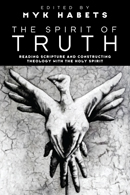
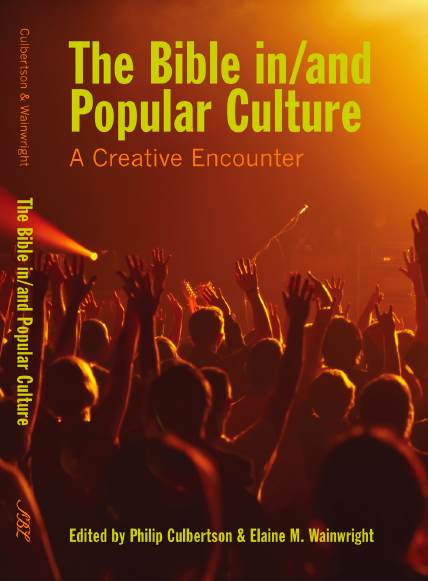
I was re-reading my sabbatical 08 journal last week. Partly because it was this time a year ago the Taylor family headed off (August 20-Nov 1). Partly because of the news that two of my sabbatical writing projects have been given the green publishing light. (1st, a chapter on the Bible in bro’town accepted for an edited book, published by Semeia Studies, designed to be used in theology and popular culture graduate level courses. 2nd, a paper constructing a pneumatology for engaging popular culture accepted as a book chapter, to be published by Wipf and Stock publishers.)
As part of the sabbatical, I took a 3 day retreat, walking the Riesling trail and re-reading my journal, I found the following quote:
“It begins with the old, dry grown vines gently tendered. Berries gently hand picked at optimal ripeness, producing full-flavoured fruit. Crushed, hard plunged, basket pressed to extract intense juices. Add passionate wine making skills, maybe an influence of oak. And in time …. delicious, full-bodied, flavoursome wines just for you to enjoy.”
 It caused me to reflect on seasons; of how vines become laden become harvested become processed become served. What season am I/you/Opawa? What practices and resources are needed for this season? (And all this before you even think about toasts to new wineskins.)
Updated: In honour of this post, I got my Spirituality Of Wine
Sunday, August 30, 2009
eli and samuel: from sunday school to (another) male text of terror
Just back from an (excellent) weekend away with Opawa men. The theme was “We’ll be in the shed” and the focus was being male today. Alongside lots of relaxing, eating, relating, we gathered around themes of being Christian and being male. Everyone was invited to bring something from their shed and in the midst of our uniqueness and passion we honoured the life of Christ.
This morning I led a lectio divina engagement with 1 Samuel 3. We read the text slowly three times. The second time half the room were invited to hear the text as a young boy and to wonder what it would have been like to be Samuel in the story. The third time the other half the room were invited to hear the text as an older man and to wonder what it would have been like to be Eli in the story.
Slowly, reading the text closely, the romantic Sunday school layers many of us had of this text were peeled back. It began a frank and robust discussion of Eli, a prophet of God, who is judged for his parenting. What sort of God would do that? Was this fair? As Eli aged, did he in fact grow further away from God?
These are not abstract questions, for many of us are parents. Having children has changed us. How much guilt do each of us carry over our parenting? How will we cope when our parenting dreams are met by the free will choices of our children?
In that sense, the Eli/Samuel text became a “text of terror” for us as males. (I borrow the term from Phil Culbertson’s New Adam: The Future of Male Spirituality

It helped us face our fears – of growing old, growing bitter, growing passive in our relationship with God. Oddly, in the midst of these questions, there was a growing sense of companionship. I realised I was less alone. I was among those who have gone before me, and others who are coming behind me. Together, there was a shared pain, a shared strength and a growing commitment.
Further links
For more on male spirituality see. For fathers day worship resources see here, for fathers day worship and communion go here. For fathers day preaching resources see here.

Friday, August 28, 2009
an apologetic for evil
Following on from my recent post, a narrative theology concerning evil, I have been pondering whether Christians need to explain evil.
Much ink has been spilt on whether, if there is a God, did this God create evil? And if there is Satan, can we say the devil made me do it?
But we live post-Auschwitz. Is the task to philosophise? Or to weep?
I remember once being part of volunteer training event. The phone rang, with news of a suicide. The room went silent, sickened by the pain seeping into the room. The person taking the phone call shouted to me across the room “What would the Christian God say?” All the room, many non-Christian, looked at me, awaiting my reply.
I still think it an absurd question. The Christian God would visit and would weep and would rage and say My God, why have you forsaken us. It would not philosophise.
And in the months to come? Would it then philosophise? Or would it still not visit and weep and rage and say My God, why have you forsaken us?
Or am I just ducking hard issues?
It’s been a tough week for Opawa Baptist. Can’t say more here. Perhaps later. So this post is not a theory.
Wednesday, August 26, 2009
a narrative approach to a theology of evil
Lots of stories are happy stories. Yet we live in a dark world. Babies get hurt. People grieve. Relationships break. This raises the question as to the presence of evil. Are there bad forces, outside humans, that contribute to human pain and destruction? If so, how should their presence shape human behaviour? Here’s a short story, a dark story, that I wrote for our Grow evening service, trying to get my head around evil and being human. I’m not sure if it works, or if I like it, so I’ll post it here.
The advertising catches your eye. The Bible Horror puppet show. Human puppets performing avant garde interactive theatre.
Intrigued you purchase your ticket, score your ice cream and settle in.
The scenes unfold. The early acts intrigue. Moments of awe-inspiring creativity and star-studded destiny are interspersed with hints of a darker human horror, of cold campfire stories of incest, forced rape, planned assassination.
Intrigued at first intermission, you contrast and compare the puppet costuming in the crowded foyer.
The Job act makes for even more disturbed viewing. A son of God storms the stage and stalks the earth. Cast as accuser, waving divinely sanctioned permission slips, he plots evil. Women are stabbed and flesh of sheep and settler is burnt. Amid the smoke and in a climactic moment of horror, a destructive tornado whips sand into a frenzy, killing family and friends gathered for a family feast.
Appalled, sickened by the violence, you stumble through the second intermission. Only to realise, with a sickening stomach, that the horror has just begun. Appalled, you watch the final Revelation scene unfold.
A dark star crashes.
An abyss opens and smoke billows. Locusts emerge, chasing screaming humans across the stage. Scenes of torture ensure, humans writhing, screaming for mercy.
Toes curled in horror, chilled by the seemingly random violence, you suddenly feel a breath on your shoulder. Hair standing on end, deeply unsettled, you feel a presence settling beside you.
“Don’t worry,” the voice breathes. “I own the theatre.”
You turn, appalled by the seeming callous indifference of a threatre owner to the escalating scenes of horror.
The voice continues. “In this theatre, the ending belongs you to me.”
Eyes widening in disbelief, you suddenly see movement. The puppet show has a puppetter. Dimly lit, high in the scaffolds, joker-like, a figure huddles over his puppets – the locusts and random tornados – skillfully manipulative, seemingly intent on wreaking destruction.
The voice continues, quiet, careful. “It’s interactive theatre. The actors can all make choices. So can the audiences.”
Puzzled, you turn. “So if you don’t like anything, just yell. Some call the yells prayer. Others describe them as acts of repentance or moments of protest. Still others hear them as howls of lament and protest or describe strength found in bread broken and the chant “My God, My God, why have you forsaken us.””
“Whatever the name, however the actions, this is interactive theatre. Actors and audience can always change this play, force the joker to move. That’s the rules in the Bible horror picture show.”
The voice fades as the final curtain fall begins.
A note of explanation (ie. Biblical shaping). (more…)
Sunday, August 23, 2009
digital faith conference
Steve Garner asked me to mention this ….
DIGITAL FAITH: Exploring the contours of faith in our digital world
How do the Christian faith and the Internet impact upon each other? What place might the Bible have in our digital world? Come and join us as our panel of expert speakers engage with these topics and others relating to issues of faith in the digital world.
Speakers
Mark Brown, CEO, Bible Society New Zealand
Founder Anglican Cathedral in Second Life.
Stephen Garner, Lecturer in Theology and Popular Culture,
School of Theology, University of Auckland.
Heidi Campbell, Assistant Professor, Dept. of Communication, Texas A&M University
Author of Exploring Religious Community Online.
Tim Bulkeley, Lecturer in Old Testament, Carey Baptist College
Developer of the Amos Hypertext Commentary & podBible projects.
Saturday 5 September 2009, 9am-12pm. OGGB4 Lecture Theatre, Level 0, Owen G Glenn Building, 12 Grafton Road, The University of Auckland. Please REGISTER your attendance by Wednesday 2 September with theologyadmin AT auckland DOT ac DOT nz
Saturday, August 22, 2009
global style lovely review
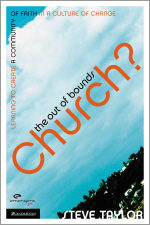
 There is a lovely review of my Out of Bounds Church?: Learning to Create a Community of Faith in a Culture of Change (Emergent Ys)
Titled: Written in New Zealand, published in US and quite useful also in Latin America it reads as follows: How does Taylor’s book translate into a Latin American situation? I would answer rhetorically: Was it not really written with churches in São Paulo in mind? To start with, the problems are the very same: churches, small and large, which, ignoring the obvious cultural changes, use the same communication and teaching methods of almost a century ago. This condition is perpetuated by pastors who seem not to live in the Age of Information. Therefore, also here in Spanish- and Portuguese-speaking America, the churches need to become missional in a postmodern way, responding with creative and flexible structures and movements to the culture of change. Not only the principles, but also the practical ideas presented by Steve Taylor in The Out of Bounds Church? apply perfectly to urban Latin America. They are relevant for São Paulo, Rio de Janeiro, Buenos Aires, Santiago, Montevideo, etc. We can see ourselves in the Kiwi book. Contextual differences play a lesser role than our share in postmodern culture. Then, dear Steve, “waiho i te toipoto, kaua i te toiroa” (Maori proverb: “Let us keep close together, not far apart”).
Finishing with a Maori proverb. Now that’s classy aye!
emerging disciples resources: a work in progress
Thanks to those who attended my Emerging disciples workshop in Auckland yesterday. A number of you stayed after to ask specific questions about resources, and I referred you to my blog. Since there’s a lot of stuff here, I will try and draw it together (over the next few days and in between hockey and church). ie this blog post a work in progress (more…)
Friday, August 21, 2009
a personal challenge for Steve the church minister
“Pastoral ministry always comes back to you, the minister. This is the bummer of being a minister. It’s also why it’s a great job. A huge personal growth challenge which you get with very few other jobs.”
Nigel Wright, Baptist leader, Thursday, August 19.
Thursday, August 20, 2009
emerging disciples
I’m off to Auckland this evening to speak at the 21st Century Challenges to the Gospel conference, organised by Laidlaw College. Here is a PDF of my 2 page handout.
They gave me the topic of “emerging church” but I asked for it to be changed to “emerging disciples.”
Partly because I’m sick of talking about “church”, but mostly it’s where I am at the moment in terms of ministry at Opawa. We have good numbers of searchers among us, particularly from our local community, and so our season is a “discipling” season, with particular emphasis on two groups (using John Drane’s Do Christians Know How to Be Spiritual?
Updated: for notes go here.
Wednesday, August 19, 2009
Jesus as mother prayers
Instead, we were like young children among you.
Just as a nursing mother cares for her children
– Paul in 1 Thessalonians 2:7
Truly Lord, you are a mother
for both they who are in labour
and they who are brought forth
are accepted by you.
– Anselm of Canterbury
Suck not so much the wounds as the breasts of the Crucified.
He will be your mother and you will be his son.
– Bernard of Clairvaux
But our true Mother Jesus, he alone bears us for joy and for endless life,
blessed may he be. So he carries us within him in love and travail
– Julian of Norwich
From Giving Birth: Reclaiming Biblical Metaphor for Pastoral Practice
Tuesday, August 18, 2009
in a tangle over membership
Sunday morning service included the welcoming of 6 new members at church. This included a family of 5 from the Philipines and made for an exciting service.
On the way home my children floored me. “Dad, are we church members? We listened to what you said (by way of introduction). You talked about membership as belonging, and membership as participation. So we can be members. Right?”
As baptists, we have a number of rites of “theological” passage: membership, baptism and communion. Historically, they are not generally reserved for children. But looking at my kids, I’m suddenly not actually saw why not. If my kids participate and feel they belong, why can’t they be members?
Help me with theology of children and faith development folks.
For more on membership:


 )
)