Sunday, April 05, 2009
reshaping missional life among baptist churches in urban centres
On Thursday I got down on one knee and “proposed”. It was at the end of our church meeting, in which we’d spent an hour talking and praying with our neighbouring Baptist church. Both churches are nearly 100 years old, yet only 2.3 km apart. They’ve been struggling for a while and so I’ve spent quite some time in recent months sitting with their leaders. (This might explain some rather oblique recent posts, including help my church is dying and chopping down the Sunday tree.) Here is the proposal, which is being made public in both churches this Sunday morning.
INTRODUCTION: For over a year, conversations have been happening with regard to the future of Beckenham Baptist. On Thursday night, the Beckenham leaders were welcomed to an Opawa Baptist Church meeting and an hour together we listened, talked and prayed.
PROPOSAL: Beckenham and Opawa talk about what it means to be one church, in two physical locations, with multiple congregations.
QUESTION: If our Baptist forebears were starting Christian mission today, what would they do in our area?
FRAMEWORK: The goal must be mission and God’s Kingdom and not the survival of a church.
ETHOS: for Opawa, we want to make clear that
– This is family and families walk together. This must not be a takeover
– In Romans 12, Paul reminds us we are a church body, called to work toward unity. This comes in the power of God’s spirit and as we respect the unique value of each different part.
– While Opawa is already really busy, we are excited about the mission and Kingdom possibilities that could emerge as we consider the area between Colombo Street and Brougham Street.
ONE CONCRETE WAY FORWARD:
1. Continue Beckenham ministries.
2. Opawa ministries (eg. children, intermediate, youth, discipleship, Bible days) offered to Beckenham at Opawa.
3. Place Opawa’s Side Door arts congregation at Beckenham.
4. Locate a missional leader to run a new form of church at Beckenham on Sunday mornings. This would involve closing Beckenham’s Sunday morning service in its current format but keep doors open on Sunday morning to serve coffee and muffins, read Scripture and find concrete ways to serve the Beckenham community.
5. Those at Beckenham who might struggle with this new form of church join one of Opawa’s existing congregations : hymn service or 10:30 am service.
6. Richard Smith (current pastor) become part of an “overall” combined church pastoral team, to provide pastoral care of all existing Beckenham people and possible involvement with existing Opawa people.
A SUGGESTED PROCESS:
1.Start in worship and fellowship. Opawa worship at Beckenham on Good Friday, and Beckenham worship at Opawa on Easter Sunday.
2. Form a combined taskforce to explore the idea and consider what this would look like in terms of leadership, buildings, congregations, ministries and church name. Involve Baptist Union leaders.
3. Both congregations discuss the taskforce proposal.
4. If agreement, hold a party to launch the changes and celebrate this new form of life.
In God’s timing, may the death and resurrection of Easter, be our comfort, guide, hope and courage.
Steve Taylor for Opawa Baptist
Saturday, April 04, 2009
Stephen Matta
Stephen Matta from Georgia, I have responded to your email. However my email reply keeps bouncing. Since you leave no other address I have no way of contacting you, apart from to place this notice on my blog.
Friday, April 03, 2009
yes to bible and popular culture new book
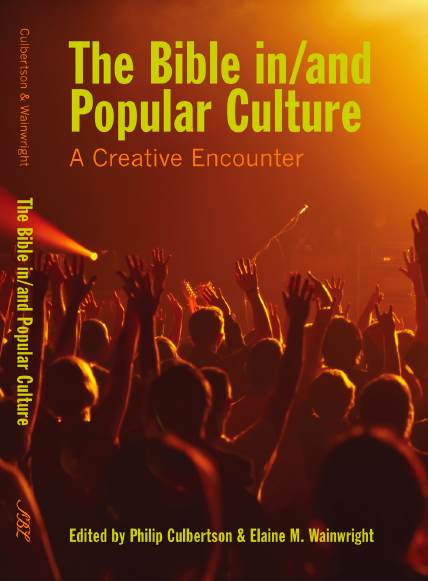
Semeia Studies is one of the leading, cutting edge experimental publishers in the area of Biblical studies. The editorial board has just said yes to a new book proposal: titled The Bible in/and Popular Culture: A Creative Encounter. Edited by Dr. Philip Culbertson and Dr. Elaine Wainwright the book will explore a wide range of popular media: popular music, graphic novels, fiction, television and video games. Particular attention will be given to the way these media engage biblical texts and characters and to hermeneutical and methodological/theoretical issues.
I post this because the book will include a chapter by me, titled: Reading “pop-wise”: the very fine art of “making do” when reading the Bible in bro’Town. So over the last few months, I’ve been quietly stealing time to move between the book of Revelation, Sionerella bro’Town episode and Understanding Comics: The Invisible Art
What I found intriguing was that so many of the issues discussed in Understanding Comics: The Invisible Art
Wednesday, April 01, 2009
harvest festival
Sunday was so much fun, as in our morning congregation we brought back an ancient Opawa tradition, the harvest festival. It was nice to bring back to life something that had been lying dormant in the church for years and the display looked fantastic.

I preached from Ruth 2, an ancient harvest festival during a credit crunch, and the need to celebrate production and the challenge to consider distribution. What would gleaning look like in over-developed Western economies?
We offered 3 practical ways for people to live the Ruth text.
1 – Join twoshirts and start sharing our extra stuff (and we’ve set Opawa Baptist up as a group)
2 – We printed off “thanks for making your garden look so great” postcards and people were invited to take them and post them in the letterboxes of gardens they admired.

3 – We made soup. And more soup. And more soup. Over 150 litres of homemade vegetable soup to replenish our foodbank. About 20 people cut and chopped most of the afternoon and had a thoroughly rich experience of community for mission.
And a question to ponder. And so a harvest festival challenges us to think about distribution. How on earth do we care for the unemployed and the migrant in New Zealand? How on earth could we do business, so that any struggling migrant could find work?
This food will go toward our foodbank. This afternoon we’re having a soup-working-bee. It would be easy for us as a church to stop there. To feel good about ourselves. Wow, we had a harvest festival and we’ve replenished Opawa’s foodbank with some nourishing vegetable soup. What a practical thing for a church to do in a credit crunch. But that’s not harvest according Ruth 2. In Ruth 2 we’re asked some much more fundamental questions. How we live, so that the unemployed can find meaningful work?
Saturday, March 28, 2009
preaching a complex scent simply
The latest U2 album, No line on the horizon, has a song ( “Cedars of Lebanon”) that intrigues me. It’s one of my favourite songs on the album and it’s been making some odd echoes in my head over the last few days.
The song seems to be written from the point of view of a journalist in Lebanon. In the first verse we find him waking up after a late night, meeting a deadline.
Yesterday I spent asleep
Woke up in my clothes in a dirty heap
Spent the night trying to make a deadline
Squeezing complicated lives into a simple headline
I’ve been wondering if the last line actually captures some of the task of communication in general, including preaching.
It’s a fact that the Bible is complicated. Multiple genre’s, from poetry to story, from apocalypse to epistle, from gospel to poetry, from proverb to parable. The literature emerges from lives spread over hundreds of years, across diverse languages (Greek, Aramaic, Hebrew) and unique cultures (nomadic, Ancient near eastern, Israelite, Greco-Roman). It’s complicated.
So to are the lives of people. Every Sunday a range of lifestories eye me up. Some are high, others low. Some are forgiven, others burdened. Some are open, others closed. All are trying to make sense of a rapidly changing world and the complications of life in a credit crunch.
Into all this complication comes the cry for simplicity, to be clear and sharp, to say one thing well. Preaching becomes “Squeezing complicated lives into a simple headline”! I’m not saying this is good or bad, it simply is. Nor am I saying anything about how one goes about the preaching task – whether one exposits, or discusses, or imagines or creates. Simply that the task seems to be summarised by the juxtaposition between complicated/simple.
Come the third verse, another line jumps out at me.
This shitty world sometimes produces a rose
The scent of it lingers and then it just goes
That’s my prayer every Sunday. That in the mercy of God, my “complicated/simple headlines” might in fact be a rose, in the midst of people’s turmoil. Even better, that the rose scent would linger, beyond Sunday and into Monday and the week ahead. It might be an idea, a connection, a concept, and wouldn’t it be great if it lingered beyond the door, and wafted into the week ahead.
In writing this, I am not trying to claim anything special for my preaching, nor for the task of preaching itself. The scent might come from a pastoral prayer, or a moment of creativity, or a song well chosen, or an instrument played creatively, or a rich conversation over coffee afterward.
But the goal seems captured by that sense of “complex scent simply.” Some random connections as I’ve travelled through the week.
Thursday, March 26, 2009
church-twit
OK, we’re having a go at using twitter for Opawa Baptist – http://twitter.com/opbap. We’ve created a group twitter, initially with a number of pastoral team people, and will see whether it’s useful tool in terms of comings and goings and prayer updates around the church.
preaching Christ in a credit crunch
Blog question: If you had the opportunity to teach a four-week sermon series to a congregation that would help them sift through some of the current economic issues, what would your topics be? (And just to be clear, I’m not talking about a giving or money management series, but something that reflects a biblical mindset towards economics in general).
My response: Hi, I’m working on this very question, down here in New Zealand, as my seminary has called a conversation (tonight) between business and community leaders and theologians (and I’ll be preaching on Christ and the credit crunch this Sunday at our Harvest Festival). Here’s my suggestion:
Week 1 – creativity – co-creators with God in 21st century – Genesis 1, Psalm 8, Parable of sower, parable of talents
Week 2 – justice – distribution of resources – Old Testament, host in Luke 14, Zaccheus, Joseph of Arimathea
Week 3 – sustainability – how to live within ourselves individually, communally, nationally
Week 4 – how then should we live – stories of how Kingdom is being earthed in local communities in response to credit crunch.
thoughts? comments?
discipling: update on Lifeshapes
It was the 6th week of Lifeshapes (an 8 week discipling course we’re trying at Opawa) last night. The topic was how to pray. Which is not a new question, but asked by Jesus disciples in the Gospels. Jesus response to “How do we pray” was to offer the Lords Prayer. So that makes a great place to explore how to pray.
We started the evening sharing what makes prayer a challenge and what makes it a joy. We had some teaching about the Lords Prayer, followed by three practical suggestions of ways to use the Lords Prayer to pray. We then had 10 minutes to “try” before a final feedback – what was helpful/unhelpful. The homework was set: try praying the Lords Prayer daily. Until we gather again next week.
And after the evening ended, members of the group remained. They gathered around the Lords Prayer (projected on the screen) and just kept talking. About what it means, how it challenges us, shapes us, relates to our life. It was great to sit and watch and be part of.
This is the power of the block course teaching we’ve been slowly developing at Opawa over the last 2 years. As a church we want people to grow, yet we are a multi-congregational church, with people old in faith and new in faith. So amid that diversity, we’ve employed a number of strategies to encourage next steps in growth. One is block course Wednesday evening teaching during Term time. And last nite was fruit of that. People from different congregations, staying on, to talk about how praying the Bible can form them spiritually.
Wednesday, March 25, 2009
will someone please charge the father too!
Rant begins.
So a few days ago, this really sad things happens – a newborn baby is found alive, in a rubbish bin, on an airplane. As events unfold, it is revealed that the plane has flown from Samoa to New Zealand and during the flight, a woman has given birth, and has then tried to abandon the baby. Today comes the news that she is now being charged, first with abandoning the baby girl and second, with assaulting her.
So what about the father? It takes two parties to conceive. If the mother is to be charged with abandonment, then surely the father must be as well. He has abandoned this baby just as much as the mother has. Where is he when the going gets tough? Cowardly males, taking the easy option, getting off scott-free!
Rant over.
spirituality of change
I sat with my spiritual director last week. Where was God since we last met, was the question. And so I reflected on my sunflower prayer from a few weeks ago:
As the sunflower tracks the sun,
God, help me track your warmth and love this day,
And grow, unfold, bloom,
into my full splendour as your child, Amen.
So what would stop you following God’s warmth through a sun/day, Steve? my director asked. The question floored me. I searched within myself. I fumbled and fudged and we moved on.
Thirty minutes later, we returned. Somehow the conversation slipped back to that same question (sneaky spiritual director). So what would stop you following God’s warmth through a sun/day, Steve?
And I knew the answer. It was time for me to stop looking in and look out. To name what I have been afraid to name. That when external change happens, some people don’t like it. It’s not the same and it’s not the good old days. Change is hard and I don’t understand/agree.
To use the sunflower analogy, other people can stop following the sun. And when they stop following, when they fold their arms, they run the risk of acting in ways that, in fact, can stop others following the sun. This is heightened by my sensitivity and intuition. As I travel through my sun/day, I feel the resistance and as I feel it, I am tempted to stop following the sun, and start tracing the shadow.
Here’s the rub. The cold hard rub. When do I as a leader stop listening to these people? When do you say enough is enough? When do you say, if you are not following the sun, it is quite likely that your input is no longer life-giving to us in our journey of change? (more…)
Tuesday, March 24, 2009
(still) needing a church manager
A few weeks ago, Opawa Baptist started looking for a Church Manager. We have had some good interest. But a number of applicants have suddenly withdrawn, so in order to strengthen our interview pool, we are continuing to advertise the position. If you know of someone who is good with people, with systems and resources and wants to help shape future mission among our present people, we’d love to hear from them ASAP.
Specifically, can
– create and implement processes and systems necessary for efficient operation of the administrative functions of the church.
– take responsiblity for the daily operation of the church office.
– ensure a “staffed” office, both during the week and on Sunday mornings
– ensure café and hospitality ministry
– deal with administration of meetings, annual reports, membership and belonging
– ensure communication, including website, newsletters, promotion and signage
– ensure buildings are cleaned, used and maintained in accordance with mission and ethos of the church.
for more …
pastoral care and divorce recovery
I sat with a group of 6 people today. In the course of a rolling conversation, 4 of the 6 shared how hard they are finding life because they are currently watching their children, and their friends children, face broken marriages. I hear talk of Divorce Recovery groups. But, I asked, Do we need Parents Watching Divorce Recovery Groups?
All the heads nodded.
As divorce statistics rise, it is not just those being divorced who need care. It is those who watch helplessly as the lives of their kids get torn apart. What does justice and reconciliation mean for parents, who have invested so much in the dreams of their children?
Sunday, March 22, 2009
Do baptists have a communion liturgy?
“Do baptists have a way of doing communion?” I was asked in passing this morning. A few weeks ago, I spent time with the children in the church, talking with them about communion. It was part of a church wide process, in which we took time to explore communion, it’s why’s and wherefore’s. Hence the question, as to whether baptists have a way of doing communion.
My answer is yes, Baptist’s do have a communion liturgy. Each church is different, but there are some repeated patterns. Here’s my take on the “liturgy.”
explain – an explanation, often more devotional in format, in which the meaning of communion is explained.
pray – often 2 people, one for the bread, and one for the cup, pray.
invite – some indication is given of who can participate.
distribute – the elements are passed around. This tends to be individualistic and passive, with bread on trays and juice in little cups.
eat and drink – time is spent, usually individually, thinking upon the meaning of the cup.
thank – often a prayer of thanks.
A Baptist liturgy is not based on a whole lot of words. But the above is based on a clear theology. The explanation tends to focus on the events of the Last supper. This does make it “thin” (too thin in my opinion, missing Incarnation, resurrection, Spirit and eschatology), but it is a way of telling the story. The two people who pray are rarely clergy, because the priesthood of all believers is encouraged. Equally, going forward is viewed with suspicion, because of the danger of affirming a “priest” as essential in what is an equal table.
My journey has pushed me toward what I would call a bapti-can liturgy. It seeks to honour the richness of being baptist: a theology of community, a unease with ritual and words for the sake of words, an expectation of “communion” with God. But it adds in a greater theological breadth (weaving in themes of Incarnation, resurrection, Spirit and eschatology) in the explanation, ensures the prayer invokes the Spirit to make Jesus real, encourages people to come forward to receive from each other to enhance participation and community contact, distribution which includes the breaking of one loaf and the placing of pieces of that loaf on the trays alongside those small squares, visuals and creativity to provide multiple layers as people eat and drink, a final thanks which often includes the Lords Prayer as a way of expressing our unity with each other and the church world wide.
So yes, Baptists do have a communion liturgy.
Friday, March 20, 2009
leadership in (external) change
God help us to change.
To change ourselves and to change our world.
To know the need of it. To deal with the pain of it. To feel the joy of it. To undertake the journey without understanding the destination.
The art of gentle revolution. Amen
Change can come from internal factors, it can also come from external factors. Opawa is in the midst of external change at the moment, enjoying new faces as local community folk find us a place to call home. It’s a great privilege, but given that our community is lower-socio economic, it also brings its challenges. It’s church, but not as some used to know it.
In the midst of this, the prayer by Michael Leunig (When I Talk to You a Cartoonist Talks to
Reflecting on change, someone pointed me to Jesus. And how often in the Gospels Jesus seemed to be saying, “I’m moving on. Will you come with? It will change you. It will change your world? Will you join me in living the Kingdom?”
What is challenging is the fact that often, if people said no to change, Jesus simply moved on. Which is an important thing for us as a church to hear. In God’s grace, we are being changed. It’s not easy. It never is. It never has been. Such is the call of Jesus. “Will you join me in living the Kingdom?”
I find this hard. I like to please people and I’d love to bring everyone with me on the change journey. I am wary of a leadership style which sounds like God’s way=my way; or the highway. But at times, Jesus demanded change and kept moving, even as people struggled. How, as leader, does one know when recognise this time?


 )
)