Thursday, October 19, 2006
journalling the emerging church journey
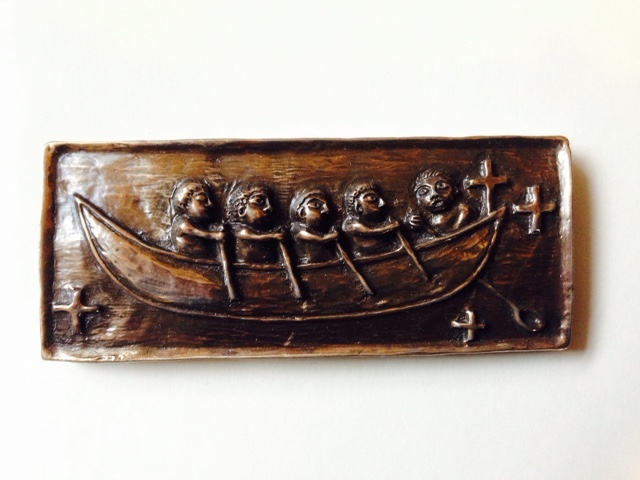
 The kitchen is “an experiment in community.” Their experimental journey is being recorded here. I’ve shared a number of coffees and listened as this experiment has taken shape over the last year.
Earlier this year, round New Year, I posted a series of emerging church postcards05; a visual record, along with some words about birth, values, music and mission, of emerging churches around the world. I wanted to make the visual point that the emerging church is wider than Emergent church US. I also wanted to name the life of the emerging church not as books and speakers but as God’s Spirit at work in the real life stories and everyday struggles of mission and worship stories of emerging church communities. (The complete series is here). I am planning to repeat this series at the end of this year.
And it is exciting to think that throughout this year, groups like the kitchen have become to take shape – to wonder concretely what it might mean to embody the life of Christ in our world – an experiment – a risk – just like the birth of that Christ baby so many years ago.
Wednesday, October 18, 2006
kiwi table manners
I have been thinking a lot lately about how Kiwis eat together. (Update: In Luke 10, mission is dwelling in the homes and around the tables of the culture. So I am re:imagining what it might mean to eat around Kiwi tables. So how do Kiwis eat together? What does the way we eat reveal about our values and identity.) So I am racking my brain, trying to think of Kiwi literature and Kiwi movies which show us eating together …
the hangi in No 2; the tea drinking and card playing around the kitchen table in Whale Rider; the tea making in World’s Fastest Indian; the candlelit orchard dinner in In My Fathers Den;
and from my fabulous commenters: the barbeque in Rain; and in Broken English; dinners in Peter Jackson’s Heavenly Creatures; the “kai cart” in Footrot Flats; the shared crayfish in Once Were Warriors;
If you can think of any (Kiwi movies only please), then please drop them into the comments below …
Saturday, October 14, 2006
the kingdom is at kids eye level
Tomorrow (Sunday) is a Take a Kid to Faith service at Opawa. We do these every 2 to 3 months. The kids staying in and we learn about faith together. They are wild and unpredictable and require lots of work.
One of the Lectionary readings for Opawa staff, interns and church this week included Matthew 19, verse 14, where Jesus says “Let the children come to me.” And wait, there’s more. “for the Kingdom of heaven belongs to such as these.”
Adults are tall and love to talk down to kids. But what if Jesus actually meant what he said? What if the Kingdom of heaven really does belong among kids?.
It should make every adult bend down. Start looking at life through the eyes of children. It might even be a Kingdom practice. That’s why I’m glad to be part of Take a Kid to Faith services at Opawa.
It’s too easy to send kids off to Sunday School. Turn church into a babysitting service. Miss out on looking at life through the eyes of a child. Miss seeing a glimpse of the Kingdom.
Friday, October 13, 2006
what we read shapes what we hear

These are beautiful books. They are the Bible. Every word is hand-written. Many pages are illuminated with vibrant hand-drawn pictures. When you open this Bible, you are faced with the text not as black and white, but as vibrant in colour and carefully tender in enscription. It comes in 7 volumes; including the Pentateuch
On Wednesday I was teaching and I started the class, as we have done every week, by reading from Luke 10:1-12. We have read this same Scripture for the last 7 weeks, dwelling deeply in the Word as a class. (Critics of emerging church might want to note this fact – a class on postmodernity and Christianity, led by an emerging church advocate (me!) that each week reads the same Scripture.)
On Wednesday I showed the class the Saint Johns Bible. I pointed out the care and colour that would have gone into handwriting the entire Bible. And I then read from this “coloured” Bible. One class member spoke; “I don’t want to think in words today. I want to think in images. When I hear this text I think of this image ….”
Fascinating! We have shifted from Christ as the Word of God in John 1 to Christ as the Image of God in Colossians 1. Both Biblical ways of thinking. I use a visual text for the first time in this class and the discussion of the Biblical text becomes visual. A coincidence? Or might it be that what we read from shapes what we hear? Could it be that a different shaped Bible means we hear different things?
Biblical text started life as oral, the stories of Jesus told and re-told by disciples. People heard orally. They were then written down on scrolls. People read a continous document.
Only with the birth of the printing press did the Bible become a book and did people turn pages and read uniform text. The Bibles we read from today are so different from the “original” Bibles. They are products of our technology. And we are shaped by these enculturations.
If we believe people are made in the image of a Creator God, if we believe that all our senses are a gift, then how will we engage ALL the senses around the Bible? Not just sense to appreciate written text, but senses to appreciate oral readings and visual readings.
And in 15 years time most people will engage our Biblical text as digitised and hyperlinked. Now how will that shape what we hear?
Thursday, October 12, 2006
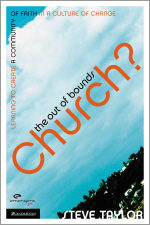
German translation of Out of Bounds Church?
There is a German translation (2 MB) of postcard 5: Spiritual Tourism that has just been placed on the web. (It is available from here).
 I was just so pleased when Daniel emailed to say he had made the translation and could he have permission to publish it. And now Zondervan have kindly said yes.
So, for those who speak German, you might like to follow Daniel’s recommendation: “I recommend the chapter to you most warmly!”
Tuesday, October 10, 2006
focus focus focus
The church ministry leaders and board are away on a retreat this weekend. We have read Ephesians 4:2-13 in community, applied it to Opawa and now a group are meeting to help ideas and dreams gain wheels. I’ve plastered these visuals (hat tip to MarkO) all over our working materials.


Sunday, October 08, 2006
da vinci code resources
I was asked to preach on the Da Vinci Code and the Bible at a local Anglican church this morning. I looked at how we can understand Scripture as inspired, and finished with some Winnie the Pooh and Piglet theology, as an example of the understanding of Scripture as the inspired word of God in community. It was a lot of fun. For those interested in the sermon download here
More resources:
Here is another sermon: Decoding Da Vinci – which explores 3 fictions and 2 facts about the movie.
Here is yet another sermon: Something about Mary – which explores the place of Mary and women in the Christian tradition.
Here is my film review of the movie.
Saturday, October 07, 2006
Tutorial Reading for Gospel in a Post-Christian Society
A Generous Orthodoxy chapters 10 and 12.
ANKC Ch 7 might also be useful revision, but is optional
Come as your favourite Christian stereotype.
what is church
After almost 3 years at Opawa Baptist I finally found some time to put up some posters. Here is my favourite, a mix of advertising poster and a quote that for me sums up a Biblical ecclesiology.

“The story of Acts is the story of a community inspired to make a continual series of creative experiments by the Pentecostal Spirit.” Quote by Fison in Fire Upon the Earth, 79.
Any chance of these being used as criteria for evaluation of emerging churches:
1. Where are the Biblical narratives shaping the journey of the church?
2. How much is the future the participatory work of a community?
3. Where are the signs of creative and innovative partnership with the Spirit?
See also my recent post on emerging church is local church.
Friday, October 06, 2006
I disagree with half of what you say
This is one of the best conversation starters I’ve ever come across. I often have strangers email wanting to see me. So I met up with one yesterday and this was one of the opening lines:
I read your blog and I disagree with half of what you say.
I never got told which half! And this person has never availed themselves of my comments. A silent dissenter, never allowing me the opportunity to grow! But it turned into a very stimulating conversation. I came away with 2 questions that I am enjoying pondering:
Here is the first one: We talked about the challenges that Christians face on campus. We wondered how local churches prepare their young people for work, and most especially for university?
So blog readers; what is your church doing to prepare your people for a tertiary study campus?
Thursday, October 05, 2006
emerging churches are local churches
“The people I talked to at [Jacobs Well] had never heard of Emergent or of McLaren.” Great quote from an excellent article in Christian Century about Jacobs Well, an emerging church in Kansas City.
It takes a good hard look at a local church; their love of arts and home grown music, their love of place and awareness of context, their breadth of ecumenical relationships and commitment to authenticity.
We need lots and lots of stories like this – stories of local churches doing local mission. That is emerging church. I contrast this with yet another email, sent to me overnight by an American fundamentalist, bagging some abstract category called “emerging church.”
What a waste of his time. “Emerging” will never be found in books or blogs or conferences. It is found as local Christians seek to Incarnate Christ in their local neighbourhoods.
Sunday, October 01, 2006
God in public space
I went down with Pete and Joyce Majendie to see Menetekel, an interactive large scale, public space art installation. The seeding idea is the story of King Belshazzars feast in the book of Daniel, and the mysterious wall writing. People are invited to text in messages, which are displayed, using laser technology, on the outside of public buildings.
The artist is Johannes Gees and it is part of SCAPE Biennial here in Christchurch (and well worth texting out).
It raises interesting questions about the use of public space. What could you write and not write? What is advertising? What is graffiti? Why would God speak in such an impersonal and abstract manner?
Pete and I were dreaming away. I wanted to project messages onto myself while I preach, like “rubbish,” while Pete wanted a 5 story building facade at Opawa. Nothing inside the building, just a big facade!
homegrown satisfaction
Every vegetable in last night’s dinner came homegrown from my garden. The vegetable filo pie that included 3 types of silver beet, carrots, broccoli, leek was basically,
delicious.
Friday, September 29, 2006
wanting to really get your teeth into the emerging and missional church
Looks like I am teaching 2 new papers around the area of emerging and missional church in 2007.
ONE: Critical missional issues: Emerging Church as part of Tyndale Graduate School Master of Theological Studies. Auckland, 11-13 April and 2-5 October. The course description is as follows: This course will explore critical issues in the missional church, with particular attention to the emerging church. Students will consider the emerging church in relation to themes of cultural analysis, practices, ecclesiological innovation and contemporary missiology. They will further consider major criticism of the emerging church in relation to the bible, doctrine and ecclesiology. By taking this case study approach to the emerging church, the paper will teach two theological skills. Firstly, that of reading a living theology; and the skills of being able to situate contemporary church practices within a multiple set of contexts. Secondly, that of faithful discernment; and the skills of being able to discern contemporary church practices in relation to faithfulness to the trajectories of Christianity.
TWO: Leadership in the Missional church. By taking this paper, students will learn to read a context, discern theological themes in lived experience, describe a missional project, appreciate missional literature and integrate it into church life today. The paper will be taught over a year, with a mix of on-line access and monthly coaching and is best suited to those in existing church ministry.
THREE: I am also pencilled in to teach an Introduction to the emerging church in Christchurch, May 4, 5 2007.
Should be a fun year.


 )
)