Saturday, June 29, 2019
the role of wiping noses and lactation in theology


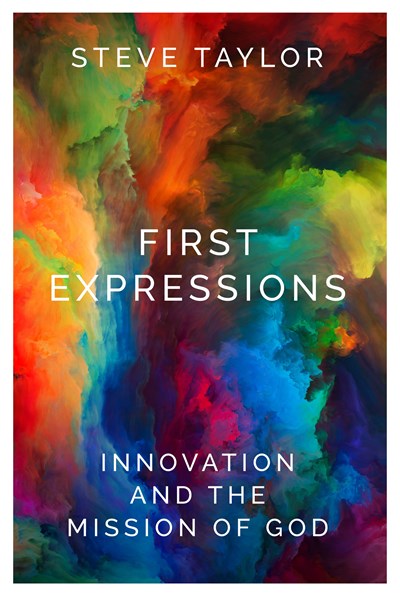
This is the second time I’ve read this fascinating book this year. The first time was during my Outside Study Leave, as I searched for ways to construct a methodology of the unique, a way by which theology could learn with and from empirical research. I found helpful the way that Soskice worked with the theology of Julian of Norwich, arguing that Julian was faithful to, yet offered a “fruitful” development of, the work of Augustine (126). Soskice drew out Julian’s “ingenuity as a theologian” in describing a theology of kinship (126). I was able to draw on Soskice on developing an ecclesiology of innovation, for my First Expressions: innovation and the mission of God book, due out with SCM in December 2019.
 This second time, I’m reading Soskice with a yellow highlighter because I am underlining all the domestic words. Words like –
pregnancy,
childbirth,
baby,
children,
toddlers,
infant,
family holidays,
making meals,
washing clothes,
wiping noses,
lactation
– all in Chapter 1.
It is rare to find such words in a theology text book. Janet Martin Soskice is Reader in Philosophical Theology at the University of Cambridge. It is rare to to find words like wiping noses and lactation in philosophical theology. So I’m fascinated by the role the domestic plays in her theology; the way she uses images of family life as a source of reason and what this might mean for theology.
As I read Janet Martin Soskice, I am reminded of the words of Anna Fisk (‘To Make, and Make Again’: Feminism, Craft and Spirituality, Feminist Theology 20(2) 160–174) and her argument that everyday acts of making in the ‘feminine’ sphere, have been neglected in mainstream theology. I also recall the words of Heather Walton, who notes recent moves within Feminist Practical Theology to prioritise the everyday in order to encourage serious theological reflection upon “the fabric of life” (Heather Walton, ‘Seeking Wisdom in Practical Theology’, Practical Theology, 7:1 (2014), pp. 5–18).
I wonder what it means for theology in general, and my theology in particular, to make the domestic an essential resource in faith seeking understanding. As Soskice writes: “Attending to the child is a work of imagination and moral effort … This is the work of the Spirit, this bodying forth of God in history – in our individual histories and in that of our world … under the attentive gaze of love” (32, 33, 34).
Such are my thoughts as I read with a yellow highlighter.
Thursday, June 27, 2019
Merata: How Mum Decolonised the Screen theological film review
Monthly I write a film review for Touchstone (the New Zealand Methodist magazine). Stretching back to 2005, some 140 plus films later, here is the review for June 2019
Merata: How Mum Decolonised the Screen
A film review by Rev Dr Steve Taylor
Merata Mita, Ngāti Pikiao and Ngāi Te Rangi, was a pioneering Māori filmmaker, the first Maori woman to solely write and direct a dramatic feature film. Her work included documentaries like Bastion Point: Day 507 (1980) and Patu! (1983), feature films like Mauri (1988) and music video Waka, for hip-hop artist Che Fu.
Merata became internationally respected as an indigenous film maker, teaching documentary film making at the University of Hawai’i-Manoa and recognized by the Sundance Film Festival’s Native Film Initiative.
Heperi Mita, Merata’s youngest son, born long after Bastion Point: Day 507 and Patu!, surprised by Merata’s sudden death aged 68, sets out to discover his mother. He begins by turning to the film archives at Ngā Taonga, spooling through the abundance of Merata’s film and television appearances. Having watched the past, Heperi then cleverly splices in the present, interviewing his siblings to gain their human story on his mothers cinematic past. Thus Merata becomes a film about a film, in which a film maker and her family is filmed by her family.
Merata: How Mum Decolonised the Screen is an uncovering of Merata’s work: located in her experience, of being Maori, raised in rural Maketu, a woman, a victim of domestic violence, a solo mother raising four children in urban Auckland. It is equally an affirmation of culture. For Merata, as Maori film maker, she is working in continuity with the carvings crafted by her grandfather for the wharenui. Both carving and film are image and story through which life speaks.
Decolonisation is related to the search for justice. Decolonisation pays attention not to individual acts of protest, but to the processes of liberation by which indigenous communities are freed from the colonial imposition of imperialism, patriarchy and racism. Decolonisation sounds academic but it is as simple as a Maori woman finding her voice, as tough as Merata turning a camera on the reality of Police brutality during the 1981 Springbook Tour.
Merata is a profoundly theological film, an indigenous meditation on resurrection. The first words we hear are theological, Heperi’s announcement that “A resurrection is taking place. Our hearts and spirit respond as the past lives again. She shows me things as I hear her again.”
At one level, it introduces Heperi’s spooling through the archives.
At another level, it affirms that the past brings revelation, ushering in a search for justice in which a whole person transformation is possible.
At times Merata felt a bit like Jesus in the garden, calling Mary Magdalene to declare to the disciples that they are now part of a new family, gathered around ‘my God and your God’ (John 20.17). These five words spoken by Mary Magdalene are an echo of the words spoken by Ruth, a migrant woman, to Naomi, a solo mother, as together they seek to find a community in which they can be fed amid the poverty of a famine.
In these five words, the resurrection becomes a call to decolonise. All those who respond to ‘my God and your God’ are finding a community in which women have voice and the poor are given daily bread. Which leaves the church – having heard ‘my God and your God’ – with the question: what might we need to decolonise?
Sunday, June 16, 2019
Indigenous home-making as public theology – Wiremu Tamihana
 Happy Steve, stoked to have a book chapter published on the life of Maori leader, Wiremu Tamihana, in which I argue he’s an extraordinary public theologian.
The theme of home yields rich insights when it is examined through diverse cultural lens, in this case in relation to New Zealand history. Methodologically, an approach of biography as missiology has been used in researching the life of Maori leader, Wiremu Tamihana. In word and deed his reimagining of home has been outlined: in planting an alternative indigenous community, in leadership reorganisation and in public speechmaking as a set of ethical acts shaped by a christological ethic. Translation theory has clarified Tamihana’s reading of Scripture, including the reversing of what is foreign and domestic, and a household code shaped by Christology. What Wiremu Tamihana offers is a theology of homemaking as a public theology of empire resistance. His theology offers significant resources for those seeking to reimagine home in response to dominant cultures, in encouraging a Christology interwoven with ethics and the use of place-based readings to reverse categories of what is foreign and domestic. It suggests that creative responses to the empire can emerge through the ongoing renegotiation that happens as people move in the tides of history. A flexible justice-making is encouraged, one that uses the translations from the empire in resistance against the empire.
This is part of research begun in 2017, which has resulted in 3 conference papers, 1 (unsuccessful) research bid, 2 keynotes, 2 sermons, 2 short publications for the Presbyterian Church and now this longer academic piece. It is published as one of the conference papers from Australian Association of Mission Studies 2017. It was nice to slip a New Zealand indigenous story into the mix!
Details: “Indigenous home-making as public theology in the words and deeds of Maori leader, Wiremu Tamihana,” Re-imagining Home: Understanding, Reconciling and Engaging with God’s stories together, edited by Darren Cronshaw, Rosemary Dewerse and Darryl Jackson, Morling Press, 2019, 188-207.
Available from Morling Press. Thanks to Darren Cronshaw, Rosemary Dewerse and Darryl Jackson for their editorial skill, Morling and Whitley for their hospitable approach to scholars and scholarship.
Thursday, June 13, 2019
Remembering death live: an analysis of live music concerts postponed after terror attacks
Abstract proposal in response to call for papers on Death and Event: Death, Remembrance, Memorialisation and the Evental.
Remembering death live: an analysis of live music concerts postponed after terror attacks
Dr Steve Taylor
Terror disrupts the event. A tragic dimension of contemporary life involves suicide bombings that fatally disrupt live music concerts, including Paris in November 2015 and Manchester in May 2017.
While terror disrupts the event, sometimes the event experiences a resurrection. Following the bombings in Paris and Manchester, artists U2 and Ariana Grande returned in the weeks following to perform live music concerts. As entertainers, skilled in the enacting of large-scale public events, these concerts invite examination. How was terror narrated and death remembered amid life at these postponed events?
Sociologist Paul Connerton (1989) has argued for a collective autobiography in which societies make sense of the past through a bodily social memory. Taylor (2014) has applied Connerton to U2 concerts, while Taylor and Boase (2013) have considered the memorialisation of death in live entertainment. Building on these studies, the particularity of the relationship between terror and event requires analysis in order to further theorise concerts as events of collective autobiography.
The concerts of U2 and Ariana Grande will be examined, analysing video footage (Kara, 2015) of the concerts that exist in the public domain. A methodological lens is provided through Connertons’ distinction between inscription and incorporation, between what might be expected based on the standardization inherent in album production and what was performed live. This approach pays attention to lyrical changes, gestures and spoken segue, seeking the variations through which the collective bodily memory of terror, trauma and death were re-presented. Particular attention will be paid to the juxtaposition between remembering death in the context of live entertainment and how difference might be theorised given the shared experiences of communal grief and branded assertions of “One Love”.
This paper will be of value to those seeking to theorise the evental and understand meaning making in popular culture. It will also be of practical benefit to those who might sadly be required to create further public events of remembrance in the wake of terror.
Connerton, Paul. How Societies Remember
Taylor, Steve and Liz Boase. “Public Lament,” Spiritual Complaint: The Theology and Practice of Lament
Taylor, Steve. “Let “us” in the sound: the transformative elements in U2’s live concert experience,” U2 Above, Across, and Beyond: Interdisciplinary Assessments
Kara, Helen. Creative research methods in the social sciences: A Practical Guide
Monday, May 27, 2019
last days
I’m into the last days of outside study leave.

The first 1/3 of the outside study leave followed a daily pattern
- create – write words on First expressions book project
- make – do something embodied
- complete – work on ‘must get around to it’ journal articles and writing pieces
- deepen – reading or doing data analysis
- connect – attend external random lecture, write a blog post
This pattern held well for the first month. It gave balance. There was joy and satisfaction. I walked lots. I submitted two written pieces for PCANZ publications, two scholarly articles to international journal articles, completed final edits on another three scholarly pieces. I learnt to knit. I got out the highlighters and colour coded data from the Craftivist project.
The second 1/3 involved some external travel. I presented at a teaching and learning conference in Sydney and took the weekend to catch up with good friends. This was also part of complete – working the Thornton Blair Research data into a 20 minute presentation and a journal article. I went on haerenga (journey) engaging with Maori perspectives on their experience of the New Zealand Wars and re-connecting with the Presbyterian church marae at Ohope. This was part of deepen and of make – to undertake place-based learning and be on the land and among people.
The third 1/3 has been trying to complete the First Expressions book project. For the last month I’ve been working all day, most days. I had 5 major chapters and so many days left. Working on the 80/20 rule I have allocated the days and made a timetable.

There is some flexibility – last week I got stuck into the Mission moves chapter rather than the apostolic chapter. This is the not fun part. There is only one task and the deadline is hard. I have a book contract in which I promised a book in May 2019. I can’t hold a 90,000 word book project in my head when I return to work. I didn’t get the book finished in my 2013 sabbatical and made little progress when I returned to work in 2014. So this last third is just solid writing. If I do well, I might shout myself a little walk. But basically it is write and edit 8 plus hours a day.
In some ways it is a shame to be ending with this sort of pressure. At the same time, I chose to play (make, deepen, connect) at the start of the outside study leave. And there will be huge relief if I can pull it off. I currently have 8 complete chapters, 2 complete chapters with a few holes to fill and 2 chapters rough full drafts but needing a final edit. On my good days, I think I will get there.
When I get tired, I imagine the feeling of returning the 40 borrowed books to the University library, of filing away the rough notes and of clearing the side desk of piles of draft chapters. The project is currently 90,000 words – that’s a lot of words – and I imagine holding the book.
Each week of the sabbatical, I randomly choose a Maori word from the Ira pack. This week – this last days week – the word is hūmārie – gentleness. May it be so.
Sunday, May 26, 2019
Craftivism as a missiology of making abstract for Ecclesiology and Ethnography Conference 2019
I’m hoping to be in the north of England for a few weeks in September. I have 2 weeks of sabbatical I need to take. I am hoping to link that with being able to participate in the Ecclesiology and Ethnography Conference 2019 at Durham. I’ve just submitted a paper proposal. This proposal is a development of the paper I’ve had accepted for ANZATS in Auckland in July 2019, as a result of some of the data analysis I’ve done during my sabbatical.

Where #christmasangels tread: Craftivism as a missiology of making
The church is formed by witness. A contemporary ecclesial embodiment of witness is craftivism, which combines craft and activism. One example is the Christmas angels project, in which local churches are encouraged to knit Christmas Angels and yarnbomb their surrounding neighbourhoods. This paper examines this embodiment of craftivism as a fresh expression of mission.
Given that Christmas angels were labelled with a twitter hashtag, technology was utilised to access the tweets as empirical data in order to analyse the experiences of those who received this particular form of Christian witness. Over 1,100 “#christmasangel” tweets were extracted and examined. Geographic mapping suggests that Christmas angels have taken flight over England. Content analysis reveals a dominant theme of a found theology, in which angels are experienced as surprising gift. Consistent with the themes of Advent, this embodiment of craftivism was received with joy, experienced as place-based and understood in the context of love and community connection.
A Christology of making will be developed, reading the layers of participative making in dialogue with David Kelsey’s theological anthropology. The research has relevance, first, exploring the use of twitter in empirical ecclesial research; second, offering a practical theology of making; third, challenging missiology in ‘making’ a domestic turn.
Let’s see what happens. In the meantime, back to learning to knit 🙂
Monday, May 20, 2019
Daffodils film review: crafting a Kiwi lectionary
Monthly I write a film review for Touchstone (the New Zealand Methodist magazine). Stretching back to 2005, some 140 plus films later, here is the review for May 2019.
Daffodils
A film review by Rev Dr Steve Taylor
Daffodils packs an emotional punch, a Kiwi soundtrack in which the songs actually silence the words that sustain relationships. Daffodils began life as a play, created by Rochelle Bright in 2015. Returning from New York because she wanted to tell New Zealand stories, she starts close to home with the tale of her own parents falling in, then out, of love.
The plot is artfully constructed. Kiwi songs – Bic Runga’s Drive, the Mutton Birds’s Anchor Me, Dave Dobbyn’s Language and Crowded House’s Fall At Your Feet – are like pearls, each sung by Maisie (played by Kimbra) and her band in front of adoring fans. As Maisie polishes these well-known Kiwi pearls, her estranged father Eric (played by George Mason), dies alone in a hospital bed.
2019 is a year for movie musicals. Daffodils shows New Zealand can foot it with the likes of Bohemian Rhapsody and A Star is Born. Songs carry emotion and narrate life.
Individual pearls shine brighter when strung together. Continuity comes in Daffodils with the story of Eric, meeting Rose beside the daffodils in Hamilton Gardens. We watch them fall in love, get married and have children. Yet as they mature, they can’t shake the immaturity of the lies they let themselves believe about each other’s lives.
One way to understand Daffodils is to turn academic. Tom Beaudoin, musician and theologian, touts contemporary popular culture as the amniotic fluid in which young adults become familiar with themselves (Virtual Faith : The Irreverent Spiritual Quest of Generation X
What is significant for church readers is that the Daffodils’ songbook comes devoid of religious hymns. The tunes from bygone Britain no longer evoke memory or stir emotion. Rose and Eric get married in a church. But when relationships get rocky, the hymns of the wedding and the rote learned vows have no reconciling power.
Yet neither do the Kiwi pearls. This is the ironic sadness of Daffodils. Kiwis might have a unique pop culture soundtrack, but the songs as sung actually silence the language needed to sustain relationships.
For preachers wanting to connect with a Kiwi culture, why not ditch the hymns. Instead take the songs from Daffodils and link them with a Gospel story:
• Bic Runga’s Drive with Mary’s haste to connect with Elizabeth in Luke 1:39-45;
• Dave Dobbyn’s Language in conversation with Jesus Heals a Deaf and Mute Man in Mark 7:31–37;
• Crowded House’s Fall At Your Feet in harmony with the events of the Garden of Gethsemane in Matthew 26:36-46;
• The Mutton Birds Anchor Me as a tune alongside Jesus’ reinstating of Peter in John 21:15-19.
In each of these Gospel stories people are living with and in silence. Yet through Divine encounter there are ways to face the lies they’ve let themselves believe.
Friday, May 03, 2019
good to go – Theological Education as Development in Vanuatu
You are ‘good to go’ said the editors.

Forthcoming in Sites: a journal of social anthropology and cultural studies vol 16, issue 1, (August 2019). As I submitted it today, I noted the partnerships that made this possible, particularly staff at the Archives Research Centre of the Presbyterian Church of Aotearoa New Zealand. My thanks also to Phil King, Talua College and Presbyterian Church of Vanuatu, along with the dedication and energy of the editors, Philip Fountain and Geoff Troughton, from Victoria University, Wellington.
THEOLOGICAL EDUCATION AS DEVELOPMENT IN VANUATU: ‘WAYFARING’ AND THE TALUA MINISTRY TRAINING CENTRE
Steve Taylor and Phil King
Abstract
Education is essential to development. In Pacific cultures, in which the church is a significant presence, theological education can empower agency and offer analytical frames for social critique. Equally, theological education can reinforce hierarchies and dominant social narratives. This paper provides an account of Presbyterian theological education in Vanuatu. Applying an educative capability approach to a theological education taxonomy proposed by Charles Forman brings into focus the interplay between economics, context, and sustainability as mutual challenges for both development and theological education. However Forman’s model does not accurately reflect the realities of Vanuatu. An alternative frame is proposed, that of wayfaring, in which knowledge-exchange is framed as circulating movements. Wayfaring allows theological education to be imagined as a development actor that affirms local agency, values networks, and subverts centralising models. This alternative model provides a way to envisage theological education, both historically in Vanuatu and into an increasingly networked future, as an actor in Pacific development.
Key words: Vanuatu, theological education, wayfaring, Christianity, development
Thursday, May 02, 2019
change of sabbatical pace courtesy of land owners
 A change of sabbatical pace for the next week. After an intense period of writing, a week of indigenous learning, courtesy of land owners.
First, a weekend haerenga (journey) with Karuwha Trust. A chance to learn more about the Kingitanga and to greet Ngati hau. I did a lot of research through 2017 in relation to Wiremu Tamehana, the Kingmaker and chief of Ngati hau. This resulted in 2017 in 1 video, 4 publications, 2 conference papers and 3 talks; along with a further conference paper in 2018 (Translation and Transculturation in indigenous resistance: the use of Christian Scripture in the speeches of Wiremu Tamihana). Throughout 2018 I sought to establish contact with Tamehana’s descendants and one of my sabbatical aims was to walk his country. The weekend haeranga is a chance to do that.
Second, a visit to Te Aka Puaho and Te Maungarongo Marae. Outside study leave gives me a chance to accept a longstanding invitation to visit Maungapohatu and honour Tuhoe and Rua Kenana. I’mj looking forward to time and to hear the stories of injustice and ongoing search for justice, with the 2017 pardon of Rua Kenana.
I feel very privileged to be able to participate in these ways, as part of doing theology on the land of another.

Monday, April 29, 2019
Mission Studies journal acceptance
Stoked to hear that my journal article – Cultural hybridity in conversion: an examination of “Hapkas” Christology as resistance and innovation in Drusilla Modjeska’s The Mountain – has been accepted (minor revisions) for Mission Studies. Mission Studies is the Journal of the International Association for Mission Studies and aims to be a forum for the scholarly study of Christian witness and its impact in the world. The article should be published at the end of the year.
It’s the 1st visible written result of my Outside Study Leave Project. It’s also the 3rd journal article I’ve had accepted this year – all focused on Oceania.
The acceptance came with some really lovely reviewer (2) comments – “an excellent article – well framed, written and a pleasure to read. … one of the best articles I have read in a while … Well done!”
Getting this published is a bit of a story of persistence. This particular piece of work began in August 2016 as a conference paper in Korea. It was further helped by the chance to present in March 2017 at a conference in Auckland. I then plugged away all through the rest of 2017 writing it up. Finally I submitted it to a journal in November 2017. 4 days after I submitted, the editor of the journal emailed saying the journal was closing.
They were no longer taking submissions!
I was gutted. The focus of this article – PNG – is a non-Western nation and it makes it fairly tricky to get something published. The editor agreed it was exactly the type of article the journal existed for. But he had no choice. The University was making funding decisions and cutting the journal was part of their re-alignment of resourcing.
Throughout 2018 I lacked the mental space to do anything. But I’d done so much work already. So outside study leave this year finally gave me the mental space. Here’s what I did.
- I identified another likely journal. I did this by going back to my two conference presentations and asking – who is talking about these things?
- I cleared the desk and carefully read Pat Thomson’s internationalising a journal article
- I settled on her question “what bigger international concern, debate, issue, question or an interest does my paper speak to?”; along with “How might my results inform the wider international conversation in the field?”
- I read through the recent titles and abstracts of the journal I was targeting, reflecting on the international concern that my paper spoke to
- I added in a new section to my paper (talking about conversion, culture and revelation)
- I then lightly edited the entire article, looking for ways to connect my article with this theme as outlined in the new section.
- This included a restructure, in which I introduced a local/regional/global frame to help address the ‘How might my results inform the wider international conversation in the field’ question. It also was a way of seeking to keep the particularity (PNG), engage with the region (Oceania) and speak to the international debate
- I rewrote the conclusion, again with a particular focus on engaging with the new section.
- This then required a re-worked introduction, followed by the abstract and title (note the use of culture and conversion)
- Finally, I did the detail work of changing all the references to conform to a different journal article
In the end, there were 1200 new words, over a number of afternoons. Thankfully the new journal accepted longer articles (up to 10,000 words – with the new words I had about 30 spare!)! And I was then intrigued to see the reviewer comment well framed. I think this is a consequence of the work I did in order to internationalise.
 Which means that PNG – my birth country – will be talked about in an international forum for the scholarly study of Christian witness! (Steve quietly hums the PNG national anthem …)
Anyhow, here is the abstract – This essay analyses Christian witness, applying a post-colonial lens to Drusilla Modjeska’s The Mountain
The other reason I’m really stoked is that this article was testing the waters. This is evident in one of the comments from Reviewer 1 – I am intrigued by the notion of “hapkas” christology and hope the author has a chance to expand on this analysis in subsequent research. Landing this article was for me part of my ongoing research plan. It was a stepping stone. It was clearing the ground, gaining scholarly approval, in order to take a further step in researching hybridity and genealogy in Christology.
Thursday, April 18, 2019
craftivist research: coding round 1
So I am coding. As introduced earlier this week, I have 1100 individual tweets; 22 pages of data. These have been printed on A3 sheets, leaving me with margins to scrawl notes as I go.
 Over 3 afternoons this week, when I need a break from writing on the First Expressions book project, I have laid out the highlighters – orange, yellow, green, pink. I have added the pens – red and black – and a pencil. Potentially 7 different categories.
I have then simply read each tweet, word by word, looking for themes. When I think there is a theme I write it down on a blank A3 sheet of paper. Then whenever I see that theme in the data, I use that colour highlighter. For example, pink is warm comments – words like lovely. I mindmap related words. Cute is similar to lovely, as is beautiful, so I add that to the related words and in pink I underline lovely/cute/beautiful whenever they appear.
This is a first read. I’m trying to get a feel for the data, to notice trends and seek patterns. There will be themes that will need to be merged, or themes that will probably appear on a subsequent read. I realise that my data set is corrupted. the hashtag Xmasangel has pulled in other data. This is fine, I can cull the database before I read again.
As I go, I make notes of impressions. This will need to be verified, by numbers, by assembling quotes. But I am getting a feel for the data.
There will be a second read and perhaps a third round. I have the data as a master, so will photocopy off another A3 sheet and using the codes I already have, I will start again from the top and read through.
This is intuitive. I am wanting to be able to stand in front of a group of peers and be able to say – these are the main themes in this data – and here is the evidence to explain and support these main themes.
My initial impressions – in no particular order – are as follows,
- the overwhelming sense of joy and positivity generated by Christmas Angels. In the 1,100 tweets, there is only one that might be read as negative. The word “lovely” and “thanks” were dominant
- the place-based nature of this community engagement. Invariably tweets named locations. These could be towns, streets, park benches, homes, train stations etc. There is a strong sense of connection with place being evoked by the angels. The angelic goodwill is not being heard in Bethlehem but in local communities and closes, streets and high streets shops, in contemporary England.
- the layers of participation, both for senders and receivers. Senders source materials, make, tag, box, commission, deliver and tweet. Receivers find, carry, display, home and tweet. Indeed it could be argued that there is a making of angels as senders and a making of homes as receivers. Making is an essential part of this mission and in making, connections are deepened and meaning is being made.
- the way the project built connections, particularly within households and between church and community.
These four themes are articulated in one tweet: “What a lovely idea. Daughter found this for me now taking pride of place on tree.” There is the positivity of response (“lovely”), the place-based nature (on tree), the layers of making (participation by the receiver of finding, homing, tweeting) and the building of connections (between daughter and parent).
I’m in a really happy place doing this. I love being curious about the world, in particular about mission and how fresh expressions of mission are received. I’m also curious about the domestic and gendered, the place of making in knowing, what is and is not communicated in craft and tactility.
And a reminder: of the craftivism Christmas angels research project (full outline here).
Background: I am interested in fresh expressions of Christian witness. One recent fresh expression I’ve become aware of is Christmas angels. It is a form of How to Be a Craftivist: The Art of Gentle Protest
To address this question presented some research challenges. I live in another country, it is not currently Christmas and I don’t want to look like a stalker, chasing people who find Christmas angels to ask for an interview. Helen Kara’s Creative Research Methods in the Social Sciences: A Practical Guide
Research method: To address this question, I am experimenting with analysing social media. Each angel was sent out with a hashtag #Xmasangels. This meant that people who received the angels could interact and in ways that are in the public domain. This provides a way to analyse recipent response – How people responded to the angels? What meanings did they make? With help from a colleague, I have extracted over 1,1000 #Xmasangel hashtag tweets. I am now conducting thematic analysis. This will be brought into dialogue with the literature, particularly a theology of making and the place of domesticity and craft in contemporary cultures.
Outcomes? Action-reflection on mission action, research-informed teaching (at KCML and as I am invited by churches to talk about fresh expressions of mission), presentation of data at academic conferences, writing for industry (Candour, Spanz) and an academic journal, possible engagement with Christmas angel organisors.
Monday, April 15, 2019
craftivism research: recipient responses
I’m around the halfway mark of the sabbatical. After 6 weeks, I’ve completed some major tasks
- 10,000 word journal article on mission submitted
- 6,000 word journal article on life-long learning submitted
- article to SPANZ completed
- article to Candour after Christchurch mosque murders on Spirit in trauma completed
- Sydney Learning and Teaching conference presentation completed (feedback here)
Plus I have completed around 22,000 new words on the First Expressions book project. I’m around 7,000 words ahead of schedule and I’m moving into the editing stage. So I need to adjust the shape of my sabbatical.
It’s time for a more playful task alongside the editing tasks and as a way of celebrating after the completing tasks. I will continue to write on the First Expressions book project in the morning but I’m picking up a more creative project in the afternoons.
Background: I am interested in fresh expressions of Christian witness. One recent fresh expression I’ve become aware of is Christmas angels. It is a form of How to Be a Craftivist: The Art of Gentle Protest
To address this question presented some research challenges. I live in another country, it is not currently Christmas and I don’t want to look like a stalker, chasing people who find Christmas angels to ask for an interview. Helen Kara’s Creative Research Methods in the Social Sciences: A Practical Guide
Research method: To address this question, I am experimenting with analysing social media. Each angel was sent out with a hashtag #Xmasangels. This meant that people who received the angels could interact and in ways that are in the public domain. This provides a way to analyse recipent response – How people responded to the angels? What meanings did they make? With help from a colleague, I have extracted over 1,1000 #Xmasangel hashtag tweets. I am now conducting thematic analysis. This is fancy words for printing them out – all 22 pages – on A3 sheets of paper, finding highlighters and coloured pens and reading every tweet, looking for themes.
Research methodology: As another part of the research, I am also learning to knit. I figure that it is one thing to engage #Xmasangels intellectually. It is quite another to engage by actually making Christmas angels. So I have started to learn to knit. I am keeping a diary of my experiences. It is fascinating to be learning to craft as I am researching craft – a tactile embodying of research. (For those who keep watch on how KCML staff spend their time, rest assured I am knitting after hours and not in work hours).

What will be the outcomes? I think knowing how people respond to mission is important in guiding future mission action. It is the basis of practical theology and action-reflection modes of learning. I hope to include the results as I teach on mission at KCML and as I continue to be invited by churches to talk about fresh expressions of mission. I hope to present the data to at least one, ideally two academic conferences, as part of reflecting on mission. I hope to write up the results, so that those who don’t hear me talk can still engage with the data. This will include Candour, Spanz and an academic journal. I will also send the results to the Christmas angel organisors. They might want to engage with me and I’m happy to do that. I hope to learn to knit. Above all, I hope to continue to be curious about the world around me and especially fresh expressions of Christian witness.
Over the next few days, I will share my initial impressions of the first read (fancy word for colour coding with highlighters) of the data. While is it very early days, I am already struck by some fascinating recipient responses.
Sunday, April 14, 2019
Religious liberty and the curious case of Israel Folau
I write a column for Zadok, an Australian print publication, every quarter. It is a print based publication which they let me share on my blog, to resource more widely and generally. After recent events, my column for Winter 2018, seems strangely relevant.
Religious liberty and the curious case of Israel Folau
Steve Taylor
John Bunyan, Sarah* a Biblical studies scholar and Israel Folau meet in an English pub. Folau is carrying a folder. Marked secret, it contains back line moves for the upcoming rugby international at Twickenham. Bunyan is carrying an early draft of Pilgrim’s Progress, what will become one of the most significant works of religious English literature. Sarah is carrying a well-thumbed Greek New Testament and an article by Tuiloma Lina Samu, entitled ‘Dear Israel Folau – your unchristian comments hurt young, vulnerable Pasifika’.
Over a drink, lemonade for all, they share news.
John Bunyan shares his fate. He is about to be imprisoned for his religious beliefs, for preaching without permission from the established church.
Folau nods at the suggestion of religious persecution. He is also in trouble for expressing belief. It began with a post on social media a few days earlier about gay people being hell-bound unless they repent. Folau has an employer. That employer has corporate sponsors and they have called for inclusion. How does diversity and tolerance mesh with right to speak?
Does the Bible have an answer? Folau wonders.
Sarah opens her Bible and begins to share her research, which is analysing religious liberty in Biblical times. She points to Abraham, who recognises the divine names (El Elyon) used by indigenous people (Gen 14:18-20) and builds altars among already existing sacred trees (Gen 12:6-7; 13:18). Abrahams’ faith could live and yet recognise the liberty of other already existing beliefs. Then there is the book of Esther, in which God is never mentioned and yet faith is maintained by courageous individuals, including Esther, willing to marry a non-believer. So Christianity grows from people of faith living in diverse worlds.
The story of Esther and the mention of Haman’s gallows cast a shadow over Bunyan. Bunyan begins to name the friends he has lost, burnt at the stake. Their stories are told in the only book Bunyan will take with him to prison, Foxe’s Book of Martyrs. As a dissenter, Bunyan knows he will be denied a church burial. It is a future shame his family will bear, for when Bunyan, along with other well-known dissenting authors, like Daniel Defoe and William Blake, is buried outside the City of London, he is forever excluded from the embrace of the established church and civil society.
Folau shakes his head in disbelief. How does his social media experience compare with Bunyan’s eventual twelve years of imprisonment? Folau confesses he hasn’t read Daniel Defoe’s Robinson Crusoe. ‘But’, he grins, ‘I have heard Blake’s Jerusalem, ringing around Twickenham’ – a song silenced when Australia beat England at Twickenham in the 2015 Rugby World Cup. Bunyan, a rugby fanatic, feels the pain of what would be a 33-13 loss.
Sarah has a biblical question for Folau. In 1 Corinthians 6, a range of sins is mentioned. Why post about one sin, that of being gay, and not about theft or greed? What does Folau think of conservative New Testament scholars, like Gordon Fee and Ben Witherington, who stress that Paul is talking about behaviour, not orientation? And why focus on sin, when the verses that follow are about grace? 1 Corinthians 6 is a text marinated in grace and the joy of relationships restored. How can the grace of 1 Corinthians be communicated on social media? Sarah wonders.
Bunyan also has a question for Folau. He quotes Colossians 4:5: ‘Be wise in the way you act toward outsiders’. The letters of Paul and the New Testament are about the ‘constraints of context’ and the ‘amazing feat of ingenuity, improvisation, survival and creative living’ (Gorringe and Rowland). The early Church lived faith in situations in which their faith was a minority report and their beliefs were practised in everyday life rather than through seeking to change public law.
Folau picks up the newspaper and points out the headline: ‘Dear Israel Folau – your unchristian comments hurt young, vulnerable Pasifika’. He is aware of the high rates of suicide among Pacific Island youth, often linked to struggles over sexuality. Yet he still wants to be authentic, to share his faith.
Bunyan nods. Those are the very reasons he wrote Pilgrims Progress. To communicate his faith, he created a story. He jumped into an imaginary future, in which dissent does matter. It remains a vital Christian practice and an essential part of the flourishing of free societies. But the practice in Pilgrim’s Progress is focused internally, on the way that Pilgrim walked his journey. ‘Change yourself, and let your actions change the world’, Bunyan advises.
‘Closing time’, comes the call from behind the counter.
Last rounds make for last words. Sarah and John offer to pray for Folau: ‘God make your face shine upon your servant. Creator God, give words creative and wise toward all outsiders. Bless him and your church with the ingenuity to improvise in Australia today’.
‘And may England win’, Bunyan giggles.
* While there are many fine female Biblical studies postgraduate students who have studied at London Bible College, Sarah is a fictional figure. As is this encounter.
________________
The following items have been a resource:
Ben Witherington, Conflict and Community in Corinth: Socio-rhetorical Commentary on 1 and 2 Corinthians
Gordon Fee, The First Epistle to the Corinthians
Tim Gorringe and Christopher Rowland, ‘Practical Theology and the Common Good – Why the Bible is Essential,’ Practical Theology 9:2, 101-114.
Curtis Freeman, Undomesticated Dissent: Democracy and the Public Virtue of Religious Nonconformity
Tuesday, April 09, 2019
Feedback: unbounding theological education in the context of ministerial vocations
Friday I co-presented a research paper at the Sydney College of Divinity Learning and Teaching Theology Conference.
Graduate formation and life-long learning in the context of ministerial vocations
Proposal: That the theological college should partner with local church communities, unbounding learning to offer it in “communities of practice.”
Directly after the paper
- Can you give some examples of what it might look like to unbound theological education? (We had, so pointed to the two stories we had shared)
- What is the real issue? If the real issue is a crisis of faith in churches, then what role should theological education be expected to play?
- How would we assess our ‘graduate outcomes’? What type of processes could we use to ensure that unbounding theological education is forming people? (We pointed to the ways we are seeking to assess New Mission Seedlings over a 7 year period)
In further conversation over meals and coffee
- Do we have a business model? Have other theology providers tried what you are doing and can you learn from them?
- Being devils advocate – if you move theology toward the local church, might that dilute the quality of the education? What could be done to avoid the educational experience being “lowest common denominator ” shaped by a person who has not read or studied?
- We used a practical theology model as proposed by Mark Lau Branson. What we happen if we used the model by Richard Osmer in Practical Theology: An Introduction
? Osmer suggests four stages: describe – history – normative – strategic. In our presentation, we shared three stories to outline what this might look like, but it might be that using ‘strategic planning’ frameworks would be valuable if we had a governance board wanting to take a next step, wanting to unbound theological education more broadly across the church.
 ? Osmer suggests four stages: describe – history – normative – strategic. In our presentation, we shared three stories to outline what this might look like, but it might be that using ‘strategic planning’ frameworks would be valuable if we had a governance board wanting to take a next step, wanting to unbound theological education more broadly across the church.
Excellent questions, showing good engagement and helping us clarify work done and still needed.
We had arrived at the conference with a 2,000 word verbal presentation based on an already drafted 6,000 word journal article – in our back pocket, possibly ready to submit depending on feedback.
Our sense is that the above questions helpfully extend our work. They are important, yet they are practical – a strategic plan, assessment matrix, quality control, viable business plan. Rosemary and I discussed a next set of steps which involve
- submit the article we have drafted, pretty much as is
- develop the material further, with two purposes – a chapter for the conference book and a strategic plan presentation (if a governance group is interested). Development would include a different practical theology model (swapping Mark Lau Branson for Richard Osmer, Practical Theology: An Introduction
- These are two distinct pieces of work: drawing from the same data but are responding to the more practical interests of conference attendees, which are different from the journal article we are targetting.
So, all in all all, very useful exercise – forcing us to clarify two years of work, giving us generative feedback on next steps. Our thanks to Thornton Blair, who made it possible.


 )
)