Wednesday, January 29, 2014
Theological education in leadership formation
I’ve been asked to present at a colloquium in Melbourne in March. Titled Beyond Education: Exploring a Theology of the Church’s Theological Formation, the event is being sponsored by the Uniting Church’s Centre for Theology and Ministry and the University of Divinity. It involves scholars, church leaders and ministers, from diverse Christian traditions all picking away at a theology of theological education.
I’m one of 11 presenters and have been given the topic – Theological education in leadership formation. Here’s my 100 word abstract, due tomorrow:
This paper will interrogate the tagline of Uniting College for Leadership and Theology – learn! lead! live! – using the work of cultural theorist Mieke Bal in order to pay particular attention to the place of formation in a pluralistic world. It will explore the ethical implications inherent in notions of “founding texts” and “moments of meaning.” Some implications, for ministry practice (learn!), for ministry agents (lead!), for communities of faith (live!), will be outlined. The aim is a theology of ecclesial formation that might shift the conversation beyond modern dualities of head and heart, theory and practise, religious and secular, individual and communal.
Tuesday, January 28, 2014
After rain: art and a spirituality of encounter
Over the long weekend, hoping to escape work, I picked up William Trevor, After Rain: Stories
The most fascinating is titled After Rain. A young woman, nursing a heart broken by a love affair returns to a childhood holiday spot. With rain falling, she shelters in a church and is captivated by an artist’s rendering of The Annunciation.
She has not been in this church before, neither during her present visit nor in the past. Her parents didn’t bother much with churches.
Harriet becomes absorbed by the painting, by the colours, by the details she hasn’t noticed at first glance. It leads to change.
The rain has stopped when Harriet leaves the church, the air is fresher. Too slick and glib, to use her love affairs to restore her faith in love: that thought is there mysteriously. She has cheated in her love affairs: that comes from nowhere too. Harriet stands a moment longer, alone on the steps of the church, bewildered by this personal revelation, aware instinctively of its truth.
So, an uncertainty toward faith, but a move toward experience, toward truth, toward a changed experience in her world. It’s a turning point in the narrative, from which flows a healing, a restoration, a willingness to face life anew.
And a final sentence, in which the encounter with Annunciation is recalled: “the angel comes mysteriously also.” I took After Rain: Stories
Thursday, January 23, 2014
Jesus and popular culture
“the afterlife of the Bible has been infinitely more influential, in every way – theologically, politically, culturally, and aesthetically – than its ancient near-eastern prehistory.” (John Sawyer, 2004, 11)
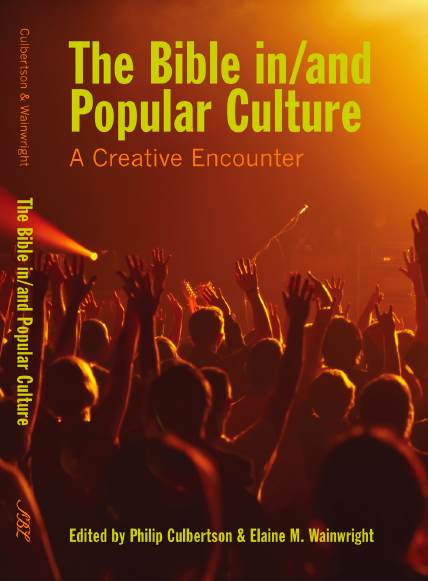
I spent yesterday at Flinders, teaching in the Bible and popular culture course. The topic was Jesus and popular culture. Dan W. Clanton Jr., in The Bible in/and Popular Culture: A Creative Encounter
So I explored Jesus and popular culture under 5 headings, using some of the following examples.
1 – Jesus then: in original context – in films like Jesus of Nazareth and Passion of Christ
2 – Jesus now: Christ figures – in places like Narnia Chronicles or Jesus of Montreal or Harry Potter. This draws in particular on Baugh, Imaging the Divine: Jesus and Christ-Figures in Film
3 – Jesus now: context – in which Jesus is placed in site specific contexts, like Manchester Passion or Baxter’s poem, The Maori Jesus.
4 – Jesus Elsewhere – in which Jesus is placed imaginatively in new world, like Deborah Bird Rose’s hearing of Ned Kelly being a Christ figure in some indigenous dream stories, or a comic series like Loaded, Jesus and Vampire gospels.
The term “elsewhere comes from DC Comic creator “heroes are taken from their usual settings and put into strange times and places – some that have existed, and others that can’t, couldn’t or shouldn’t exist. The result is stories that make characters who are as familiar as yesterday seem as fresh as tomorrow” (DC Comics Elseworlds)
5 – Jesus sarcastically – for example in Lamb: The Gospel According to Biff, Christ’s Childhood Pal
It is always a lot of work to bring a lecture together for the first time, but an enjoyable and rich experience.
Wednesday, January 22, 2014
pioneering workshop update
Yesterday I led a Pioneering workshop, a day in which I invited the Uniting church in South Australia to reflect on the processes of selection, discernment, training, placing of pioneers in our life.
The “agenda” was 3 questions
- what are we hearing?
- what is the biggest question?
- what could be a next step?
The day was based around hearing from pioneers – their experiences of our system. So we split into 3 groups and each group heard from 2 pioneers, who were asked in about 15 minutes to share their experience. Each group then shared back to main gathering “what are we hearing”? Ben Edson, from the UK was with us and as an external voice, from another church system, provided his feedback.
That was the morning. In the afternoon, I invited people back into the initial groups. Pioneers were still present. Each group was asked to clarify the biggest question needing to be asked as a result of the hearing – a question for selection, for discerning, for training, for placing. Plus an elephant in the room question.
That yielded 15 questions. Those were shared back in the main group and people then gathered around the question that most interested them, to try and come up with a next step. About 8 ideas emerged, all to be directed toward relevant bodies within the church. Some were affirmations, other were significant next steps. Some were quite radical and would lead to major change in our system.
Time will tell the results. But their was a really lovely feel in the room. And it was so lovely to be with 35 people, listening to pioneers share their story.
Monday, January 20, 2014
Ben Edson: hearing another story part 1
Ben Edson met with Pastoral Relations Committee (PRC) this morning, helping start a conversation that went for 2 hours. It was an excellent time together. In the Uniting Church, this body assists the whole church in regard to the pastoral and administrative oversight of all ministers and pastoral charges within the Presbytery. It has a role in Ordinations; Supervision of vacancies; Placement Processes of specified ministries and variations.
Ben was brought in to help think through discerning, selecting, training and placing “pioneers.” As Ben defined it, those with an imagination to see the world differently.
As a church, in 2010, the Uniting Church in South Australia said yes to training pioneers. Today was a time to take our pulse. Together we talked about our progress, and lack of, since then. We identified some barriers that are holding us back. We heard, through Ben, from another church, the Anglican church in the UK, regarding how they select and train.
It is one thing to say yes to a change. It is quite another to do the work of shaping a system, the habits and culture of an institution, around that change. Today was, in my opinion, a very important next step in that process. We needed to say yes as a church in 2010. We needed time to experiment in the time since. We needed, today, to take time to reflect and to begin to ponder how, in ways true to being the Uniting Church, we can cultivate the systems, culture and habits that nurture and sustain those with imaginations to see the world differently. Ben did an excellent job of being passionate, grounded, well-prepared and challenging.
Ben Edson part 2 happens tonight – Monday, 7:30 pm at Citysoul, where Ben tells his story of planting Sanctus.
Ben Edson part 3 happens tomorrow, Tuesday, 9:30 am -3:45 pm when anyone interested (and so far we have 32 booked), will gather around our local pioneer stories. We will begin with 6 stories from individuals in South Australia who have come into our system with a pioneer dream and hear their experiences. From that, we will ask what we are hearing and what might be the next steps as a result. I’m hoping that together Part 1 and Part 3 will be important steps in the ongoing change processes, of the walk from vision to reality, from ideal to habit.
Friday, January 17, 2014
fresh expressions impact in UK
Overnight, research was released on the impact of fresh expressions in the UK. The research was designed to move from anecdote to systematic data and involved surveying 10 Dioceses in England. The results are so encouraging, with over 500 fresh expressions planted, numbering over 20,000 people, of whom 40% have no previous church background and 35% are people who used to belong to church. I hope to reflect more on the data in the coming days, but in the meantime, here is the summary (click to enlarge).

The timing is great, because here in Adelaide, through Uniting College, there are a number of training and resourcing opportunities in this area for those in Australia wanting to know more.
Stories of mission – Monday, 20 January, from 7:30 pm, at City Soul, Ben Edson is sharing his fresh expressions story, of pioneering ministry, among young adults, in city centre Manchester (more here).
Pioneering workshop – Tuesday 21 January, from 9:30 am, at Uniting College, a day to gather around pioneer training stories and reflect on what we’re learning for selection, training, placement (more here).
Pioneer training – a week long intensive with Dave Male and local stories, March 17-21, at Uniting College
Evangelism, conversion and the mission of God – a week long intensive with John and Olive Drane, March 31-April 4, at Uniting College, sharing place of faith sharing today.
All of these are chances for us in Australia to contextualise, grow and learn.
Wednesday, January 15, 2014
the ethics of education and ministry formation
Currently I’m team teaching a summer school topic (Bible and Culture) at Flinders University. It’s the first time in years that we as Adelaide College of Divinity/Uniting College have been able to teach actually on campus at Flinders. It’s a new topic and it’s been great to see Flinders get excited and in behind it.
Of the 17 students enrolled, at least 13 are non-Theology students. Which makes for a very different teaching experience. I’ve heard comments like “Who is Jacob?” when explore the live performances of Bullet the Blue Sky. Or “Did Jesus, if he lived, have long hair? Cos all the pictures say he has.”
In other words, presume nothing.
Yesterday, in preparing for class, I was reading Mieke Bal and her introduction in Anti-Covenant: Counter-Reading Women’s Lives in the Hebrew Bible (Library Hebrew Bible/Old Testament Studies)
Her phrase “founding texts” has stayed with me. Being plural, it suggests other “founding texts.” Obviously other religions have other founding texts – Koran, First Testament – being examples. Thinking about Western culture, it seems to me that nations have “founding texts” not necessarily explicit or cogent, but surely celebrated in events like Australia Day, Anzac Day, Remembrance Day. Equally Western individualism and consumerism are again “founding texts” for our culture.
Bal then argues that the “text is one thing … its meaning is quite a different matter. Meaning … is a property of the act of reading.” (12-13) This then, can be applied to all texts, including all founding texts. So this brings into focus the role of the reader and the audience, who create meanings based on their prior experiences, values and attitudes. (Yes these are shaped by the founding texts, but they still exist separately, individually from the actual texts). She suggests that meaning is dynamic, a process, expressed in the phrase “moments of meaning”, present in both the text as a provider of meaning and the reader reading.
Further, Bal notes that rather than fall into a subjective, all readings are equal, or a imperialist, my reading is better, there still remains ways to question, and critique, ours and others meanings (“readings, without positivistic claims to truth.” (16)). She calls this the “ethical responsibility” of reading, that we need to reflect on how we read, the meanings we create, and their impact on ourselves, others, the earth. Specifically, she refers to the methods we use to read, and the nature of our discourse. Thus “every scholar of texts is a reader in the first place. Acknowledging that status, and accounting for the underlying guiding conventions, is a primary ethical responsibility for all scholars.” (15)
What these ethics might be remains open to question, but for Bal, this need for ethical responsibility keeps alive scholarship and justice.
Finally, Bal suggests that this need for “ethical responsibility” is especially important in relation to founding texts. In other words preaching the Bible. Or how Australia Day is named and practised.
Which helps me make sense of Bible and culture, and, more big picture, the task of education and ministry formation. It is about helping people to read their founding stories ethically. To develop the ability to think about how they use the Bible and it’s impact on others. To consider the discourse we create as we tell the narratives of an Anzac Day or Australia Day. To ponder the effect of individualism on people and planet.
This applies equally to those who use the Bible or who read a pop cultural text. It allows a wide range of people to sit in a class together, becoming more respectful of how to read, methods for reading, the discourse generated.
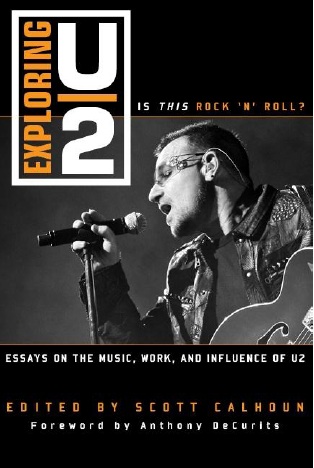
Such are my ponderings as I taught today, as we explored how U2’s live performance of Bullet the Blue Sky in Chicago was a reading of some founding stories – Jonny comes Marching home today, the UN Declaration of Human Rights, the Bible’s expression of desolation and lament.
Tuesday, January 14, 2014
hi ho (to watch Lost and Banksy and U2)
It’s my first day back at work today.
And I get to spend it at Flinders, talking about movies, street art and concerts – more specifically Lost, Banksy and U2. It is part of an innovation, in which we are using the (new) Summer School window at Flinders, to offer courses on campus that might be of wider public interest.
So we quietly worked away last year, putting a new topic – Bible and Culture – through academic processes at Flinders.
It seems to have worked, of the enrolments, 12 are non-Theology students, which means a wider public engagement (and a much more diverse and interesting class-room).
So today I spend the morning teaching, talking about the “and culture” part of a topic called Bible and culture. I’ll chat about how I became a film reviewer and the tools I use to do that year after year, from a theology slant. We’ll look at the rise of popular culture and ways to understand the ongoing presence of Christianity in culture.
All while watching Lost and looking at Bansky and considering Bono’s hand gestures!
Friday, January 03, 2014
one of New Zealand’s finest private walks
Team Taylor are having a very relaxing holiday. Lots of catching up with friends, reading, doing puzzles, reflecting.
New Years included the ceremonial burning – all the stuff from 2013 we wanted to leave behind – and then dancing in hope of a better 2014 with sparklers.
We’re about to head off on the Kaikoura Coast Track, 3 days of walking – off the Christmas dinner! Day pack only, (not a real walk! says one member of Team Taylor) but still a great chance to walk a great piece of Coast. Expecting seals and hoping for a whale sighting!
Monday, December 23, 2013
postgraduate affirmation with TEQSA accreditation
Big news for us at ACD/Uniting College: TEQSA (Tertiary Education Qualifications Standards Authority) in Australia has accredited our post-graduate courses for another 7 years, with no conditions attached.
That’s like getting A+ for an exam, the best result possible.
TEQSA ensure quality control for all universities and higher education providers in Australia. On a regular basis, they audit courses, asking for extensive evidence of what we are providing and the quality standards we are working toward.
This is followed by a site visit (ours was held in October) before review by an independent panel of academics from three other providers, before a report is provided to their Commission. It is an ardurous process, one that has taken a huge amount of time and energy over the 2013 year.
In making our application for ongoing accreditation, we also decided as a College to take the opportunity to innovate, proposing a number of significant changes. In no particular order
- we created a Graduate Diploma in Ministry, a one year (full-time equivalent) offering, including an entry point for those who have not done theology study before. This arose out of a desire to provide pathways for lay training, particularly those who want to focus on ministry in all spheres of life
- we standardised the former 1, 3 and 6 credit point structure of our post-graduate programmes into 4.5 credits. This makes our postgraduate offerings consistent with our undergraduate offerings and with Flinders University, allowing smoother cross-crediting pathways for students
- we clarified the research focus of our Doctor of Ministry. Recently TEQSA announced changes to ensure that professional doctorates across all education spheres maintain a research focus. They wanted to see a professional doctorate as a research degree of excellence. We welcomed these changes, as they fit with our ethos, a practical theology that seeks a rigour of action and theory reflection. While other Christian theology providers have responded by moving out of the DMin arena, we argued to TEQSA that our existing structures, with a few modifications and clarifications, met these research standards. We’re delighted that TEQSA agree with us and that we can continue to offer a DMin with a high quality research focus on ministry practice
- at the same time, we wanted to maintain and underline our collegial approach to post-graduate ministry. The student working alone on an extended project is in sharp contrast to the realities of ministry, which require peer learning. So in making our application to TEQSA, we proposed a pathway which will ensure all our post-graduate (Diploma, Master and Doctor) form a regular peer learning community, in which they gain encouragement and peer review. We believe this will lift standards, enhance the experience of participation in a learning community, in a way consistent with the collegial nature of ministry. In other words, degrees to serve the church in ministry and mission, through high quality, creatively rigorous practical theology.
The response by TEQSA – 7 years accreditation and no conditions – we take as a huge endorsement of our direction, our standards and the research community with the focus on a high quality practical theology we are creating.
And a great Christmas present to ACD, Uniting College and our post-graduate community.
Saturday, December 21, 2013
An excellent writing week
I’ve had an excellent writing week, holed up in our shack/bach, no wireless, a flock of black swans for company and inspiration.
I’ve got my head back into the emerging 10 years on research project, which I’ve not been able to engage since Dad died. I’ve written three frames for analysing various aspects of the data. I’ve now got four almost complete chapters, with good work on another three. I’ve now written 40,000 words in relation to the 20 UK interviews.
Key moments this week included
- Finding a way to link the local stories with the recent World Council of Churches statement on mission and evangelism
- Finding five layers of church in Philippians
- Framing the local stories around images of God, patterns of growth, understandings of mission
- Realising again how rich the data set is
- Loving the humanity of each fresh expression story – like the moment when one community moved the photo of Rowan Williams to make way for their data projector screen!
It feels like a book.
Tuesday, December 17, 2013
working with the New Zealand Presbyterians
Sitting on an outdoor bench at the bach/shack yesterday, it was lovely to be interviewed by Angela Singer from the Presbyterian Church of Aotearoa New Zealand communications department.
Angela wanted to chat, following up an invitation to me to be the key note speaker at the next General Assembly of the Presbyterian Church of Aotearoa New Zealand. The Assembly happens every two years, for five days, from October 3rd to 7th 2014. I’ve been asked to offer three key note sessions, engaging with the theme of Inspiring Mission.
So we talked – about why me, about what I might say, about my knowledge of the Presbyterian church in New Zealand and about whether a new initiative, a move to table group format, would help or hinder my communication style.
I’ve also said yes to being part of Offspring. This will another new thing for the Assembly. It will involve a stream, open to anyone in the church, offering resourcing in mission. It is planned to run alongside the business sessions on Sunday, Monday and Tuesday. (What a choice – business or mission resourcing?) It will have a similar format to what I was part of in October earlier this year, with a theme of story telling – learning from local stories about mission and innovation.
Saturday, December 14, 2013
flood damage
We headed out to our family holiday home today. It had been hit by floods in June and today was the first time we’ve seen it since. It’s been a place of much happiness and family memory creation, so there was a certain trepidation, wondering what we would find.
We could have had a look in August, when we came back for dad’s funeral. But we had enough grief to cope with at that time and I couldn’t face looking at the bach.
The floods had certainly taken their toll, with over a foot of water through the entire house. Good friends and the insurance company have been hard at work in our absence. Carpet has been lifted and taken away, damaged walls have been cut out, repaired and then painted, new kitchen cupboards installed.
Today was about getting everything outside and sorting. Belongings too damaged in the tip pile, bedding to be washed in another. Every single dish and cultery washed, to remove silt and dried.
We did enough work today that we can move in tomorrow. The day was warm, perfect for drying. It’s hard to believe that six months ago, the entire place was inaccessible, with flood waters over two feet high over the entire village.
We’ve lost a lot of belongings. But we’re glad of insurance. And friends and family, who’ve done so much in our absence. And sunshine and gentle winds, which are so good at airing bedding.
Wednesday, December 11, 2013
pioneer processes workshop
Part of a letter sent today …
A key signpost for us at Uniting College is to grow pioneers in innovation and invigoration. We’ve been blessed to see a number of pioneers – at least eight I can think of – sense God’s call to train with us over the last few years. This has raised new questions, posed fresh challenges for us as a College.
Pioneer processes – selection, training, placement, sustaining workshop
Tuesday 21 January 2014, 9:30 am – 3:45 pm, at UCLT
This pioneer processes workshop, is designed to help us process what we’re learning. To ensure a pioneer flavour, we’ll have Ben Edson, a Fresh Expressions missioner from the UK, with many years experience, join us.
For more information, see the information here …
Posted by steve at 05:09 PM


 )
)