Wednesday, August 08, 2012
The gift of forgiveness
This week we begin a new course here at Uniting College. It’s called The gift of forgiveness. It was historically an ethics course but in the new Bachelor of Ministry, we’ve retooled it, wanting to give it a grounding in contemporary realities.
My sense, from pastoral ministry and intuitively from a missiological perspective, is that forgiveness is a topic that touches us in so many ways – individually, in our families, in our churches, among cultures, as we consider colonisation. So the course will be bringing these real life realities into conversation with Christian understandings of forgiveness and justice.
Today I was preparing, enjoying being back with Miroslav Volf and his thinking – Exclusion & Embrace: A Theological Exploration of Identity, Otherness, and Reconciliation

Alongside the books, here he is on video
Monday, August 06, 2012
the potential of limits for creativity
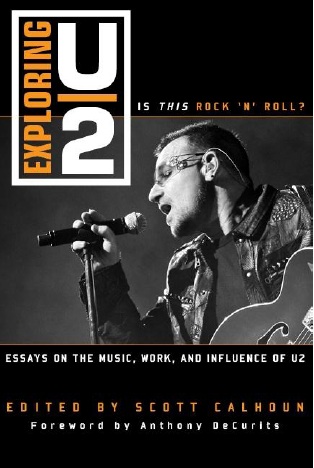
“We’ve always used the limitations of the band as a creative tool almost.”
— Edge
It’s a fascinating quote by U2’s The Edge, in which limits and limitations are realised as essential in the creative process.
Twice recently I’ve seem limitations unleash creativity. Here’s one moment.
On Thursday I led the team through a creative brainstorming process. I was greeted with the news as I became Principal that heading into 2013 we as a College needed to generate another $100,000. We discussed this as a team and decided this was a “we” challenge, rather than an “I” or a “they” challenge.
In other words, rather than give it to a single person or a representative group, this was a challenge we wanted to face together.
We agreed to a process. We would go away for a week to prayer and ponder. We would each return to share one idea, along with a monetary figure. It was one of the best meetings I’ve been part of in a long time, with a range of outstandingly creative ideas placed on the table. We are now work shopping each of the ideas. But if even half of them came to reality, we would be a very, very different College.
The limits – of funds – had opened up our collective creativity.
Often we imagine that creativity emerges when we have unlimited time and unlimited resources. Perhaps the converse is true – that creativity materialises when we have limits, and when these limits are faced in community.
Saturday, August 04, 2012
multi-sensory worship at mission shaped ministry Adelaide 2012
A second week of mission shaped ministry course on Thursday evening.

Each week includes worship. We have a commitment to try and worship in ways that don’t include singing. This is not because singing is not important. But it tends to be a default in Christian gatherings. And since mission shaped ministry course is about exploring new possibilities, it seemed appropriate to place some limits, in the hope of generating creativity.
It certainly worked in Week 2. One of the pioneer leaders training at Uniting College, and a candidate for ordained ministry, Karen Paull, led. She had prepared a central table, on which was a compass. We were invited to gather based on our location in Adelaide. In groups we were invited to reflect on our context:
- Where were the weeds in our communities?
- Where were the good things?
This led into prayer. Weeds were placed in the blue rubbish bin as an act of confession and intercession, while candles were lit for the goodness of the Christ-life. Finally, in benediction, we each took rosemary, which if placed in water in our homes, will grow roots and can be planted, an expression of us going to grow, to take root, to be the fragrance of Christ in our communities.
In 15 minutes, so many senses were engaged – smell of rosemary, hearing as we listened to those around us, touching in the candle lighting, seeing as we reflected on our communities. All amid classic Christian worship practices – of praise, confession, intercession, benediction. All within the framework of mission – gathering for and on behalf of our communities.
A rich, rich evening.
Wednesday, August 01, 2012
the limitations of single emotion churches
I had a wonderful afternoon with leaders from the Grace network today. It was my first speaking gig as Principal among Uniting Church leaders and needless to say, I woke early, nervous and prayerful.
The Grace network had asked me join them to reflect on mission. I did three things with them.
First, I used the Jesus Deck to engage Matthew 9:36ff. Those gathered offered some great insights and it was wonderful to see the way, once again, that the Jesus Deck opens up such rich conversation.
Second, I suggested a missiological reading of Matthew 9:36ff. I noted the link between compassion, prayer and the sending of the disciples. In other words, mission began with the emotion of compassion. I noted other emotion words around Jesus – anger, love, sorrow – and pointed out how each led to a different expression of mission – anger led to mission as justice-making, love led to mission as disciple-making, sorrow led to mission as intercession.
I suggested that at times the Uniting Church came across as a single emotion church. Some parts make a big deal of justice, but seem to be less passionate about disciple-making or prayer for healing. Other parts make a big deal of proclamation, but seem less passionate about justice. In contrast, the mission of Jesus was wholistic in emotional and mission.
Third, I invited group work on what it might mean to help people mature in their feelings and this generated a lot of excellent discussion (shaped by what I blogged last week regarding A Question of Principal 4). Hopefully I left them with some sense of what is shaping me as Principal – growing people in mission. I certainly left richer for having been with folk working so closely and carefully with people and congregations. On the way, I was asked for some helpful books …
Tuesday, July 31, 2012
mission shaped ministry Adelaide 2012 begins
A second mission shaped ministry course began in Adelaide last week. Once again, there was this profound sense of being among shared minds, among people with a similar ache, a willingness to find their unique shape and connect it to the mission of Jesus.
 This image is a snapshot of some of our work from the first session. People were invited to indicate (using a star colour of their choice on a map of Adelaide), where they lived. People then shared some of their hopes (black pen colour) and fears (red and blue pen colour), which were written (with their permission) up on the map of Adelaide.
As was the case last year, this course is a wonderful example of ecumenical partnership, with three “funding” denominations – Uniting, Anglican, Lutheran. Last year we had around 40 participants (including a leadership team of 6). This year we have around 25 participants (including a leadership team of 8).
Two folk who did the course have stepped into leadership and a highlight of the first session last week was having them share their experiences.
Around 25 participants means a much better group dynamic than last year (although it’s not quite as viable financially). A nagging concern for me is that of the new participants this year, only two three are Uniting. Which does seem strange, given all the talk about fresh expressions that there has been over the past few years. (Still time to enrol, go here for info!)
Monday, July 30, 2012
Note to self: Rules of thumb for change agents
I was looking through some old lecture notes (2008) and I found these notes, a sort of “rule of thumb for change agents.” I’ll spend the week walking around it, kicking the tires, reflecting on how they sit in my current context.
But for the record, I’ll also post it here.
• Stay alive – care for yourself and keep a life
• Start where the system is – empathy for the group and the people
• Look for green zones – places of promise
• Innovation is as simple as a good idea, initiative and a few friends – work with the willing
• Celebrate well – build in lots of success milestones
• Light many fires – utilise the complexity of any group by seeking movement in as many places as possible
• Keep optimistic – with a focus on the better future
“Rules of thumb for change agents”, a chapter by Shepard in Organization Development Classics
Sunday, July 29, 2012
Olympic Games opening ceremony as public ritual
On Friday I blogged about the way U2 craft remembrance into their public presence. I noted how the use of a single line –
Where’s Frank? 13 years ago, this very evening, we said goodbye to Frank Sinatra
becomes a “moment” that engages, deepens and honours. Such “moments” humanise, since all have suffered loss of some sort. They invite reflection, on who we are and how we are. They invite connection, with those who’ve gone before, with those around us, between leader and participant. These, I suggest are the skills needed in public worship and in the crafting of liturgy.
So it was intriguing to see an analysis of the Olympic Games opening ceremony, by an Anglican Dean, also note the importance of remembrance in the ceremony, and the way that such moments allowed spirituality to “leak” into the public arena.
The other moment where faith broke through was in the invitation to remember ‘those who are not here’. After the spectacle and the celebration, what heralded the arrival of the athletes was not a grand rhetorical climax but the silencing of the crowd, an act of recollection, the words of a prayer. For yes, unbelievably, we had all of ‘Abide with me’ sung quietly while a simple ballet on the theme of being lost and found was performed on the stage.
Saturday, July 28, 2012
spirituality in mission
Not merely by the words you say,
Not only in your deeds confessed
But in the most unconscious way
Is Christ expressedIt is a beatific smile?
A holy light upon your brow?
Oh, no – I felt His presence while
You laughed just nowBeatrice Cleland, in David Bosch’s, A Spirituality of the Road
56
This offers a way to understand a spirituality for mission, the way Christ is transfused among people, across cultures. Missiologist David Bosch suggests a number of ways to frame this. He contrasts a pipe with a branch.
Regarding the pipe
We often call ourselves channels or instruments which God uses to communicate His message to people. Our understanding of such a channel usually is that of clean water pipe which does nothing but allow an unrestricted flow of water. In order to guarantee this flow, the channel or pipe has to be cleaned regularly. Transposed to the missionary sphere the suggestion seems to be that the message has got to be kept aseptic in the process of communication. It should in no way be contaminated but remain absolutely pure. (A Spirituality of the Road
Regarding the branch
He draws from John 15, the image of the vine and branches.
A channel remains unaffected by what flows through it, but a branch has, first of all, to absorb the nutritive power which comes to it from the roots and trunk. It has to make all this a part of itself, and allow itself to be affected, and renewed and transformed by that power. Only after having assimilated such energy can the branch impart it to the fruit.” (A Spirituality of the Road
I think this intersects with what I was reflecting on earlier this week, reading Matthew 9:36ff, reflecting on the importance of emotions in the mission of God and the formation of people. A pipe suggests our mission, our engagement with people, should be free of emotions, cleansed of us. A branch suggests that our emotions are essential, are part of the God transfusion. This is a much deeper, much more interesting way to understand our growth as humans, and the formation of leaders. It is consistent with Jesus, in whom emotions of compassion, anger, joy, were not “cleansed” but were integrated into acts of commission, prophetic justice and partying at weddings.
It suggests a theology of Incarnation and embodiment, that the mission and message of God can only be communicated through and in us, in our emotions and being and bodies.

Friday, July 27, 2012
U2’s litany for the saints

It only takes one line. It’s live from Mexico City. It’s on the U22 album. And there it is. In the middle of “Until The End Of The World.”
Where’s Frank? 13 years ago, this very evening, we said goodbye to Frank Sinatra.
One line. And a person is remembered. A memory is triggered. A song, sung repeatedly (played 491 times, on every U2 tour since 1991.)
Change one line. On an anniversary – “13 years ago” – mention a name, and your history and influences are honoured.
So there are some lessons to ponder for liturgists.
- The importance of remembering
- The power of one line
- The need to place all we do within the one, holy, catholic and apostolic church, to remember the many who have gone before, who have shaped us, challenged us, inspired us, critiqued us
(This is an 8th point, to add to my list of 7 things a worship leader can learn from U2
1. Connect uniquely.
2. Engage through familiarity.
3. Use repetitition to call forth prayer.
4. Secure a 5th (visual) band member
5. Create hope by drawing the best from the past.
6. Plan participation.
7. Invoke passionate practices.
here)
Wednesday, July 25, 2012
how do you how grow emotions of Jesus? a question of Principal (4)
This continues my “As an incoming Principal, I have plenty of questions” series – questions that I ponder as I begin a new role as Principal at Uniting College. (First question, with some responses is here, here and here).
Here is the fourth question I’m asking
How do you grow compassion (and other emotions like joy, anger, sorrow and love for people)?
In Matthew 9:36, Jesus had compassion. The result is commission to mission, prayer that workers will be sent into the harvest. Doesn’t that become a way of understanding a College? That it engages compassion (and other emotions), as part of the educative and transformative act?
According to Matthew Elliott
“The theologies of the New Testament, as we have seen, do not do a good job in incorporating emotion into their framework. As it is in secular ethics, in New Testament ethics and theology emotion is often belittled, trivialized or ignored.” (Faithful Feelings: Rethinking Emotion in the New Testament
256).
So that is a direct challenge to any College (course, sermon, preacher) – the claim that the ways it has taught (“theologies of the ….”) have not engaged the whole person.
According to adolescent psychologists, Haviland-Jones, Gebelt and Stapley
“We usually think of learning how not to be emotional rather than whether or not emotions are being refined and transformed to mature forms.”
So emotions can be, should be, part of the educative process. You should be able to point to intentional ways that emotions are being transformed, just the way you can point to growth in theology of mission or skills in preaching.
Reading the Gospels over the last few years, I’ve been struck by the feelings of Jesus, wondering what I might learn from God who experienced sorrow, crying, radical love, anger, compassion. And now, the question of Principal emerges – how do you grow compassion (and other emotions like joy, anger, sorrow and love for people)?
As I read the Biblical narrative of Matthew 9:35-38, I am intrigued by how the feelings of Jesus shaped his development of leaders. And what that might mean for Principal, staff and students, curriculum and common rooms, chapels and classes.
For more on some of my earlier reflections on feelings of Jesus
- and mission here
- some leadership reflection here
Tuesday, July 24, 2012
recipes for success? or journeys of discovery?
We tell them exactly how they ought to behave, what they ought to do, how they ought to believe, and what they ought to abandon. We prescribe carefully prepared gospel recipes. But – and this is the core of the problem – only rarely do we allow them to experience all this together with us. They do not go with us on a journey of discovery to search and find together. They are simply being provided with the net result of do this, believe as follows, leave that! They get the ready answer but have not struggled with us in trying to solve the problem. Bosch, 68
This is a quote from David Bosch, A Spirituality of the Road
Monday, July 23, 2012
defining theological research
Tonight I attended, with my daughter, a high school careers night. One of the presentations outlined the Research Project, a final year independent study. It is described as an opportunity to:
- research something you are interested in
- decide how you carry out your research
- decide on the way you produce your findings
- make judgements about how successful you’ve been
The presenter noted that a new feature for 2013 includes local universities offering students the chance to join one of their projects, in areas like health and medicine. The student works with the University in one of their projects and gets named in the research as it is written up.
On the way home, the following conversation ensued.
Daughter: I liked the idea of doing research with a university.
Dad: Yes, when they talked about that, I wondered about theology offering a research project.
Daughter: Now that would be cool. They could start new types of churches and explore how people engage with those new forms.
Dad grins, pondering the rather unique view of theological research – the mix of research and practicum, thinking and doing, university and church – the daughter has grown up with.
Saturday, July 21, 2012
No one can serve two masters: academy or church
“No one can serve two masters.” Matthew 6:24
Theological colleges are pulled two ways. The university demands intellectual rigour, PhDs, conference attendance and publications. Increasingly this includes multiple layers of academic compliance.
The church expects effective mission leaders, down to earth application, ideas with legs, lecturers who can walk the talk. Often this includes multiple process around selection, formation and mentoring of students.
The contrast became clear for me in a conversation this week. One of our local ministers, a highly effective ministry leader is also a seasoned and much loved part-time College lecturer in the area of worship.
He noted that there were over 40 new books in his subject area. Which as a minister he simply had no time to read. He wasn’t sure he would be able to continue.
Who would you rather have teach? A person who leads worship every week, an effective practitioner in a complex, growing, multiple congregational church? Or a person with time to read 40 books, a university researcher?
The ideal is both. The reality is we have to choose. Do we face the university? Or the church?
(Note – Practical theology offers a way to do both. John Swinton defines practical theology is critical reflection on the actions of the church in the light of the gospel. Church and university, actions and critical reflection. However, not every lecturer is trained in this way).
Thursday, July 19, 2012
discernment in mission
It was great to be part of the Cato lecture last night and hear Kirsteen Kim, Professor of Theology and World Christianity, reflect on mission today. Her talk moved from Edinburgh in 1910 to Edinburgh in 2010, noting changes in cultures, mission theology and spirituality. She was clear, with great visuals and a dry wit. We are very much looking forward to having her with us next week at Uniting College, teaching an intensive on Spirit and mission.
Among many good quotes was the way she opened up discernment in mission.
In every context there are things to embrace and things to resist. K Kim
This for me is well illustrated in Luke 10:1-12, in the delightful tension between “eat what is set before you,” and “shake the dust.”

(Art from Mark Hewitt who “images” the lectionary each week here.)
In Luke 10, mission includes both embrace and resistance. New Testament scholar, George Shillington interprets the act of “shaking of dust” as a practice of giving freedom to the other, being willing to let them choose, rather than insisting on your way, your perspective, your insight. It’s the curse of Christendom, whether through the gun, guilt or gold. But it’s not the way of Jesus. Shillington concludes that “the idea of imposing a Christian culture on a receiving culture is foreign to this [Luke 10:1-12].” (An Introduction to the Study of Luke-Acts
In this we are not alone, for we have the wisdom of the church in history and today and the gift of discernment from God’s Spirit.
For more:
– Shaking the dust Aussie style go here
– Pluralism and Luke 10.


 )
)