Friday, March 25, 2011
Give us this day our daily bread: a just theology of food?
(Click here for the food and equality quiz)
Last night the Reading cultures/Sociology for ministry class I teach talked about food. And the fact that, to quote Rebecca Huntley, “food is rich in meaning … eating habits can be a useful means of describing social distinctions.” (Eating Between the Lines
We started with a quiz, some statements about food and eating habits in Australia, drawn from her book, Eating Between the Lines
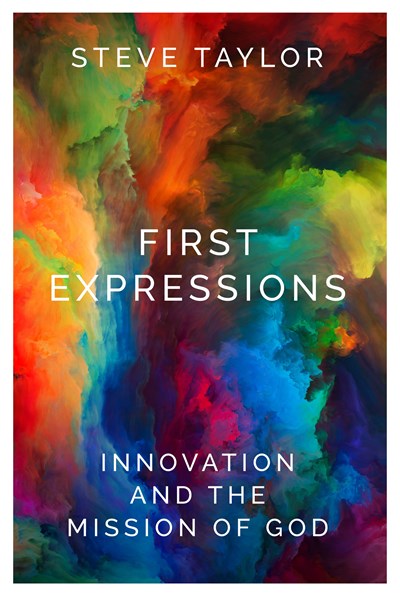
What’s this got to do with being Christian? Well it this a faith that in the Eucharist, places the eating of bread and wine at the centre of life. And a faith that prays “Give us this day our daily bread.”
Not “my” daily bread, but “our” daily bread.
In other words, it should want to act when being on a low income makes it harder to pray “Give us this day our daily bread”; when being time poor makes it hard to pray “Give us this day our daily bread – healthily”; when living in remote indigenous communities makes it almost impossible to pray “Give us this day our daily bread.”
In my next post I’ll post the research data that lies behind the quiz and point to the resources we then discussed in class. In the meantime, take the food and equality quiz (click here for the food and equality quiz)
Tuesday, March 15, 2011
What reaches young adults? 3 free giveways
I’ve just had an essay, titled “What reaches young adults?”, published in Australian Leadership. It was a commissioned piece and the entire edition is focused around generational mission, including pieces by Fuzz Kitto and Heidi Harding.
 Subscription is $68 (Australian); $78 NZ for 6 editions per year from Mediacom (go here for e-version). As author, I got a few free copies, which I thought I would offer as a freebie. I will send a copy of Australian Leadership to the first 3 people to comment on blog and provide a one paragraph biography of the person who was most influential in your young adult spiritual formation!
The article took a snapshot of a number of “young adult spirituality” moments in 2010 – from Blake Prize to Father Bob. Given that I was writing for a more mainline church context, I was particularly pleased with my concluding paragraphs.
If you have 0 young adults, then pray for them. Regularly use your prayers of intercession to pray for young adults. But choose your words carefully. Given the emerging trend of popular culture, you will need to find words to bless, rather than critique, their spiritual search.
If you have 1 young adult, then offer a traveling companion. Place this offer on the front of your weekly newsletter. Ask people in your church to become as curious as Father Bob, to ask a young adult to take you to the Blake Prize or the Big Day Out. Not to speak, but to listen. The aim is not to make Jesus relevant, but instead, to simply share, only when asked, your story of how your God-experience has daily legs.
If you have 5 young adults, ask to join them in a shared project. One example could be some shared, mutual action, a giving of legs to faith. Perhaps cleaning up a local stream. In other words, gather not around belief, nor around worship, but around mission action. (More examples can be found at the www.morepraxis.org.au, a ministry of the Uniting church in Victoria.)
Another example could be a conversation, similar in shape to espresso, one of the young adult congregations I helped plant. It began by inviting young adults to write down their questions about life and faith. These were thrown into a bowl. Together, some guidelines by which a culture of irreverent questions might flourish were agreed and discussion began. As one voice among many, the need for faith to grow by including irreverence was encouraged.
If you have 20 or more young adults, then you have a gift. Something to be shared not just with yourself, but with the wider body of Christ. Your task includes inviting them to put legs on 1 Corinthians 12:22 “those parts of the body that seem to be weaker are indispensable.” And how to partner with neighbouring churches who have fewer young adults than you.
Free to first 3 blog commenters to describe the person who most influenced them as a young adult!
Monday, March 07, 2011
mission begins with two ears
Written for a local church newsletter, and for a new distance course I’m writing for Semester 2 – Equipping in Christian mission.
“Sorry, I wasn’t listening.” Sadly, it’s a comment that I hear a bit too much from my family at the moment! Yet we all know what happens when we take time to listen.
In December I met with the leaders of a local church to talk about mission. They felt stuck, trapped, ineffective, out of touch.
Mention the word mission and images come to mind: perhaps sending people overseas or trying to recruit people to attend church. I suggested to this leadership team that in the 21st century, mission starts in neither of these ways. Instead, it starts by listening.
Why listen? First, it is common courtesy which people appreciate. It shows they are valued, important, recognised as unique. Second, our world is changing. So listening helps us keep up with that change. Third, we have preconceptions. So listening ensures we start with the needs of others rather than our prejudices.
How to listen? I wanted to be practical, so I suggested a number of different ways this church could listen – take photos, conduct neighbourhood walks, practise appreciative inquiry, interview people. Different strokes for different folks. These were introduced at a seminar in January.
What happens when we listen? Two stories might help. The first is from New Zealand. The church I used to pastor walked the streets of our community at Pentecost. Our task was to listen to the history of the community. One year, as we listened, someone mentioned that a community group needed funding for a new heater (this was Christchurch in winter after all!). We prayed. The next week we heard our prayer had been answered. Listening helped us know what to pray. And it strengthened our relationship with our neighbours.
The second is a story from Australia (told in “God Next Door
There is a lot more to mission that listening. But it’s an important, and respectful, place to start.
Friday, March 04, 2011
missional church. what are you reading?
I’m in the process of putting together some books for a course on mission and leadership for a group of ministers. They are in context, they have some exposure to the missional conversation, they live in Australia and they are keen to actually put some legs on their passion. Here are the six books I’ve selected. A mix of voices was important, as was the sense of being both theological and yet grounded in existing congregational ministry.
What do you think? What have I missed?
Christopher Wright, The Mission of God’s People
Helen Lee, The Missional Mom: Living with Purpose at Home & in the World
Alan Roxburgh, Missional: Joining God in the Neighborhood
John Koenig, Soul Banquets: How Meals Become Mission in the Local Congregation
Paul Kelly, How to make gravy, Hamish Hamilton, 2010.
Ann Morisy, Journeying Out: A New Approach to Christian Mission

Wednesday, February 02, 2011
hard questions about Christian mission
Every generation has challenges. One of the challenges for our generation is how we respond to the injustice of the past. Last Wednesday was Australia Day, which is a celebration of a nation with a history of dispossession of indigenous people. Sunday in New Zealand is Waitangi Day and the subsequent failure by settlers to honour that treaty.
This has implications for being Christian. We talk of a God of reconciliation who heals the past. How do such claims make sense for this generation?
In recent days I have been reading Remembering Jamestown: Hard Questions About Christian Mission
The final chapter is by Amos Yong, a theologian, Malaysian born, now working at Regent University, USA. I have engaged in this blog previously his extraordinary book on Theology and Down Syndrome: Reimagining Disability in Late Modernity

Yong argues that “it is important for us not to quickly forget the offenses that were part and parcel of the missiology” of the past. (163). He advocates a post-colonial theology of mission based on the many tongues of the Pentecost narrative.
- “As many tongues were empowered by the Spirit to speak about God’s deeds of power … so also are many languages required to bear witness to the glory of God today.” (164)
- This requires us to listen to many voices as a first move in mission.
- The expectation is that the encounter with those different than us will lead to “mutual transformation” of both parties (166).
- The many tongues of Pentecost assume a multiplicity of missionary modes of engagement, a diversity of approaches to being Christ today. “We need to creatively participate in the work of the Spirit to develop many more liturgical forms and other social practices that facilitate the healing and salvation needed to respond” to the past (166). (Anyone else hear echoes of the call to fresh expressions!)
- It expects a theology of hospitality in which Christians become not hosts, but guests. (Anyone else hear echoes of Luke 10? – for more on this go here and here and here and here and here and here)
Thought provoking stuff for all those who care about mission in Australia and New Zealand.
Saturday, January 29, 2011
listening at your local in Lent: step one in a fresh expression?
Updated: Feedback
“The good thing about this is that it’s a process. We’ve been offered in the past so many programmes, which people tend to resist.”
“The best thing about what you did is the homework. So many seminars just give information. You gave us something to do.”
On Sunday I am offering a Lenten mission challenge to a local Uniting Church. I am preaching and then offering an hour long mission seminar. The Lenten focus I am suggesting is not a study or some readings. Nor is it a chance to give some money. Nor even to engage some internal spiritual practices. Rather the focus is on some practical tasks in order to listen outside the church walls and into their community …

Task: Take a project. Decide on a time frame. Do it either individually or as a group. If as a group, why not meet fortnightly for coffee to encourage, pray for each other.
- Listening project one – some growth questions to ask selected individuals
- Listening project two – observation walks around the community
- Listening project three – visual observation of the community, involving creating photo exhibits
- Listening project four – some Appreciative inquiry questions
I am hoping it is practical and fun and people want to have a go. Why not enjoy a few summer walks around your community.
I am hoping that this becomes a first step in a process, that what they hear clarifies their next steps in mission; that out of listening comes some acts of intentional service, that such acts are designed not as programs but to grow relationships, that those relationships become conduit for gospel stories to be told, that those gospel stories invite an exploration of Jesus, first individually and then in community. (ie a fresh expression).
But those words – fresh expression – are often a step to far. So first, hey, why not listen in your local ….
Friday, January 21, 2011
Christ for us today: in pluralism, colonisation, environmental degradation
The blog title is a reference to Dietrich Bonhoeffer, a German pastor seeking to be a Jesus follower during Hitler’s reign in Germany. He found his theology must address the question: Who is Jesus Christ for us today?
The context today is not Nazi Germany.
Our context is one of pluralism, the challenge of how to name Jesus when my neighbours might be aetheist, Muslim or hedonist.
Our context is also one of colonisation, the challenge of the fact that the land I live on originally belonged to someone else, an indigenous community. It was pretty much taken by force, with the aid of gun and often by someone professing to follow Jesus. And the money that funds so much of the mission of the Anglo-church today is based on historic exploitation of indigenous land. To use the term of Chris Budden, how are we Following Jesus in Invaded Space: Doing Theology on Aboriginal Land
Our context is also one growing environmental degradation. We live with growing talk of global warming, with acid rain and deforestation and decline of species and bio-diversity.
This is the Bonhoeffer challenge: who, what is Christ for us today.
All of this by way of saying that I am currently writing a distance course on the topic of Jesus. And I am looking for sermons. Have you preached a sermon that relates Jesus, or any part of the Gospels and New Testament, to the issue of either pluralism, colonisation or enviromental issues? Have you heard a sermon on this? Do you know of someone who might have preached on this?
Because I am looking for examples, with a view to inclusion (full acknowledgement will be given), to help students in the course think about how they will answer the the Bonhoeffer challenge: who, what is Christ for us today.
I am not looking for book chapters or readings, simply examples of how people are having such conversation in relation to the preaching life of the church.
Not am I hoping for a particular theological slant, simply examples of people having a thoughtful conversation between Jesus and the issues of pluralism, colonisation or environmental degradation.
Tuesday, January 18, 2011
pioneer stories, learning with those who’ve gone before
I’m privileged to be serving among a denomination making some really interesting missional moves. This includes the desire to make intentional the training of pioneer leaders. To that end, I have been asked to facilitate a retreat in February with a focus on the implications of training pioneer leaders.
In starting to prepare, I really wanted the voice of pioneers to be heard, to let their experience shape our thinking going forward.
So today was V-day – video day. I asked four pioneer leaders to reflect, on video, on their formation and growth. A set of similar questions was used to kick-start the conversations:
- The word “pioneer” is often used to describe someone with a track-record of starting things, sees possibilities, takes risks, willing to live with high degree of ambiguity. In what ways do those words make sense of your life and ministry?
- Do pioneers take just one shape, or are their diverse models?
- What’s the most important thing someone supervising you? forming/mentoring you? should know?
- What’s the most important thing the various denominational structures (selection, formation, placement) need to know about you as a pioneer?
One person is beginning the “formal” part of their training (wanting to explore mission and innovation by enrolling in our new B.Min), a second has just completing their formal training (having spent the last few years pioneering a new community as part of their College Fieldwork), a third is well into their first pioneer church-plant, a fourth is into their 3rd major pioneering project. Some fascinating discussion has ensued.
As we all know, discussion is the easy bit! Now we have to cut the 75 minute video into something more manageable. But a fascinating exercise, to sit with pioneer leaders and hear them reflect on how God has formed them. To hear the differences. To sense the commonalities
– the shared passion for possibilities
– the need for flexibility and space to experiment
– the uncertainty of the journey, both becoming internally self-aware in the midst of trying to work that out in existing paradigms
– the desire for an relational accountability
And to begin to wonder about what it means for colleges and denominations to partner with what God is doing in the hearts and lives of people.
Friday, December 10, 2010
the art and craft of missional leadership
I sat with a group of church leaders during the week. They were concerned about their local mission. Could a lecturer with the title “missiologist” help them? During the week I continued to read Richard Sennett’s The Craftsman
The book argues that the notion of craftsmanship, the desire to do a job well, for it’s own sake, should be the way we approach not just work, but life. In Chapter One, Sennett explores the arrival of Computer Aided Design. He notes how architects used to draw by hand, yet how with the advent of CAD, it posed new problems for thinking about buildings. A loss became possible, a detachment from the actual local site, a removal from the materials by which buildings are made. Sennett notes
“architectural sketches are often pictures of possibility; the the process of crystallising and refining them by hand, the designer proceeds just as a tennis player or musician does, gets deeply involved in it, matures thinking about it.” (40)
I would replace “tennis player and musician” with writer, worship curator, preacher, leader. There is “a kind of circularity between drawing and making and then back again” (40). Week by week worship is crafted, ideas are pondered, project are imagined, people are engaged, groups are formed.
As I read, I thought back to those church leaders. How much of the missional conversation might actually be CAD? When we look at other churches, when we seek consultants, when we read books, we are in danger of becoming detached from our own local site, our own local context? The reality is that the person who knows the most about the church are likely to be its leaders and the people who know most about their community are likely to be those who attend church and live local.
So the mission challenge becomes the passing on of a craft. It is to help these leaders and this church become better – more focused, more insightful, more reflective, more strategic, more deeply involved in – their thinking and acting in mission. The key to mission are these leaders, not the imported missiology expert or those books. Or to quote Alan Roxburgh, the future of God might really be among the people of God!
I will probably return to these leaders. I want to offer them some tools that could help them become more skilled mission crafters-in-mission. I’m wondering also how all this applies to the launch of the Missional masters next year. And how The Craftsman
Tuesday, November 30, 2010
alternative, emerging, fresh in australia: new website
It’s a strange time to be in Australia. Currently there’s a lot of looking to England under the fresh expression brand. A few years ago it was emerging with Brian McLaren. Before that it was Forge. Alternative, emerging, fresh in Australia – yes the words mean many different things to many different people.
Brands. Do they create identity? Or do they provide something for groups to push, or be pushed, against. As I said, strange times.
Anyhow, there doesn’t seem to be any sort of online list of “alternative, emerging, fresh” communities in Australia. So in order to try and provide some sort of database, Cheryl Lawrie has set up a Alternative forms of worship and community in Australia website. Basically a wiki and an invitation to any and all groups who feel they are – alternative, emerging, fresh – to both put up, and update as necessary, their details.
So if that’s you (in Australia) head on over and add your details. If you know of groups, please pass the details on …
Monday, November 29, 2010
putting legs on the local: an aussie take on Fresh Expression vision days

Putting legs on the local, held on Saturday, went really well. About 25 folk, gathered around input from multiple voices, networking, food, worship, interaction. One person drove 6 hours from the Eyre Peninsula to be there (it’s Australia!), other’s drove two hours from Murray Bridge or an hour from Strathalybn.
Here in South Australia as a Uniting Church, we’ve had a fair few overseas folk talk to us about fresh expressions and new forms of church. It’s one thing to hear from overseas, it’s another to have a genuinely local conversation. So Putting Legs on the local was an attempt to gather around an ongoing local conversation. The concept was to some extent based around the UK Fresh expressions vision days but it needed to have a local South Australian flavour.
The day kicked off with an hour introducing concepts and thinking around fresh expressions. This included the Who? What? Where? When? Why? How? of Fresh Expressions and what fresh expressions mean in light of Uniting Church.
We then broke for lunch, which was based around the invitation to all participants to bring local produce to share. This was a stunning success, with all sorts of creative local flavours being brought and shared. Free range eggs, olives from the backyard, citrus tarts from the neighbours tree, donuts from local bakeries. A tasty reminder of the value and diversity of being local.
We then listened to three local fresh expressions tell their story.
- Eco-church, 9 years old, meeting outdoors with a commitment to the body in worship and a desire to bless the city and think ecologically
- a yet to go public group wanting to plant a faith community in a local school, meeting to pray, to experiment, to spend time being human within their local community
- Esther project, using story and alternative worship to engage the arts community.
Again, a wonderful reminder that there is some fine local produce, which is so easily overlooked when the overseas guru comes visiting. Again a reminder of the uniqueness that is fresh expressions, of the ups and downs, of the importance of experimentation and being open to change.
This was followed by time in groups, exploring what we’d heard. Three types of conversation – the stakeholders, the dreamers, the doers – talked about what they needed to flourish and what they’d like to say to each other in light of fresh expressions. Getting back to share once again we were nourished by the reminder of the diversity that is in the body of Christ and the need for us to value the vital roles of different folk.
We then finished in worship, led by a 4th local fresh expressions. Candelit Reflections had created a beautiful space and offered music, reflection and meditation and it was a fitting reminder, once again, of the richness that is local.
Plenty more to do, but Saturday was a enjoyable beginning.
Wednesday, November 24, 2010
theology fail for a hip Jesus: Gruen transfer on selling Jesus
I’ve been enjoying the Gruen Transfer, a snappy, attractive reflection on contemporary advertising. 290 pages, colour pictures. It describes itself as a textbook on advertising, an encyclopedia on advertising and an exploration of the art and science of persuasion. It will become a compulsory textbook in my B.Min Reading Cultures topic.
Amidst reflection on everything from how they sell us toothpaste to underwear, it also analyses how Christians sell Jesus. Yep, pages 77-80, cover the 2009 Jesus: All About Life campaign. Given that over 1500 churches in New South Wales splashed more than a million dollars on this, it’s great to have some reflection on it’s ability, or otherwise, to persuade.
So what do the advertising experts say of the campaign?
Bram Williams, once head of Saatchi and Saatchi’s wrote: “Better to make the activity of being Christian attractive than try to come up with a ‘hit spin on Jesus’.”
Carolyn Miller has a similar spin: “If I had to make Jesus relevant, I would apply his teachings to modern life. What I wouldn’t do is try and make Jesus trendy – no one wants to see rapping Jesus.”
So there’s some mission wisdom from the advertising industry. Stop trying to make Jesus relevant. Get on with living the Jesus life to the full (John 10:10)! Which, interestingly, will be an upcoming theme of the Uniting church of Australia!
Monday, November 22, 2010
Putting legs on the local: fresh expressions in South Australia
On Saturday, I’m involved in this …
What is a fresh expression? How do they emerge? What is the role of sponsors? How do we help the dreamers? How do we support fresh expressions well? What is happening on the ground in South Australia? We’ll be grappling with these questions and more at this Fresh Expressions tasting day, designed to stimulate discussion and action.
The day will include 3 “fresh expressions of mission” telling their story, their struggles, their learnings. We will talk in groups about best practice – how best to support a fresh expression, how best to dream a fresh expression.
27 November from 11am – 3.30pm at Christ Church, Wayville (26 King William Rd). Hosted by Fresh Expressions Synod of South Australia Taskforce. More info: Al Dutton 8236 4271
As mentioned here
Monday, November 15, 2010
spirituality of blood and bone: another fresh expression
Some mates are web-journalling their guerrilla garden attempts in Christchurch. Currently the virtual looks much more impressive than the real, but knowing the rainfall of Christchurch and the power of spuds and rhubarb, I’m sure it will change.
 I do think that gardens make an excellent place to ground (pun intended) a fresh expression. I’ve blogged before about
- the spirituality of composting (here)
- the spirituality of gardening (here and here)
- about a gardening centre as a future church model (here)
- about an outdoor faith indoors (here)
- about how we brought back the harvest festival at church last year in response to the Global Financial crisis and as our families headed back to the garden (here)
- a funny story that emerged because we as a church gave out vege plants at our annual Spring Clean community contact day
- about why I’m a vegetarian (here)
- about how much (little actually) land you need to feed a family of 3 (here)
Here in Adelaide there is even more interest in fresh food and local produce than in Christchurch. What about a fresh expression that met on Saturday while the Central Market was open, and used stations – of thanks, of fair trade justice, of community – that the thousands who attend the market could engage?


 )
)