Monday, March 07, 2011
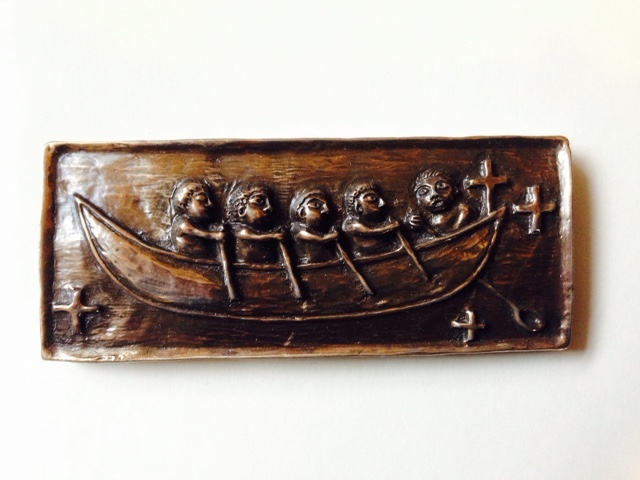
mission begins with two ears
Written for a local church newsletter, and for a new distance course I’m writing for Semester 2 – Equipping in Christian mission.
“Sorry, I wasn’t listening.” Sadly, it’s a comment that I hear a bit too much from my family at the moment! Yet we all know what happens when we take time to listen.
In December I met with the leaders of a local church to talk about mission. They felt stuck, trapped, ineffective, out of touch.
Mention the word mission and images come to mind: perhaps sending people overseas or trying to recruit people to attend church. I suggested to this leadership team that in the 21st century, mission starts in neither of these ways. Instead, it starts by listening.
Why listen? First, it is common courtesy which people appreciate. It shows they are valued, important, recognised as unique. Second, our world is changing. So listening helps us keep up with that change. Third, we have preconceptions. So listening ensures we start with the needs of others rather than our prejudices.
How to listen? I wanted to be practical, so I suggested a number of different ways this church could listen – take photos, conduct neighbourhood walks, practise appreciative inquiry, interview people. Different strokes for different folks. These were introduced at a seminar in January.
What happens when we listen? Two stories might help. The first is from New Zealand. The church I used to pastor walked the streets of our community at Pentecost. Our task was to listen to the history of the community. One year, as we listened, someone mentioned that a community group needed funding for a new heater (this was Christchurch in winter after all!). We prayed. The next week we heard our prayer had been answered. Listening helped us know what to pray. And it strengthened our relationship with our neighbours.
The second is a story from Australia (told in “God Next Door
There is a lot more to mission that listening. But it’s an important, and respectful, place to start.
Wednesday, March 02, 2011
when meals become mission: learning from 9/11
A recent post at prodigal Kiwi is asking for resources to help churches think through their response to the February 22 Christchurch earthquake.
It caused me to recall the research done by John Koenig on how the church in New York responded after 9/11, which is written up in Soul Banquets: How Meals Become Mission in the Local Congregation
So the church simply began serving food. First with volunteers running a street barbeque to feed the clean up crews. Once the church was deemed safe, they turned to serving meals in the shelter of the church.
They made a conscious decision to be a generous host. For them, this involved forming a partnership with a local restaurant to serve food and drink of the highest possible quality.
Some ten days after 9/11, they served communion. They offered this as an option, the liturgy up at the altar table but in a church filled with tables, heaped with food, around which everyday conversation continued. This moment, of food mixed with faith, proved an important and transformative moment of healing for numbers present that day.
Koenig concluded that one of the most healing thing done by churches through out New York in response to 9/11 was the decision to simply eat together. He wrote
“we have seriously undervalued our church meals, both ritual and informal, as opportunities for mission … to realize this potential, we, like the disciples on the road to Emmaus, must have our eyes opened by the transforming presence of Christ at our tables.”
Another chapter in the book offers an interesting checklist on what it might means for meals to become mission. It suggests a new set of habits will be required. Mission meals is no slapping of food on a cold tin plate in a chilly church hall.
Instead
- This is serving graciously with human contact. Koenig cites the example of one the busiest church food kitchen in New York, in which each volunteer is expected to find ways to encourage eye contact and genuine conversation.
- This is setting tables, serving food, eating in patterns and places that speak of God’s abundance and creativity.
- This is encouraging role reversals by finding ways for all, helper and hungry, to contribute through a diversity of gifts.
- This is committing to a long-term, intentional project, a willingness to eat together a lot, because in that eating good things will happen.
So, for those wandering about how to be church in Christchurch, how to deal with so much physical loss, so much psychological trauma, so much grief and fear – start by simply eating together.
Sunday, February 20, 2011
church and mission: a highly constructive ongoing blog comment discussion
“The story of Acts is the story of a community inspired to make a continual series of creative experiments by the Pentecost Spirit.” (Joe Fison, Fire Upon the Earth, 79.)
I’m involved in one of the most satisfying and stimulating blog conversations I’ve had in quite a while – in relation to my ongoing book review of For the Parish. The conversation has become a probing exploration of church and mission as it relates to Fresh Expressions.
I know that in general blog commenting is way down compared with a few years ago. I realise that there is a blog rule of thumb that the life of a blog post lasts three days. So I wanted to simply note this ongoing conversation, thank God for the value of blogs and provide a note of appreciation for Tony Hunt and his wisdom, grace, thoughtfulness.
Tuesday, February 15, 2011
emerging responses to For the Parish, chapter 4 – segregation
“For the Parish”, by Andrew Davison and Alison Milbank, is an extended critique of fresh expressions. Always good to listen to the critics, so I am engaging the book, chapter by chapter. The Introduction is here, Chapter one is here, Chapter two is here. Chapter 3 is here.
There is much that I applaud in this chapter (The Flight to Segregation). This includes the call for conversion to be radical, the call for reconciliation to be made present in local faith communities, the call for a faith that challenges politics and ethics. There is an even-handed and thorough discussion of the Homogenous Unit Principle (that people are more likely to find faith if they don’t have to cross cultural boundaries).
I think that Fresh expressions would do well to keep some of the quotes from this chapter for ongoing evaluation. For example
- Bad examples of church practice need “not doom everyone to reproduce these patterns.” (80).
- “Expressions of the Fall in late modernity are particularly nasty.” (page 84, footnote 29)
- “There is almost no sense (in Fresh Expressions) that the Church might take a political stand against the errors and tragedies of contemporary society, not least in offering practical resistance through its forms of life.” (91)
It is easy to take the best of what you fancy and the worst of what you dislike. I’ve seen it done often in emerging/fresh expressions circles. However I suspect it’s also being done in this book. This chapter suggests that one particular facet of the parish church is that it is a “mixed economy ” (64) For Davison and Milbank, this is linked theology, linked to “a message of reconciliation, forgiveness and peace.” (64) Apparently, “The parishes of the inherited church are heterogenous communities.” (64)
Well, try telling that to my kids, for whom their experience of a mixed economy means continuing to do church the way another generation likes it done. Or tell that to a migrant struggling with English, for whom their experience of a mixed economy means doing church in English.
I remember once a 90 year old churchgoer telling me that the kids were being too noisy in church. Their turn (to sit quietly like the adults), would come later. For now, they should be somewhere else.
This simply assumes the church does not yet belong to “the little ones.” It’s about privilege fused with power. For Davison and Milbank, “the cultural interests of church members [in a parish] can be valued without having to structure an entire church around them.” (77)
So let’s reverse this. Imagine the “parish” offers messy worship. Or sings to drum and bass. Now imagine telling a visiting baby boomer that their cultural interests can be valued without having the drum and base music and chatter of kids needing to change! Because this is a “heterogenous” church.
So what to do with church next Sunday? Establish something new for the visiting aging babyboomer. Which Davison and Milbank consider “a recipe for segregated congregations.” (65) Or continue the status quo (in which the boomers like it or lump it, because in essence this church is in fact already segregated)?
Or does not Acts 15 give us some way forward? A dominant power group lays down it’s need for assimilation, and instead sends some pioneers to encourage what is new, requesting only a willingness to grow in a shared commitment to mission and justice.
Davison and Milbank might charge that this runs the danger of being seen as choice, a bowing to consumer culture. But isn’t it surely part of the Spirit’s work in the early church? Consider these two verses from the same Bible book In 1 Corinthians 1:10 I appeal to you, brothers and sisters, in the name of our Lord Jesus Christ, that all of you agree with one another in what you say and that there be no divisions among you, but that you be perfectly united in mind and thought. Place it against 1 Corinthians 9:20 To the Jews I became like a Jew, to win the Jews.
Do you start with mission-as-contextualisation ie 1 Corinthians 9? Or mission-as-reconciliation ie 1 Corinthians 1? If you start with either, it seems to me that you need to see them not as the endpoint, but as the start of a life-long spiral toward justice and transformation.
Further:
(I have written elsewhere about the place of social justice and the poor in Fresh Expressions)
Tuesday, February 08, 2011
emerging responses to For the Parish, chapter 3 – mission and church
“For the Parish”, by Andrew Davison and Alison Milbank, is an extended critique of fresh expressions. Always good to listen to the critics, so I am engaging the book, chapter by chapter. The Introduction is here, Chapter one is here, Chapter two is here.
Before we plunge into round (chapter) 3 of For the Parish vs Fresh Expressions it is worth gaining an overview. Chapter 3 is a crucial chapter, which in a nutshell, battles over the relationship between church, worship and mission. Did Christus propter ecclesiam venit (Christ come for the sake of the Church)? Or the world?
Before I explore this chapter, I wanted to gain an overview of current debates on the relationship between church and mission. I turned to the The Routledge Companion to the Christian Church
Collins offers some history. First a history in which mission has been understood, based on Matthew 28:19-20, as going. By implication, mission becomes a task performed elsewhere. Second, a history in which the context of Christendom, which meant that “conversion and salvation, church and mission became inextricably bound together.” (624).
Collins urges the “understanding of the world church today [be] rooted in the experiences of the colonial and post-colonial periods of the nineteenth and twentieth centuries” (623). He then links six themes – salvation, partnership, missio Dei, relationality, inculturation and pluralism – in dialogue with major church councils like Vatican 2 and World Council of Churches. His conclusion is that to be church is to be sent, to participate in God’s mission in the world. “Ideas of ‘mission’ in terms of conversion and recruitment to church membership need to be re-evaluated in the light of God’s cosmic mission: ‘that God may be all in all.” (633, drawing on 1 Cor 15:28)
This overview of global trends in thinking about church and mission, gives us some way to understand For the Parish. The book makes no reference to trends in world Christianity, nor to the conciliar councils. Instead the authors draw on European theologians like John Robinson, Sergei Bulgakov, Henri Lubac. They acknowledge the place of the Kingdom in the Gospels, but choose to place priority on the Pauline epistles to argue that “the goal of salvation … might even be said to be all church.” (48) They conclude that to suggest mission is a proper ultimate goal is “the ultimate heresy within the contemporary Church of England.” (54)
Heresy. A strong word indeed.
They critique Fresh Expressions for having
the fervour of devotees casting around for increasingly precious things to offer up to mission. The favoured sacrifices are the practices and traditions of the inherited church. To mission, every and any treasure must be sacrificed. (For the Parish, 54)
This chapter opens up a crucial, crucial debate. What is the relationship between church and mission? Does church exist for mission? Or for worship? It seems to me, given the overview provided in The Routledge Companion to the Christian Church
Whether Fresh Expressions is doing any better is an equally valid question, which will occupy us in Chapter Four. But first, back to the piles of paper on my desk.
Wednesday, February 02, 2011
hard questions about Christian mission
Every generation has challenges. One of the challenges for our generation is how we respond to the injustice of the past. Last Wednesday was Australia Day, which is a celebration of a nation with a history of dispossession of indigenous people. Sunday in New Zealand is Waitangi Day and the subsequent failure by settlers to honour that treaty.
This has implications for being Christian. We talk of a God of reconciliation who heals the past. How do such claims make sense for this generation?
In recent days I have been reading Remembering Jamestown: Hard Questions About Christian Mission
The final chapter is by Amos Yong, a theologian, Malaysian born, now working at Regent University, USA. I have engaged in this blog previously his extraordinary book on Theology and Down Syndrome: Reimagining Disability in Late Modernity

Yong argues that “it is important for us not to quickly forget the offenses that were part and parcel of the missiology” of the past. (163). He advocates a post-colonial theology of mission based on the many tongues of the Pentecost narrative.
- “As many tongues were empowered by the Spirit to speak about God’s deeds of power … so also are many languages required to bear witness to the glory of God today.” (164)
- This requires us to listen to many voices as a first move in mission.
- The expectation is that the encounter with those different than us will lead to “mutual transformation” of both parties (166).
- The many tongues of Pentecost assume a multiplicity of missionary modes of engagement, a diversity of approaches to being Christ today. “We need to creatively participate in the work of the Spirit to develop many more liturgical forms and other social practices that facilitate the healing and salvation needed to respond” to the past (166). (Anyone else hear echoes of the call to fresh expressions!)
- It expects a theology of hospitality in which Christians become not hosts, but guests. (Anyone else hear echoes of Luke 10? – for more on this go here and here and here and here and here and here)
Thought provoking stuff for all those who care about mission in Australia and New Zealand.
Saturday, January 29, 2011
listening at your local in Lent: step one in a fresh expression?
Updated: Feedback
“The good thing about this is that it’s a process. We’ve been offered in the past so many programmes, which people tend to resist.”
“The best thing about what you did is the homework. So many seminars just give information. You gave us something to do.”
On Sunday I am offering a Lenten mission challenge to a local Uniting Church. I am preaching and then offering an hour long mission seminar. The Lenten focus I am suggesting is not a study or some readings. Nor is it a chance to give some money. Nor even to engage some internal spiritual practices. Rather the focus is on some practical tasks in order to listen outside the church walls and into their community …

Task: Take a project. Decide on a time frame. Do it either individually or as a group. If as a group, why not meet fortnightly for coffee to encourage, pray for each other.
- Listening project one – some growth questions to ask selected individuals
- Listening project two – observation walks around the community
- Listening project three – visual observation of the community, involving creating photo exhibits
- Listening project four – some Appreciative inquiry questions
I am hoping it is practical and fun and people want to have a go. Why not enjoy a few summer walks around your community.
I am hoping that this becomes a first step in a process, that what they hear clarifies their next steps in mission; that out of listening comes some acts of intentional service, that such acts are designed not as programs but to grow relationships, that those relationships become conduit for gospel stories to be told, that those gospel stories invite an exploration of Jesus, first individually and then in community. (ie a fresh expression).
But those words – fresh expression – are often a step to far. So first, hey, why not listen in your local ….
Thursday, January 27, 2011
spacing and placing transformation
Earlier this week I was asked to explain my job title “Director of Missiology, Post-graduate co-ordinator.” While I have a job description, for me the “big picture” is that my task is to
add strength to change process that Uniting College is going through, in particular to show that leadership can be theological and missiology can be transformative in the life of a local church.
In that vein, here are some links that I have been pondering.
- the place of context in leadership. A gracious, gracious post by David Fitch, in which he argues that churches that rely on preaching, in particular a “fingerhead” type preach, are in fact a last gasp of Christendom. Such a form of ministry/leadership have a place, but have little chance of connecting with a post-Christian culture and thus of offering clues as to future leadership imaginations. (Full post here).
- a local church running their own spirituality fair. Deceptively simple – three hours on a Saturday offering to interpret dreams, conduct spiritual massage. Apparently there were people queuing on a winters night. (Here).
- a (UK) website charting spaces for temporary and pop-up projects – empty shops, church halls, fields, shopping precincts and old offices. A great way to think about running a mission experiment and an intriguing reminder of mission possibilities for temporary cultural engagement. (Here)
Thursday, January 20, 2011
a practical post: turning alternative worship stations into communities
I sat with a pioneer today. We reflected on a year of experimentation. An artist by charism, last year they thought “Stuff it, I’m going to create a quiet, still space. Populate it with stations. Have a start and end time. Advertise it as I can. And offer some resources to nourish people’s spirituality.”
After a year of experimenting, they are encouraged. By the growing numbers. By the engagement with folk they don’t see on Sunday mornings. By the impact of leaving the stations set up during the week, so that folk on Sunday morning get to see and engage.
It is proving a genuine missional innovation. Having visited (I love visiting pioneer innovations) I had some encouragements. And some suggestions
1. Think more about what people can bring into your space. How about providing a variety of things on the foyer (bits of material, stuff from $2 shop, coloured cards). Invite them to chose something that marks their week/mood/a relationships. This creates curiousity and builds individual participation.
2. Think more about what people can take away, something to tuck in their pocket as a reminder of their engagement – a stone, a thread, a symbol that connects with a station. This helps memorialise the time.
3. Have a map of church, with stations. As a newcomer, visitors always wonder if there are special “sacred” places. A map helps orientate me in a space, lets me know where to go and where the stations are. It lets me decide if I want to go in a liturgical order, or not. This map can be simple (station a, station b, station c etc) or more detailed (rose station, origami station, water station).
4. Think about next steps. People need space to come and go. And feel free to come and go. But some people might want next steps. They might want to suggest an improvement. Or know about future offerings. Or have a go. Or something touched a nerve and they want to talk. Sp provide next steps, sensitively.
5. What about a discussion space. Some people like to to process thoughts and ideas. They want to share how they engaged. And to hear how others engaged. Especially for people with aural learning preferences. So a dedicated coffee space afterward. Or the next Sunday. It must be optional. But this provides ways for events to become communities.
I note these ideas here, wondering if they might be useful to others experimenting with installation type, station based fresh expressions.
Wednesday, January 19, 2011
a emerging response to For the Parish. A Critique of Fresh Expressions, chapter one
For the Parish, by Andrew Davison and Alison Milbank, is an extended critique of fresh expressions. Always good to listen to the critics, so I am engaging the book, chapter by chapter. The Introduction is here.
Chapter one – The Union of Form of content
This chapter argues that Fresh expressions separate form (practices) and content (message, purpose, identity). The authors argue that such a separation is passe (so 19th century!), because “In the Church … the message is in the form.” (9) They offer some charity “Any particular Fresh Expression may well embody one aspect of the Church’s life and mission extremely well.” (9) However the belief is that a parish, because it has a deep rooted commitment in people and place (ie doesn’t separate form from content) is more likely to have the resources to adapt and minister across the breadth of human living.
The argument about the inseparability of form from content is grouped in three sections.
First, they draw on Ludwig Wittengstein, a 20th century philosopher, who argued that language is thoroughly communal. “Our existence is a shared existence and it becomes intelligible only through distinctive, shared ways of life.” (12) The implications for Christianity include the ordinary, everyday practices and disciplines of the Church as the place where faith is embodied.
Their concern is that Fresh expressions “do not appreciate how much the practices of the inherited church offer for mission and discipleship. They discount the forms of the inherited church without appreciating their potency for bringing the Faith to bear upon our time and space.” (17)
(I’ve heard this argument used to justify fresh expressions, especially in the seeking of a more communal hermeneutic, for example Ben Edson, “An exploration into the missiology of the Emerging Church in the UK through the narrative of Sanctus1” and Guest and Taylor “The Post-Evanglical Emerging Church: Inovations in New Zealand and the UK”, both in the International Journal for the Study of the Christian Church, 6, 1, 2006)
Second, they draw on post-liberal theology, for example George Lindbeck and his use of the “cultural-linguistic” turn to urge the essential coherence between religious statements and community life. (And so again, content can no longer be separated from form).
“The meaning of the Christian faith is found in the forms of the Christian church. It is in the forms of the Christian church … any root and branh ‘re-expression’ of the Church, in new practices and forms of life, involves and equally thoroughgoing re-configuration of what the Church believes.” (23-4).
Their concern is that separating form from content, faith from culture, leaves fresh expressions appealing “to an abstract and cultureless deposit of the Faith that is is be enculturated here and now.” (23) Thus fresh expressions are bypassing the tradition, the form and content of the church through history.
(Again, I’ve heard this argument used to justify fresh expressions, especially in the turn toward spiritual practices.)
A third major section is that of the rise of a theology which stresses how mysterious God is. This demands a humility in our talking of God, an awareness of the limitations of human language. It requires us to “stress another sort of knowledge through art and ritual, shared stories, and shared forms of life.” (26)
(Again, I’ve heard this argument used to justify fresh expressions, especially in the turn toward art, ritual, story and community).
I have five responses to this chapter. (more…)
Tuesday, January 18, 2011
pioneer stories, learning with those who’ve gone before
I’m privileged to be serving among a denomination making some really interesting missional moves. This includes the desire to make intentional the training of pioneer leaders. To that end, I have been asked to facilitate a retreat in February with a focus on the implications of training pioneer leaders.
In starting to prepare, I really wanted the voice of pioneers to be heard, to let their experience shape our thinking going forward.
So today was V-day – video day. I asked four pioneer leaders to reflect, on video, on their formation and growth. A set of similar questions was used to kick-start the conversations:
- The word “pioneer” is often used to describe someone with a track-record of starting things, sees possibilities, takes risks, willing to live with high degree of ambiguity. In what ways do those words make sense of your life and ministry?
- Do pioneers take just one shape, or are their diverse models?
- What’s the most important thing someone supervising you? forming/mentoring you? should know?
- What’s the most important thing the various denominational structures (selection, formation, placement) need to know about you as a pioneer?
One person is beginning the “formal” part of their training (wanting to explore mission and innovation by enrolling in our new B.Min), a second has just completing their formal training (having spent the last few years pioneering a new community as part of their College Fieldwork), a third is well into their first pioneer church-plant, a fourth is into their 3rd major pioneering project. Some fascinating discussion has ensued.
As we all know, discussion is the easy bit! Now we have to cut the 75 minute video into something more manageable. But a fascinating exercise, to sit with pioneer leaders and hear them reflect on how God has formed them. To hear the differences. To sense the commonalities
– the shared passion for possibilities
– the need for flexibility and space to experiment
– the uncertainty of the journey, both becoming internally self-aware in the midst of trying to work that out in existing paradigms
– the desire for an relational accountability
And to begin to wonder about what it means for colleges and denominations to partner with what God is doing in the hearts and lives of people.
Thursday, December 16, 2010
emerging churches 10 years on: major research project
Sitting in the international departure lounge at Adelaide Airport, enroute to Christchurch via Auckland, I got the news I’d been hanging out for, the granting by the university of ethics approval for me to conduct a research project, a study of the emerging church over time.
In 2000-1, as part of my PhD research, I conducted major qualitative research on new forms of church/alternative worship in UK and New Zealand. This involved interviewing leaders, conducting participant surveys and running focus groups. It became a 140,000 word PhD thesis.
Now, 10 years later, I was seeking approval to repeat the research – to ask the same questions, to conduct the same surveys, to repeat the focus groups. And in so doing, to begin to gain some concrete data on what has happened inside fresh expressions/new forms of church/alt.worship communities over time, in discipleship, in leadership, in sustainability, in life stage.
And so while the Taylor girls flew onto Christchurch, I stayed on in Auckland for another 24 hours. And turned on the tape recorder and conducted my first interview.
What I heard was far more interesting and useful than I expected (and I tend to have fairly high expectations!) Some fabulous data on what should be a really stimulating piece of research.
Saturday, December 11, 2010
the art and craft of missional leadership: masters year one
Further to my post on the art and craft of missional leadership, in which I suggest that leadership is a craft. By craft I mean that leadership is not a bunch of techniques. Rather it is a craft in that it is concerned about the cultures in which we flourish. Nor is it a program. Rather it is a craft in that it is a unique and individual blend of skill, commitment and judgment. Nor is it head knowledge. Rather it is a craft in the aligning of head and heart, intuition and intelligence, history and innovation.
So the application becomes: How do you develop leaders in their craft?
Which is what I’ve been working on through recent months – first a Masters in Missional Leadership.

And then more specifically, the shape of Year One

It’s for current ministers who want to grow in their leadership. Mention Masters ie post-graduate education and people tend to think of an individual pursuit in a library which involves lots of footnotes and even more words. Which seems opposite to this notion of the “craft of leadership”. Glancing back over the one page information blurb about Year One, using the lens of “craft” I note
1. It’s part-time, because leaders get better at their craft by practising their craft
2. The major thesis project expects participants to focus their craft in their own culture. It’s not a theoretical thesis, but a documenting over 4 years of an ongoing process of action/reflection (practising your craft). (This then raises a whole lot of theoretical and ethical questions, answered by the field of action research.
3. Program Seminars provides ways to embrace the strength and critique that comes from a community of crafters.
4. Leadership 360 creates a space space for people to gain a snapshot, shine on mirror on the practise of their craft and how they might improve.
5. Reading is assessed on integration, the implications for one’s own context.
Wednesday, December 01, 2010
Fresh expressions as church at Advent birth
I’ve been working hard over the last few weeks on an article for the Anvil journal, titled Evaluating Birth narratives: A Missiological Conversation with Fresh Expressions. It’s the write up of what I presented in September in Durham in which I interview UK alternative worship leaders and communities about how they began, and then reflect on implications for being church/ecclesiology.
In trying to make sense of what I was writing on Friday, I made the following graphic, based on the Orans Icon.

And here is a section of the paper, which I post because we are now in Advent.
The most likely place to find a birthing ecclesiology should be with regard to Incarnation. Indeed, for Williams, in Ponder These Things: Praying With Icons of the Virgin
With regard to the Orans Icon, Mary stands facing us, hands extended in prayer. For Williams, “Here is Christ praying in Mary. Mary becomes, as the Church becomes, a ‘sign’ in virtue of the action of Christ within her … There is plenty here for us to think about in relation to the Church’s life.” Given that “the art of making icons is often termed “writing” rather than “painting”, such an Icon offers what could be termed a birthing ecclesiology, in which the body of Christ is linked with the Body of Christ, most specifically in the pre-natal life of Christ. (here)
Williams’ ecclesiology is formed in the invitation to consider Mary; hands open to God, with eyes open to the world. “If Mary is indeed the image of the true Church … [it is a church] … Hands open to God, eyes open to the world; and within, the hidden energy that soaks the Church with divine action, divine love.” Further, “[t]he church is the humanity Christ has made possible; its real history is the history of particular persons realizing by the Spirit’s gift the new potential for human nature once it has been touched by divine agency, divine freedom, in Christ.” This provides a way to evaluate Fresh Expressions.
With a (birthing) Mary as an image, so can (the birthing) of Fresh Expressions be evaluated by considering how it imitates the posture of Mary, hands open to God, eyes open to the world, a gift of new potential.


 )
)