Wednesday, June 06, 2012
Female atonement images: Hunger games film review
Each month I publish a film review, for Touchstone (the New Zealand Methodist magazine). Here is my most recent.
The Hunger Games
“The Hunger Games” is a deeply disturbing movie. The camera opens on a bleak future, a life of subsistent, subservience in slavery to a wealthy Empire. Annually, as some sort of depraved atonement ritual, 24 children are chosen by random ballot, to fight for life in a televised death match. Roman Gladiatorial style human-tertainment is repulsive enough applied to adults, but to conceive of it for children takes a particular chilling imagination.
The film is based on a teenage novel written by American television Suzanne Collins. The transition from page to screen suffers from the common problem, of how to express in a visual medium complex written internal monologue. The result is a beginning too long, followed by a middle too short, shorn of the internal dialogue that makes intriguing the heroine, Katniss Everdeen (Jennifer Lawrence). Some redemption is provided, in an ending twisted enough to ensure suspense despite the seemingly inevitable Hollywood style good girl wins.
Technically, the film gains four stars. Well directed by Gary Ross, the acting is tight, the musical score fitting, the scenes a dramatic contrast of high-tech beauty, subsistence squalor and bush-leaved prison.
Conceptually, the dimensions of reality TV ensure this sci-fi future feels uncomfortably close to home, while the giving of gifts by a watching TV audience evokes complex levels of participation in us, the watching film audience.
So what sort of role model is Katniss Everdeen? First, she is a woman. In a film industry dominated by the macho and male, it is pleasing to watch a quick-witted woman emerge a star. Second, Katniss embodies care and character, a willingness unto “death-do-us-part,” to seek another world of possibility.
So what sort of mirror is the film for a watching church? It should certainly provoke discussion around how to understand that central Christian symbol, the cross.
“The Hunger Games” is built on substitution, the willingness for some to die for the peace of all. On screen it beggars belief. What sort of society would sacrifice an innocent few for the sake of many? On screen we are faced with the moral repugnancy that is substitutionary atonement.
Is innocent death really the best, the only way, that God could conceive to deal with human rebellion? Thankfully, even the quickest flick through history is a reminder that substitution is only one of a number of understandings of the cross held through by the church. (Others include Anselm’s satisfaction, Gustaf Aulen’s Christ the Victor and Abelard’s moral theory of atonement).
Intriguingly, the actions of Katniss provide further ways to frame atonement. In a scene of tender drama, Katniss loving lays white flowers on the chest of Rue, one of her dying Hunger Games competitors. Unknown to Katniss, her care for another, an enemy made friend, sparks a riot among the watching. Love liberates, releases a repressed communal desire for freedom.
This surely is the possibility buried in Easter. Love liberates, questions the values, attitudes, paradigms that shape one’s world. In the willingness, even unto death, to live differently, we find another world of possibility.
(For other cinematic reflections on female atonement images, see Kathy in Never let me go and Sue Lor in Gran Torino.)
Rev Dr Steve Taylor is Director of Missiology, Uniting College, Adelaide. He writes widely in areas of mission and popular culture, including regularly at www.emergentkiwi.org.nz.
Monday, April 23, 2012
“The Cross is not enough” book review – Chapter 4
As part of my post-resurrection Easter spiritual practice, I’m reading Cross Is Not Enough: Living as Witnesses to the Resurrection
Chapter four
The idea of the resurrection fills us with profound, deep, and for me at least, non-specific and extremely complicated emotions. Thus I do not want it represented in images that are otherwise. Above all, though, I do want it represented. That is, I want it, to paraphrase Luther, “spoken” but also “sung, painted and played.” I also want it molded, sculpted, danced. Linda Marie Delloff
And so this chapter takes up the challenge by Dellof, and explores resurrection in culture. It begins with the resurrection in art history. It moves to church music. It moves to contemporary music. It moves to pop culture, specifically film, comic books like anime, TV series and fiction novels.
I’m not going to be specific, because you really should get the book. It’s worth the price of this chapter alone, as a reflection, preaching and communication resource.
Clifford and Johnson are practical, with a section on how to respond to these resurrection images. They note the importance of not assuming that because we see an image, all viewers will.
Even some lapsed churchgoers did not recognise that Aslan was a Christ-figure and that his death and resurrection mirrored the Easter Event.
They are cautious.
None of these characters’ resurrections are exact counterparts to Christ’s resurrection, as they remain mortal after they have arisen.
These resurrections are not once-for-all like Christ’s, and the stories have their veiled ambiguities about the source of the resurrection (does the character possess the power to rise again or is there an external source?).
Not only do they acknowledge the hopeful, the resurrection analogies. They also acknowledge the anti-Christ resurrections in pop culture, those moments when “dead, malovelent” characters return from the dead.
A weakness is that the world of pop culture is too narrow. Pop culture is so much more than film. What about resurrection in advertising, in fashion, in video gaming, in photography? I have not got it with me, but I’d want to place this chapter alongside Detweiler and Taylor’s, A Matrix of Meanings: finding God in pop culture (Engaging Culture)
Because, to quote Clifford and Johnson
Conversations with non-Christians can provide opportunities to draw these connections and help those who are seeking to begin to understand the power of Jesus’s resurrection.
Saturday, April 21, 2012
Review of 9/11 film Extremely Loud and Up Close
Each month I publish a film review, for Touchstone (the New Zealand Methodist magazine). Here is the review for the movie “Extremely Loud and Up Close.”
Extremely Loud and Up Close
Last year was the 10th anniversary and they had to come, the Hollywood gaze settling on the shock of 9/11 and the horror of the aftermath.
In “Extremely Loud and Up Close,” the tragedy that is the twin towers is viewed through the eyes of 9 year old, Oskar Schnell as he struggles to make sense of the death of his father. Threads of further mystery are woven into the plot line, driven by the key Oskar finds in his fathers’ jacket and the unexplained appearance of The Renter, suddenly living with Oskar’s grandmother in a nearby apartment.
The movie, adapted for the screen by Eric Roth (“Forrest Gump,” “The Curious Case of Benjamin Button”), is based on a novel of the same name by Jonathan Safran Foer. It is directed by Stephen Daldry. Each of his previous movies (“Billy Elliot,” “The Hours,” “The Reader”) gained nomination for the Academy Awards. “Extremely Loud and Up Close” was no exception.
Despite the accolades, the movie struggles. Perhaps it is simply because we know the ending. A similarity would be the Jesus movie genre. How to generate tension when we all know what happens, whether death and resurrection in a Jesus movie, or shock and grief in the aftermath of the Twin Towers?
Perhaps it is because the metaphors are so cliche – the vase shattering on the first anniversary, the key triggering a search both physical and psychological, the answerphone unblinking in its silent reproach.
Perhaps it is because at times, the plot seems less than believable. How can a child so young wander so easily all over New York? How can his mother find the time to work, to mother and to tread ahead of him? Why, really, can The Renter not speak?
A saving grace is the cast. Thomas Horn is sensational as Oskar Schell, mildly autistic, highly imaginative, caught in a trauma not his making. So also is Max Von Sydow as The Renter, so remotely human and Tom Hanks as the creatively engaging father.
The movie employs the zoom lens, wanting us to be up close, to focus on one child and one family. It means that every emotion is played extremely loud, evoked in the montages of bodies falling and sidewalk shrines awash with people grieving. It makes the film feel like pure opportunism, a commercial piggybacking on human tragedy.
In being extremely close, what inevitably gets lost is perspective. The focus on one story obscure the unique grief that surrounds the other 2,594 who died at the World Trade Centre. The focus on New York overlooks the many Iraqi children who now wander their bombed out streets looking for their dead parents. Oskar’s mental health, his struggles with autism, are turned into comedy simply to keep the tragedy light.
In the midst of these failings, a credible theology of grief is presented. Oskar’s self-harm is believably palpable, as is Linda Schell’s patient acceptance of Oskar’s unthinking, tearful anger. Time can heal, but only when the cycles of guilt, shame, anger are engaged, up close and extremely loud.
Rev Dr Steve Taylor is Director of Missiology, Uniting College, Adelaide. He writes widely in areas of theology and popular culture, including regularly at www.emergentkiwi.org.nz.
Wednesday, April 11, 2012
Hunger Games and atonement theology: a short film reflection
This post has been further developed into a 500 word film review for Touchstone magazine here.
Hunger Games is a deeply disturbing movie. The movie is set in a future in which each year, 24 children are selected to fight in a televised death match. Roman Gladiatorial style human-tertainment is repulsive enough applied to adults, but to conceive of it for children takes a particular chilling imagination.
To live in a society in which children are sacrificed annually for the sake of peace beggars belief. That said, it should make worthwhile discussion for those who hold to a Christian faith, have just journeyed through Easter and believe in the sole primacy of substitutionary atonement – Jesus dying as a substitute for others.
The Hunger Games is built on substitution, the willingness for some to die for the peace of all. Is this really the best, the only way, that God could conceive to deal with human rebellion?
What is interesting is how the actions of the heroine, Katniss Everdeen, offer other ways to frame atonement, in particular the scene in which Katniss buries her friend, Rue Roo.
(Substitution is only one of four better known understandings of the cross held through church history; the other three being Christus Victor, satisfaction and Abelard’s moral theory of atonement).
The flowers laid so lovingly on the chest of Roo began a moment that sparked a riot among those watching. Grief stricken, they protest against the powers and forces that oppress them. In Katniss, we see a desire to live differently, a questioning of the values that shape her world, a willingness, even unto death, to seek another world of possibility. Her act, the laying of the flowers, spark a communal desire for freedom.
On Easter Sunday, I was part of a church service in which the cross was flowered. Flowers laid lovingly (yes on an empty cross, not an dead body). This is the possibility buried (pun intended) in Easter, a questioning of the values that shape our world, a willingness, even unto death, to live differently, to work toward another world of possibility.
All of which refuses to be futuristic sci-fi. On the way home one of Team Taylor wondered if the way our planet today treats the poor in Africa is much different from The Hunger Games. You could sense the ache – that in our generation, justice and equality will be made concrete. May the flowers she, and so many others, laid on the cross this Easter, spark a very different sort of atonement, a renewed willingness to make plain “God’s Kingdom come, God’s will be done on earth, as in heaven.”
Further posts on film and atonement:
– Never let me go: atonement theology at its best and worst here
– Inception: dreaming of atonement here
– Harry Potter as a Christ figure here.
– Holy week atonement theologies here.
– Atonement theologies: a short summary here.
– Edmund Hillary and atonement here.
– and a sermon I preached on atonement, referencing Whale Rider and Edmund Hillary, made it into this book (Proclaiming the Scandal of the Cross: Contemporary Images of the Atonement
Sunday, April 01, 2012
holy week at the movies
 Last year, in the week leading up to Easter, each day I posted a movie a day that I consider speaks directly to the challenges, unsettling questions and faith demands of Jesus’ journey toward the cross. It is one way to respond to the importance of popular culture in faith expression –
The fact that popular media culture is an imaginative palette for faith … the church has to take that imaginative palette seriously… if part of the pastoral task of the church is to communicate God’s mercy and God’s freedom in a way that people understand then you have to use the language that they’re using, you have to use the metaphors and forms of experience that are already familiar to them. Tom Beaudoin
This year, I’ll summarise it here as a resource:
- On Monday, The Insatiable Moon (2010), while reading Mark 11:15-16.
- On Tuesday, Serenity (2000), while reading Mark 14:3.
- On Wednesday, Gran Torino (2008), while reading John 12:23-14.
- On Thursday, Dark Knight (2008), while reading Mark 14:10.
- On Friday, Never let me go (2011), while reading Mark 15:33.
- On Sunday, Never let me go (again) and Invictus, while reading Mark 16:6-7.
Sunday, March 11, 2012
Hugo: A Film Review by S and K Taylor
Each month I publish a film review, for Touchstone (the New Zealand Methodist magazine). Here is the review for February 2012, on the movie Hugo. I wrote this with one of the kids – it seems appropriate for a children’s movie, provides variety for the audience and is a very good growth opportunity for a child.
“Time is of the essence.”
The movie begins with time, with the orphaned Hugo, tending the many clocks of a Paris railway station. Forced to age through trauma and tragedy, abandoned by his drunken uncle, Hugo lives with two precious things. One, a broken automaton, the other a notebook in which Hugo’s clock maker father has described his dreams for the automaton’s repair.
Hugo is aided by Isabelle, also orphaned, who lives with her godparents, one of whom (Papa Georges) works at Hugo’s station. Together they will unravel the past, discuss the present and change the future. She introduces Hugo to books, while he, despite her misgivings – “This might be an adventure, and I’ve never had one before, outside of books” – introduces her to movies.
Ironically the movie “Hugo” is based on a book, “The Invention of Hugo Cabret” by Brian Selznick. The book is beautiful, the story told mainly through black and white pictures. Similarly the movie adaptation favours sounds and images, with any dialogue sparing.
The cinematography is stunning. Highlights are the lights of Paris that blend into a machine-like beauty, the steam that illuminates the twists and turns of the train station, the candles that shine on Hugo’s clocks and cogs and the snow that gently falls as Hugo follows Papa Georges home one evening, desperately seeking the precious notebook.
The result is, as film should be, a celebration of the potential of images to generate mystery and create imagination, all without losing a strong story line.
The acting is strong and consistently believable. Hugo (Asa Butterfield), Isabelle (Chloe Grace Moretz) and the station inspector (Sacha Baron Cohen) are highlights. The work of Cohen is a pleasing surprise, given he is better known for his comic impersonations in the form of Ali G and Borat.
Much of the movie draws on historical references. Papa Georges is Georges Melies, a figure famous in French history as an innovative film maker. The train crash scene is a reference to 1895, when a faulty brake resulted in a train crashing out of Hugo’s station and into the street.
A central theme is “time.” Hugo tends time in the form of the clocks at the railway station. Hugo’s father, when alive, fixed time, while Papa Georges lives to hide from his past-time. Formerly a film-maker, shattered dreams have left him a man in need of redemption. As his wife tells him: “Georges, you’ve tried to forget the past for so long. Maybe it’s time you tried to remember.”
“Hugo” might be told through a child’s eyes, but the philosophy and theology questions it raises are adult in depth. Are humans simply cogs in the machine of time? Can a past be redeemed? Can humans, like Hugo, fix what is broken, both people and things?
Thus the film becomes a two way mirror. In “Hugo,” amid the ticking of time, with the machine-like quality that is modern life, through the brokenness of human dreams, we see ourselves. We are human, needing to hear an invitation: “Come and dream with me.”
Steve lives with his daughter, Kayli, in Adelaide, Australia. Both miss New Zealand. Both enjoy writing, watching and reviewing movies.
Sunday, February 12, 2012
Film review of When a city falls: scripting contemporary lament
A 500 word (monthly) film review by Steve Taylor (for Touchstone magazine). This one is about contemporary lament, in particular the Christchurch earthquake. Film reviews of a wide range of contemporary films (over 65), each with a theological perspective, back to 2005 can be found here.
When a City Falls. A film review by Rev Dr Steve Taylor
At the heart of the First Testament, and the experience of the people of Israel, is the disintegration and destruction of the city of Jerusalem. The resultant pain and trauma generated a type of literature known as lament, as vehicle to share experiences of suffering and hope for restoration. (more…)
Saturday, December 10, 2011
film review: Moneyball
A 500 word (monthly) film review by Steve Taylor (for Touchstone magazine). Film reviews of a wide range of contemporary films (over 65), each with a theological perspective, back to 2005 can be found here.
What do you value? Numbers, money, sentiment or fun?
“Moneyball”, (more…)
Sunday, December 04, 2011
this is the house that Up built
The Up house is for real. And for sale.
A house modelled after the home featured in the animated movie “Up” has been sold to a family who are self-described Disney and Pixar fanatics … Builder Adam Bangerter has said the blueprints for the house were drawn based entirely on details found in the popular movie. Much of the home had to be custom-designed. (here)
It’s amazing to consider how an animated movie, can shape real life.
It’s also amazing to consider how that animated movie has shaped my real life. It was September 14, 2009 and we had taken the kids to see the movie. We loved it and I blogged about it here.
It’s the plot that makes Up great; that good old-fashioned ability to engage an audience by telling a story, in this case of childhoon dreams lost, the pain of life and the possibility of imagination rekindled.
At the time, we were considering whether or not to move to Adelaide, as the founding Director of Missiology at Uniting College. I was getting cold feet, considering the pain it would cause for us, for Opawa, for our family and friends. Watching Up, I felt it had some messages for me. Would I be like the old man in Up, Carl Fredricksen, who had been too scared to actually put an adventure into reality? Or would I, and team Taylor, be willing to trust God and go on a new adventure? Which became worship that Sunday. And was a part of our discernment and journey toward Australia.
So again, an animated movie shaping real life. The power of popular culture. To quote Tom Beaudoin:
The fact that popular media culture is an imaginative palette for faith … the church has to take that imaginative palette seriously… if part of the pastoral task of the church is to communicate God’s mercy and God’s freedom in a way that people understand then you have to use the language that they’re using, you have to use the metaphors and forms of experience that are already familiar to them.
Monday, November 14, 2011
film review: the cup
A confession. As a Baptist minister, I once found myself winning at the races.
Like all confessions, the slippery slope began some time prior, when I was teaching a class on crossing cultural boundaries. Which resulted in a lively discussion on the applications for life in New Zealand.
One Canterbury student suggests NZ Trotting Cup Day at Addington was for him a cross culture experience, a boundary he then suggested we should cross together. Finding it hard to resist such a public challenge, I found myself in a world of fine hats and fit horses.
As the day drew on, I decided that part of the cross cultural challenge must include meeting the bookies. I mean, if I as church minister expected people to not only enter, but also play in my religious world, then surely the least I could do was participate in theirs.
A bet was duly placed. Later, with a mighty surge my horse was in the money and I left the Addington Showgrounds a good deal hoarser, albiet a few dollars richly.
Memories of horse and hats returned as I watched “The Cup” (directed by Simon Wincer). Based on a true story, of Australian jockey, Damien Oliver (acted by Stephen Curry), who in 2003 rode the Irish horse, Magic Puzzle, to Melbourne Cup victory, a week after the death of his older brother and fellow-jockey, Jason (acted by Daniel MacPherson).
A feature of the film is the use of mirroring. Black and white footage of historic Melbourne Cups is placed alongside racing today; TV footage of Bali bombing is placed alongside the trackside death of Jason Oliver; colour footage of Jason’s body lying lifeless on a hospital bed is placed alongside black and white footage of Jason’s father, who also died while racing.
Such mirroring includes an intriguing window onto the entwined relationship between identity and spirituality, with Damien at the hospital wishes his brother well in death, while his mother at the church, prays for his soul in the afterlife.
Kiwi viewers will bristle at the film’s treatment of Temuka born Phar Lap and the assumption that he is Australian, so soon after the scene in which Irish horse owner Dermot Weld (played by Brendan Gleeson) complains: “They want our presence. They just don’t want us to win. This race is part of who they are. We’re up against the whole of Australia.”
The movie captures some, but not all of the racing industry. It finds the fashion, exploits the dangers and holds the traces on the relationships between horse and human. Yet it skims over the problems of gambling and misses the vulnerability of young girls drinking beyond limits. A movie worth your time, if not your dividend.
Which might leave some of you pondering the fate of my race winnings. A story best left untold, for it would require revealing a certain local Baptist building project built on winnings from the horses!
A 500 word (monthly) film review by Steve Taylor (for Touchstone magazine). Film reviews of the most common contemporary films, each with a theological perspective, (over 60) back to 2005 can be found here.
Tuesday, October 18, 2011
film review: Red Dog
A 500 word (monthly) film review by Steve Taylor (for Touchstone magazine). Film reviews of the most common contemporary films, each with a theological perspective, (over 60) back to 2005 can be found here.
Red Dog. A film review by Rev Dr Steve Taylor
At first glance, “Red dog” is a delightful movie, suitable for adults and children, a heart warming mix of human life and canine love.
A stranger arrives in a strange town. Seeking life, knocking on the door of the local pub, instead he finds himself beside the bedside of a dying dog.
Around the bedside, he hears the stories. This is no ordinary dog. This is Red Dog.
The plot is a storytellers delight. The pace is well-varied, the suspense genuine. The stories interweave, lives threaded together, each story offering a different slice of Red Dog’s life – his arrival, his elevation to dog for everyone, his finding of his true master, his role as match-maker and life-saver.
The stories produce some laugh out loud moments of sheer delight, the fights between Red Dog and Red Cat worth the ticket price alone.
Red Dog is based on a true story, of a real life statue, erected in 1979 in Dampier (an outback mining town in the Pilbura area of Western Australia). It relies on the skilled acting of Koko (playing Red Dog) and definitely panting for an Academy nomination. While Australian in accent, location and plot, Kiwi audiences will appreciate seeing a familiar face, Keisha Castle-Hughes, playing veterinary assistant become wife and mother. And in the statue of Red Dog, they will catch a glimpse of the famous Tekapo statue of the Shepherds Dog.
While at first glance a delight, a more closer look reveals a glimpse of the poor and pale reflection that is White Australia.
In a final climatic speech, as the town waits beside Red Dog’s bed, the “Pommy”, the “general” and the “politician” are contrasted with one’s mining “mates.” The speech lauds the values of loyalty and generosity, the need for a person to understand their land, to appreciate the red dust of the outback. It is a fascinating summary of so many values of Australian culture.
Ironically, sadly, the faces of those listening are all white, and the “Hear, hear” all European in accent. Their is no sign of, nor respect for, indigenous Australians, who for thousands of years before the arrival of white people, lived and loved in this red dirt.
One wonders what Red Dog, lauded for being the friend of all, would make of the absence of indigenous Australia. Surely in a plot-line based on multiple stories, it would have been possible to include at least one story of culture-crossing and the gifts and insights of the first inhabitants of the outback?
Another sinister reflection shimmers in the heat haze, that of the place of mining in Australian culture. “Red Dog” is a window into the loneliness and social dislocation that drives the Australian mineral boom and the industrialised transport lines that stain the beauty of the Outback. It is mining that is in fact driving a two-speed economy in danger of poisoning any Red Dog in their ability to be a friend for all.
Saturday, October 01, 2011
Killing Bono film review
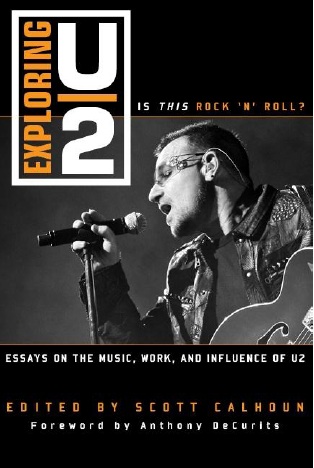
Killing Bono is a film about fame. Specifically, U2 band fame. It is a movie adaptation of Neil McCormick’s Killing Bono: I Was Bono’s Doppelganger
Both boys attend the same school. Both boys form a band. Everything one band touches turns to gold, as they become the world’s biggest band. Everything the other band touches, turns to failure, lost in the Irish hills as U2 play Croke Park in Ireland.
The film bears little resemblance to the real book ie real life. Or so the author, McCormack would have us believe
each rewrite it became more detached from my life as I remembered it. Characters were compressed. New characters invented. Incidents exaggerated. The story started to take on a logic of its own. By the 14th draft, they had me running around Dublin with a gun, hunting down my old friend.
Cinematically, the movie struggles. It is hard to find much empathy for the main character (Ben Barnes as Neil McCormack), so driven is he by his preoccupation with fame. Which makes the entire project somewhat ironic. Who would buy the book or care about the film without the famous word “Bono” in the title?
Which does, in turn, provide some theological interest. The film is essentially an anti-film, a celebration of failure, of the inability of a person with obvious musical talent to pursue their dreams. In a world awash with celebrity, McCormick finds fame (in the book and through the film), through telling the story of his inability to find fame.
There are some moments of humour. Most rely on band jokes – references to Bono’s height, or recognition of band posters. In sum, while the film Killing Bono might be of interest to U2 fans (of whom there are many), it struggles to rise beyond being a band film, a poor attempt to cash in on the fame of another.
(NB the film includes nudity, violence and drug use).
Tuesday, August 16, 2011
Of Gods and men: compulsive viewing
“compulsive viewing for a Western Christianity tempted to reduce faith to a decaffeinated religion of gentle Jesus hymns shared over civil pot-luck meals.” (a line from my just completed film review).
Based on a true story.
“This is mission as service. It draws energy from the life of Christ and finds expression in caring for the sick, filing forms for the illiterate and learning the Koran. The rhythms lap in gentle harmony with their Muslim neighbours. It is an uplifting and positive model of mission, a reminder that different religious faiths can – and have – lived in beneficial co-existence.” (a paragraph from the same review, for those with a missional bent).
For more
– on Christian-Muslim interaction on this blog see my summary of Jenkins Lost History of Christianity here and here.
Tuesday, July 19, 2011
Harry Potter as a Christ figure
I went to watch the final Harry Potter film last week. I’ve not read any of the books, but my kids had suggested I watch all the films in preparation for this grand cinematic finale. (For my review of Deathly Hallows part 1, with a focus on character, go here).
The theological part of my brain came away thinking about Harry Potter as a Christ figure. Lloyd Baugh, Imaging the Divine: Jesus and Christ-Figures in Film
First is films which tell the gospel story of the historical person of Jesus of Nazareth (eg King of Kings, Godspell, The Last Temptation of Christ, The Gospel according to Saint Matthew). Obviously that does not apply to Harry Potter.
Second are movies which on the surface are simply telling a story, but offer deeper links and parallels to Christ. Baugh calls this the arena of analogy; “They are not unlike the parables of Jesus which, when “read” on a literal level, remain brief narratives of human experience, but when interpreted metaphorically, fairly explode with theological and christological significance.”
Baugh suggests 11 elements by which to assess whether or not the characters in these movies function as Christ figures:
- mysterious origins
- conflict with authority
- performing of wonders
- attracting a group of followers
- becoming a scapegoat
- withdrawing to a deserted place
- acting as a suffering servant
- showing a commitment to justice
- entering passion
- reaching out to the repentant thief and
- a metaphorical resurrection.
Baugh asserts that, since “the filmic Christ-figure does not always reflect the totality of the Christ-event”, the eleven elements are descriptive and generative rather than exhaustive.
So let’s place the 11 alongside Harry Potter (after the fold line cos of spoilers) (more…)


 )
)