Monday, September 19, 2011
UK adventures 2 – answering the emigrants letter
I spent quite a bit of creative time today at the Manchester Art Gallery parked in front of James Collinson’s Answering Emigrant’s Letter.

The map on the desk is South Australia, and the painting is a snapshot of a UK family writing to a family members who’ve emigrated.
I love that the boy is writing the letter, not the parents. So many migrant dreams are invested in hopes for their children.
I was fascinated by the two sources of heat and light – the fire and the light through the window. It is like the family is caught between them both. The comfort of a winter fire, of staying indoors, of being safe and warm. Yet the lure of the light, of heading outdoors, of taking a risk. It’s a fascinating polarity, and a call to discipleship for me.
Will I stay safe? Or take a risk, step toward an unknown?
Sunday, September 11, 2011
magical night: Review of Shaun Tan’s Arrival
 Just back from a magical night at Her Majesty’s Theatre, experiencing Shaun Tan’s The Arrival, put to music by composer Ben Walsh. A visual and auditory experience that over 1 hour 15 minute, engaged The Arrival
I came away stunned by the ability to connect and story tell, without words. One hour and 15 with NO words.
I came away reminded of the importance of being invited to pause, forced to take the time to dwell, and in so doing to discover meaning.
I came away struck by the potential for all-age worship, kids aside, in front and behind, all transfixed.
Why can’t church be a wordless, intergenerational invitation to pause and ponder?
I came away reminded anew of the enormous courage required to migrate and the reliance of the generosity and time of the host culture. (No Taylor’s cried that I am aware of!) Tan’s father is a migrant from Asia. Now here in Australia we delight in Tan’s art and I can’t help wondering how many more Shaun Tan’s might be in the next load of migrants washing up on Australia’s shores.

Shaun Tan is an Australian treasure, a noted illustrators of picture books and young people’s literature. I’ve blogged before about discovering his book, Eric and the theology of hospitality buried in illustrations.
Sunday, August 07, 2011
Spirituality and Paul Kelly: A concert reflection
 “An Unforgettable Night of Paul Kelly Songs as you have never heard them before” was the billing for the concert. Australian composer, Paul Grabowsky, had taken various Paul Kelly guitar ballads and reworked, rewoven, remixed them. The result was a fresh and vital take, that served to showcase not only the songwriting gifts of Paul Kelly, but those of the Australian Art Orchestra, singers Vika and Linda Bull and The Choir with No Name.
The concert blurb described how the set list originated.
“Weather? Seasons? Women’s names? Drinking? I’d recently written a song called God Told Me To, the last verse a direct lift from Revelations, which put me in mind of other songs I’d written using Biblical language.”
And so the concert was about God. Strange really, to sit in a 21st century concert hall, listening to some of Australia’s finest musical talent sing. About God. Song after song introduced by explaining the connection to Biblical characters or texts. A live “Bible and culture” tutorial (It’s a topic we teach in our B.Min degree).
Here was the playlist.
48 Angels
Be careful what you pray for
The gift that keeps on giving
Surely God is a lover
Love is the law
Coma
My way is to you
Glory be to God
Jump to Love
Passed Over
Meet Me in the Middle of the Air
God’s Hotel
Gathering Storm
It is interesting to place this play list alongside another Paul Kelly playlist. I teach a B.Min class called Reading Cultures and we spend an hour on the music of Paul Kelly. We invite a local Uniting Church minister, Sean Gilbert, to play some songs and reflection on the significance of Paul Kelly.
The play list is so very different. It can include songs like
From Little Things Big things Grow
How To Make Gravy
When I First Met Your Ma
If I Could Start Today Again
Dumb Things
Deeper Water
The shape of spirituality is very different. It is about justice, about listening to indigenous voices, about facing our mistakes, about ritual and seasons, about growth through life, about absence and mistakes, about the seasons of life. It expects to find God not only in Biblical lyrics, but in all the places of our life, in all aspects of being human.
Which for me is a far more grounded, far more wholistic, far more interesting approach to spirituality. It expects God to be a whole lot bigger, big enough to be part of our life as well as big enough to speak through a book. I wonder if it is perhaps a bit more intrusive, God jumping out of church and asking to shape our lives 24/7.
Further
Paul Kelly, Meet me in the middle of the air and Ascension Day worship here.
Paul Kelly, Sound Relief Bushfire appeal and the spirituality of public lament here.
Paul Kelly and the Parables of Matthew 13 here.
Tuesday, March 29, 2011
Give us this day our daily bread: a just theology of food? part 2
Last week I began to sketch a just theology of food. I offered a short quiz:
- True or false: Wealthy suburbs are more likely to have fast-food outlets than poor ones.
- True or false: Healthy food is more expensive than fast food.
- True or false: 77% of Australians eat together as a family five times a week
- True or false: In Australia, more women are head chefs that men
- True or false: On a daily basis, women spend more than twice as long as men on food preparation and clean up.
- True or false: The biggest global killer is a disease called New World syndrome
(Answers, for those interested are at the bottom of this post).
My contention is this – that when Christians pray Give us this day our daily bread, we must pay attention to think about who cooks, who cleans, who eats what, and with who.
In the class I offered two resources. First, a story from Rebecca Huntley’s (Eating Between the Lines
The second is the book by John Koenig, Soul Banquets: How Meals Become Mission in the Local Congregation
“we have seriously undervalued our church meals, both ritual and informal, as opportunities for mission … to realize this potential, we, like the disciples on the road to Emmaus, must have our eyes opened by the transforming presence of Christ at our tables.”
He provides a checklist on what it means for meals to become mission:
- This is serving graciously with human contact. Koenig cites the example of one the busiest church food kitchen in New York, in which each volunteer is expected to find ways to encourage eye contact and genuine conversation.
- This is setting tables, serving food, eating in patterns and places that speak of God’s abundance and creativity.
- This is encouraging role reversals by finding ways for all, helper and hungry, to contribute through a diversity of gifts.
- This is committing to a long-term, intentional project, a willingness to eat together a lot, because in that eating good things will happen.
Give us this day our daily bread is an invitation for all those who pray that prayer to consider what and how they eat. And it opens to door to a whole new way of being in mission – around tables, among strangers, with justice, generosity and humanity. Such is a just theology of food in the Kingdom of God.
Friday, March 25, 2011
Give us this day our daily bread: a just theology of food?
(Click here for the food and equality quiz)
Last night the Reading cultures/Sociology for ministry class I teach talked about food. And the fact that, to quote Rebecca Huntley, “food is rich in meaning … eating habits can be a useful means of describing social distinctions.” (Eating Between the Lines
We started with a quiz, some statements about food and eating habits in Australia, drawn from her book, Eating Between the Lines
What’s this got to do with being Christian? Well it this a faith that in the Eucharist, places the eating of bread and wine at the centre of life. And a faith that prays “Give us this day our daily bread.”
Not “my” daily bread, but “our” daily bread.
In other words, it should want to act when being on a low income makes it harder to pray “Give us this day our daily bread”; when being time poor makes it hard to pray “Give us this day our daily bread – healthily”; when living in remote indigenous communities makes it almost impossible to pray “Give us this day our daily bread.”
In my next post I’ll post the research data that lies behind the quiz and point to the resources we then discussed in class. In the meantime, take the food and equality quiz (click here for the food and equality quiz)
Wednesday, October 20, 2010
faith making sense?

Senses play
Bodies create
Humans diversify
see
hear
smell
taste
touch
Christianity. Is yours
making
good sense?
Friday, June 04, 2010
resourcing baptism today: a baptist in a Uniting world
One of the peculiar parts of my current call is having to work out being Baptist in a Uniting denomination. I’ve got roots and life experience and intellectual convictions about being Baptist, but in the strange ways of God, get to express that within a Uniting context. Which has made the last few weeks really fun, because as lecturer in a class called Church, Ministry, Sacraments, we’ve been looking at baptism. And being Uniting – they baptise kids! So, in order to honour the Uniting context, we’ve had some local Uniting folk in lead the class. It’s been quite rich to listen, learn, reflect.
As the topic drew to a close, I offered a few concluding comments to the class, as I’d listened to a rich range of discussion. The class seemed to find them very stimulating in terms of ministry practice, so I’ll blog them here.
Adult baptism should be normative. Please keep being profoundly disturbed by that.
As it says in the Uniting Church Basis of Union, “The Uniting Church will baptise those who confess the Christian faith, and children who are presented for baptism.” Infant baptism is NOT the only path. Where are your adults? If you don’t see them being baptised, please be disturbed.
Baptism is a means of God’s grace not the church’s grace.
It is easy to focus on who should be baptised, especially when people roll up wanting their kids baptised because their parents or grandparents had it “done.” It’s too easy for churches to start to see themselves as boundary keepers, when in reality baptism is God’s grace, never humans.
A person’s responsibility is ours to resource but never to expect.
Baptism invites a response, an ongoing walk of discipleship, an ongoing training and formation in being Christian. The church has a rich range of resources to nourish this. In the Uniting worship book alone, there are nearly 100 pages of resources: Pathways to discipleship like A rite of welcome; of calling; for all the Sunday’s in Lent. Or Reaffirmation of Baptism rituals for congregation and individual. There is no excuse for a people of the liturgical book to not be offering lots of rich resourcing.
Offer a variety of resources – both inside and outside the church.
This links with the above, but also applies to baptism itself. Birth of children is a rich time for people. Don’t just offer two options – baptism or nothing. Some people want naming ceremonies, others an excuse to gather friends to celebrate. In my ministry practice when it came to parents wanting something for their kids, I used to suggest two things
- can I come back at the anniversary to light a candle – and thus maintain pastoral contact
- how about start with a DIY approach to your child – I’ll provide you with resources but how about you have a first go at writing the service. This turns me from patroller of boundaries and doctrines, to ritual adviser.
As ministers and as churchs we have lots to offer – we work with words and worship, we regularly create safe spaces, we have heaps of rich symbols and ideas. Offer these as well as baptism. At Opawa we even once ran spirituality resourcing workshops in terms of birthing and parenting rituals.
Saturday, May 29, 2010
Pentecost season book review: Holy Spirit. Contemporary and Classic Readings
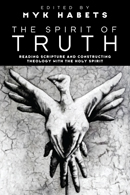
For too long the Spirit in Christian thought has been stereotyped, ignored as the forgotten person of the Trinity, left to the Charismatics and Pentecostals. With the church celebrating Pentecost last week, it is surely a season for us all to be reading around the third person of the Trinity. A book like The Holy Spirit: Classic and Contemporary Readings
A feature of the readings is their genre – while some are theology texts, others are sermons, or songs, or art works, or descriptions of liturgy. As such it reminds us of how much theological work can be done by the church – in our Pentecost sermons, in the songs we sing about the Spirit, in the art we promote, in the words we say at communion and baptism.
Each reading has a helpful introduction by the editor, theologian Eugene Rogers. (I’ve noted before here and here his excellent After The Spirit: A Constructive Pneumatology From Resources Outside The Modern West
One gripe is the lack of readings from the contemporary Pentecostal or charismatic world. There is now quite enough material to have provided such a section. Is the absence yet another indication that the problem the church has with the Spirit is not just historic, but still contemporary?

Sunday, February 14, 2010
wood fired pizza worship
 I was making pizza on Saturday afternoon. Homemade tomato pesto, mixed with finely cut basil and baby spinach leaves (from the newly planted “only-been-in-the-country-3-weeks-garden” of course!), topped with local sundried tomato and lots of cheese. Very simply, very yummy. (Picture does not represent the reality).
And I thought again about pizza church. Not just pizza as in, oh, we are funky because we eat pizza after worship. Which would be yummy enough.
But more like that sense of making a pizza out of what’s in the fridge. And how what’s in our fridge is simply a reflection of our lives. So why can’t that be the central image for being a worshipping community?
I mean, what it would be like for church to set up a woodfired pizza outside. Bases supplied. And the invitation for worship to be about bringing toppings from what’s in your fridge.
You could have a thanks pizza and a confession pizza and an intercession pizza.
And as each pizza is served, there’s time for a toast. And those who want can name, either by ingredient or by spoken words, what they might be bringing – their praise and their confession and their intercession. And so the pizzas are the worshipping work of the people, what’s in our lives, brought to community, shaped by the liturgical pattern of traditional worship – praise, confession, prayer.
This might not be a normal way for people to experience church, but it would be easy to run an experiment, try it for a few months, simply by working your way through say the gospel of Luke. Lots of food moments there, and so the preaching/teaching moment would involve serving the 2 fish and 5 loaves pizza, the eucharist pizza, and so on through the Gospel of Luke, using table fellowship as the metaphor. In other words, the Scriptures are embodied in the “Bible pizza”, offered to those who gather.
A simply over the top idea and I returned to the much simpler task, of calling the Taylor tribe for homemade pizza. And together we gave thanks – for a few of our favorite things – weekends and each other and the promise of a new life.
Thursday, October 29, 2009
save the last latte for me
I was teaching my last class ever at Laidlaw College (Christchurch) today. Which made it a moment of personal significance. Happily, it was the Missional Church Leadership course, one that I have pioneered, and now taught 5 times in 4 different cities in Australasia. A personal favourite, so I nice course to end on.
We headed off to the local cafe and sat around a long wooden table. Coffees all around, on my “leaving budget”! Together we all shared a memory, something about the Missional Church Leadership course that might stay with us – Luke 10:1-12 as hopeful hook and challenging platform, a sense of safe space, a model of leadership as reflective and bottom-up, benedictions as physically facing the door, taking the course out of classroom and to community tables.
And then we read Luke 10:1-12 together. A bit of a recurring Steve Taylor/mission, church, leadership text! What struck us? What question might we have for a New Testament scholar?
It was a fitting conclusion: in cafe rather than classroom, around a shared table, drink in hand, Biblical text central, a growing community of pilgrims. A moment worth saving the last latte for.
And what struck me? The need to dwell deeply. That as I leave one (Christchurch table) and journey to another (Adelaide table), my task is to dwell deeply, to make a priority of relationships and food and drink and consistency and hospitality. I have offered peace and found peace in one place. May it be so in another.
Monday, October 19, 2009
u2 concert’s and a world transformed by the gospel
This is part of Laidlaw College information night promotion, short video’s of people responding to the question: so what part of your world do you most want to see transformed by the gospel? Here’s my contribution, reflecting on my recent U2 concert experience
click here to watch 25sec video clip
Check out the rest – other religions, Japanese people, young people, community spirit – here. It’s an interesting initiative – using social networking – specifically Facebook, as a promotional strategy.
Friday, September 11, 2009
springtime spirituality
As I left work on Wednesday, I was greeted with a waft of flowering cherry blossom. All around us (here in the Southern Hemisphere) are reminders of spring – bright daffodils, delicate blossom, cute lambs.
 Spring reminds me of the words of Jesus, I have come that you might life, and life to the full (John 10:10). Words of promise, of intent, like spring, of hope in potential for beauty.
Parker Palmer, Christian author, educator, and activist (in his wonderful book, Let Your Life Speak: Listening for the Voice of Vocation
May God surprise us all this spring. May it happen as each of us take time, to notice the waft and the unexpected colour, not only in the world around us, but also in our lives and in the people around us.
Some practical ways to embrace a springtime spirituality:
1. Pause every time you catch a waft of spring. Breathe deep, opening yourself to hope and potential.
2. Sit and consider a blossom tree. Visualise yourself as a dormant bud. Thank God for the energy that flows through you, so often unrecognised.
3. Wait for a wind, then seize the moment and lie under the blossom. Let the gentle caress of falling petals become your prayers for those you know who struggle.
4. Like unexpected bulbs, take a moment to send random cards, unexpectedly, to people you know, thanking them for the colour they bring into your life.
5. Use the hope of spring, the lengthening days as a chance to replace one destructive pattern with one lifegiving behaviour.
Tuesday, September 01, 2009
a seasonal spirituality of wine making
I was re-reading my sabbatical 08 journal last week. Partly because it was this time a year ago the Taylor family headed off (August 20-Nov 1). Partly because of the news that two of my sabbatical writing projects have been given the green publishing light. (1st, a chapter on the Bible in bro’town accepted for an edited book, published by Semeia Studies, designed to be used in theology and popular culture graduate level courses. 2nd, a paper constructing a pneumatology for engaging popular culture accepted as a book chapter, to be published by Wipf and Stock publishers.)
As part of the sabbatical, I took a 3 day retreat, walking the Riesling trail and re-reading my journal, I found the following quote:
“It begins with the old, dry grown vines gently tendered. Berries gently hand picked at optimal ripeness, producing full-flavoured fruit. Crushed, hard plunged, basket pressed to extract intense juices. Add passionate wine making skills, maybe an influence of oak. And in time …. delicious, full-bodied, flavoursome wines just for you to enjoy.”
 It caused me to reflect on seasons; of how vines become laden become harvested become processed become served. What season am I/you/Opawa? What practices and resources are needed for this season? (And all this before you even think about toasts to new wineskins.)
Updated: In honour of this post, I got my Spirituality Of Wine
Sunday, June 21, 2009
a christian response to swine flu part 3
Short-term, what 10 things would you give a family suffering from the flu? With people in our community now nursing sick kids, we want to put together a “thinking of you flu pack” (a variant on pastoral care through transition packs); some things that could be dropped into a letterbox and might bring cheer to the sick and those caring for the sick. Any ideas?
Longterm, this quote from the local newspaper: “Most infectious diseases are diseases of poverty.” Ouch. I stopped and read that again.
“And beyond fears of infection, there is a bigger story about inequality and social conditions …”As a society, we’ve got to look at the conditions some members of our society live in and recognise that the conditions in which poor people live are important for all of us. If we don’t reduce inequalities, it does ultimately affect all of us. And this is a stark example of that. This is what the reformists in the 19th century argued about poverty and disease. We look back and think it was about cholera and tuberculosis and it doesn’t apply anymore. It still applies. This is exactly what’s happened in Christchurch.” Alistair Humphrey in The Press, D2.
In other words, housing inequity is an issue that churches who dare to take the endtimes dreams of Isaiah 65 seriously.


 )
)