Friday, June 17, 2011
teaching Jesus today
“…Theologians are now primarily called to provide not a theoretical argument for Christianity’s plausibility, but an account of how Christianity can be part of the solution—rather than part of the problem—on matters that make a life-and-death difference to people, especially the poor and the oppressed. Kathryn Tanner, Kathryn. “Christian claims: how my mind has changed.” Christian Century 127, no. 4 (February 23, 2010), 40.
This quote (hat tip Paul) haunts me, a call for those who teach, research and train leaders.
It was hugely important in the new VET Christology distance course I have been writing this semester and in my own thinking, including the Flinders University debate.
Wednesday, May 25, 2011
leading and fresh expressions
I’m back from a rich and thought-provoking time with the Anglican clergy of South Australia. Throat a bit sore and grateful for all those who prayed. One of their requests – to reflect on leadership and fresh expressions – involved me reworking some previous work, plus developing some entirely new material. Time consuming, but quite rich personally. It involved reflecting on the leaders who had helped shape my understandings of leadership in fresh expression
- Mary who births – hands open to God and eyes open to the world
- Elizabeth who blesses in Luke 1:39-45
- The unnamed in Luke 10 who speak peace and dwell at tables
- Paul in Athens who looks for unknown Gods
I explored the postures toward culture and the habits at work. This included some contemporary leadership and change insights, including appreciative inquiry and Roxburgh’s three zone model. Plus some stories, via God Next door and my Opawa experiences.
We ended by praying for each other (the person next to us), aware that we are all uniquely gifted, we are all uniquely called to keep growing as disciples and thus (for this group) as leaders and ministers.
It seemed to be helpful – as someone commented “You took what was beyond us and made us feel like we could be part of it.”
Friday, May 13, 2011
spaces and places used well in mission
I am looking for examples of spaces and places being used well in mission. I want them by Wednesday 18th May, both a picture and a one paragraph explanation of why you think that space or place is being used well in mission and ministry.
You see my Reading cultures/Sociology for ministry class last night explored the theme of spaces and places. I began by talking about spaces and places of spiritual significance in New Zealand – Waitangi, Maori Jesus at Ohinemutu, Parihaka, Anzac War memorials.
The class then brainstormed Australia and they did some excellent work. I then wrote a statement on the board
spaces and places are not important to Christian ministry
After some work in “yes” and “no” groups, an excellent discussion resulted. Words like creation got used. The Old Testament was scanned – the setting up of altars yet the encouragement to keep on pilgrimage. The ministry and mission of Jesus, in birth, life and resurrection was trawled.
The potential of spaces and places – in time, in place, in buildings, in material elements of bread and wine – became evident. Having indigenous and non-indigenous voices in the class became a great gift as the complexity of contested spaces and places, including colonisation were explored. An excellent night of collaborative learning was had!
As we left, I suggested some practical homework. That during the week, each person take a picture of a space or a place they think is being used well in mission. Email it to me (steve at emergentkiwi dot org dot nz). And we will share them together, as practical examples, as we start our class next week.
So why not join us. Enrich our class with your voice, your location, your example of a space/place you think is being used well in mission and ministry. (And in so doing, you will help reinforce the value of social media, which the class explored 2 weeks ago with Andrew Jones).
In return, after the class, I will then put the entire resource – photos and explanation – back up online as a general mission resource, some 2011 examples of spaces and places being used well in mission and ministry!
Thursday, May 05, 2011
Jesus today at Grow and go 2011
Grow and go is one of those joyful surprises you stumble across when you move to a new place. A weekend dedicated to learning. An invitation to the whole church across South Australia. Some shared input and worship. A whole lot of streams, so that a team can pursue different learnings.
If I was a minister, I’d use it as a key part of my leadership development. I’d ask my leaders team to commit to a retreat once a year, and a Grow and go learning experience once a year. One a chance to focus on the church, the other a chance to upskill.
 It’s happening again May 13-14. The theme is God@earth: being present, real, local. There are 8 streams – on faith sharing, working with families, preaching, understanding Uniting church, pastoral care, preaching Matthew, creative worship and understanding Jesus.
I am doing a keynote address on the Friday evening. It will include stations and input exploring feelings, colour and the mission of God. I’m then doing the understanding Jesus learning stream over Saturday and Sunday, exploring more deeply how life can be shaped by Jesus as sufferer, liberator, culture-crosser, cosmic healer, reconciler.
For more details Grow and Go 2011.
Saturday, March 26, 2011
colour my feelings: how the feelings of Jesus shape the mission of God
Updated: This post continues to grow. The relationship between feelings, colour and the mission of God are being developed further at a talk I am giving, May 13, Friday evening, at Grow and Go 2011.
What colour is
- sorrow?
- crying?
- radical love?
- anger?
- compassion?
According to Matthew Elliott
“The theologies of the New Testament, as we have seen, do not do a good job in incorporating emotion into their framework. As it is in secular ethics, in New Testament ethics and theology emotion is often belittled, trivialized or ignored.” (Faithful Feelings: Rethinking Emotion in the New Testament
256).
According to adolescent psychologists, Haviland-Jones, Gebelt and Stapley
“We usually think of learning how not to be emotional rather than whether or not emotions are being refined and transformed to mature forms.”
In the last month my home town of Christchurch has been trashed by an earthquake, while Japan has gone radioactive and Libya has become a warzone. In response, I’ve been reading the Gospels, looking for the feelings of Jesus, wondering what I might learn from God who experienced sorrow, crying, radical love, anger, compassion.
And I’ve become more and more intrigued by how the feelings of Jesus shaped his mission, and the implications for how the 21st century church needs to feel, think and act.
Faithful feelings: how the feelings of Jesus shape the mission of God.
Which I will be preaching on tomorrow, Sunday March 27, 6 pm at Adelaide West Uniting. And exploring in more depth a keynote address at Grow and Go weekend, May 13-15, at Uniting College.
Hence my question, what colour is
- sorrow?
- crying?
- radical love?
- anger?
- compassion?
Thursday, March 17, 2011
visualisation: creating multiple acts of beauty
This is a website to get lost in. I admire (yearn for) the gift of making complex things simple, the beauty that comes from clarity. This is a fascinating new venture which attempts to visualise data. It involves academics and design schools from around the world.
Note the key words:
complex, interdependent
understanding proceeds action
design is about integration.
it is dynamic, based on people doing things
design enables us to negotiate a revolution
integrate and collaborate
I have no idea how this can be applied to missiology and theology, but I’d love to be part of a conversation on this.
Posted by steve at 10:19 AM
Friday, November 12, 2010
a way to teach theology
Here’s an idea for teaching theology. Say you have a format which includes tutorials. You also have readings you expect (!) students to read. And a concern that students don’t read enough.
Why not offer an introductory frame, based say around the Wesleyan quadrilateral – experience, tradition, Scripture, reason.
 (Hat tip: Diagram from Scott McKnight)
(Or perhaps you’re a bit more hip and you want add a fifth – creation and culture – ie Wesleyan pentalateral!).
(Or the practical theology model offered by John Drane, After McDonaldization: Mission, Ministry, and Christian Discipleship in an Age of Uncertainty
Having provided the frame, as you hand out the readings, also handout to each student 10 cards – 2 experience cards, 2 tradition cards, 2 Scripture cards, 2 reason cards, 2 creation/culture cards.
Suggest the following tutorial format:
- each week the lecturer will offer both a case study question and a set of readings. Say the topic is Spirit and the church. So a question could be “Can a person call themselves a Christian and not be part a the church?” and the reading could be a chapter from Clark Pinnock’s fantastic Flame of Love: A Theology of the Holy Spirit
- each week the lecturer will stand at the board and prepare to scribe the student discussion
- each week discussion is invited. This occurs by inviting each student to play one of their cards. They choose whether they bring an experience, or a Scriptural reflection, or an insight from tradition, or some reason, or an artifact from creation/culture. (Over 10 weeks, with 10 cards, they choose how they prepare for the tutorial and what they read/reflect upon.) All must be in relation to the case study question. Discussion and interaction occurs.
- in the last 15 minutes you switch from discussion to reflection on the process. Overall, how do the “cards” integrate? are there missing or overabundant parts? what are the implications?
- each student then writes up a 1 page reflection on the case study question, upon which they are graded. This is handed in at a later date and ensures that they are provided time to settle their own theological view in relation to the question. Students gain extra marks if they do extra research over and above the class discussion. So if a class finds a weakness one week in say tradition or Scripture, and the student goes away and does extra work in this area, credit is gained.

My hunch is that this would provide both an interesting way for students to engage in theology and a way for them to continually reflect upon the actual process by which they do theology. It would encourage reflection that is not just book based and would helps students develop in areas they are not instinctively strong in.
Thoughts?
Tuesday, October 26, 2010
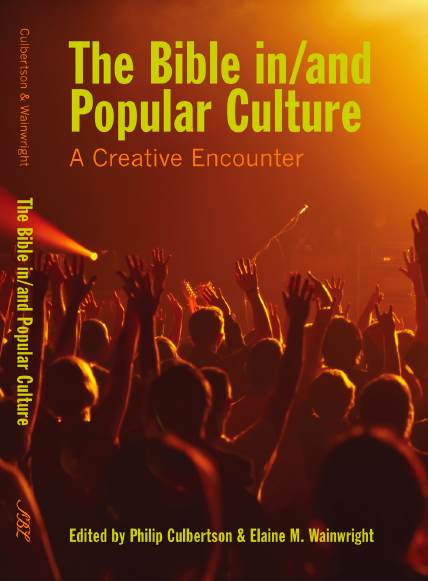
new book release: Bible in/and Popular culture: a creative encounter
 I have a book chapter in a new release, out this month. Titled The Bible in/and Popular culture: a creative encounter, it is an exploration of how the Bible reads pop.culture – and how pop.culture reads the Bible. (Available for purchase on Amazon
A lot of writing has done on the Bible and film. This book charts a different path and focuses on areas including the Bible and other popular media like hip-hop, graphic novels, animated TV cartoons, apocalyptic fantasy. Mine is a chapter on Bro-town, an animated TV cartoon, set in Pacifica urban culture. The title is “Reading “pop-wise”: the very fine art of “making do” when reading the Bible in bro’Town.”
Updated: By request, here is the full list of contributors
Introduction by Elaine M. WainwrightSome Novel Remarks about Popular Culture and Religion: Salman Rushdie and the Adaptation of Sacred Texts by Michael J. Gilmour
Red Dirt God: Divine Silence and the Search for Transcendent Beauty in the Music of Emmylou Harris by Mark McEntire
“Here, There, and Everywhere”: Images of Jesus in American Popular Culture by Dan W. Clanton Jr.
’Tis a Pity She’s (Still) a Whore: Popular Music’s Ambivalent Resistance to the Reclamation of Mary Magdalene by Philip Culbertson
Spittin’, Cursin’, and Outin’: Hip-Hop Apocalypse in the Imperial Necropolis by Jim Perkinson
The Bible and Reggae: Liberation or Subjugation? by Noel Leo ErskineHelp Me Make It through the Night”: Narrating Class and Country Music in the Theology of Paul by Tex Sample
Jesus of the Moon: Nick Cave’s Christology by Roland Boer
Prophetic Voices in Graphic Novels: The “Comic and Tragic Vision” of Apocalyptic Rhetoric in Kingdom Come and Watchmen by Terry Ray Clark
Reading “Pop-Wise”: The Very Fine Art of “Making Do” When Reading the Bible in bro’Town by Steve Taylor
Daemons and Angels: The End of the World According to Philip Pullman by Tina Pippin
Close Encounters: The Bible as Pre-Text in Popular Culture by Laura Copier, Jaap Kooijman, and Caroline Vander Stichele
Pop Scripture: Creating Small Spaces for Social Change by Erin Runions
Personally, career-wise, I am pretty stoked. The publisher is the Society of Biblical Literature, which is the oldest (1880) and largest (8,500 members) international scholarly organization in the field of biblical studies, so it’s neat that first, they are publishing in this area and second, for me to have work published in such a place.
NB 1. One of the talks I gave at Spurgeons College in September drew on this.
NB 2. For a description of my method and some of the resources I used, go here.

Tuesday, September 21, 2010
stories stories everywhere. mission and discipleship in Mark’s gospel
Today (UK Monday) has been a fun workday, preparing for the Network of Biblical Storytellers Conference annual conference, in Adelaide, this weekend coming. I’m down to do 3 keynote sessions, plus a workshop on storytelling in general. I’ve been looking back through the range of stories that sit on my laptop and framing them around three questions
- What makes a good story?
- Where do stories come from?
- Where do stories take us?
My goal is to tackle these questions entirely by telling stories. It’s been so much fun. Stories allow one to be less linear and less structured. It’s been fascinating to lay different stories alongside each other and start to see how they talk to each other.
My thinking was that I would probably be in a more creative place before flying back on to Australia tomorrow. So today was spent testing this theory. The big challenge today was writing a whole new story. The guts of my keynote sessions are stories emerging from the gospel of Mark. I had two already, which I wrote last year. At the time I had the creative germ of an idea for a third in the trilogy. So this conference was a chance to capture that creative germ.
I am fascinated by the fact that the world of Jesus was pretty small and his discipleship outside the 12 disciples seemed so haphazard. So what might happen if a healed leper (Mark 2) had a chance meeting with the woman with the issue of blood (Mark 5). Would the recognise the same Jesus in each other’s stories? Would they respect the potentially diverse discipleship path of each other?
Friday, August 20, 2010
Tasmanian hospitality?
I am spending the weekend with the Presbytery of Tasmania, speaking with them on the topic of Your place or mine: hospitality as mission, staying at Port Sorrell, which I am told is beautiful. (My initial scoping, with some really insightful comments is here).
I am speaking four times as follows:
– Luke 10:1-12: Aim: Introduction to a Biblical frame for hospitality as mission at their place, grounded with two congregational stories.
– Luke 14: Aim: explore practices of hospitality at tables, grounding with 3 practices and two stories for congregational life.
– Luke 19: Aim: speaking the gospel at another’s table and the challenge to contextualisation of God’s story.
– a workshop exploring a range of tools important for leaders and leadership teams in the journey of change.
It has been quite energising, yet quite demanding, putting it all together. Two books I’ve found most helpful have been Amos Yong’sHospitality and the Other: Pentecost, Christian Practices, and the Neighbor

Wednesday, July 28, 2010
talking mission head in the UK?
There is a UK research and networking conference I would love to attend in the UK on the weekend of 17-18 September. It looks a worthwhile conference, but it is a long way to fly for a few days. So I thought I would use the blog to flag the possibility and ask if any of my UK readers could use a talking “mission” head either before or after.
I have spoken in a wide range of denominational contexts (and can provide references – even a Bishop(!) – if wanted). I can engage at both academic and popular level. My interests are in mission, leadership, change.
More concretely I have recently been found talking on
- leading an established church through change, the practical and spiritual challenges of a “mixed economy”
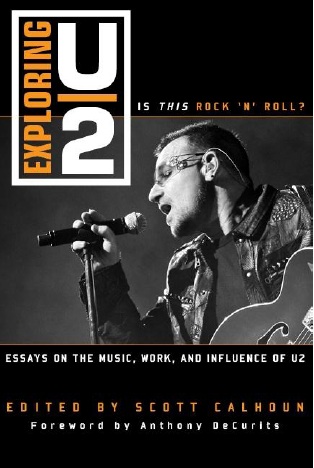
- worship, and proclamation, as a creative conversation between installation art and the evolving live performances of band U2
- theology of pop culture, using pneumatalogy and Luke 10 as a lens
- cultivating innovation in leadership and communities
- hospitality as mission, particular as it related to their turf, not ours
- how colonised communities resist their colonising cultures, with a specific focus on Bible reading practises
- fresh expressions downunder, including use of lay teams, public art installations and spirituality2go
If you think I could help serve you, drop me an email steve at emergentkiwi dot org dot nz
Friday, June 11, 2010
a brilliant ending: teaching sociology for ministry
I am still buzzing at the presentations of students in my Sociology for Ministry class. They had done so much work! Outstanding in their creativity and their attention to both sociology and theology. One group presented an idea of opening a Sudanese cafe as a way of welcoming migrants on the fringe of an existing church. Another suggested a video making competition as a way to work alongside unemployed working class youth. Another suggested a multi-purpose spirituality centre in a new build community and even built their own website. Their presentations each took over 45 minutes each, carefully attending to context, articulating clear theologies of ministry, emerging from grounded research of existing communities and existing ministries.
Sociology for ministry is a compulsory introductory level paper in the degree. The aim is to explore at the interface between society and ministry in the Australian context, developing skills so students could research their communities and reflect about the implications for ministry.
Not being a local, and only having been in the country a few weeks, a foreigner teaching Sociology for (Australian) ministry could have been a disaster. What do I know about Australia?
Equally, not being a local, teaching Sociology for (Australian) ministry could have been an advantage. Rather than show my knowledge, could I show them the research tools I am using to try and understand my new local context? So each week I used a different type of sociology tool – poetry, songs, movies, demographics, fiction novels, sacred places, history – to cover a range of topics including family, work, leisure, religion, plurality, spirituality, globalisation, IT cultures.
In order to facilitate shared learning, I decided to set a group learning assignment. (For more on creating class learning communities see here.) Each group got given a prepared case study, a real local community. Each case study noted some community strengths and some community challenges. The task was – as Sociology for Ministry consultants – to present to a church leadership team (me) some ways forward that were faithful to both the sociological context and had a clearly articulated theology of ministry. While all of us – lecturer and students – were a bit nervous, the results exceeded all of our expectations.
If this is the future of Australian ministry, there are some real possibilities brewing. It was also an endorsement of the essential formational nature of papers on contextual ministry, of group learning processes and the potential of case studies to bring energy and grounded focus into a class.
Thursday, May 06, 2010
Where does the hope come from? guest lecture at Queensland Synod
I’ve been asked to deliver something called the Norman and Mary Miller Lecture, to the Uniting Church Queensland Synod, on May 23. So I’ve been chewing away on what I might say and how. So much, so little time. Here is my current thinking.
TITLE: Where does the hope come from?
(The title is a deliberate play with my Principal Andrew Dutney’s book, titled Where did the joy come from? He’s from Queensland and in the book he explores the history of how the Uniting Church was formed. Which got me thinking about what it might mean to frame mission in terms of “where does the hope come from?).
BLURB: The task of the Norman and Mary Miller lecture is to apply the Church’s past witness to the social context of the modern day. In recognition of Rev Norman Millar’s work in Church Extension, Steve will reflect on his recent ministry experience, which involved leading an established church in a transition into a new mission future. This ministry story will be set within a leadership framework, in particular the recent NCLS research into Australian leadership. It will also chart the mission lessons learnt and the implications for a theology of change. Steve will seek to weave personal experience, theological reflection and contemporary understandings of leadership and mission.
Monday, May 03, 2010
mission that’s out of the valley 2: motivations for Uniting mission
So on Saturday I spoke to about 70 local Adelaide youth leaders. My topic was mission. Here is what I did.
I started by talking about motivation. Why bother spending a gorgeous autumn afternoon talking mission, especially with a Showdown looming?
- first, mission is in my blood, and I introduced my background
- second, mission is in your (Uniting) blood. To explore this I presented a visual summary (hat tip Craig Mitchell) of the Basis of Union. People commented on the priority of words like church and (members/people) and (God, Jesus, Christ). This suggests a great motivation, than mission is simply God transforming lives, not of the clergy, but of the whole people of God. So mission is simply changed lives and it’s essential to the Uniting blood.
- third, mission is also in our history, positively, and I told the story of Brendan the Navigator and the values of risk and edgy adventure
- fourthly, mission in our history negatively, and I told the story of Samuel Marsden. Who in New Zealand is a mission hero, but in Australia is the flogging chaplain, an appalling mission example as he dealt excessive punishment to convicts. So as we think about mission, we need to own our past, both positive and negative and be aware of how that history shapes our imagination.
- fifthly, the fact that only 5% of Uniting churches have offered the whole people of God training in faith sharing. That’s a tragic statistic for a denomination in which church and (members/people) and (God, Jesus, Christ is in their blood. So, while mission is broad, in the Uniting context, evangelism as mission, certainly deserves some sort of intentional focus.
So, I wanted to talk about mission as evangelism and I intended to explore that under three headings
- being a mate – sharing with friends
- having a yarn – announcing the good news
- crossing the ditch – incarnational mission
(These are highly Aussie phrases and they came to mind while reading Darren Cronshaw’s most excellent Credible Witnesses, Companions, Prophets, Hosts and Other Australian Mission Models, Urban Neighbours of Hope, 2006.)
That was the first part of four segments. For what I said –
1) in relation to faith sharing, go here,
3) in relation to practice at an ordinary church, go here.


 )
)