Tuesday, July 27, 2010
Can I swap my pliers for your economic Trinity?
A charge often levelled against theology is that of inaccessibility. I heard it again a few weeks ago. Why do theologians use incomprehensible words and talk in ways that none can understand?
I’ve been pondering this and have now decided that fair is fair.
That from now one, when someone accuses theologians of incomprehensibility, I will ask if I can borrow from them a silver metal thing, shaped like scissors, that snaps shut and has plastic handles.
14 words.
14 words that can still mean at least a number of tools.
When one word – pliers – would do.
Yes, theologians use short hand, words like economic Trinity.
2 words.
2 words that summarise 46 words: “the acts of the triune God with respect to the creation, history, salvation, the formation of the Church, the daily lives of believers, etc. and describes how the Trinity operates within history in terms of the roles or functions performed by each Person of the Trinity.” (From Wikipedia).
I’m being smart. My point is simply this. Don’t we all use code words as short hand, as a way of speeding up conversation? Petrol heads have distributors, sheet metal workers have pliers. So can theologians have their economic Trinity?
Tuesday, July 20, 2010
wind of Spirit blows on and on and on: valuing takeaways

Tim Keel just dropped me a line to share a lovely story of the gracious, caring, unpredictable Spirit. He describes being part of a worship experience I lead in Pasadena, back in 2005. (I blogged about it back here.) The story then blows on, taking shape some 5 years later. Tim writes …
I returned to my office to clean it out. That involved box a lot of things up. But I also took the opportunity to go through old files to see what I wanted to keep and what could be thrown away. Going through old conference files, I found this postcard. Because of the impression Steve’s prayer made on me at the time of the conference, I wrote it out on the back of the postcard … To randomly find a postcard from a place I would soon being leaving for…I can’t adequately describe how powerful it was to read and then pray that prayer at a time when everything in my life felt like it was being blown apart.
It’s a lovely, encouraging, inspiring story. What strikes me is the importance of things that make worship tangible. I talk about this in my book, The Out of Bounds Church?: Learning to Create a Community of Faith in a Culture of Change
Walter Brueggemann describes the task of mission in a postmodern world as one of funding, of providing the bits and pieces out of which a new world can be imagined. The emergent church needs to see itself as “funding” tourists, providing a deep and wide enough passage to enable postmodern people to navigate their way to God.
Sourcing tourism through the provision of spiritual products can be a key mission task of the emerging church. This builds on some of the current worshipping practices of the emerging church. It invites a move beyond gathered worship to consider how the church can be missionary, offering its spirituality resources as spiritual product to a spiritually hungry world, without expecting the crossing of a threshold of a church door. Let me give a few practical examples.
Most tourists buy souvenirs. When I talk of souvenirs, I am not thinking of kitsch. I’m thinking of photographs, personal mementos, shopping bags and those soaps, shampoos, and sugar packets from hotel rooms. These are souvenirs. When the tourist returns home, the handling of these takeaway souvenirs rekindles memories. The emerging church is asking itself what kind of physical souvenirs we can send home with those who journey with us.
For the last few years, churches like Graceway and Cityside have used art as part of the Advent experience in the Sundays leading up to Christmas. Each Sunday, a different piece of art was introduced and reflected upon. The art pieces were printed on postcards and distributed. Attendees could take them home as a spiritual memento for the week and perhaps return to the reflections of Sunday’s experience. They served as spiritual takeaway, a souvenir to hang on the fridge door.
At this juncture, the souvenirs become missionary. Everyone remotely connected with the church can be sent a pack of four postcards. The church as tour guide is now offering spirituality to people both gathered and scattered. The e-mails and letters of gratitude flow in.When churches start adding physical souvenirs, people have access to spiritual resources without having to open a church door. A theological stake has been driven into the ground. The church has recognized that people are at different places in their spiritual journeys. The church is loving people enough to go into the “highways and byways,” trusting the wind of the Spirit to do its work in people’s lives.
Five years on from when I wrote that, my thinking still holds. Our worship needs tangible shape. I don’t see a separation between the wind of the Spirit and the practicality of a takeway. Rather, drawing on Eugune Rogers, After The Spirit: A Constructive Pneumatology From Resources Outside The Modern West
This wind of the Spirit blows on the material world, and essential to our engaging the Spirit is our working with God’s creation. Like postcards.

Wednesday, July 14, 2010
when non-priests pray – as Spirit making a world habitable
Here in an excerpt from my recent paper – When non-priests pray: A conversation between Sarah Coakley and Bono Vox regarding incorporative pneumatology and priestly prayer.
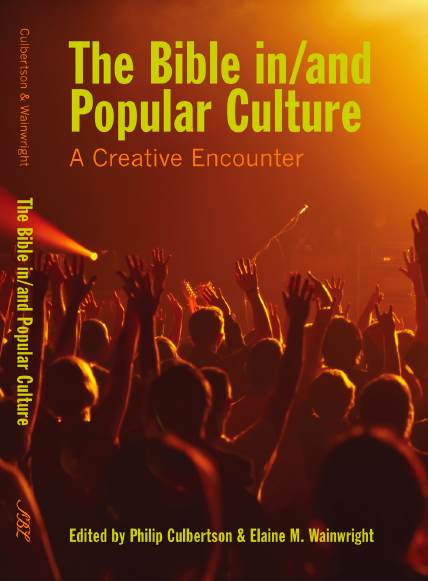
Yet at the heart of the incorporative pneumatology of Romans 8 is that of the Spirit at work in all creation, in spaces and places both inside and outside ecclesial. Such Spirit-ed activity makes sense of a number of “non-priestly” stories within the Biblical narrative. Consider Melchizedek in the Abrahamic narrative (Genesis 14), Balaam’s blessing of Israel (Numbers 22-24) and the worship of the Magi (Matthew 2). All of these are moments in which people outside the faith community offers public prayer. All can be claimed to be some expression of the activity of God’s Spirit.
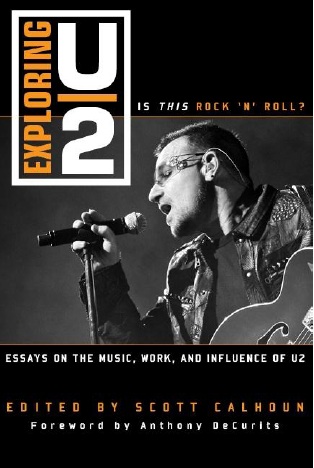
Bono has often been called a prophet. Yet the argument that “Mysterious ways” is a call to worship suggests that Bono, arms raised, is serving as a contemporary cultural priest.
Bruce Marshall in The Holy Spirit: Classic and Contemporary Readings
It is significant that at a number of points throughout the concert, Bono invited those gathered to pray. They were invited at the beginning of the song “Sunday, Bloody, Sunday,” to listen to a recording of Radio Tehran. Such can be framed as an invitation to lament.
They were invited during “Walk On” to send prayers to Aung San Suu Kyi in her quest for freedom. This invitation comes in the form of a bodily action, to touch our heart and to send our love.
Using liturgical language, in “Mysterious Ways” Bono called those gathered to worship, to “move with her.” During “Sunday, Bloody, Sunday,” those gathered were invited to engage in lament, while during “Walk On” those gathered were invited to “pray for others” and finally to make an “Offering” by texting their support for the One campaign.
Is this not the work of the Spirit, inviting all of creation, those inside and outside the church, to participate in a world made habitable – in which people say yes to the divine, hear the cry of the oppressed, pray for those held captive and offer ourselves in the quest for justice?
Tuesday, July 13, 2010
When non-priests pray: A conversation between Sarah Coakley and Bono
Today I delivered my paper – When non-priests pray: A conversation between Sarah Coakley and Bono Vox regarding incorporative pneumatology and priestly prayer.
In sum I was holding a conversation between the evolving performance of a U2 song, Mysterious Ways, and exploring themes around what it means to talk of the Spirit present at a pop culture event like a rock concert. While Bono is often called prophet, I began to trace some lines by which he might be called priest, not in a captured by church way, but in the sense of a Melchizideck in Genesis or a Balaam in Numbers or the Magi in Matthew, all outside the church yet offering blessing.
The paper stimulated some energetic and thoughtful conversation, so that was encouraging. In fact, the whole 2 day conference has been a delight, with Sarah Coakley a delightfully engaged listener as we talked about her work. The only surprise, for me, was the absence of many Anglicans – Sarah is both an Anglican priest and Systematic Theologian at Cambridge University, UK, and I really thought her presence would have seen them out in droves.
In light of my current interest in Wordle, here is my paper “wordled”.

Update 1: A highlight for me of the conference was the excellent papers by two younger women theologian; both so poised, so respectfully engaged, so clear in their articulation. It was a delight to behold and a real sign, for me, of hope for the church.
Update 2: An excerpt from my paper is posted here – in which I explore how a theology of Spirit allows the Christian to celebrate pop-culture artifacts.
Saturday, July 10, 2010
God in the margins and cross the boundaries
It has been a fascinating 24 hours at the Engaging the Basis of Union conference. The aim is to provide scholarly discussion on the Uniting Church’s Basis of Union and I was urged to attend by my work. I think the hope was for me to network and get more of a feel of the whole Uniting ethos/theology/style.
To be honest, I came reluctantly. I needed a weekend with family, not yet another weekend away on church stuff, yet another meeting with strangers, yet another chance to feel displaced. But the ticket were booked and away I go.
What has resonated the most for me was the session on “transcending cultural, economic, national and racial boundaries, and hearing the wisdom from a Korean theologian and a Fijian theology. Here are some of the choice quotes, all of which I apply to my own sense of displacement:
- “to be open to the grief of leaving your cultural home is to be willing to share in the healing of others.”
- “when you live in the margins, you gain the privilege of seeing two centres”
- “the time does come when you discover a piece of yourself even in a strange land”
- “offering a hospitable space to a new culture can’t be at the expense of a Christ-following which challenges injustice”
- “if Jesus did contextual theology, then don’t forget he still came into conflict with his context.”
All of these had a sense of God speaking to me. It doesn’t make it any easier for me to be in Australia, but it has provided some fresh lens.
Tuesday, July 06, 2010
my paper went well – Bible, plough and damper: responding to a de/colonising God
I delivered my paper – titled Bible, plough and damper: responding to a de/colonising God – today. It seemed to gain lots of energy and positive feedback today: the radio man recording for ABC shook my hand in genuine appreciation, while my chief interlocur called it “great”.
What I wanted to do was explore how indigenous communities read the Biblical text, particularly when it is perceived that the dominant culture has brought the Bible as part of the colonisation process. I would suggest such work is of importance given the concern with how contemporary Christianity will survive in the face of what is often perceived as colonising – the threats of consumerism and globalisation.
I looked at two historic examples. One was the Parihaka story and Te Whiti O Rongomai’s use of the Bible, when the story of Samson in Judges inspired their acts of non-violent resistance. The other was the Aboriginal people of Yarralin and Lingara, who have a story of Ned Kelly as a type of Christ figure, multiplying damper and giving his life. My interest was not so much on the actual biblical texts, but on the reading strategies ie how specific communities used the Biblical text.
For those interested, here was my conclusion: (more…)
Saturday, July 03, 2010
God at feast, a further re-imagining of God and creativity
Following on from the image of God as musician, here’s one about God at feast – What does this quote say about God? What does it say about being human?
“All the senses are involved in a good feast. We taste, touch, smell, see, hear. Salvation as health is here vividly physical. Anything that heals and enhances savouring the world through our senses may feed into a salvation that culminates in feasting ….
As millions starve, ought anyone to be feasting? Ought there not to be a long detour of working to feed anyone, postponing the feasting till that has been achieved? Or should we keep alive the hope of food for all by working for justice, and, if we have food, simultaneously celebrating the goodness of God? Can we even sustain work of compassion and justice in the right spirit if we are not also having some celebratory foretaste of the Kingdom of God? …
That combination of sharing and celebrating is, perhaps, the most radical of all the implications of the teaching of practice of Jesus. Feeding the hungry is not a matter of the well-fed offering handouts and getting on with their private feasting: the vision is of everyone around the same table, face to face. Even to imagine sitting like that gently but inexorably exposes injustice, exploitation, sexism, hard-heartedness, and the multiple ways of rejecting the other …
To envisage the ultimate feasting is to imagine an endless overflow of communication between those who love and enjoy each other. It embraces body language, facial expressions, the ways we eat, drink, toast, dance and sing; and accompanying every course, encounter and artistic performance are conversations taken up into celebration.”
David Ford; in Theological Aesthetics: A Reader
Tuesday, June 29, 2010
when home is a pain: church being in exile?
“I yearn for home” is a line by Pádraig Ó Tuama from the Ikon Dubh album. Hearing it today is a reminder of pain, of the profound disorientation that’s taken place in my understanding of home, caused by the move from New Zealand to Australia. Home used to be a place of comfort, of acceptance, of belonging, found among my previous Opawa church community with creative, intelligent, relational companions, found seated at our South Island holiday home, with those broad vistas to lake and mountains.
But by coming to Australia, the Taylor family has been forced away from home. We believe it’s the call of God, asking us to leave home. So now the concept of home is simply a pain, a reminder both of isolation and distance, and of obedience. And part of me fights against ever wanting to call this Australian land home!
I think, intuitively this is actually really helpful. You see, isn’t there a danger of home being domesticated around what is familiar and comfortable. I was struck by this when reading Luke 19:1-10 recently, and realising that Jesus does mission not in his home, but in the home of Zacchues. Incarnational mission in this text was not about being comfortable, but about being in someone else’s home, seated at another’s table. It’s meant to be uncomfortable and alien.
Pádraig Ó Tuama has another song, Maranatha, in which he sings “I found my home in Babylon.” (more…)
Saturday, May 29, 2010
Pentecost season book review: Holy Spirit. Contemporary and Classic Readings
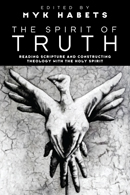
For too long the Spirit in Christian thought has been stereotyped, ignored as the forgotten person of the Trinity, left to the Charismatics and Pentecostals. With the church celebrating Pentecost last week, it is surely a season for us all to be reading around the third person of the Trinity. A book like The Holy Spirit: Classic and Contemporary Readings
A feature of the readings is their genre – while some are theology texts, others are sermons, or songs, or art works, or descriptions of liturgy. As such it reminds us of how much theological work can be done by the church – in our Pentecost sermons, in the songs we sing about the Spirit, in the art we promote, in the words we say at communion and baptism.
Each reading has a helpful introduction by the editor, theologian Eugene Rogers. (I’ve noted before here and here his excellent After The Spirit: A Constructive Pneumatology From Resources Outside The Modern West
One gripe is the lack of readings from the contemporary Pentecostal or charismatic world. There is now quite enough material to have provided such a section. Is the absence yet another indication that the problem the church has with the Spirit is not just historic, but still contemporary?
Saturday, May 08, 2010
Ascension day and emerging worship with Paul Kelly
I spent some time in preparation for leading (Wednesday chapel) worship, playing with Ascension Day, which the church affirms, as it says in the Apostles Creed:
I believe in Jesus Christ, his only Son, our Lord …
He ascended into heaven
and is seated at the right hand of the Father.
Tall skinny kiwi engages with Jeremy Begbie concerned that the emerging church doesn’t engage with Ascension Day. Well, Jeremy obviously doesn’t read this emergent/ing blog, like back in 2007 when I noted what Ascension day means for Christian faith. (Get with the internet Jeremy) and when I noted the following points about Ascension Day.
- God in Jesus is present through all time and space.
- A human body now live with God.
- Faith without sight is now the normal way to follow Jesus.
- God’s people are the primary hermeneneutic of the Gospel.
Anyhow, back to my emerging worship, with me making random connections, humming the Paul Kelly song, “Meet me in the middle of the air”, which was played in my recent Sociology for Ministry class. (Here’s a cover, the actual song I was thinking about was Paul at the bushfire concert.
In the midst of all that bushfire pain, Paul sings acapella a song that seems to claim outrageous hope in the world beyond. Was it inappropriate? Pietistic? Or is there more going on in the music and life of Paul Kelly, that lets him slap a form of eschatalogical, Ascension-like hope on the bushfire table?
Is this why Ascension Day is important for the church – in Creed, worship and theology – because it keeps alive a note of outrageous hope? If so, when, how, in the midst of a broken world, to name it? Not sure if such thoughts will be woven into Wednesday worship, but writing them helps me process them.
Thursday, April 15, 2010
sara coakley and the future of theology symposium
On 12-13 July 2010, in Sydney, an international symposium on “Sarah Coakley and the Future of Systematic Theology”.

Organised by Ben Myers, with contributors from around Australia, New Zealand, United States, United Kingdom, Rome. And one Kiwi-in-exile – me! (I’m doing a paper wanting to have a conversation between prayer and the Spirit as it happens outside the faith community – Bono’s public invoking of the Spirit to be present at their concerts is what has got me pondering).
Topics being covered include:
- Does systematic theology have a future?
- Trinity and mysticism
- Priestly and non-priestly prayer
- Embodiment and the body of Christ
- Analytic theology
- Subjectivity and responsibility
- Praying theology
- and a public lecture by Sarah Coakley
More details are here, with a full list of abstracts here.
Friday, February 19, 2010
purchased: philosophers fingerpuppets, now wanted: theologians fingerpuppets
These little people are being ordered today:

the philosophers fingerpuppets, care of my Ministry Enhancement Allowance, in preparation for some upcoming input.
At Spirit of Wonder: imagining a church immersed in culture (part of the Adelaide Fringe Festival, more info here), I am providing two blocks of input. One is on imagination, leadership and culture, the other on the Spirit, the Bible and culture.
In a moment of mad randomness with Craig yesterday, I was talking about how imagination has a history and the need for us to find our story within that history. Craig, totally lateral thinker that he is, mentioned a shop that sold philosophers fingerpuppets. Nietzsche, Plato and Kant. Who all had things to say about imagination! Who all deserve to make an appearance at the Spirit of Wonder!
So that’s the creative spark that suddenly clicked the first session. Yes!
Which only leaves the second session – theologians fingerpuppets – like Moses and the tabernacle makers, like Deborah and Hannah, like Mary and the 70/2 anonymous in Luke 10, like Peter – who all also deserve to make an appearance at Spirit of Wonder, because they all have a lot to say about imagination and a church immersed in culture.
Friday, February 05, 2010
seachange, foreshore and seabed, as a theological category
Earlier in the week I blogged about seachange as a important strand in contemporary Australian identity and the wonderful article by Wendy Snook in Reimaging God and mission, edited by Ross Langmead. As I read, a number of factors were resonating for me and with me.
First, was the importance of the foreshore in Kiwi cultural identity. New Zealand is an island nation. All people that arrive in New Zealand must come by the sea. The recent foreshore and seabed issue simply highlights the importance of the sea for identity, both for Maori and Pakeha (recent developments here). For Maori it is a place of feeding. Equally, Kiwi theologian Neil Darragh writes of the impotance for Pakeha
“the beach, the sea, the sand, not so much as the holiday beaches of sun and sea, but the sand – shifting margin between solidity of land and fluidity of water, a standing-upon, walking-upon, lying-upon margin of sound and touch and taste and smell and sight.” (“The Experience of Being Pakeha,” CIT, Unpublished paper, May 1991.)
In coming to Australia, aware of the symbolic importance of the outback, I feared that this strand of identity might be lost for me. So it was such a joy to see it narrated as essential for Australia.
Second, it resonated with some Biblical work I’ve done around the seashore. In the midst of the foresore and seabed controversy, I began to read the gospels, wondering what Jesus did on the foreshore. What happens when we read looking for change on the beach? Here is some of what I wrote:
Sea(as-a-place-of)change is a recurring motif in the ministry of Jesus, as he engages with human identity, history and relationships. There is a dynamism at work, in which boundaries are challenged, dis-placed, and re-storied. The call narratives (Luke 5:1-11) occur on the seashore and it becomes a place of encounter, call and commitment. On the seashore, Jesus announces the Kingdom, as in the Kingdom parables in Matthew 13, which are placed “by the lake” and Jesus challenges the ethics of Pharisee encounter with anOther.
Above the seabed Jesus miraculously demonstrates his identity as Son of God. The calming of the sea (Matthew 8:23-27) illuminates Jesus as the Lord of Creation. The fear of the disciples, caught without warning in “a furious storm,” is symbolic of the fear of a land-locked nation. In response, the Son of Man turns chaos into order and bring peace by facing the storms that are part of seachange.
In John 21:1-19, the seashore again stands as a place of encounter, call and commitment. This post-resurrection narrative places the disciples doing what they do best, working the seabed, and the foreshore as a place of encounter. Jesus is on the foreshore, where he has lit a fire and is cooking some fish. One might suggest that the narrative theologically places Jesus as exerting his customary fishing rights as Lord of Creation and Chief Fisher of people.
Hence the metaphor of seachange is both a sociological reality shaping identity (Australiasian) and it’s a theological category that invites us to consider life change. It’s also an ethical category, in light of climate change.
Sunday, December 20, 2009
the logic of the Incarnation: Mary where’d you get your baby from
Here’s a snippet of Sunday’s sermon – in response to a bus-stop conversation last Christmas, and to the media coverage of a certain billboard put up by a church in Auckland.


 )
)