Saturday, May 09, 2009
being human in U2’s no line on the horizon part 2
So the new U2 video for their single Magnificent is out. It’s all North African and white sheets. Ho hum. And the lyrics seemed to make no sense. “Only love, only love can leave such a mark” as the white sheets are pulled off buildings. They are all drifting and the bird is flying overhead unnoticed.
Which makes no sense. How can sheets leave a mark? They billow and drift. What a dumb graphic for a visual, I think.
Or is it ironically subtle?
You see, I have already suggested that the song Moment of Surrender includes a wonderful theology of being human. Take those lines:
I was punching in the numbers at the ATM machine
I could see in the reflection, A face staring back at me
At the moment of surrender, A vision of a visibility
– and consider that the face looking back at the ATM is ours, transformed by the moment of surrender. Only then does the human person become fully human, fully visible. This is God en-fleshed, for the silence of the incarnate sound finds voice, and thus visibility in us. In so doing, the two lines of the horizon are integrated, for vision has become visibility. (for more go here).
So is this theology of being human at work again in Magnificent. As the sheets are pulled away, do they not actually reveal the real thing, the real Africa, the real shape of buildings and people. Is this the mark left by love? Layers that once obscured and masked are in fact removed. Such is the mark of love.
Theologically, this would have echoes with Genesis 1, in which humans are made in the image of God. Then in Genesis 3, sin enters and so clothes are worn, obscuring and masking that which God has made good and whole. Then in the Incarnation, Christianity affirms Christ as fully human and fully divine. Thus the invitation to be in Christ must be understood as the invitation for us to enter fully into our humanity, to refind ourselves as the image of God. Such is love, the return to full humanity.
If this is so, it’s no wonder Bono also sings in Magnificent: And sing whatever song you wanted me to, I give you back my voice, From the womb my first cry, it was a joyful noise
Is this what it means to get “in the sound”, as each human, in response, finds their own unique voice, that which was a gift in the womb? This is love, and this love is twofold; for not only is the original voice re-found, but is found, for “Justified till we die, you and I will magnify, The Magnificent” Is this justification theological, the invitation to be fully human, revealed in all our honesty by love.
Or perhaps it’s simpler to accept, dumbly, that the visuals of the video really do have nothing to do with the lyrics. And that the lyrics of one song really do have nothing to do with the other songs in the album.
Sunday, March 22, 2009
Do baptists have a communion liturgy?
“Do baptists have a way of doing communion?” I was asked in passing this morning. A few weeks ago, I spent time with the children in the church, talking with them about communion. It was part of a church wide process, in which we took time to explore communion, it’s why’s and wherefore’s. Hence the question, as to whether baptists have a way of doing communion.
My answer is yes, Baptist’s do have a communion liturgy. Each church is different, but there are some repeated patterns. Here’s my take on the “liturgy.”
explain – an explanation, often more devotional in format, in which the meaning of communion is explained.
pray – often 2 people, one for the bread, and one for the cup, pray.
invite – some indication is given of who can participate.
distribute – the elements are passed around. This tends to be individualistic and passive, with bread on trays and juice in little cups.
eat and drink – time is spent, usually individually, thinking upon the meaning of the cup.
thank – often a prayer of thanks.
A Baptist liturgy is not based on a whole lot of words. But the above is based on a clear theology. The explanation tends to focus on the events of the Last supper. This does make it “thin” (too thin in my opinion, missing Incarnation, resurrection, Spirit and eschatology), but it is a way of telling the story. The two people who pray are rarely clergy, because the priesthood of all believers is encouraged. Equally, going forward is viewed with suspicion, because of the danger of affirming a “priest” as essential in what is an equal table.
My journey has pushed me toward what I would call a bapti-can liturgy. It seeks to honour the richness of being baptist: a theology of community, a unease with ritual and words for the sake of words, an expectation of “communion” with God. But it adds in a greater theological breadth (weaving in themes of Incarnation, resurrection, Spirit and eschatology) in the explanation, ensures the prayer invokes the Spirit to make Jesus real, encourages people to come forward to receive from each other to enhance participation and community contact, distribution which includes the breaking of one loaf and the placing of pieces of that loaf on the trays alongside those small squares, visuals and creativity to provide multiple layers as people eat and drink, a final thanks which often includes the Lords Prayer as a way of expressing our unity with each other and the church world wide.
So yes, Baptists do have a communion liturgy.
Wednesday, March 18, 2009
being human being Christian in U2’s no line on the horizon
Art is not theology. And lots of theology is certainly not art. But art is an attempt to make meaning and in that attempt at meaning making, theological echoes and insights can occur. While such insights should respect the voice of the author and the sound of text, neither should they ignore the reader/listener/viewer.
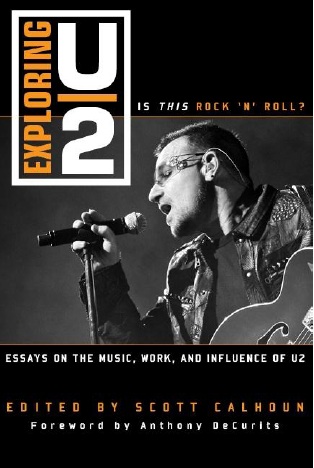
 The U2 album has got me doing some serious theological pondering, particularly on what it means to be human. Who are we and how then should we live? The following is a reader/listener response that seeks to honour the sound of the text and the complexity of the author … (more…)
Christ and the credit crunch
Just out of a gruelling faculty meeting. We are concerned at the credit crunch. And how then we should live as Christians in times like these? So at Laidlaw College, we’re offering a seminar:
Christ and the credit crunch, Thursday 26 March, 7-9 pm, 70 Condell Ave.
We want it to be a conversation between the biblical and theological faculty of Laidlaw College and business and community leaders. What is happening with the global economic crisis at the level of our local community? Do the Bible and theology have anything to say? How then should we live in times like this?
We’re all as nervous as kittens. We do have a theoretical confidence that the Christian gospel should be able to speak to our times. We also know that very few people do seem to have answers at the moment. We all know the perception that academics and theologians know nothing about real life! We’re the hosts and we don’t want to talk to ourselves. Nor do we want to deny voice, our voice, or that of the wider community.
So how to set up a conversation? And so began the gruelling back and forth, trying to nail a process. A guiding slogan has been “Not the last word, but perhaps a start.” (A twist on Groove booklets).
Here’s the result. We’re going to try a model of reflection which starts with concrete experience, invites reflection on that experience, offers theoretical frameworks, which might start active experimentation.
So we’ve invited a business person to share their experience of the credit crunch (concrete experience). Then a panel (retail business person, public research company, grassroots community budgetry advisor) will reflect on what for them are the key questions and concerns that emerge from the concrete experience). Three of our faculty staff will then offer ‘ancient wisdom’, wondering what the stories of Jesus, the people of Israel and the economic saints of the New Testament might say if they were here today (theoretical frameworks). Back to the panel for their thoughts on “active experimentation” and how we might live, followed by time in table groups, brainstorming potential connections and ways forward. And timings to ensure equal voice between theology and business/community.
So what do you think of the process? And what would you want to say if you were me? I have 10 minutes to address the questions: Do the Bible and theology have anything to say in the credit crunch? How then should we live in times like this?
Sunday, February 08, 2009
transformation and the atonement
“A butterfly is not a caterpillar with wings on.” So commented the worship leader today after I had preached on Romans 12:1-2. The Greek root word, for the English “be transformed” in Romans 12:2 is “metamorphosis”. So I concluded my sermon with a video clip of a metamorphosis, a monarch butterfly hatching. No music, just some space to reflect and wonder.
And then up popped our worship leader with his insight: “A butterfly is not a caterpillar with wings on.” He continued, “While that was my early impression of Christianity, I was wrong.”
It was a comment which I have continued to ponder in terms of the impact of the atonement, of how we speak of the death of Jesus and it’s effect on our images of Christianity.
The substitutionary doctrine of the atonement has been the dominant way (recently) that Christians have explained Jesus. I often hear Christianity offered as the blood of Jesus washing my sins away. This means that being a Christian means being washed by saying sorry for sin. This is then followed by a set of behaviours needing to be adopted – not smoking or swearing, instead coming to church and sharing our faith. It doesn’t take much for that to be heard as a caterpillar, washed a bit, and some pretty behaviour wings attached.
In working with the text in Romans over last few weeks, I have been struck not by the blood language, but by the “in Christ” language. In Romans 6 we are “alive to God in Jesus Christ.” In Romans 8 the “Spirit lives in you.” This is not an external washing, but an inward transformation. This is not a new set of behaviours, but a new heart. Through entry into faith and through the sanctifying work of the Spirit, we are metamorphosised.
“In reality, a caterpillar actually has to return to their cellular level in order to remerge as something new” concluded our worship leader. That’s metamorphosis. That’s being “in Christ.” That’s a much more profound way of imaging Christ than a washing of hands before dinner.
I know it’s not either/or. But since one (the blood) has been dominant, surely it’s now worth seeking a more enriched diet, one that so beautifully explains the metamorphosis of Romans 12:2?
Wednesday, December 24, 2008
save. does it need a cross? do you need to spell it to know it?
Here is what I’ve just written as the sermonette for our family Christmas eve service. Back in theological college I had to write an essay – what does the Incarnation (birth and life of Jesus) have to do with the Atonement (death of Jesus)? What follows is an attempt to explore that at a kids level – to ask – what does Matthew 1:21 – Jesus will save his people – mean at Christmas and for the 33 years BEFORE the cross.
So Christmas is about God being a baby. All babies have a name and this one was named Jesus. Means – save. Because he will save people from their sins.
Save at Easter. But also save at Christmas.
Save at Christmas, because in the baby, in the manger, in the Incarnation, all the life of the universe, the one who made oceans and singing birds, who invented rough and tumble and carved the valleys …. all of that creating life was placed inside one human person.
Until Jesus at Christmas, we could turn to God and go “can’t save, can’t save. You’re in heaven, God and it’s easy up there. Come down here and try to be a human. Come down here and try to be a Christian to my sister. Come down here and have to forgive the people who pick on me at school. Can’t save. Can’t save.”
Until Jesus at Christmas, in the baby, when all the creating life is placed inside a human life. And now a human can save. Can save. Paul calls this a new Adam. Because when all the life of the universe is placed inside the baby Jesus, God can save and a human can be redeemed.
The second save at Christmas happens when the baby grows. Which means we get to see what “salvation” actually looks like. Not as an idea. Not as a set of rules. Not as a word. But inside a person.
We get to see salvation in a baby, with marconium and through sleepless nites,
as a toddler, teething and trying to talk
as a 3-4 year old, learning to play nicely with friends
at school, learning to sit still, to read and write and listen to a teacher,
as a teenager, with pimples and hormones
That’s the second save, that because of Christmas, we get to see salvation and see it grow. See what it looks like inside a person.
Which means that salvation is never only for adults. If it was good enough for Jesus, to live “saved” as a toddler and as a teen, then it’s good enough for all of us, no matter our size.
Sometimes adults look at children and go – “oh, grow up.”
Sometimes children look at adults and go – “oh, this is for big people.”
But if this Jesus was sent to save, and if the saving started as a baby, not as an adult, then saving is for for any age, for big people and for little people.
And so you have a nappy. A clean nappy. They go on a baby. And in response, to carols, readings, story, you are invited come and to place it on the manger. We’re going to sing Silent nite. You are invited to come and lay your nappy on the manger. You might want to pray:
Thankyou Jesus for wanting to save. For wanting to save me, for wanting to save my family, for wanting to save my world.
Or please. Please, Spirit of Jesus, enter into my life and help me grow as a person saved, whether toddler, teen or adult, Amen.
So what do you think? What does the life of Christ mean for our understandings of salvation? Can you talk about salvation from Christmas? Or should one always bring in Easter?
Thursday, December 11, 2008
something done
Study leave ultimately is meant to produce outcomes! Publish or perish. All those words typed into a keyboard, are then destined to endure the red pen of an editor, the hard glare of peers and finally the cold, hard light of day, as published work. Along the way, the initial glow fades and one’s brilliance is replaced by the rigorous work of refinement and clarification. This is why I still think there is a place for book and journal writing in the internet world. Writing for blogs is fun and fast (and often inflammatory in the hope of hits), but is a different discipline from the cold, hard slow scrutiny of printed publication, with each and every word weighed and weighted.
All this to say that I have just ticked off my first concrete sabbatical outcome and the better half of the emergentkiwi partnership tells me to celebrate. I have just sent off a chapter (A pneumatology for an everyday theology: whither the anonymous Spirit in Luke 10:1-12?) for a book on the Spirit in theology today. It began life as a conference paper in August, was debated by an Adelaide theological post-grad forum in October and endured 2 edits via my noble co-researcher. A publisher has expressed interest and an editor has compiled a range of chapters. I have done my bit and the 6,600 words are now in the hands of the vagaries called “with publisher.” All I can now do is wait.
Here’s a paragraph: This leaves a question with regard to discernment. Invoking categories of the Spirit at work in “the world” leaves one open to the accusation of “how low can you go” and of being on the slippery slope toward liberalism. Brown sums it up well: “The claim is that the world is fallen, and so cannot be read properly unless it is approached from the perspective of the Christian faith and not the other way round …. For too long [the doctrine of Original Sin] has been used to yield selective negative verdicts only on what happens outside the Church.” Yet in contrast to the monolithic nature of such assertions, Luke 10:1-12 offers a plurality of categories with regard to the materiality of “the world.” The text simply refuses to “baptise” all things cultural as Christian. Instead, the Kingdom is to be named both in receptivity (“Stay there eating and drinking” (10:9, NRSV)) and in rejection (“Even the dust of your town that sticks to our feet we wipe off against you” (10:11, NRSV)). Discernment must be thus multi-faceted rather than simply the breathless adulation of “theology” in all things everyday and popular.
Saturday, November 15, 2008
writing today
working on a chapter for an edited book. my piece is on the relationship between Spirit of God and popular culture:
The geography of the text in Luke 9:52 is also doing theological work. While the journey to Jerusalem takes ten chapters, all of which are strikingly sparse in geographic detail, the journey begins going into a Samaritan village. Shillington notes that the “place ‘between Samaria and Galilee’ is hard to find on the map. It looks like ‘no-one’s land’, a place for outcasts or expendables.” Thus, geographically and theologically, the mission of Jesus in the move toward Jerusalem begins in this ‘no-one’s land.’ This has relevance given that for theology, popular culture and everyday life have long been considered a theological extra at best, an outcast at worst.
Sunday, March 23, 2008
resurrecting the resurrection
Went to see the movie Vantage Point and it helped me make sense of the resurrection. The movie is tagged 8 points of view: 1 truth. It’s a soft form of postmodernity, affirming eyewitnesses as subjective, without losing history as truthful.
In a similar way, the Bible has 4 gospels. Each offers a uniquely different point of view – Mark is fear and trembling; Matthew is earthquakes and angels; Luke is burning hearts; John is a new start. Each is subjective. Each adds insight, without losing truth.
Vantage point (the movie) ends with an 8th scene, an extended narrative which provides the big picture. In the same way, Christian hope is a big picture, or in the words of N. T Wright:
the events of Easter Sunday are no less than “a full, recreated life in the presence and love of God, a totally renewed creation, an integrated new heavens and new earth, and a complete humanness
in worship and love for God, in love for one another as humans, in stewardship over Gods world.”
In between the 4th and 8th perspective is the church. Each of us, in our homes, workplaces, city, living out the resurrection in our lives. Each of us subjective eyewitnesses, adding insight.
I wonder if the evangelical captivity to historical truth means that we jump to quickly from the 4th to the 8th perspective. I wonder if evangelicals are so concerned about the historical truth of the resurrection that they reduce the resurrection to an intellectual set of categories. Thus the entry to the 8th perspective is reduced to a set of beliefs that get you into heaven.
Yet the resurrection is so much more than an intellectual historical search. It is the affirmation of life, and life to the full. That is a truth to be lived, through your own unique point of view.
Full sermon manuscript is here.
Friday, October 05, 2007
what are Calvinists doing with Jesus?
Is the Incarnation of Jesus about God or about humanity?
I was reading some blogs last nite extolling Calvinism and how it encouraged a God-cented theology rather than a human-centred theology. Which sounds sweet. But as one of my Calvinist friends tells me (Don the Carson): damn all false antithesis to hell. So I began to wonder if God-centered theology and human-centred theology might actually be an antithesis.
I woke up this morning thinking about Jesus, who is the revelation of God. Yet this Jesus is both fully human and fully divine. If you make him out as God-centred, you run the risk of downplaying his fully humanity, for he is the new Adam. Equally, if you make him out as human-centred, you run the risk of downplaying his full divinity, for he is Lord.
So is it that in Jesus are integrated all the riches of the universe, including both a God-centred and a human-centred theology?
Just wondering. I really should go and have some breakfast.
Monday, September 24, 2007
creation and re:creation
What is the difference between creation and re:creation?
Is it that God starts with creation. Human sin meant that God could have decided to start again (creation again). But instead, through Jesus, God enters into re:creation. This is not a starting over, but a continuity between the old and the new.
Tuesday, June 19, 2007
got any room for an animal in your faith?
What part do animals play in your faith?
Following a communion moment last November at Opawa, when a dog was fed some of the host/bread, I have been pondering the place of animals and communion. This week I hope to finish, and submit, a 4,000 word article: “Even the dogs eat the crumbs that fall from their masters table”: a contemporary reflection on the sacramentality of communion.
Today, I came across these quotes from Isaac of Nineveh, 7th century bishop:
“What is a merciful heart? It is a heart of fire for the whole of creation, for humanity, for the birds, for the animals, for demons and for all that exists.”
“If a person of humility comes near dangerous wild animals, then the moment these catch sight of him, their ferocity is calmed; they come up to him and attach themselves to him as though he were their master, wagging their tails and licking his hands and feet. This is because they smell that fragrance that emanated from Adam when he named the animals in Paradise before the Fall: this fragrance was taken away from us at the Fall, but Christ gave it back to us at his coming.”
How many Christians today share the same understanding of Christianity as Bishop Isaac? What is the place of animals in your faith and practices?
Sunday, June 17, 2007
the gospel according to shrek
I don’t often blog my sermons, because they are verbal pieces of work and contextual to a specific life situation. But the following groups of readers might be interested in today’s sermon.
1. Shrek fans, who might appreciate some Christian reflection on the movie.
2. Readers interested in the relationship between gospel and culture, specifically how a Christian might engage with film.
3. The sermon was preached to 50 kids and 130 adults at our bi-monthly intergenerational (Take a Kid to faith) services, so those interested in all-age communication might be interested in the use of 2 video clips, the group activity and the response.
3. Those with an interest in theology, particularly how the gospel of Jesus can be named without drawing on substitutionary atonement metaphors. Thus the sermon outlines Irenaus theology of recapitulation and Julian of Norwich’s use of Christ as an objective love. (Bearing in mind that I am trying to explain Jesus with a kid’s eye view – which is, I think, the ultimate test of a theological idea anyhow.)
Update: if you want some visuals, just found a 3 min vblog by Iain McMahon, which includes some vid of me wearing a Princess Fiona wig! (Isn’t there a verse in 1 Corinthians about becoming all things to all people!)
Friday, May 18, 2007
what it does it mean to be a Pentecostal?
Admit failure: that’s according to Acts 1:16ff, where Peter starts his sermon by naming Judas as one of the apostles and a sharer in ministry. No triumphalism. No ignoring leadership failure. The church of Pentecost publicly admits failure.
Inclusive, including women, in ministry: that’s according to Acts 1:14, where women and Mary the mother of Jesus are named. Their inclusion would have stood out to a 2nd century reader, as an indication that the church at Pentecost was a breaker of boundaries and a welcomer of all. According to Harvey Cox, Fire from heaven, the mark of the Spirit at Anzusa Street was not tongues, but the fact that many nations worshipped together. Again, an inclusive Spirit at work.
Bottom up leadership: that’s according to Acts 1:21ff, where new leaders are chosen from the ranks of those persons whom the prayerful community chooses to lead.
Know many Pentecostal churches around today that sound like the early church of Acts?


 )
)