Thursday, February 06, 2014
from Waitangi to Walking on Country
Today is Waitangi Day in my homeland. On this day in 1840, a Treaty was signed between Maori people of New Zealand and the Queen. While it is a times a contested document, it stills stands as a seminal moment in the history of New Zealand and in how two people’s might relate to each other. Over the years of my time of ministry in New Zealand, it provided a rich ground for reflection – in sermons, in prayer, in communion.
Today, here at Uniting College, in Adelaide, Australia, is the start of Walking on Country. It might be coincidence, but I don’t think we’d be Walking on Country without Waitangi Day, without the energy that Rosemary Dewerse and myself, both New Zealanders, both Missiologists, both shaped by being Kiwi, being Christian, both now here at Uniting College, have poured into this.
Today a group of about 20 people headed off to the Flinders Ranges, to the land of the Adnyamathanha people. They will be led by local indigenous leaders, to be in their world, to hear their stories. It is the 2nd year we as a College have run this. (See here and here and here).
It was a few days that had more impact on our life as a College in 2013 than any other few days that year. New insights, new relationships (including Pilgrim Uniting), new sensitivity. Thanks Waitangi Day, for pushing us toward Walking on Country.
Wednesday, January 29, 2014
Theological education in leadership formation
I’ve been asked to present at a colloquium in Melbourne in March. Titled Beyond Education: Exploring a Theology of the Church’s Theological Formation, the event is being sponsored by the Uniting Church’s Centre for Theology and Ministry and the University of Divinity. It involves scholars, church leaders and ministers, from diverse Christian traditions all picking away at a theology of theological education.
I’m one of 11 presenters and have been given the topic – Theological education in leadership formation. Here’s my 100 word abstract, due tomorrow:
This paper will interrogate the tagline of Uniting College for Leadership and Theology – learn! lead! live! – using the work of cultural theorist Mieke Bal in order to pay particular attention to the place of formation in a pluralistic world. It will explore the ethical implications inherent in notions of “founding texts” and “moments of meaning.” Some implications, for ministry practice (learn!), for ministry agents (lead!), for communities of faith (live!), will be outlined. The aim is a theology of ecclesial formation that might shift the conversation beyond modern dualities of head and heart, theory and practise, religious and secular, individual and communal.
Thursday, January 23, 2014
Jesus and popular culture
“the afterlife of the Bible has been infinitely more influential, in every way – theologically, politically, culturally, and aesthetically – than its ancient near-eastern prehistory.” (John Sawyer, 2004, 11)
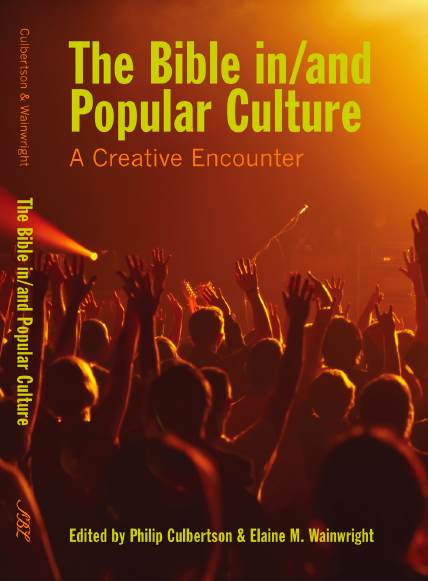
I spent yesterday at Flinders, teaching in the Bible and popular culture course. The topic was Jesus and popular culture. Dan W. Clanton Jr., in The Bible in/and Popular Culture: A Creative Encounter
So I explored Jesus and popular culture under 5 headings, using some of the following examples.
1 – Jesus then: in original context – in films like Jesus of Nazareth and Passion of Christ
2 – Jesus now: Christ figures – in places like Narnia Chronicles or Jesus of Montreal or Harry Potter. This draws in particular on Baugh, Imaging the Divine: Jesus and Christ-Figures in Film
3 – Jesus now: context – in which Jesus is placed in site specific contexts, like Manchester Passion or Baxter’s poem, The Maori Jesus.
4 – Jesus Elsewhere – in which Jesus is placed imaginatively in new world, like Deborah Bird Rose’s hearing of Ned Kelly being a Christ figure in some indigenous dream stories, or a comic series like Loaded, Jesus and Vampire gospels.
The term “elsewhere comes from DC Comic creator “heroes are taken from their usual settings and put into strange times and places – some that have existed, and others that can’t, couldn’t or shouldn’t exist. The result is stories that make characters who are as familiar as yesterday seem as fresh as tomorrow” (DC Comics Elseworlds)
5 – Jesus sarcastically – for example in Lamb: The Gospel According to Biff, Christ’s Childhood Pal
It is always a lot of work to bring a lecture together for the first time, but an enjoyable and rich experience.
Wednesday, December 04, 2013
in the guise of a small child: an Advent spirituality
 I’ve been offered a new way of engaging Christ – one that seems strangely relevant in this Advent Season. In the 12th century, an English mystic, Christina of Markyate, wrote of her experience of the divine:
an unheard-of-grace. For in the guise of a small child [Jesus] came to the arms of his sorely tried spouse and remained with her a whole day, not only being felt but also seen.
The experience can be found in The Life of Christina of Markyate (Oxford World’s Classics)
The experience was a turning point for Christina. There is more evidence of compassion, more active care for friends, more concern for the church, more peace in prayer. There is a new joy evident, a greater depth of celebration of Christmas. (According to Grace Jantzen, “The womb and the tomb,” in Wounds that Heal – Theology, Imagination and Health
It opened up some new imaginative space in prayer for me. What might I experience if Christ came to me, today, as a small child. What “Christology” might I encounter? I identified four things – simplicity, mindfulness, play, surrender. I realise that these are a form of reader response – that I am most likely bringing my (idealised) experiences of small children – to the encounter. But it offered a new sense for me of engaging with God. It made fresh sense of the Incarnation, that God as fully human can relate to all of life. It made me realise again the gift that is all-age, inter-generational worship, that I can encounter God in the actions, questions and questions of a child.
I also reflected on what might be the opposites of simplicity, mindfulness, play, surrender. I identified complexity, history, rationalism, suspicion. I was reminded of the sour and corrosive power of these behaviours – often the domain of adults, and perhaps adults who are academics. These became for me moments of confession, as I reflected on my last 24 hours, the email I send and receive, the conversations I have.
“In the guise of a small child”, is proving a generative Advent spirituality.
Wednesday, November 27, 2013
a pilgrim church needs pausing places
One of the three main images of the church is that of the pilgrim people (the other’s are people of God and body of Christ, For a full 99 images of church in the New Testament, see the amazing Images of the Church in the New Testament (New Testament Library)
Yesterday I was in a meeting discussing future property needs. The phrase pilgrim people was used and it got me thinking about the Biblical tradition. (Bad Principal, I was meant to be thinking property and there I was, lost in a fog of theological and missiological reflection of pilgrimage as a practice.) I began to wonder about the settledness, the pausing places in the Abraham narrative.
So here they are ….
“So Abram went to live near the great trees of Mamre at Hebron, where he pitched his tents. There he built an altar to the Lord.” Gen 13:18
“The Lord appeared to Abraham near the great trees of Mamre while he was sitting at the entrance to his tent in the heat of the day.” Gen 18:1
“Abraham … lived between Kadesh and Shur. For a while he stayed in Gerar.” Gen 20:1
“Sell me some property for a burial site here so I can bury my dead.” Gen 23:4
“So Ephron’s field in Machpelah near Mamre … was deeded to Abraham as his property.” Gen 23:17
So there we are, even the great saint of pilgrimage had property. The narrative has numbers of different pausing places – to rest, to encounter God, to bury your dead.
Which dare I say it, sounds a lot like the reasons I hear today for church buildings! When you lay this alongside the commendation in Hebrews, to make homes in promised places, it suggests that a key spiritual practice of pilgrims still includes theologies of Incarnation.
Wednesday, November 06, 2013
a tale of two churches

I was teaching on church today in my Introduction to Christian Thought class. I have been thinking a lot recently about the vision of church and the reality of church. So I pulled together a tale of two churches. I took the vision, the ideal, four Biblical images of church as explored in Paul Minear, Images of Church in New Testament
I laid that alongside a second tale of church, the reality, the who is the church, the how did the church act, as explored in Kirsteen Kim’s survey of the church in global history, in Joining in with the Spirit: Connecting World Church and Local Mission

It generated some excellent connections, as we realised how much church changes over time and space, and how that frees us to think about fresh expressions of church today.
Tuesday, October 29, 2013
a feel good moment: preaching a missional Jesus today
I walked into a cafe this evening to find a good friend reading this …

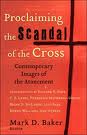
“I’ve got a book chapter in that,” I commented, pointing to Proclaiming the Scandal of the Cross: Contemporary Images of the Atonement
“I know,” he said in a surprised tone of voice.
“How did it happen? How did you get to be in a book with the likes Brian McLaren and CS Lewis?” he said, his voice still surprised.
How indeed!
When I began at Opawa Baptist, I wanted to help the church gain a deeper and richer understanding of the death and resurrection of Jesus. Every communion Sunday during my first year of ministry, I took a different Biblical image of the cross – family, reconciliation, leader, martyr, new Adam. I preached on the image, and then wrote a communion prayer that connected the image with the thanksgiving prayer for bread and wine. It was a fantastic experience, to work Biblically and liturgically with the church around our shared understandings of communion.
I was also during that time lecturing at Laidlaw College and one day got chatting to a visiting scholar about the sermons I was preaching. He mentioned that he had a colleague, Mark Baker, who was putting together a book of sermons on preaching the cross. It was a followup to Recovering the Scandal of the Cross: Atonement in New Testament and Contemporary Contexts
How do you communicate a rich and deep atonement?
And so the authors’, Mark Baker in particular, were looking for sermons on the cross. The connection was made, my sermon was sent.
Some two years later, the book was produced, and I found my sermon – on 2 Corinthians 5:15 And he died for all, that those who live should no longer live for themselves but for him who died for them and was raised again being published, alongside a whole range of other sermons, including ones by CS Lewis, Brian McLaren, Rowan Williams and Frederica Matthewes-Green.
In my sermon I focus on Christ as the New Adam. I use contemporary cultural images from Whale Rider, from treaty signings, from famous individuals on banknotes, to explore how one person might indeed become representative for the many. It’s a book chapter, and a sermon, and a series, I’m still really pleased with.
One of the things I’m looking forward to in 2014 is returning to these questions – I’m doing a second semester course on the Missional Jesus, then repeating it as an intensive at New Life Uniting, Gold Coast, in November 2014. I’m looking forward to returning to my work on the atonement and to trying to explore Jesus with a very specific missional focus – Christ today.
Friday, October 25, 2013
The e-learning version of a Jesus call story (Luke 5:1-11)
Some recent writing I’m still quite pleased with …
I want to begin by contemporising Luke 5:1-11. While somewhat playful, I intend to make a more serious point as my argument unfolds.
One day as Jesus was standing by the Lake of Gennesaret the people were crowding around him … checking their facebook status and live tweeting updates as they were … listening to the Word of God.
[Jesus] got into one of the boats … Then he sat down and taught the people … by handing the disciples a Kindle, on which had been loaded core theology texts, including the Dead Sea Scrolls and latest translations of the First Testament ….
Then Jesus said to Simon, Come follow me and … so he gave the disciples their moodle login and automated password. Upon login, they clicked on My courses and discovered they had been enrolled in a core topic – Discipleship. It came complete with course outlines for the next three years and powerpoints of the Sermon on the Mount. Assessment involved the completion of weekly forums, involving contemporary doing theology case studies. One involved a written response to a question asked by a rich young ruler, another an exercise in going ahead of Jesus looking for a donkey.
Plus, a bonus, a set of MP3’s. Titled Parables, they allowed students to be updated on Jesus latest adventures in storytelling.
Jesus had toyed with the idea of offering a MOOCS – Massive Open Online Course. Instead of a focus on the disciples, he had toyed with marketing his Discipleship course to the crowds, aiming for open access and large-scale interactive participation.
Sadly his treasurer had resisted, pointing out that it was better to give to poor than to fund the video lecture style pedagogy and a graphic novel, which, it was argued, would increase student retention of texts from the Apocraphya.
This was an introduction to my paper – Embodiment and Transformation in the context of e-learning – at the recent Teaching and Learning: Theology: The Way Ahead conference in Sydney. While at first glance my e-learning version of a Lukan “call story” might suggest the importance of face to face modes of discipleship, my intention was subversive. By placing the Incarnation as central, it applied me to argue that transforming theology can involve e-learning and online technologies. In other words, an attempt to be theological about transforming theology.
Wednesday, October 09, 2013
doing theology: teaching by induction and the flipped classroom
This semester I am experimenting with teaching theology by doing theology rather than by lecturing theology. Class readings and notes are placed online and students are invited to access their content in their own time. Class time is then spent interacting, engaging, doing. (I’ve described how I introduced this to the class here).
Each week I try to offer different ways to engage. Sometimes it is simply discuss the readings in groups, other days I offer some artistic and creative engagement, other days I use the Socratic method and pick on students whom I ask to explain to the class what they’ve read. This week the topic was Jesus. I decided to structure it as a set of challenges, different tasks, with students choosing what they did; how many they did; how long for; whether they did them alone or together.
Here are the challenges –
a) Tradition challenge – Read through some readings of early theological writings (8 readings selected from Alister McGrath, The Christian Theology Reader
). They are actual words from theologians wrestling with Who is Jesus? . Make your own written dot point notes of any connections you make between these readings and the class lecture notes (ie page 3 of your notes).
b) History challenge – Consider Jesus morph.
Connect the dates of the Jesus morph with the timeline from an earlier class reading, Ellen Charry, Inquiring After God: Classic and Contemporary Readings
). What do you already know about any of these dates, that might help you understand the Jesus Morph? Make dot point notes on the provided timeline.
c) Method challenge – Take the class reading. (Clive Pearson and Jione Havea, Faith in a Hyphen: Cross-Cultural Theologies Down Under
). Choose one of the three Christologies (one Samoan, two Korean). Read it, looking for examples of the use of Scripture, tradition, experience, reason. List your examples on the whiteboard.
d) Context challenge – Take a walk outside. Reflect on what, in Australian contexts today, might help you, and your friends, make connections with Jesus the Christ.
e) Moodle challenge – If you have internet access (through your 3G cell phone or ipad), then log onto the class moodle site and complete the exercises there in relation to this lecture.
f) Help desk challenge – Chat with Steve about any questions you have from notes, readings or life.
At around 3:15 pm, we will all gather for any reflection and general learning.
If I had more time (ie next time I teach it), I would try and add in some immediate feedback. I would offer some multi-choice options in relation to the history challenge, I would ask them to see me for a model answer to the method challenge. Nevertheless it was a good start and I continue to be pleasantly surprised by the degree of engagement and energy and the connections being made in our interaction.
I’ve also discovered that this approach, which I had intuitively decided to try, actually has a technical name -“flipped classroom” – and is at the forefront of contemporary learning innovation. I simply thought it was an idea that made sense of basic adult education principles.

Created by Knewton and Column Five Media
Friday, August 23, 2013
doing theology: teaching theology by induction
I’m teaching an introduction to Christian theology topic this Semester.
I began with a two questions and a proposal. First question, does anyone here not have access to a computer? All did. Second question, does anyone here not have access to a printer? All did. Which led to the proposal. I will put all the lecture notes and class readings online. And when we meet, rather then talk theology ie me lecture you, we will do theology ie I will guide you, through the readings and my doing theology together.
We were all a bit apprehensive about this new approach, since the dominant model of education involves an expert imparting knowledge. But I was keen to explore a learning by doing, induction process, which better equipped them for the complexity of life beyond the classroom.
To help guide them, I have outlined to them the following process, which they used to get them going.
- My (current) theological question is …
- I’m curious about this because ….
- The theological frame I’m going to us is (in week one I suggested three examples Wesleyan quadrilateral, Miroslav Volf’s three questions, indigenous storytelling approach) …
- My conversation partners will need to include ….
- The values I have used to chose them include (from week three) ….
- I’d like to express my findings by (in week two we noted blogs, film, story, liturgy, writing) …
So far, after four weeks, we are all greatly energised. They have come up with excellent theological questions – none that we would have discussed in a normal syllabus, yet all touching key theological themes. They loved the conversation partner idea. The process really energised the library visit I then organised, when they got shown how to use databases to find conversation partners. Some were heading back to the library after class to search further.
For those interested, I also gave them one example, one of my recent “doing theology” projects – Let me in the sound. (more…)
Wednesday, August 21, 2013
fresh words and deeds: a theology of innovation
I preached in chapel today. The Gospel lectionary text was Luke 13:10-17. After the reading, I played Van Gogh Shadows by Luka Agnani and then spoke.
The video brings together two artists.
First, Vincent Van Gogh. Our entire trip through Europe during our Sabbatical was defined by Van Gogh. Our 13 year old was fascinated by the colours, the vibrancy, the subject matter, the fact he cut off his ear.
The second artist is Luka Agnani. A digital artist. Who takes Van Gogh – 13 paintings – and adds light, intensity, movement and people.
The result is that what is historic, Van Gogh paintings, is seen in fresh ways. Things we’d not noticed. People I’d not paid attention to. Insights I’d not been aware of.
Which helps me make sense of the Gospel reading. In Luke 13, the is something historic – Sabbath understanding, Torah, pattern of living. “There are six days on which work ought to be done; come on those days and be cured, and not on the sabbath day.”
And then there is the fact that, in the actions and words of Jesus, faith is seen is fresh ways. “Woman, you are set free from your ailment.”
Jesus takes the historic – sabbath, Torah – and adds light, intensity, movement. And above all a focus on people. “And ought not this woman, a daughter of Abraham whom Satan bound for eighteen long years, be set free from this bondage on the sabbath day?”
Which also helps me make sense of some of my current research. I’m exploring new ways of church. How does what is historic, relate to the new, the contemporary world around us?
As part of the research, I’ve been re-reading the Basis of Union. As all Principals of Uniting Colleges do! 🙂 In particular wonderful phrase “fresh words and deeds.” It occurs at the end of Paragraph 11.
According to Davis McCaughey’s Commentary on the Basis of Union, you need to read paragraph 11, alongside paragraph 10.
Together. You read paragraph 10 and value of historic maps – of Scripture, of the witness of reformation fathers. You read alongside Para 11 and value the “faithful and scholarly interpreters” who serve the church by enabling it to stand “in relation to contemporary societies in ways which will help her to understand her own nature and mission.”
It’s such an interesting place to locate scholars- not in paragraph 10, with the historic, but in paragraph 11, with contemporary societies and fresh words and deeds.
So applying Paragraph 10 – we need historic maps – we need Van Gogh – we need the Old Testament, the Torah, the Law.
And applying Paragraph 11 – we need scholarly interpreters, who help us stand in relation to contemporary society.
Result is fresh words and deeds – fresh light, extra intensity, focus on people.
Which I hope is our experience – as faculty, as students – at Uniting College, as Flinders Department of Theology, as Adelaide College of Divinity.
We’re hold Paragraph 10 and 11 together. The historic – Scripture, tradition – and the new – reading the culture in mission. And the result?
May the Lord be confessed in fresh words and deeds.
Tuesday, August 20, 2013
Sin and evil in a liberal world
Words like sin and evil don’t always play well in a liberal world. In a world of tolerance, we like to assume the best of another. In a strength based paradigm, we like to focus on the positives of appreciative inquiry, as in this wonderful video.
I remember a class, in which I was told in no uncertain terms by a minsterial candidate that they didn’t believe in sin. It was an old-fashioned invention of the church, designed to encourage guilt in religion. It is a conversation that has continued to sit with me. What is the place of sin and evil in a contemporary, liberal world?
So interesting today to stumble across a thought piece in the Guardian by social media columnist, Paul Mason, reflecting on recent trends in social media. He is reflecting on some particular nasty occurrences on twitter. And writes:
Evil may be a medieval theological concept, but when it invades your interface with the rest of humanity – and confronts your unwilling mind with imagery designed to provoke disgust, fear and self-loathing – it is all too modern.
It reminded me of the conclusion by Miroslav Volf, Exclusion & Embrace: A Theological Exploration of Identity, Otherness, and Reconciliation
To the person who is inclined to dismiss it, I suggest imagining that you are delivering a lecture in a warzone. Among your listeners are people whose cities and villages have been first plundered, then burned and leveled to the ground, whose daughters have been raped, whose fathers and brothers have had their throats slit. The topic of the lecture: a Christian attitude toward nonviolence. The thesis: we should not retaliate since God is perfect noncoercive love. Soon you will discover that it takes the quiet of a suburban home for the birth of the thesis that human nonviolence corresponds to God’s refusal to judge. In a scorched land, soaked in the blood of the innocent, it will invariably die. And as one watches it die, one will do well to reflect about many other pleasant captivities of the liberal mind. (Exclusion & Embrace: A Theological Exploration of Identity, Otherness, and Reconciliation
There is much, much, more to Volf. But it is a reminder that theology needs to take sin and evil seriously. A worthy topic for my Introduction to Theology class tomorrow perhaps.
Friday, August 16, 2013
theology as dinner party conversations
Today, I took a second step with the Master of Ministry Theology of Ministry Practice class.
The assumption of the topic is that each participant began ministry with a theology of ministry, a set of values and principles about ministry. Another assumption is that over time, they have collected experiences. Now, as they begin their Master of Ministry journey, is a time to re-theologise, to think again about their theology of ministry practice, to contemporise their reading, to clarify what their thesis topic really should be.
For this second class, each participant was invited to bring an experience, a moment of ministry that had left them thinking.
We began the class by sharing, around the room and online, using video-conferencing software. A rich set of stories, confronting, challenging, emerged.
It was time for the second step. Having shared, I invited them to consider themselves hosts of a dinner party. And to choose six guests whom they would like to have help them think through the question raised by the ministry experience. They could be alive or dead. But who would they like to have a conversation with.
I also noted that the average person speaks at about 100 words a minute. So one hour conversation with these six guests, would in fact be 6,000 words – the size of their essay. And like all conversations, these guests would probably argue ie engage in critical thinking.
Well, the lights went on and the energy went up in the room. Theology had been transformed. The participants had all sorts of interesting people they wanted to invite to their theological dinner party for conversation. People from the story they had shared, artists who would help them think differently, theologians in history, ministry practitioners they admired, saints who embody practices they value.
Which raised the inevitable question. How to get these voices into a theology essay? How to research and quote and cite?
Well, I said, that’s the third step. That’s for next gathering. How about I invite the librarian next time we meet and we ask them? We get them to guide us to the relevant databases, help us work out how to source information, whether books or journals or newspapers or people.
Lots of nods around the table. Lots of interest now in literature searching and proper use of bibliographies. Because research has taken another whole different shape.
It’s a dinner party conversation.
Wednesday, July 31, 2013
how to pass theology
I kicked off Introduction to Christian Thought, a Semester 2 class today. Rather than the usual lecture mode, I suggested a more interactive, communal journey, in which I functioned not as the dispenser of knowledge, but as a guide in the communal doing of theology.
I offered them the following proposal:
- all content is online or in the library (alone we will read)
- theology is best done in community (together we will talk, laugh, disagree, grow over what we read)
- we will do theology not hear theology (together we will work on what concerns us and our world)
Or practically, in terms of our time (3 hours a week), a format as follows:
- 30 min catch up/ theological ‘show and tell’ from the week.
- 60 min ‘Doing Theology’ in-class project in small groups, with answer recorded on Moodle ‘wikispace’ for further interaction.
- coffee break
- 60 min Q&A based on the Moodle site readings/activities/resources. Students are expected to come to class having read the readings and study notes. The tutorial questions provided online will be used.
There was lots of energy at the end of the first week, so we’ll see how it goes. And how much reading gets done!


 )
)