Thursday, March 31, 2016
Letter to the editor March 31 2016
My recent letter to the editor of the Otago Daily Times has just been published! A little flag wave for justice. Ten days after submission, but still a point worth making.
The ODT (19 March) leads with the headline: “Camp site like ‘refugee camp.’” It quotes Brandon O’Callaghan comparing a Gibbston camping ground to a “Syrian refugee camp.”
The article mentions 200 people camping. The Za’atari refugee camp holds 83,000 refugees. The leading ODT photo shows twenty parked cars, with people relaxing on camping chairs. Syrian refugees walk, arriving at Za’atari desperate for food and water. 86% of Syrian refugees live below the poverty line, a far cry from the financial resources freedom campers require to navigate Aotearoa New Zealand.
In a short time, Dunedin City will welcome Syrian refugees. What will they make of Dunedin’s leading newspaper making such pronouncements about the realities they have experienced?
Freedom camping is a problem needing solving. Misleading headlines add more heat than light. Can I suggest the ODT do some fact checking in order to run headlines more accurate and compassionate.
Dr Stephen Taylor
Friday, March 18, 2016
“says Taylor, establishing a fascinating “fixity” to how we recollect what U2 has done”
 A very thorough review of U2: Above, Across, and Beyond—Interdisciplinary Assessments
In terms of my chapter, “Transmitting Memories” there is an extended, positive, engagement.
Flinders University senior lecturer Steve Taylor sifts through Bono’s in-concert “lyrical departures” from the recorded versions of key tracks to arrive at an understanding of how the band memorializes people, places, and events during performances—thereby manufacturing unique new moments for the ticketholders in attendance. Spring-boarding from his discovery of a shout-out to the thirteen-years-dead Frank Sinatra in a live version of “Until the End of the World,” Taylor comments upon Bono’s many mentions of past concerts, prior locations…and dead people (Eunice Shriver, Greg Carroll, buried miners in New Zealand) from the stage, and how these seemingly unscripted one-liners establish both an oral history of the band and a “collective memory” for concert audiences.
“What would motivate such changes?” Taylor ponders.
Calendrical repetition, verbal repetition, and gestural repetition conspire upon U2’s gargantuan stages, weaving a ritualistic tapestry the band tosses over audiences like a playful papa blinding a laughing toddler with her “woobie.” There’s more than meets the eye when Bono waves at Larry behind the drums, thrusts a finger in the air, or points his microphone at fans in the front row. These are “concert-rical” connections that make each show special and enhance the universal appeal of each tour after the fact.
Remember Bono’s white flag at Red Rocks (Under a Blood Red Sky), or how he danced with a girl from the audience at Live Aid? These small, spontaneous gestures mean a lot in the long run, says Taylor, establishing a fascinating “fixity” to how we recollect what the band has done.”
For the full review, by Pete Roche, in the Cleveland Examiner, go here. For a summary of my next U2 chapter – She moves in mysterious ways: a theology of “sexy music” – check out here. For the book, in paperback, check out is here
.
Saturday, March 05, 2016
Acceptance Notice Mysterious Ways: U2 And Religion
 I was delighted to hear today that my proposed chapter for a book on U2 and Religion has been accepted. The book, titled Mysterious Ways, is to be published by Bloomsbury Press, sometime in 2017. My chapter will pick up on some work I did in 2010, around Sarah Coakley, pneumatology and U2. It is good to have a chance to revisit the work and to be able to position it slightly differently by focusing directly on Mysterious Ways. Here is what the chapter will explore:
She moves in mysterious ways: a theology of “sexy music”
Dr Steve Taylor
This chapter argues that U2’s live performances of “Mysterious ways” offer an ecstatic, sonic and participative theology. The song, described by Bono as “sexy music,” has gained critical and popular acclaim.Performed live 584 times, “Mysterious ways” has gone through three distinct live phases. The first involved an on-stage belly dancer, moving always out of reach of Bono’s stretching fingertips. The second involved a female member of the audience joining Bono live on stage to dance. The third involved a re-worked conclusion. The lyrics “She moves, We move, s/Spirit teach me” were sung as Bono extended his arms upward and outward. Simultaneously the lighting, until then tightly focused on the band, rolled outward over the audience. Together these three phases – performer on stage, the audience member as performer on stage, the audience as performer – become an incorporative, participative and sonic theology.
This conclusion is reached by bringing the performances of “Mysterious ways” into conversation with British theologian, Sarah Coakley, who calls for an understanding of God’s Holy Spirit as gendered, sexualised and ecstatic. She argues from Romans 8:22-27 that God is experienced only through a profound entanglement with the ecstasies of human sexual desire. For Coakley, feminine metaphors (birth pains) and the mysterious ways of the non-rational realm (wordless groans) describe divine participation. Coakley’s theology gives words to the performative phrases of “Mysterious ways,” making sense of a theology of “sexy music,” in which the audience is invited to “move with” the dancing s/Spirit.
Three points of departure are important. Regarding performance, if Bono is inviting the audience to “move with” it, how does an incorporative, participative pneumatology honour the individual in the concert experience? Coakley helps by calling attention to the Spirit’s ceaseless “moves” irrespective of human participation. This complicates and enriches all three of Bono’s performative modes.
Regarding theology, Coakley commends prayer as silent contemplation. U2 provide a stark contrast, offering rock, specifically the Edges’ chiming bar chords, played through an effects unit. U2’s approach provides another way to understand “wordless groans,” as a sound scape. This reading would complicate and enrich Coakley’s understanding of the ecstatic.
This line of enquiry can be developed using the work of Endrinal (2012) who has analysed the introduction by U2 in Achtung Baby of multiregister vocal layering to provide a rich sonic signature. This can be helpfully set alongside evidence of the growing influence on U2 of North African and African-American musical traditions. “Sexy music” is thus communicated sonically, as well as through performance and theology.
Hence bringing “Mysterious Ways” into conversation with Coakley provides a theology of “sexy music” in U2. The Spirit moves in a soundscape that is ecstatic, sonic and participative. This provides a different place to locate the mystery of religious experience, in the beat and bass of a rock concert.
Dr Steve Taylor,
Senior Lecturer, Flinders University, Adelaide, Australia.
This will be my sixth publication in the area of U2 in the last five years:
- Taylor, S. (2015). Transmitting Memories: U2’s Rituals for Creating Communal History. In Scott Calhoun, ed. U2 Above, Across, and Beyond: Interdisciplinary Assessments
- Taylor, S. (2013). Baptist Worship and Contemporary Culture: A New Zealand Case Study. In David Bebbington and Martin Sutherland, ed. Interface: Baptists and Others
. Milton Keynes, UK: Paternoster, pp. 292-307.
- Boase, E.C. and Taylor, S. (2013). Public Lament. In MJ Bier and T Bulkeley, ed. Spiritual Complaint: The Theology and Practice of Lament
. Eugene, USA: Pickwick Publishers, pp. 205-227.
- Taylor, S. (2012). U2. In RK Johnston, C Detweiler and B Taylor, ed. Don’t Stop Believin’: Pop Culture and Religion from Ben-Hur to Zombies
. Louisville, USA: Westminster John Knox Press, pp. 125-126.
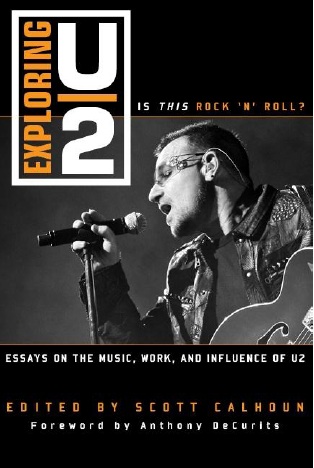
- Taylor, S. (2012). “Bullet the Blue Sky” as an Evolving Performance. In Scott Calhoun, ed. Exploring U2: Is This Rock ‘n’ Roll?: Essays on the Music, Work, and Influence of U2
Plymouth, UK: Scarecrow Press, pp. 84-97
Which is a somewhat unexpected (“mysterious” even) move in my writing. However I do enjoy the opportunity to think theologically, particularly through the lens of lament and liturgy, so I’m delighted to participate in this project.
Saturday, January 30, 2016
New kid in class: Qualitative research into flipped learning in a higher education context
This is the abstract I have just submitted for BERA (British Educational Research Association) annual conference. What I like most is the missiology that is implicit in this abstract. Are you willing to learn from the new kid?
New kid in class: Qualitative research into flipped learning in a higher education context
Flipped learning, like any new kid in town, finds itself undergoing careful scrutiny. A Review of Flipped Learning (2013) identified the need for further qualitative research, including its potential to engage diverse learners across cultures and subgroups. This paper investigates the impact on learners when flipped learning is introduced into a higher education undergraduate theology topic. Traditionally, theology has privileged Western discourse. Can flipped learning be a useful ally in encouraging globalisation and personalisation?
A 2014 Flinders University Community of Practice research project implemented three pedagogical strategies. These included the introduction of indigenous voices to encourage personalised learning, the use of Blooms Taxonomy to scaffold activities in-class time and digital participation to cultivate the learning culture. These addressed all four pillars (Flexible Environment, Learning Culture, Intentional content, Professional educator) of flipped learning (The Four Pillars of F-L-I-P™, (2014)).
Students completed a four question written survey at the start, middle and end of the topic. The results indicated a significant shift. Students had moved from an initial appreciation of content, to a consideration of how they learn from the diversity inherent among their peers. Students perceived that the changes had enhanced their ability to communicate effectively and expressed a preference for choice, collaboration and diversity. However, feedback from Student Evaluation of Teaching responses, assignments and interaction with students was mixed. While overall people affirmed flipped learning, some expressed a desire to return to traditional lecture modes.
This data can be theorised using the notion of learning as a social act, shaped by learner agency. Preston (“Braided Learning,” 2008) observed that students fill different roles in an on-line learning community. Some act as e-facilitators, others as braiders or accomplished fellows. Each of these roles depend on agency being given to, and received by, fellow learners. Student assignments demonstrated that these roles were present during in class-time and further, that the pedagogical strategies implemented were essential in inviting students into these roles. In contrast, students who expressed concern about flipped learning indicated either a desire to preserve the percieved purity of an objective academic experience or a reluctance to trust student agency.
This suggests that the success of flipped learning depends not on the technological ability to produce videos. Rather it depends on pedagagical strategies, including those that help learners appreciate agency in their peers. In sum, the desire to learn from any new kid in the class remains at the core of the educative experience.
– Dr Steve Taylor, Vice Chancellor’s Awards for Excellence in Teaching, Flinders University, South Australia
References
Flipped Learning Network (2014). The Four Pillars of F-L-I-P™. http://flippedlearning.org/cms/lib07/va01923112/centricity/domain/46/flip_handout_fnl_web.pdf.Hamdan, Noora, McKnight, Patrick, McKnight, Katherine and Kari M. Arfstrom (2013). A Review of Flipped Learning: A White Paper Based on the Literature Review.” http://www.flippedlearning.org/cms/lib07/VA01923112/Centricity/Domain/41/WhitePaper_FlippedLearning.pdf.
Preston, C. J. (2008). “Braided Learning: An emerging process observed in e-communities of practice.” International Journal of Web Based Communities 4 (2): 220-43).
Keywords: flipped learning, diversity, higher education
It is a development of work I presented in 2015 at ANZATS and HERGA, but this time with clear focus on flipped learning. I will hear by 11 March if the proposal is accepted. The BERA conference is September 13-15 in Leeds, so might well fit beautifully with the Ecclesiology and Ethnography conference, 6-8 September in Durham and Lines in Sand, 18th Biennial Conference of the International Society for Religion, Literature and Culture, 9-11 September in Glasgow. Or it might be a stretch too far. We will see. Good to have an abstract entered and grateful for the time and encouragement of Dr Katy Vigurs in looking over a draft of my abstract.
Thursday, December 17, 2015
How I Write: An Inquiry Into the Writing Practices
I see the writing process very much like a pregnancy. . . . It takes time. And it doesn’t help to push it. (Tammar Zilber) (85)
There is an interesting article just out, by Charlotte Cloutier, “How I Write: An Inquiry Into the Writing Practices of Academics,” Journal of Management Inquiry 2016, Vol. 25(1) 69–84. It involves interviewing 17 academics about their practice of writing. Cloutier notes plenty of research on what makes good writing, but little research into the mundane, daily practice of writing on a day-to-day basis.
“Our identities and reputations as academics are largely formed on the basis of what and how we write. Many would argue that the fate of our careers rests more on our ability to write than on our ability to teach. And yet despite this, we spend very little time thinking about how we write. Most of us have received little, if any, formal instruction in academic or other forms of writing” (69)
She interviewed seasoned and (mostly) qualitative researchers in the field of organization studies. Patterns did emerge. A key finding was that writing is linked to other practices, of talking, reading, drawing, and thinking.
Regarding talking, practically all the respondents described how their ideas were largely generated through their conversations with others. This involved three areas;
– Informal conversations (face to face and digitally) with coauthors, peers, and students
– semiformal conversations in presentations at conferences
– formal conversations as part of the publication process.
The review process was found by all to be challenging and frustrating. All talked about the need to have a strategy to deal with the inevitable emotions that surround this process. Some were quite strategic.
When I’m writing, I don’t try to write the perfect paper. I try to write a good-enough paper that is interesting enough and intriguing enough for my immediate audience—a set of reviewers and an editor—that allows me to get an {Review and Revision]. (citing Tammar Zilber, 74)
Reading was seen as the lubricant that keeps writing moving. A repeated theme was that “reading and writing were done iteratively and repeatedly, one activity continuously feeding on the other.” (75)
A number used drawing to help make connections. This included boxes, arrows and various mind mapping exercises.
Thinking was important to all. “We write what we think, but in the act of writing, we also clarify our thoughts.” (76) All used some sort of mechanism to help organise their thoughts. For some, this was detailed structures with points and sub points, for others a few dot points. The approach to writing was linked to personality. Some wrote in a linear way, from start to end; while others wrote in a more non-linear method.
Essential was messy writing. “Almost all the authors I interviewed felt that writing became easier once they had managed to write a few sentences, as those handfuls of words gave them something to “mull over” and think about” (77) As a result, all engaged in re-writing.
In conclusion Cloutier noted some important lessons. First, writing is an integrative activity, so there is a need to be continually feeding our writing with activities like conversing, reading, drawing and thinking. Second the importance of developing rituals. There are steps we can take that remind our bodies we are here to write. In other words “writing as a practice that requires practice: a practice that we engage in deliberately and routinely, regardless of our particular mood on a particular day” (80). Third, the understanding that academic writing is actually a social activity.


 )
)