Thursday, November 14, 2013

Wednesday, November 13, 2013
we are two more
Exciting day today, as we welcome two new members to our Uniting College team.
Kelly Higgins is our Marketing and Promotions Officer. She will initially be at 0.2 FTE, moving to 0.4 in March 2014. She has an undergraduate degree in communications and multi-media and nearly ten years experience in Communications, Promotions and Marketing, in a wide range of work places – private business, local council, SA Health, Department of Education. She will help us tell our story, as a College, in clear, compelling, relational and contemporary ways.
Adam Jessep is our Blended Education Design Officer, working 0.6 in what is a Faculty position. Adam has over 10 years of experience, with Ministry of Defence and then a range of educational providers, in the area of adult education. He has a Masters in Ancient History, a Graduate Certificate of Education Leadership & Management and a Graduate Diploma in Educational Multimedia. He also has a Bachelor of Theology and is currently enrolled in Bachelor of Theology Honours. Currently, social media and digital technologies are inviting massive changes and we want to be a pro-active, theologically and pedagogically, in processing how these changes impact on our teaching and learning. Adam will work with both students and staff in these changing times, and as we move toward blended learning across all of our topics in 2014.
Both Adam and Kelly’s appointments are designed to resource the essential growth we need to see as a College, in helping transition to digital education and in enlarging our student base. They emerge out of two reviews, a Distance review tabled in July and an Organisational Capacity Review, tabled in August.
Good times.
Tuesday, November 12, 2013
the pain and peril of living in exile: a theological film review of White Lies
Each month I publish a film review, for Touchstone (the New Zealand Methodist magazine). Stretching back to 2005, some 85 plus films later, here is the review for November, of New Zealand film, White Lies.
White Lies
“White Lies” has the same producer (John Barnett) and original writer (Witi Ihimaera) as the now celebrated New Zealand film “Whale Rider.” Yet “White Lies” offers a far darker exploration of New Zealand’s bi-cultural identity.
The era is early twentieth century and Maori medicine woman, Paraiti (Whirikamako Black) gathers native herbs and provides medical care for her people, scattered throughout Te Urewera wilderness.
On a rare trip to the city, she is furtively asked by Maori housekeeper, Maraea (Rebecca House), to help her wealthy mistress, Rebecca Vickers (Antonia Prebble), keep a secret. Together, these three women generate the emotional heart of the movie, an interwoven pairing of life with death and death with life.
Initially, Paraiti refuses to help, chilled by the alien whiteness of the world in which Maraea and Rebecca live. Her mind is changed by subsequent events, a child birth gone wrong, during which Pakeha display a callous disdain for Maori patterns and practices. All of which is history, for in 1907 the New Zealand Government passed the Tohunga Suppression Act, which limited the services Maori could provide to their communities. For Paraiti, her actions will be an act of resistance, a way of restoring some justice.
This is an acting debut for well-known Maori singer, Whirikamako Black and she is superbly paired with Antonia Prebble, best known for her portrayal of Loretta West in TV drama, “Outrageous Fortune.”
Plaudits are also due to other New Zealand artists. The house in which Rebecca lives is a triumph for film designer, Tracey Collins, while the forests in which Paraiti gathers herbs and the room in which Rebecca gives birth, allow the well-honed atmospheric skills of Alun Bollinger to unfold in all their gloomy cinematographic glory.
Written and directed by Mexican born Dana Rotberg, “White Lies” significantly reworks Ihimaera’s novella, “Medicine Woman.” Maori carvers return to their work, reasoned Ihimaera, so why not writers? Despite the re-carving of words, the early scenes of the movie lack pace, failing to provide momentum the emotional centre deserves.
What unfolds in “White Lies” are three contrasting approaches to dominant Pakeha culture, each embodied in the three women: marginality in Paraiti, accommodation in Maraea, ultimate assimilation in Rebecca.
What is thought provoking is to then lay “White Lies” alongside the First Testament. Israel’s experience of exile offers another perspective on how minority communities activate resistance. We see marginality in the return of Nehemiah to a Jerusalem destroyed. We see accommodation in the book of Esther, her willingness to parlay her sexuality in exchange for influence. We see assimilation in Jeremiah’s injunction to build houses, plant gardens and take wives.
“White Lies” a century on offers little hope. Rebecca’s final decisions are chillingly bleak, while the forest gathering ways of Pariati are, in twentyfirst century New Zealand, long gone.
All that remains, as the movie tagline declares, is the reality that redemption comes at a price. Christians will ponder the crucial birthing scene, in which Rebecca hangs in a crucifix position, arms spread wide, supported by a watching woman, in the painful journey through which new life will eventually be won.
Rev Dr Steve Taylor is Principal at the Uniting College for Leadership and Theology, Adelaide. He writes widely in areas of theology and popular culture, including regularly at www.emergentkiwi.org.nz.
Sunday, November 10, 2013
mission, identity, relationships and gender: preaching Luke 20:22-38
 Here is Sunday’s sermon. To be honest, I approached the Lectionary text – Luke 20:22-38 apprehensive, thinking, this is going to be tough. This is an obscure argument about an obscure part of the Bible. Over the week, I’ve gained fresh insight into the radical nature of God’s Kingdom. Thanks especially to the commentary by Joel Green, The Gospel of Luke (The New International Commentary on the New Testament)
Luke 20:22-38 offers some radical insights on identity, relationships and gender. We’re invited to be children of God. Our relationships with each other, our relationships with God are not defined not by historic cultural patterns. Nor by how sexy we are. Nor by how much bling we have. We’re children of God. Called by a God who listens to the cry of people’s suffering. Invited to live lives of mercy and justice.
Here’s the sermon …. (more…)
Friday, November 08, 2013
Leadership formation days
All around us at Uniting College is change. So much of it that at times I find it hard to keep on track of.
Back in July, we introduced changes to our Leadership Formation Days (announced here). Building on the past, we decided to try in our Leadership Formation Days to focus more specifically on practices and storytelling. Leadership Formation Days (currently) involve Uniting Church candidates for ministry and those in discernment. Prior to 2010, they occurred weekly on a Wednesday afternoon for chapel, community and colloquium input.
With a move to more dispersed training models and Candidates in context and at distance, we needed to find a different rhythm. So we shifted in 2011 to monthly on a Monday, all day. We kept chapel and community and offered a range of topics considered topical.
Another shift began this semester. We’ve moved from topics to practices. We opted to explore the practices (10) essential for mission-shaped spirituality. (Drawing on Susan Hope’s Mission-shaped Spirituality: The Transforming Power of Mission
Rather than work through them in the order from Mission-shaped Spirituality: The Transforming Power of Mission
So the shape of our final leadership formation Day for 2013 – with a focus on being bearers of the message – was as follows.
9:30 am – Missional Practice – Tim Hein – Being message bearers – the habits that shape and sharpen “message bearer” ministry
11 am – Morning tea
11:20 – Communities of trust processes in groups in S1, chapel, common space – Introduction including reflection of practise as a disciplines that read us, read our community actions.
12:20- Chapel with special guest Malcolm Gordon leading
1:10 – Lunch
2:00 pm – Storytelling one – Julie, an ordinary evangelist – a great example of a message bearer – using Skype. After the story, reflect in groups using a regular set of questions to engage and deepen insight.
2:45 pm – Storytelling two – Saint story told by Steve Taylor – Parikaha story as an example of a community as a message bearer.
After some adjustment over the last few months, all that initial trying out of new things – story, group processes – there was on Monday a real sense of depth and engagement. The mixed modes of input – teaching, storytelling, chapel, discussion, food are throwing up some lovely patterns. A highlight for me has been the storytelling – inviting new voices among us. We’ve used a mix of local, national and international guests and heard some great stories of God at work. A change, one of many, that is working it’s way nicely through our life.
Wednesday, November 06, 2013
a tale of two churches

I was teaching on church today in my Introduction to Christian Thought class. I have been thinking a lot recently about the vision of church and the reality of church. So I pulled together a tale of two churches. I took the vision, the ideal, four Biblical images of church as explored in Paul Minear, Images of Church in New Testament
I laid that alongside a second tale of church, the reality, the who is the church, the how did the church act, as explored in Kirsteen Kim’s survey of the church in global history, in Joining in with the Spirit: Connecting World Church and Local Mission

It generated some excellent connections, as we realised how much church changes over time and space, and how that frees us to think about fresh expressions of church today.
Monday, November 04, 2013
21st Century Theological training – vision radio interview
My radio interview on 20twenty – Life, culture & current events from a Biblical perspective is available here.
Adelaide College of Divinity have introduced some innovative 21st century concepts including study tours and Blended Learning.
Host: Neil Johnson
Guest: Steve Taylor – Principal Uniting College (part of ACD)
I talk about the value of ecumenism in education in a pluralist world and about 3 waves of distance as it impacts upon theological education
- distance as written
- distance by broadcast
- distance by blended learning
I also talk about flipped learning and the rationale for beyond the classroom study tour experiences – those who learn by watching. I finish by reflecting on the imperative of mission in theological education, including the places we go and the books we read if our God is a global God.
“Steve Taylor, you are an inspiration” concludes the radio announcer, Neil Johnson.
Sunday, November 03, 2013
the changing landscape of agencies and mission
David Bosch is one of the worlds finest thinkers on mission. His Transforming Mission: Paradigm Shifts in Theology of Mission
- Primitive Christianity
- Patristic Period;
- Reformation;
- Enlightenment;
- and Ecumenical (or postmodern)
Bosch argues that as a paradigm changed, mission changed. In changing times, the mission of the church took different shape. His argument is strengthened by the research he does, asking what Scriptures were being quoted in these paradigms to motivate mission. He argues that each paradigm was shaped by a different dominant Biblical text.
- Primitive Christianity – the letters of the New Testament
- Patristic Period – John 3:16 in the patristic Period; the love of God, seen in the sending of Jesus, is extended by God’s messengers
- Reformation – a shift from Luke 14:23 in the Middle Ages; compel them to come in! to Romans 1:16; God’s rightliving means grace and mercy, not punishment
- Enlightenment -the Great Commission (Matthew 28:18-20)
With regard to the ecumenical/postmodern, Bosch suggests the immense challenges of our contemporary world are signs of a transition into a new period. This has huge implications for churches thinking about mission today. There is widespread agreement that culturally we are going through another paradigm shift. The world of today is vastly different from the world of 40 years ago. So any discussion of church and mission today needs to keep stepping back, keep watching the paradigms.
Stanley Skreslet (Comprehending Mission: The Questions, Methods, Themes, Problems, and prospects of Missiology

- Primitive Christianity – the radical communal compassionate care for the sick
- Patristic Period – the monastery
- Reformation – religious orders
- Enlightenment – the voluntary society, based on the shareholder model, by which lay people became voluntary participants. And the institution, the large scale constructing of schools and hospitals, which offered care and cure.
Which of course, raises the question, what might be the modes for the ecumenical/postmodern period. Skreslet argues for the NGO – the Non-government organisation. He cites examples like Greenpeace and Amnesty International. These offer a physical presence, based on a extensive networks and clear, instant lines of communication. These NGO’s harness public opinion, building pressure to bring about change. They thus offer a very different model for mission.
Over the last few days, I’ve been part of debates about the changing landscape of agencies and mission. All the time, I kept wondering if these debates are part of the same worldwide questions about the forms of mission into a new ecumenical/postmodern paradigm. Bosch writes:
“The transition from one paradigm to another is not abrupt … This produces a kind of theological schizophrenia, which we just have to put up with while at the same time groping our way toward greater clarity … The point is simply that the Christian church in general and the Christian mission in particular are today confronted with issues they have never even dreamt of and which are crying out for responses that are both relevant to the times and in harmony with the essence of the Christian faith …. The point I am making is simply that, quite literally, we live in a world fundamentally different … The contemporary world challenges us to practice a “transformational hermeneutics”, a theological response which transforms us first before we involve ourselves in mission to the world.” (Bosch, Transforming Mission: Paradigm Shifts in Theology of Mission
What will it look like to see the shape of the church and mission formed by NGO models? To prioritise smaller bodies, with a premium put on their ability to be nimble, to cultivate networks and communication? Skreslet notes a number of advantages of the NGO paradigm: “a new model of mission would also have its own distinctive organizational structure” (“Networking, Civil Society and the NGO: A New Model for Ecumenical Mission,” Missiology 25 (1997): 307-319, p. 310). These can apply globally, to international mission. They can also apply locally, to how a local church might operate in their community. Networking as a mode of action contrasts with the worst parts of colonial mission. It encourages behaviours that are flexible, egalitarian and wholistic in orientation. They allow multiple partnerships, at local, regional, national, global levels.
Thursday, October 31, 2013
Vanier Space commisssioning – just a twinkle one year ago
I’m so looking forward to this.
A year ago, chaplaincy was only a twinkle in a few eyes at Uniting College for Leadership and Theology.
Now there’s a Diploma of Ministry with a specialisation in chaplaincy, there are students, there is a new course offering – Theology and Practice of Chaplaincy, it’s available in distance and will be taught as an intensive in November 2014, there is talk of a Masters cohort, there is a hardworking Chaplaincy Co-ordinator – Trevor Whitney.

And there is a dedicated Pastoral Vanier space. It is being commissioned today, Thursday 31 October, 6.15-7pm (below library). It is during the tea break at Presbytery Synod. (The “we” story of how it happened I’ve chatted about before).
Update – Photo of launch, with 50 guests watching 2 students using a hospital bed in the classroom to demonstrate what they’ve learnt about chaplaincy care.

During the launch, the dream was shared by the person who first dreamed it, some 10 years ago. A student spoke of their growth. An interactive prayer of commissioning was prayed. And the room was named – Vanier Space – after a contemporary pastoral theologian who’s integration of practice and theory in radically fresh forms of Christian life inspires us.
The room was named
It’s amazing what can happen in the space of one year.
Tuesday, October 29, 2013
a feel good moment: preaching a missional Jesus today
I walked into a cafe this evening to find a good friend reading this …

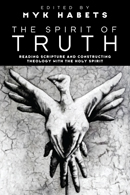
“I’ve got a book chapter in that,” I commented, pointing to Proclaiming the Scandal of the Cross: Contemporary Images of the Atonement
“I know,” he said in a surprised tone of voice.
“How did it happen? How did you get to be in a book with the likes Brian McLaren and CS Lewis?” he said, his voice still surprised.
How indeed!
When I began at Opawa Baptist, I wanted to help the church gain a deeper and richer understanding of the death and resurrection of Jesus. Every communion Sunday during my first year of ministry, I took a different Biblical image of the cross – family, reconciliation, leader, martyr, new Adam. I preached on the image, and then wrote a communion prayer that connected the image with the thanksgiving prayer for bread and wine. It was a fantastic experience, to work Biblically and liturgically with the church around our shared understandings of communion.
I was also during that time lecturing at Laidlaw College and one day got chatting to a visiting scholar about the sermons I was preaching. He mentioned that he had a colleague, Mark Baker, who was putting together a book of sermons on preaching the cross. It was a followup to Recovering the Scandal of the Cross: Atonement in New Testament and Contemporary Contexts
How do you communicate a rich and deep atonement?
And so the authors’, Mark Baker in particular, were looking for sermons on the cross. The connection was made, my sermon was sent.
Some two years later, the book was produced, and I found my sermon – on 2 Corinthians 5:15 And he died for all, that those who live should no longer live for themselves but for him who died for them and was raised again being published, alongside a whole range of other sermons, including ones by CS Lewis, Brian McLaren, Rowan Williams and Frederica Matthewes-Green.
In my sermon I focus on Christ as the New Adam. I use contemporary cultural images from Whale Rider, from treaty signings, from famous individuals on banknotes, to explore how one person might indeed become representative for the many. It’s a book chapter, and a sermon, and a series, I’m still really pleased with.
One of the things I’m looking forward to in 2014 is returning to these questions – I’m doing a second semester course on the Missional Jesus, then repeating it as an intensive at New Life Uniting, Gold Coast, in November 2014. I’m looking forward to returning to my work on the atonement and to trying to explore Jesus with a very specific missional focus – Christ today.
Monday, October 28, 2013
Spiritual Complaint: the theology and practice of lament

A new book just out – Spiritual Complaint
The book begins in human experience, the recognition that personal and communal tragedies provoke intense emotion. It recognises that in Scripture such emotions were given expression in complaints or laments. Bringing together biblical scholars, liturgists and practical theologians, this book begins to provide a bridge between these worlds in order to enrich our ability to respond appropriately to personal and communal tragedy and to understand these responses.
The writing of the book was a move toward genuine collaboration. Papers were presented in a context designed to encourage fertilisation and thus final drafts were encouraged to engage with the other contributors. It was an attempt at bridge building. Further, many of the writers had connections to the Christchurch earthquakes and thus the book becomes grounded in that reality, including liturgies of lament written for Christchurch (167-169).
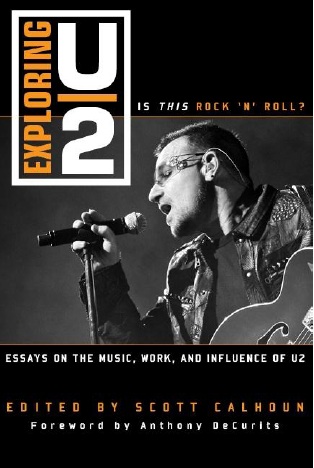
There are 15 chapters – 8 explore Biblical texts, 2 explore worship practices and 5 explore lament in contemporary cultures – Maori lament, lament poetry of Burmese Karen refugees, lament in digital cultures, lament in pilgrimage through Israel, lament in rock concerts. The last chapter is mine, co-authored with my Old Testament colleague, Liz Boase, in which we explore the live performances of U2 after the Pike River Mining disaster and Paul Kelly after the Black Saturday Bushfire tragedy. We use the Old Testament genre of lament to analyse these performances and argue that culturally lament still happens, just outside the church. Here’s our conclusion (227):
A consideration of both the history of the performers – U2’s past use of songs as memorial or lament works, and Kelly’s frequent use of biblical allusions within his music – alongside the production commentary of the U2 concert, suggests that there was some intentionality in the creation of these lament contexts. In both cases, the lyrical wording and allusions introduced a markedly “Christian” expression of eschatological hope which potentially provided the language through which new beginnings might be made. These public laments may not resemble the typical biblical lament forms, but they do form a vehicle for the communal expression of suffering and grief.
I think it’s an excellent resource, an example of inter-disciplinary research that connects with everyday reality. What it needs is a number of companion volumes, in which the liturgies are tested, pastorally, and in which further voices are added to this particular human experience project.
Friday, October 25, 2013
The e-learning version of a Jesus call story (Luke 5:1-11)
Some recent writing I’m still quite pleased with …
I want to begin by contemporising Luke 5:1-11. While somewhat playful, I intend to make a more serious point as my argument unfolds.
One day as Jesus was standing by the Lake of Gennesaret the people were crowding around him … checking their facebook status and live tweeting updates as they were … listening to the Word of God.
[Jesus] got into one of the boats … Then he sat down and taught the people … by handing the disciples a Kindle, on which had been loaded core theology texts, including the Dead Sea Scrolls and latest translations of the First Testament ….
Then Jesus said to Simon, Come follow me and … so he gave the disciples their moodle login and automated password. Upon login, they clicked on My courses and discovered they had been enrolled in a core topic – Discipleship. It came complete with course outlines for the next three years and powerpoints of the Sermon on the Mount. Assessment involved the completion of weekly forums, involving contemporary doing theology case studies. One involved a written response to a question asked by a rich young ruler, another an exercise in going ahead of Jesus looking for a donkey.
Plus, a bonus, a set of MP3’s. Titled Parables, they allowed students to be updated on Jesus latest adventures in storytelling.
Jesus had toyed with the idea of offering a MOOCS – Massive Open Online Course. Instead of a focus on the disciples, he had toyed with marketing his Discipleship course to the crowds, aiming for open access and large-scale interactive participation.
Sadly his treasurer had resisted, pointing out that it was better to give to poor than to fund the video lecture style pedagogy and a graphic novel, which, it was argued, would increase student retention of texts from the Apocraphya.
This was an introduction to my paper – Embodiment and Transformation in the context of e-learning – at the recent Teaching and Learning: Theology: The Way Ahead conference in Sydney. While at first glance my e-learning version of a Lukan “call story” might suggest the importance of face to face modes of discipleship, my intention was subversive. By placing the Incarnation as central, it applied me to argue that transforming theology can involve e-learning and online technologies. In other words, an attempt to be theological about transforming theology.
Wednesday, October 23, 2013
A Clear Call mission and evangelism conference + intensive

Next year, Uniting College are delighted to be partnering with the National Assembly Mission and Evangelism working group – in a conference and intensive on mission and evangelism.
A Clear Call is a national conference engaging in how we share our faith contextually where we each live, love and have our being. It is for everyone who would like to share their faith and would benefit from conversation, information and practical examples. It is for all people: lay people, ordained, teams, young adults, all cultures and the full spectrum of theology of the Uniting Church. It will be be fun, deep, thoughtful, energetic, thought provoking and practical. It will approach faith-sharing from every angle. Speakers, program, registration is here.
The conference is followed by a week long intensive, Evangelism, Conversion and Mission of God. This course is designed to assist participants in forming and developing churches and faith communities in the task of evangelism. Participants will examine the nature of Australian society and its implications for evangelism and the growth of the Church. They will explore understandings of the value of evangelism as integral to the mission and ministry of the church. They will develop skills and practices in implementing local church evangelism. They will explore some of the important issues around evangelism, conversion and the mission of God, including pluralism and postmodernity. Content could include theologies of evangelism and conversion, the Australian context in history, contemporary challenges, models and practices of evangelistic churches, evangelism and special events and resources for evangelism today.
Taught by Olive Fleming Drane and John Drane for Uniting College of Leadership and Theology, they will use creative and inductive approaches, including storytelling, to help participants process and ground learnings for their own mission and ministry.
Course Costs: credit $1600 for Bachelor of Ministry; audit $275 (tbc); $1450 for Master or Doctor of Ministry
Course time/venue: 9-5 pm with an hour for lunch. Possibility of offering two evening rather afternoon sessions as opportunities for wider public engagement.
For more info, talk to Uniting College or register through Adelaide College of Divinity.
Tuesday, October 22, 2013
I’ll say goodbye
An ecumenical worship service occurs every term on the campus at Adelaide College of Divinity. This term was the last service for the Catholic Theological College, who are being closed down at the end of 2013. (The Uniting College will remain, and as our recent press release notes, will actively continue to give visible expression to an education in ecumenism.) So there was a particular poignancy about the service today.
I was involved in the planning, along with the Principal of Catholic Theological College. A creative spark for us came from Joyce Rupp’s, Praying Our Goodbyes
So as part of the service we asked a number of folk to reflect on two questions
- What blessing do you most want to carry with you as you move on?
- What blessings are you most in need of?
Here’s what I said, with about 10 minutes prep time in between morning appointments, …
I came to this campus 3 and a half years ago. One of the selling points, one of the reasons I moved my family to another country, was the opportunity to teach and work ecumenically.
I’m a Baptist boy, so having Catholics above me, and Anglicans to my right, and Uniting colleagues to surround, would I thought be a very rich and a very growing experience.
So that’s the blessing I most want to carry with me as I move – ecumenical richness.
That moment when I give my Intro the Theology class a set reading. And then casually mention, oh the author of that reading is Denis Edwards. He’s a colleague on campus.
That moment when I pull Derrida’s Bible: (Reading a Page of Scripture with a Little Help from Derrida)
That moment when I speak at the ACD art exhibition, when I worship in a chapel surrounded by art – Anglican, Catholic, Uniting –
The spirituality and art series run by Jo Laffin here on the weekends in my first year.
That’s the blessing, I’ll carry forward, the ecumenical richness. It’s one of the reasons I came, moved country.
What blessings are you most in need of as you continue your journey?
It’s expressed most eloquently in Te Putahi Matauranga Whakapono Katorika, the history of the Catholic Institute of Theology. As a way of helping me process what feels like the great ecumenical divorce that we’re growing through, I brought this book earlier this year. It describes a very similar journey, the NZ experience of the Catholic Institute of Theology, established some 23 years ago, emerging from the enthusiasm of Vatican 2, to embrace the world. Which closed in 2012, due to a range of reasons, including the actions and inactions of Catholic church hierarchies.
On page 114 there is like a short obituary notice – “What had started as a brave and visionary enterprise was hampered by a pre-occupation with the church’s own denominational interests which ran counter to the ecumenical spirit.”
That’s the blessing I’m most in need of. We live in times when it’s so easy to be pre-occupied with the church’s own denominational interests – Baptist and Uniting. Dare I even say Catholic. What I’m most in need of is a brave and visionary Spirit, of a God so much bigger than my own expression of church. That’s the blessing, that’s the God, I most need.


 )
)