Wednesday, September 18, 2013
promoting practical and scholarly excellence: kicking 3 quick goals
At Uniting College, one of our 5 strategic signposts is promoting practical and scholarly excellence. We’re seeking a spiral of heart, head and hand.
So tomorrow we celebrate a book launch. Our missiologist, Dr Rosemary Dewerse launches Breaking Calabashes, Becoming an intercultural community. It takes her PhD, so it’s scholarly. In 140 pages, it applies it to local Christian living. So it’s practical – readable, woven with stories, poetry, questions and pictures. It’s a compelling mix of Biblical reflection, theological depth and compassionate vision. If you’re in Adelaide, join the party at 4:45 pm tomorrow, 34 Lipsett Tce.
Last week was the news that Dr Liz Boase earned a Gold Award at the Australian Religious Press Association for Best Theological Article for her writing in New Times. Mixing personal story with her PhD work on lament, here’s the commendation. “A thoughtful and reflective piece, well researched on the psalms and prayer. A much needed call to recover the literature and practice of lament in communal worship and private devotions … Its clarity and simplicity makes this article immediately accessible to a broader audience.” Scholarship, made practical. (To read the article – Learning in Lament – go here and scroll down to October 2012).
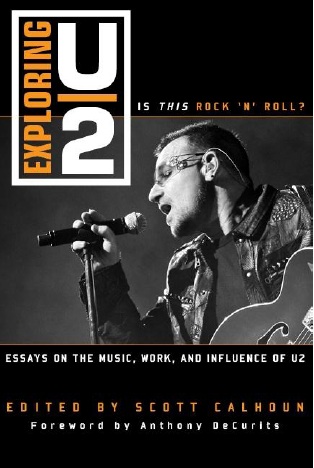
Today, I heard that my paper at the U2: TRANS conference has been accepted for publication, in a book in which academics will produce something readable by the non-expert, though college-educated, reader. Again, scholarship – analysis of performance gestures and lyrical adaptations – made practical.
Practical and scholarly excellence. Not either/or but both/and. Three quick goals from our Faculty team at Uniting College.
Tuesday, September 17, 2013
praying our goodbyes: a book soaked in memories
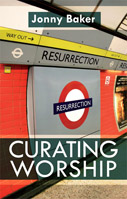
Some books are soaked in memories. I pulled Joyce Rupp’s Praying Our Goodbyes
The book has been so well used that as I opened it the pages fell out. I held them, remembering the times I’d used it – our struggles with infertility, twice in 9 months being turned down for a job I thought would be ideal, the pastoral transition away from a loved church family, some difficult work situations. And how different those situations seem now, 5 and 10 years later. Felt the pain, still. Yet realised, almost laughed in delight, at the different trajectories now in play.
And reflecting on the truthfulness of these words from Joyce
for the Christian, hello always follows goodbye in some form if we allow it. There is, or can be, new life, although it will be different from the life we knew before. The resurrection of Jesus and the promises of God are too strong to have it any other way. (Joyce Rupp Praying Our Goodbyes
Monday, September 16, 2013
transmission of faith: by colour, via culture, in Christ

My copy of The Armenian Gospels of Gladzor: The Life of Christ Illuminated 
Gorgeous in colour they describe a faith that crosses culture – from Jerusalam to the sands of Armenia, that takes root in indigenous cultures, in this case Armenian, that is fabulous in colour, calling forth a visual awareness of Christ. This is how I understand fresh expressions – faith transmitted by creativity, via culture, in Christ.
“The Gladzor manuscript is a most eloquent and very self-consciously formulated Armenian life of Christ.” p. 31
There is a strong emphasis on Christ the healer. One-sixth of the illuminations of the Gladzor Gospels focus on healing stories. This is compared for example with Giotto, who has only one panel in 38 dedicated to Christ the healer, or many other artists who focus on Christ in infancy or passion.
“This Christ is a very personal, caring savior: he is directly involved with other people, sensitive to their problems, and in touch with their even on a physical level.” p. 32
More on Christ tomorrow, as we explore the interplay between human and divine.
Saturday, September 14, 2013
Dad’s death and Christian approaches to suffering
Thursday was my first time back leading the Uniting College team meeting since Dad’s funeral. I decided to share some of what I’ve been thinking and feeling and reading since his death. This had a number of potential dangers. First, the risk of being simply self-therapy. Second, that others in the team have also recently suffered loss, so an uncertainty how my story might connect with their story. At the same time, this is the team that have supported me in prayer and love (cards and calls and care, including gathering to lit a candle as prayer on the day I flew to New Zealand) and a team what is seeking to grow deeper with each other in all of life.
I began by sharing a number of photos that might help capture for the team some of my experience of the funeral. It is wierd when you bury your Dad in a different country, and so I live between two worlds, one of which does not know my dad, nor was able to be with me as the funeral happened.
First, my mums fingers around dad’s ring has he died. That sense of faithful love over so many years.

Second, building our own coffin for Dad, some building, some drilling, some decorating.

Third, the invitation at the funeral to sign the coffin, allowing individual engagement with the reality of Dad’s death.

And then some theological reflection. A few words from a poem, on the importance of pain in the forming of faith
“We must feel
The pulse in the wound
To believe.” Denise Levertov, On belief in the Physical Resurrection of Jesus.
And some words from Justin of Norwich, in which pain and suffering are asked for, as a way of loving God. It is a spirituality so counter to so much of contemporary Western culture, in which we are so keen to live young endlessly.
“And it suddenly occurred to me that I should entreat our Lord graciously to give me the second wound [ ], so that he would fill my whole body with remembrance of the feeling of his blessed Passion, as I had prayed before; for I wanted his pains to be my pains, with compassion, and then longing for God … I want to suffer with him, while living in my mortal body, as God would give me grace.” (Julian of Norwich, RDL, 3)
It led to a rich discussion, a story about the richness for a community when suffering was faced, tears for those we love who continue to suffer, a reminder of the positive impact of suffering on our character formation.
(Both readings from the chapter on Julian Norwich in Disability in the Christian Tradition: A Reader
Wednesday, September 11, 2013
Dad’s death as a wheel-chair shaped hole
(A warning to regular readers, since this is my blog, I’m going to continue to process some of my Dad’s recent death on the blog. I guess it runs the risk of being too personal, but as a practical theologian, I’m committed to taking that risk, and finding my life a sifting ground for reflection on the fingerprints of God.)
I’m continuing to reflect on the physicality of Dad’s absence. His death leaves a very interestingly shaped hole, one that is wheel-chair shaped.
Dad had multiple sclerosis and thus spent his last ten years wheelchair bound. This reality, the shape of his disability, had a physical impact upon our family life. The reality of that wheelchair meant a physical altering of how our family gathered and related.
The lack of mobility mean that Dad was a physical central point which we moved toward, around which we as a family gathered, around which our social life defined itself. It is strange, bewildering, to realise we’ve lost a wheel-chair shaped central point.
There are of course, other spatial ways for groups to gather. The Christian tradition often uses notions of pilgrimage, of always moving together toward a distant horizon.Walking a beach offers tidal images, the slow back and forth rhythm of waves. Maori culture gives us the image of Koru, of growth unfolding outwards from a centre. All of these offer quite different ways to visualize gathering. Each result in quite different patterns of living.
Thus the death of Dad is not only of a person, but of a pattern of gathering as a family.
What was intriguing about us as a family making Dad’s coffin was that it was actually giving us a different pattern of gathering – the garage rather than the lounge, working side by side rather than talking face to face, small groups playing different roles at different times.
Being a missiologist, I can’t help linking this with the church in mission. Much of church life in Western Christianity has a central gathering pattern – we go to church rather than move on pilgrimage or unfold outward as church in the world. So my grief is perhaps at some level what the church in the West is living with on a daily basis.
And what might it mean for the church to embrace different patterns of gathering – around projects, in shared tasks, seeking participation and new charisms.
Spatially, Dad’s hole is not just central, it is also wheelchair shaped. His disability is central to his parting. To help me process this, I’m back reading Disability in the Christian Tradition: A Reader
It looks at how various thinkers through Christian history have responded to disability. I suspect that somewhere in there will be important insights for me, about how God’s redemption embraces the physicality of the human body, about how the disability of Jesus (beaten beyond recognition, wounded side, nail-scarred hands) are part of God’s gracious pattern in the world.
Tuesday, September 10, 2013
telling a story one year on
Today I’m planting seeds. First, early morning, in my garden, Van Gogh sunflowers, Wild Sweetie micro tomatoes, heirloom carrots and provencal salad mix. Second, later today, I’m hosting a one year on anniversary.
This is the invite I sent out (planted?) a few weeks ago …
Greetings,
A year ago, you gave us at Uniting College a gift.
You participated with us in a Capacity Builders process, giving your input, ideas and perspectives, as we at Uniting College worked toward a four year Strategic Planning process.
One year on, we want to report back.
On Tuesday, September 10, between 4:15-5:15 pm, in Uniting College Common Space, 34 Lipsett Tce, we want to thank and update you,
to share with you,
- the result – including the new tag line, sharpened mission statement, signposts, and 2014 objectives
- the home truths – some feedback we found hard to hear, but essential as we looked into the feedback mirror
- the road not travelled – some moments of learning, about ourselves and our mission, emerging from our 2013 objectives
- the road travelled – some highlights of God’s goodness in the last 12 months
There will be wine, cheese, stories and information, so for catering purposes, can you please RSVP to eloise dot scherer at flinders dot edu dot au.
It was in September a year ago that we as a theological College began a strategic planning process. While the idea of strategic planning in a theological college has a number of potential pitfalls, for us its been a breath of fresh air, providing clarity and allowing a depth of listening and community and team.
Today we’ll share some of that, and some of the stories of fresh life (planted seeds) that have sprouted among us.
Update: Feedback was very positive. We began with wine and cheese, which gave a relaxed, after work type of feel.

I then talked about the results, the feedback and the process. At various times I offered ways to engage. One idea that went really well, was giving out 5 hot dots to each person and asking them to vote on what they thought our 2014 goals should be. The goals had been placed up around the walls. I ran through them and then (3 days after the election here in Australia) people got to to vote (again), wandered around with the dots, choosing. It has been great for us as a team to have this outside input into what we as a team had initially thought was important.

Finally I finished with four highlights of the 2013 gone
- our first ever candidate indigenous immersion experience (see here and here)
- a just announced Gold award for “Best Theological Article” from the Australasian Religious Press Association for one of our lecturers
- our growth in the use of online learning, in both our under-graduate and post-graduate courses
- regional delivery, allowing us to engage many more lay people in our BMin
All in all, One Year On worked really well – an informal way for us to enjoy ourselves, while maintaining connections, giving and receiving feedback and telling stories
Monday, September 09, 2013
pioneers in contexts organisational and cultural
There are three key contributors to entrepreneurial success. They are personality, the culture of the country they live in and the support available to them. (From here)
Worth pondering. It suggests that pioneering talk needs to occur in context – to consider the culture and the organisation.
Regarding personality, the article notes that there is no such thing as an “entrepreneurial personality.” Indeed, there are great variances in psychological makeup of entrepreneurs. This is good news and certainly important given the common stereotypes that hang around the word leader and innovator.
However, pioneers do tend to have some shared characteristics
- an enjoyment of achievement
- take personal responsibility
- exist with higher levels of tolerance for ambiguity and uncertainty
- look for risks
- see failure as an opportunity for learning
Regarding culture, this is really interesting. I find it intriguing the rise in recent literature in business circles around social entrepreneurship and the rise of the word pioneer in church circles. Our Western culture prizes novelty and so the word pioneer finds coherence. However, down-under cultures add complexity to the word pioneer. In New Zealand, we quickly stomp on tall poppies. In Australia, pioneers died in the desert. They also tended to be male, playing into an outdoor, rather than domestic spirituality. (I’ve written more about this here). So downunder, these layers make pioneering a more complex cultural image to play with.
Regarding support, well for those of us in the Uniting Church who talk about innovation, have a read of this
My vocation carries a cost with it, a cost I am – to a certain extent – willing to pay. But paying that price may cost me more than I can afford … I am left wondering, then, what choices I now have available to me. Can I learn new ways to live within my limited resources that are life-giving and sustainable? Must I choose an occupation that takes me away from a calling that has this year been so profoundly affirmed, in order to extend my financial resources and remove the strain? Are there avenues for support I have not yet explored?
And will my community, the church, be brave and explore these questions with me? For the reality I face, of a limited income and / or multiple occupations, will face more and more ordained and lay ministers called to serve a church with fewer and fewer full time placements available. (From here)
Sarah refuses to accept that creativity and innovation are individual. Rightly (IMHO) and especially for a Uniting church that claims to be inter-connectional, she asks about the place of the organisation in supporting and sustaining innovation.
I sat with someone recently who noted that their church was looking for a 2nd minster who could pioneer something new that in time will pay for their salary. I quietly pointed out that I long for day when that the sustainability of salary applied to the first minister as equally as the incoming pioneering minister.
In sum, only part of pioneering is about the pioneer. They always need to be seen in context – both their cultural and organisational
Saturday, September 07, 2013
being church in mission on election day
A few weeks ago, a local Australian pastor asked my advice. He’d heard a rumour that I might be creative and outward looking. So, he asked, “how can we as a church maximise the fact our buildings will be used on election day as a polling booth?”
“Give the money away,” I replied, knowing that many Australian churches offer a barbeque to folk lining up to vote and that many charge a gold coin for the sausage and sauce.
In fact I said, warming to my new role of creative mission advisor, “Why not choose 3 local charities. And have your own vote. Invite everyone to whom you sell a sausage to choose what charity they most want to support locally. That’s a very different way of being church. Participating in mission by serving the community.”
He looked slightly crestfallen, so I asked how much they earned last election. Around $700 he said.
“That’s around $200 a year. If you keep the money, you simply reinforce the message that all the church cares about is itself, it’s own concerns and agendas. If you give it away, you’re inviting your local community to participate with you in mission.
“That’s a very different economic policy,” I concluded.
I’m looking forward to meeting post-election and seeing how the vote for mission might have played out in that local church
Wednesday, September 04, 2013
Eulogy for John Cuthbert Taylor
My task, my privilege, on behalf of the family is to reflect on John Cuthbert Taylor – as husband, dad, father-in-law, granddad.
For the three Taylor sons, our childhood is defined by Dad and our Dad is defined by PNG.
Holidays using coconut palm leaves as a toboggan to fly into Lake Murray,
the family fondue and games nights – playing Careers,
the three hour church services in Gogodala,
the standards of behaviour expected at the three hour church services from the three sons of the foreign missionary.
All of us as sons were raised in PNG and it’s only in hindsight that one can begin to appreciate the way it shaped us. The values it instilled across cultures. And the costs, for Dad and for us.
For the grandchildren, Grandad meant Wethers Original lollies from his special tin. His smile of welcome. His genuine interest in their lives. And wheel chair rides.
For Mum, Cuth Taylor meant 53 years of companionship. A shared sense of call. Mutual support. In health, and more recently, in sickness
I still remember the phone call from Dad with the news that he’d been diagnosed with multiple sclerosis. I remember him struggling emotionally to share the news of this disease that was attacking his nervous system. For which there is no known cure. (As yet)
Dad was in his late 50s when he was diagnosed. It would’ve been easy to respond with anger, self-absorbed bitterness. Instead I watched as Dad used those years to grow. To find new ways to contribute – through prayer, in care. I’ve watched him go through the Opawa Baptist church phone directory, person by person. Realising that he was keeping better track of newcomers than most people in the church.
Not that dad was perfect. He could withdraw from conflict. He could hide his emotions. He could work too hard. Not that anyone’s perfect.
Last year for Fathers Day I gave dad a memory book. A series of questions – favourite childhood holiday, his first job – that might help capture his memories before they became lost in the confusion that is Alzheimers.
One question asks – What are the proudest moments of your life. Dad wrote of his first century in cricket. Getting married – to you Mum. Birth of his sons – Chris, Dave and even me. And how he coped with MS.
At first glance it’s an unusual thing to be proud of. But this is what he wrote:
“God’s goodness to me and my growth in Him since my MS was diagnosed. I used to .. ask God why he allowed old people to get sick. But I now know the answer – are we still prepared to trust God even when we are sick. Yes I am!!”
John Cuthbert Taylor – husband, dad, father-in-law, granddad. Remembered by us, admired by us, loved by us – for his character.
Friday, August 30, 2013
tomorrow we’ll build a coffin
My Dad died yesterday, peacefully, surrounded by some close family. After many years of battling debilitating illness, it was a relief to have a passing so swift and peaceful.
Today we met with the funeral director and after a fairly intense planning suggestion, a slightly light-hearted question was asked.
Do we have to purchase a brought coffin?
No came the answer.
And with increasing energy, we began to explore the possibilities of building, then decorating, our own. It would be a group project while we wait for the funeral. It would be an act of love. It would help us process our emotions. It would connect us, personally, with what is happening. It would allow different family groups – some builders, some decorators, some cup of tea makers, to be at work.
We each do our little bit.
Saturday update: Friday night the plan was made, with a bit of help from the internet. Saturday morning we confirmed the plan and brought the pine. Saturday afternoon we built the base, sides, handles and lid. The grandkids did lots of the drilling, while the adults supervised and guided. A really rich time of participation and learning.
Saturday evening update: And now, in the evening, after dinner, a blonde wood stain. It has brought out the pine wood, offered some sense of a proper finish, and laid the foundation for the decorator crew on Sunday. A different group of participants were involved in this painting phase, folk who felt they could contribute via paint, more than hammer and drill.
Sunday evening: With the coffin built, today became a day of decoration. Each person found a spot around the sides – a panel for each family. Some used words, others song lyrics, others stencils, beads or lolly wrappers. Across the generations words of love and memory were inscribed. The coffin is now individualised, made with love, decorated with care. The lid has been kept free and before the funeral, participants will be invited to add their words of memory. It has been a rich, full weekend. The activity has created memories and given us something to storytell together, as we seek to find new ways to relate and connect as a family.
Monday morning: So the funeral director returned to take away the coffin. She seemed genuinely impressed, moved by the heartfelt decorations on the side and the extensive number of screws used to hold down the lid.
It felt good to help her load the coffin into the hearse.
And then to close the boot and realise that I’d personally been able to be part of making what would carry Dad for his final physical journey, first to the church tomorrow and finally into cremation.
We built that. For Dad
(The problems were to emerge later that day. Our coffin handles were great for multiple hands to hold, but not good for sliding into the crematorium chamber. Thankfully, the funeral directors took the initiative and added some sheeting on the bottom, to allow for a smoother roll.)
Tuesday at the funeral: As hoped, a handmade coffin, already decorated, proved a big of a magnet. The service was from 3:30pm, with refreshments and fellowship from 2 pm. This included the invitation for folk to sign the coffin and/or leave a message. It was wonderful seeing folk gathered around the coffin, reading, talking, interacting, messaging. It allowed another layer of storytelling and helped people connect with the reality of Dad’s death.
We made a backup plan. If we’re not successful by Monday, we can go back to the catalogue. Which gives us two days to see what we can produce.
Tuesday, August 27, 2013
Anyone up for a big picture theological conversation?
I’m looking for conversation partners.
The question is: what will be the shape of theological formation for mission and ministry in 10 years time? And the knock on questions – what facilities will it need, what library resourcing will it require, what teachers will it need, what research capacities will it nourish, what church will it service?
You need to be willing to talk as well as listen. You need to be willing to work at the conversation, to read and think and push back and be pushed. You also need to be willing to stay in the conversation over a good number of months.
If you’re interested, get in touch – steve dot taylor at flinders dot edu dot au.
Sunday, August 25, 2013
a very rich speaking event
Last night was one of the most rich speaking engagements I’ve ever been part of. Last year I spoke to the Churches of Christ ministers at their annual Magarey lecture. I focused on the importance of our sense in the mission of God. A number of those present wanted to continue the conversation and the result was an invite to last night – to be part of Conversations at the table. But as a feast rather than a talkfest!
I arrived to find a four course dinner, lights dimmed, candles lit, flowers laid out around tables. It was extraordinary.

Between each course I engaged a Scriptural text and explored four themes – companions, manners, words and communion. I wanted to provide examples of how to do church around tables, not to try and be fresh or relevant or cool. Rather in response to Jesus, who did so much of his ministry in conversation at tables.
Course 1 – Companions
I began my inviting them to plan a special meal for 4-6 people. Who would you invite? Where would you have it? What would you eat? What would you celebrate?
I then read the Parable of the Great Banquet, in Luke 14:15-23 and asked if anyone had stories of times when you’ve invited “poor, crippled, blind, lame.” This opened up some great conversation, about how we’re changed by the simple acts of inviting the strangers to eat.
I introduced them to John Koenig and his research into churches and food.
“we have seriously undervalued our church meals, both ritual and informal, as opportunities for mission … to realize this potential, we, like the disciples on the road to Emmaus, must have our eyes opened by the transforming presence of Christ at our tables.”
And the four hospitality practices he offers.
- Practice: serving graciously by finding ways to encourage eye contact and genuine conversation.
- Practice: setting tables in ways and places that reflect God’s abundance and creativity.
- Practice: seek role reversals by finding ways for all to contribute (a diversity of gifts, each has its corresponding service.)
- Practice: committing to a long-term, intentional project.
Course 2 – manners
I asked if Christians should eat differently and suggested a number of practices that might mark Kingdom manners. This included placing on the table all the cans (cleaned) used to make the meal we were enjoying and inviting folk to talk about the labels, what we know of the prayer needs of that country and pray for those people. Intercession!
Course 3 – words
I used the movie The Kings Speech, to ask what it means for us to find voice, to share our story as part of conversations. It was spliced with a number of video and art explorations of woman at the Well in John 4 – her sharing her story uniquely.
Course 4 – communion
We finished with communion. It allowed us to draw the evening together – to “Do this in memory of” the table fellowship of Jesus, the manners of the Kingdom, the words.

I finished with one final conversation around table, the Emmaus story in Luke 24, to remind us that the cup is the cup of the new covenant, in which Jesus continues to be recognised around tables; not just in the past, but into the future.
Why such a rich night? The multiple senses – food, lighting, environment, conversation, cans, wrapped around justice, mission and hospitality – made for an evening that was rich, yet inputting. The people at tables were from diverse churches, making it a time of relational growing. Mission was made as simple as eating, as challenging as Jesus radical Kingdom manners.
A night I will remember for a long time.
And I’d love to do this with other groups – an evening of mission as conversation at tables.
Saturday, August 24, 2013
Conversations at the tables
I’m speaking today at Conversations at the table.

It’s a unique invite. They want me to talk actually at tables, around food, between courses. Not as the make them laugh after dinner speaker, but to engage their senses in God’s mission of justice, community building and story telling.
I’ll be taking along John Koenig, Soul Banquets: How Meals Become Mission in the Local Congregation
Friday, August 23, 2013
doing theology: teaching theology by induction
I’m teaching an introduction to Christian theology topic this Semester.
I began with a two questions and a proposal. First question, does anyone here not have access to a computer? All did. Second question, does anyone here not have access to a printer? All did. Which led to the proposal. I will put all the lecture notes and class readings online. And when we meet, rather then talk theology ie me lecture you, we will do theology ie I will guide you, through the readings and my doing theology together.
We were all a bit apprehensive about this new approach, since the dominant model of education involves an expert imparting knowledge. But I was keen to explore a learning by doing, induction process, which better equipped them for the complexity of life beyond the classroom.
To help guide them, I have outlined to them the following process, which they used to get them going.
- My (current) theological question is …
- I’m curious about this because ….
- The theological frame I’m going to us is (in week one I suggested three examples Wesleyan quadrilateral, Miroslav Volf’s three questions, indigenous storytelling approach) …
- My conversation partners will need to include ….
- The values I have used to chose them include (from week three) ….
- I’d like to express my findings by (in week two we noted blogs, film, story, liturgy, writing) …
So far, after four weeks, we are all greatly energised. They have come up with excellent theological questions – none that we would have discussed in a normal syllabus, yet all touching key theological themes. They loved the conversation partner idea. The process really energised the library visit I then organised, when they got shown how to use databases to find conversation partners. Some were heading back to the library after class to search further.
For those interested, I also gave them one example, one of my recent “doing theology” projects – Let me in the sound. (more…)


 )
)