Thursday, October 29, 2009
save the last latte for me: an evening update
So the Thurs-day also marked not only my last latte-frothed class, but an evening staff/student barbeque. This included a farewell to me. Previous students I had taught were invited. (Some showed. You know who you are/are not! 🙂 )
A few speeches of thanks. Regret that I was going. Reflection on my impact on student lives. Naming of my unique “hole” – a creative thinker who offered whole-bodied educational experiences (other wise known as lectures!)
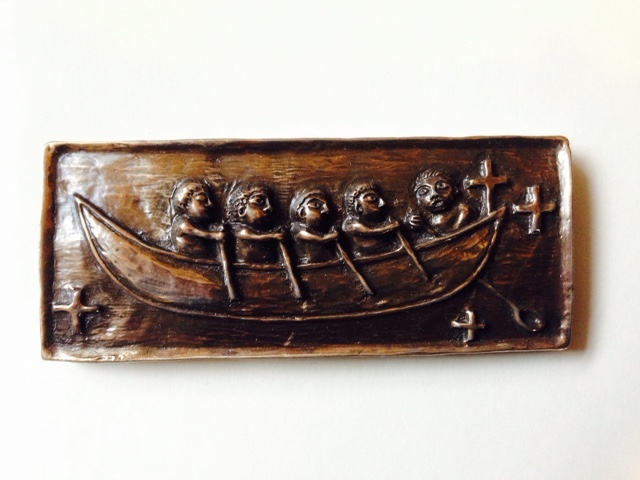
And a lovely, unexpected, gift – a koru, framed in native rimu timber. A Kiwi symbol of new beginnings. With the prayerful hope, that my move to Adelaide, while Laidlaw’s loss, may truly become a new beginning for Taylor’s and an expression of God’s missional purposes in Adelaide.
No latte, but a lovely ending. Thanks Laidlaw.
save the last latte for me
I was teaching my last class ever at Laidlaw College (Christchurch) today. Which made it a moment of personal significance. Happily, it was the Missional Church Leadership course, one that I have pioneered, and now taught 5 times in 4 different cities in Australasia. A personal favourite, so I nice course to end on.
We headed off to the local cafe and sat around a long wooden table. Coffees all around, on my “leaving budget”! Together we all shared a memory, something about the Missional Church Leadership course that might stay with us – Luke 10:1-12 as hopeful hook and challenging platform, a sense of safe space, a model of leadership as reflective and bottom-up, benedictions as physically facing the door, taking the course out of classroom and to community tables.
And then we read Luke 10:1-12 together. A bit of a recurring Steve Taylor/mission, church, leadership text! What struck us? What question might we have for a New Testament scholar?
It was a fitting conclusion: in cafe rather than classroom, around a shared table, drink in hand, Biblical text central, a growing community of pilgrims. A moment worth saving the last latte for.
And what struck me? The need to dwell deeply. That as I leave one (Christchurch table) and journey to another (Adelaide table), my task is to dwell deeply, to make a priority of relationships and food and drink and consistency and hospitality. I have offered peace and found peace in one place. May it be so in another.
Wednesday, October 28, 2009
U2 Pasadena webcast as culture making: updated
“Fans are making multi-cam experiences of concerts. Even with trailers. So what will U2 do? When, how will they push back?”
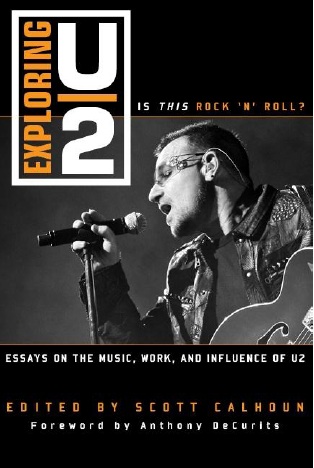
So spoke Matt McGee, founder of U2 fan site atU2, at the first U2 academic conference on Sunday, October 4.
Surely the live streaming of Los Angeles 360 tour concert was U2’s definitive reply? (Updated: an event that became Youtube’s largest streaming event ever, with nearly 10 millions viewers. Not a bad crowd!)
What do you do when every fan is a walking multi-media unit, when your concerts are being live streamed and when your live concert sound and image is being defined on Youtube by cheap cellphone recordings?
In my classes and speaking recently I’ve been using Andy Crouch’s Culture Making: Recovering Our Creative Calling
– condemnation
– critique, with the emphasis on intellectual analysis of culture
– copying culture, in which a subculture develops around the imitation of forms from contemporary culture
– consuming, in which “most evangelicals today … simply go to the movies … [and] … walk out amused, titillated, distracted or thrilled, just like our fellow consumers who do not share our faith.” (89)
– creating
Crouch argues that the first four are problematic, for the only way to change culture is to create more of it.
So apply this to the live streaming. U2 could condemn, with cease and desist legal action. They could critique, making bitchy public media statements. They could do nothing, let themselves be consumed, defined, by handheld cellphones on youtube.
Instead they have created. They have experience in making live DVD, they have the best sound system in stadium, they have the cameras best placed to catch the action, they have the leverage to talk with youtube. So if they send the show out live, get watched by millions around the world, then they get to define the quality on Youtube.
Plus create a promotional goldmine. For instance, in the wash of free publicity throw in an announcement of a return to the US in 2010. Plus become defined as the band who played to the largest audience in the world. And a prediction – it allows them to put a line under the 360 tour, freeing them to release a new album in 2010, complete with new songs, more “pop” to quote Bono, and so repair the damage done by the slower sales of NLOTH.
Whichever way you look, a global webcast is quite some response to the question of fan consumption in a digital age. And Paul McGuiness is a marketing genius. And U2 are a fine example of culture-making in an internet age.
Tuesday, October 27, 2009
redemption for the body: a spirituality of native timber
Today was a wet cold rainy day. Too wet for the builders working on our church building project to be outside. So they started in on the foyer.
The old 70s windows are to go. Replaced by new aluminium glass. The builders knock off about 5 pm. Two windows out, two windows in. A good day’s work.
Then at 5:15 pm a van arrives. It’s the Opawa Facility’s Ministry leader. A man of immense creativity, faithfullness, care and humour.
He reverses the van in and opens up his boot. And starts to rumage through the rubbish left over by the builders.
Intrigued I wander out. He tells me he’s looking for rimu. It’s a New Zealand native timber species. A beautiful, honey brown colour. And it was pretty common back in the 1970’s, used to frame windows. And when you strip back the paint, and apply coats of varnish, then recycled rimu starts to look absolutely stunning.
And together, bent over the day’s rubbish, the two of us start to dream.
What about another pulpit. Or perhaps a communion table. Or what about some stands, to hang art or allow interactive stations! We get excited. What about taking the old rimu and make something re-newed for the church. We could take the best of the 70s, the best of our past, and redeem it for the new millennium.
Sunday, October 25, 2009
forming disciples today: conversations with Christian mission history
Today I started a 4 part sermon series, titled Turning points: key moments in Christian history
Today was the monastic movement, particularly Benedictine spirituality, and the implications for discipleship and mission. Since history is about people, I gave a brief introduction to three monks – Anthony, Clare and Benedict. Since history is about place, I looked at the world’s oldest, largest and most beautiful monasteries.
The sermon raised some significant questions for me in regard to church life today.
1. Forming disciples. Compare a monk, who prays 7 times a day, 7 days a week. That is 49 church services. Consider how much that shapes a person in the way of Jesus. In contrast, much church going is once a week at best. How much can we really expect to grow in our Christian faith, when many of us watch more TV than enter the Christian story? (Now I know that some of you have daily quiet times. But the challenge of the monastic life was how they committed themselves to grow together, not as individuals).
2. Transforming community. I showed a picture of a Celtic monastery, which functioned as a 7 day a week place of prayer, learning, healing and relating. And the mission question, is church really about a worship service that we drive to? How much can we really expect our neighbourhoods to change, as we drive to and fro once a week?
3. Faith for life. Since Benedict was about all of life – prayer and work – ora et labora, then his “rule” must surely have application outside a monastery. It occurred to me that our working days are filled with breaks. We eat 3 times a day, and stop for morning and afternoon tea. So could that be the start of a “local church rule”; in which we commit to pause for micro-prayer every time we hold a hot drink in our hands?
Taking the monks out of history began some pretty challenging after-church coffee conversations. I’d love some feedback on this from my wider blog audience.
I thought it might be of interest to some outside Opawa, so we had a first ever Opawa go – Steve on video, then very basic edit (top and tail) on iMovie, then upload on www. All very new. (coming) (I had lots of powerpoint, but not sure about copyright, so it’s just a straight talking head. Slightly longer than I normally preach, but it was a long weekend, so everyone is a bit more relaxed and there is often less in other parts of the service.)
It was a lot of fun preparing a “history” sermon and I got a stack of positive feedback, people really appreciating a different approach. Variety is spice of life and all that.
And for those who missed it from Friday, here was some of my reading in preparation:
– Mark Noll, Turning Points: Decisive Moments in the History of Christianity
– Radical Hospitality: Benedict’s Way Of Love
– The Rule of Benedict for Beginners: Spirituality for Daily Life
– A Public Faith: From Constantine to the Medieval World, AD 312-600
– Emerging Downunder
– New Monasticism: What It Has to Say to Today’s Church
– St Benedict for Today.


Saturday, October 24, 2009
the joy of being a fan: u2 in milano
This is a great video clip:
a man happy in his skin
a creative man, who has found a way to express his creativity
a man who is now captured on video, humming the songs
of another creative man, another who has found a way to express his creativity
the mixing of two creative joys. angst is easier to capture artistically. joy is much hard to capture. the music of U2 has a joyous feel at the moment, the freedom of a group who seem very comfortable in their skin, in their creativity.
much band fandom feels adolescent, like a kid doing rabbit ears behind a live camera feed,
an energy doing it’s best to make itself the centre of the show.
this fandom feels mature, someone who perhaps really has found what they are looking for,
who can “shout for joy if you get the chance” (U2, Unknown Caller).
Friday, October 23, 2009
free Black Seeds Kiwi music download
for next 48 hours here.
Here are my thoughts on the free download:
Funky beats. Laidback vibe. Nice guitar. But the wind section is just too predictable. This is a live version of a song from their On the Sun album (2004). Which is an OK album, but is not nearly as strong as their more recent Into the Dojo and Solid Ground albums. In other words, this is not necessarily a strong advertisement for their new album release: The Black Seeds Live: Vol 1 for the start of their NZ tour.
And it also raises an interesting question: Why would you release a live album to coincide with the start of a live tour? Surely a live album should come AFTER a live tour?
turning points: key moments in Christian history
- Benedict and Monasteries, Sunday 10:30 am, October 25
- Luther and Reformation, Sunday 10:30 am, November 1
- John Smith and Baptists, Sunday 10:30 am, November 8, complete with Anabaptist communion
- Wesley and faith for all of life, Sunday 10:30 am, November 15
(All at Opawa Baptist, cnr Hastings St East and Wilsons Road). The intention is that Opawa catches a bigger picture of God in history. For a church in transition, knowing our back story helps shape our future. The hope is that I can be clear enough and sharp enough to relate history to life today.
Each Sunday will feature a song, a “saint”, some history and some contemporary application. This Sunday, Benedict and Monasteries, will include
– the facebook monks quiz
– honouring of three monks – Anthony, Benedict and Clare
– an analysis of the impact of the monastic movement on Christianity.
– finally, I want to reflect on what we can learn from the monastic movement for Christian life today. This will include how we imagine church, how we live our lives 24/7 and the shape of our Christian growth.
(The title of the series is borrowed from Mark Noll’s fabulous Turning Points: Decisive Moments in the History of Christianity
– Radical Hospitality: Benedict’s Way Of Love
– The Rule of Benedict for Beginners: Spirituality for Daily Life
– A Public Faith: From Constantine to the Medieval World, AD 312-600
– Emerging Downunder
– New Monasticism: What It Has to Say to Today’s Church
– St Benedict for Today.
All in all, it’s been a rich week of sermon reflection.
Thursday, October 22, 2009
an evening on u2: for Christchurch fans
For those of you in Christchurch, please pass this on …..

The world’s biggest band offers an intriguing case study in contemporary communication.
➢ How to play “old” songs in a new millennium?
➢ How to speak prophetically through changing times?
➢ How to connect across generations and cultures?
Steve Taylor presented a paper “The evolving live performance of U2’s Bullet the Blue Sky” at the first ever U2 Academic Conference, held in USA in October 09.
At AN EVENING ON U2, Steve will:
• Present his paper (visual here, some content here).
• Demonstrate with live concert footage
• Suggest implications for worship and preaching today
7:30-9pm Friday 30 October, Opawa Baptist Church, cnr Hasting St East and Wilson Road, Christchurch. This evening is brought to you by Laidlaw College and Opawa Baptist Church. To register call 03 3544270 or email chch at laidlaw dot ac dot nz
Wednesday, October 21, 2009
emerging adults and emerging church
Christianity Today has a feature “Lost in Transition“, exploring emerging adult research and a new book, Souls in Transition: The Religious and Spiritual Lives of Emerging Adults, by sociologist Christian Smith
The missiologist in me wants to be asking if churches in Australasia (having watched today this TV program regarding the future of Sydney Anglicanism) currently strong in young adult ministry are actually only more likely to be targetting/reinforcing belief among say the Traditionalist.
Here were some quotes that struck me: Firstly in response to the question: Do emerging adults like the emergent church?
The bottom-line answer is yes. Emergent churches are on to something that seems to connect better with this wave of young people … Where it exists, your average emerging adult would find it more intriguing and more engaging than a traditional approach. But I would caution that emerging adults are smart about when they are being marketed to. So if the emergent church doesn’t offer something genuinely different from what emerging adults have too much of already, they’re not going to give it two seconds of attention.
Second, the essential role of parents in faith development.
The most important factor is parents. For better or worse, parents are tremendously important in shaping their children’s faith trajectories.
Third, the need for churches and leadership with creativity and imagination!
To connect with emerging adults is going to take more creativity and initiative than I see at the moment.

interactivity in contemporary culture: u2 at creative play
I am constantly intrigued by the way contemporary culture encourages interactivity and human creativity. Like U2’s recent announcement of a 1000 word partnership with here.
They say a picture is worth a thousand words. The band’s new BlackBerry App gives you the chance to tell the story of a U2 song through the images it inspires for you. We want you to mail us your images – and become part of U2’s mobile album.
1. You interpret. “The songs on No Line On The Horizon evoke different people and places, thoughts and ideas in every listener … Does Breathe take your breath away ? Got a pair of sexy boots ? What or who is Magnificent for you ? … Share the images you associate with certain songs.” In other words, U2 really do write multi-layered songs (scroll to 5th paragraph: I’m the “theological trained acquaintance and actively encourage the creativity of reader-response.
2. You point and shoot. ” Snap your Unknown Caller or capture a moment of Stand Up Comedy.” Because we live in a world awash with digital cameras and cellphones, which provide the vehicle by which interactivity is encouraged.
3. You send in. “All you have to do is select the photo which you think captures a particular song and then email it to us … and we’ll select some to tell the story of each track in the ‘Origami’ section of the Mobile Album. Maybe you’ll find your picture telling the story of one of a song…”
This has immediate transfer into church life.
1. A few months ago at our evening service the theme was Grow in the black of Easter Friday and the white of Easter Sunday. So we encouraged people to shoot digital photos of things, during the week, that inspired awe in them, which were then used the next week in worship.
2. Email out the lectionary text and invite people to send in images of what the text evokes in them. Montage these as the Lectionary text is being read.
3. Invite people to send in photos of their workplace, to be placed on the church website.
What else folks? What are you doing, what have you seen done, in which contemporary culture is utilised to encourage interactivity and human creativity?
Tuesday, October 20, 2009
is God holding a white-y Bible? (chapter four)
This continues a review of Mark Brett’s Decolonizing God: The Bible in the Tides of Empire
Chapter four. Pigs, Pots and Cultural Hybrids.
There is a convergence between the biblical narrative and archaeological reconstructions, not in terms of an exodus of hundreds of thousands of people from Egypt that in one swoop defeated Canaan, but in terms of a developing unique identity among indigenous Canaanites, evolving over time, in negotiated contact with neighbours. This includes contact with refugees from Egypt, bringing the name Yahweh to Canaan.
Archaeological evidence suggests some hundreds of new settlements in the hill country around the 12th century BCE. (Of course, more evidence might be discovered in the future, but this is an argument from silence).
Biblical evidence includes the fact that Bible book of Joshua only mentions the burning of three Canaanite cities (Jericho, Ai and Hazor) and of these, only Jericho enacts the “holy Jihad” of Deuteronomy 20:16. It also includes the fact that Amos 9:7 describes multiple Exodus narratives. (This reminds Israel that their landrights are not exclusive. More, if they do not act justly, they will forfeit their land.)
“In the course of time, and especially with the rise of urban centres, one group within Israel developed an understanding of El-Yahweh that made the worship of other gods incompatible with Israelite identity, even though many aspects of culture continued to be shared with Indigenous neighbours. In principle, there is nothing problematic with this development, since no ethnic group is static.” (Brett, Decolonizing God
For discussion: What are the implications of ethnic identity is framed as ‘part of a continuum of ethnic groups with overlapping borders … held together by a founding … set of … narratives about how this particular group came into being’ (70)? Is God any less powerful if he is part of such an evolving story?
Links:
For all the posts relating to this book/blog review go here.
Monday, October 19, 2009
u2 concert’s and a world transformed by the gospel
This is part of Laidlaw College information night promotion, short video’s of people responding to the question: so what part of your world do you most want to see transformed by the gospel? Here’s my contribution, reflecting on my recent U2 concert experience
click here to watch 25sec video clip
Check out the rest – other religions, Japanese people, young people, community spirit – here. It’s an interesting initiative – using social networking – specifically Facebook, as a promotional strategy.
Sunday, October 18, 2009
neat service: transfiguration of Jesus
Sunday morning’s service included a baptism. We’re seeing a steady stream of local, more working-class adults, who have not previously been in church, saying yes to Jesus. We put a lot of effort into our local community mission and baptisms are wonderful encouragements.
In addition, we had four people share short testimonies in the service. As the service was being shaped around the transfiguration in Mark 9:2-14, during the week I had emailed the church, asking if anyone had an experience of “awe” – whether silence or song, preaching, communion, or art, public or private, while loving a neighbour, or simply driving down the road – that had changed their walk with God and they might be willing to share. Four people said yes. Each was profoundly different, a reminder of God’s living and vital presence.
It seems to me that the stories of God’s activity, whether in baptism or in testimony, are just SO important in terms of change processes.
And for those interested, aware that I’ve been wrestling with the Transfiguration Bible text all week, here is the sermon. With a nod to David Letterman, U2, Transfiguration art, Hitchhikers Guide to the Galaxy, Chalcedonian Creed (more…)


 )
)