Wednesday, July 06, 2011
fresh expressions: three dangers
I was helping a group of leaders from Mission Resourcing (part of the South Australia Synod) this morning think through fresh expressions. They have a simple mandate, to not have one person being a Fresh expression champion, but to let fresh expressions shape each and everyone of their ministries – justice, youth, children, IT, rural, urban, multi-cultures.
In an ideal world, fresh expressions are encouraged to emerge from a process that begins with listening. This then allows acts of serving. These form community, for the service occurs in partnership and relationships are built. In the midst of the relationship, the Jesus story that shapes us is told, and explored together (evangelism and disciplemaking). As a result – of listening and relationships and storytelling, a worship life emerges, one shaped by the context and the relationships.
Which led to me sharing some stories, three dangers of fresh expressions.
Simple photocopying. We go visit a fresh expression. It’s established as a worshipping life. We see something we like at the end of their process. And without thinking about the why (it developed), or where (the shaping of the context), or who (the folk that have shaped the story), we simply point and go, ‘Oh, that’s a Fresh expression.” And we make a photocopy for our place.
Rejecting simple photocopying. We go visit a fresh expression. It’s established as a worshipping life. We see something we don’t like. And we simply point and go, ‘Oh, that’s a Fresh expression. I don’t like that” And we decide Fresh expressions is not for us. We opt out of the hard work of thinking about the why (how it might develop uniquely with us), or where (how our context might uniquely shape), or who (the unique gifts of the folk who might be gathering around our table).
Skipping straight to the end. This is sort of like wanting dessert without the entree or mains. We ignore the listening and relationships and storytelling. This is perhaps because of Christendom – that our mindsets are so shaped by thinking that church is about worship – that when we hear the word “fresh expression” we just redesign what happens on Sunday morning. Whatever, the result is that we skip straight to dessert. We redesign our worship. We put out some publicity. And then after a few months of effort, we begin to wonder why new folk don’t come. We invest in some more publicity.
Tuesday, July 05, 2011
Lily Allen on the shape of missional pastor care
Hooray for local ministers who care not just for their own, but for any, who extend pastoral care to any in the community, who don’t wait for folk to come to them, but make the effort to connect beyond the walls of their church.
Such simple acts, might one day be shouted by rockstars in fame mags that ripple though the internet.
“People wouldn’t have thought I’d have a church wedding, but since I had the really traumatic experience last year, our local community all pitched in … Our vicar said a similar thing had happened to his family, so he would come over and sit with me. It feels really nice. We feel protected.” Lily Allen, here.
Monday, July 04, 2011
resourcing mission: challenge or opportunity?
Two different moments today that got me thinking about resourcing mission.
First, a student assignment. It described a standard local Uniting Church. Aging, struggling. It is resourced by a supply minister, who focuses on Sunday preaching and pastoral care. Toward the end of the assignment, almost as an afterthought, there was mention of events this church puts on for the local community – Anzac Day and Carols – and how 400 people turn up.
So my resourcing question. Why, on why, resource Sunday, when you have a booming community event? If church is about worship, then of course, focus on Sunday. But if church is about mission, why not focus on better resourcing the community events?
Second, a post by Scott Guyatt, Mission Planner in Tasmania. Titled birth and death, he noted the struggles around buildings, money, age, numbers. Then the following:
All over Tasmania, wherever I go, I am encountering stories in the Uniting Church of people trying new things, re-thinking what it means to live together in faith community, worship together, engage in community, participate in God’s mission. I hear the hope in a Friday night praise and worship gathering in the rural village … a lounge-room gathering … a wild and powerful vision of residential community … the quiet contemplation of a new garden … the burgeoning community meals … the dreams of a first-ever website … the endless stories of community service … the stories of a cape york visit by students.
Again the resourcing question. If your resources are limited, as most churches are, as all businesses are, where do you put them? Into what is, the existing? Which has tradition and heritage? And voice?
Or into what might be? Which is a huge risk. They might not work. (Not that what is, is).
The two examples got me thinking over what church is about. And this growing concern, that we have tied our resources and our imaginations into self-care. We pay people to sustain Sunday. We have buildings based to seat folk for worship. We have budgets that mostly serve those who contribute financially.
So often the resourcing questions seem to get defined by Christendom paradigms. Apparently we need enough people to sustain a sole-charge minister. Well, who says ministers should be sole-charge, or should serve the gathered church? We have a budget with a bit left for mission. Well why shouldn’t the whole budget be for mission, with a bit left to sustain some regular smaller groups?
If church is about participation in the missio Dei, then doesn’t that mean we need to ask our pastors to be missionaries, train our candidates for mission and convert our buildings into serving our mission. That our resources exist for others, not us?
Or am I missing something?
Saturday, July 02, 2011
house churches are about a new vision not a new form of church
I’ve spent a wet, winter’s day reading. It is one of the ways I am renewed – reading – and especially reading theology. (Wierd I know, but there’s something about reading slowly and deeply and thoughtfully that I found renewing.)


To us, the household churches and their economy may seem rather quaint, even naive, but they constitute a striking rejection of the Roman and Judean economies, in which redistribution of resources was based on social location and power, not need. The practices of the early believers also set aside the engrained cultural notion of limited good. (89)
Given that there is a lot of talk in emerging church/fresh expressions about the potential place of house churches, its fascinating to see them framed not as a new form of church but as a different way of being in relationship in the world. In other words, this is not about moving the deck chairs, but about living in ways that challenge the economic and social values of our culture.
Here’s a second quote, in which the new vision is limited not to where and how ministry happens, but also to who does the ministry.
Luke repeatedly makes it clear that the authority to proclaim the mysteries of God resides not in a select few, but in an ever-expanding group of ministers and eyewitnesses … Luke alone among the evangelists pairs and follows the sending out of the Twelve (Luke 9) with the sending out of seventy (Luke 10), the latter receiving the same commission and authority as the Twelve … Similarly, in Acts the ministry of the Twelve is soon overshadowed by those outside the original apostolic circle. (90, 1)
Which is a point I repeatedly make when talking about new forms of church/fresh expressions. And was certainly our experience at Opawa, the potential of gathering lay teams of 3-5 folk to pursue mission and ministry through the creation of fresh expressions.
Friday, July 01, 2011
another published piece – The Gospel and the Land of Promise
I’ve just had a chapter published (the book arrived today) in a new book, The Gospel and the Land of Promise: Christian Approaches to the Land of the Bible
My chapter explored the Jacob narrative in Genesis. I offer a post-colonial reading, reading the narrative in light of New Zealand indigenous, animal and migrant stories. Here’s my conclusion:
I have used four readings – Nga Ururoa, a poem by Nola Burrell, Te Horeta and Cook’s diary – to read the world in front of the Biblical text. Themes of land, indigenous species, ownership, supernatural, hospitality, weather and mapping have opened up some fresh angles with regard to the migrant journey of Jacob in Gen 28:10–18. Many resonate with post-colonial themes. These include the following:
• Land has been reframed to include indigenous species, and to be considered as both gift and responsibility to all migrants.
• Pluralism has been considered in light of Jacob’s ability to discern “I Am” in the “holy place” of anOther.
• Awareness of Eurocentric narratives of power and control has been raised by hearing Maori understandings of land ownership, and subverted by considering a theology of providence which opens up space for the discovery of new configurations of being human.
• Reaction against Western ways of thinking and producing has been unearthed in relation to the presence of the supernatural.
• The prominence of diaspora and indigenous issues has been heard in terms of all peoples as migrants. Indeed, all people who live in Aotearoa New Zealand have, by the very fact of New Zealand being an island, had ancestors who have had to cross “watery chaos.” Further, we have been exposed to hospitality as a potential mark of cross-cultural exchange, along with the potential of food to re-negotiate human relationships.
Other chapters explore other Old and New Testament themes in response to the notion of “Land of Promise.” The book gets some great wraps ….
“These able and provocative essays will offer us skilled guidance in territory few scholars are willing to enter.” -Gary M. Burge, Wheaton College
“the brilliant scholarship, biblical integrity, and keen commitment to justice that emanates from every chapter” -Alex Awad, Bethlehem Bible College
“In these excellent essays, Christian scholars in New Zealand–where indigenous land rights have long been at the center of public discourse–reflect on ‘land’ in the Bible” -Chris Marshall, Victoria University of Wellington
“an immensely important work of biblical scholarship on the theology of the holy land.” -Stephen Sizer, Christ Church Vicarage

Thursday, June 30, 2011
Living the text intensive – learning from Rob Bell, Brian McLaren and U2
I’m teaching an intensive – Living the text – in a few weeks (11 -15 July). It has become a bit of signature course for me. I first taught it at Fuller Seminary in 2006, again in 2007, then at Tabor in 2008, a couple of times in Christchurch and finally a segment by distance last year at the University of Otago.
So this is number 7 and it’s been fun over the last few days to update the readings, ponder the case studies, hit a few refresh buttons and consider what we can learn from the likes of a Rob Bell or a Brian McLaren or a Bono Vox about communication.
There’s still space for a few more, so if you want a week of story, community and creativity that seeks to resource the use of the Bible in local church communities, then drop me a line.
Here’s the plan for the week
Monday
The text today: The text as strangely familiar
Case study: U2‘s Bullet the Blue Sky; Rob Bell “Resurrection”Tuesday
Imagination: Community
Case study: Communal lectio divina by Brian McLarenWednesday
Environments: Spirit2go
Case study: Show and tell from the Taylor grab bagThursday
Storytelling in theory: Storytelling in practice
Case study: Amateur Godly playFriday
Sunday’s coming: Structures, preparation
Case study: Participant offerings and discussion
And here’s the course blurb: This course will explore the communication of the Biblical text in a contemporary world, with particular missiological reference to the use of the Bible in a contemporary context. It will apply theological insights around text, community and culture, to the task of maintaining and communicating the integrity of the Biblical text with reference to postmodernity. This course will take for granted skills in expository preaching, and deliberately seek to critically explore other ways to engage and present the Biblical text.
tech tools in ministry: writeboard, kindle and snapz pro
Over the last 6 months, I’ve had the opportunity to learn about and then putting to use in ministry, a number of new tech tools;
- writeboard for worship planning
- kindle for speaking
- snapzpro for teaching
For those interested, here’s a run down … (more…)
Prayer for those with a common cold
I’m suffering from a common cold – sore ears, sore throat, snuffles, blah. This prayer (hat tip Michelle Coram) is proving helpful.
God bless those who suffer from the common cold.
Nature has entered into them;
Has led them aside and gently lain them low
To contemplate life from the wayside;
To consider human frailty;
To receive the deep and dreamy messages of fever.
We give thanks for the insights of this humble perspective.
We give thanks for blessing in disguise.
Amen – Michael Leunig
Wednesday, June 29, 2011
Why engage a leadership 360 process in Christian ministry?
Yesterday I blogged about a new Masters intensive, Leadership 360. As Sandy Jones spoke today, on why do 360? I took the following notes …
- Overcomes isolation. A common complaint from ministers is about a sense of is isolation in ministry. They get so little feedback and when they do, it’s often complaints. What they have found is that a Leadership 360 opens up constructive feedback loops. You get some perspective on your strengths and impact you are having on people.
- Eavesdropping into expectations. The leadership 360 has involved working with 100s of leaders. A recurring surprise is the fact that the 360 tool offers not just a window into a leaders own personal leadership. It also offers a window into the expectations that people have, or yearning for, in leadership. This is really helpful, as it allows insight and discovery of more about the community of faith you are part of and what might be significant for this group of people.
- Celebration. Invariably the 360 allows a chance to celebrate God’s grace through a person’s leadership. This is key, to take the feedback as a chance to honour before God what people are thankfulness for about your ministry.
- Assumes team. No leader can be great at everything. A 360 makes that obvious.
- Exploration of perception. The tool is not designed to describe what a great leader looks like, but interact with perceptions of those who engage with you in ministry.
- Invitation to journey. The process provides a space for journeying. It includes coach working with you to help a person process and plan. It mixes personal reflection mixed with coaching.
- Education. Doing the 360 can have an educative role for congregations. It helps folk realise the breadth of being in ministry. This can often cause them to want to better support and train. Which returns us to point one – it works against isolation in ministry
Tuesday, June 28, 2011
Creating safe spaces for leadership development: Missional masters
This evening a Masters of ministry (missional) intensive begins, with folk from inter-state and rural South Australia gathering for 3 days of learning.
The point of the Masters of Mission (missional) is to encourage action reflection research – for folk to be able to treat their context, their ministry placement, as the primary place for reflection on mission and ministry. This means a thesis that is more of a journal, a record of what has been implemented (action), and the learnings (individual, community, theology, missiology) that have resulted, which in turn has lead to more action, and more learning. And so the spiral between action and reflection continues over the 3-4 year period. Academic rigour is essential, but it need not be abstracted, impersonal, detached research.
Around the thesis is built a cohort experience (6 times a year) – for collegiality – along with, over the period of the Masters, a range of readings and intensive experiences.
This includes a leadership intensive and in particular the use of a 360 tool. As students engage in the Masters of ministry (missional), we want them to have a clear picture of themselves as leaders. Most leaders both overestimate and underestimate themselves. Our perceptions get skewed by ego, insecurity and the muddle around the word “leadership.”
To facilitate the 360 tool, we have worked with an independent resource, Sandy Jones, who has a consultancy in this area.
It has required a considerable amount of pre-work, in which the participant nominates 15-20 people who see them in action – in meetings, in peer relationships, in ministry – and are invited to reflect back what they see. This data is compiled and is provided, anonymously, to the participant. At the start of the intensive, each participant is linked with a coach, with whom they meet three times over the time. Once to make sure they are hearing the data correctly (most of us focus on the negative), a second time to start to devise a growth plan that builds on the strengths and faces the weaknesses, a third time to ensure the plan is realistic and achievable. That relationship will continue over a 12 month period as the plan is implemented.
It is a first time. But we hope that rather than teach an intensive about leadership, that instead folk in ministry get an accurate picture of who they are in context, and a chance to be strategic about their growth in mission and ministry. Which in turn sharpens their thesis, their action in a context.
For a Masters in Missional Leadership brochure.

And then more specifically, the shape of 2011 – Year One

Further posts:
For some thought pieces on the underlying methodologies of the Masters of Ministry (missional), see (here and here and here and here).
Sunday, June 26, 2011
more on Exploring U2: the book
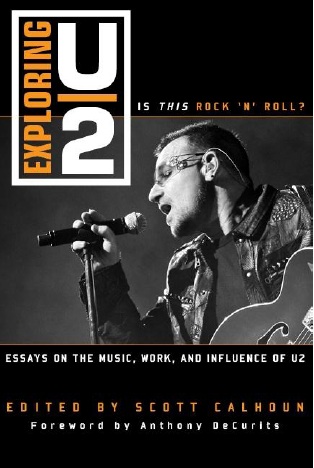
 Here’s some more information about Exploring U2. Is this rock and roll? book (in which I have a chapter – (“Bullet The Blue Sky” As An Evolving Performance).
Edited by Scott Calhoun and with a foreword by music journalist Anthony DeCurtis, Exploring U2 is a collection of essays examining U2 from perspectives ranging from the personal to the academic and is accessible to curious music fans, students, teachers and scholars alike.
Four sections organize sixteen essays from leading academics, music critics, clergy and fans. From the disciplines of literature, music, philosophy, psychology and theology, essays study U2’s role in developing their listeners’ concepts of personhood and identity; U2′s evolving use of source material in live performances; the layering of vocal effects in some of U2′s signature songs; the crafting of a spiritual community at concerts; U2’s success as a business brand; Bono’s rhetorical presentation of Africa to the Western consumer; and readings of U2’s work for intertexts, spiritual statements, irony, conservatism and hope in space and time.
Official band biographer Neil McCormick presents U2 as a “Dublin-shaped” band, and for the first time in print, Danielle Rhéaume writes on how discovering and returning Bono’s lost briefcase of lyrics for the October album propelled her along her own artistic journey.
This thoughtful and timely collection recognizes U2’s music both as its own art and as commenting on personal journeys and cultural dialogues surrounding contemporary issues. It offers insights and critical assessments that will appeal to scholars and students of popular music and culture studies, those in the fields of theology, philosophy, the performing arts and literature, and all intellectually curious fans of U2.
The book is due for publication with Scarecrow Press (academic reference and professional books publisher owned by University Press of America) in a variety of formats in October/November of this year.
Saturday, June 25, 2011
U2 “Out of Control” at Glastonbury
U2 have just concluded their headline act at Glastonbury, finishing with “Out of Control.” (Full set list here). U2 tend to finish with a quieter, more reflective song like Moment of Surrender or 40, while “Out of control” tends to be played early in the “energy” part of their sets.
So the use of Out of Control to conclude a show is interesting. A nod to the difference between a festival compared with a concert? A nod to the sort of schedule which seems them play Baltimore (USA) on the 22 June, Glastonbury (UK) on the 24, then flying back across the Atlantic for East Lansing (USA) on the 26th?
Or perhaps it was because of the lyrics;
Eighteen years of dawning
I say how long; You say how long
given that this was U2’s first ever Glastonbury appearance and given the postponement, due to emergency surgery on Bono’s spine, from last year.
“Out of control” is from their first album, Boy, and the song was first played live in 1979. That’s like 30 years ago. It’s a pretty gusty call to finish a headline performance at a global music festival with a song from your first album. It got me thinking about my first attempts at creativity – those early sermons and fumbling attempts at alternative worship. Would they stand the test of time?
While on the subject of U2, this week by email arrived the Table of Contents and the cover image for the Exploring U2. Is this rock and roll? book in which I have a chapter (one of 16) titled (“Bullet The Blue Sky” As An Evolving Performance). The book is (still) on track for publication with Scarecrow Press (academic reference and professional books publisher owned by University Press of America) in October/November of this year.
Given the accessibility of the subject matter (popular music) and that this is an international publisher, it got me wondering about having a bit of book launch here in Adelaide. Perhaps linked with the new Bible and Culture topic being taught for the first time ever this second Semester at Uniting College?
Thursday, June 23, 2011
(updated) quite the media man: an ABC day
Updated: for those interested I said no to ABC radio. And yes to ABC TV in my capacity as Flinders University lecturer. The result is here, with my 20 secs worth from 4:05-4:24. (Mostly shots of my office and books)
As I got off the plane from Melbourne yesterday, my phone rang. It was ABC TV, the 7:30 report wanting an interview, a wider perspective on a local and topical church issue.
After discussion with my various “bosses” my answer was yes and so today the cameras arrived and set up in my office. Lighting check. Sound check. A range of questions. A bit of coaching (weave the question into the answer). Some background type shots of me answering email.
And they were gone and who knows what might be sliced and diced for the viewing public (on Friday).
Three hours later, another phone call. ABC radio, wanting me to be part of panel (Sunday evening) discussing another topical issue. Still tossing this one around, as it’s a even “hotter” than the first.
And at some point there is my day job (marking!!)
a crash course in fleeing Western captivity. part 1 culture
According to Wilbert Shenk (“Recasting Theology of Mission. Impulses from the Non-Western World”, in Landmark Essays in Mission and World Christianity
Western theology has pursued an inward-focused, intellectual, and pastoral agenda rather than outward-looking evangelistic and missional agenda … As Western theology moved into the university and was professionalized, it became increasingly detached from ecclesial reality and cultural context. (117, 8).
Ouch.
This means that all talk about being Christian, about church, about mission, in the West, runs the risk of being corrupted by the scripts of Western theology, of being overly inward, intellectual and detached.
For Shenk, the way forward is to learn from the global (non-Western) church. He suggests wisdom from the global church has come in four areas -culture, Spirit, Jesus and church.
Let’s start with the first. With regard to culture, we need to learn skills to look for God in culture. Shenk draws on the work of Andrew Walls (“The Gospel as Prisoner and Liberator of Culture” Landmark Essays in Mission and World Christianity
Christianity Today has called Andrew Walls “the most important person you don’t know.” Walls argues that while mission needs to hold in tension both the Indigenizing principle (God starts where we are at) and the Pilgrim principle (God invites us to change), that mission must begin with the first, with indigenization, with starting where people are.
- Indigenizing – only way we can understand Christ is “in our own language” – in our context, our culture, our concepts. In other words, God starts despite our prejudices, suspicions, our hostilities.
- Pilgrim – God takes us in order to transform us. That faith will put us out of step with culture and invites us to link with our past, with the church through history, with another’s sets of ideas, concepts, assumptions.
For discussion.
1. What would it mean in your community if you started with “indigenizing”?
2. What examples of “pilgrim” have you seen in your own experience?


 )
)