Tuesday, May 17, 2011
is it my eyebrows? or my ecclesiology?
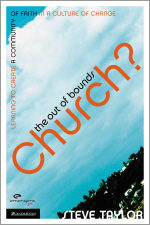
Prodigal Kiwi, ever the electic, has been listening to Rowan Williams at the recent Fresh Expressions launch, while reading my The Out of Bounds Church?: Learning to Create a Community of Faith in a Culture of Change
He reckons there’s a link. I hope it’s not the eyebrows! As, I suspect, does Sheila Pritchard!
I suspect it’s because as Rowan Williams in 2011 peers into the future (from under those eyebrows), his vision for diverse forms of church finds concrete expression in some forms of church that I suggested back in 2005
- house
- labyrinth
- collective
- weekly participative
- festival
- monastic
including a table in which I outlined strengths and weaknesses of each. (Cos there’s no such thing as the perfect church!)
Sunday, May 15, 2011
film review of Never let me go: atonement theology at it’s worst and best
A 500 word (monthly) film review by Steve Taylor (for Touchstone magazine). Film reviews of the most common contemporary films, each with a theological perspective, (over 60) back to 2005 can be found here.
Never let me go
A film review by Rev Dr Steve Taylor
This is a haunting movie. Directed by Mark Romanek it remains deeply disturbing long after the credits roll. The film is based on a novel by Japanese-born British author Kazuo Ishiguro. Short listed for the 2005 Booker, adapted for the big screen by Alex Garland, it provides some profound questions about being human and the person and work of Jesus.
The movie begins with Ruth (Carey Mulligan) watching her lover, Tommy (Andrew Garfield), preparing to be anesthetised on an operating table.
What follows is a cinematic triptych, elegantly woven together by the evolving love triangle between three friends, Ruth, Tommy and Kathy (Keira Knightley).
The year is 1978 and the friends are children (convincingly played by Ella Purnell, Charlie Rowe, Isobel Meikle-Small) at Hailsham School. What seems sheltered increasingly grows sinister, innocence hemmed by stories of dismembered bodies and evidence of repressed emotions.
Next, the year is 1985 and the children emerge into adolescence. The tension in the love triangle escalates and a sinister future becomes frightfully clearer. The three have been bred as organ donors, born to be broken apart in adulthood, spare lungs and limbs to ensure other humans are healthy.
Finally, the year is 1994 and in adulthood the three friends become re-entangled, each forced to confront their past and future.
Much of this makes little logical sense. Why don’t these three fight or flee? What events have breed a society in which humans exchange organs? Unnervingly, these unexplained absences, while perplexing, serve to make a plot simply more haunting.
In the final scene Ruth is alone. She contemplates her death, facing a fence on which pieces of plastic flap emptily on the wind. A chilling and senseless isolation is complete. All that remain are Ruth’s final words.
“Do we feel life so differently from the people we save?”
The word “save” jumped out, the idea that hunks of flesh ripped from one person’s body might prove essential to the salvation of another. Which brought to mind the Passion of Holy Week and the Christian gospels, which describe a body whipped and pierced. And the claim that such an act of brutality was essential to human redemption.
Are we really catching a glimpse of the Christian understanding of the person and work of Jesus?
Perhaps a difference is that of choice. Ruth, Kathy and Tommy are born to die, the days of their lives based on the whim of another. In contrast, in the Garden of Gethsemane we glimpse a Christ choosing to drink from the cup of human suffering.
While at Hailsham, Tommy gives Kathy a cassette tape of a (fictional) singer Judy Bridgewater. Kathy grows to treasure one song in particular, titled, appropriately, “Never let me go.” She grasps it not as a love song, but as a mother’s plea to her baby. The song, a recurring musical note running the length of the movie, offers another way to understand the Easter experience. That in and through acts of perverse human brutality is the reality that in Jesus, we realise that God will “never let us go.”
Friday, May 13, 2011
spaces and places used well in mission
I am looking for examples of spaces and places being used well in mission. I want them by Wednesday 18th May, both a picture and a one paragraph explanation of why you think that space or place is being used well in mission and ministry.
You see my Reading cultures/Sociology for ministry class last night explored the theme of spaces and places. I began by talking about spaces and places of spiritual significance in New Zealand – Waitangi, Maori Jesus at Ohinemutu, Parihaka, Anzac War memorials.
The class then brainstormed Australia and they did some excellent work. I then wrote a statement on the board
spaces and places are not important to Christian ministry
After some work in “yes” and “no” groups, an excellent discussion resulted. Words like creation got used. The Old Testament was scanned – the setting up of altars yet the encouragement to keep on pilgrimage. The ministry and mission of Jesus, in birth, life and resurrection was trawled.
The potential of spaces and places – in time, in place, in buildings, in material elements of bread and wine – became evident. Having indigenous and non-indigenous voices in the class became a great gift as the complexity of contested spaces and places, including colonisation were explored. An excellent night of collaborative learning was had!
As we left, I suggested some practical homework. That during the week, each person take a picture of a space or a place they think is being used well in mission. Email it to me (steve at emergentkiwi dot org dot nz). And we will share them together, as practical examples, as we start our class next week.
So why not join us. Enrich our class with your voice, your location, your example of a space/place you think is being used well in mission and ministry. (And in so doing, you will help reinforce the value of social media, which the class explored 2 weeks ago with Andrew Jones).
In return, after the class, I will then put the entire resource – photos and explanation – back up online as a general mission resource, some 2011 examples of spaces and places being used well in mission and ministry!
Thursday, May 12, 2011
a theology for mad b*****ds
I went to see the Australian movie, Mad Bastards, over the weekend.
Set in the Kimberley, in Western Australia, it is a window into the life of indigenous people in Australia today. I went as a film reviewer, to write a 500 word film review for a Christian newspaper. That’s in process, but it sits alongside the ongoing work of the Spirit in my life. Ultimately, this is a personal blog, that marks my journey, so it’s important to note that I’m in a bit of hard patch, with too much work on my to do list, to really enjoy the month of May. Add in a sick child and ongoing homesickness (Yep, the fiddle is playing). And the recent article by Nicholas Rothwell in The Australian, which continues to grieve and astound me.
A crisis of grief is unfolding, a spiritual collapse so deep it cannot be held back. … Those watching struggle for words and fear they may be watching as an entire culture, acting collectively, destroys itself. (for more go here)
That quote just keeps on undoing me. It just goes against every thing I know and profess about God and life and resurrection. Can I call myself Christian in this Aussie land when this sort of thing is happening?
Anyhow, one of the best parts of the movie was the soundtrack – original – by Alex Lloyd and Pigram Brothers. Fabulous folk rock. And all through the week, I’ve been enjoying one song in particular, Hearts and minds.
From within, from without,
There is fear and there is doubtNothing’s simple, nothing’s clear
Whats (?) the words we need to hearChorus
If we listen to the times
We can change your hearts and minds
We can change your hearts and minds
If we listen to the timesIn your soul, the fire burns
round and round it spits and curlsIn the flames, the truth may lie
Fumbling with the wrong and rightChorus
If we listen to the times
We can change your hearts and minds
We can change your hearts and minds
If we listen to the times
I was asked to lead a devotional today. The lectionary text for Sunday is John 10:1-10. I think there’s a link; between my sadness, the song, the movie and the Biblical text. For example shared themes of listening to and in change. A sense of the complexity of listening. That it takes time and requires discernment. A requirement of courage, for to listen is to lay aside what we’ve heard in the past, and to listen to today.
Wednesday, May 11, 2011
laughing Jesus: essential in the post-resurrection creationary
A creationary: a space to be creative with the lectionary. For more resources go here.
Just came across an Australian art exhibition with the theme laughing Jesus. This is a piece by Lindena Robb, titled Behold the Joy of Jesus.

The representations of a tortured Jesus were crowded in my mind, so the thought of painting a joyous Jesus delighted me. I was reflecting on the words: “being held” and “behold”. I noticed how we support each other by witnessing our experiences. Through witnessing, we are affirming, and also sharing the human expression of life. We are being held by those who witness our lives. We are also being held by God witnessing our lives. We behold others, as the women in this painting behold Jesus, each with her own personality and expression of delight, humour, compassion, admiration, and possibly desire.
There is a range of pieces, from a range of cultures (16). They note that images of Jesus often make suffering central and so miss a laughing, loving Jesus who is a living presence. Well worth reflection, whether in corporate gathered worship, or private reflection. I will be using them over the Grow and go weekend.
Tuesday, May 10, 2011
a playful and public faith? a favourite urban mission resource
This is one of my favourite resources for mission, particularly in urban contexts.
I love the way it started with just a few folk, with a passion. And yet the way it grew. Simply by the use of social media and capturing the imagination of other groups. Not to reproduce, but to be individually them.
I love the way it spotlights an issue, without being illegal, aggressive or obnoxious. I love the words “playful” and “public.”
Why can’t more urban churches do this? Esp in warmer, outdoor Aussie climates? Plant an easter garden outside, serve coffee and give out easter eggs after Resurrection Sunday. Blow bubbles and create homemade wind chimes at Pentecost. Share a banquet table for an occasional community.
Simply take your belief and passion outdoors in ways that are “playful” and “public.”
Monday, May 09, 2011
twas the day that happens annually

College Graduation, so a chance to play dressups.
Big congrats to all those who graduated. So important to celebrate folk who work so hard, face the fears, hurdle the inevitable discouragements. And to honour the support people who invest so much in time and moral support.
Saturday, May 07, 2011
Jesus washes Osama’s feet

Just saw this picture, Lars Justinen from the Justinen Creative Group, who painted the above picture to use on posters advertising a conference. It was from 2007, so I’m a bit slow.
After some of my posts this week (Augustine, Bono, Revelation on Osama), does someone need to now paint a picture of Jesus preparing Osama’s body for burial, according to Muslim custom, weeping for the state of our world today?
mission project updates
Part of my current role (Director of Missiology) involves teaching. So recent months have found me
- writing a distance unit for lay folk on Jesus
- teaching an under-graduate course on Reading cultures
- teaching across a range of post-graduate courses. This is focused on working with church leaders in a mix of group and one-on-one research projects. Some of these are smaller – looking at how church is understood in recent changes in Catholic dioceses, hospitality Bible passages, how Christian education is being taught, researching their local community. Others are more lengthy, the effectiveness of short-term mission trips, the missional practices of pioneer leaders, the cross-cultural skills of church leaders, how migrants do theology.
Another part of my current role also involves catalysing in areas of mission. Quite a bit of this has been going on below the blog radar, so I thought it time I provided a bit of an update.
1. Mission shaped ministry Australia – In November 2010 a group of 12 leaders from four Australian States met at Uniting College to talk about partnership in mission training. The upshot was a decision to form a national development team, to work collaboratively on contextualising the mission-shaped ministry course, which is a one year part-time course ( equipping in planting and sustaining fresh expressions of church, currently running ecumenically in over 30 centres across the UK. The core values include hospitality, prayer, ecumenical generosity, interactive learning, coaching and practitioner teachers. Followup includes ongoing coaching and learning networks and it has been hugely important in developing a mission mindset in the UK context.
Since then, via meetings and email, a Memorandum of Understanding has been developed, forming an Australian Centre to allow negotiation and licensing with UK, yet maintain freedom for local initiatives to be run by local groupings. Currently there are seven partners from 4 States and 2 Territories. (Other partners will always be welcome to join in the future.) It has been humbling to see denominations and states decide to work together for mission.
(Two pilots are being well piloted in 2011 and if the signs are good, then processes are being worked on for other states/cities to offer courses in 2012. If anyone is interested, please contact us)
2. Mission shaped ministry Adelaide 2011 pilot – A planning group from Adelaide, involving folk from the Lutheran, Uniting and Anglican Church has been meeting to explore the first ever pilot of the mission shaped course in Australia. Go Adelaide!
The plan is to run this Wednesday evenings from mid-July to end-November, over 12 weeks, plus a weekend away to build community. The course is for leaders and members, clergy and lay people, learning side by side. It’s a great opportunity for folk in Adelaide who want to focus on either preparing to start a fresh expression of church or because they want their existing church to be more mission-shaped. More details will be rolling in forthcoming weeks.
(There is also a pilot happening in Canberra, three weekends in the second half of 2011).
3. Innovation and pioneer leader research – Uniting College has partnered with the National Church Life Survey (NCLS) to do some specific research on innovation and pioneer leaders across Australia. This has involved commissioning some research, both on how innovative are churches in Australia and also how innovative are leaders in Australia. This will be used as part of the nationwide NCLS. It will also be used by us at Uniting College.
Our Bachelor of Ministry (practice) and our Masters of Mission (missional) are focused on developing innovative leaders and we want a tool to benchmark whether that is actually happening. It will take a while for the data to emerge, but it is energising to at least be thinking about what questions might need to be asked.
Thursday, May 05, 2011
Jesus today at Grow and go 2011
Grow and go is one of those joyful surprises you stumble across when you move to a new place. A weekend dedicated to learning. An invitation to the whole church across South Australia. Some shared input and worship. A whole lot of streams, so that a team can pursue different learnings.
If I was a minister, I’d use it as a key part of my leadership development. I’d ask my leaders team to commit to a retreat once a year, and a Grow and go learning experience once a year. One a chance to focus on the church, the other a chance to upskill.
 It’s happening again May 13-14. The theme is God@earth: being present, real, local. There are 8 streams – on faith sharing, working with families, preaching, understanding Uniting church, pastoral care, preaching Matthew, creative worship and understanding Jesus.
I am doing a keynote address on the Friday evening. It will include stations and input exploring feelings, colour and the mission of God. I’m then doing the understanding Jesus learning stream over Saturday and Sunday, exploring more deeply how life can be shaped by Jesus as sufferer, liberator, culture-crosser, cosmic healer, reconciler.
For more details Grow and Go 2011.
Wednesday, May 04, 2011
Revelation’s White Horse Warrior on Obama/Osama bin Laden?
Following on from what Augustine and Bono might say to Osama bin Laden, I think for the sake of honesty, Christians must also ask what Revelation’s White Horse Warrior might say to Osama/Obama?
The Bible book of Revelation ends with the Rider on the White horse, who comes to pour out God’s wrath (Revelation 19:15). In response, the saints gleefully cheer (Rev 18:20). It is easy to claim an Old Testament God of vengeance and a New Testament God of love. Revelation refuses to allow us this luxury.
What to do with these Bible texts in Revelation? What to do with those who suffer violence in the name of Divine? Miroslav Volf, theologian at Yale and native born Croatian, puts the question this way: “Why must God say the unrelenting “no” to a world of injustive, deception and violence in such a violent way?” (Exclusion & Embrace: A Theological Exploration of Identity, Otherness, and Reconciliation

Volf argues that much talk of non-violence has “the sweet aroma of a suburban ideology” (296).
“A “nice” God is a figment of liberal imagination, a projection onto the sky of the inability to give up cherished illusions about goodness, freedom, and the rationality of social actors. (298)”
Ouch! Volf argues that in reality, patient appeals to reason do not always work. Thus the texts of Revelation are, in my words, reality texts. That some people and situations will not change. They refuse to “shy away from the unpleasant and deeply tragic possibility that there might be human beings, created in the image of God, who, through the practices of evil, have immunised themselves from all attempts at their redemption.” (297)
Obama and religious fundamentalism (of any persuasion) become contemporary examples of this.
In such reality, the White Rider in Revelation functions to keep open a God who is indignant at injustice, deception and violence. This does not mean that God is schizophrenic, a wierd mix of suffering Messiah and justice-seeker. Rather it is the preserver of true and radical human freedom, that people have the choice to say no to redemption and reconcilation – whether a fundamentalist or a Christian refusing to face their sin.
These are tough things to consider. But it does provide a way to understand what Volf calls “the symbolic portrayal of the final exclusion of everything that refuses to be redeemed by God’s suffering love … not because God is too eager to pull the trigger, but because every day of patience in a world of violence means more violence and every postponement of vindication means letting insult accompany injury.” (299)
To be honest, part of this makes my blood chill.
But another part warms toward a God who cares enough about justice to engage the world in reality, in truth, in freedom whether in good or bad.
Volf has not finished. He then asks “who” – who can enact such justice? Can Obama and a group of US Seals? Volf notes that in the New Testament, the “who” is the suffering God and the White horse rider, “partners in promoting nonviolence.” (302) Humans are freed to renounce violence because of future hope in God’s passionate justice.
“the only way in which nonviolence and forgiveness will be possible in a world of violence is through displacement or transference of violence, not through its complete relinquishment.” (302)
Further posts:
see Christian Jihad or what sort of God killed the Canaanites?
Tuesday, May 03, 2011
what is the aussie Christian response to this?
A crisis of grief is unfolding, a spiritual collapse so deep it cannot be held back. The acts of self-harm are not inadvertent, not mistakes, not just the ill-judged results of too much drink and drugs, not something to be solved by simply lowering the levels of intoxication. Those watching struggle for words and fear they may be watching as an entire culture, acting collectively, destroys itself.
The conclusion to an article by Nicholas Rothwell, titled “Living hard, dying young in the Kimberley” in The Australian over the weekend has just left me gob-smacked. It outlines the state of indigenous communities in Western Australian outback.
What on earth does the church do if he is even half right?
Saint Augustine and Saint Bono on Osama Bin Laden?
“Let your desire for him [your enemy] be that together with you he may have eternal life: let your desire for him be that he may be your brother. And if that is what you desire in loving your enemy (that he may be your brother) when you love him, you love a brother. You love in him, not what he is, but what you would have him be.” (Augustine, Eighth Homily, in Homilies on the First Epistle of St John)
And even more clearly, “You are to love all men, even your enemies – not because they are your brothers, but in order that they may be.” (Augustine, Tenth Homily, in Homilies on the First Epistle of St John).
Thus the death of Osama is a tragedy, for in a sinful world, we are facing the fact that “Your Kingdom” has not come, that an enemy has not (yet) become a brother.
Two further things I find intriguing in these quotes. First, I would want to interpret the phrase “eternal life” through the lens of John 10:10, abundant life to the full, as both a current hope and a future reality. In other words, the (costly) call to love our enemies must start now.
Second, “not because they are your brothers” suggests a theology of difference, that the love of others does not start by expecting them to be like us. Or in the words of Charles Taylor (in Multiculturalism: Examining the Politics of Recognition

And finally, a line from Bono, in the song Cedars of Lebanon, from the No Line on the Horizon album.
Choose your enemies carefully
Cos in time they will define you.
For further posts:
see Revelation’s White Horse Rider on Osama?
Monday, May 02, 2011
leader as gardener: a minister of pastor commissioning sermon

On Saturday I was honoured to be invited to speak at a commissioning, of a friend as a family pastor (Uniting church ministry of pastor). They were expecting quite a lot of community folk, particularly younger families. So I needed to all-age friendly and to explain what was happening in understandable categories. Plus I was keen to keep it connected to the church year, and thus the Easter story.
So here’s the sermon, drawing on my faithful friend, Bodge Plants a Seed: A Retelling of the Parable of the Sower


 )
)