Wednesday, January 05, 2022
The Power of the Dog: a theological film review
Monthly I write a film review for Touchstone (the New Zealand Methodist magazine). Stretching back to 2005, some 165 plus films later, here is the review for December 2021.
The Power of the Dog
Reviewed by Steve Taylor
After a twelve-year silence, New Zealand director, Jane Campion, plays again. Acclaimed for her work on The Piano, Campion takes us to 1920’s Montana. Phil (Benedict Cumberbatch) and George (Jesse Plemons) are brothers. Strikingly different, they share the lonely task of raising cattle on their parents’ ranch. Tensions are heightened when George marries, bringing Rose (Kirsten Dunst) to the family homestead.
A star cast offers powerful performances. Highlights include Benedict Cumberbatch, who plays the talented, yet grief-stricken Phil, and Peter (Kodi Smit-McPhee), Rose’s enigmatic son.
Amid a star cast, the films’ most important character is never seen. In a cowboy world of word of few words, the death twenty-five years ago of ranchhand Bronco Henry is a grief that refuses to be forgotten. It is intriguing to watch a film haunted by the main character’s absence, the unprocessed grief a festering wound, demanding attention.
The film is based on a novel by Thomas Savage. In books, words provide interior insight into motives. In films, the inner monologue can either be verbalised or visualised. Or, as in The Power of the Dog, a lack of words becomes a deliberate tool that deepens mystery and builds suspense.
In 1920’s Montana, anthrax is a killer, deadly to cows and humans. In a scene-setting cattle drive, a dead cow draws the attention of Phil and his faithful cattle dog. It wasn’t until 1937 that Max Sterne developed a vaccine. While this new vaccine was to bring immediate good news for humans working with cattle, its’ development was a few years after the movie’s final dramatic scenes.
The movies’ title is a quoting of Christian Scripture. In a final dramatic scene, Peter reads the words from a Funeral Order of the Service. Psalm 22:20 become the last words spoken in the movie: “Deliver my soul from the sword; my darling from the power of the dog.”
Psalm 22 is a Psalm of lament. The hearer is invited to share in the experiences of a man needing deliverance, a person surrounded by enemies like prowling dogs (verse 16).
In history, the Christian church has connected Psalm 22 with the death of Jesus. In the drama of the cross, Jesus’ last words include the voicing of verse 1: “My God, my God, why hast thou forsaken me?” Yet in the drama of Jesus’ death, his final words also include a prayer that enemies might be forgiven.
The crucifixion thus presents a compelling contrast with the dramatic scenes that end The Power of the Dog. What emerges in the life and death of Jesus is a radically different understanding of justice. Isolated like Rose, Jesus offers a cry of forsakenness rather than a cry for rescue. Mocked like Peter, Jesus places the demand for justice in the hands of God. Such radical trust challenges the human seeking of deliverance, so dramatically enacted in The Power of the Dog.
(For those placed in Covid-19 red traffic lights, The Power of the Dog is available on Netflix from 1 December).
Thursday, December 23, 2021
conference proposal: Missions in Digital Culture: A Transforming Shift
Missions in Digital Culture: A Transforming Shift
by Rev Dr Steve Taylor, AngelWings Ltd, Flinders University
IAMS 2022 conference paper proposal
The digital is a rapidly morphing field. Technology impacts our work and homes and changes health care, leisure, and religious practice. Digital missiology examines how mission intersects with the internet, digital culture, and other forms of digital technology. The IAMS conference themes – of power, inequalities, vulnerabilities – provide a valuable hermeneutical frame to overview the current state of research, assess the contributions, and consider future directions for research in digital missiology.
This paper aims to discern how digitalization is changing the methods and conditions of mission. Particular attention is given to empirical research and ethnographic studies of digital resourcing, including trans-national studies of ecclesial innovation in Aotearoa New Zealand, and the United States. These experiments in digital missions will be analysed missiologically. If, as Marshall McLuhan claims, the medium is the message, then how is the vulnerable Christ present as an animating presence in these digital experiences and networks? The analysis will include dialogue with two recent reappraisals of McLuhan by Douglas Coupland (2011)) and Nick Ripatrazone (2022), as part of a reappraisal of embodiment and participation, informing theologies by which mission might be understood as being re-contextualised for an emerging digital world
This work is part of a larger project seeking to re-theorise Bosch’s notion of paradigm shifts. While Bosch focused on paradigms, the argument is that transforming generativities occur in shifts rather than paradigms. Hence digital cultures offer significant resources for indwelling and embodying missio Dei as transforming shifts in mission.
Wednesday, December 22, 2021
a year today at AngelWings Ltd
A year ago today, I began at AngelWings Ltd in a more full-time way. AngelWings Ltd was a company Lynne Taylor and I formally established in 2002 to share demographic resources, research services, and writing across the church.
Through 2020, as we together reflected on the impact of Covid on the church, we sensed a hunger for resourcing and research. We observed how the enforced online environment drew on skills that I had been honing for many years. We also recognised that the continuous reviews at KCML – begun in 2018, still ongoing – were consuming creative time and emotion, while the “no new initiatives” frameworks made innovation from within KCML and the PCANZ very difficult. So we made the decision to take a leap and use the platform of AngelWings Ltd to offer experience, skill and passion more widely across the diversity of the church.
It’s been an exciting year.
As a snapshot, in the last week, my work included Advent online resourcing, preaching on mission in a local church, working on two different research projects for two denominations, individual minister supervision, preparing to export Learn Local overseas, agreeing to provide theological course design for an Australian denomination offering complex change resourcing, co-workshopping a column for a US magazine, and examining a PhD. Plus some probono input into the local missional community I’m part of, along with progressing a number of academic research projects on innovation and mission.
Over the week, the snapshot involved serving 10 different organisations in 4 countries among folk from at least 5 distinct denominations. It was an exciting week in what has been an exciting year.
Thankful for the year gone, excited about the year ahead.
Tuesday, December 21, 2021
Learn Local in Community Mission
Back in October, as part of AngelWings Ltd and with the generosity of the Synod of Otago Southland, I ran Learn Local as a mission learning opportunity. One of the participants, Lisa Wells, has written up some of her learnings, for her church newsletter and also for the Southern Presbytery newsletter.
For those who don’t get either newsletter, here with Lisa’s permission is her response to Learn Local. It includes her reflections on some of her visual attending (taking photographs) from the Learn Local experience ……….
Learn Local in Community Mission
Back in October, which seems so long ago now, I was one of the curious people who attended “Learn Local”, which is a new event, funded by the Synod of Otago and Southland, seeking to explore community mission through local story telling.
Led by Rev Dr Steve Taylor (former Principal of KCML and daring missiologist) and members of two local faith communities, the course involved a day spent in two communities and four weekly teaching and reflection on-line sessions.
It was a rainy South Dunedin day as we met with the people involved in “The Seedling”, a place-based mission experiment in South D, which is discovering different ways to be in community, be church and care for each other and the neighbourhood. The plan for the day was that course participants walked the streets of South D as Seedling members unrolled the story of how they came to be and how they discerned where God was already working and inviting them to join in. This approach is consistent with the idea of Missio Dei (God in the World). It is not about designing programmes and hoping people will come. In fact, it’s not about programmes at all. It is both contemplative and active. Walking, using all our senses, is not only a grounding thing to do, but it slows us down and helps us notice things we would usually hurry past.
Like most things related to community mission, plans had to be put aside and our physical walk became a virtual thing as we “walked” from one stage of the Seedling journey to another. And still it poured!
It cleared up after lunch and we were in North Dunedin, the University area specifically. We met at the café Student Soul uses for its weekly services. We heard how it had changed over the years and the amazing plans for the future, utilising Web 3 technology for teaching, discipling and pastoral care. We were invited to go out and listen and discover what Student Soul’s mission context was. These are some photos I took and how I wondered about them as a reflection of a student’s journey.

I’ll tell you more about the on-line teaching someday, but I want to jump to the end! Each of us committed to walking in our own neighbourhood (both a spiritual discipline and a means of discernment) and sharing our discovering with the group. As we did this the seed of an idea took root in my mind.
What if … others might be interested in this too?
What if … it wasn’t about walking, but wandering and wondering?
What if … we looked at the small signs of God’s work?
For me taking photos of details and patterns is a way to keep my mind on what’s in front of me.)
Then … what would our story be? Is this a story God is opening up?
So now my curiosity and desire to be a learner has led me to more questions. Who would be interested in “wandering and wondering”? Can taking photos be a way to share God’s presence and creation?
Finding God in all things is at the core of Ignatian Spirituality and is rooted in our growing awareness that God can found in everyone, in every place and in everything. When we learn to pay more attention to God, we become more thankful and reverent, and through this we become more devoted to God, more deeply in love with our Creator.
So, I’m wondering … are there others who would like to see where this might lead?
Lisa Wells
(with Lisa’s permission)
Tuesday, December 07, 2021
workplace whole of life resourcing with Advent Tiredly
“Come to me, all you who are weary and burdened, and I will give you rest.” Matthew 11:28
I recently initiated a new online offering. Called Advent Tiredly, I wanted to offer online spiritual resourcing during December for those feeling ragged as a tough year ends. It was an innovation as part of my role as Director of AngelWings Ltd.

In 30 minutes, Advent Tiredly offers space to breathe in, to pause (with Anna, Mary, Elizabeth and Wisdom) and to breathe out with a story of contemporary Advent innovation. I offered it on Zoom, with the invitation to bring a “light” of choice – it could be the light switch in your room, a desk lamp or a specially chosen candle.
Watching participants in the moments of silence, I realised that a number were connecting in from their workplaces. Their zoom backgrounds were not lounge room sofas or kitchen tables. Instead what was behind them were office noticeboards and workplace glass partitions. This meant Advent Tiredly was enabling me to read Scripture, the stories of Anna, Mary, Elizabeth and Women Wisdom, in peoples’ workplaces.
After the first week, one participant, Lynne Taylor, posted this photo on her facebook.

Notice the open work diary on the right, the computer keyboard front and centre, the monitor to the back. Advent Tiredly spiritual resourcing occurs within her everyday working world.
She wrote the following words on her facebook:
“Blessed by a moment to breathe. Advent tiredly … Leaving a reminder for tomorrow.”
As she enters her work the next day, spiritual resourcing will be remembered. Faith will greet her as she opens her office door.
This online resourcing stands in stark contrast to so much religious resourcing. As a church minister, I would normally read the story of Anna in a church building not in a persons’ workplace. If I was pastorally visiting during the week, I would most likely catch up with a Monday to Friday worker in a cafe. I’ve never read Scripture in their working office. Yet here, through online resourcing, I was holding sacred space for people amid their computers and filing cabinets and work place diary appointments. It was a wonderful reminder of the everyday and whole of life potential of online resourcing.
Advent Tiredly runs for the 4 weeks of December. Wednesday’s 1, 8, 15, 22 Dec, 30 mins from 4:45 -5:15 pm (New Zealand time). A $5 cost per session is suggested. To register click here.
Friday, November 26, 2021
squid game – a theological film review
I sent off a film review (The Power of the Dog) to Touchstone magazine today. In 2005, the editor rang and asked me to theologically review a film of interest to their readers. 500 words please. And offered to pay! The editor liked the review so much, he asked again next month.
It’s now my 15th year of film reviewing. 11 reviews a year. 500 words a film review. Now over 82,000 words! Writing to a deadline month by month has been such a wonderful challenge. Viewing a film theologically, yet needing to be respectful of the art. This month, it was the realisation that the title – The Power of the Dog – was a quote from Scripture (Psalm 22:20). Last month, with Squid Game, a co-written review with my daughter, pondering the harrowing of hell …
Squid Game
Reviewed by Kayli Taylor and Steve Taylor
Squid Game is a survival drama television series streaming on Netflix. Hundreds of cash-strapped contestants compete in children’s games for a winner take all prize. Yet, the stakes are deadly. Directed by Hwang Dong-hyuk, set in South Korea, it has become a Netflix sensation. Rated R16, it is a dark and compelling mediation on contemporary life.
Central to Squid Game are children’s games. Episode 1 centres around Red Light, Green Light, also known as Statues. Participants run on the call of “Green Light” and must freeze on the call of “Red Light.” Any movement during “Red Light” results in elimination. At this point, the story shifts, and it becomes evident that in Squid Game, this children’s game involves real-life survival.
Children’s games should evoke the sounds of gentle laughter. In Squid Game, they illuminate the worst qualities of human character, holding a mirror on the desperation that results from lack of choice.
The lack of choice is brilliantly depicted. Participants begin each game by walking through a hallway of staircases. Painted in pink, yellow and green, it is similar to Dutch artist M. C. Escher’s famed Relativity. At first glance, Escher’s woodcut suggests an idyllic community in which participants enjoy life. Yet all the figures are featureless and identical in dress. The seven staircases are positioned in ways that evoke feelings of being trapped. None of the figures can move freely or escape the image.
The participants in Squid Game are similarly featureless and trapped. They are numbered, not named. Each has been selected based on an assessment of their debt. Yet each number is a person.
Episode 2, intriguingly titled “Hell,” shines a light on the lives of individual numbers. The main character, 456 (played by Lee Jung-jae) is a man caught in a gambling addiction. Number 199 (played by Anupam Tripathi) is a Pakistani migrant caught in an exploitive working environment. Number 067 (played by HoYeon Jung) is desperately trying to reconnect with her family stuck in North Korea – a reunion that comes with heavy costs. Hell exists in the here and now as the circumstances of life’s realities and the consequences of desperate choices play out in human relationships.
A masked man controls Squid Game, watching the carnage from a distance. The notion of an omnipotent being, usually male, controlling the game played by lesser mortals is a familiar image of the Christian God.
Where is God in Squid Game? Christian theology argues that in Jesus, God refuses to watch from a distance. Instead, God gambles by entering the game of life. Christ becomes a number, participating to repay the debts of those trapped by their human choices. An unknown fourth-century sermon describes the events of Easter as God being “swallowed” by Hades. This swallowing occurs so that Christ might search the very depths of human hell. Could God take the number of another human player inside the game of life, even to death?
Kayli Taylor is a Masters student at the University of Otago and researches queer feminist social histories.
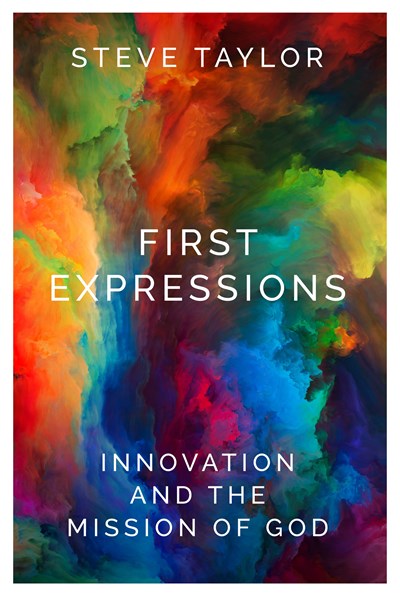
Rev Dr Steve Taylor is author of “First Expressions” (2019) and Director AngelWings Ltd, resourcing churches in mission.
Monday, November 22, 2021
Applied Research Abstract – Theological education as “being with” the future church

I am delighted to have an Applied Research Abstract accepted for the Review of Religious Research.
Title: Theological education as “being with” the future church: applied research among local leaders in an Australian Baptist denomination
Keywords: theologies of change, future church, theological education
The Review of Religious Research is a journal that publishes empirical social science research on religion as a forum for applied and academic research across multiple disciplines and approaches. This means that they publish not only original research but also short summaries of applied research with practical implications for denominations and religious bodies. Given this focus on applied research with practical implications for denominations, I was able to write up a summary of a 2-month piece of research I did earlier this year for Whitley College and the Baptist Union of Victoria.
It was a project done entirely online, which was a fascinating experience over Zoom (and worth a research reflection on its own right!)
It was an excellent exercise turning what was a 55-page report on interviews, a mix of 1-1 and focus groups, with some 55 people for a College Council, into a short summary, in the format of a structured abstract with Background, Purpose, Methods, Results, and Conclusions and Implications. I’ll include a link once the Applied Research Abstract is published.
Sunday, November 07, 2021
more grounded, more international
I completed 3 major project milestones this week.
First, the 6th and last Mission For A Change for 2021. What was a spark of an idea at the start of the year – to offer online resourcing on mission – has become interviews with women and indigenous thinkers who are writing in areas of mission and change.
Second, the completion of a Codesign report. At the start of this year, I was contracted with Val Goold to undertake a consultation about researching the future of theological education and ministry formation across the Anglican Church of Aotearoa, New Zealand and the Pacific. 55 interactions later, after listening with over 160 people, an 8-page report this week summarised a 2nd stage of the Codesign, as we checked our listening with various stakeholders, and outlined 10 research strategies for what could happen in 2022.
Third, the completion of Learn Local. Funding from the Synod of Otago Southland and the support of the Southern Presbytery has enabled me to offer education in local mission. Over the last month, I’ve been privileged to work face to face and online with folk from 7 local churches and 1 Queenslander who have walked local communities as a mission learning experience. The visual is notes from the final “online” session, by the amazing Lynne Taylor, as participants shared their “walking” learnings and as I gave input on forming faith in local mission.

There is much more to process on each of these and more plans for 2022. But it’s nice to savour 3 milestones, all resourcing mission in different ways across different denominations. I feel more grounded in local communities and more international, resourcing across countries and organisations all at the same time.
Monday, October 18, 2021
why should a Christian get vaccinated?
I got vaccinated today. Let me give 5 brief reasons why.
First, because I’m not an island. I live in relationships and I have a human responsibility to be healthy in those relationships. A vaccine reduces the chance of infecting others (for one study, see here).
Second I did an undergraduate science degree, including biochemistry. I learnt enough to know how little I know and how focused and dedicated are those who work in science research. Rather than fear what I don’t know, I choose to trust those with more knowledge than me.
Third I’m a Christian. As the charismatic leader Christian John Wimber used to say – I pray for my headache and I take a Panadol. God heals through medicine and God protects through vaccines. To not trust God the healer through and with science is the way of the fool in Proverbs.
Fourth, in my current work, I conduct high-quality human research. I know how carefully my colleagues check my ethics applications and how carefully I check theirs. That careful diligence is magnified when it comes to medical trials. The global collaboration amongst scientists and governments in vaccine development is to be applauded, not feared.
Fifth, it’s a global pandemic. It’s scary and unknown. One way to respond to fear is with love – love of neighbour, which is what Jesus commands in the Gospels.
For these reasons, I got vaccinated today.
Tuesday, October 12, 2021
on being an indie educator
“Indie” as a noun involves what is small and independent. “Indie” as an adjective involves not belonging or affiliated to a major record or film company.
Which means I’m an “indie” educator. I’m running independent educational events. These are not connected to any major academic organisations.
Because I’m indie
- I don’t work in a classroom. Instead, I offer educational experiences in cafes and community centres and online
- I forge different participation relationships, choosing to work in teams to enhance accountability and interaction and diversity of voice
- I do my own advertising. I use Zoom and Vimeo to make short videos that introduce and invite
- I handle my own registrations. I use google docs to handle enrolments and seek to clarify expectations
- I don’t have a library. So I look for children’s stories read on Youtube and use Scannable app to add key resources. I use Wakelet and look for links to other public square resources
- I conduct my own student evaluations, gaining feedback using post-it notes and evaluations
For example, one of my current “indie” educator events is Learn Local. It involves a Saturday immersion experience, followed by 4 online evenings. I worked to form accountable relationships with local ministers and sound artists. Some of the video’s are here and here and the Learn local Wakelet course resources are here.

The evaluations from Saturday asked people to identify learnings and explain Learn Local to a friend and in response, they said things like:
stimulating, informative, thought-provoking;
a way to develop thought processes, develop relationships that enable you to discover your own answers;
a good way of getting ideas for mission in our community;
a curated theological reflection group
I’m an indie educator. I’m not sure how long it will last but I’m enjoying meeting people I’d never meet inside existing academic organisation. Above all, I’m learning as I go.
Monday, October 04, 2021
“a unique contribution”: Andrew Dunlop reviews my First Expressions book
 Another (7th) international academic review of my First Expressions: innovation and the mission of God is out in International Bulletin of Mission Research, Vol 45, Issue 4, 2021, 441-442, here. The review is by Andrew Dunlop, who is Tutor in Context-Based Training at Ridley Hall and oversees pioneer teaching for lay and ordained. The review is a highly accurate summary of the book, with many affirmations.
Since the review is behind a paywall, here are some of my highlights
– “a first — a longitudinal study” of new Christian communities
– the empirical research of new Christian communities is “particularly engaging” with my “woven ecclesiology” (90–91) offering a “reframing” of sustainability in fresh expressions of church. (Instead of longevity, numbers, and finance, I argue for leadership development, inter-generational faith formation and creative resource making).
– “a huge amount of deep missiological thinking”, particularly as from the empirical date I develop themes of authenticity, ambient witness, creativity, sacramentality, and governance, explored through the credal framework of the church being one, holy, catholic, and apostolic
– noting my conclusion, that “innovation is what makes church “church,” enabling it to remain faithful to this credal structure (232)”
Andrew concludes that First Expressions makes a “unique contribution” to ecclesiology questions around resourcing and sustainability. The book is of “particular interest to those studying new Christian communities.” First Expressions also provides “a valuable addition to theologies of innovation.” Thanks Andrew for such an accurate review, along with such a range of compliments.
This is the 7th substantive review of First Expressions: innovation and the mission of God. The other reviews (that I’m aware of) are summarised by me –
- here in Theology;
- here in Church Times;
- here in Ecclesial Futures;
- here in Practical Theology;
- here in Ecclesiology;
- here in Scottish Episcopal Institute Journal.
Thursday, September 30, 2021
Learn local walking with short explanatory video
“because I’m an educator, let me read you a story ..”
A short video introducing Learn local as a mission education experience + walking as a local practice.
- 3 reasons to walk local – because Jesus walked, because early church walked, because pilgrimage is a Christian practice
- 2 experiential ways to learn
- 1 children’s story – The Listening Walk by Paul Showers
Participation in Learn Local is possible face to face and online. Register here. Enquiries to me at -> kiwidrsteve@gmail.com
Tuesday, September 21, 2021
Learn local
God is up to something.
My research into how churches are responding to Covid-19 has included analysing interviews with ministers from a range of denominations in Aotearoa New Zealand, Australia and the United States. A recurring theme is the ways in which churches are returning to their neighbourhoods.
In lockdowns, we live and exercise locally. God’s love has been made visible as churches have slowed, localised, walked and (appropriately) blessed. I’ve heard socially distanced stories of laypeople being equipped, commissioned and released as neighbour connectors. I’ve seen and experienced worship in which local parks, suburban crossroads and mailboxes have become invitations to pray.
Amid constrictions, ancient spiritual practices have been expressed in new ways. There has been a creative localising of disciplines of discerning, spiritual direction, serving, and prayer walking (Spiritual Disciplines Handbook, IVP, 2005, 99-103; 115-7; 145-7 and 253-5).
Learn local connects with what God can do locally. Learn local visits local mission initiatives to experience grassroots mission, hear stories of local community engagement and consider different expressions of Christian mission practice. The first Learn Local begins in Dunedin and visits the Seedling and Student Soul on Saturday, October 9 (10 am – 5 pm). This experience (a soundscape will be available for those at distance), is followed by 4 online Thursday evenings. These 75-minute sessions provide theological, practical and relational resources to encourage individuals and churches in local mission.
Supported by the Southern Presbytery and a gift from the Synod of Otago and Southland, Learn local offers hybrid learning – there are face to face and online options – to cope with the complexity of rapid level changes. Numbers for the Saturday experience are limited to 15 and priority will be given to those endorsed by their Church Council.
For queries->Steve Taylor, kiwidrsteve@gmail.com.
To register-> tinyurl.com/learnlocalnz

Thursday, September 16, 2021
Mission For A Change 2021
Mission For A Change is a bi-monthly resource showcasing recent research and new ideas. Steve Taylor, Director AngelWings Ltd, provides short, sharp upgrades to learning. To register for updates and more content -> here.
Mission for a change faith and migration – explored Squid Game and bubble tea, then internalised racism, policing and the way the Gospel transforms identities with Grace Lung
mission for a change faith and migration.mp4 from steve taylor on Vimeo.
Mission for a change Enliven – explored social research and church vitality with Dr Ruth Powell
Mission and conversion – explored conversion and faith-sharing with Dr Lynne Taylor
Mission for a (climate change) – explored faith and tikanga with Rev Christopher Douglas-Huriwai.
Mission and gender – explored gender, mission and reading Scripture for liberation with Dr Rosemary Dewerse and Dr Cathy Hine.
Mission and indigenous cultures – explored indigeneity and mission with Rev Dr Hirini Kaa


 )
)