Tuesday, August 24, 2010
resources used in hospitality for mission weekend
This post also might be useful for those working on Luke 14 lectionary text ie the Banquet Parables.
Pre-engagement
In order to create curiosity and pre-engagement with the your place or mine? hospitality as mission theme, I invited people to send in cell phone pictures of their tables. During the weekend I made this into a Quicktime movie which looped. It was very useful in terms of reminding us of the diversity of tables we dwell at, in which our “hospitality as mission” takes shape.
Luke 10 talk – theme hospitality as mission at their place
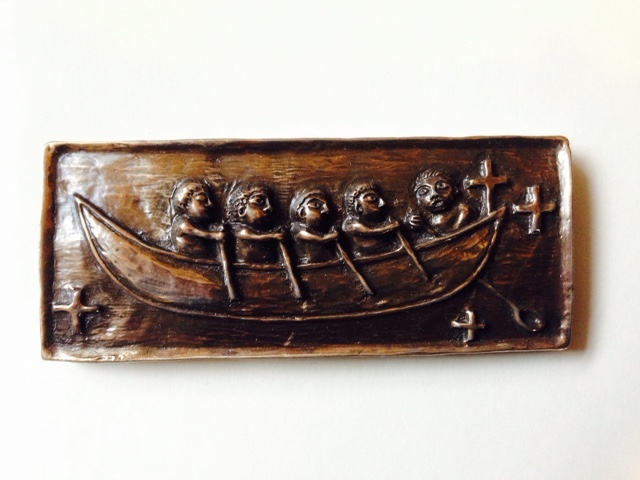
- The story of Brendan and it’s link to mission came via Mark Berry’s Safe Space community and the words for the soundtrack being played are available here.
- Boats, on which to write the name of your church and the “word of mission” for you, are here.
- Lots and lots more information about the story and development of Opawa and espresso can be found here – start at the end and work forward!
Luke 14 talk – theme banquets as mission, their place and ours
- Quiz was taken from a book about meals from around the world
- The images of “church at table” were from Steve Collins website, particularly here.
- The Benched video, which was used as a way of reflecting on hospitality in shared community projects.
- The list of 4 hospitality practices which we used to evaluate the video (and thus our congregational life and hopes in general) was a summary of a chapter from Soul Banquets: How Meals Become Mission in the Local Congregation
. This also has the (fantastic) story of the response of a New York church to 9/11. The specific practices (as I reworded them) are as follows:
- Practice: serving graciously by finding ways to encourage eye contact and genuine conversation.
- Practice: setting tables in ways and places that reflect God’s abundance and creativity.
- Practice: seek role reversals by finding ways for all to contribute (a diversity of gifts, each has its corresponding service.)
- Practice: committing to a long-term, intentional project.
- For more about Richard Passmore go here, with the Abs and Flow story (which is one of the best example of Western contextualisation I have seen) here
- The cartoons were from Dave Walker, in particular here
Benched from Brandon McCormick on Vimeo.
Luke 19 talk – theme the gospel at their place
Wrap up summary
Information about Lumina Domestica, God’s light potentially transforming the ordinary and everyday of our hospitality, here.
Two books I’ve found most helpful have been Amos Yong’sHospitality and the Other: Pentecost, Christian Practices, and the Neighbor
Monday, August 23, 2010
creationary: happy meals with Jesus/banquet parables in Luke 14
A creationary: a space to be creative with the lectionary. For more resources go here.
Personally I think the lectionary butchers the readings from Luke 14. In my support I quote Robert Tannehill, Abingdon New Testament Commentary – Luke
So as I read Luke, 14 I am thinking tables and meals.
I’d spread recipe books around. As people arrived, invite them to search the recipe books for something delicious. As part of the gathering, as thanksgiving, get people to share their favourite, followed by a refrain, “Thanks be to God.”
In relation to confession, I’d invite everyone is invited to bring a can from their pantry. As part of confesssion (or intercession), get them in 2’s around some questions like
- Share your can with the person beside you
- What is the country of origin?
- What do you know about the issues the country faces?
- What hands made have been involved in the preparation?
- Was it fairly traded? If you don’t know, where could you go to find out?
Then I’d use the Good Samaritan in a CNN world prayer I wrote last week.
As an act of intercession, I’d find some “family table” stories. Here are two that are on my computer, stories from Australian tables (source unknown, sorry. Happy to add the link if I am made aware).
“What is dinnertime like in your home?” “I usually eat by myself. My parents are either not at home or they are upstairs playing on the computer. So obviously I rarely talk during dinner. But I like it that way.” (Matthew, an Aussie, aged 14)
“What is dinnertime like in your home?” “We never eat together. I eat about 5pm, always something different from what the rest of the family eats, because I am picky and hate a lot of stuff. While I’m eating I talk to my mum. Usually our conversation turns into an argument, which then fades and we watch the Simpsons. My mother and brother eat at about 6.30pm and watch Neighbours. Finally, my dad comes home at about 8.30 and eats whatever mum made and tells me about his day.” (Sasha, an Aussie, aged 14)
Read them, then invite prayer for these, and other families.
By way of benediction, I’d offer some “grace for meals” option: like Saint Brigids, or the Grace from New Hebrides or the Madeline grace or the Strangers blessing.

Saturday, August 21, 2010
Tasmania speaks: reflections on place and space

Tasmania is beautiful. Wet but stunning. I came a day early. I’m trying to explore how to do the whole speaking thing in ways that are more human. So rather than race in and out, I asked if I could come a day early and have a “still day.”
It made for a really, really stressed Monday-Thursday, but a very rich Friday. I worked on some exercises suggested by my spiritual director, I did an act of creative writing – the wounded picture – that has been lurking for some time. Then I changed track after lunch and worked on some research – evaluating birth narratives/how fresh expressions start (for the Sept UK conference trip).
Today I woke to this beach. The wind and rain had done their worst, and left a beautiful pristine slice of heaven.
There’s a metaphor in that. Storms are stink. Wet and depressing. But the days after can be magic. Such is the gift of a storm.
Friday, August 20, 2010
Tasmanian hospitality?
I am spending the weekend with the Presbytery of Tasmania, speaking with them on the topic of Your place or mine: hospitality as mission, staying at Port Sorrell, which I am told is beautiful. (My initial scoping, with some really insightful comments is here).
I am speaking four times as follows:
– Luke 10:1-12: Aim: Introduction to a Biblical frame for hospitality as mission at their place, grounded with two congregational stories.
– Luke 14: Aim: explore practices of hospitality at tables, grounding with 3 practices and two stories for congregational life.
– Luke 19: Aim: speaking the gospel at another’s table and the challenge to contextualisation of God’s story.
– a workshop exploring a range of tools important for leaders and leadership teams in the journey of change.
It has been quite energising, yet quite demanding, putting it all together. Two books I’ve found most helpful have been Amos Yong’sHospitality and the Other: Pentecost, Christian Practices, and the Neighbor
Thursday, August 19, 2010
prayer for those being bullied
Bullying happens in all sorts of ways – verbal and physical, perceived and real. It requires confronting, but sometimes that is not immediately possible. This is a prayer emerging out of being with some who feel powerless, as an application of Celtic “caim” or circle prayer.
Imagine you are in a bubble. It stretches all around you. Inside this bubble is a place for you to stand, to feel safe, secure, loved. Feel the security and safety.
This bubble has a window. This gives you a choice. You can let the words and people and actions in. Or you can imagine another choice. You can imagine that when words and actions and people hit the bubble, they simply bounce back.
Imagine words and actions bouncing back to those who might send them.
The bubble around you is God. Feel the security and safety. Take God’s love and protection with you into your day.
You might want to make this prayer your own, for yourself or for others you know. If so, one way to do that is to simply leave your initials as a comment.
For other everyday prayer practices, go here.
Wednesday, August 18, 2010
UK trip update
A few weeks ago I mentioned the possibility of being in the UK for a week in September. A fair bit of discussion on the home and work front and lots of email conversations …. and here are the current tentative details
Leave Monday 13/Arrive London Tuesday 14
Wednesday 15 – Spurgeons D.Min programme
Thursday 16 – ? possibly Spurgeons M. Theol programme (TBC)
Friday 17 – train to Durham with Jonny Baker, comparing pioneer leader training notes.
Friday 17/Saturday 18 – Evaluating Fresh Expressions Research Consultation. I’ll be doing a paper – Evaluating birth narratives (TBC) – plus networking with various folk around pioneer leader training for both lay and ordained here in South Australia.
Saturday 18 – Coffee conversation – mission and the mixed economy – with Methodist leaders (TBC)
Airborne Tuesday 21/Arrive Thursday 24.
My Sunday and Monday are still up in the air, so if I could be of speaking/consulting help in your missional project, drop me a line. If not, I’ll tuck up at a Durham pub and write!
Tuesday, August 17, 2010
creationary: Good samaritan prayer for those loving neighbour in a CNN world
I wrote this prayer out of a day spent sitting with the banquet parables in Luke 14, made tense by the call to love our neighbour in the Parable of the Good Samaritan, being woken by morning news updates of the flooding in Pakistan.
God who is closer than our neighbour
we thankyou for the places you plant us,
the comforts of home, the familiarities of place
God who call us to love our neighbour
we thankyou for variety,
diversity,
our globality that gifts us spice and rice
God who points us to our neighbour in need
only till we turn on CNN,
to see,
the bigness of our world with 6 billion neighbours
And so we pray for aidworkers living love
Your hands, our feet amid flood and famine
God who owns the cattle on a thousand hills
we are grateful for the gifts of science
for researchers multiplying food to grow
We ask for honesty in the climate change industry
Our courage to make Your creation our moral issue
God who healed the ones among many
You gave every gift with it’s corresponding service
Grant us discerment,
the signs of our time – ourselves and your world
and so be your hands
of love of neighbour
today.
A creationary: a space to be creative with the lectionary. (For more on what is a creationary go here; for other Creationary resources, go here).
Sunday, August 15, 2010
a sociological reflection on the growth of fresh expressions
Interesting article by David Allis, exploring growth (numeric) in new forms of church/fresh expressions. David is a Kiwi, who withdrew from the more Pentecostal end of church life to focus on a home church in his local neighbourhood. The article is a few years old (2007), but makes some good points. David suggests that when we look at new forms of church we need to realise that:
- Slow Growth is Normal. Allis quotes (the excellent) Rodney Stark (The Rise of Christianity: How the Obscure, Marginal, Jesus Movement Became the Dominant Religious Force ….
, 6) who estimates that Christianity grew at 3.4% per year for the first few centuries. “Hence, anything new that starts with small numbers and grows at only a few percent per year, will take a long time to become large.” (This was certainly our experience at Graceway, starting with a small core team.)
- The drain created by existing models. “The existing church models are the norm, and people (both churched & unchurched alike) think this is the only way to do church.” This means that alternative models require people to have thought through new forms, or with new converts. Further, “It is difficult for a new small tree to grow under the shade of a large tree, as the large tree drains the nourishment from the ground and; also shades the light.” Yeah, all you light shaders! 🙂
- Exhaustion. Potential leaders are most likely to come from people who leave the organised church structure. They are often more ready to want to ‘take a break’ from church activities, rather than throw themselves quickly into something new. (I can certainly relate to this one. I’ve struggled to stay afloat in the last 6 months, let alone have energy for something else.)
(The full article is here). I think the points are well made, and as always, value any comments.
Friday, August 13, 2010
Fresh expressions. Import or Local (South Australian) produced?
I wrote the following for New Times, the monthly denominationl magazine here in South Australia. Others beyond might be interested.
South Australia is famous for our local produce – Kangaroo Island honey, Riverlands dried fruit, McLaren Vale reds. So it is worth reflecting on Dave Male’s recent Synod input in light of what is happening locally in South Australia.

Dave suggested that a fresh expression goes through a number of stages in their formative journey. This starts with “listening to God’s call”, moves to “loving service”, then is followed by “forming community” and “disciple-making”. The result is “church” emerging in a fresh space, opened up in response to the creative work of God’s Spirit.
So in light of Dave Male’s input the Fresh Expressions team cast an eye over what is being locally grown here in South Australia.
Candlelit Reflections at Modbury have sensed God’s call and their “loving service” has involved creating a quiet, meditative space. The next step in their “fresh expression” journey includes how to appropriately gather individual seeking spiritual searchers into community.
Fresh expressions are never only urban. In the Barossa, Greenock Uniting Church have seen people begin to gather around a building used for “loving service” not on a Sunday, but in a mid-week café with local art and craft. The next step in their journey also involves the challenge of “forming community.”
Hungry no more, at Mt Barker, has seen their “loving service” naturally lead into “forming community.” Their challenge now includes “disciple-making,” with the realisation that the people they are ministering with have unique needs. Hence discipleship and church will definitely need to take shape as a “fresh expression.”
A fresh expression journey is never linear, as is evident in the Esther project. An initial dream to form church around theatre production then took shape in 2009 around storytelling. Community began to form, but recent changes are causing a re-think.
City Soul or Eco-church would be an example of Dave Male’s final stage, “church” taking unique shape, whether around student life or environmental concerns. Both are locally grown, and missionally creative, fresh expressions.
The Synod Fresh expressions team are keen to build on these, and to encourage other locally grown products. The Regenerate pub conversation serves as a bi-monthly resource (for information contact Nicola Shaw at Uniting College). Plans are underway to offer a Fresh expressions vision day on Saturday, 27 November, 2010 and Fresh Expressions training through the Mission-shape ministry course in 2011.
Steve Taylor, Director of Missiology, for Fresh Expressions team
Wednesday, August 11, 2010
Transformation + worship: conversation with U2’s Willie Williams and Romans 12
Tuesday I had to speak for 5 minutes on the word “transformation” as it applied to worship. It was fun to try and say something in 5 minutes. (And gives a reason for some of the rant I blogged on Monday and some from Opawa might recognise fragments from a sermon series last year!)
I began with a projection of Willie Williams Lumia Domestica, as people walked in, helping to create an environment.
(This is an entire interview, if you’re pushed for time, start at 4:13)
On the screen is an art exhibition by Willie Williams. Called Lumia Domestica it aims to take the ordinary things, the everyday things, the domestic things, and see what happens, how they are transformed, when Light is shone on them.
The word transformation, and our topic – worship – brought to mind Romans 12:1-2.
1Therefore, I urge you … in view of God’s mercy, to offer your bodies as living sacrifices, holy and pleasing to God—this is your spiritual act of worship. 2Do not conform any longer to the pattern of this world, but be transformed.
The word transformation, is, in the Greek, the word metamorphousthe, from which we get the word metamorphosis.
Rather than only words, let me offer you a visual reflection on transformation, metamorphousthe, and worship.
I then showed the following Youtube visual, for 55 secs. (Note – sound was OFF!!)
In Romans 12, transformation is about the whole of life. In verse 1-2; present your bodies. This stops us reducing transformation to ideas and the intellect.
Or as we are told in Uniting in Worship 2:1 “People are shaped by story, by narrative … Christian people are shaped by the story of Jesus …. The story is told through proclamation – which may include reading the Scriptures, preaching, reflection on Scripture, drama/movement, symbolic action, art, multimedia resources, and silence … ” So transformation in worship begins with attention to the whole senses of the whole body.
Then in 3-8; we are told of diverse gifts. Or as we are reminded in the Basis of Union: “the one Spirit has endowed the members of Christ’s Church with a diversity of gifts … there is no gift without its corresponding service: all ministries have a part in the ministry of Christ.”
This stops us reducing worship to the gifts of a few.
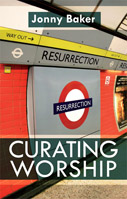
To quote Jonny Baker, new book Curating worship (for a review of the book, see here): “In many church circles the only gifts that are valued for worship are musical ones or the ability to speak well. This attitude needs shattering, and opening up so that poets, photographers, ideas people, geeks, theologians, liturgists, designers, writers, cooks, politicians, architects, movie-makers, storytellers, parents, campaigners, children, bloggers, DJs, VJs, craft-makers … can get involved.” (12)
Jonny argues for an approach to worship that is neither liturgical presiding. Nor is it choosing some songs and fronting a band. Rather it is what he calls “curating worship” an approach that like a art curator, seeks the best environment by which to showcase the whole bodies gifts and graces.
Then in Romans 12:9-21 the focus is how the whole world. As a result of whole bodies, the whole body is to “bless those who persecute you. If the enemy is hungry, feed them.”
This stops worship being for “I” and “we”, and instead offers us worship for “them”; for the transformation of the whole world.
To quote Paul Walton, introducing Uniting in worship 2 on ABC radio: “I think good liturgy is liturgy that’s not only understandable but connects with life as a whole.”2
Inviting whole bodies, honouring the whole body, for transformation, metamorphousthe of the whole world.
What is worship? the theology of Francis Webb
And for me always the grave great peace is stronger
In flaring colours, and a laugh, and a careless singer
Two lines from “Cap and Bells” by Australian poet, Francis Webb.
I have been amid much talk of worship and church in the last two days. Talk of liturgy and order, of emotion and diverse giftedness. Sitting in the bath this morning, reading a new found friend, Francis Webb, those two lines quoted above stood out – the gift of colour, the sharing of humanity and celebration of risk.
For me that’s what worship is, a space to encourage humanity. In so doing, it makes Incarnational, possible, what 2nd century theologian Irenaues wrote:
The glory of God is man fully alive
That’s what Webb is articulating, the peace that comes amid colour, laughter, creativity. I want to find those people, those spaces, be part of forming those sorts of Christian communities here in Adelaide
Monday, August 09, 2010
Creationary: the saints in Hebrews 11
A creationary: a space to be creative with the lectionary. (For more on what is a creationary go here; for other Creationary resources, go here).
I am struck by Hebrews 11:29-12:2. It’s all about the saints.
So I’d be wanting to plaster the walls of the church with saints. I’d be googling for images and I’d be choosing carefully and I’d be out and about with my digital camera. I’d be after pictures of the folk now in old peoples homes who used to come to church. And the kids. And I’d be going back through mission history, using say a book like Constants in Context: A Theology of Mission for Today
And I’d get people wandering around during worship and looking at these saints and wondering why these folk are saints. Then the sermon could be a bit of a storytelling.
Or I’d make them up like playing cards (here is an example of some “economic” saints I used for one sermon). And I’d lead a meditation, inviting people to consider their biggest faith struggle, the question/doubt that most bugs them. And then I’d invite them to look at their saint card and wonder what, if anything, that saint might want to remind them of.
And for the benediction, I’d invite people to be taking a “saint home” – pull a picture off the wall, or take the card home.
And I might even, next week, ask if there were any stories, any moments when the persons saint came back to mind. (If my community were technology literate – cell phone and email – I might even think about sending them a random picture during the week and then use that as basis for a storytelling in the week following.)
rant on creativity, or lack, in preaching and proclamation
This post has been bubbling for a while and should not be read as a reflection on recent sermons I’ve heard and worship I’ve been part of.
Back in May, someone pointed me to a few lines from Uniting in Worship 2. (See a fascinating ABC introduction here). This book is like the official worship book of the Uniting Church in Australia. It’s meant to be important in shaping Uniting worship.
On page 134, in a section titled “The Service of the Word/Receiving God’s Word”
“People are shaped by story, by narrative … When we hear stories again and again, we are shaped and re-shaped as the stories are told and re-told. Christian people are shaped by the story of Jesus …. The story is told through proclamation – which may include reading the Scriptures, preaching, reflection on Scripture, drama/movement, symbolic action, art, multimedia resources, and silence … ”
When I read that, I began to scratch my head. Which may include … stories and art and multi-media and movement.
Here is clear and written encouragement to be creative. Yet my experience is that in 99% of churches (all churches, not just Baptist and not just Uniting), proclamation is only every the first two, “reading the Scriptures, preaching”? Words, words, words. And rarely, if ever … stories or art, multi-media or movement.
Or to quote from Jonny Baker’s new book, Curating Worship, which I reviewed over the weekend …
“In many church circles the only gifts that are valued for worship are musical ones or the ability to speak well. This attitude needs shattering, and opening up so that poets, photographers, ideas people, geeks, theologians, liturgists, designers, writers, cooks, politicians, architects, movie-makers, storytellers, parents, campaigners, children, bloggers, DJs, VJs, craft-makers, or just about anybody who comes and is willing to bounce ideas around, can get involved.” (Baker, Curating Worship, 12)
What a gorgeous list. So with such encouragement and such potentially creative people sitting in our churches, what is it that so limits the church’s proclamation to spoken words?
Saturday, August 07, 2010
review of jonny baker’s book curating worship

Curating Worship
Curating worship is a term used to frame an approach to worship that is neither liturgical presiding nor fronting a band. Rather it is the skills of framing other people’s elements. It’s a ethos of participation:
“In many church circles the only gifts that are valued for worship are musical ones or the ability to speak well. This attitude needs shattering, and opening up so that poets, photographers, ideas people, geeks, theologians, liturgists, designers, writers, cooks, politicians, architects, movie-makers, storytellers, parents, campaigners, children, bloggers, DJs, VJs, craft-makers, or just about anybody who comes and is willing to bounce ideas around, can get involved.” (12)
Or in the words of the Uniting Church, Basis of Union, “the one Spirit has endowed the members of Christ’s Church with a diversity of gifts, and that there is no gift without its corresponding service.” Or in a Baptistic understanding, the priesthood of all believers. So curating worship is an approach by which the priesthood of all believers, with their diverse gifts, can find corresponding service in public worship.
What Jonny wants to do is write a book because “creative processes can seem mysterious and unattainable, even intimidating. The hope is that lifting the lid off the process and thinking might help demystify curating worship, and encourage people: ‘You can do it!’ (7)
He does this through what he calls 12 interviews with people involved in curating worship experiences around the world. While Jonny calls them interviews, I actually think they are conversations in which Jonny engages in lengthy to and fro. Because they are companions and friends, because relationships are established, Jonny can push and probe, asking some tough questions:
- Does it matter if emerging churches remain small?
- Arn’t some communities actually leading as artists and not curators?
- What are the theological implications when alt.worship communities close?
- What is the place of intellectualism?
Which makes this one of the most honest books I’ve seen from inside the emerging/alt.worship conversation. It also means a book in which the medium is the message – a book on curating in which the main author actually curates, shining the light on others. The range is rich – from public exhibition artists to pastors, from New Zealand through Australia to USA and UK, from those at the centre of churches to those off the edges, from lay to ordained.
The book has another heartwarming upside and that is the way it locates itself in a dialogue not with the church, but with the creative world, particularly the notion of curating as it has been researched in art and museum studies. What this means is a book that does not have to gain momentum by scoring points against other practices and practitioners in worship, which makes for a generous and creative read.
Curating Worship is an excellent read that marks a moment of maturity in the emerging/alt worship movement. First in articulating a clear and unique theology of worship. Second in conducting a critical conversation. Third in genuinely modelling a collective approach to authoring.
PS If you live in Adelaide and want to purchase a copy, I have a boxful of 20 books.


 )
)