Friday, March 21, 2008
easter atonement theologies
thursday
is for friends,
honestly. OK, honestly betraying, honestly bad praying, honestly
take, eat,
this is my body
(atonement in community)
friday,
is for Passover,
liberation rescues us
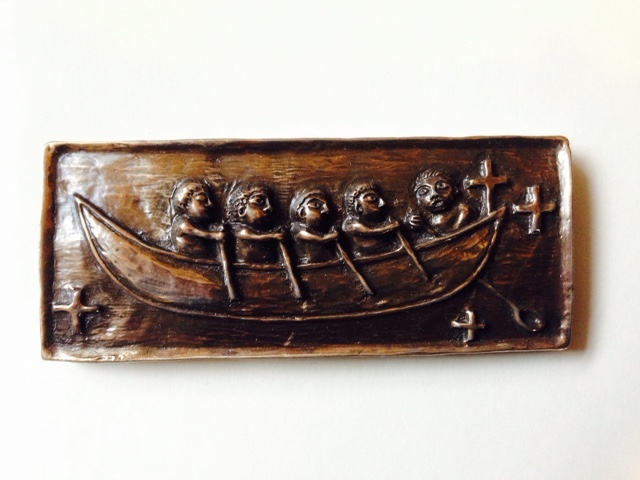
crossing seascape, crossing sandscape
Kingdom coming
(atonement as liberator)
saturday
is for pain,
honestly. In, Darfur and in child abuse, God why have you
abandoned me, him, them
gone God
while innocents die
(atonement as crucified God)
Thursday, March 20, 2008
vantage point student
from my leadership class today, a student cell phone pic.
the picture says a lot: in the foreground inductive learning with the class invited to use a type of lego to “build” their church. a way of allowing them to name their leadership values. leading into an excellent discussion around leadership and leader as builder in 1 Corinthians 3:10-17. in the background lecturer, white board marker in hand, waiting to capture student feedback. in so doing I am questioning, making links to pre-set class reading and earthing through practices and storytelling.
Wednesday, March 19, 2008
pushing pause on a strength: easter journey 2008

Our easter services: creative, contemporary, multi-sensory, happening Easter Thursday, Friday and Sunday. But note, for the first time in 10 years, there’s no Easter Journey (interactive art pilgrimage) at Opawa.
I wrote to the main organisers, Peter and Joyce on December 28, 2007, noting that Easter was the earliest it has been in 95 years and that given the enormous energy required to do our 2007 Christmas Journey, open for 60 hours continously in a public park, it might be time for a pause.
In hindsight, it was a good call. It’s a good discipline to pause something that you as a church are really well-known for. We’ve been able to give Peter and Joyce a weekend trip away. We’ve been less busy as a staff. We’ve been able to do more with Lent.
How about you? What have you discovered when you have paused something you’re really well known for?
Tuesday, March 18, 2008
easter week resources

Great Easter visually Biblical resource here for each day of Easter week.
I used a couple of clips on Sunday (and will again on Friday and Sunday). Afterward one of our church artists commented on how they are experimenting with similar art techniques in their work, with particular reference to Luke 10:1-12. Really looking forward to seeing that!
Friday, March 14, 2008
collaborative learning around the real Jesus
Grow (our non-linear, interactive, Sunday evening church service) is using a cell phone text challenge to help us search for the real Jesus. Themes – like aren’t there are other gospels that offer us a different Jesus or the church tampered with the gospels – lend themselves to some collaborative learning through a text challenge. So we have asked people to volunteer to be either
a) a Gnostic Jesus or
b) a Buddy Jesus
c) or a real Jesus.
We have given them either a Gospel of Thomas, or a selection of feel-good Bible verses, or a Gospel of Mark and sent them into the week. Then we text them a challenge during the week.
I was sitting a test this week. I cheated by copying from my friend. Now I feel bad. What do I do [Gnostic or Buddy or real] Jesus?
Simply giving people the Gnostic gospels has already highlighted how patriarchal, esoteric and just plain weird they are. And we are hoping that then running these “Jesus’s” through real life type scenarios will further help us realise the significant differences between the real Jesus of the gospels, and other constructions.

Thursday, March 13, 2008
let him who has no sin cast the first stone

a tear ran down my cheek last week. it was a tear that developed from a splinter that I found in my own eye.
(If you want to make this poem your own, feel free to add your initials or your response in the comments).
Tuesday, March 11, 2008
so who is the Bible for?
As I continue to probe the place of the Bible in church today, I have found myself asking who is the Bible for? Is it for individuals or for the church?
Is the Bible for individuals? And therefore the way we use it reinforces this. We encourage personal devotion and applaud a sermon that applies the minds of the individual with thoughts and truths.
Is the Bible for the church? And therefore the way we use it reinforces this. We preach a sermon that applies to the church. We encourage devotions that remind us we are reading within a wider communion. And we read the Bible together in ways that invite the community to engage the text as a community, through practices like communal lectio divino, Dwelling in the Word, community discernment, storytelling, takeaway spirituality.
Or is it for someone/thing else? Am I making a false dichotomy? How much does the culture we grow up in shape our answers?
Sunday, March 09, 2008
updated post: the theology of one Hillsong song
Update: Commenter Bill has posted on this post at his blog, and started another stream of conversation over there. His blog is bigger than mine (just like Hillsong is bigger than most of us), and so the commenting energy has now swung over there.
For those who think I might be a Hillsong devotee, check out my other posts on Hillsong here and a here and here. And other posts I have done on exploring Jesus images in texts, including Narnia, Edmund Hillary and the Mel Gibson movie.
……………………………………………
I did the below at our Grow service tonight. We’ve started a series looking for the real Jesus. As part of it, I am leading into worship by taking a song and asking “what are we thinking when we sing this.” Here is the Hillsong number “for all you’ve done.”
The song has 3 parts. The opening is fascinating;
My savior
Redeemer
Lifted me from the miry clay
I hear echoes of the Old Testament. For example Psalm 40:1 -3; I patiently waited, LORD, for you to hear my prayer. You listened and pulled me from a lonely pit, full of mud and mire. You let me stand on a rock with my feet firm, and you gave me a new song, a song of praise to you.
Such echoes of Jesus are present in a number of places in the Old Testament. The most well known is Proverbs 8, with what I call a “Cosmic or Wisdom Jesus,” Jesus present at the birth of creation, giving wisdom to life. So “for all you’ve” done starts with a creation Jesus present redemptively within creation.
The middle of the song keeps the Old Testament theme going:
Almighty
Forever, I will never be the same
At this point, I become a bit uneasy, as there is the potential of Jesus being mushed into Almighty God. But then the song gets very specific.
Cos You came here
From the everlasting
To the world we live
The Father’s only Son
This is a good Incarnational theology. This Cosmic Jesus is God before time, that came to live. The life of Christ is essential. “For all you’ve done” includes every day of every one of those 33 years.
The good theology continues as the song moves to end:
And You lived
You died
You rose again on high
You opened the way for the world to live again
I find fascinating the echoes of ascension. Jesus fully human and fully divine “opened the way.” The human body of Jesus ascends into God. In the Ascension, the way for humans is opened to God. What is more, God is changed as God embraces humanity.
In summary, “for all you’ve done” is a surprisingly broad song theologically. Christians often limit what Jesus does to the cross. Yet this song names Jesus, for all you’ve done as including creation, incarnation, life, resurrection and ascension. So salvation in Christ is not limited to the work of the cross. It starts with God making the world, involves the sending of Jesus, God with skin on, moves through thirty three years of healing to the embrace of the cross, the surprise of Easter Sunday and the ascension, as Jesus opens the way. That’s the Jesus being worshipped in “for all you’ve done.”
PS:
Friday, March 07, 2008
how should we use the Bible?
I was listening to someone rant this week. Discipleship was poor in the church. The evidence? Well, only 21% of people said they read their Bibles daily.
I thought back to the early Jews. They had handcopied scrolls in the Synagogue. They never had a Bible to read daily.
I thought back to the first disciples. They never had a book. Although they did have the stories of Jesus to tell to each other.
I thought back to the church before the printing press. They had handcopied scrolls in the church. They never had a Bible to read daily.
So isn’t daily Bible reading as a mark of discipleship simply a contemporary phenomenon, based on the fact that due to the printing press and internet, we now have Bibles we can read daily?
I thought back to Jesus. When asked about eternal life in Luke 10. He quotes the Bible, mixing two Bible texts from different contexts. Then he creates a story from contemporary culture (the one about robbers and Samaritans and religious leaders). Then he says go and do likewise. That is discipleship for Jesus. Nothing to do with reading the Bible daily. Simply the ability to relate the Bible to everyday contemporary life in a way that changes behaviour.
Using that story, yes discipleship will include using the Bible. Although not necessarily daily and privately. And it must also include the number of contemporary stories told in church. And it also must include the way lives are lived.
How about you? As you think about the church through time, how should we use the Bible?
Wednesday, March 05, 2008
hunting hindu idols
Update I have closed comments due to sp*m problems.
How many emerging church gatherings have you attended?
Of those gatherings, how many times have you seen a hindu idol present?
Of those gatherings, how many times have you seen the Bible used?
Of those gatherings, how many times has Jesus been mentioned?
I need to know, because I nearly lost it in front of strangers yesterday. I have been attending the Vision New Zealand Congress, probably New Zealand’s broadest gathering of church leaders. In preparation, I had been asked to write a 5,000 word chapter (A Kiwi emerging church. Yeah right?) for the congress book, tracing the development of emerging church in Aotearoa New Zealand. And I am down to do a 75 minute workshop on the emerging church.
All is trucking along in the workshop reasonably smoothly until the word “absolute truth” is mentioned. And at this point, dialogue between myself and the audience goes up a notch. And one punter tells me that if you deny absolute truth, you end up worshipping Hindi idols. I am sure he said other things and I am in danger of misrepresenting the dialogue, but at this point I had lost it. I was absolutely gob smacked.
Stunned. Trying to work out the logic. Mentally flicking through my powerpoint images and presentation, hunting for hindu idols.
Hence this internet survey. I need to know from all of my readers:
1. How many emerging church gatherings have you attended?
2. Of those gatherings, how many times have you seen a hindu idol present?
3. Of those gatherings, how many times have you seen the Bible used?
4. Of those gatherings, how many times has Jesus been mentioned?
(I would also love to know where in the Bible “absolute truth” is mentioned, but that’s another whole arena.)
I am serious folks. I need to know …. has the questioning of the modernist understanding of truth as “absolute” led to hindu idols in emerging church worship?
Friday, February 29, 2008
is is worth it?
every now and again, when I am dog tired in an aeroplane flying home from a speaking gig I wonder if it is worth it. An email today indicated, well ….
yes.
The course I did last year with Steve – “Missional Church Leadership,” enabled me to ‘envision’ Nyte lyfe [a new multi-ethnic evening service called Nyte Lyfe where we are aiming to provide a safe place [in the poorest community in our city] for the growing amount of people who are gathering on the borders of the church to engage with God] and so now we are just entering the ‘engaging’ stage the first service is this Sunday (please feel free to pray for this if so led)
camp bible
So it’s church camp this weekend. I am really looking forward to being able to simply hang with people, to talk and walk and laugh.
As part of camp, we’ve been wrestling with how we engage the Bible. We’ve got ages 0 to 80. We’ve got people from across our congregations.
So we’ve hatched a plan. On the Sunday morning, before morning tea, we will offer 4 different options. People can choose how they engage the Bible; whether by Bible Study, by Dwelling in the Word, by Godly play, or by interactive adventure. Over to them. Different options, but every option will be engaging the same Bible text (Philemon).
Morning tea will gather us and then, around the communion table, we will read the Bible text we have all engaged with, and then invite an open mic time, with people sharing what God might be saying to Opawa.
It will be fascinating to see how it goes and whether the offer of diversity around the Bible enhances unity.
(And, don’t tell anyone, but it is also an experiment for me in whether this could actually be a regular part of our life. I.e. on a Sunday morning could we gather for shared worship – then offer diverse options (say sermon, kids time, discussion, service in our community) – then return for communion together. And whether the offer of diversity might enhance our unity.
Thursday, February 28, 2008
processing grief
(Some details blurred to ensure anonymity) I don’t normally have deep plane conversations. Yesterday was different. As I flew back from Auckland to Christchurch we started talking.
He was returning to New Zealand, to the house where his wife had died 2 decades ago. It was the day of a significant birthday. Party preparation was in full swing until the phone call came. Death by coronary.
And his world fell apart. For years he had travelled the world, stuck in his grief. Today he was returning. It was time to pack up the house and move on. It was time to live again. And so we talked: of grief and pain and death and God, of life and journey and the power of listening.
It was a sacred hour and I longed to mark it in some way. It’s difficult to mark sacramentality in an aeroplane.
So I mark this blog entry in respect for all who grieve: new acquaintances who are rebuilding lives, good friends who are watching a mother being consumed by cancer, my pain over the demise of a project I invested 9 years of my life into, the parishioner who today will lose their arm in surgery, the failing health of loved parents.
What rituals have you found to mark and process your grief?
If you want to share respect or name your processes of grief, feel free to leave your initials, or the initials of those you are grieving with.
Sunday, February 24, 2008
welcome to my spot
It was my 40th birthday on Friday nite. I wanted to cook food for my friends. I wanted it to be at “my spot”, which is the rundown rumpty old holiday house/bach were I go to hibernate. I wanted to invite the people who have invested and given my life meaning. I wanted to have a storytelling, of life lived.
It was a fairly major logistical exercise: our holiday house is not equipped for 2 guests, let alone 40. The kitchen is too small (think no stove and no bench space. The toilet is compostable (think overflow issues). So the logistical exercise included outdoor barbeque, all salads pre-prepared at home and driven out, all guests invited to bring their own outdoor chair, but port-a-loo toilet provided.
And what a night. Flounder grilled on barbeque. Vegetables grilled with rosemary. Marinade meat for the non-vegetarians. 45 adults and 15 kids. Black Seeds great new album in the background. Standing outdoors with the huge horizons of Lake Ellesmere. Kids racing around. Storytelling from birth, through my early work days in Roxburgh, via training to be a pastor, Auckland life and now to Opawa. Laughter. Honesty. Cake. I thank God for the richness of my life and relationships.


 )
)