Friday, February 22, 2008
team changes
Our (paid) team at Opawa is changing. Amy Hay, who was employed 2 days a week in areas of youth and worship is stepping down in order to concentrate on her studies. And Craig Fairhall and Paul McMahon are joining us 2 days a week each in areas of mission and discipling (a search that began in October last year). So change and uncertainty. Excitement and sadness. All mixed together for us at Opawa.
It continues our commitment to team ministry by part-timers rather than sole charge leaders-do-it-all. It continues our missional journey, focusing us on mission and discipleship. At some point I might blog about the selection process, which was the most rigorous and innovative selection process I have been through. We worked with a Human Resource consultant, who gave a lot of sharpness and skill. It was a new experience for me and for those in the process, but was well worth it.
It was also a deeply God process. At one point we as a Calling group were a bit stuck. A radical suggestion was made and the selection panel went away to pray about it. The Scripture the next day, from the church Lectionary Reading, was 1 Kings 19. Elijah is called, unexpectedly, to anoint new leaders. It was the Scripture that I had used to shape the first year of my ministry at Opawa. I read it, amazed at how the Lectionary reading could so clearly read our life.
We will welcome Craig and Paul as a church family on Wednesday, March 12 and farewell Amy on April 5. For more on Craig and Paul,
Thursday, February 21, 2008
lent cross [digital] 2008
People’s “digital” responses (in contrast to physical responses), in relation to the Lenten 2008 journey, are starting to roll in. In time I will get them up as rolling slideshow on flickr, but for now…. (and scroll down) enjoy the diversity ….
Tuesday, February 19, 2008
lent cross 2008
 One of our artists, Pete Majendie, has made this cross for our 2008 Lenten Journey. It is in the shape of a door, which fits with our theme for the year; Building the Kingdom, not with a church building focus, but into our homes and workplaces. (So the cross is part of an ordinary domestic door, which will be opened for Easter Sunday).
The cross is designed to be a physical collecting point as part of our Lenten Journey. The actual journey through Lent consists of Si Smith’s 40 images and they are sent out among our community either physically (post) or digitally (email or cellphone). Then there are 6 set projects, (for more info on these go here), which allow people different ways to process the 40 days of Lent, at any level of creativity. Each project is designed to be displayed, again either physically (placed or pinned on the Lent cross) or digitally (through a website). More projects will be added each week, creating a growing momentum, and offering future participation for people next year (about 25 of our Opawa folk have asked for the resources).
The underlying idea was a desire to create a journey that could be done individually yet in community. So much of church stuff is based on come to us. What about go? So it was a great thrill on Sunday to place, on the Lent cross, photos sent to us from UK, Germany and another town in New Zealand and to have a sense that there is a global community walking Lent with us.
you rang?
The phone went at 1 am this morning. When you’re a minister and the phone goes in the middle of the night, the heart tends to race. Car accident? Death bed emergency?
In a deep sleep, I jumped out of bed. Confused, I opened the door. Unfortunately it was the wardrobe. Difficult to get into and certainly no phone in there.
I found the proper door and just as I got to the phone, it stopped.
Perhaps they would try my cell phone. A frantic search found it, but no call.
By now my wife was by my side. “Our phone can track missed calls,” she said. So I rang the missed call.
“Hi, your phone has just rung this phone and I’m returning the missed call,” I said sleepily.
“Are you Kentucky Fried Chicken,” a voice that I did not recognise said.
“No,” I replied, “I’m not Kentucky Fried Chicken”
“Oh, sorry, I must have phoned the wrong number.”
Slowly I trudged back to bed. No parishioner injured in a car accident after all. No death side pastoral visit needed. Simply a midnight soul searching for a greasy takeway.
Monday, February 18, 2008
sensational book
Lovely comment from Bob Carlton about my Out of Bounds Church? book here
“In his sensational book Out of Bounds Church, Steve Taylor writes: “How is the emerging church DJ-ing gospel and culture, mixing image and sound, ancient and future, to create a remix for a new world?”
Bob is picking up on my way of framing gospel and culture, in which I use the image of a DJ to analyse how the relationship between gospel and culture could be; that rather than see them as monolithic wholes that we either embrace in total, or reject in total, that instead we see our lives as samples, or bit-sized pieces and that we are sometimes juxtaposing gospel and culture, other times subverting gospel and culture, other times, amplifying gospel and culture.
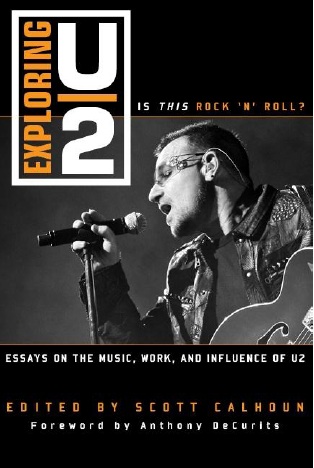
I have continued to develop the DJ image since my book came out. Another example I find really helpful in terms of explaining the concept is the way that U2 use the song Bullet the Blue Sky in their Vertigo tour (DVD here).
The song was written in response to the US intrusion into Central American politics. 20 years later, they take that protest song and re-frame it in relation to US intrusion into Middle Eastern politics. Now, note the samples that are used in the song;
– US fighter plane visuals
– lyrics from ‘Jonny comes marching home again”
– Bono blindfolding himself with Co-exist label
– Bono placing himself in torture position
– lyrics from ‘Gangs of New York’
and the list goes on. Each sample adds layers of meaning, subverting, amplifying, juxtaposing meanings to produce a very potent piece of communication.
(I use this in my classes; Living the text – which I have taught at Fuller Seminary the last two years, and am due to teach in Adelaide this year, and Contemporary preaching, which I am teaching this Semester, starting Wednesday, at BCNZ here in Christchurch)
Last year I got to talk with Bruce Ramos, U2 lighting engineer. I explained my ideas and he nodded. “Yep” that’s what’s going on. “Intuitively.” (One of my goals for my study leave later this year is to write this up as a journal article.)
Saturday, February 16, 2008
enjoying today

the album by Matt Shepherd. Matt is a Kiwi, and the album includes the lovely vocals of other friends I’ve met along my life journey, including Mark Barnard and Raylene Bradfield and it’s nice to have them in my room today. Titled Still small voice, it is a fusion of electronica and ambient, that works well as a soundscape, both for corporate worship and for individual pleasure.
Thursday, February 14, 2008
emerging, Kiwi and anglican
Today was a day in preparation for my time with the Anglican priests-to-be at St Johns Theological College, Auckland on February 26 and 27. As part of their Anglican Studies Programme they are looking at Anglican Ministry: Contemporary Models and Challenges. They have chosen to focus on the emerging church and to invite a Baptist to help them. Very gracious.
The learning outcomes include:
Describe the mission context of Aotearoa, New Zealand and Polynesia, and some of the challenges this raises for the Anglican Church.
Describe and evaluate the emerging church as one model of ministry developed to respond.
I thought these 2 videos will be particularly appropriate: Rowan Williams on what Anglicans think of emerging church and how he would evaluate the emerging church.
Over the two days I will be addressing the following:
Tuesday 9.30 – 12.30
Lecture 1 – New soil = new plants = new church shapes
Lecture 2 – What is the new “soil” that is “postmodern cultures”?
Lecture 3 – A missiology for a postmodern soil
Tuesday 1.30 – 4.00
Lecture 4 – Identifying with the life of Jesus
Lecture 5 Transforming secular space
Lecture 6 – Living as a community
Wednesday 9.30-11.00
Lecture 7 – The mixed economy that is emerging churches
Lecture 8 – Discussion and evaluation of the emerging church
And for those interested, here is my list of key Kiwi emerging church writings.
Wednesday, February 13, 2008
an A to Z beginners guide to the missional conversation: 3rd and final part
OK, here’s the 3rd, and final installment in the A to Z beginners guide to the missional conversation. Thanks for all the positive feedback. If you like to start your alphabet from A, go here.
O is for ordinary. In Luke 10, the disciples are not named. The task of mission to given not to the high profile disciples, but to everyday folk. Missional church seeks a similar attention to the ordinary and the everyday. It believes that in the suburbs and at the urban street corners, among the lay and the old, the young and the inexperienced, God can be at work. Which is why it seeks to cultivate an open and participatory conversation at the tables of everyday life.
P is for participation. The future of God is among the ordinary people of God. Thus the missional church seeks to cultivate an environment in which these people are able to name the Kingdom. By nature, people are polite. They go quiet in the presence of experts. Hence the missional conversation is aware that entrepreneurs and CEOs can silence people, the very people who might have the story that allows the Kingdom to be named. So the missional conversation seeks practises that get the table talking.
Q is for questions. The chain of questions set of by that one question: “Can the West be won?”
R is for Roxburgh, Alan. Author. Pastor. Consultant. And director of Allelon, who are involved in two significant missional projects – the Mission and Western Culture project and the Schools project. Both worth keeping an eye on.
S is for spiritual practices. Descartes gave us the dictum: “I think, therefore I am.” And so theology was offered to the head. Yet Jesus said, I am the way, the truth and the life. So Christianity is a relational way of living. In other words, spiritual practices. Practices overcome the separation of head from heart; of theology from practioners; of seminaries from churches, for what we do and how we act are expressions of theological belief. Missional conversation cultivates spiritual practices; like dwelling, like listening, like receiving hospitality.
T is for tables. That’s where you sit when you follow Luke 10. Tables takes the missional conversation from buildings and Sunday and places it in homes, amid relationships, with everyday conversations. Tables celebrates diversity, for the 70 disciples of Luke 10 went to different table in diverse villages. Thus the missional conversation asks you to consider the unique tables at which you sit.
W is for Western. Cultures of European origin, marked by a set of literary, scientific and philosophical ideas. It is in this context that modernity began to flourish and which exerts such enormous influence on our world today and in which the missional conversation seeks the Incarnational Christ.
W is also for women. At the risk of stereotypes, women tend to be naturally better at creating relational conversations and, thus are more likely to intuitively be missional leaders.
U is for ..; V is for .; X is for ..; Y is for .; Z is for . I am stuck on these, (along with G). Suggestions appreciated.
More links
For A to H of missional conversation, go here.
For I to N of missional conversation, go here.
For an A to Z of emerging church, go here
Monday, February 11, 2008
offering practices
One of the good gifts that Jason King, one of our pastoral team, gave to us last year was a re-shaping of our offering practices.
As we designed Grow, our new evening congregation, Jason suggested that when it comes to the offering, we give everyone a piece of paper and ask them to write down what they are offering God in the week ahead. (This works really well at Grow, because the service meets around tables. So it’s easy to have pieces of paper and pens on each table, along with muffins and a range of other ways to participate.) Practically, this helps everyone to contribute, and avoid the embarrassment of only a few giving in a smaller congregation. Theologically, it reminds us that the offering is indeed about all of our lives, and not just our finances.
Personally, this simple change has radically transformed my sense of worship. As a person, I use automatic payments, so the offering bag has less connection. As a pastor, I attend three (of our five) congregations and even if I put cash in, it raises questions about which service I would do that at.
So the simple invitation to write down what I am offering, has allowed me to re-engage with the offering and to consider a meaningful contribution. I’ve written things like helping a community family move, work a long week for the church, enjoy a great day off. A very simple thing that has helped me connect my faith with my faith.
(Jason was with us as a Community Development Pastor for a three year period. This ended this month, and, in God’s goodness to Jason, he was called to North Avon Baptist. Thanks Jason for the gift of the offering idea and God bless you as you start your ministry this week).
Saturday, February 09, 2008
dub and Christian worship (again)
one of my christmas presents was tickets to Salmonella Dub and New Zealand Symphony Orchestra and we went on friday night. a very rich night.
i was struck by the mix of crowd. definitely not a normal dub crowd i thought, as i noted the grey hair and more conservative dress style. but it worked. as i sat and listened to violins mixed with bass beats, traditional Maori instruments mixed with electonica, i thought of Opawa on Sunday morning. why can’t we mix classical music with dub?
back in 2006 I wrote a post, bemoaning the lack of dub music in Christian worship. that heart ache remains. dub is my natural voice. i long to love God “in my own language” (to use the words from Acts 2, the crowds experience of Pentecost).
Friday, February 08, 2008
Grow through grandparenting
How many of you have grandparents? How do we grow through these relationships? The Bible is full of stories of old connecting with young – Samuel to Eli, Ruth to Naomi, Anna and Simeon to Jesus. What wisdom can we gain from these relationships?
Grow our Sunday evening service is back, exploring these questions. Features will include “adopt-a-gramp”; top 10 oldies in our church; tips on how to grandparent, grandchild and visit a rest home; interviews with grandparents; generational stereotypes and clips from Waiting for God.
Grow through grandparenting; Feb 10, 17, 24, Sunday’s at 7 pm, cnr Hastings St East and Wilson Road
Thursday, February 07, 2008
spirit2go, into the wilderness, Lent 2008
Working toward Lent this year, I have also been seeking a way for people to do spirituality without any physical link to church, while retaining some sense of shared life. How could people do a shared task, but in their own timestyles, yet be encouraged by each other? In the old days it was meet physically, same time, same place. But is that the only way?
The upshoot, the first crack, is a website (www.spirit2go.blogspot.com).
So for Lent 2008, people can download si smith’s 40 day resource, with poetry (for a small fee). Which is great and is supplied via Proost and certainly doesn’t need me to build a website for that. But it is individualised and for me, I need people with me on the journey. Perhaps I’m oldfashioned, but I get encouraged by other’s creativity.
So … I then designed 6 assignments that link with the 40 days (for example build sand castle, visit a wilderness area – etc, more info on website). Lent covers 40 days plus Sunday’s. So that gives some lay days. And why not use that to process the 40 days in different ways? Why not have shared projects that people can do in their own time that help them process, projects that access different ways to connect with God, projects that compliment 40’s themes.
And all projects with the invitation: take pictures, sound recordings, blog journals, and email your work to the spirit2go website. So that we are encouraged by what others do. So there is a sense of shared journey.
If it works, i will want to add more projects around themes; a set around Kiwi spirituality and another set around meals in Luke and slow eating and food.
At Opawa we are also offering a physical option – paper based with a physical cross in the foyer. So people can mix and match their own combo of digital and physical. Introduction to whole concept tonight (Thursday), 7:30 pm in church foyer.
UPDATED: OK, 20 people from Opawa have signed up. Some have gone digital, some physical. And emails from 3 people in the UK, keen to join us. And a lovely note from the poet, “This internet thing is great ain’t it? Best wishes for your endeavour, it is very encouraging for me to see a bit of creativity grow legs and find uses all over the place.”
Wednesday, February 06, 2008
technical query
Does anyone know if it is possible to place already existing digital images (JPEGs) onto a cell phone, in order to PXT that digital image?
(I know I can take a digital picture of the existing image with a phone, but that would lose quality. I know you can select and send PXt’s from the Vodafone gallery. But I already have the image (40 actually, one for each day of Lent 🙂 that I want to send out)
waitangi day thoughts, thanks to Paul Moon
Today in New Zealand is a public holiday in honour of Waitangi Day, that moment in 1840 when the Treaty of Waitangi was signed and when the Tangata Whenua and the Crown agreed to a shared future, one nation and two people’s.
It means for me that today is a lecture day. But because Luke 10 sends the missional church out, instead of gathering my missional church leadership students together, I have sent them out, the 15 in Auckland and the 17 in Waikato, to walk their local communities. They are invited to watch and listen to what people are up to today, and what that says about the narratives of ordinary people in ordinary communities. Over the next weeks they will interact online about this and I am looking forward to reading what they discover.
In preparation for today, I have been reading Paul Moon’s The Newest Country in the World. A History of New Zealand in the Decade of the Treaty. He concludes with these thoughts:
“The idea of New Zealand was not created, it evolved in an organic fashion as much in spite of as because of the policies of its rulers in the 1840s …. Thus, although New Zealand bore all the hallmarks of a colonial dependency, its destiny had already fallen into its own hands, and was ready to given shape.”
That suggests that it’s time to move beyond the crippling ideas of colonisation. I am by no means downplaying the need for justice and restitution for the past. I am simply reminded that this country is what we have made it, all nations, Tangata whenua (people of the land) and Tangata tiriti (people of the Treaty).
And that this country will be what we have make it, all nations, Tangata whenua (people of the land) and Tangata tiriti (people of the Treaty). I am glad to be part of this organic evolution and I pray that my students and my church can be a grace-filled part of this nation’s future.
Links:
Some history here. Waitangi Day worship here. Waitangi Day sermon here


 )
)