Tuesday, August 21, 2007
mission and leadership in Dunedin
I will be in Dunedin Thursday, November 22, doing a day long seminar on themes of mission and leadership. Topics will include
Learning from an Ancient Text
Mission with a Kiwi Accent
Creating Community with a Missional Imagination
Creating a Community of Faith around Spiritual Practices
Leader as Change Agent (hoping to provide this as a takehome DVD option)
and ending with dinner, a social evening, for those interested in eating and drinking with me!
Saturday, August 18, 2007
counting worship attendance
Tomorrow as part of our morning congregation, we dedicate Grace Ngaire Russell. Her immediate family moved from the UK to NZ two years ago and as we were planning the dedication a few weeks ago, they were telling me about their use of the webcam to keep in touch.
“Oh,” I said, “The church is on broadband. Why can’t your family in UK watch the dedication live through the internet?”
A few tech experts, and a few technical trials over the last 2 Sundays, means that in a few hours, DV and TV (God and technology willing), UK-based Russell family members will be clustered around their computers watching worship at Opawa Baptist Church.
Which only leaves the question: How do we count church attendance as we move into a cyber future?
Friday, August 17, 2007
The parable of the missing talents
I have been preaching on the topic of Jesus and money. One of the business people in the church asked me what I thought was an excellent question: what would Jesus have said if one of the people in the parable of the talents (Matthew 25:14-28) had lost money. It got me thinking about how domesticated the Parable has become, and prompted me to have a go at contemporarising the parable in light of contemporary ethical issues.
Any suggestions to the “What would Jesus say? gratefully accepted, as Sunday’s coming!

“Again, it will be like a businesswoman going on a journey, who called her servants and entrusted her property to them. To one she gave 3.5 million dollars, to another 1.5 million, and to another 700,000, each according to their ability. Then she went on her journey. The one who had received the 3.5 million went at once and put his money to work and gained 3.5 million more. So also, the one with the 1.5 million gained 1.5 million more. But the man who had received the one talent went off, and placed it in Kiwisaver.
“After a long time the master of those servants returned and settled accounts with them. The man who had received the 3.5 million brought the other 3.5 million. ‘Master,’ she said, ‘you entrusted me with 3.5 million. See, I have gained 3.5 million more. I set up a sweat shop in Thailand and used bonded labour to supply cheap chairs for growing churches.
What would Jesus say to that?
“The one with the 1.5 million also came. ‘Master,’ he said, ‘you entrusted me with 1.5 million. I invested them in the share markets and foreign exchange currency. But I lost my money when the Kiwi dollar crashed.’
What would Jesus say to that?
“Then the man who had received the 700,000 came. ‘Master,’ he said, ‘I knew that you are a hard woman, harvesting where you have not sown and gathering where you have not scattered seed. So I was careful and cautious and planned for my retirement and I invested in Kiwisaver. When I retire, I am sure that you will get what belongs to you.’
What would Jesus say to that?
Thursday, August 16, 2007
key missional phrases emerging from waikato diocese
I’m back from Waikato Diocese. (This is my 3rd Anglican clergy conference I’ve spoken at in the last few months (leaving Dunedin in November and Wellington in April next year)). There were about 130 leaders, apparently their best attendance for a long time. I’m very tired: two 90 minute sessions on the Tuesday, followed by four 90 minute sessions on the Wednesday …. slot in the after speaking people interaction, along with getting the powerpoints and video files ready for the next session … has left me quite fried.
There were a number of really nicely phrased understandings of mission, that emerged from the first session’s interaction with Luke 10:1-12: Firstly, get into their culture and secondly, centred on everyday.
Thirdly, in response to my asking where church was in Luke 10, came the phrase meeting where people are at. I turned this into a question back: Where do people meet in your diocese? and very quickly, from around the room came the answers: malls, cafes, schools, workplaces, RSA, bus stops, internet, stock sales, hospitals. A very grounded understanding of the missional movement of going, rather than expecting a coming to a building.
On the Wednesday two potential research projects began to bounce around the room. Firstly, the need for a gathering for storytelling and brainstorming around emerging and rural ministry, which I think needs to include developing a website of ideas and resources.
Secondly, a “green zone” gathering, a NZ wide Anglican gathering of pioneering leaders, to tell their stories, listened to by a few Bishops and key leaders, around two questions – how to sustain existing pioneering leaders and how to train pioneering leaders.
I am not sure what my place in these projects needs to be, but I wonder if they are some next steps in the mission journey.
In the meantime, both Auckland and Waikato Dioceses have expressed interest in my Missional Church Leadership year long coaching program. This will involve me flying to Auckland and Waikato monthly (starting late September 07 and ending August 08) to work with a group of people who want to take missional leadership learning further, integrated with on-line learning and coaching around developing mission projects in one’s local context. There are some spaces available, and I’d quite like some non-Anglicans in the mix, so let me know if you’d like to join. Here are some more details: Download file.
large people and airplane seats
Update: While debate continues in the comments, I have invited a number of guest blogs around the theme of Faith in body image. Here is the first one: Why, if Christians are made in the image of God, is it so hard to look at ourselves n*ked in the mirror?
This might not be a very PC post, but I think airlines need to have a policy about large people and airplane seats. I pay good money for my seat. I expect to be able to use the whole seat that I pay for. Why should half of it be taken by another person? Why should I have to sit huddled into the window, unable to move?
When you board the airplane, the airline checks your carry on luggage is not to large. They provide a metal frame, and if your bag can’t fit, you can’t carry it on. It’s time airlines provided a similar, metal seat at check in. If you hang over the edge, then you need to pay for two seats. Pure and simple.
Come on large people. Stick up for yourself. Stand on your own feet. Stop expecting skinny people to subsidise your travel.
Monday, August 13, 2007
waikato anglicans
I am back on the airplane again, flying up to be with the Anglicans in Waikato. I have been asked to speak around themes of leadership and mission, titled Learning to create a community of faith in a culture of change. Here is my schedule;
Tuesday 14th
3:30 to 5:00pm: Learning from an Ancient Text
7:30 to 9:00pm: Mission with a Kiwi Accent
Wednesday 15th
9:00am to 10:30 am: Creating Community with a Missional Imagination
11:00 12:30 pm: Creating a Community of Faith around Spiritual Practices
1:30pm: Workshop, Leader as Change Agent
It is very ecumenical and hospitable of the Anglicans to invite a Baptist. I had a great time with the Anglicans in Auckland in July, and May in Christchurch. I always gain a lot from these types of encounters, so am looking forward to it. Plus I get to re-connect with the most historic of the Prodigal Kiwi’s.
However, amid all this excitement is the realisation that this will be my 5th major speaking engagement in the last 6 weeks. That’s a fairly heavy schedule when I also have two day jobs as pastor and as lecturer, along with a family life to nurture.
Sunday, August 12, 2007
videoblogging and sermons 2
“Tonight made me want to read the Bible more.” That was a comment made to me after church on Sunday. What do all those who claim that emerging church is soft on the Bible do with that type of feedback, I wonder?
Some months ago I blogged about the possibility of using videoblogging in relation to sermons. Well here’s the first go, by the brave and innovative Iain McMahon, which went live at Digestion church service yesterday.
The theme for the service was “journey and promise.” It was part of 7 week series titled God’s big story. We have broken the Bible up around themes of
CREATION: Genesis
JOURNEY, PROMISE: Exodus, Leviticus, Numbers, Deuteronomy, Joshua, Judges, Ruth
POWER + JUSTICE: 1+2 Samuel, 1+2 Kings, 1+2 Chronicles, Ezra, Nehemiah, Esther, Isaiah, Jeremiah, Ezekiel, Daniel, 12 micro:prophets (including Hosea, Joel, Amos, Obadiah, Jonah, Micah, Nahum, Habakkuk, Zephaniah, Haggai, Zechariah, Malachi).
SONGS + SAYINGS: Job, Psalms, Proverbs, Ecclesiasties, Song of Songs, Lamentations
INTERTESTAMENTAL TIMES: what did happen in those centuries between the Old and New Testament
GOOD NEWS OF JESUS: Matthew, Mark, Luke, John, Acts
LETTERS OF LOVE: Romans, 1+2 Corinthians, Galatians, Ephesians, Philippians, Colossians, 1+2 Thessalonians, 1+2 Timothy, Titus, Philemon, Hebrews, James, 1+2 Peter, 1+2+3 John, Jude, Revelation
I was down to do Journey and promise, and had wondered aloud to Iain if he wanted to have a go at “videologging” around that theme. So the sermon/content bit started with me spilling wine on a white tablecloth. It’s what the Jews do at Passover, to remind themselves that they were once enslaved. So that’s where the Biblical theme of journey starts. I then gave a brief thumbnail sketch of Israel’s journey from Egypt to nationhood, from Exodus to Ruth.
Iain then showed his “videolog”, which turned out to be a contemporary probing of the theme of journey and promise. As the music played on at the end of the “videolog” I laid bread, broken, on the winesoaked tablecloth and inviting those who needed bread for their journey today to eat.
Initial thoughts on videoblogging and sermons:
1. It went surprisingly well.
2. It allows a multi-sensory experience of music and image.
3. It allows a world outside church – in this case the environment of Christchurch and the stories of people – to become part of church.
4. It increases participation – both in the skills of videoblogging and in the voices of those who speak.
5. The use of editing allows spoken participation to be sharpened up.
6. It takes time, and demands a new set of skills – for example in this case lighting and sound quality. This will lead to an ever-increasing tension around time and professionalism.
7. In this case the videolog flowed really well. But it might not always and what then?
8. Iain did it for blog. That is vital. It suggests and accessiblity and suggests that our congregation includes the web. This suggests a whole lot of interactivity: a webspace where others can post their journeys, a space to share what spiritual practises sustain journey, a place to log complaints about communities who don’t welcome the stranger and practise hospitality …
Iain will have another go with Songs and sayings on August 26. It will be interesting to see if this is just an experiment, or if it actually allows some very different ways of engaging with Biblical text to emerge for us at Opawa. In the meantime, we have individuals off to read the Bible more, which is good and healthy fruit to see developing among young adults today.
Friday, August 10, 2007
Unexpected treats
I have been unexpectedly and richly blessed by the following two books in recent months.
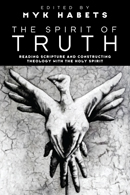
Seeing things helps me understand things. In the midst of words and concepts, I often find a simple diagram brings clarity and fresh insight. After the Spirit, by Eugene Rogers is a theology book that in the midst of some sophisticated reflection on the Spirit as revealed in the ministry of Jesus, managed to draw on some art. This is the type of book that has sat by my bed for the last 9 months, and I have found myself turning to as Christmas, Pentecost and Trinity Sunday approached. And the art pieces – on Jesus birth, baptism and ascension – clarified and then enlivened 3 sermons and 2 lectures.
Behind a boring cover, this book has been fantastic. It’s brought Ezekiel to life for me in recent days. What I thought was a dusty old prophet has become a deeply inspiring and encouraging friend. There’s a huge vision of God and the gospel for the whole of life hidden in Ezekiel that is accessed by this commentary. I have been toying with doing a series on the 12 minor prophets and reading this book has made up my mind.
Wednesday, August 08, 2007
sharpening the edge
Last week I was part of Sharpening the edge conference, wondering what God is up to in New Zealand by gathering around 8 mission stories. There are now some video highlights up on youtube, including part of my presentation, storytelling some mission stories about our multi-congregational approach. (Wow, do I ever wave my arms when I speak. Is that distracting?)
There were 7 other stories. You can catch Rich Johnson talking about St Pauls here, and Duane Major talking about 24/7 here.
So what might God be up to in New Zealand today? Here is an excellent written summary, by the prodigal Kiwis.
: Changing primary biblical mandates. A few years ago I suspect a similar gathering would have emphasized the great commission passages (e.g. Matthew 28) or the mercy/ compassion passages (e.g. Luke 4 v16) that under girded the move into community ministries but none of these mandates seemed to be primarily informing the new initiatives described as this gathering. More in vogue were Acts 2, Luke 10:1-12, and the parable of the prodigal father coupled with biblical images of friendship.
: Changing sense of others. A few years ago I suspect a similar gathering would have described people as ‘the lost’, ‘pagans’ ‘non-Christians’ and the ‘un-churched’. Yet these labels were remarkably absent in this gathering. Replacing them was a desire to find ‘common ground’ with others, create ‘third places’ and affirm long term friendships that are friendships first and possible sites of sharing faith second or third.
: There was more talk of transformation through coming to know Christ (the road to Emmaus) than conversion (the road to Damascus). Such transformation seemed more of a process than an event and encompassed longer time frames.
: There was less emphasis on preaching but an awareness that people, young people in particular, generally lacked a biblical background and a theological grid from which to shape their lives.
: There was an emphasis on ‘doing life together’, ‘being friends’, building long term genuine relationships. This was highlighted by the talk of café’s, coffee machine meetings, meals, food together, parties etc.
: There was a high expectation that many things tried will fail. That ventures have use by dates and that what they are doing now may well change soon. This brought humility to their successes.
: There was a strong push for leaders to listen and look for what the Spirit is doing in the local setting and then support and build on this. Coupled with this was a dislike of trying to ‘franchise’ ministries, ‘copy and paste or use programmes from elsewhere.
: There was a clear commitment to work with and acknowledge the need for older leaders, established churches and long-term structures. While the stories were of new ventures they were all committed to walking hand-in-hand with others.
: The conference as whole offered avenues of hope for older established churches and new fresh plants. There were expressions of re-awakening and re-emerging Missional life and new mission endeavors. Both were encouraged and examples of both were shared by way of stories memorable for many was youthful Anglican Priest, Rich Johnson’s telling to the St. Paul’s Symond Street story over recent years. Another example was the Opawa story, narrated in part by Steve Taylor. As we’ve noted above, both offered (in different ways) hope for long established mainstream congregations.
Sunday, August 05, 2007
listening to the Spirit during weekly church
Today was a Sun-day when the last thing I wanted to be was a pastoral leader.
Some background. I had preached last week, a reflection on Ezekiel 37, and all week have been getting email and comment back about what I had preached. People challenged, people inspired.
All week, the intuitive part of me was saying “pause Steve. listen Steve.” You see, I’m like a magpie. I like bright and shiny things. It easy for me to approach the Bible like that, always looking for a new bit of information. It is easy to approach church like that – last week’s sermon was good, what will we be fed this week. I suspect those narratives are strongly at work in many of us.
The ordered part of me had a sermon topic – starting a 3 week series on Jesus and money – to work away on. Besides, how can you pause a week after you’ve preached something. There would be people absent last week, but present this week. There would be visitors, new to the church. It’s not very welcoming when they start to hear all about a previous something they’ve missed.
So by last night I had a sermon, needing the usual Sunday morning polish, but ready to go.
This morning I read today’s lectionary reading. In the cycle I use, it is Ezekiel 47 and it beautifully mirrors and reflects last weeks Bible text, Ezekiel 37. And I sense that God is wanting me to ditch the ordered sermon and go with the intuitive wondering. Which would be fine if this was 24 or even 48 hours ago, but church is 2 hours away.
God, find someone else to be a pastoral leader. Find someone else to balance preparation with intuitive trusting the Spirit. Find someone else to discern what needs to happen. Grump over. Back to work.
My partner created a handout, summarising last week and giving 2 questions for reflection.
I stood and explained what would happen:
1. A short introduction, asking us to consider how we as the people of God engage the Bible. Are we magpies? Does God only speak through preaching, or can God also speak through Scripture reading and through the body of Christ?
2. Summarise last week and read Biblical text
3. Give 4 mins for individual reflection, using handout.
4. Open microphone time for people to share
5. A 10 minute spoken reflection on Ezekiel 47 and how it mirrors Ezekiel 37, thus offering some fresh content for those fresh to the process and who like sermonic input.
Anyhow, these are my summary notes of what was shared during (4) at the open mic:
– Ezekiel 37 reminds us that we need to be willing to let God do something different.
– Ezekiel 37 reminds us that it is not up to us as humans to rattle dead bones. Rather it is God doing something. Our role is simply to speak “lavish kindness”
– Ezekiel 37 reminds us we need to pray every day “fill me afresh Spirit today.” This was being integrated into a spiritual practise that had been suggested earlier in the year.
– Ezekiel 37 reminds us God has given each of us talents, so none of us need to be a dry bone.
– Ezekiel 37 reminds us it is easy to look at dry bones and lose hope. Yet following God is about faith in things not yet seen.
– Ezekiel 37 reminds us even though things have been hard in my life (and thanks to my home group for supporting me), I need to keep working on it.
– Ezekiel 37 reminds us that we should never give up. Dry bones are like all those unanswered prayers.
A very stressful Sunday. How does a group of people who meet weekly pause and listen, in a way that is not inhospitable to visitors?
Saturday, August 04, 2007
film and faith online
I am spending the day with my Bible College of New Zealand Faith and Film class. Rather than lecture, together we are working on a website, film and faith – online – from a Kiwi perspective. I am providing the coffees. They are writing the reviews and building the website (we are using a wiki) over the day. It will be fascinating to see what develops by the end of today.
Once we have the reviews up, the class and I will watch, fascinated, to see what happens. Two of the class learning outcomes are:
– elaborate some of the key characteristics of contemporary New Zealand culture as portrayed in New Zealand films and reflect on these from a Christian perspective
– identify ways in which film may be utilized as a point of engagement for the gospel within contemporary society
So, if we build a website about film, exploring film from a New Zealand and Christian perspective, what will result as a point of contemporary engagement? Will other’s comment? Will other’s want to join and add reviews (anyone can apply simply by asking)? Will the class keep wanting to write reviews once the day is done? Will the next class (I run Faith and Film every 2 years) want to build on today?
It’s fun. It’s a good way to learn and be together with students. It might even be useful. Imagine that. A seminary class that is actually useful!
Friday, August 03, 2007
one church, many congregations and one member
I wrote the blurb below for our church newsletter today. I post it here because it gives some insight into our life and into how we are reworking traditional concepts like church membership into our multi-congregational approach. Note also that there’s a whole lot more thinking about how to innovate and free mission within existing systems that lies behind the multi-congregational approach. For us, its not a formula, but a way of pursuing the mission of God.
At Opawa Baptist we are one church with multiple congregations. I find it helpful to think of it as an umbrella, a shared handle and a shared shelter, under which different congregations huddle. We are one church as we share vision and values, pastoral leadership, all-church events, teaching, shared prayer, growth coaching and training, etc.
Under this one umbrella different congregations can stand. A congregation is seen as a place to develop community, to grow in Christian life to the full and to extend Jesus love. A congregation will express these values in different and unique ways. For example, people grow in Christian life through sermons on a Sunday morning, or through engaging with art at Side Door or entering into discussion at Espresso, or hymns and soup at the Hymn congregation.
Practically, at a church forum in 2004, we noted that this would mean:
1. Working at all-church celebrations that gather the whole church.
2. Building discipling and pastoral structures that could fit any congregation.
3. A newsletter suitable for all congregations.
4. Members are welcomed and people are baptized in either their congregation or at all-church celebrations, with the use of technology to share highlights from other congregations e.g. baptisms, membership.
5. All congregations seen as equally valid.
6. All congregations have appropriate ways to contribute financially to the whole.
I note this because Tuesday night will include a historic moment for our espresso congregation, as it welcomes IM as a church member. Other church members attend espresso, but this is the first time someone has been welcomed into Opawa Baptist membership at espresso.
Why welcome IM at Espresso? Because espresso is the congregation by which IM found his way into Opawa. Equally, for IM, becoming a church member is an expression of his sense of belonging to the whole Opawa church.
For more on our multi-congregational model go here.
For information on each congregation, check down the sidebar here or here.
Wednesday, August 01, 2007
a day that turned pear shaped
I have been away from Sunday, part of leading and speaking at a conference in Auckland, storytelling around new mission expressions. About 70 people gathering around 8 mission stories. Lots of learning, lots of relationship building between different parts of God’s body.
Around that gathering I have also been hosting Al Roxburgh and the first conversations around the Allelon Mission in Western Culture project as it might apply to New Zealand. So last night included a meal, with various church leaders here in New Zealand, informally, as we wondered aloud (and got an overwhelming affirmation), with regard to New Zealand.

Today I was due to fly back to Christchurch for the first lecture of a new class for the Semester, Being Kiwi, Being Christian. At the hotel, I opened my laptop bag this morning to begin my lecture preparation and realised that in the rush of my speaking yesterday, I had left behind my powercord for my laptop.
Sinking feeling … quick cancelling of taxi … rushing back to conference venue … searching … finding … great sigh of relief … off to airport.
Only to find my flight delayed… great sinking feeling, as I realise I am going to be missing my first class … Lynne said she could collect my bags, so I run off the plane … rush from the airport by taxi (never again, it was RIDICULOUSLY expensive) … frantically print off my notes … charging into the classroom.
Thankfully the 35 students were very gracious about the class starting late and it was a good start.
I am now due in town, to do a recording for a community radio station, talking about life and faith in Aotearoa New Zealand. Very much looking forward to collapsing at home and being able to simply laugh about being on the other side of a pear-shaped day.
Saturday, July 28, 2007
chip off the old block
We are chips off the block, shaped by our parents, moulded by their attitudes and behaviours. The church I pastor has an old building and a new building. The old building, built in 1953, is an A-frame.
[Photo of church under construction, 1953]

It is quite rare to see an A-frame house in Christchurch, let alone an A-frame church. So this week the pastor from back in that day was contacted and asked “Why? Why an A-frame?”
Looking back I think the church realized that to replace the
former church, built in 1916 and founded in 1924, the new church had to be
of a design, outside the square and would revolutionize the way churches
would be built in the future.
That’s a great chip to carry on our shoulders into the future.


 )
)