Sunday, March 26, 2006
passionate practice of pilgrimage

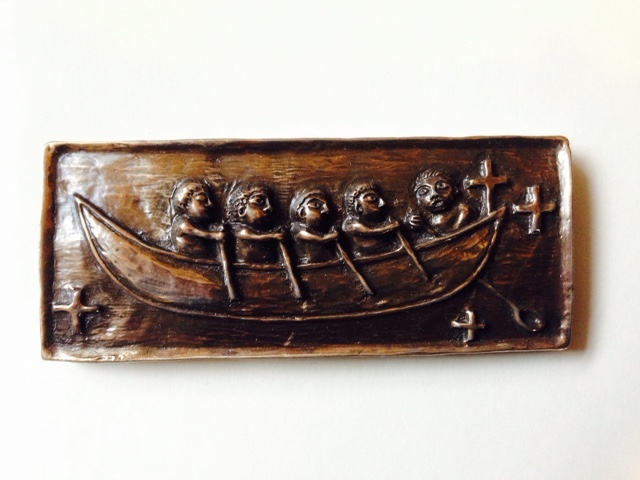
We kicked off another passionate practice for the next 5 weeks of Digestion, our evening service. (The passionate practice for last month was discernment of music.)
I told the stories of two pilgrimages that inspire me; Celtic peregrini and walking the Camino de Santiago. We then offered a number of stations; communion, praying for Easter camp and plaster casting our feet (which will evolve over the next weeks). The passionate practice of pilgrimage, could be embraced in the the following concrete practices;
1.Go for a walk each day for the next 5 weeks. As you walk, pray the same pilgrim prayer. See what you learn.
God be with me in every pass,
Jesus be with me on every hill,
Spirit be with me in every stream,
Each step of the journey I goest
2. Go to Easter camp.
3. Do an internet pilgrimage. Go here twice a week for the next 6 weeks.
7 things I learnt from Bono and the real life of worship leading
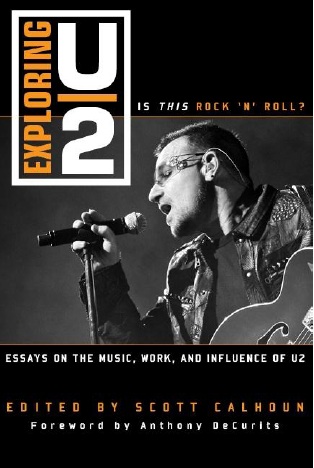
Early this week I suggested that Christian worship could learn something from Bono and U2; under 7 headings;
1. Connect uniquely.
2. Engage through familiarity.
3. Use repetitition to call forth prayer.
4. Secure a 5th (visual) band member
5. Create hope by drawing the best from the past.
6. Plan participation.
7. Invoke passionate practices.
The post has drawn some interesting comments (including the suggestion I might be manipulative and a bit cult-ish:))
This morning I put together the following concrete act of worship, and this afternoon I thought I should put it through the “Bono worship” grid.
Saturday, March 25, 2006
Spirituality resources birthed
Paul met God in a dramatic encounter. Peter met God step by step, in process. Which raises the question; how do we be intentional about connecting with the Peter’s we know.
 To do so would value;
– Variety; creative, adaptive, flexible; issue and audience focused.
– Celebrate small; if we had lots of variety, then success would be 1, not 99.
– See people as pre-Christian, not anti-Christian; believe that God can be active in people’s lives before they were Christian. And this would change our conversation. It would not be us and them. It would be, how can any person, take a next step toward Jesus.
– Keep focused. Our activities would need to invite people into relating with Jesus.
Today I met with a group to bat around two concrete ideas in relation to spiritual resources;
– spirituality courses that explored spiritual practices in a small group setting
– rituals of change offering a spirituality and rituals around birthing, including the 9 month preparation, birthing boxes, capturing emotions, baby room’s “dedication” prayers, prayers for sleepless nites, adoption rituals, grandparent rituals (memory book, symbolic actions), naming (home or church, formal or informal):
The five in the room (with four apologies) then discussed the following:
Thursday, March 23, 2006
what dreams may come
Last year he attended my BCNZ Emerging Church course. Today we met over coffee and I listened to his dreams, to plant something emerging in his church and his denomination. It’s the sort of coffee I dream of having.
Wednesday, March 22, 2006
7 things I learnt from Bono about worship leading: update
Update: I have added to the post below with a second post here; 7 things I learnt from Bono and the real life of worship leading, in which I discuss the 7 points below in relation to an actual worship service.
1. Connect uniquely. Time and again on the Vertigo DVD, Bono speaks about Chicago and his memories of Chicago. It is also his birthday, another uniquely contextual layer. A wise worship leader does not start in heaven and continue to the 7th heaven. Rather they search for the unique connections that make that context, that day, that date, that time, uniquely unrepeatable.
2. Engage through familiarity. The use of familiar songs brings back layers of memory. A wise worship leader includes songs that resonnate with previous experiences and previous encounters.
3. Use repetitition to call forth prayer. Bono dedicates Running to stand still as a prayer. He concludes Running to stand still by sliding into a repetitive “Hallelujah.” It’s so easy to sing. The simple repetition enables the audience to sing with the band. Bono has turned a concert into a participation in prayer, through the simple use of repetition.
4. Secure a 5th (visual) band member. U2 concerts are no longer a 4 band show. They are a 5 band show, with Willie Williams providing visuals that add multiple layers to the experience. Not many worship leaders have U2’s dosh. But a wise worship leader will look to add not just singers or musicians, but a “visual” person to their team, charged with enhancing visual environments.
5. Create hope by drawing the best from the past. As Bono tells the audience of the Vertigo CD, We as a band are looking to the future. We’re taking the best of the past and moving forward with hope. A wise worship leader searches the past for the fragments that resonnate with a hopeful future.
6. Plan participation. Faced with 40,000 fans, Bono can draw one boy from the audience to sing to, one woman from the audience to dance with. He can use repetition to call forth prayer and he can hold the mic to encourage “congregational singing.” A wise worship leader intentionally looks for ways to turn the many into one.
7. Invoke passionate practices. Bono invites the audience to haul out their cell phones. He kills the house lights and thousands of phones dance blue. He invites them to do something, to text the Make Poverty History campaign. A wise worship leader looks for ways to turn singing into action and turn entertainment into justice.
an iPOD spirituality OR passionate practices of discernment
 We ended the first cycle of passionate practices – discernment of music – on Sunday. (I introduced the concept on my blog here).
Theology: We are passionate. God is passionate. Passionate practices help us connect our passion with God’s passion.
How:
Friday, March 17, 2006
the Verti-CAN’T-go tour
A night for all depressed fans
Playing the U2 DVD Collection
on the large screen
with amplified sound
Saturday 25 March, 7:30 pm
Opawa Baptist Church
Cnr Hastings and Wilson
Google ads
Since this blog costs me to run, I’m playing with using Google ads on this site to “fund” my habit. It might take a day or so to get ads in the right zone, so in the meantime, I might not support all the ads you see.
brokeback mountain film review
Here’s my latest film review: of Brokeback Mountain. I do these for a Denominational magazine, who allow me to place them on the web once the monthly magazine has been published.
Brokeback Mountain. A film review by Steve Taylor. The date is 1963. The location is Signal, Wyoming and the mountain is Brokeback. Two young unemployed cowboys (Jack Twist, played superbly by Jack Gyllenhaal, and Eniss Del Mar, played by Heath Ledger) will spend the summer on its slopes. Mustering sheep against a stunning backdrop … For the full review click here
My other film reviews include;
Narnia here;
Serenity here;
The World’s Fastest Indian here;
Sedition, a New Zealand film about the fate of conscientious objectors in World War 2, here;
Charlie and the Chocolate Factory, here
And look at next month for review of a New Zealand film called River Queen.
Further film resources:
Film as a point of gospel engagement (PDF).
Film and spirituality web resources.
Why gospel and film?
Thursday, March 16, 2006
copyright and blogs: updated
In the last 24 hrs I have had two of my blogs posts copied in their entirety on someone else’s blog. I’m not going to name them because this is not in any way a personal discussion. Rather it just got me thinking.
In a book world, you are allowed to “copy” 10% or a chapter from a book. Should there (is there?) such (voluntary) guidelines for the blog world?
Advantages of 100% copying
1. Ideas get spread. A person’s thoughts get multiplied. That is part of the new media revoluation.
2. Ideas get read more widely. Every blog audience is unique and so the readership of an idea increased.
3. Imitation is the highest form of flattery, so 100% blog post reproduction is a huge compliment.
Disadvantages of 100% copying
1. Words lose context. A blogpost gains layers of meaning because it is shaped by an author and by the surrounding posts. Reproducing a blogpost loses that context. (This is also the reason why I don’t use or like RSS feeds. They might be efficient but they strip context.)
2. The original author is more likely to be removed from any ensuing discussion (ie comments occur in another context and the original author is less likely to be aware).
3. Chinese whispers. You know that game you play where you form a line and pass a whisper down and laugh at how much it has changed. Similarly, reproducing a reproduction heightens the risk of not giving due credit or mixing up words from various bloggers.
4. Internet pollution. In an information rich world, should there be an ethical commitment to streamlining information rather than reproducing the same information?
I am not upset or anything. It just got me thinking. What do you think? What advantages and/or disadvantages do you see?
Updated based on comments:
Wanting some short, sharp leadership focus?
Mark Strom is speaking for a day on Wise Leadership, Friday, March 24 at the Bible College of New Zealand (Christchurch). Mark combines a passion for Jesus, a PhD knowledge of the Bible, church ministry miles and years of leadership consultancy among business and educational spheres. It is a unique blend not be missed.
Details: Friday March 24, 9:30-12:30; 2-5 pm, Bible College of New Zealand, 70 Condell Ave, Christchurch. To register phone 3544270, chch at bcnz dot ac dot nz.
For overseas punters (included North Islanders 🙂 ), I might see if I can do a podcast with him on “leadership challenges for the New Zealand church.”
Wednesday, March 15, 2006
the good old days: yeah right
I am working on some notes for my Leadership class tomorrow.
Much Protestant thinking about church leadership is based on the assumption of the “good old days.” All we need to do is re-find the vitality of the “good old days” and we will be right.
However, closer examination suggests that the early church might not be as “ideal” as reformers and revolutionaries tend to make out. The “early church” of Acts involved fraud (Acts 5:1-10), misuse of church finances (6:1-7) and racial segregation (Acts 10).
As John Drane helpfully notes;
[We assume] that the [early church] were always ‘successful’ in the sense of large numbers of people responding to their message. This was not the case, and by including stories of small response [Acts 17:34], as well as of persecution and hardship [Acts 13:50], Luke emphasized that occasions such as the Day of Pentecost (Acts 2:1-41) were few and far between, and his readers could expect that evangelism would generally be hard work with average results. Do Christians Know How to be Spiritual?, London, DLT: 2005. Note 32, p. 179.
We need to be wise in how we apply the so-called “good old days” idealism to our understandings of church and leadership today.
that moment you dread: updated
Last week I got that email I was dreading. “I was wondering if you had any copies of your PhD left that you got made into a smaller book size? If so could I purchase one of you?”

When I completed my PhD in 2004, I wondered if people would want copies, yet knew that it was cheaper to do a bulk run. So I offered a Graduation special, hoping that if their was sufficient interest, to do a bulk run and thus cut costs. I also took a bit of a punt and did a few extras, suspecting that requests might trickle in over the years.
They did. I sold my last extra a week ago. And then, you guessed it, I got that dreaded email, requesting a copy. So I am going to repeat the offer and see if I get enough requests to make it worth generating another run.
Update: Here’s one happy purchaser, who comments: “Go purchase its excellent and a valuable resource!”
Here’s the PhD details:
books resourcing my mission
On Tuesday with the Christchurch Presbyterians and on Thursday with the Dunedin Baptists I mentioned two books that have greatly resourced my mission and my thinking in the last six months.
A FIRST RESOURCE:
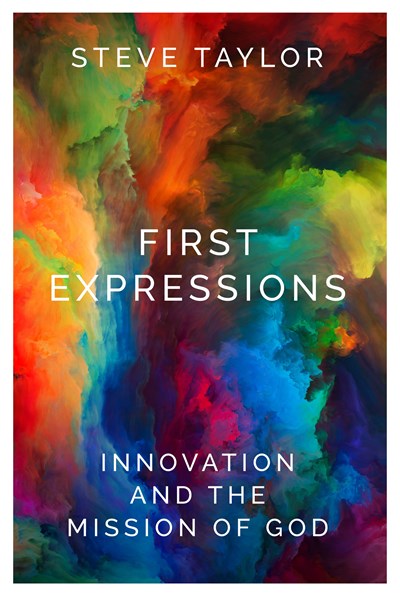
 Richard Peace, conversion in the New Testament
: intermediate community programme
: family film night helping families find God at the movies
: spiritual resourcing through journalling and naming ceremonies
: third-age programme, offering financial, health, relational and spiritual resources
: grief work among children.
These are ideas dreamed up among our faith community, resourced by my preaching and leadership, largely due to conversion in the New Testament
A SECOND RESOURCE:
 James Kemp, gospel according to Dr Seuss


 )
)