Saturday, January 26, 2013
a (UK) sabbatical update 2
Well first, sadly, some more of team Taylor departed, leaving me alone in UK for next 4 weeks. The very isolating part of the UK sabbatical has begun.
This week I began trying to implement my book proposal and test if my method would work. In essence, I’m trying to think about the wisdom of experimentation by telling stories. Specifically, stories of churches doing things differently. The stories are congregational studies, and I am placing them in conversation, to see what themes emerge, what wisdom they can learn from each other. It’s an attempt to implement an approach to understanding church by Nicholas Healy, Church, World and the Christian Life: Practical-Prophetic Ecclesiology (Cambridge Studies in Christian Doctrine)
So we gain more insight about being the church on mission today by storytelling among communities who have lived it. The stories have to be ethnographic, based on people living with churches and surveying participants, not just interviews with a leader likely to spin and spruik. There is one major continuous story, my data on Cityside over 10 years, and ten other selected stories, from four countries.
So this week I was immersed in two concrete stories.
First, Matthew Guest’s study of one of the largest and most influential evangelical charismatic churches in the UK, St Michael le Belfrey, in York, in which is also nestled an emerging church called Visions. His book Evangelical Identity and Contemporary Culture: A Congregational Study in Innovation (Studies in Evangelical History and Thought)
Second, Tracy Robinson who wrote a Masters thesis, based on participant observation and interview methods to explore a Fresh Expression in Oxford. She concluded that the worship of this emerging church emphasised movement and change rather than rootedness and stability, which is better for some types of people than others.
So a week of note taking and writing up what learnings emerge as these two churches talk to each other, and to my main case study, Cityside Baptist over 10 years.
Plus a week of organising – pulling together trips in the week coming to Bristol on Sunday/Monday and a trip to Cambridge on Thursday/Friday to do research on UK experiments 10 years on.
Friday, January 25, 2013
a rural fresh expression: the Glebe at Luss
A highlight of staying with John and Olive Drane was a visit to Loch Lomond, specifically Luss. A small rural town, which has a rich history (1500 years of continuous Christian presence, being originally founded by Saint Kessog.) And a fascinating fresh expression. Here is the pilgrim cross that marks the start of the Glebe.

A glebe is a name for a piece of land owned historically by the church, used to fund the minister. In the case of Luss, the land was across a creek and inaccessible, being washed away in a storm in 1993. Soldiers from the Royal Engineers were persuaded to rebuild it and it is becoming a place of pilgrimage. Here is an introduction from the minister, Dane Sherrard
There is also a social justice dimension. The church has linked with young people from the cities of Scotland, who come to work on the Glebe, take part in leadership training and outdoor recreation. Local business have become involved, with finance and materials.
There is also a public-prophetic theology, given that with more and more land around Loch Lomond being used for exclusive resort accommodation, this is also about providing public space for public recreation.
The minister, Dane Sherrard, moved to Luss in 1998. Now this is some years before all the talk about pioneering, fresh expressions and network churches. Dane is certainly not young or hip looking. But he knows the internet. He’s got an online internet presence, his own LussTV youtube channel. And here is him using the internet to discuss the Presbytery Strategic Plan!
Have a listen. It’s very good missiology – strategic thinking, networks, community partnership, pilgrimage, hospitality, missio Dei. Which left me reassured, that fresh expressions and pioneering are not only for the young nor the urban. Go Dane. Go rural communities.
Wednesday, January 23, 2013
Faith in the midst of violence: the La Faruk Madonna
In a side room at Kelvingrove Art Gallery and Museum, Glasgow, is placed the La Faruk Madonna. At first glance, it looks your standard religious fare, three paintings, an angel either side of a Madonna.
But the story behind the paintings is extraordinary, for they are painted on old flour bags in the middle of World War 2. The artist, Giuseppe Baldan, was by a prisoner of war. Hence the backdrop behind the angels and the Madonna is a prisoner of war camp, including the prison fence, the Sudanese desert, a washing line and the huts that held prisoners.
The story is that Italian prisoners of war, captured by the British in North Africa, sought permission in the camp to build a chapel. A chapel needs decoration and so the La Faruk Madonna was painted, an aid for prayer, a source of hope.
As the war ended, the paintings were saved from the camp and were given to the British commander for safe keeping. It was a mark of respect for the humane way he had treated the prisoners and honoured the art.
It is both comforting and disturbing. Comforting in the creativity of humans, even in bleak times. Disturbing in that here were British and Italians worshipping the same God, yet finding ways to kill each other. What did the British think as they saw the angels being painted and as they watched the prisoners turn up for worship week by week, as they heard the prayers to “Forgive us our sins, as we forgive those who sin against us.”
Friday, January 18, 2013
a (UK) sabbatical update
Well first, importantly, it snowed. Very important experience for a UK sabbatical.
I’ve been back at work writing for a week. It’s been productive, with a 5,200 word book proposal now with an editorial board. That feels a significant milestone, and has involved 3 significant re-edits over the last few months, while I try to work out exactly what I wanted to say. Now the nervous wait begins, but in the meantime, there is clarity on each chapter, a clear plan for the way ahead, which will greatly focus the writing over the coming weeks. Time to stop analysing data and produce some conclusions!
I’ve continued to read: a refresh on recent trends in practical theology plus working my way through congregational studies. The highlight has been discovering Nicholas Healy, Church, World and the Christian Life: Practical-Prophetic Ecclesiology (Cambridge Studies in Christian Doctrine)
This week I’ve also begun to organise the research phase of the sabbatical, trying to set up around 20 interviews around England, Wales and Scotland. The research is in two parts. First, wearing my Principal hat, is talking with a some theological colleges about how they are training leaders in mission, what they are learning, how they are resourcing their staff for that challenge. Second, is to seek to interview again the alt.worship groups I interviewed back in 2001 in the UK. My hope is to reflect with them on their mission learnings, to glean from fragile edges.
Now we’re off to Glasgow for the weekend – snow willing! – to catch up with John and Olive Drane. Which will be great.
Thursday, January 17, 2013
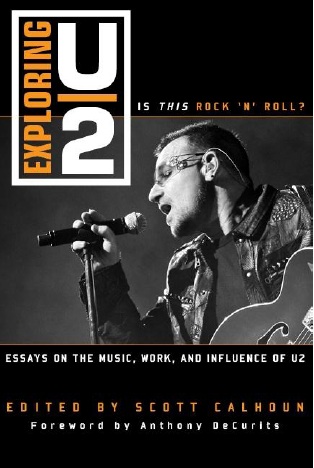
Let me in the sound – not! U2 conference paper proposal
I was informed (graciously) today that my U2 conference paper (April 2013) proposal was not accepted. No explanation as to why. For the record (pun intended), here was my proposal (it makes the title even more poignant!).
Update: An invitation, on 6 March 2013. Due to a late withdrawal, might I be interested, despite the late notice, in presenting my paper! Let me in the sound is, after all, a live performance option.
The paper emerged from this moment of listening pleasure, which was deemed “perceptive” by well known U2 scholar, Beth Maynard. In terms of theorising, I consider their would be some real insight to read U2 against the work of Martin Stringer, UK social anthropologist, who has a body of research applying sociology to live liturgy.
Let me in the sound: the role of one liners in the live concert experience of U2
This paper will analyse the use of one-liners in U2’s live concert performance. It will explore the differences between U2‘s known songs from their studio albums and live performances (as recorded in the limited U22 CD that resulted from their most recent 360 degree tour). The paper will catalogue the one-liners and outline how they serve as a significant dimension of the live concert experience.
Three dimensions of these one-liners will be explored. First, how they particularise, offering a unique concert experience. Second, how they reframe, providing a different hermeneutical lens by which a song might be interpreted. Third, how they humanise, enhancing the connection between the band and the feelings of concert-goers.
An example is illustrative. During the live performance on U22 of “Until The End Of The World,” the following one-liner is employed: “Where’s Frank? 13 years ago, this very evening, we said goodbye to Frank Sinatra.”
This one-liner served to particularise, marking this concert (live from Mexico) as occurring on an anniversary of significance. It served to reframe, linking the song with a legend in rock music. It served to humanise, crafting a respectful memory with regard to those who have gone before.
This analysis will be placed alongside recent liturgical writing, in particular the work of Martin Stringer, On the Perception of Worship
and his argument that with regard to ritual, it is in the irregularities that significance is generated.
Wednesday, January 16, 2013
creative resource: British Library Illuminated Manuscripts now online
The British Library has just put online their illuminated manuscripts, both images and information. Since the Library holds one the richest collections of medieval and renaissance manuscripts in the world, this is a rich resource.
Since I’m currently working on the Emmaus Road, a search produced 8 images. Here is one from a Psalter, England, Central (Oxford); 1st quarter of the 13th century, before 1220. (I love how the legs are disappearing up, a reference perhaps to Ascension. Also love the fish on the table, a creative addition to the normal bread/eucharistic references).

This is one of 56 images in the Psalter. Imagine a Bible with 56 coloured images, hand crafted. Such a contrast to the text only versions that currently dominate the market! That surely says something about creativity and value and provides food for current Bible reading practices. (For more of my reflections on this theme, see faith shaped by art not words)
By contrast, here is one from Bruges, Belgium, in the 1400s, where we were a few weeks ago.

Of even more interest/usefulness is their public domain copyright policy –
The Catalogue of Illuminated Manuscripts content is now available for download and reuse. Although still technically in copyright in the UK (and a number of other common law territories) the images are being made available under a Public Domain Mark* which indicates that there are no copyright restrictions on reproduction, adaptation, republication or sharing of the content available from the site.
Monday, January 14, 2013
A prayer for writers (for me)
Having returned from holiday over this weekend, my main task for the next 12 weeks is to write. (I have some research to do, but that takes second place behind my hope of completing a book – on sustainability in emerging and fresh expressions.) I face the 12 weeks with mixed feelings. It’s been 7 years since my first book
Writing is such an individual experience. It feels so egotistical, this individual pursuit to be heard. Why might my words be worthy of being read? Why, in a world of so many books, should I pollute with yet more information?
There are a whole lot of academic pressures at work – to publish, to get the right press, to be recognised. Again, a complex set of emotions and motives to sift.
So this morning I found some phrases from Philippians 1:9 helpful.
“And this is my prayer:”
“love” – and so to write out of love for God, church, people and world
“knowledge” – and so to write respectful of the tradition, of those who’ve gone before and my contemporary colleagues in scholarship, all the while conscious of the intuitions and feelings that are learnings within myself
“depth of insight” – to write something that might, through God’s mercy, shine some light on the yet simply complex and complexly simple task of being a disciple in this contemporary world.
And so, to writing I will go …
Saturday, January 12, 2013
Art and creativity as acts in community
Walking art galleries. Something I’ve done a lot of in recent days. There is a pattern. Payment. Coat removal. The signs – no flash, no backpacks. The rooms patrolled. Pictures framed. Ropes to divide, cameras to watch.
But it turns out such an approach to art is cultural. At least according to A History of the World in 100 Objects
Of the 100 objects that are the focus of the book, number 39 is a painting from China. Called the Admonitions Scroll, dated around AD 400, it introduces a very, very different way of understanding art appreciation.
“each imperial ruler has left their mark on (the art piece), in the form of a stamp carefully placed in the blank spaces around the paintings … Some of the previous owners have also added their own comments to the scroll. This brings a kind of pleasure you can never find looking at European painting: the sense that you are now joining a community of discerning art lovers who have cherished this painting over centuries.” (A History of the World in 100 Objects
So this is another approach to art. You make it with interactive borders, a white space for viewers to engage. In doing so, you allow, expect even, participation. All very different from the wonderful solo artist who produces solo art works. Instead we have a work for community.
Which sounds like an early form of blogging to me, that deliberate attempt, at least for those who allow comments (!) to encourage participation, to expect work to be modified and affirmed.
There is one caveat. In the case of Object 39, the participating community is elitist, in this case the emperors. In contrast, any can blog and any can comment.
Still, the challenge remains. Who is art and creativity for?
(This links with the work of Thomas Struth – which I’ve blogged about here) and his exploration of how people engage galleries and museums, and how museums and galleries actually control people.)
Friday, January 11, 2013
Middle-aged Cathedrals as cultural mirrors
In order to help me process Europe, and its accompanying museums, galleries and cathedrals, I’ve been reading A History of the World in 100 Objects
Object number 20 was the statue of Ramesses II. I read it the day we visited the Cathedral at Cologne. Described as an Everest among cathedrals, it is one of the largest in the world in floor area. I must confess to having a rather allergic reaction to cathedrals. I struggle with the fusion with military conquest, with the way God is imaged as remote, so inaccessible in the height of roof and distant altar.
So what does this have to do with the Statue of Ramses II?
This serenely smiling sculpture is not the creation of an individual artist, but the achievement of a whole society – the result of a huge, complex process of engineering and logistics – in many ways much closer to building a motorway than making a work of art.
So a cathedral is much more than a reflection of God and church. It’s also about society. How a town can show off their organisation and culture, their ability to plan, resource, be a team.
It’s also a way for artists to participate. I mean, there were no galleries back then. So you can have your work locked up in kings collections. Or brought by wealthy benefactors. All remove your work from the public. Or participate in cathedrals, thus engaging the public.
In other words, I need to understand cathedrals within their cultural context. And to appreciate how they flow within a society, in community rather than through an individual “God and me” lens. They are mirrors not just off the church, but of the whole of society.
Wednesday, January 09, 2013
the year that was – 2012
It’s always interesting to look back over the blog as one way of reflecting on the 2012 year past. The most interesting thing for me is the decline in blogging that began in July, coinciding with becoming Principal. I was posting 25 times a month prior and 19 times a month after. Given that I blog as a way of reflecting aloud, it is an interesting development.
So, posts from 2012 that I like, that give some sense of the year gone
- the sacramentalism of house renovations
- we lift up our livers
- ordination as mission
- Pentecost practice of small growth
- nature’s baptism
- still blogging 10 years on
- I had a dream
- this is the house the team built
- a faith shaped by art not by words
- the end of greed: be kind to animals
- colours of formation
- Getting on with mission: are you broad enough?
- at work for mission
So there you are. Fascinating to look back and see the blessing as I pay attention to the natural world, the importance of creativity, the priority of mission and the ongoing opportunities to write.
The writing has been the most interesting, with a frontpage article here, this artists floor talk being requested for an international publication, along with the usual more academic book chapters (this published, this accepted for publication) and monthly film reviews.
Wednesday, January 02, 2013
A New Years spirituality – Amsterdam Festival of Lights
The Amstersdam Festival of Lights has been an unexpected treat. For those travelling from a Southern Hemisphere, having darkness fall from 4 pm onwards takes some adjustment. The up side is the chance to play with light.
For the last few years, Amsterdam has maximised this climatic advantage with a Festival of Lights, inviting artists to mount installations in key locations.
Ovo is one installation. In the shape of an egg, it thus suggests new birth. With over 700 lights, each individually able to respond to changes in light, temperature and fog, it proves itself flexible and adaptable. New birth is not a one size fits all, but a uniquely beautiful response to changing environments.
Seeing it today, on the first day of a new year, it became a prayer, for new life in a new year, for beauty that responds to the uniqueness of my changing environment, our changing world.
A time lapse video of the making is here, with the Ovo in full colour, from about 2.11 on.
Amsterdam Light festival: the making of timelapse from Amsterdam Light Festival on Vimeo.
Monday, December 31, 2012
The Last Supper at work for mission -Gustave Van De Woestijne’s
Gustave Van De Woestijne is a Flemish Expressionist painter of the early 20th century. His work includes The Last Supper and it is huge.
Huge.
It hangs almost floor to ceiling in the Groeninge Museum, Brugge, Belgium. (Image is on flicker here)
In the Catholic context of Belgium, surrounded by the religiosity of previous centuries, it is a stunningly unreligious piece of work. One simple full loaf of bread sits on the table. There is no cup, grapes or any other food on the table. Around the table are clustered 12 disciples, portrayed as workers, Flemish miners or farm hands.
Which leaves the size. Why paint what is one of the largest paintings in the Museum? Why make something so ordinary so large?
Either a sign of no faith? A critique of the ceremony and wafer thin spirituality of the religion he has experienced? It certainly has the checkerboard floor often used in religious art.
Or full of faith? A reminder of the very large place for God in the ordinary, in simple bread, shared among workers hands? If so, it has echoes of the worker priest movement, such an intriguing mission development in France, among Catholics, in the 1940s. Priests asked to be freed from parish duties in order to work, in factories, in order to try and reconnect with the working class. It is a fascinating, bold, and innovative approach to mission, that was closed down by the Pope within a few decades.
It is the type of fresh expression/emerging church I’d love to see, one that jumps out of middle class subcultures and across class boundaries, out from church and worship and among the 24/7 patterns of working life. A movement that could only be nourished by a Jesus breaking bread with workers around ordinary tables of life.
Saturday, December 29, 2012
Colouring a contemporary stations of the cross
Amid the ancient history of Saint Salvador Cathedral, Brugge, is a contemporary stations of the cross. Beautifully arranged in a side chapel, it is one, of very few signs, that this faith might be living.
A project by Dutch artist, Jac Bisschops, between 2008 and 2010, he aimed to communicate the essential message of each Station of the Cross. His aim is contemplation, a seeking for simplicity, harmony and clarity. The hubris of the cathedral was thus a thoroughly fitting backdrop.
A feature is the limited palette, five colours
- blue for infinity
- brown for transitory earth
- black for darkness
- white for purity
- gold for resurrection
Each base colour is used three times. Layering is used to provide a rich intensity of colour.
Another feature is the interplay of horizontal and vertical lines. In this sense, it has echoes of New Zealand artist, Colin McCahon and his stations of the cross (although McCahonh uses more of a two colour palette).
Together, simple palette, straight lines, rich layers, it actually works. I find myself slowing, pausing. In the concentrating, I find an inviting clarity, a simplicity that reminds me of life’s essence, the reality of Easter. (For those interested, a YouTube video, which includes every piece is here.)
Friday, December 28, 2012
Multi- sensory storytelling
“Passionate people wanted to produce something new”
I went today to the recently opened Historium in Bruges. A wonderfully creative way to access history, that has some challenges for Christian communication and shows the enormous potential of storytelling.
It began with a question, what was it like in the Middle Ages?
The question was answered by multisensory storytelling. They took a red robe, a green parrot and the girl model from a van Eyk painting, Madonna with Canon, to create a narrative, told in audio and through video screens cunning placed around a set, spread over 7 rooms). Each set involved senses, simulating fog, snow, local produce. Animation was used, both to ensure historical accuracy, in the backdrops, costumes, hats, jewellery, but also to enhance the storytelling. The 7 sets/rooms allowed a focus on a wide range of life, customs to guilds, public baths to harbour, created from miniatures and art of the time. The goal is an emotional insight. In other words, not just information. But neither just entertainment. But a use of senses to help people make a connection, and thus to bring the past into the present.
After the experience comes the information, a room full of displays to browse. Imagine if church history or Biblical studies were taught in this way!
It is important to note also the place of collaboration – film makers, musicians, historians, business people all working in partnership.
I’m hoping (numbers willing) to teach a course in 2013 (starting April) on the place, potential and possibility of senses in mission and ministry, working with a local artist and local storyteller. What I saw today may well become a contemporary case study.
For a video of the making –
Historium: The Making Of from Historium Brugge on Vimeo.


 )
)