Friday, September 03, 2010
a “surface” book: hipster Christianity
I don’t like doing book reviews. It takes time to read a book, sit with a book, contemplate a book. So books I get sent to review tend to find their way to my pile of good intentions.
But I’ve just got my copy of Hipster Christianity. When Church and Cool collide by Brett McCracken and it demands a different approach.
Here is a whole book dedicated to people’s outward appearances. It visits a few churches and counts the goatees and the screeens. So in honour of a book glossing over people’s surfaces, I’ll give this book a quick surface read and review.
Here is a book that judges people, and churches, based on their outward appearances! If they look hip, then they might have sold out to culture! Really. What is culture? Oh, it’s the surface appearance, what people wear and look like. Really. I couldn’t find a single reference to any meaningful cultural theorist. Sigh! Check again through the bibliography. No, hardly a writer from outside the surface of US Christianity.
As I leafed it, the Bible story that came to mind was Samuel’s anointing of David and that gorgeous refrain “People look at the outward appearance, but the LORD looks at the heart.” This is a book that looks at the outward appearance.
I know I really should look more deeply at this book. But to do so would seem a betrayal of it’s essential method: that you judge a person and a church by their cover.
Thursday, August 26, 2010
the ethics of living At home
My recent thinking about hospitality and mission, food and faith has also been finding itself shaped by Bill Bryson’s At Home: A Short History of Private Life

“Houses aren’t refuges from history. They are where history ends up.”
Which links so superbly with hospitality as mission and the banquet meals in Luke 14. Faith becomes domestic. Christianity sits at table. It’s just profoundly challenging, yet profoundly empowering to realise that how we live, what we eat and who we eat with is Kingdom living, a world loving way of being. Or in the words of says Silvija Davidson, chair of Slow Food UK.
“The world food crisis is making people think differently about what’s on their plates,”
To be practical, like this sort of list from the slow food movement: (more…)
Saturday, August 07, 2010
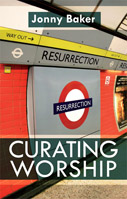
review of jonny baker’s book curating worship

Curating Worship
Curating worship is a term used to frame an approach to worship that is neither liturgical presiding nor fronting a band. Rather it is the skills of framing other people’s elements. It’s a ethos of participation:
“In many church circles the only gifts that are valued for worship are musical ones or the ability to speak well. This attitude needs shattering, and opening up so that poets, photographers, ideas people, geeks, theologians, liturgists, designers, writers, cooks, politicians, architects, movie-makers, storytellers, parents, campaigners, children, bloggers, DJs, VJs, craft-makers, or just about anybody who comes and is willing to bounce ideas around, can get involved.” (12)
Or in the words of the Uniting Church, Basis of Union, “the one Spirit has endowed the members of Christ’s Church with a diversity of gifts, and that there is no gift without its corresponding service.” Or in a Baptistic understanding, the priesthood of all believers. So curating worship is an approach by which the priesthood of all believers, with their diverse gifts, can find corresponding service in public worship.
What Jonny wants to do is write a book because “creative processes can seem mysterious and unattainable, even intimidating. The hope is that lifting the lid off the process and thinking might help demystify curating worship, and encourage people: ‘You can do it!’ (7)
He does this through what he calls 12 interviews with people involved in curating worship experiences around the world. While Jonny calls them interviews, I actually think they are conversations in which Jonny engages in lengthy to and fro. Because they are companions and friends, because relationships are established, Jonny can push and probe, asking some tough questions:
- Does it matter if emerging churches remain small?
- Arn’t some communities actually leading as artists and not curators?
- What are the theological implications when alt.worship communities close?
- What is the place of intellectualism?
Which makes this one of the most honest books I’ve seen from inside the emerging/alt.worship conversation. It also means a book in which the medium is the message – a book on curating in which the main author actually curates, shining the light on others. The range is rich – from public exhibition artists to pastors, from New Zealand through Australia to USA and UK, from those at the centre of churches to those off the edges, from lay to ordained.
The book has another heartwarming upside and that is the way it locates itself in a dialogue not with the church, but with the creative world, particularly the notion of curating as it has been researched in art and museum studies. What this means is a book that does not have to gain momentum by scoring points against other practices and practitioners in worship, which makes for a generous and creative read.
Curating Worship is an excellent read that marks a moment of maturity in the emerging/alt worship movement. First in articulating a clear and unique theology of worship. Second in conducting a critical conversation. Third in genuinely modelling a collective approach to authoring.
PS If you live in Adelaide and want to purchase a copy, I have a boxful of 20 books.
Tuesday, August 03, 2010
developing change leaders book review – Ch 7 Developmental approaches
I’m speaking to a group of church leaders on Thursday on the topic of mission as innovation, and again in a few weeks to another group on change, so it’s back to a book review of Paul Aitken and Malcolm Higgs Developing Change Leaders: The principles and practices of change leadership development
First, great (amazing really) to see an opening quote (from Dance of Leadership, The: The Call for Soul in 21st Century Leadership
Leadership is a dance, in which leaders and followers jointly respond to the rhythm and call of a particular social context, within which leaders draw from deep wells of collective experience and energy, to engage followers around transforming visions of change and lead them in the collective creation of compelling futures.
This suggests a focus away from leader-centric models of leadership, to the relational aspects of collective change leadership. Collins is cited, that great leaders have two essential dimensions – humilty and persistence.
Then comes a fascinating section (165-173) naming ways leaders can develop. Things like move to a foreign culture, shadow an arbitrator, become a volunteer.
This is followed by a number of case studies of leadership development within organisations. Let me take one, that of developing emerging leaders in the New Zealand public sector. This involved a development centre and a leadership program. The focus was based around a set of leadership competencies. The focus was an experiential learning through peer challenge, self-revelation and team learning in a safe environment.
Each person developed a portfolio, to document their learning over 9 months through the following stages.
- Stage 1 involved identifying prior leadership experience
- Stage 2 involved some input (a 1 week course) combined with personal goal setting around “lever” activity (self-awareness, learning as a leader, values and beliefs, interpersonal intelligence, communication skills, behaviour modeling)
- Stage 3 involved leading a strategic change project
I can’t help putting all this alongside the leadership training I experienced, which was mainly lectures on the importance of vision and how it worked in a large church.
I begin to reflect that some of the “lever” activities are to some extent embedded in some dimensions of ministerial training, but need to be made more explicit and clear. I see the challenge of the modernist mindset that equates teaching with content rather than learning. I see echoes between what we hope to do with our new Innovation stream in the new Bachelor of Ministry, especially Stage 1, the Introduction to Formation topic and Stage 3, the invitation into a practical project over the course of the training. I wonder what it would look like for a denomination to do this with their existing ministers and to think about the Missional Church Leadership course I offer, and did offer to ministers in New Zealand. What was the fruit and what changes could be made?
Monday, August 02, 2010
Joining in with God’s Spirit: a great missional resource
God’s mission is greater than any church, and it is in this wider movement of the Spirit that all the churches in the world participate. It is within the greater purposes of God that we find our unity. The missio Dei is not confined to any locality; it spills over, crosses boundaries and is carried across the world by the wind of the Spirit. It does not have a single origin or one direction but comes and goes as the Spirit wills. However, it is one movement because the Spirit witnesses to a unique person, Jesus Christ of Nazareth, crucified and raised, who reveals the Father in heaven, source of all things. We have yet to realize that the cosmic Christ is manifested in the unity of local churches in the mission of the Spirit. When we do, we will connect world church with local mission. We will be able to join with the Spirit who moves over the earth sustaining our world and our life – the Spirit of Jesus Christ, who is given to bring about good news in the whole creation.
Conclusion from Kirsteen Kim’s Joining in with the Spirit
Books like these are essential to the missional church conversation. They offer the Western missional church the gift of dislocation. When you read chapters that start with the insights from contemporary mission in Africa and Korea and India, you are offered a missiology that is so much richer than your own. You are reminded that the missional God is up to so much more than patching up a declining Western church. That mission is so much deeper, richer and wider than bringing back the young people!
So I used Kirsteen Kim’s quote as a devotional beginning at our Masters of Ministry class last Monday. Each of us were invited to sit with the quote and as we did, to identify the phrase that most spoke to us. After sharing, we then prayed for the person on our right. Then together we said the Lord’s Prayer. Just a few minutes, but a great way to place ourselves, each other and our ministries in the caring context of God’s globally local mission.
Wednesday, July 21, 2010
church for the (kiwi) man in the shed
My interests include the relationship between church and society, gospel and culture. What is the role of the church in the world? How does the world see the church?
I’m currently enjoying The man in the Shed, a collection of short stories by Kiwi writer, Lloyd Jones, published in 2009, a commercial follow-up to the success (Commonwealth Writers Prize and shortlist for Man Booker Prize) of Mister Pip
One story, Lost Cities, begins with Alice, who is painting her (rural Canterbury) town, building by building.
“And after the theatre, she plans an eating house and, next to it, a bar, and across the street a police station and gaol. And at the end of the street, a church of sharp cheekbones and high forehead. Within view of the church Alice adds the farmhouse.” (52)
A typical rural town, complete with to be expected church. The pages of the short story continue to turn.
Over time, Alice’s husband dies and her son, Mark grows. In time, Mark leaves for the bright lights (of Sydney). All the time, Alice continues to paint, the same picture, touched and re-touched, a visual reflection on her changing life in changing times. She paints and repaints. The tree grows, the buildings are modernised, threatres and restuarants are added, the city crowds are coloured in.
“Milling among the crowd over the ‘historic’ flagstone area are hotdog vendors, jugglers, pickpockets, thieves of all descriptions. There are yellow cabs, policemen on horseback, a flotilla carrying a beauty-pageant queen.” (59-60).
It’s a gorgeous sentence and a fascinating way to visualise change. The painting work as the still point, the canvas which captures change. So what will be the place of faith, the church, as times they are a changing?
“Over the church hovers Alice’s paintbrush. She hesitates to demolish it because the city will need a soup kitchen for the lives stranded short of the promised land.” (60).
It’s a fascinating glimpse, one perspective, on the future of faith in a culture of change. In the imagination of Kiwi author, Lloyd Jones, the future obviously needs a church. The reason is based on what Lloyd sees as the role of the church in contemporary society – to care for the broken and dispossessed. As it does that, it earns the right to remain in a contemporary painting, as it exists as a beacon of hope.
Yet such a place for the church, remains for Alice simply a painting. She might be grieving, she might be oh so creative. However, church remains for her an object painted for “them.” Never, for creative, middle-class, grieving Alice.
A fascinating way to paint the body of Christ into society today!
Saturday, July 03, 2010
God at feast, a further re-imagining of God and creativity
Following on from the image of God as musician, here’s one about God at feast – What does this quote say about God? What does it say about being human?
“All the senses are involved in a good feast. We taste, touch, smell, see, hear. Salvation as health is here vividly physical. Anything that heals and enhances savouring the world through our senses may feed into a salvation that culminates in feasting ….
As millions starve, ought anyone to be feasting? Ought there not to be a long detour of working to feed anyone, postponing the feasting till that has been achieved? Or should we keep alive the hope of food for all by working for justice, and, if we have food, simultaneously celebrating the goodness of God? Can we even sustain work of compassion and justice in the right spirit if we are not also having some celebratory foretaste of the Kingdom of God? …
That combination of sharing and celebrating is, perhaps, the most radical of all the implications of the teaching of practice of Jesus. Feeding the hungry is not a matter of the well-fed offering handouts and getting on with their private feasting: the vision is of everyone around the same table, face to face. Even to imagine sitting like that gently but inexorably exposes injustice, exploitation, sexism, hard-heartedness, and the multiple ways of rejecting the other …
To envisage the ultimate feasting is to imagine an endless overflow of communication between those who love and enjoy each other. It embraces body language, facial expressions, the ways we eat, drink, toast, dance and sing; and accompanying every course, encounter and artistic performance are conversations taken up into celebration.”
David Ford; in Theological Aesthetics: A Reader
Friday, July 02, 2010
God the musician compliments of 4th century poet Paulinus of Nola
Imaging God, imaging humans – What does the following quote say about God? What does it say about being human?
“Think of a man playing a harp, plucking strings producing different sounds by striking them with one quill … This is how God works … the Musician who controls that universal-sounding harmony … God is the Craftsman of all creation natural and contrived … Like a musician strumming the strings of the lyre with fluent quill, the Spirit proclaimed the same message in different tongues, instilling into men’s ears the varying sounds.”
From Paulinus of Nola, a Bishop around the 4th century, most famous not for his name, but for his poetry. (In Theological Aesthetics: A Reader
Wednesday, June 30, 2010
eyes wide open: a visual of out of bounds church
I was bored last night. I should have been marking, but I was looking begging for a distraction. I found it by plugging various bits of my writing into wordle. Very sad I know.
Now again tonight I should be marking. Again I’m looking begging for a distraction. So why not blog the result. Even sadder I know.
Here’s chapter 3 of my Out of Bounds Church?

And here’s my sermon, a chapter, in Proclaiming the Scandal of the Cross: Contemporary Images of the Atonement


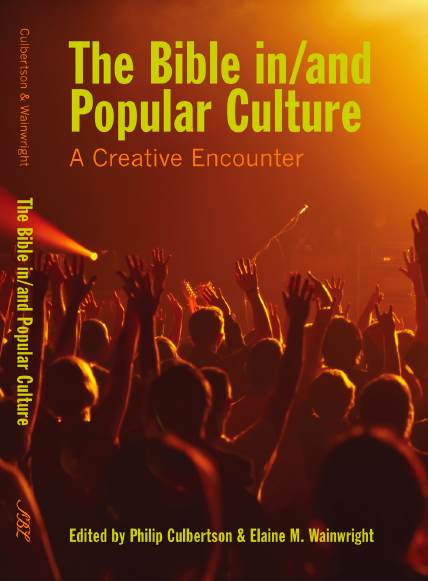
And here’s my chapter on Spirit with popular culture, in The Spirit of Truth: Reading Scripture and Constructing Theology With the Holy Spirit


I like Wordle. But now I have run out of distractions ….
Friday, June 25, 2010
fascinating resource for postmodern preaching: Blackwell Bible commentaries
In doing some research this week – indigenous responses to colonisation; how colonised people’s use the book of the coloniser (the Bible ) – I stumbled across a fascinating resource – the Blackwell Bible Commentaries.
To quote from the commentary on the book of Judges
In other words, while most commentaries focus on the Bible text, this commentary series explores how people have interpreted the Biblical text, from the church fathers through to current popular culture. It dips into literature, art, politics, comics, hymns and official church statements. It’s classically post-modern in focusing on reader-response, but it’s fascinating. It’s even got pictures! How cool is that in a Biblical commentary.
So in my research I am looking at the Samson story in Judges 14 and in particular how a Maori leader (Te Whiti O Rongomai of Parihaka) used that text to encourage non-violent resistance. Turning to Judges Through the Centuries
Which serves to underline how radical and innovative was the theological work of Te Whiti – some 100 years ahead of other Biblical interpreters of that text. There are commentaries on John


Thursday, June 24, 2010
developing change leaders book review – Ch 6 The evolution of a change leader
A book review of Paul Aitken and Malcolm Higgs, Developing Change Leaders: The principles and practices of change leadership development
Becoming an effective change leader takes time and requires change in the leader themselves. It begins with reflective practise. While authoritarian command type leaders are most appealing in a crisis (page 121), the most appropriate skills are those of questioning and reflection.
Research on change leaders show they hardly ever grow by formal development. Rather, they grow through things like watching leaders, affirmation of their own ability in the midst of conflict, first-hand experiences of the mis/use of power, leadership opportunities and facilitated reflection on their lived experience. This comes best through coaching. This should also include coaching others, due to the giving of compassion becoming a personal healing agency.
The book then summarises 10 dynamic capabilities for change leaders as follows:
1 – Develop decision making – specifically the ability to wait and see, keep an open mind and be comfortable with contradictions. Central to this is the ability to inquire, to accept that you are not the expert and that someone in your team may have a better insight.
2 – Access capability from across the team
3 – Become a co-creator of a learning culture
4 – Combine future-sensemaking with strategic thinking – digging deeper, reading widely, in a desire to appreciate the system and not just the events.
5 – Develop ‘total’ leadership – including authenticity, integrity and experimentation, at all levels of a person’s life
6 – Develop competency to work in diverse cultures
7 – Develop 1-1 coaching skills – eg micro-skills of building rapport, active listening, attention, sensitivity.
8 – Develop 1-many skills – eg micro-skills of dialogue, facilitation, process consulting, because leadership is about responding to real lived relationships.
9 – Emotional intelligence including self-awareness, emotional resilience, sensitivity, influence, intuition and conscientiousness.
10- Dialogue on performance.
The next 2 chapters set out to explore how to develop these capabilities. In the meantime, take some time to reflect on a change leader you admire. In what ways were these capacities in evidence?
Tuesday, June 15, 2010
developing change leaders book review – Ch 5 Building a Change Leadership Culture
A book review of Paul Aitken and Malcolm Higgs, Developing Change Leaders: The principles and practices of change leadership development
“we need to depersonalise and decentre the leadership concept, so that we begin to perceive leadership as a co-operative or collective enterprise.” (93-93, quoting Bate, 1994, 242).
This is a crucial chapter, providing a framework by which to develop change leaders. This chapter explores the shift from “I” to “we”; from individual change managers to “leadership culture.” It calls for a “walk the talk” in which leaders make clear the links between what they do and their underlying values. “Whilst heroes can carry the day in times of crisis, building a sustainable culture of innovation, excellence and achievement requires a collective and distributed, as opposed to individualised and hierarchical, leadership mind-set and approach.” (103)
Research into “leadership culture” is rare, with a lack of clarity about how values of individual leaders translate into action. How to influence a culture? There are many options, including directing attention to priorities, reacting to crisis, creating formal statements, telling stories, symbolic acts, design of work facilities and processes, rewards and sanctions, methods of decision-making. But which to use and when? They suggest a mix of the following (112):
- role model the future, every day and in every way
- foster understanding of changed expectations and their purposes
- find and develop the ‘new way’ values, capabilities and behaviours
- reinforce future state with formal and informal culture signals
This includes some practical steps
- appreciate that change is complex. It must be embedded in behaviours and run across the organisation, not top-down
- make modelling a priority
- build in feedback loops (this is critical including “experimental, case study and real life observation of leadership” (114)
- build team by creating an open table in which to discuss the real values of the organisation
- creating a culture development plan
- identifying key behaviours that have the best chance of making a difference
- seeking out and developing change leaders and followers who represent your future
The more I read this book, the more impressed I am. The mix of research, concise summaries, diagrams and practical examples is appealing. The use of a strong values basis makes it much more likely to transfer to religious contexts. I suspect it will provide a fascinating way to discuss leadership development ie training of Christian ministers.
Saturday, May 29, 2010
Pentecost season book review: Holy Spirit. Contemporary and Classic Readings
For too long the Spirit in Christian thought has been stereotyped, ignored as the forgotten person of the Trinity, left to the Charismatics and Pentecostals. With the church celebrating Pentecost last week, it is surely a season for us all to be reading around the third person of the Trinity. A book like The Holy Spirit: Classic and Contemporary Readings
A feature of the readings is their genre – while some are theology texts, others are sermons, or songs, or art works, or descriptions of liturgy. As such it reminds us of how much theological work can be done by the church – in our Pentecost sermons, in the songs we sing about the Spirit, in the art we promote, in the words we say at communion and baptism.
Each reading has a helpful introduction by the editor, theologian Eugene Rogers. (I’ve noted before here and here his excellent After The Spirit: A Constructive Pneumatology From Resources Outside The Modern West
One gripe is the lack of readings from the contemporary Pentecostal or charismatic world. There is now quite enough material to have provided such a section. Is the absence yet another indication that the problem the church has with the Spirit is not just historic, but still contemporary?

Wednesday, May 26, 2010
developing change leaders book review – Ch 4 A Values Dialogue for Change Leaders
A book review of Paul Aitken and Malcolm Higgs, Developing Change Leaders: The principles and practices of change leadership development
The chapter starts by marshalling a wide range of evidence for the importance of values in change leadership. “The management focus for the first part of the twenty-first century will be the management of meaning through the demonstration of values in management behaviour.” (62) The authors urge that selection of change agents include values, as well as experience and competencies.
They suggest a diversity of values are at work and offer some categories (77-81) by which a leader can assess their organisation and how their individual values might mesh with that of their organisation. (Anyone like to locate their church, and their leadership training, in relation to the grid?)
- Clan. Family type organisation, (often seen in Japanese companies). Key word is collaboration. Values commitment, communication, development. Leader type = facilitator, mentor, team builder.
- Hierarchy. Key word is control. Values coordinator, monitor, organizer. Leader type = efficiency, timeliness, consistency.
- Market. Key word is compete. Values hard-driver, competitor, producer. Leader type = market-share, goal achievement, profitability.
- Adhocracy. Key word is create. Values innovation, transformation, agility. Leader type = entreprenuer, innovator, visionary.
And the implications for change leaders? “leaders have to learn to communicate purpose and direction with a whole culture made up of different personal values, concentrating on shaping informal organizational life (emphasis mine). We might call this ‘strategy by the coffee machine’, consisting of dialogue about what we are told we should be doing, what are leaders are actually doing and how we feel about joining them to make change happen.” (82) “Effective change leaders must continually check what their heart, head and hands communicate.” (83)


 )
)