Tuesday, May 18, 2010
Spirituality in contemporary Australian women’s fiction
Part of my current life task is to listen to Australia. In that context, an unexpected treasure is Rewriting God. Spirituality in contemporary Australian women’s fiction.
- God is a verb, rather than a noun. There is a focus on the active agency of love, healing and friendship rather than debates of gender.
- Scant attention is being paid to the solitary and distant place, like the desert, outback or the wilderness.
“Women find it possible to access the divine wherever they are, in their houses and gardens, in the company of friends and family, or in the act of creation … The way to God is through joy, creativity, and loving kindness: ‘salvation’ is communal not individual.” (278, 9)
- A recurring behaviour is a concern for other people. In this sense, the hermetic journey to the outback is seen as self-absorbed.
- Acceptance of self, of humanity, of frailness, is the first step towards God. This is in contrast to a negation of self. “[S]ervice to others is therefore rendered not as a penance but out of compassion and willingness to share onself and thus be enriched.” (279)
Love to hear feedback from the locals, about the claims of another local. In the meantime, I want to go back and re-read a younger Australian writer, Charlotte Wood, and her book The Submerged Cathedral
She builds a garden, creatively using Australian plants to transform the hollowed hull of the monastery. It’s ceaseless and heart-breakingly hard work. But in the process of contextualisation, of clearing Australian clay, she finds love, meaning and redemption.
Sunday, April 25, 2010
Job as poet: a “sensitive-in-suffering” and post-colonialist reading
There is a superb reflection on the Biblical book of Job, in Sacred Australia, Post-secular Considerations (2009). It comes from an Australian poet, Peter Boyle. Whether he is of faith is unclear. Irrespective it is a creative, absorbing engagement.
The first window is the note that Job is a poet, describing his inner world in the deep experience of suffering. We glimpse authenticity. Which, in relation to Job, if we are honest, none of us seek, given the experiences Job describes.
My links: Such a window saves Job from being exclusively religious or Christian, because the Bible is the gutsy narration of human experience.
The second window is the note that other poets have suffered and in their suffering, like Job, have accused God.
My links: Such a window saves Job from being exclusively religious or Christian, opening a dialogue between the Bible and the literature of any, and many, who name pain.
The third window considers that Job is wealthy, and asks the question as to where Job has gained his wealth from. Could it be that his wealth has come as the expense of others? If so, Job becomes like so many Westerners, well to do in a world in which others suffer. At which Peter Boyle offers one of his poems in which he offers a way forward.
- Be silent in the face of suffering, willing to let the oppressed speak until they also are silent.
- Give back what we have taken.
What a treat – a reading of the Bible which accesses themes of how to live in a suffering world.
Wednesday, April 21, 2010
developing change leaders book review – Ch 3 What does it take to lead?
A book review of Paul Aitken and Malcolm Higgs, Developing Change Leaders: The principles and practices of change leadership development
Chapter three explores what is required to lead change effectively.
One helpful insight is the fact that they need to be able to operate both on the church and in the church, to both performing public skills (ensuring existing functions like preaching, pastoring and organisation) and backstaging (engaging support, working with resistance, influencing the future).
Key phrases keep appearing – “deal with ambiguity” (44), “deal with ambiguity, paradoxes and dilemnas” (45), “facilitative and engaging practices” (55)
The danger lights, especially in regard to some existing church change process, are there if we want to pay attention:
“Might not the continual search for the hero-leader be a critical factor in itself, diverting attention away from building institutions that by their very nature, continually adapt and reinvent themselves, with leadership coming from many people and many places and not just from the top. (45 citing Senge 2002, 64)
When, oh when will the church get over the search for the one dynamic, command/control type leader. When will it realise that their is no magic bullet, that leaders need “not follow a set or common approach to the overall change implementation process.” (49) Instead: “It is only by learning new things about ourselves, our relationships with others and discovering new ways of seeing reality that we can start to implement new [business] practices” (49)
Research of 84 leaders shows “that effective change leadership requires the leaders to have a high level of Emotional Intelligence.” (50)
Over 100 change leadership stories (when, on when might the church collect 100 change stories and use them as one of the data sets for reflecting on leadership. Could we be part of this with the Master of Ministry), showed three broad groups of behaviour, and a subset of behaviours:
- Shaping behaviour – lead by example, expect hard work and enthusiasm, personally persuasive, expecting accountability.
- Framing change – working with others to create vision and direction, explaining, educating and communicating on need for change, giving freedom for innovation within broad frameworks, changing how things get done as well as what gets done
- Creating capacity – developing the skills of others in implementing change, offer feedback and coaching, working across the organisation at all levels, ensure adaptation of reproducible systems.
The change stories indicate that while directive type leaders focus on the first, shaping behavior, this actually negatively reduces the likelihood of change. Yep reduces! By contrast, it is the last two – framing change and creating capacity – that bring long term change.
This data was reduced to four core change leadership principles:
- attractor – creates energy for change by connecting with others emotionally to embody the future, creates compelling story, weaves it to make sense of the life of the organisation, seeks good of the organisation above their own, able to adapt their leadership
- edge and tension – amplifies disturbance by telling truth, is constant in tough times, challenges assumptions, stretches people, grows talented people
- creates a container – holds the tension around the change by managing expectations, faces conflict, encourages, creates safe space to take risks, seeks alignment of resources
- transforming space – creates movement by showing commitment, is vulnerable in a way that frees people to new possibilities, breaks existing patterns and challenges systems.
I’ve just spent 3 days and over 20 hours with 15 students. The topic was change and the leadership question sat with me all week. How to develop these people? How to best use the time? Was this the best use of my time? Should instead have been researching change stories? offering ongoing and longterm coaching with a few leaders?
The next chapters might answer these question, as they will turn to explore how to develop change leaders.
Saturday, April 17, 2010
developing change leaders book review of chapter 2
A book review of Paul Aitken and Malcolm Higgs, Developing Change Leaders: The principles and practices of change leadership development
Chapter 2 The Challenge of change
This chapter explores the challenge of change. It provides a helpful diagram, linking change to what looks like a grief cycle – shock, anger, resistance, acceptance, hope. As with grief, people need time.
This includes noting the potential of resistance:
“Whilst resistance is generally perceived as being a negative within a change process, it is important to consider that resistance can be an indicator that change is having an impact. Furthermore, it surfaces the key issues and concerns which need to be addressed in order to ensure the effective implementation in the long run. Finally, resistance can play a positive role in surfacing challenge and insights which can prove beneficial in achieving the change goals or indeed discovering more appropriate ones.” (31)
Of course, to respond to resistance in this way, and be able to surface such positive possibilities for a change process requires a fairly unique skillset, far removed from “Well, this is what we have decided.”
It also depends on the approach to change, of which 5 are noted:
- Directive: the leader’s right to impose change, which has the disadvantage of breeding strong resentment
- Expert: generally applied to more technical problems, in which a specialist team leads
- Negotiating: accepts that those involved in the change have the right to a say in how the changes are made. It takes longer, but equally is more likely to last longer
- Educative: changing people’s hearts and minds. Again, takes longer but is more likely to last
- Participative: while driven by leaders, all views are considered as change occurs. Again, takes longer but has far greater by in.
They note the shift from linear and programmatic notions, to emergent notions of change, characterised by the appreciation of the entire system, the acceptance that change can start anywhere (and the larger the system, the more likely that large changes begin at the edge), leaders as facilitators instead of drivers of change.
They then analyse over 100 change stories to conclude that change was successful when:
- it was understood as complex
- processes were used that genuinely involve people
- change leaders have the skills to involve people.
Saturday, April 10, 2010
women and the emerging church. a bibliography
For a number of months I’ve been meaning to compile a list of missional and emerging church writers who are female. I’ve been prompted by a colleague who is doing a post-graduate project on women and the missional church, plus a glance over my Missional Church Leadership bibliography and the realisation that it is still overwhelmingly male. Plus stumbling across this podcast, which is me interviewing Jenny McIntosh back in 2006, on the topic of gender and the emerging church conversation.
Which prompted a brief literature search. My criteria included being recently published and with a focus on mission/evangelism/leadership. Here is the list. Who am I missing? (more…)
Friday, April 09, 2010
developing change leaders: book review of chapter 1
While nearly 2000 books were recently written on leadership in an 18 month period, very few address the question:
How do we develop effective change leaders?
Such is the task attempted by business lecturers, Paul Aitken and Malcolm Higgs in their Developing Change Leaders: The principles and practices of change leadership development
(Given that church’s and church leaders are meant to be into life change, I began to flick through the book. The more I browsed, the more intrigued I was, both by the clarity of the material, and by the extensive reading and practical case studies the author’s draw on. Thinking this might be a good resource, I opened my wallet.)
Aitken and Higgs use a key image, that of “sense-making” to argue that the challenge is not to find some yet to be discovered new golden bullet. Rather the challenge is to make sense of what we know. In chapter one, this focuses on the impact of organisational culture on leadership.
“In broad terms, our framing of effective leadership has shifted notably from the ‘Heroic’, leader-centric viewpoint to a more ‘Engaging’ one which focuses on working with followers to address the leadership of organizational challenges … In today’s complex environment, an approach to leadership which is more ‘Engaging’ appears to offer some useful pointers to more sustainable success.” (13-14, 20).
They suggest leadership is a triangle, made up of thinking, doing and being.
- thinking is about a range of intelligences – evaluating, decision-making, planning.
- doing is about the skills and competencies to envision, engage, enable, inquire, develop.
- being is about authenticity, integrity, will, self-belief and self-awareness.
They then suggest the same triangle for the organisation, in which
- thinking is in fact strategy
- doing is policies and practices
- being is culture, the social glue and the way things are done around here
This introduces the challenges of effective change. Research shows very clear links between an organisations culture and it’s performance. Other research shows that leaders have a strong impact on an organisation’s culture. This sets up chapter 2, which describes the challenges involved in implementing change.
Thursday, April 08, 2010
the spirit today: a theology with popular culture
“a work of outstanding scholarship”
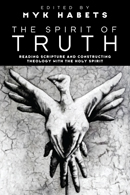
That’s the blurb for a book just out, The Spirit of Truth: Reading Scripture and Constructing Theology with the Holy Spirit, in which I have a chapter.

The book began as a conference, back in 2008, which gathered around what is one of the most interesting and growing fields in theology at the moment, that of the study of the Spirit. My chapter sought to provide a theological method by which one might read popular culture. I argue, drawing on Luke 10 and art in relation to the Transfiguration, that in the action of the Spirit in the New Testament, we see that God likes material things – wombs and water, bodies and bread – and this can be applied to help us understand a theology of popular culture and in a more naunced way than if we use an Incarnational approach.
The book has got some great endorsements:
“This ‘pneumatology from below’-not in the methodological but in the geographical sense: from New Zealand-extends the contemporary renaissance of the discussion on the doctrine of the Holy Spirit across the theological loci and disciplines. A veritable pneumatological contribution indeed by Myk Habets and his colleagues from Down Under.”
—Amos Yong, J. Rodman Williams Professor of Theology, Regent University
“There has been a resurgence of interest in the Holy Spirit in recent years and this wide-ranging book edited by Myk Habets, who is quickly becoming a major contributor to discussions of the Spirit in contemporary theology, offers reflections that are profoundly theological and sometimes provocatively challenging but always helpful in pushing theologians to think more precisely about the pneumatological dimensions of theology”
—Paul D. Molnar, Professor of Systematic Theology, St. John’s University, New York
“The theology of the Holy Spirit has undergone something of a renaissance in recent times: this collection reflects a valuable contribution to that cause. These are stimulating essays on a range of vital topics in biblical, dogmatic, and practical pneumatology-scripturally responsible, historically informed, and justly conscious of the potentially transformative significance of their theme for Christian existence in the world.”
—Ivor J. Davidson, Professor of Systematic & Historical Theology, University of St. Andrews
Tuesday, January 26, 2010
Australia Day 12 months on
Today is Australia day. A year ago, I participated in the Australia day synchroblog, an (excellent) initiative of Matt Stone. My personal contribution was a review of a book on Australian missiology: Credible Witness by Australian Darren Cronshaw (published by Urban Neighbours of Hope in 2006). Here’s what I wrote:
It’s an excellent missional resource. It takes Australian context seriously. It asks what the Spirit might have already been doing in that place. In the case of Credible Witness, it trawls Australian history and the place of chaplaincy, of shepherds, of advocates for the marginalised, of servants and of generous hosts. What I love is how it refuses to stay with history, but suggests contemporary expressions of these images.
At the time, I had NO idea, that in 12 months time, I’d be living in the great red land. But I did quote a prayer, by Michael Leunig, for myself and for Australia on Australia Day 2009, that in hindsight, looks quite remarkably prophetic:
God help us to change. To change ourselves and to change the world. To know the need of it. To deal with the pain of it. To feel the joy of it. To undertake the journey without understanding the destination. The art of gentle revolution. Amen.
To read the entire Australia Day 2009 post, go here.
Wednesday, January 20, 2010
book review: After the Church. Divine Encounter in a sexual age by Claire Henderson Davis
After the Church. Divine Encounter in a sexual age. Claire Henderson Davis, Canterbury Press: Norwich, 2007, is a fascinating book. I’d like to give it to people I met outside the church and say “Does this make sense? If so, lets have an ongoing conversation.” It’s short, at 77 pages. It is divided into 6 chapters, each of which has a theological title – Fall; Babel to Pentecost; Incarnation; The Trinity; The Body of Christ; With My Body I Thee Worship.
Each chapter does theology, well-written, interesting. It even quotes large chunks of Scripture, but in a fresh voice, that resonates with the 21st century. This is an attempt at faith that seeks to make sense of Christianity within the cultural frameworks of today. It’s what you would imagine Paul doing, Acts 17 style, if he was here today.
It weaves insights from pyschology with the author’s own life – growing up outside the church, and slowly making sense – through study and personal work – of a coherent Christian faith for herself. Consider the Parable of Samaritan.
“The duty of a Christian is not to seek out people in distress and prey on their needs, but to wait and prepare for that unexpected encounter with the other that reveals the shape of God by making our own limits clear, and, in so doing, offering a path towards greater wholeness.” (55, 56)
This is because the audience would identify not with the Samaritan, but with the beaten man. Thus the challenge is to be open to receive help from the “other”; the one who might well surprise and challenge us.
It is a superbly hopeful book. It invites us into relationships with the Christian church and with each other as humans: not as child to parent, nor as a bored and cynical teen, but as adults – as equals, who in process of encounter, find new forms emerging.
“The real alternative to advertising is not a dull and self-righteous moral rectitude that denies the pleasure and importance of the material world, but a form of storytelling that charts a real course between where we are now and the possibilities that exist for human fulfillment and transformation. This discipline requires that we attend closely to our present reality, and cultivate, in hope, an expectation of where it may lead.” (73)
Sunday, January 10, 2010
atheist delusions. part 3. so how might Christianity live in times of “new atheism”
Christianity offers values of compassion, truth, justice, beauty. It has a wise understanding of human nature, as capable of reflecting the divine and of cruelty.
The question is what world new atheism will offer. What values will it draw from, and how might these nurture a more just and humane society? Hart notes that ““memes” like “human rights” and “human dignity” may not indefinitely continue replicating themselves once the Christian “infinite value of every life” meme has died out.” (237) While we await, Christianity can, for Hart, set about the following.
1. Be accurate apart our history. “Christians ought not to surrender the past but should instead deepen their own collective memory of what the gospel has been in human history.” (17)
2. Make our whole concern the simplicity of love God, love neighbour.
3. Take hope from monasticism
“Even so, it may be the case that Christians who live amid the ruins of the old Christendom – perhaps dwelling on the far-flung frontiers of a Christian civilization taking shape in other lands – will have to learn to continue the mission of their ancient revolution in the desert, to which faith has often found its necessary, at various times, to retreat.” (241)
Saturday, January 09, 2010
atheist delusions. part 2. assessing Christian impact
Atheist Delusions: The Christian Revolution and Its Fashionable Enemies
Hart is not concerned to advocacy, (“there are numerous forms of Christian belief and practice for which I would be hard pressed to muster a kind word” (x)), merely for accuracy.
Myth: the intolerance of Christianity
- The Roman empire accepted a diversity of cults, but not a diversity of religions. “It was tolerant, that is to say, of what it found tolerable.” (118).
- Pagan cultures marked by disease, poverty, starvation, homelessness, gladiatorial spectacle, crucifixion, depravity and cruelty.
- Gnostics were “marginal, eccentric, and novel.” (135)
Why did Christianity spread across the empire and through social classes?
- Christianity welcomed both sexes and all classes. “This was, in many ways, the most radical novelty of their community: that it transcended and so, in an ultimate sense, annulled “natural” human divisions.” (158)
- Women found Christianity immensely attractive. Christianity forbade killing female babies and offered care to widows. It demanded loyalty from Christian husbands.
- Legal reforms instituted by Christian emperors included greater rights for women in divorce (Theodosius), for slaves (Justinian).
- Pagan critics were astonished at Christianity. “[O]ne finds nothing in pagan society remotely comparable in magnitude to the Christian willingness to provide continuously for persons in need, male and female, young and old, free and bound alike.” (163)
- Christian theology gave hope in a world of love, over against capricious fatalism. It gave human body dignity, a life here as well as eternal hope.
Part 1 the myths of new atheism here
Friday, January 08, 2010
atheist delusions. part 1. the myths of new atheism
Atheist Delusions: The Christian Revolution and Its Fashionable Enemies
The book is written given that for Hart: “new atheism” lacks historical insight and intellectual honesty, and comes as “attitudes masquerading as ideas, emotional commitments disguised as intellectual honesty.” (19)!!
Hart names, and then dissects, the myths of new atheism.
Myth: religion is violent
- But to be honest, the reality is that wars, bigotry and religious persecution are peculiar to humanity, not simply to monotheistic faiths.
- Christianity actually forbids violence. Should incorrect practice of a faith by it’s followers mean the faith is at fault.
- What evidence is there that secular, atheistic society would be less violent than religious societies, especially given the track record of social eugenics movement, including the Nazi movement as it’s offspring?
Myth: religion is baseless.
- Reality, for a “baseless” religion, Christianity has had an ENORMOUS impact on making world a more humane, charitable and compassionate place.
- Intellectual honesty demands that a religion be assessed on it’s actual particularities, rather than pushed into a category called ‘religion.’
- Just because the reasons for faith do not impress a skeptic does not make them irrational. “More to the point, it is bizarre for anyone to think he or she can judge the nature and credibility of another’s experiences from the outside.” (11)
Myth: that humanity has emerged from the dark ages (an age of faith) into a new age of enlightenment (an age of reason)
- Isn’t calling something the “Dark Ages” in fact an act of bigotry in it’s assumption that our times are more enlightened than other times (and other cultures?)
- In reality, the Middle Ages were marked by dynamism in many fields, like the plow, armor, horse shoe, waterwheels, wrought iron, practical inventions driven by developing scientific theory.
Myth: A golden age of Hellenistic science was killed by Christianity
- Copernicus was heir to an extended tradition of Christian scholarship.
- Science – its methods, controls and guiding principles – were birthed “within Christendom, and under the hands of believing Christians.” (63) due in large degree to the development known as the medieval Christian university.
- Galileo was supported by Archbishops and Cardinals, but refused to acknowledge that his model had flaws and was simply a hypothesis.
- Galileo appealed to Augustine and church fathers, who always saw the Bible as not providing scientific descriptions of reality.
Myth: cruelty of religious intolerance (Crusades, inquisitions, witch hunts) in Christendom
- In times of witch hunts, the church played a key role by introducing courts to channel mob hysteria.
- “[I]n lands where the authority of the church and its inquisitions were strong – especially during the high tide of witch-hunting – convictions were extremely rare.” (80) Eg. Only two convictions went to trial in Spain in all of 13th and 14th centuries.
- The fascination with witchcraft was part of a society freeing itself from authority of the church, and thus a manifestation (a fruit?) of the dawn of modernity.
- Spanish Inquisition was an office of the state, not the church. It was driven by King Ferdinand and Queen Isabella, who needed an instrument to enforce national unity. As such, the Inquisition serves an object lesson in “the inherence violence of the state.” (85).
- History shows us not a decline in church violence as the secular state gained power, but that “violence increased in proportion to the degree of sovereignty claimed by the state.” (86)
Myth: “wars of religion”
- Are in reality the first wars of the modern nation-state, with the role of establishing power of state over church.
- The crusades began as indignant response to the tales of brutality against Christian pilgrims.
- “They certainly had no basis in any Christian tradition of holy war. They [became] the last gaudy flourish of Western barbarian culture, embellished by the winsome ceremonies of chivalry.” (89)
- The wars of Christendom pale into insignificance when laid alongside the wars of the 20th century.
Part 2 here
Thursday, November 26, 2009
creativity in ministry book list
I spent today working on a first draft book list on the topic of creativity in ministry. It is for a course (a Spirit of wonder: imagining a church creatively immersed in culture) I am part of in Adelaide in March, along with Jonny Baker and Cheryl Lawrie. I suggested that the input, which knowing Jonny and Cheryl will be first-rate, if supported by a reading list and a post-graduate qualification (me!), could also be a Masters paper.

So today was spent looking through my book shelf, looking for books on creativity, ministry and mission. Here’s my first draft. I’d love to know what you, my blog readers, might add. (more…)
Wednesday, June 17, 2009
God in the silence: the lost history of Christianity part 2


1- Be honest:
“Historically, all major religions have produced multiple instances of intolerance and persecution, and the scriptures of Islam include considerably fewer calls to blood-curdling violence than do their Christian and Jewish counterparts: witness Joshua’s conquest of the land of Canaan, or the ethnic purges associated with Ezra and Nehemiah … At various times, some Muslim regimes have been inconceivably brutal, others mild and accommodating. That diversity suggests that episodes of persecution and violence derive not from anything inherent in the faith of Islam, but from circumstances in particular times and places.” (242)
2 – Be Strategic:
Churches are better positioned to survive tough times if they diversify, accepting that times are always transient and thus being willing to adapt, both politically, economically, sociologically, ethnically. “Churches also survive best when they diversify in global terms, so that they are not dependent on just one region of the world, however significant that region might appear at a given time.” (244). A look at history shows that “Too little adaptation means irrelevance; too much leads to assimilation and, often, disappearance.” (245).
3 – Take the long way home:
As we consider, for example, that Christianity has appeared in China four times over the last 2000 years, we should be weary of too quickly declaring something dead. In other words, “forever can be a risky term to apply to human affairs, and so can extinction.” (256).
4- Easter benchmarks:
Our criteria for influence are too easily secular, too easily tied to power and politics. In reality the Christian understanding of Easter offers a totally different paradigm by which we should view life: that of suffering and surprising life. “The more we study the catastrophes and endings that befell individual churches in particular eras, the better we appreciate the surprising new births that Christianity achieves in these very years, in odd and surprising contexts.” (261) Jenkins ends with a great quote from the title by a Charles Olson poem: the chain of memory is resurrection.
5 – Silence is simply our shame:
Jenkins is a historian and so he can’t resist waving a flag for his discipline and having a dig at our contemporary culture of amnesia. He notes that yes, silence can be due to nobody speaking. Yet silence can also be because nobody is bothering to listen. If Christians do believe God speaks through history, then why are we not better studiers of history? And make that all history, not just the successes, but the failures too? “Losing the ancient churches is one thing, but losing their memory and experience so utterly is a disaster scarely less damaging.” (262).
In that sense The Lost History of Christianity: The Thousand-Year Golden Age of the Church in the Middle East, Africa, and Asia–and How It Died
(This is a 2nd post. Part 1, including debunking of some myths about Christianity, is here)


 )
)