Monday, August 20, 2012
preludes and Practical Theology (or leadership as an orchestra)
Update: Tonight as the woodwind instruments played, the birds outside the chapel began to chirp. Nature’s harmonies in chime!
On Thursday I slipped into the back of a school concert, to listen to one of Team Taylor play oboe in the Senior Concert Band. Exhausted after a long day at work, including preparation for the Eyre Peninsula trip, it was exactly what I needed, a reminder of the power of music to invite, to soothe, to create space in which to be.
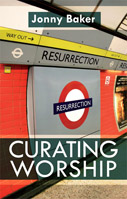
The previous weekend I’d been reading Jeanne Stevenson Moessner, Prelude to Practical Theology: Variations on Theory and Practice
Practical theology does not exist in isolation but in an orchestra filled with homileticians, religious educators, spiritual mentors, pastoral care and counseling specialists, liturgists, liberation theologians, missiologists, sociologists, and ethicists. (67)
Moessner notes the mutuality within a musical community and the non-hierarchical role of the conductor as a model for leadership. Here are the 7 principles of orchestration (55).
1. Remember that people, or music lovers, want to hear an orchestra, not an institution.
2. Look for the common solutions even in chaos, for chaos precedes the creative act.
3. Accept repetition as a normal occurrence in the music of ministry.
4. Lead by allowing others to take initiative,
5. Develop leaders (musicians) who are flexible, creative and also collegial.
6. Encourage a free exchange of ideas, or scores.
7. Understand that God is not necessarily efficient, but passionate.
Sitting listening to “Mekong” on Thursday, it all made sense – not logically, but intuitively, artistically, beautifully.
Wednesday, August 08, 2012
The gift of forgiveness
This week we begin a new course here at Uniting College. It’s called The gift of forgiveness. It was historically an ethics course but in the new Bachelor of Ministry, we’ve retooled it, wanting to give it a grounding in contemporary realities.
My sense, from pastoral ministry and intuitively from a missiological perspective, is that forgiveness is a topic that touches us in so many ways – individually, in our families, in our churches, among cultures, as we consider colonisation. So the course will be bringing these real life realities into conversation with Christian understandings of forgiveness and justice.
Today I was preparing, enjoying being back with Miroslav Volf and his thinking – Exclusion & Embrace: A Theological Exploration of Identity, Otherness, and Reconciliation

Alongside the books, here he is on video
Sunday, July 01, 2012
theology of divine supermodel by Gregory of Nyssa
IVP have released a new series, called Classics in Spiritual Formation. They are designed as introductions, for first time readers of the Church in history. They take the original languages (Greek and Latin) and seek to connect them with contemporary life. Last night I found myself reading Gregory of Nyssa: Sermons on the Beatitudes
Yet God made us “in the image of God.” So indirectly we, who are created in the likeness of true blessedness, experience blessedness. Let me give you an example of what I’m trying to say. Take, for instance, the physical beauty of a supermodel captured on the cover of a women’s magazine. The real beauty is the supermodel herself. Yet, secondarily, we can attribute that same beauty to the photographic image. Likewise human beings are images of the transcendent blessedness, and similarily as copies we may be said to possess the same beauty when we display the features of blessedness. (24-25)
This is a fascinating bit of writing, for it images God in feminine terms – as a supermodel. I’ve been doing a lot of reading and writing recently about gender and faith development (here, here, here, here and my summary here). So it’s fascinating to find this, God as a supermodel.
The sermon is by Gregory of Nyssa, a 4th century bishop and theologian. He is highly regarded in the church for insights into the theological debates about Jesus Christ, one of the great defenders of trinitarian Christianity.
So were their supermodels and photographic images in Gregory’s day? No, which suggests the image of is introduced in the paraphrase by Michael Glerup, his desire to connect with contemporary life. So I need to whip off and check the original, as to how Gregory of Nyssa was imaging the divine.
But whether Gregory of Nyssa or Michael Glerup, what do you think of the image? What are the implications for gender and faith development if God is a supermodel and followers are copies of photographic images?
Wednesday, June 06, 2012
Female atonement images: Hunger games film review
Each month I publish a film review, for Touchstone (the New Zealand Methodist magazine). Here is my most recent.
The Hunger Games
“The Hunger Games” is a deeply disturbing movie. The camera opens on a bleak future, a life of subsistent, subservience in slavery to a wealthy Empire. Annually, as some sort of depraved atonement ritual, 24 children are chosen by random ballot, to fight for life in a televised death match. Roman Gladiatorial style human-tertainment is repulsive enough applied to adults, but to conceive of it for children takes a particular chilling imagination.
The film is based on a teenage novel written by American television Suzanne Collins. The transition from page to screen suffers from the common problem, of how to express in a visual medium complex written internal monologue. The result is a beginning too long, followed by a middle too short, shorn of the internal dialogue that makes intriguing the heroine, Katniss Everdeen (Jennifer Lawrence). Some redemption is provided, in an ending twisted enough to ensure suspense despite the seemingly inevitable Hollywood style good girl wins.
Technically, the film gains four stars. Well directed by Gary Ross, the acting is tight, the musical score fitting, the scenes a dramatic contrast of high-tech beauty, subsistence squalor and bush-leaved prison.
Conceptually, the dimensions of reality TV ensure this sci-fi future feels uncomfortably close to home, while the giving of gifts by a watching TV audience evokes complex levels of participation in us, the watching film audience.
So what sort of role model is Katniss Everdeen? First, she is a woman. In a film industry dominated by the macho and male, it is pleasing to watch a quick-witted woman emerge a star. Second, Katniss embodies care and character, a willingness unto “death-do-us-part,” to seek another world of possibility.
So what sort of mirror is the film for a watching church? It should certainly provoke discussion around how to understand that central Christian symbol, the cross.
“The Hunger Games” is built on substitution, the willingness for some to die for the peace of all. On screen it beggars belief. What sort of society would sacrifice an innocent few for the sake of many? On screen we are faced with the moral repugnancy that is substitutionary atonement.
Is innocent death really the best, the only way, that God could conceive to deal with human rebellion? Thankfully, even the quickest flick through history is a reminder that substitution is only one of a number of understandings of the cross held through by the church. (Others include Anselm’s satisfaction, Gustaf Aulen’s Christ the Victor and Abelard’s moral theory of atonement).
Intriguingly, the actions of Katniss provide further ways to frame atonement. In a scene of tender drama, Katniss loving lays white flowers on the chest of Rue, one of her dying Hunger Games competitors. Unknown to Katniss, her care for another, an enemy made friend, sparks a riot among the watching. Love liberates, releases a repressed communal desire for freedom.
This surely is the possibility buried in Easter. Love liberates, questions the values, attitudes, paradigms that shape one’s world. In the willingness, even unto death, to live differently, we find another world of possibility.
(For other cinematic reflections on female atonement images, see Kathy in Never let me go and Sue Lor in Gran Torino.)
Rev Dr Steve Taylor is Director of Missiology, Uniting College, Adelaide. He writes widely in areas of mission and popular culture, including regularly at www.emergentkiwi.org.nz.
Tuesday, May 29, 2012
Does the Trinity and Rublevs Icon prioritise worship over mission?
 Does Rublev’s Icon encourage a church gathered in worship, rather than a church scattered in mission?
Such is my question as I prepare to speak on mission, including leading worship, amongst leaders of the Uniting churches of the South East on Saturday. It is the only speaking engagement I’m doing in the 3 months of sabbatical. I had said yes before the sabbatical option came up, so I felt it was a commitment I had to honour.
In preparation, I’m aware that the Sunday coming is Trinity Sunday. So the obvious place to go is to Trinity and mission. Here’s what I wrote in 2004.
At the heart of the Trinity is three persons – Father, Son and Spirit – in the giving of love. Love is shared between persons, in an unlimited, ever-spiraling flow of love. The church fathers used to call this perichoresis – the divine dance of love. It is a beautiful metaphor; fluid, whole-bodied, dynamic.
What makes this missional is that this dynamic, fluid, flowing love is shared with the world, in creation, in Christ, and in the activity of the Spirit. This flow of love refuses to remain self-centred.
When God breathes breath into humanity, created in the image of God, we see the relational love of the Trinity shared. Love is never self-indulgent. In Christ, the relational love of the Trinity is shared. The sharing is so radical, so complete, so life-giving, that one person of the Trinity will die for the Other. The affirmation that the Spirit is in our world reminds us that love is always calling us, always inviting us out of our circles, out of our understandings of community, out of our walls and set practices. In this sense the Trinity is missional,
Further, the Trinity offers us unity and diversity, one love shared between three distinct persons. This also guides our mission. The missional church will be an expression of the shared love of God. Equally the missional church will be locally distinctive, a unique, grounded expression of the God-head.
Thus talk about church and mission needs to be grounded in our understandings of God as Trinity. A “missional church” is not new, but a recovering of very ancient understandings, in which we live, we create, we emerge, as an outflow of the shared love of God. We seek to express fluid, whole-boided, dynamic love. We honour the unity with other expressions of church, we applaud diversity, we celebrate uniquely grounded differences.
I’m still happy with that, some 7 years on. But how to express such concepts – intellectual and theological in worship?
One option could be to invite them to draw in the beautiful sandy beaches around Robe, like here. Another could be to adapt the Rublevs Icon children’s talk, which I did with such positive feedback when I preached last year at Brighton Uniting on Trinity Sunday.
But it raises the question with which I began: Won’t contemplation of the icon simply leave me sitting at the table with Jesus? Doesn’t it encourage a church gathered in worship, rather than a church scattered in mission?
Sunday, May 13, 2012
A mighty totara tree has fallen: death of Walter Wink
Kua hinga he totara i te wao nui a Tane. A totara has fallen in the forest of Tane.
A totara is a huge tree that grows for hundreds of years. For one of them to fall is a great tragedy. This proverb is said when someone of importance passes away. The Totara is a native tree of New Zealand. (Ref here)
Sad news overnight, with the death of Walter Wink. His trilogy on the powers – Naming the Powers: The Language of Power in the New Testament


I had come from a charismatic background and was struggling with the intellectualism of theological training. Wink helped me find a way to integrate my charismatic roots with an intelligent justice and to pursue a spirituality that was neither all head, nor all heart, but an integration of mind, body, spirit.
No ivory tower this man and his writings. His was a deeply rigorous scholarship, yet remaining attentive to the world beyond what is seen and constantly engaged with a real world of violence.
It helped to open me to the work of Te Whiti, at Parihaka, and to appreciate his spirituality of non-violence (for more on what I’ve written, see here and here.
It also began to shape much of my thinking about change and leadership. Before Wink, I had often seen change as individual – one person holding back an idea. After Wink, I began to appreciate change as an organisational and systemic, that you need to introduce practices that destabilise a system, and nourish the conversations that then occur around the resultant anxiety. That conversion is not simply a reference to an individual, but can be to a group, a church, a community, a movement, a society.
It gives a neglected dimension to the work of the Spirit. Not a Spirit as privatised and individualised. But a Spirit in the world, the Spirit of surprise who redeems groups and institutions, who offers to each generation gifts new and fresh, not for their sake but for the sake of mission as radical justice-making.
Last year I was back reading Wink again – Transforming Bible Study
Walter Wink is more abrupt, arguing that historical Biblical criticism is bankrupt, incapable of interpreting the Scriptures in ways “that the past becomes alive and illumines our present with new possibilities for personal and social transformation.”
Walter Wink. Thankyou.
Thursday, May 10, 2012
the haiku theology of Rowan Williams
For a while last year, I tried a spiritual practice, of making a 1 sentence prayer from my first waking experiences. It was an attempt to pay attention to God in the everyday, to (try and) keep me centred in simple places. Well, I am a babe, compared these six haiku offered by Archbishop Rowan Williams.
A million arrows, I
the target, where the lines meet
and are knottedInside, hollowness; what is
comes to me as a blow, but not
a woundNot only servicing the lungs, the air
is woven, full
of needlesThe first task: to find
a frontier. I am not,
after all, everything.The strip of red flesh
lies still, absorbs, silent; speaks
to all the bodyEach door from the room says,
this is not all. Your hands will find
in the dark
The six haiku are in Sense Making Faith. Body Spirit Journey
“To guide our thoughts and ideas we asked the Archbishop of Canterbury, Dr Rowan Williams, if he would offer us a creative meditation for each of the chapters on the senses. He has responded by sending us six haiku. A haiku is a poem, based on an ancient Japanese tradition of poetry, which is set out in 17 syllables in the space of three lines. The economy of each poem means that each word has layers of meaning and asks the reader to engage deeply and imaginatively with the world it invokes.”
It is one type of charism to write dense theology crowded with footnotes. It takes a rare gift to pen theology in 17 syllables. My favourites are the last three, the way the senses push us into new spaces, new encounters, new experiences.
Tuesday, May 01, 2012
intuition and anecdotes in theology
 A playful moment today. I am working this week on a chapter on emerging church practices. In trying to make sense of how to proceed, I have been enjoying a book by Max Van Manen, Researching Lived Experience: Human Science for an Action Sensitive Pedagogy
The book explores how to use lived experience – ours and others – not for mere academic interest, but to be part of transformation – in us and in our spheres of influence. In the book, Van Manen seeks a method by which to be systematic and critically rigorous about lived experience. One way he suggests is by the use of anecdotes. He notes how so often in conversations, people use short stories to make a point.
Anecdotes connect us to real life. They can provide concrete demonstrations of wisdom. They provide experiential case studies. Each anecdote is unique and particular, yet often each anecdote is addressing matters of universal importance.
So I have been looking through my interview data, looking for anecdotes. Surprise, surprise, I found that in the 5 focus group interviews I did, 45 anecdotes were used. Previously I might have dismissed these as examples, difficult to make into nice little sound bites. So probably I would have walked past them.
Instead, today I have grouped these 45 anecdotes and begun to analyse them, each particular, for the emerging practices present in them.
As I have worked, I have also been thinking about the Gospels. And I began to wonder if perhaps they too are in fact a collection, artfully chosen, of anecdotes about Jesus. In John 20:30, we are told that “Jesus performed many other signs in the presence of his disciples, which are not recorded in this book.” In describing these signs to each other, the disciples used anecdotes. Which John then declares that he has selected, edited and artfully arranged so that the reader “may believe” and “by believing … may have life.” I love that sense of the Gospel writer daring to tell a universal story by gathering a particular set of particular anecdotes.
But how to connect some anecdotes from an emerging church today with these Gospels as anecdotes?
So this afternoon I spread out the Jesus Deck on the office floor. The Jesus Deck has 52 cards. In other words, 52 anecdotes from the life of Jesus! I spread out these Gospel anecdotes alongside the anecdotes from my interviews.
It is certainly not an approach I’ve used in research before. But it has begun to generate some really interesting conversations. Whether they are dead ends or not, we will see in the coming days.
Friday, April 27, 2012
sacraments, mission and a really open table
When nothing is holy, everything is holy.
This is what struck me reading this wonderful, thoughtful post by Sally Coleman.
I am suggesting that there are occassions [sic] and contexts where we are able to share the story of God in the world, from creation to re-creation, the incarnation, ministry, crucifixion and resurrection of Christ, and we need to give people the opportunity to respond…
Imagine setting out to tell the story of God at a town festival, a music festival or something of that kind, tell the story in an imaginative and creative way, and people gather to listen. How then do we invite them to respond? They could come forward and recieve a tract, and prayer, and maybe those things are good, or we could break bread together…
She deploys Scripture
- the feeding of the 5000 (She’s right – the exact same verbs – took, gave thanks, broke) used by Jesus as at the Last supper.
- she also reflects on Pentecost (but does overlook the fact that there is no sacraments used at that point. Further than those who heard were devout Jews and thus came from around the Mediterranean with a huge amount of worldview already formed).
- and on the woman at the Well (although again overlooks the fact that there are no sacraments at that point eitther).
She uses missiology
- bounded sets and centred sets, the work of Paul Hiebert, to explore what a centred set understanding of sacraments would look like (there’s a few post-graduate theses in that question)
She reflects on tradition
- the very words and patterns used at communion (She’s right – the words are often so deeply theological that they do require knowledge of the story to unpick the invitation)
- but she might also want to turn to the pattern of the early church, who delayed communion, placed it on Easter Sunday, after a year long process of formation and understanding.
She uses reason
- the way that sacraments are “a tangible, physical way for people to meet with and respond to what the Spirit” and extends this forward into initial encounters with the Spirit.
To conclude:
So what am I saying about the sacraments? I believe that they open a door of powerful encounter with God, and that they can be used missionally, indeed that they are in some way; for if it is the Holy Spirit who brings them to life
It’s a wonderful, thoughtful, probing post. It needs a response, not from the church, but from the culture. Sometimes, might those outside the church want to ponder precious things, to save the moment until their understanding might enable a richer feast. But it’s exactly the type of questions needing asking in our post-Christian context.
Thanks Sally. Just the type of resource to use in my next Church, Ministry, Sacraments class!
Updated: And Sally has blogged a 2nd time, with some more reflection.
Tuesday, April 24, 2012
“The Cross is not enough” – the Hillsong excursus
As part of my post-resurrection Easter spiritual practice, I’m reading Cross Is Not Enough: Living as Witnesses to the Resurrection
There is one comment by Clifford and Johnson from chapter four I’d like to pull out and reflect further on:
Perhaps one reason for Hillsong’s success is that the resurrection is celebrated in uplifting songs.
 The comment reminded me of some worship work I did back in 2007. The church I was pastoring was doing an Easter evening church series on the topic of the real Jesus. As part of that, wanting to encourage the primarily youth congregation to think about what they sing, the pastoral team were each allocated a random contemporary song and asked the question – “what are we thinking when we sing this.”
I got given the Hillsong song, titled “For all you’ve done.” Somewhat to my surprise (and in an endorsement of the comment made by Clifford and Johnson) I found quite a well-developed theology of resurrection. Here were some of my comments on “For all you’ve done.”
The song has 3 parts. The opening is fascinating;
My savior
Redeemer
Lifted me from the miry clay
I hear echoes of the Old Testament. For example Psalm 40:1 -3; I patiently waited, LORD, for you to hear my prayer. You listened and pulled me from a lonely pit, full of mud and mire. You let me stand on a rock with my feet firm, and you gave me a new song, a song of praise to you.
Such echoes of Jesus are present in a number of places in the Old Testament. The most well known is Proverbs 8, with what I call a “Cosmic or Wisdom Jesus,” Jesus present at the birth of creation, giving wisdom to life. So “for all you’ve” done starts with a creation Jesus present redemptively within creation.
The middle of the song keeps the Old Testament theme going:
Almighty
Forever, I will never be the same
At this point, I become a bit uneasy, as there is the potential of Jesus being mushed into Almighty God. But then the song gets very specific.
Cos You came here
From the everlasting
To the world we live
The Father’s only Son
This is a good Incarnational theology. This Cosmic Jesus is God before time, that came to live. The life of Christ is essential. “For all you’ve done” includes every day of every one of those 33 years.
The good theology continues as the song moves to end:
And You lived
You died
You rose again on high
You opened the way for the world to live again
I find fascinating the echoes of resurrection and ascension. Jesus fully human and fully divine “opened the way.” The human body of Jesus ascends into God. In the Ascension, the way for humans is opened to God. What is more, God is changed as God embraces humanity.
In summary, “for all you’ve done” is a surprisingly broad song theologically. Christians often limit what Jesus does to the cross. Yet this song names Jesus, for all you’ve done as including creation, incarnation, life, resurrection and ascension.
So salvation in Christ is not limited to the work of the cross. It starts with God making the world, involves the sending of Jesus, God with skin on, moves through thirty three years of healing to the embrace of the cross, the surprise of Easter Sunday and the ascension, as Jesus opens the way. That’s the Jesus being worshipped in “for all you’ve done.”
(The original post is here) and if you check out the comments, quite some heat was generated!)
Monday, April 23, 2012
“The Cross is not enough” book review – Chapter 4
As part of my post-resurrection Easter spiritual practice, I’m reading Cross Is Not Enough: Living as Witnesses to the Resurrection
Chapter four
The idea of the resurrection fills us with profound, deep, and for me at least, non-specific and extremely complicated emotions. Thus I do not want it represented in images that are otherwise. Above all, though, I do want it represented. That is, I want it, to paraphrase Luther, “spoken” but also “sung, painted and played.” I also want it molded, sculpted, danced. Linda Marie Delloff
And so this chapter takes up the challenge by Dellof, and explores resurrection in culture. It begins with the resurrection in art history. It moves to church music. It moves to contemporary music. It moves to pop culture, specifically film, comic books like anime, TV series and fiction novels.
I’m not going to be specific, because you really should get the book. It’s worth the price of this chapter alone, as a reflection, preaching and communication resource.
Clifford and Johnson are practical, with a section on how to respond to these resurrection images. They note the importance of not assuming that because we see an image, all viewers will.
Even some lapsed churchgoers did not recognise that Aslan was a Christ-figure and that his death and resurrection mirrored the Easter Event.
They are cautious.
None of these characters’ resurrections are exact counterparts to Christ’s resurrection, as they remain mortal after they have arisen.
These resurrections are not once-for-all like Christ’s, and the stories have their veiled ambiguities about the source of the resurrection (does the character possess the power to rise again or is there an external source?).
Not only do they acknowledge the hopeful, the resurrection analogies. They also acknowledge the anti-Christ resurrections in pop culture, those moments when “dead, malovelent” characters return from the dead.
A weakness is that the world of pop culture is too narrow. Pop culture is so much more than film. What about resurrection in advertising, in fashion, in video gaming, in photography? I have not got it with me, but I’d want to place this chapter alongside Detweiler and Taylor’s, A Matrix of Meanings: finding God in pop culture (Engaging Culture)
Because, to quote Clifford and Johnson
Conversations with non-Christians can provide opportunities to draw these connections and help those who are seeking to begin to understand the power of Jesus’s resurrection.
Monday, April 16, 2012
“The Cross is not enough” book review – Chapter 3
As part of my post-resurrection Easter spiritual practice, I’m reading Cross Is Not Enough: Living as Witnesses to the Resurrection
Chapter three
Most Baptists, after clearing their throat as to the purpose of their book and stating their main point, reach for the Bible, then consider the mission implications. Not Clifford and Johnson. In Chapter three, they turn to mission. Specifically, apologetics. More specifically, their experience of apologetics, especially among spiritual seekers.
When most Christians think about sharing about the resurrection they are immediately drawn to the truth question. A better entry point, however, is exploring what difference the resurrection makes in people’s lives and showing that it really does work.
The chapter argues for mission, and especially apologetics, that balances both the experiential and the intellectual. This is based on their experiences with spiritual seekers, whom they have found want both. It is also based on personality types. People are diverse, so we need a diverse church, offering both experience and intellectual.
In making this argument, they take aim at sections of the emerging church that have argued that in the wider cultural shift to postmodernity, we need a more experiential, communal apologetic. A particular target for Clifford and Johnson is Pete Rollins. They point out places in which he has derided intellectual apologetics. To be honest, it felt a strange critique, given that Rollins also writes intellectual books, enjoys name dropping European intellectuals like Zizek and seems to me to be seeking to articulate a robustly intellectual faith for a contemporary world. Have I misheard Rollins? Or have Clifford and Johnson?
The chapter is highly practical. It offers stories of how they use experiential tools like the Wheel of the Year (for an example, tied to Christ’s mission see here), a neo-pagan ritual calendar, in which they seek to highlight the dying-and-rising myth within the Wheel. They also describe their use of aromatherapy, massage and the Jesus Deck. This practical “experiential” missiology is then followed by a practical “intellectual” missiology in which they summarise the ‘logic’ of the resurrection: how they respond to questions like
- Can we trust the NT Gospels?
- Did Jesus really die?
- What circumstantial evidence exists for the resurrection?
- What evidence for resurrection lies outside the Bible and Church teachings?
It’s clear. It’s accessible. It’s based on lived experiences of mission among real people. To sum chapter 3:
Do our personalities truly embody and express all the life-changing and empowering realities implied in Jesus’s resurrection?
Thursday, April 12, 2012
“The Cross is not enough” book review – Chapter 2
As part of my post-resurrection Easter spiritual practice, I’m reading Cross Is Not Enough: Living as Witnesses to the Resurrection
Chapter two
This is a wonderful chapter. Since the main argument is about the importance of resurrection, not just for belief, but for life, it proposes 12 resurrection zones for living
- forgiveness
- whole person
- empowerment
- future hope
- eschatology
- Eden breaks in
- confidence
- face of God
- ethics
- judge/justice
- new community
- mission
Each zone is explained, linked with Scripture and often accompanied by a story that clarifies and applies. It is great stuff.
The section on new community is a standout, with a side bar exploration of the stories of Genesis and how they allow healing for people treated as non-persons, how “the gospel reverses nonperson status, declaring that in order to be right with God one must be right with one’s neighbour. In Christ there is no nonperson status.”
On the basis of these 12 resurrection zones, Clifford and Johnson call for a “resurrection culture”, which should shape who we are as leaders, as followers and our environments.
Despite it being a wonderful chapter, it did leave me pondering a few questions. As I thought about each of the above 12 zones, I realised that all 12 could be applied to Incarnation. And many of the 12 could also be applied to Ascension. So is there a danger that we will need a book in a few years to argue for the Incarnation in theology and life? Followed by a book on the Ascension? So is the argument of this book simply about a needed corrective? If so, could it actually end up making the same mistake it is seeking to correct, that of imbalances in theology? Further, can any part of God’s theology be isolated and then argued that it is pre-eminent? Or might it be that theology is a weave, in which every strand is both individually rich, yet so much the richer when woven together? So yes we need resurrection for forgiveness, yet forgiveness that also weaves into resurrection themes of creation, incarnation, ascension and Spirit is even richer still?
I look forward to the next chapters, as I continue to ponder the questions. In the meantime, I’m left saying to myself and God’s creation “Alleluia. Christ is risen!”
Wednesday, April 11, 2012
Hunger Games and atonement theology: a short film reflection
This post has been further developed into a 500 word film review for Touchstone magazine here.
Hunger Games is a deeply disturbing movie. The movie is set in a future in which each year, 24 children are selected to fight in a televised death match. Roman Gladiatorial style human-tertainment is repulsive enough applied to adults, but to conceive of it for children takes a particular chilling imagination.
To live in a society in which children are sacrificed annually for the sake of peace beggars belief. That said, it should make worthwhile discussion for those who hold to a Christian faith, have just journeyed through Easter and believe in the sole primacy of substitutionary atonement – Jesus dying as a substitute for others.
The Hunger Games is built on substitution, the willingness for some to die for the peace of all. Is this really the best, the only way, that God could conceive to deal with human rebellion?
What is interesting is how the actions of the heroine, Katniss Everdeen, offer other ways to frame atonement, in particular the scene in which Katniss buries her friend, Rue Roo.
(Substitution is only one of four better known understandings of the cross held through church history; the other three being Christus Victor, satisfaction and Abelard’s moral theory of atonement).
The flowers laid so lovingly on the chest of Roo began a moment that sparked a riot among those watching. Grief stricken, they protest against the powers and forces that oppress them. In Katniss, we see a desire to live differently, a questioning of the values that shape her world, a willingness, even unto death, to seek another world of possibility. Her act, the laying of the flowers, spark a communal desire for freedom.
On Easter Sunday, I was part of a church service in which the cross was flowered. Flowers laid lovingly (yes on an empty cross, not an dead body). This is the possibility buried (pun intended) in Easter, a questioning of the values that shape our world, a willingness, even unto death, to live differently, to work toward another world of possibility.
All of which refuses to be futuristic sci-fi. On the way home one of Team Taylor wondered if the way our planet today treats the poor in Africa is much different from The Hunger Games. You could sense the ache – that in our generation, justice and equality will be made concrete. May the flowers she, and so many others, laid on the cross this Easter, spark a very different sort of atonement, a renewed willingness to make plain “God’s Kingdom come, God’s will be done on earth, as in heaven.”
Further posts on film and atonement:
– Never let me go: atonement theology at its best and worst here
– Inception: dreaming of atonement here
– Harry Potter as a Christ figure here.
– Holy week atonement theologies here.
– Atonement theologies: a short summary here.
– Edmund Hillary and atonement here.
– and a sermon I preached on atonement, referencing Whale Rider and Edmund Hillary, made it into this book (Proclaiming the Scandal of the Cross: Contemporary Images of the Atonement


 )
)