Monday, April 09, 2012
“The Cross is not enough” book review – Chapter 1
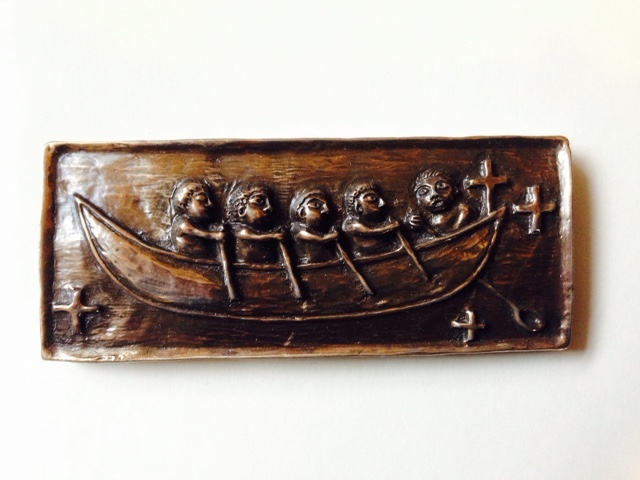
As part of my post-resurrection Easter spiritual practice, I’m reading Cross Is Not Enough: Living as Witnesses to the Resurrection
Chapter one
This introduces the book. Their argument is simple – that Christianity has neglected the resurrection, to its detriment. The opening quote by George Beasley-Murray puts it well.
If the Church had contemplated the Empty Tomb as much as the Cross of its Lord, its life would have been more exhilarating and its contribution to the world more positive than has been the case.
Clifford and Johnson do this by exploring across the breadth of the Christian church
- the gospel presentations in Acts which all focus on the resurrection
- Luther, who is his writings urges the priority of the resurrection
- the work of evangelicalism, including John Stott and the Lausanne movement, which they critique as being so focused on the cross that the resurrection is lost.
While this breadth is commendable, at times it felt too broad brush. Notably, the attempt to cover Roman Catholicism is done by noting a quote from two Roman Catholic theologians. Catholicism is such a large and broad part of the church, any attempt to engage them as dialogue partners needed more attention.
This chapter also introduces a second part of their argument, that the doctrine of the resurrection must be so much more than an intellectual agreement. If resurrection is central, then it must also be able to be integrated into “practical areas of theology and church life, such as in healing ministry, pastoral care, and spiritual development.” Which suggests an intriguing book, as the authors indicate they want to explore the resurrection in areas like popular culture, new forms of spirituality, inter-religious dialogue.
The writing style is accessible, with stories helpfully sprinkled through. These give the impression that Clifford and Johnson are no ivory tower academics, but are themselves deeply involved in mission and cross-cultural encounter. Alongside the readability of the book is an impressive set of footnotes, suggesting a depth and quality of research.
From Chapter one, this looks like being a really rich post-Easter read, and I’m looking forward to chapter two – The resurrection effect.
Sunday, April 08, 2012
resourcing resurrection
What a great line – “you didn’t see that coming, did you?” Superb capturing of the surprise for the Gospel witnesses.
The full text, all 605 words is here, along with link to a discussion guide.
 My resurrection spiritual practices this year include shuffling the Jesus Deck from Mark to John (it has just been re-printed, available from “resources at chelmsford dot anglican dot org”), planting my front yard full of native plants and sinking my teeth into some Australian missiology – Cross Is Not Enough: Living as Witnesses to the Resurrection
Friday, April 06, 2012
“Why did Jesus die?” the child asked
“Why did Jesus die?” she whispered beside me. Three years old, pretty in pink, shoes not yet touching the floor, her mother gently sushed her. This, after all, was church. Where visitors want to be seen, not heard.
But it’s the question that needs answering each and every Easter.
“Could we think of the cross?” I thought. “It has a flat piece, a horizontal piece, that points to people. Jesus died because the people around him killed him. He said and did things they didn’t like. He said things about God they didn’t agree with. They couldn’t stop him, so they decided to kill him.
Jesus also died, not only because people did something. But also because some people did nothing. Stood silent. Kept their mouths shout.
But the people around Jesus, that is only one part of why Jesus died. The cross not only has a flat piece, a horizontal piece. It also has an up and down piece, a vertical piece. That points to God.
Jesus died as an expression of love, God’s love. There are many ways to respond to evil people and evil plans. We can fight them, run from them, avoid them.
Jesus took a different approach. He decided to love them. It was like he became a sponge that soaks up all the spilt milk.
In the up and down part of the cross, God sucking up all the evil and pain in the world. Think of all the bad things people have done. And not done.
Not just the people around Jesus. All people. Through history. Even you and I. So much of it.
No wonder he died, one person trying to love all the evil out of life. That’s why Jesus died.”
Wednesday, March 21, 2012
appreciative inquiry and mission through Jess’s eyes
I’m speaking on appreciative inquiry and mission with folk in a Catholic leadership formation programme today. In preparation I’ve been re-reading Mark Lau Branson’s wonderful Memories, Hopes, and Conversations: Appreciative Inquiry and Congregational Change
And loving this video, young Jessica affirming all that is good about life.
I’ll use this to seque into the theological foundations for appreciative inquiry, in Luke 10:1-12 and in the Pauline letters. But for now, I’m thankful for my dad, my house, my pyjamas …. Yep, you get it, go Jess … 🙂
The Gospel: Luke 10: Where is Appreciative Inquiry in this Biblical text?
1 After this the Lord appointed seventy-two[a] others and sent them two by two ahead of him to every town and place where he was about to go. 2 He told them, “The harvest is plentiful, but the workers are few. Ask the Lord of the harvest, therefore, to send out workers into his harvest field. 3 Go! I am sending you out like lambs among wolves. 4 Do not take a purse or bag or sandals; and do not greet anyone on the road.
5 “When you enter a house, first say, ‘Peace to this house.’ 6 If the head of the house loves peace, your peace will rest on that house; if not, it will return to you. 7 Stay there, eating and drinking whatever they give you, for workers deserve their wages.
Note:
- Peace is shaped by Old Testament concept of “Shalom” – love of God, love of neighbour, love of alien, love of earth. Go looking to bless, looking to affirm
- Disciples look for response. They don’t force ourselves. But where there is “life”, we stay.
- Assumes “common ground,” that we are not the only people who desire the wellbeing of our communities.
Letters of Paul: 1 Corinthians: Where is Appreciative Inquiry in this Biblical text?
4 I always thank my God for you because of his grace given you in Christ Jesus. 5 For in him you have been enriched in every way—with all kinds of speech and with all knowledge— 6 God thus confirming our testimony about Christ among you. 7 Therefore you do not lack any spiritual gift as you eagerly wait for our Lord Jesus Christ to be revealed. 8 He will also keep you firm to the end, so that you will be blameless on the day of our Lord Jesus Christ. 9 God is faithful, who has called you into fellowship with his Son, Jesus Christ our Lord.
Note:
- Paul writes to a church in conflict. Yet he starts with thanks.
- It is important to note that each letter of Paul’s has a unique, specifically, different “thanks.” In other words, the thanks (the AI) is specific.
- As it is specific it can thus only connect as it truely names.
- Key “problems” in the church (for example spiritual gifts, eschatology) at Corinth are engaged in the “thanks.” Hence its not Pollyanna!
Saturday, March 03, 2012
theology needs art: Adelaide Fringe Festival floor talk
Here is the floor talk I gave to launch the Adelaide College of Divinity bi-annual art exhibition.
Over the recent summer holidays, I was fortunate to be able to spend some time visiting friends in New Zealand. As part of our time together, they took me to the Brick Bay Sculpture Trail, which lies about an hour north of Auckland, New Zealand’s largest city.
The Brick Bay Sculpture Trail is part of the Brick Bay Winery, although owned by a separate, not-for profit arts trust. In 1986, the owners, Richard and Christine Didsbury, had brought the land.
While the land had previously been overfarmed, they had a personal passion for the environment and began a systematic project of restoration. Trees were replanting. Native bush was protected. Water was carefully damned and channelled.
Which means that all of the art in the Brick Bay Sculpture Trail, is outdoors. So to experience the art requires about an hour of your time, and about a 2 km walk. You climb through native bush and walk past gently meandering lakes.
In other words, the backdrop is not walls, but trees and landscape. The roof is the sky and the land and environment speak. Which allows a fantastic art experience – glass of wine, time to wander, space to contemplate and discovery, all outdoors, all surrounded by birdsong, all open to random encounters with native wood pigeons and tui.
The 43 artpieces displayed in the Brick Bay Sculpture Trail are from some of New Zealand’s most well known sculpturers.
For example, sculpture 17 – Lucy Bucknall’s Awaiting Transportation. It references immigration, a proud couple, dressed their best, awaiting transport on their next part of their journey to a strange land. It says so much about the hopes and dreams of all migrants.
Or sculpture 25 – Jim Wheeler’s Regeneration. A revered native bush, the Puriri, sprouts from a distinctively New Zealand fence post. It says something about the processes of settler colonisation, and about the potential for rebirth, of nature’s ability to regenerate and reemerge.
Or Sculpture 31 – Graham Bennett’s Position Fixing. A wire fence, it captures the linkages – links between people, links between place – that give shape to our identity. Running along the top of fence are a line of towers and at the top of each tower is a boat, each boat pointed toward a Pacific Island, in honour of those who first sailed to New Zealand. The art explores boundaries and journeys.
Each sculpture is profoundly shaped by it’s context; Lucy Bucknall’s Awaiting, the migrant couple waiting to board a boat, is playfully positioned by a small stream of water. Jim Wheeler’s Regeneration almost hidden in a thicket of regenerated native bush. Graham Bennett’s Position Fixing standing proudly atop a hill and it serves to mark a boundary between native bush on one side and a (imported) vineyard on the other.
I’ve taken the liberty of taking quite some time to describe this, because I want it to serve as contrast with some of my experiences of theology.
You see, in 2009, I was part of an academic theology conference that explored the theme of land. I did a theological paper that engaged with many of the sculptures – that explored Jacob in the Old Testament as a migrant, as crossing boundaries, and the impact of that on the indigenous peoples of the land.
In 2011, the conference became a book. The Gospel and the Land of Promise: Christian Approaches to the Land of the Bible
But walking the Brick Bay Sculpture trail, sitting on the grass, looking at Graham Bennett’s Position fixing, I began to wonder what sort of conference, what sort of book, and what sort of theology might have been possible if our theological work on land had actually engaged with art of the land.
If instead of sitting in a sterile lecture room, we’d been expected to take regular walks been lectures through this art trail. If instead of a lecture spent looking a data projector, we’d had a lecture looking at the art, which was exploring so many of the same themes. If artists like Lucy Bucknall, Jim Wheeler and Graham Bennett had been our dialogue and conversation partners, rather than simply other theologians.
In other words, over the summer I was reminded again of how much theology needs art. (The question of whether art needs theology is best addressed by an artist?)
Theology needs art, first because art celebrates metaphor more than careful footnote. Both are important. But a theological focus on the footnote alone, on the careful analysis, on the minute detail, needs to be reminded of the importance of metaphor, the need for making connections, for looking for a bigger weave.
Theology needs art, second because art reminds us we are bodies and not just heads. The first thing theology tends to do is look for a library. But we are more than minds, waiting to be stuffed full of information. We are also bodies, who need to walk and look and be moved by our emotions. That, to quote one New York art critic, there are times when “words fail us; the glossary dissolves, there are no more terms that really work.”
Theology needs art, third, because art invites us to see. Richard Kearney, who is Charles B. Seelig Chair of Philosophy at Boston College has written over 460 pages on the place of art in human history (The Wake of Imagination
First an ethical seeing, we need things – words and images- that make us aware of the other, of the voiceless, the missing, the unheard the overlooked. An ethical seeing.
Second a creative seeing, we need the invitation to the invention and re-invention of ourselves, others, our worlds. A creative seeing that invites us to be more than what we currently are. To quote Christian Seerveld, we “need an understanding of playfulness if we are going to take sanctification by the Holy Spirit seriously.”
Which is why I’m delighted that every two years the Adelaide College of Divinity is part of the Adelaide Fringe through facilitating an art exhibition. This year, but also back in our history.
And why I thank each artist. And Stephen Downs and his team for the work they put in behind the scenes to make this event possible.
Because theology needs art. First, to remind us of metaphor as well as footnote. Second, to help us recall that we are bodies and not just head. Third, to invite us to see, ethically and creatively.
And fourthly, and finally, because it makes our lives, this space, a whole lot richer. I watched on Tuesday as folk came into the Chapel of Reconciliation for a weekly chapel service. And how, rather than take their seats, they gasped in wonder, and proceeded to wander around the art. To point. To talk. To ponder. And suddenly our lives, our chapel, this space, was a whole lot richer.
Because theology needs art.
Tuesday, February 14, 2012
What is a sacrament?
This week the intensive class is exploring sacraments. Rather than begin with the history of what is a sacrament, I decided to begin with two video clips. One of Archbishop Sentamu baptising publicly on Easter Saturday, another of an outdoor worship service, including communion, lasting six minutes. (I’ve blogged about this here).
and then ask what is a sacrament.
The responses were fascinating. Words included “public”, “witness”, “planned spontaneity”, “connecting to God.” Using the videos opened up a different space for discussion, about how the sacraments are part of the living mission of the church.
The depth of discussion grew this morning in our tutorial. The statement was “all of life is a sacrament” and readings included
- Acts 10:1-48
- James 1:17
- Pinnock, Clark H.,Flame of Love: A Theology of the Holy Spirit
, pp.113-147, and 264-268.
- Geoffrey Rowell, “The significance of sacramentality,” in Rowell, Geoffrey and Christine Hall, Gestures of God: Explorations in Sacramentality
, pp. 21-36
- Taylor, Steve, “Even the Dogs Eat the Crumbs that Fall from their Masters’ Table”: A contemporary reflection on the sacramentality of Communion, Colloquim 39, 2 (2007), pp. 209-225
- Bouma, Gary, Australian Soul: Religion and Spirituality in the 21st Century
, pp.86-105.
The discussion was excellent. I suggested the following summary:
The Reformers argued for two sacraments, baptism and communion. Celebrating these has the effect of making all of life sacramental. Reformation theology had a particular emphasis on Christ and the events of Easter, especially Friday. Themes of creation and eschatology can enrich our theology and greatly enhance the mission of the church today.
Tuesday, February 07, 2012
thinking in straight lines
I am currently teaching an intensive on Church, Ministry, Sacraments, which is a compulsory course for Uniting Church candidates. Co-teaching actually, working with Michelle Cook, from Congress.
As part of the course, we are experimenting with a different approach to tutorials. (I have written more about this here, where I first sketched the idea). Here are the instructions given to the class on the first day.
The tutorials will have the following format:
• each tutorial the lecturer will offer a case study statement/question, along with some readings and resources.
• each tutorial the lecturer will stand at the board and prepare to take notes on the student discussion
• each tutorial discussion will evolve using the following framework. Each student will be given a set of cards and be expected to play one of their cards (an experience, or a Scriptural reflection, or an insight from tradition, or some reason, or an artifact from creation/culture)/tutorial. All must be in relation to the case study question and should expect discussion and interaction by all the class.
• in the last 20 minutes the class will switch from discussion to reflection on the overall process. Overall, how do the “cards” integrate? Are there missing or overabundant parts? What are the implications for our processes as minsters and leaders in theological reflection?
• Student will write up one of the tutorials. This will involve providing a one page response to the case study statement/question. This should be in form of “Pastors’ paragraph.” While references are not expected in this, a separate Bibliography is expected. The one page is to be handed in one week after the tutorial. Students will gain extra marks if they show evidence of extra research over and above the set readings and class discussion. In other words, if a class finds a weakness in one tutorial in say tradition or Scripture, and the student goes away and does extra work in this area, more marks are gained.
The approach is based on the Wesleyan quadrilateral – experience, tradition, Scripture, reason.
 (Hat tip: Diagram from Scott McKnight). However we’ve added a fifth element, culture, because it’s so significant in how we do theology and so often unrecognised.
Here are the five Church, Ministry, Sacraments tutorial questions Michelle and I drafted, based on what we think are current issues facing the church:
1 – “It’s not that the church of God has a mission, but that the God of mission has a church.”
2 – Is Uniting Care church?
3 – I’m not into the word leadership because I’ve seen too many leaders misuse power.
4 – All of life is a sacrament.
5 – We restrict the Spirit if we only baptise those who have been through a discipleship process.
With two tutorials over, it is proving a great way to teach. Students are highly engaged and seem to be reading more than normal. The discussion is wide-ranging and robustly critical of each other. There is an evident and growing appreciation of what it means to think in straight lines, using the breadth of the Christian resources. Which is essential, because as folk head into ministry, the tutorial questions will change as society changes. So the skills needed are not in knowing content, but in knowing how to work with content in the face of life’s changing questions.
Monday, January 23, 2012
this is my body? paper update
My paper presentation today, shared with Tim Matton-Johnson, from Congress Tasmania, seemed to go OK. Having two voices was certainly nice in an afternoon session.
Some really useful questions in response, which will help to clarify and make it sharper. It’s the most developed of papers I’ve done in recent times, so it should be an easy task to make publishable – the plan as a result of the confernece is to produce both a set of DVD’s, plus a book as a result, with Palgrave publishers. So hoping for that …
for now, after a 5.45 am start, it’s goodnight …
Friday, January 20, 2012
story weaving conference

I’m off on Monday morning (early), to be part of Story Weaving, an international conference on Colonial Contexts and Postcolonial Theology. It is being hosted by Whitley College, Melbourne. They are Baptist, so I’ll be able to breathe deep that Baptist air 🙂 Apparently the conference is over-subscribed, which is great. For me, being part of these types of conversations is an esssential partnership that needs to lie alongside fresh expressions, as a concrete expression of being a stranger, of surfing the edges and entering into the marginal spaces.
My paper, which I’m delivering on Monday afternoon, is titled:
This is my body? A post-colonial investigation of the elements used in indigenous Australian communion practices
The introduction is here. What is most fascinating is how the paper has evolved. As part of my research I got into conversation with Tim Matton-Johnsto, a Congress (indigenous) leader in Tasmania. Some email, some skype, some shuffling of drafts back and forth, some negotiation with his local elders and the result is that he will be sharing the paper with me, telling a story from his indigenous community of one of their communion practices.
There’s something very personally satisfying about a process which will mean I, as a recent migrant, am part of theologising alongside indigenous communities here in Australia, and am to co-share a paper in this type of way.
Sunday, January 15, 2012
walking the art: Brick Bay Sculpture Trail
Over the weekend I loved walking the Brick Bay Sculpture Trail – 43 sculptures from some of New Zealand’s most well known sculpturers, located outdoors, among native bush and meandering lakes. The walk takes about an hour, and involves 2 km of walking. Trees and landscape is carefully used to ensure that the environment is the canvas and it allowed a wonderful mix of walking, contemplation and discovery, all in the outdoors, allowing the visits of native wood pigeons and tui. The trail is run by a Trust, with profit being made available to assist artists with costs (because large scale sculpture is expensive).
In 2009, I was part of an academic theology conference on land. Sitting on the grass, contemplating sculpture 31 – Graham Bennett’s Position fixing – I wondered what would have happened if the academic conference had occurred not an hour down the road in a sterile lecture room, but here, with regular walks through the trail.
In 2011, the conference became a book, The Gospel and the Land of Promise: Christian Approaches to the Land of the Bible
Theology needs art. (But does art need theology?)
Thursday, December 15, 2011
the bias of a bowling ball as a metaphor for postmodern epistemology
 Last week included a team social. Each year we try and do something fun and different to end the year. This year we went lawn bowling. Despite some initial uncertainty, photos of the event revealed a lot of smiles on a lot of faces.
Essential to lawn bowls is the bias on the bowling ball, that one side is weighted. Which makes for great hilarity when folk get the bias wrong and the ball heads off into the next door neighbours game.
In the week following, a number of times I’ve found myself sitting with folk who have felt the need to declare their own bias. They are making an observation and as they do, point out that they have a particular perspective, a particular relationship, a particular history, that will shape their opinion.
Knowing my post-modern epistemology, I gently point out to them that there is no such thing as objective neutrality, that in fact ever person has a particular perspective, a particular relationship, a particular history, that will shape their opinion.
Like a bowling ball I have told them since last week. A bowling ball has a bias. Our task is not to think in straight, objective lines. Rather it is to be aware of our bias and weight the speed of the green (the context). Only by accurately knowing our bias will we ever get close to truth.
The bias of a bowling ball as a metaphor for postmodern epistemology. What do you reckon?
Wednesday, November 30, 2011
the place of apt liturgy in fresh expressions
In marking, I tend to engage in student work with at times quite extensive written comments. Here, with an introduction to give some context, are some thoughts I wrote in an assignment I marked today.
“Apt liturgy” is a wonderful phrase, from Ann Morisy in her book, Journeying Out: A New Approach to Christian Mission
“Liturgy if it is to be described as “apt” needs to express people’s deepest fears and hopes. Apt liturgy should also enable people to put their fears and hopes into a wider context by sensing the resonances between their own situation and humankind as a whole. One of the costs of the low level of religious literacy in our society is that people are deprived of the conceptual tools which could help them to locate their circumstances, both positive and negative, in a more universal framework. Apt liturgy is a way of providing a framework of understanding which helps people to move beyond self centered and narrow horizons.”
This invites the role of poet, the gift of seeking to name/give voice to the work of Spirit. I find it helpful to frame this by considering the work of the Spirit. Such thinking will begin with Romans 8:23, the Spirit groans in the world. Thus, good apt liturgy will give voice to this groaning. To be faithful, it must start by listening to people, to popular culture, to the world outside the church and to naming their groanings.
This listening must be seen as part of a process. As it is in Romans 8, for after verse 23 comes verse 27, in which the groaning of Spirit is always a groaning toward God. Thus apt liturgy is a way to participate in the Spirit (the One who is at work in the foundational domain, to use another term from Ann Morisy) in the journey from Romans 8:23 toward 8:27.
Another way to understand “apt liturgy” is in reference to Luke 10:1-12, and in light of the proposal “any experience is an educative experience” (Robert K. Martin, “Education and the Liturgical Life of the Church”, Religious Education 98:1 (Winter 2003), 61). Luke 10:1-12 assumes that mission begins with the ability to listen. As this happens, one will recognise healings, interpreted in light of the speaking of peace/shalom. This draws on the Old Testament understanding of God who cares for people and place and thus healing can include physical, spiritual, relational and with the whole of creation. In Luke 10, it is only after healing is recognised that the Kingdom is named as near.
This is “apt liturgy”, recognising healing in a context and linking it with the Kingdom mission of Jesus. In this way, the experience, the participation in healing, becomes educative of the Kingdom.
This calls for a different kind of liturgy leader skill set. One still needs to know the tradition, to know of the Kingdom, and not just superficially, but at such depth, that we can connect it with experience ie what is happening, rather than bringing a liturgy package from the shelf/book/internet.
Friday, September 02, 2011
out of the closet? or just the closest I’ll ever be to Barthian?
I’ve just had a short piece published on Share, a UK fresh expressions website. Titled “Welcome home? Hospitality as mission”, (a cut down piece from something I wrote here last year), I explore how often the church hears hospitality as welcoming people who come to us. I start with a New Zealand singer, Dave Dobbyn, move to Jesus and then to fresh expressions. I conclude with a mission question
“I wonder what it means for the church to see itself as homeless rather than home-owner? To forget practising welcome and instead go looking for welcome? To make ourselves reliant on people to make space for us?”
Which, as I reflected today, might actually make me a closet Barthian. I’ve never read all of Barth, but am informed that it was he who describes the Father’s sending of the Son into the world as “The Way of the Son Into the Far Country.” (Church Dogmatics Vol IV 1 and 2). Just as the prodigal son traveled off into “the far country” (Luke 15:13), so in Jesus, the Son takes the same journey (While the Son of God, in contrast to the Prodigal Son, carries out this journey in total obedience, this journey into the far country is radical, risky, excessive and prodigal.
So there we are. Am I a closet Barthian? Or simply a missiologist coming close?
Anyhow, head on overand see what you think of the piece. Or go here, for another – David Fitch – angle on the whole Incarnation-mission thing.
living libraries and the communion of saints. a spirituality of study?
I wrote this in an email this morning. I thought I’d put it up here for comment.
Pedagogically, we believe in “living libraries” as well as “libraries” ie that wisdom is in people as well as books. So we encourage a starting with reflection on experience, and that being located in the reflection on experience of others. But we are weary of an approach that begins with doing a lot of reading, if it then suggests that folk lose their own voice and insights in the process. So reading after rather than prior.
Often I see higher education reduced to “read more books.” I wonder if in fact the real task of higher education is “reflection on experience, your’s and the communion of saints.”
By communion of saints, I meant the fact that we are not alone, that others have thought and reflected and wrestled and wept. So in humility, our reflection must include hearing their reflection. So I’m still a passionate advocate of bibliographies and footnotes. But framed as a spiritual discipline of humble reading, placed in dialogue with what God is doing in us, our lives, our communities.
There is still much academic rigour in the reading of experience. Perhaps more, because you have to read yourself truly and critically, as well as read others truly and critically.
For more on this, see here. For how this might apply to the use of senses in experience and Biblical scholarship, see here and here.


 )
)