Wednesday, November 10, 2010
prayer for ordinands
May you have the courage and discernment to name yourself,
and those you serve,
both truly
and uniquely.
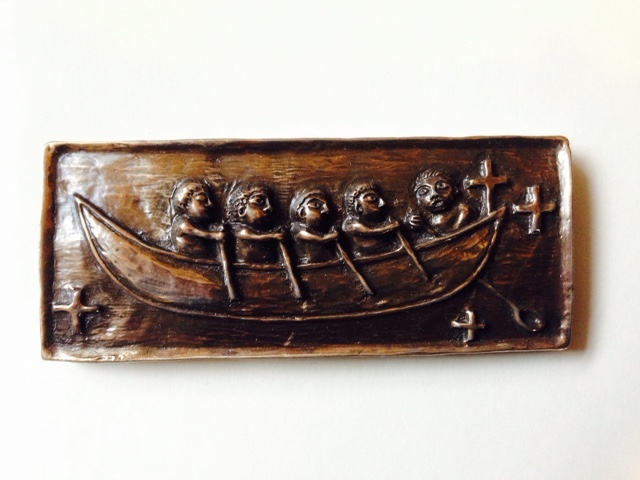
My prayer for those from Uniting College today who received candles as a symbol of transition from phase 2 (intentional training through formal and in placement mechanisms) to Phase 3 (first full-time ministry placement).
mission shaped church australia?
A sign, small and white, stuck on a door. An invitation to enter, to begin a conversation. The future, uncertain, the companions inside, unknown …

And so yesterday I at Uniting College hosted 11 folk, from 4 States and 1 territory, representing 4 denominations. The invitation, as the sign indicated, was to a conversation about mission-shaped church training in Australia.
The conversation was wide ranging and frank. The outcomes were for the next 12 months. To seek permission from UK to a pilot, in two places, from mid-2011 of an Australianised version of the UK Missionshaped course. One in Canberra using a more intense format over a number of weekends. Another in Adelaide weekday evenings during Semester 2.
An initial (cash) intention to partnership from five groups, with three other likely partners and an open invitation for any and all to join at any time later. A (time and skills) commitment from different folk to be part of a national team of trainers by workshopping segments, both individually and in partnership, with the intent of developing an ecumenical team of learners-together-in-teaching.
And the hope that, based on learnings from the two pilots, based on feedback from the UK, that we might look to run more courses into 2012, not only in Adelaide and Canberra, but perhaps in Tasmania, Victoria and New South Wales.
We finished thanking God for those who have pioneered before us, both here in Australia and in the UK, on who’se work we are building.
And with excitement, of being part of a broadly ecumenical partnership wanting to follow the Spirit in providing concrete mission-shaped training.
And of affirmation, that the sign on the door remains, to anyone, to enter, to join the conversation – one that us uncertain, unknown, but it does now have some companions on the journey.
I’ll keep blogging more details as they shape up; for an earlier post/invitation, see here.
Tuesday, November 09, 2010
Shifts: Doing action research in your own organization
One of the very significant shifts in recent decades has been the willingness to embrace experience in knowing. In contrast to “I think therefore I am,” has been the pursuit of “We experience, therefore we grow.”
This has huge implications for being human, for being Christian, for education. This serves to introduce a new book I will be blog reviewing: Doing Action Research in Your Own Organization
 Action research is defined as “an approach to research which aims at both taking action and creating knowledge or theory about that action.” (ix) It is interested not only in individual head knowledge, but in actions and knowledge.
It assumes a spiral approach to life and learning, in which planning leads to action which leads to reflection which leads to planning … and so on. It assumes collaboration, in that what is being studied are themselves active in the study process. It assumes we are all insiders of many systems. This brings us knowledge and the invitation to action.
The desire to be involved in or to lead radical change involves high hassle and high vulnerability, realistic expectations, tolerance, humility, self-giving, self-containment and an ability to learn. Insider action research is an exciting, demanding and invigorating prospect that contributes considerably to researchers’ own learning and contributes to the development of the systems in which we work and live and with which we have affiliations. (xi)
Which surely is what much Christian research and education should be about? (Hence the missional masters, in which leaders use their own context as a place for learning and growth. And this is deemed a place which deserves post-graduate “action-research”.) It should invite us to change, it should expect our churches and our communities to grow and change!
This of course raises a complex range of issues, which the book seeks to explore and about which I will blog in coming weeks.
I would place Doing Action Research in Your Own Organization
Monday, November 08, 2010
Mastering Missional Leadership: A new training initiative
I wrote the following article for New Times, the South Australian Uniting church monthly magazine, who kindly gave me permission to reproduce it here, for readers not earthed South Australian soil.
Tim Costello, World Vision Australia CEO, noted recently: “Our leadership issues are not to do with our denominational structures. They are more to do with both our spiritual and our emotional intelligence.”
Uniting College has a mandate from Synod, to develop effective leaders for a healthy, missional church. For those beginning their formal training a new BMin has been devised that will focus on missional leadership.
But what about church leaders who have already concluded their training?
This question explains the launch, by Uniting College, of a Missional Leadership cohort within the Master of Ministry course. Participants can take all the components of the existing Adelaide College of Divinity Master of Ministry degree – coursework, guided reading, programme seminars and a ministry practice project – and approach them from a missional leadership focus.
Joining this stream is an invitation to work on missional change within one’s own ministry context. Growth as a missional leader is then foster by a combination of coaching, guided reading and peer cohort support.
In 2010, the College offered a short-course on Missional Church Leadership. Feedback was overwhelmingly positive. “The Missional Leadership Course offers great participatory learning and course content that encourages thinking outside the square” noted one participant. Another described the course as “some of the best study time spent – linking the Bible with theory and practice.”
 As the course ended, a realisation was shared that the missional leadership learning journey had only just begun. Leadership development requires both intentionality and companions in a shared pilgrimage. From this awareness arose the idea of forming a Missional Leadership cohort within the Master of Ministry programme.
If you are a person whose initial training did not include a focus on mission and leadership, if you want to enhance your missional leadership skills, and if you understand the value of collegial support in cultivating change in your ministry context, this Missional Leadership stream is for you. The plan is to pilot this course in 2011. Prompt expressions of interest are required for this to happen. For more, check out page 3 of the (1 meg) PDF download
Side bar article: A typical Missional Leadership cohort track (more…)
Thursday, November 04, 2010
mission as partnership: learning from the other in fresh expressions?
Just had a fascinating and rich coffee conversation about mission. It involves one of the Master of Ministry students, who has been interviewing people returning from short-term mission. A rich data set has emerged, packed with honesty, emotion, insight and question.
It opened up a great conversation. If we are a genuinely “catholic” church (to use the Creed – one, holy, catholic, apostolic) then the current global church is a gift. Every part of the body of Christ will have a unique charism, insights that can challenge and grow us. In the old days missionaries went to “save and serve.” But with the presence of God now in so many countries, mission is about listening and solidarity, learning with and from each other.
Might it be that people in short term mission become the literal “eyes and ears” of a local expression of church? They help the local expression of church, limited by it’s geography and culture, to see the gospel more fully.
(If so, genuine reciprocity needs to happen, in which we receive short terms as well as send short-termers!)
The implications for fresh expressions are obvious. It was old-fashioned colonialism that celebrated “save and send.” What does listening, solidarity and partnership look like? This is a Fresh expressions “ideal” model …

… which suggests that a fresh expression goes through a number of stages in their formative journey. It starts with listening to God’s call, moves to loving service, then is followed by forming community and disciple-making. The result is church emerging in a fresh space, opened up in response to the creative work of God’s Spirit.
The renewed insight for me from today was the reminder of the importance of beginning with listening including to the people we find ourselves among, of loving service not as us doing something for the other, but of finding ways to partner in service, of community forming not based our how we engage relationally, but on the patterns of the host culture, of disciple-making which is a mutual learning.
I hear echoes of what happened here with the Opawa Spring Clean (6th one happened just last weekend), in which we worked to serve with the community, and in doing so found new ways to relate together.)
I also hear echoes of various Christian artists depicting Philips encounter in Acts 8, as a mutual disciplemaking, which is outlined so helpfully in Picturing Christian Witness: New Testament Images of Disciples in Mission
Monday, November 01, 2010
mission really matters
One of the big shifts here at Uniting College in the last few years has been in the area of teaching disciplines. In order to respond to the renewed emphasis in missio Dei and to formation as whole-bodied, not merely intellectual, we’ve moved from three areas to four; from
- Biblical
- Theology – systematic and historical
- Pastoral – (ie everything that doesn’t fit in the other two)
to
- Biblical
- Education and Discipleship
- Leadership
- Missiology
I’m involved with the missiology stream. Which is new and hence I often get asked what is “missiology”? So in order to help explain missiology, and to promote the change and in the hope of drawing interested people together in the hope of gentle Kingdom revolution of the world that God loves (!), I have created a newsletter. I’m hoping to provide 3 or 4 a year, with the aim of introducing missiology, offering some helpful resources, and communicating comings and goings. Here’s the front page of the first …

(Faithful blog readers will recognise some of the resources, but might still appreciate the colour and the clarity. I am unsure whether to keep it tight at 2 pages, or to provide more resources but in doing so go larger. This time around the viscious red editing pencil won the 2 pages vs 4 pages duel!)
Friday, October 29, 2010
mission training into 2011
The last few months have involved lots of talk, networking, dreaming, discussing about ways to make concrete mission and pioneer leading training here at Uniting College. The upshot is that in 2011, and through a number of developing partnerships, we are hoping to provide:
mission training for whole people of God – through an Aussie version of the UK Fresh expression Mission-shaped course. This is based on a partnership with a number of other denominations and in a number of states, as a one year part-time learning journey equipping people for fresh expressions. Starting perhaps mid-2011 or 2012. (For more, see here)
mission training for potential pioneer leaders – through a three year Bachelor of Ministry, and the provision of majors in Missiology and Innovation (Subject to accreditation, will blog more when that is approved)
missional leadership training for existing church leaders – through an existing Master of Ministry, but with a distinct missional leader focus. This one really excites me! We will train by inviting leaders to work on missional change within their own ministry context. Growth will be fostered in a combination of coaching, guided reading and peer cohort support. The final thesis need not be a traditional thesis, but can instead be a journal documenting the process, the learnings, the theological integration over the 4 years of mission change in context. The aim is engaged action-reflection leaders in mission. For those interested here is a (1 meg) brochure master ministry 2011-www. We are wanting a cohort of 5 per year and I’m already getting phone calls, so if you are interested, do get in touch.
Monday, October 11, 2010
Bachelor of ministry information days

We are having two Bachelor of Ministry information days on campus this week. They are a chance to meet lecturers, fellow students and see the 2011 timetable. There might also be a chance to talk about the potential development of the Bachelor of Ministry, including Integrated learning, new topics, the 4 streams (Mission, Leadership, Discipleship, Bible) and the flexibility offered by the interplay of majors and minors (This is all subject to the degree being re-accredited). So if you are in Adelaide and thinking about study, come along
- Tuesday 12 October, 12:15-1:15 pm
- Thursday 14 October, 5:15-6:15 pm
Thursday, October 07, 2010
evaluating fresh expressions september 2010 UK trip report
 I spent a very rich 7 days in the UK – London and Durham – in September, speaking, networking, participating in the Evaluating Fresh Expressions Research consultation (papers planned to be published to celebrate the re-launch of Anvil)
For any interested, here is my report, which does include a page of my reflections on the UK Fresh Expressions scene as I heard/experienced it.
Tuesday, September 28, 2010
what do you need to be a pioneeer leader?
Tim Costello, currently CEO of World Vision, Australia, kicked off the Church in the City 2010 conference today. He spoke about his experience at Collins Street Baptist in Melbourne and the formation of Urban Seed. It was a mixture of challenge and inspiration.
During discussion was when Tim really (for me) excelled, a great mix of practical wisdom, reflection and astute cultural observation. He talked a number of times about the place of leaders as both prophet and leader, as taking risks and challenging the status quo. He ended with a fascinating quote (from my notes):
Our leadership issues are not to do with our structures. They are more to do with our spiritual intelligence. And our emotional intelligence.
I couldn’t agree more. Starting things is about seeing both what is and what might be. That takes honesty and vision. And faith, to believe in what is not yet. And the ability to align that with the stories of Jesus. In other words, spiritual intelligence!
And between what is and what is not, is the status quo. And inertia. And people who like the status quo. So to see change means challenging people. And leading through change. And dealing with conflict. That takes emotional intelligence!
So many times I feel when speaking to leaders the desire for easy answers and quick fixes. It’s hard to say, “There aren’t any. It’s just hard work.” The quote by Tim today gives me another frame and an affirmation, that of the need to deepen one’s spiritual and emotional intelligence, to let the slow processes of composting – emotional and spiritual – happen.
It made me glad of the Missional Church Leadership course I run, which seeks to offer spiritual practices, and to focus on Biblical narratives, especially Luke 10:1-12 and Luke 1:39-45. No easy answers, just invitations to listen, to discern i.e. spiritual and emotional intelligence.
Here at Uniting College, we’re working on three further ways (alongside the Missional Church Leadership) to access pioneer training
- a one year Mission-shaped ministry course, hopefully taught ecumenically, introducing mission, church, leadership
- the new Bachelor of Ministry which will include an “innovation” focus, allowing have-a-go learning
- a Masters in Missional Church Leadership, which offers in-service training, with a mix of coaching, peer group support, reading and a praxis/theory thesis in which people work, over 4 years, on missional leadership in their own context
Tim’s input was a great reminder that in the midst of all of these changes, the greatest gift that can be offered is fostering spiritual and emotional intelligence.
All in all, a great start to the Church and the city 2010 conference.
Wednesday, September 08, 2010
So what was the shape of your ministry today?
Was the question as I walked in the door. It’s been a rich day. So pour yourself (and me) a drink and let’s talk.
1. I presented my findings in review of a fresh expression. It’s been a fascinating experiment – an attempt to build an online community. I was invited to be the “missiologist-in-residence” as it were, which was an enormous privilege. There is not much written on this, so it has been such fun linking fresh expressions thinking with online website tools. I ended up writing about 2,500 words. So it has the makings of an article at some point.
2. I got to talk to someone about their “restless” heart and to discuss their journey toward ministry. A potential pioneer leader IMHO.
3. I got to help align a student research masters with a supervisor. It’s sort of a form of discipleship. Someone wants to do some thinking, some serious thinking, about what it means for them to love God and neighbour. And I get to help them align some people in ways that will maximise that learning. Huge privilege.
4. I got to meet with one of my PhD students. She’s just beginning a fascinating journey, wanting to explore how to help marginal voices, particularly speakers of English as a second language, do theology without imposing Western ideas on them. Stimulating.
5. I got to write up some of my own research. Again fascinating – to listen to some recorded interviews with pioneer leaders (of the alt.worship variety) and attempt to reflect on their stories missiologically. I’m developing a hunch and here it is: that “fresh expressions of church” is fundamentally an unhelpful phrase in a mission sense. I’m still working on my logic to support this hunch. But I am loving the reading, reflecting, probing.
Cheers. Thanks for listening.
Friday, August 27, 2010
fresh expressions adelaide vision day: putting legs on the local
Key words: dreamers and sponsors, wonderers and strategists
Key sense: taste
Key question: How can fresh expressions emerge within and alongside local congregations, agencies, schools ?
Had an excellent 90 minutes planning a (1st ever?) local Adelaide Fresh Expressions vision day with the Synod Fresh Expressions Core team. Put a ring around November 27, 11-3:30 pm, Christ Church Uniting, Wayville. Having had a swag of outside input on Fresh expressions, this day is ideal for local communities thinking about putting local legs on local fresh expressions.
Programme (draft):
11-12 pm – Introducing Fresh expressions: Who, What, Where, Why, How – Steve Taylor. Being Uniting, being emerging? a CMS team
12-1 pm – Local lunch – people are invited to bring local produce to share
1-2 pm – Putting legs on the local – interviews with three diverse local fresh expressions. A rural story, an art story, a justice story (TBC). Exploring how dreamers and sponsors work in life-giving partnerships.
2-3 pm – Conversational workshop – share challenges and opportunities in conversation either with local dreamers or local sponsors.
3-3:30 pm- Space with candlelight reflections community.
Monday, July 26, 2010
a new semester postgraduate focus
A new semester starts here at Uniting College today. The focus for me this Semester is the post-graduate area and it’s so nice to be building on foundations, rather than heading into unknown and uncharted terrain.
First is the continuation of Program seminars. I’ve blogged about these before, noting with excitement how these build collegiality and are constantly developing people’s ability to reflect theologically on current ministry practice. We’ve got new students and a really rich denominational environment – Salvation Army, Anglican, Lutheran, Churches of Christ, Catholic, Uniting – at play.
Second is the continuation of Missional Church Leadership. Students are at the half-way stage of the course. That means that today we are gathering around presentations of their listening in their unique contexts. As they present, I am working with the class developing their capacities to engage in processes of discernment. This is not theory, but requires stepping into real, living mission contexts and together exploring what God might be up to.
Third, the icing on the cake, is the post-graduate distance course I’m co-teaching for Otago University. It’s a “foreigner”, on my own time as it were. The topic is contemporary preaching and I am looking forward to co-teaching with Lynne Baab. The students have set up their own blogs and with the wonders of modern technology, I in Adelaide, will be engaging with Kiwi students throughout Aotearoa. It’s nice to realise that I might have left New Zealand, but in the grace of God, I can continue to be involved in my home!
Friday, July 23, 2010
Formation panels as a process in leadership formation
If you arrived at Uniting College today, you would have seen a carpark full of cars and a steady stream of students coming and going. Today is Formation panel day, when teams of 3-5 people gather around each candidates processes for ordination. Practically the panel is carefully chosen to bring missional leaders, faculty academic advice and skills in adult education. The same panel meet with the same candidates three times over a year, in a process that might take up to five years and involve academic study, fieldwork and readiness to transition into first placements.
Formation panels, and the carpark full of cars, are a recent development for training here in South Australia and have been shaped by a number of theological beliefs that are worth naming.
First, that training for ministry is not intellectual, but deals with formation for discipleship, inviting the whole person into processes of integration. Thus a panel is a way of making intentional this belief and will be exploring with candidates anything from life to balance, relationships to academic study to fieldwork.
Second, that candidates are engaged in ministry with and among the church. Hence the church, and not solely the academy, should be involved in their formation. I love seeing that carpark full of cars, some people driving up to two hours, all people living in and among the demands and pressures of congregational life. This is the church at work, giving time and focus toward leadership formation.
Third, that each candidate has a unique calling. This is not about producing cookie cutter ministers, all following the same template. Rather time in Formation Panel is given to listen, listen, listen, and then seek to shape a unique programme around each student – mixing study, fieldwork, supervision. Every programme is unique and is revisited in each and every Formation panel, wanting to be flexible to student growth and development.
It’s an exhausting, time-consuming, complex process. It is demanding for the panel and for the candidates. But it makes some important theological points about the formation of leaders for the church of tomorrow.


 )
)