Sunday, September 11, 2011
magical night: Review of Shaun Tan’s Arrival
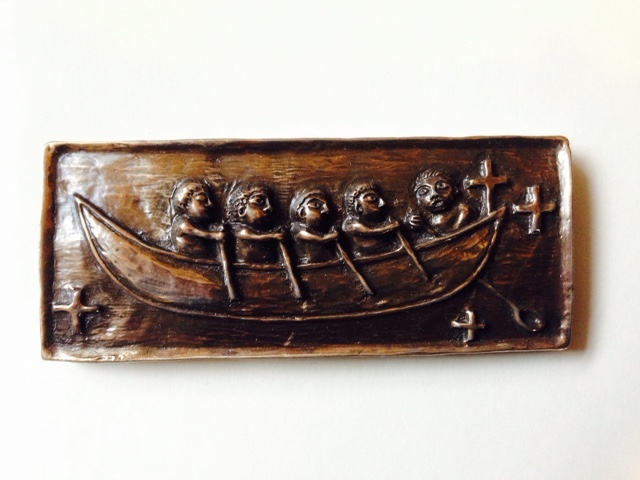
 Just back from a magical night at Her Majesty’s Theatre, experiencing Shaun Tan’s The Arrival, put to music by composer Ben Walsh. A visual and auditory experience that over 1 hour 15 minute, engaged The Arrival
I came away stunned by the ability to connect and story tell, without words. One hour and 15 with NO words.
I came away reminded of the importance of being invited to pause, forced to take the time to dwell, and in so doing to discover meaning.
I came away struck by the potential for all-age worship, kids aside, in front and behind, all transfixed.
Why can’t church be a wordless, intergenerational invitation to pause and ponder?
I came away reminded anew of the enormous courage required to migrate and the reliance of the generosity and time of the host culture. (No Taylor’s cried that I am aware of!) Tan’s father is a migrant from Asia. Now here in Australia we delight in Tan’s art and I can’t help wondering how many more Shaun Tan’s might be in the next load of migrants washing up on Australia’s shores.

Shaun Tan is an Australian treasure, a noted illustrators of picture books and young people’s literature. I’ve blogged before about discovering his book, Eric and the theology of hospitality buried in illustrations.
mission as creation care in preaching Cain and Abel
I preached at Scots Uniting Church today. The lectionary focus was the season of creation, the lectionary texts included Genesis 4. So an encouragement to explore the relationship between God’s mission and the environment, especially give that in 1984, the Anglican church developed the Five Marks of Mission, one of which includes creation care.
- To proclaim the Good News of the Kingdom
- To teach, baptise and nurture new believers
- To respond to human need by loving service
- To seek to transform unjust structures of society
- To strive to safeguard the integrity of creation and sustain and renew the life of the earth
My application was a reflection on what it means to listen to local landmarks – Victoria Park (Tarndanyangga) and River Torrens (Karra Wirra Parri). A bit too localised to be of interest to blog readers, so I will simply place the first half of the sermon here, in which I begin with some Maori culture, specifically a Maori “mihi”/welcome as a way to understand the Genesis text.
(There wasn’t a single comment on the sermon. Not one! Perhaps you as blog readers might have some). (more…)
Friday, September 09, 2011
The Kings Speech. an(other useful) way to intro evangelism?
Yesterday I blogged about a short video Tell Show Be seeking feedback on it’s appropriateness or not to talk about evangelism. The comments have been really helpful.
So much so that I’m offering another video option – The Kings Speech.
The Kings Speech tells a story. It picks up on a primal human fear, that of public speaking and of being exposed, humiliated, vulnerable in that speaking. Studies have shown that fear of public speaking ranks with fear of dying. Even more so when it is linked to things a person holds most dear. Including a person’s faith – their mystical connection with God.
Loss of voice can result from physical damage. It can also result from interior pain. Viewed at this level, “The King’s Speech” becomes a metaphor that enables reflection. What might it mean for God’s people to gain voice? If we could speak, what is the one word we might want to utter to our world? What prior patterns and previous memories are stifling our ability to speak confidently?
Or, should there be some things so intimate and precious, like a person’s faith, that in fact, they should hardly ever, if at all, actually be spoken?
Thursday, September 08, 2011
tell show be. a useful way to intro evangelism?
Evangelism. Generally a word that freaks people out. Both Christians and non. So here’s an interesting resource from the Methodist church in UK.
TELL.SHOW.BE. is an invitation to rethink evangelism, to dispel the myths that hinder many and to challenge our understanding of what it means to pass on the good news.
It’s designed to be accessible, multilingual and free, inspiring us to tell somebody, show somebody and be somebody.
Video runs for under 2 mins. What do you think?
TELL.SHOW.BE. – English from Tell.Show.Be on Vimeo.
Wednesday, September 07, 2011
Paul Kelly and the ministry of connect
“Connect. That’s what I want to say to the mixed row of young faces in front of me, some earnest, some giggling, some bored. Connect. Some distracted, some looking down, some asleep. Connect. That’s all I want to say to them – connect, connect, only connect.” Paul Kelly, How to make Gravy.
And I admire the way Paul Kelly uses his gifts of connection to tell stories. Stories we tend to walk past. Indigenous stories.
More?
For another example of Paul Kelly and a ministry of connect, specifically in tragedy, go here and here. And for a review of a recent Kelly concert, on the theme of spirituality, go here.
Tuesday, September 06, 2011
in what ways does my blog suck?
A friend took me aside on Monday to tell me my blog sucked.
I told him I was more concerned with content than with style.
He responded that he was worried that people might never get to my content, because of the style.
So, it’s time for some reader input. In what ways do you think my blog might suck? Stylistically, what 3 things would you, my long suffering readers change? Content-wise, what should I blog more about? And what should I blog less about?
The comment floor is yours …..
indigenous Anglicans claim a new mission mark
Indigenous Anglicans will ask the Anglican Consultative Council to make developing indigenous leadership within the Communion a new ‘Mark of Mission.’
The Anglican Indigenous Network (AIN), which met in Sydney late last month, has issued a statement asking the ACC to add that new goal to the five Marks of Mission it already proclaims … “We believe it is time,” for these national churches “whose borders are based on colonial conquest, to… acknowledge the reality of our existence and the implications (of that) for their ongoing life and governance.” (full story here)
Anglicans have 5 marks of mission. They are pretty excellent summary IMHO.
- To proclaim the Good News of the Kingdom
- To teach, baptise and nurture new believers
- To respond to human need by loving service
- To seek to transform unjust structures of society
- To strive to safeguard the integrity of creation and sustain and renew the life of the earth
At times I worry that all the talk about fresh expressions is a narrowing of these marks, that it is a focus on the first three (proclaim, disciple, serve) and pays less attention to the last two (prophetic challenge and creation care).
At times I worry that fresh expressions is simply white expressions (in page 2 and 3 of my report here). I’m glad to be serving a Uniting Church that in the Preamble, has taken indigenous voices seriously. And the implications for fresh expressions are many.
After a weekend listening to some stories of indigenous people in Australia, I’d certainly support a new mission mark. And probably at number one, not number six. Our misssion needs to start with listening, and for colonisors that does not come easily or naturally.
And while I’m posting – parkology looks a fascinating missional experiment – a missional community based around a park.
Saturday, September 03, 2011
sustain:if:able theology at Camp Coorong
Team Taylor are looking forward to a rich weekend here

It is part of About face, a ministry of the Uniting Church, which offers people the opportunity for intensive experiences for building faith and friendship cross-culturally. We’re looking forward to an indigenous welcome and cultural teaching, a 42 mile trip, camp fire, basket weaving, cultural and historical teaching.
Last time I went to the Coorong, it led to a change of name for my blog. It wrote of this experience:
Suddenly our guide bent down and started digging. In a few minutes, he offered us fresh water. In the middle of these desolate sand dunes, there was water. A bit further on, he showed us the piles of cockles, and the eating place of the Ngarrindjeri people, who have been the traditional custodians of these sand dunes for over 6,000 years.
I stood there astounded. Put me in that place, amid those barren sand dunes and I would die. Yet other humans have learnt to live within this environment.
I pondered the implications for spirituality.
And then started to chart a “sustain:if:able” spirituality
- It would honour the faith of ancestors, glad that historical resources have proven lifegiving in the past.
- It would be sensitive to contemporary culture, acknowledging that this is our environment and needs to be read respectfully and lived in sustainably.
- It would make formation and discipleship of the next generation a priority.
- It would network widely and broadly, aware that only in collective knowledge can one small part make sense of a wider whole.
(For more, go here). I’m not sure what will happen this time, but we are looking forward to a rich weekend together as new migrants to Australia ….
Friday, September 02, 2011
out of the closet? or just the closest I’ll ever be to Barthian?
I’ve just had a short piece published on Share, a UK fresh expressions website. Titled “Welcome home? Hospitality as mission”, (a cut down piece from something I wrote here last year), I explore how often the church hears hospitality as welcoming people who come to us. I start with a New Zealand singer, Dave Dobbyn, move to Jesus and then to fresh expressions. I conclude with a mission question
“I wonder what it means for the church to see itself as homeless rather than home-owner? To forget practising welcome and instead go looking for welcome? To make ourselves reliant on people to make space for us?”
Which, as I reflected today, might actually make me a closet Barthian. I’ve never read all of Barth, but am informed that it was he who describes the Father’s sending of the Son into the world as “The Way of the Son Into the Far Country.” (Church Dogmatics Vol IV 1 and 2). Just as the prodigal son traveled off into “the far country” (Luke 15:13), so in Jesus, the Son takes the same journey (While the Son of God, in contrast to the Prodigal Son, carries out this journey in total obedience, this journey into the far country is radical, risky, excessive and prodigal.
So there we are. Am I a closet Barthian? Or simply a missiologist coming close?
Anyhow, head on overand see what you think of the piece. Or go here, for another – David Fitch – angle on the whole Incarnation-mission thing.
living libraries and the communion of saints. a spirituality of study?
I wrote this in an email this morning. I thought I’d put it up here for comment.
Pedagogically, we believe in “living libraries” as well as “libraries” ie that wisdom is in people as well as books. So we encourage a starting with reflection on experience, and that being located in the reflection on experience of others. But we are weary of an approach that begins with doing a lot of reading, if it then suggests that folk lose their own voice and insights in the process. So reading after rather than prior.
Often I see higher education reduced to “read more books.” I wonder if in fact the real task of higher education is “reflection on experience, your’s and the communion of saints.”
By communion of saints, I meant the fact that we are not alone, that others have thought and reflected and wrestled and wept. So in humility, our reflection must include hearing their reflection. So I’m still a passionate advocate of bibliographies and footnotes. But framed as a spiritual discipline of humble reading, placed in dialogue with what God is doing in us, our lives, our communities.
There is still much academic rigour in the reading of experience. Perhaps more, because you have to read yourself truly and critically, as well as read others truly and critically.
For more on this, see here. For how this might apply to the use of senses in experience and Biblical scholarship, see here and here.
Thursday, September 01, 2011
some serious theology
It’s been great to have Stephen Garner, practical theologian from University of Auckland here with us for a few weeks as a Visiting Scholar. He’s lectured in our new Bachelor of Ministry introductory course Media and Communication in Contemporary Culture. He gave the Annual Theology Lecture – Sacred Texts in a secular world: How should we teach sacred texts in a pluralistic, multi-faith, modern university. He’s helped resource a new 2012 topic design – Bible and Popular Culture. He’s met with Australasian Theological Forum, which is based here in Adelaide, and done final edits on a book project. He’s worshipped and cup of tea’d with us.
It’s been great to have a fresh face around the place. Personally, it’s been great to have another Kiwi voice, a familiar accent and shared stories and history. Today Stephen left me a parting gift, a sign of the serious theology search we share

Serious?!
Brotown! A primetime animation, about a group of boys growing up in Auckland.
Serious?!!
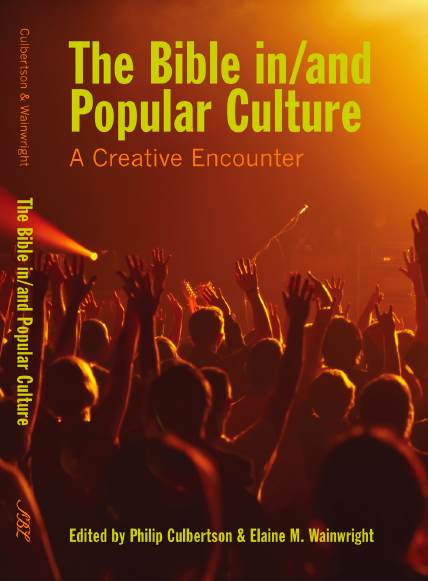
Well Brotown Annual volume 1 begins with “letter from God” and for those who want a more explicit Christ focus, Annual volume 2 begins with “Jesus welcomes you.” Which I’ve written about in much depth, seriously!, in The Bible in/and Popular Culture: A Creative Encounter (Semeia Studies)
Wednesday, August 31, 2011
making links through Fresh expressions
Here is some notes from the talk I have gave last night, titled Making Links Through Fresh Expressions. And a concluding prayer, using this advertisement, which sort of really went off!!
Introduction (2 mins)
Moses and burning bush. It has a lot to say in terms of our topic – making links through F ex.
First, mission begins with listens – Exodus 3:7 “I have heard them crying because of their slave drivers …. “ Mission begins with this compassion for hurting people.
Second, Moses is asked to give what he’s got – “what is in your hand.” (Exodus 4:2) All he’s got is his stick. And a diseased hand. And a tongue that feels to thick. And that’s what God starts with. Pretty simple way to think about mission. It’s as is as simple as giving what’s in our hands. We’ve all got something.
For all of us, it’s our God story – our lives have been changed. As it says in Basis of Union – Para 3 – say it to the person beside you … you are “the beginning of a new creation, of a new humanity. God in Christ has given to all people in the Church the Holy Spirit as a pledge and foretaste of that coming reconciliation and renewal
And our community charism. That each of us are in a church that has a particular set of gifts and possibilities.
So Making links – starts with us paying attention to the cries. And being willing to simply give what we’ve got.
I want to approach tonight under 4 headings
- linking through listening
- linking in (because despite tonight being about fresh expressions, many of you are in established churches and not yet ready to think about fresh expressions)
- linking out (focused on fresh expressions)
- linking in posture
I plan to talk for about 35 mins and then give you some time to chose 1 of those 4 headings and “do something”, ie to resource yourself practically. (more…)
Tuesday, August 30, 2011
a practical “linking in” mission resource?
Tonight I’m speaking to about 60 folk from the Community Outreach Mission Network, which is a grouping within the Uniting Church of South Australia. The topic they have given me is
“Making links in mission.”
It has given me the chance to develop some ideas I’ve been pondering. In particular, how to help churches conduct a mission audit of their life. I worked with a church recently who became aware of needs in their community but in the end decided they were simply too busy.
So the tool is a way of inviting us first to reflect on what exactly we are busy about. Who is our life for?
And second, to think strategically about how we do our mission. If we have limited resources, then how are those resources being deployed? Anyhow, here it is “Linking in” resource and I’d love some feedback on how useful you find in reflecting missionally on your church life?
Monday, August 29, 2011
leading in a mission: moses style
Sitting in church yesterday, I heard a particularly good storytelling of the call of Moses. I began to appreciate a number of important insights in regard to leading in mission.
First, the call begins with the cry of a people. So leading begins with listening, to the cries of those in pain. This is a care for another, a motivation to serve born out of desire to serve. And in the Moses story, the listening is quite specific, the cries of an oppressed Israelite people at a particular time in history. Good leading involves that depth, knowing what are the cries of our community, at a particular time. (For a specific way to do this, see some ideas I have produced here and here and here).
Second, Moses was invited to give what he had, his staff, his hand. In other words, to share what he had. This could be viewed thought the lens of asset-based community development, or appreciative inquiry, that Moses builds on what he has, on what he knows, rather than on what he does not have, or does not know. All people, all churches, all groups, have something in their hand, have gifts and insights and important ways of being. Leading in mission starts with being willing to offer that.
Third, it assumes our feelings of inadequacy. I find this wonderfully liberating. I often feel overwhelmed by what lies around me and deeply aware of my own limitations. So did Moses. Yet God called in and with those limitations.
So, leading in mission – Moses style
- listen deeply, specifically
- assume we start with limitations and liabilities
- simply give what we’ve got
I can almost feel a sermon coming on! 🙂 Which might be important, given that I am speaking Tuesday night at a Uniting Church Community network!


 )
)