Monday, September 04, 2017
video of my “hapkas” Christology as resistance and innovation talk online
 Video from all the conference presentations of the “Resistance and Innovation: Empire and Native Christianity in the Pacific” conference hosted by Auckland University on March 24, 2017 are now online. The video of my 20 minute paper is here along with the introduction and the followup questions.
Native Christianity in Papua New Guinea: “hapkas” Christology as resistance and innovation in Drusilla Modjeska’s The Mountain
by Steve Taylor, Knox Centre for Ministry and Leadership; Flinders University
The interaction between Christianity and indigenous cultures can provide rich insights into cross-cultural exchange in liminal spaces. Equally the complexity of such insights can be masked by totalising narratives, including hagiography and Euro-centric imperialism.
One way to approach native Christianity in Papua New Guinea (PNG) is through Drusilla Modjeska’s The Mountain
. It has been acclaimed as PNG’s best historical novel (Moore, 2012). The post-colonial methodologies of Colonial Contexts and Postcolonial Theologies: Storyweaving in the Asia-Pacific (Postcolonialism and Religions)
(2014) will be used to read The Mountain for indigenous agency in resistance and innovation. Such a reading requires locating Modjeska as an academic and novelist who refuses to accept totalising binaries, in both her writing and her life.
I will argue that the portrayal of native Christianity in The Mountain assumes indigenous approval and indigenization. Themes of ancestor gift and “hapkas” will be applied to Jesus as “good man true, he die for PNG” (The Mountain
 . It has been acclaimed as PNG’s best historical novel (Moore, 2012). The post-colonial methodologies of
 Monday, August 28, 2017
the dangers of heavy in weight research
I have been wondering recently if different types of research carry different weight. In July, I was presenting two papers at two different conferences. One was on indigenous responses to Empire. Titled Converting empire: theologies of church and state in the encounter between British and Maori, it involved some pretty sad reading about the impact of the Great War of 1864 on Maori. A second paper was on Christian theology and sexual violence. Titled Sexual violence in the line of David: The possibilities and limits of recapitulation, it involved some equally sad reading on the impact of sexual violence.
Both papers also invited those who might listen into some difficult spaces. The treatment of indigenous peoples and sexual violence engage us body, mind and soul. Who knows who is in the room, and how they might respond, to presentations that engage heart and head.
I finished both presentations exhausted. There is always a degree of anxiety and nervous tension that goes into a presentation. There is a vulnerability in presenting work to peers. There is the inevitable imposter syndrome – the voices saying I’ve not read enough, that need to be met with the realism of “I never will.”
But this time the exhaustion seemed worse.
This was brought into sharp relief, the next day, when I began looking at a piece of contextual theology, a 63 page comic book titled How to Disappear Completely (2017). I had taken it as holiday reading, intending to enjoy it for pleasure. But within a few hours, I was enormously energised. I had sketched out 750 words. I had done an initial literature review. I found, in a 2nd hand book shop in Bristol, a Faber Gallery book on Stanley Spencer’s Resurrection paintings, which opened up a rich vein of potential comparative enquiry. I had spied a potential arts and culture journal and sent off an enquiry email. I was energised. This was fun.
Placing the two experiences of research side by side within the space of a few days was insightful. Sure it is always more fun (for me anyhow) to start something than end something. But something more was going on. I would suggest that some research is light in weight. Not light weight, but light in weight. It takes me into parts of being human that are creative. These are places of joy and life. Other research is heavy in weight. It takes me into parts of being human that are sad. These are places of pain and heartache. Both are important. I need to invest in both, to be light in weight and heavy in weight. For a time, for the time leading up to the two July conference presentations, I had become out of balance, too heavy in weight!
 Last week, the Stanley Spencer Resurrection paintings book arrived. It sits on my desk. I have made an addition to my research pipeline. Under conceiving new ideas and draft proposals, I have added an investigation into Resurrection today, looking at contemporary depictions
Visualising the resurrection in contemporary urban contexts
How to Disappear Completely is the latest offering from UK artist, Leeds-based, Si Smith. It is a 63 page comic that offers a sophisticated visual engagement with the Lenten journey and the city of Leeds, UK. A commercial cartoonist by day, by night Smith expresses his faith in ways both visual and playful. Previous work includes 40, a creative imagining of Jesus in the wilderness, Stations of the Resurrection as a set of illustrations reflecting on Jesus’ resurrection today and 25 Advent Flatpack a series of paper-based figures to be assembled in the Christmas build up.
This research would bring How to Disappear Completely into conversation first, with the existing body of work, to chart the development of Smith’s visual work. A key theoretical lens would the work of Scott McCloud, who in Understanding Comics: The Invisible Art(1993, 7) defines a comic as “sequential visual art” that works through techniques of “amplification through simplification.” This allows a reading of repeated visual motifs like smoke and pigeons in How to Disappear Completely as visual amplications of human ephemerality in the urban landscape.
Second, I would examine the way that Smith’s work can be positioned in conversation with painter, Stanley Spencer. A Spencer quote on page 2 of How to Disappear Completely offers words to introduce reflection on the nature of contemporary vocation. Spencer painted works on Christ in the Wilderness (1939-54) and Resurrection (1945-1950). He sought to visualise resurrection as ascent, needing to be depicted in the urban streets on which he worked and walked. How to Disappear Completely is, I would argue, a response to Spencer. Both work as examples of imaging the resurrection in contemporary urban context. Placed on conversation, they allow to consider a constant artistic challenge, that of visualising resurrection. They thus present contemporary attempts to visualise the resurrection not as a historical moment but an unfolding contemporary urban transformation.
 (1993, 7) defines a comic as “sequential visual art” that works through techniques of “amplification through simplification.” This allows a reading of repeated visual motifs like smoke and pigeons in How to Disappear Completely as visual amplications of human ephemerality in the urban landscape.
After the recent heavy in weight research, I need some light in weight research. Both are important.
Tuesday, August 22, 2017
the final lecture – transforming leadership in Vanuatu
The final lecture of my week of teaching at Talua College, was titled Transforming leadership in Vanuatu and I designed the intensive carefully to build toward this final lecture. The aim was to encourage local agency and group application of the lecture material to local context

Talua Memorial lecture
On the first day, I had provided two case studies.
Either: You are chairing a leadership meeting. During a discussion of the church budget, two long time members of the church engage in a protracted and tense public exchange. How can you provide effective leadership in this situation (both immediate and during the next week or month)?
Or: You hear news that an overseas company wants to set up a fish factory on an important beach that is part of your village. You are preaching in church the next Sunday. How can you and the church provide effective leadership in this challenge?
Work in a group. Select one of Paul’s images of leadership in 1 Corinthians 3 and 4. Discuss with your group how this one image of leadership might guide your response to the challenge. Be prepared to share with the entire class 2 things you would do and thing you would not do.
I noted that on the final day, I would invite groups to present in relation to the case studies. I had workshopped the case studies with Paula Levy, who had recently served with her husband Roger at Talua.
I was delighted that on the last day, twelve groups presented. 7 chose the first case study, on handling conflict. 3 chose the second case study, on the arrival of a foreign fish factory. 2 groups worked on a 3rd assignment, a case study that had come up in class. This involved forgiveness and the question of whether saying sorry on behalf of someone else would allow genuine reconciliation. It was encouraging to see this level of improvisation occurring over the week and a sense of grounded integration.
Each group was able to clearly work between Biblical text and local context, and offer clear and practical next steps in leadership. 5 groups worked on leader as servant, 1 group leader as gardener, 2 groups leader as builder, 1 group leader as resource manager and 2 groups leader as fool – (With 1 group, my Bislama was not good enough to work out which Pauline image they were using).
11 of the groups presented in Bislama, 1 in English. The staff at Talua gave verbal feedback on each of the group presentations. This was verbal, and involved providing affirmations and suggesting improvements. This ensued some rigour and accountability in the learning process.
So in Bislama, this was nambawan (the best) lecture. It was a class essentially taught entirely by the Ni-Van students, as they grounded the material in their context.
Monday, August 21, 2017
Transforming leadership and ecclesial identities
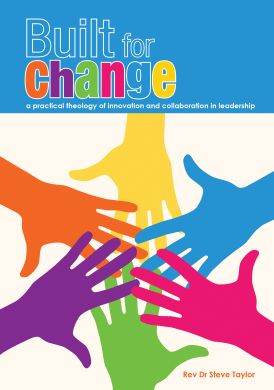
I’ve just spent 7 days on Espiritu Santo, Vanuatu, at the invitation of Talua, a Presbyterian Church of Vanuatu theological college. I was asked to speak on transforming leadership over 20 hours and as I prepared, I found myself trying to think missiologically about leadership: ie the movement from a sending God; through discipleship; to leadership – using the biblical images in my Built for change: A practical theology of innovation and collaboration
__________

Melanesian garden, Novata farm
Transforming leadership is located in missiology, in the sending God at work in the world (Luke 10:1-12). Our understandings of leadership begin with God as the active agent, the One who has called the church to serve as a fellowship of reconciliation, a body with diverse gifts, an instrument of witness (Paragraph 3).
As “the people of God on the way” (Paragraph 18), the Protestant church recognises two sacraments, that of baptism and communion. Hence any talk of leadership emerges from baptism, for it is baptism that we are initiated into God’s mission and it is through communion that we are sustained in mission. As it says in the Basis of Union, “On the way Christ feeds the Church with Word and Sacraments” (Paragraph 3). No leader emerges apart from the fact that we are all one in Christ Jesus, all of us saying yes to participation in mission through our baptism, all of us in communion strengthened in order to participate “in the mission of Christ in the world” (Paragraph 8).
An expression of our participation in mission includes the experience in which all members have gifts for which there is a “corresponding service” (Paragraph 13). In 1 Corinthians 3 and 4, Paul explains his ministry, using six images – of servant, gardener, builder, resource manager, fool and parent. In these passages, Paul is explaining what it means for him to be sent to serve, and how his theology of baptism and communion finds expression in his “corresponding service.” Given that through baptism all are one in Christ Jesus (Gal 3:27-28), it makes sense when Paul describes a shared leadership: he labours alongside other servants (Apollos in 3:5), other gardeners (3:9), other builders (3:10), other resource managers (Apollos in 4:6), other fools (apostles in 4:9) and other parents (Timothy in 4:17).
This suggests that Paul’s “corresponding service” is in fact shared by others, who alongside Paul also offer a “corresponding service” as servants, gardeners, builders, fools and parents. The result of these shared acts of service in mission is transformation. At Corinth, individuals are transformed and a church is established. When the six images of servant, gardener, builder, resource manager, fool and parent are read against literature describing the existing cultural understandings of sociality and ethics of the world of Corinth what becomes clear is an alternative ethical polis. As the one body in Christ Jesus (Gal 3:27-28) examines itself in communion (1 Cor 11:28), existing cultural understandings of leadership and influence are challenged. Such a transforming body is made possible by a transforming leadership, one which results when the church serves, gardens, builds, resource manages, acts as a fool and parent.
For every image of servant, gardener, builder, resource manager, fool and parent there are practical tools by which the entire community can serve. Thus transforming leadership has nothing to do with individual heroic leaders. Rather, both missiologically and practically, transformation emerges as God’s people participate with the Sending one in acts of service, gardening, building, resource managing, being a fool and a parent.
__________
In sketching this understanding, I am drawing on a range of recent scholarship including missiology, leadership, indigenous Aboriginal theologies, Biblical theologies, pneumatology, Christology, indigenous theology, New Testament scholarship both Pauline and Gospel, Old Testament narratives and post-colonial hermeneutics. Particularly Ben Witherington, Conflict and Community in Corinth: A Socio-Rhetorical Commentary on 1 and 2 Corinthians


Friday, August 11, 2017
Transforming leadership in Vanuatu: Talua Memorial lectures
I’ve been invited to give the 2017 Talua Memorial lecture, August 14-18, in Vanuatu and address the topic of Transforming leadership. The Presbyterian Church in New Zealand has a long history of relationship with the Presbyterian Church in Vanuatu; and Knox Centre for Ministry and Leadership has a long history of relationship with Talua College. So it was easy to say yes.

Until I realised that the Memorial lecture was actually 10 lectures! Gulp. However the topic – leadership – is something I’ve written a book on recently (Built for change: A practical theology of innovation and collaboration
I’ve had some creative educational fun in the preparation over the last week. I developed an assignment that would allow group work on “what does this mean in Vanuatu?” This included a set of case studies, which I had workshopped by a colleague with many years of experience at Talua. I also had help in the making of a certificate, to encourage assignment participation 🙂

Thursday, August 10, 2017
How to Disappear Completely: a (visual) review
Monthly I write a film review for Touchstone (the New Zealand Methodist magazine). Stretching back to 2005, some 120 plus films later, here is the review for August 2017.
 How to Disappear Completely
Films are visual storytelling. The film reviewer examines the craft of images. In this review, I want to examine images from the genre that is comic rather than cinematic.
How to Disappear Completely is the latest offering from UK artist, Leeds-based, Si Smith. A commercial cartoonist by day, by night he expresses his faith in ways both visual and playful. 40 is a creative imagining of Jesus in the wilderness, Stations of the Resurrection a set of illustrations reflecting on Jesus’ resurrection today and 25 Advent Flatpack a series of paper-based figures to be assembled in the Christmas build up. Each is telling of story through pictures.
How to Disappear Completely (2017) is a 63 page comic that offers a strikingly sophisticated visual engagement with the Lenten journey and the city of Leeds. The main character quits work, deleting his facebook account to enter a contemporary wilderness, an abandoned municipal tower. Artistic skills are turned loose on interior walls. Visually, what is abandoned is transformed from the inside out. The results are breathtaking, as the palette, initially black and white, morphs into life-giving blues and rich reds.
The theological work is biblical and imaginative. The 40 days of Lent are linked to the seven days of creation. It is a rich reading of Scripture, weaving creation into the life of Christ. The Biblical instruction of Genesis 2:15 – to till and keep –find expression in the wasteland of urban life. God’s glory is revealed in the work of human hands (Psalm 8:6), Incarnate amid modern day Leeds.
Temptations remain, despite the wilderness. The distraction of social media and the random violence magnified by the alienations of urban life, clamour for attention. As the monastic life has testified through time, isolation only amplifies the soundtrack of our inner world.
Intriguingly, a feature of How to Disappear Completely is the soundtrack. The comic genre might be paper-based, yet a playlist on page 2, provokes the question. Is sound a tempting distraction? Or a source of revelation? The main character is rarely without music. This provides a narrative continuity, first in the lyrics and second, symbolically, in the loss of sound as the iPod dies.
Si Smith works in conversation with painter, Stanley Spencer. A Spencer quote on page 2 offers words to introduce reflection on the expression of vocation. Spencer painted works on Christ in the Wilderness (1939-54) and Resurrection (1945-1950). He sought to visualise resurrection as ascent, needing to be depicted in the urban streets on which he worked and walked. How to Disappear Completely is a fitting response, a work of love for Leeds.
In its urban particularity universal questions are raised. What would it look like for Jesus to enter your town? Where are the abandoned places in which your vocation might be called to create?
How to Disappear Completely is available from Leeds Church Institute (from accounts@leedschurchinstitute.org at 5 pounds plus postage). For those seeking a contemporary reflection on vocation today, it is a life-giving purchase.
A film review by Rev Dr Steve Taylor
Tuesday, August 08, 2017
The Church in Contemporary NZ: Perspectives and Challenges – Whanganui bound
I’m speaking in Whanganui tomorrow evening (August 9, 7:30 – 9 pm) on the theme of The Church in Contemporary NZ: Perspectives and Challenges. The presenting reason is to met an incoming KCML intern, as part of the processes of induction to the KCML internship process. But it fitted really well with the local churches, who have banded together to present 4 evenings on the 500th anniversary of the Reformation. It’s a really creative and well-put together mix – of film and speaking and interaction – and I’m thrilled to be part of it.

On the 9th of August, under the heading – The Church in Contemporary NZ: Perspectives and Challenges – I will begin with what was a radical new technology, the printing press. I will use that to reflect on a forgotten hallmark of the Reformed project (according to Michael Jinkins, The Church Transforming: What’s Next for the Reformed Project?

All 4 evenings of evenings will take place at St James Church, Cnr Boydfield/Helmore Streets, Whanganui East. For more info, contact Mo Morgan 021905552 or Angela Gordon 5614314
Wednesday, August 02, 2017
baptismal words: indigenous and creation based
On Sunday, I was asked to participate in a baptismal service at a local Presbyterian student congregation. In preparing, I wanted to ensure baptism was rooted in a Biblical frame. I wanted to honour the bi-cultural relationships of which the Presbyterian church in New Zealand is a part. I also wanted to connect baptism with creation, given the importance of creation as a mark of mission in the church.
I was encouraged in this direction by a conversation in January with a Maori colleague, who noted the importance of water in Maori culture, and how the old people always reminded him that from an indigenous theological perspective were are all children of the sea. He offered a Maori proverb:
Tangaroa whakamautai, nga tamariki o te Moana nui a Kiwa.
He then linked the proverb with an Old Testament Scripture, from Genesis 6, of the Noah story. This is very astute. Rupert of Deutz, an 11th century theologian, wrote of “how familiarly and how frequently the Holy Spirit was revered even before the coming of Christ, mostly with respect to water” (Rogers, The Holy Spirit: Classic and Contemporary Readings
 The conversation got me thinking about the importance of water in the Bible and in baptism. So I pondered scriptures in which there is a connection between water and God – and how they might help us understand baptism. Anyhow, here is what resulted … (more…)
Thursday, July 20, 2017
Faith development for girls: more than just a guy thing
I’m doing a workshop at Connect this weekend. I’m taking some friends – Mary, Elizabeth, Anna – to help me explore Faith development for girls: more than just a guy thing. Workshop participants will have a chance to make a Mary/Elizabeth/Anna ‘action’ figure.

This workshop explores gender in discipleship. What can we learn from teenagers in the Bible like Loruhamah and Jarius’ daughter? It is an important question given most material on faith development has been written by men. Voices of contemporary pre-teenagers will be placed alongside Biblical voices in asking how we encourage faith development for all God’s people.
Wednesday, July 19, 2017
sacred welfare
How to nurture mystery in the practical act of giving plants?
An Australian magazine, Zadok Winter edition, carries a 900 word article they asked me to write on the future of church-based welfare. I’ve called it Sacred welfare. I start with a ministry story and examine it in light of Charles Taylor’s A Secular Age

Here’s the article in full:

Tuesday, July 11, 2017
Theologies of redemption and the ‘secondary-victimization” impact of sexual violence
I’m presenting at ANZATS 2017 tomorrow, on Sexual violence in the line of David: The possibilities and limits of recapitulation. It is a weighty, yet essential topic. Much sexual violence occurs in the context of kin and family. The Royal Commission into Institutional Responses to Child Sexual Abuse leaves no doubt that sexual violence also occurs among the family of God.

In my paper, I consider the impact of sexual violence, particularly ‘secondary-victimization” in relation to Christian understandings of redemption, in conversation with one of the four doctors of theology of the church, Irenaeus of Lyon. His theology has been summarised by Orthodox theologian, John Behr, The Way to Nicaea

This is a table summarising my data:

Given the data, I conclude:
the genealogy of Jesus in Matthew 1 offers an understanding of redemption grounded in the reality of family and kin. In Matthew 1 and in the crucifixion, the invisibility of sexual violence is made visible. Jesus, of the line of David, in Gospel narratives of compassion and truth-telling, acts in full maturity, recapitulating on behalf of other “less than mature” males in his ancestor line.
In resurrection, Jesus is revealed as fully present, both backward and forward, calling Tamar and Rahab as witnesses to the ‘economies’ of God in “each generation.” Recapitulation provides ways to redeem the ‘secondary-victimization” impact of sexual violence.
Wednesday, July 05, 2017
Wonder Woman as female Christ figure: a theological film review
 Monthly I write a film review for Touchstone (the New Zealand Methodist magazine). Stretching back to 2005, some 120 plus films later, here is the review for June 2017.
Wonder Woman
A film review by Rev Dr Steve Taylor
Wonder Woman is fun. My three female companions loved it. Each appreciated a strong woman, doing what is right without needing a male savior. For one, there was delight in connecting with 1970’s childhood TV memories of Lynda Carter fighting crime with one golden lasso and two bullet-deflecting arm guards.
Wonder Woman was a comic character, created in 1941, for DC Comics. The opening scene of the Wonder Woman movie pays homage, with a Marvel van delivering a package. Inside is a photograph. It is a smart scene, connecting Diana (Gal Gadot) with the comic genre, locating her in contemporary time, yet with a photographic history that includes World War 1.
Wonder Woman was created by American psychologist and writer, William Moulton Marston. He sought a superhero who would triumph not with fists or firepower, but with love. “Fine,” his wife said, “but make her a woman.” (Lamb, Marguerite, “Who was Wonder Woman? Bostonia). In seeking inspiration, Marston looked to early feminists, including birth control pioneer, Margaret Sanger.
Given these feminist ideals, it is interesting to then ponder Wonder Woman as a female Christ figure. Historically, Christian theology has offered a number of ways to understand the work of a male saviour. Three have dominated, including Jesus bringing victory over evil, offering a moral example and as a substitute for sin. (There are other Biblical trajectories, including Jesus as our representative, as faithful witness, as adopting us into God’s family, as embracing us like the Prodigal Son and with us in solidarity.)
In relation to Wonder Woman, the act of sacrificial love is performed by the male, as Steve Trevor (Chris Pine) offers his life for the sake of the world. Diane takes another approach. In a climatic final scene, she presents in a crucifix position, arms outstretched, radiating white love from her heart to conquer darkness. It is an act chosen after an extended wrestle with the implications of free will.
It is a complex moral question, carefully explored over an extended final action sequence. Will you give someone choice, when they have the ability to choose evil? For Diana, the answer is resolved in remaining love.
“And now I know… that only love can truly save the world.
So now I stay, I fight, and I give – for the world I know can be.
This is my mission now, for ever.”
Confronted with the human potential to bring darkness, she triumphs not with fists or firepower, but with love. In so doing, redemption chooses to participating with humanity, active in a mission in which love wins.
Wonder Woman is packed with action and fun-filled humour. It provides connections for fans new and old. For new fans, Diana’s Amazon origins are describing, while for old fans, she appears in the opening scene in the same clothes as she wore in the much loved 1970’s TV series. At the same time, Wonder Woman is a serious examination of a female Christ figure who responds to the complexity of free will with a remaining love.
Saturday, July 01, 2017
conference bound
After 2 sleeps at home, I am on the road again, heading to Australia for two academic conferences.
The first conference – Australian Association of Mission Studies – is in Melbourne. I am presenting a paper titled – Converting Kings? theologies of church and state in the encounter between British and Maori. I am looking at the story of Maori leader, Wiremu Tamihana. I am biography as theology (drawing from James McClendon, Biography as Theology: How Life Stories Can Remake Today’s Theology

The second conference – Australia New Zealand Association of Theological Studies – is in Adelaide. I am doing two things.
First, I am presenting a poster – Structuring Flipped learning: The use of Blooms taxonomy in the classroom experience. I’ve had some playful fun putting together the following.

Second, I am presenting a paper on Sexual violence in the line of David: The possibilities and limits of recapitulation. I’ve worked on this with a colleague at University of Otago, David Tombs and we will be testing some ideas about pastoral theology.
Sexual violence in the line of David: The possibilities and limits of recapitulation
ANZATS 2017Much sexual violence occurs in contexts of kinship, including tragically the family of God. This paper tests notions of recapitulation when lines of kin are stained by sexual violence. Tombs has previously argued that Jesus is a victim of sexual abuse. How is this good news for victims in history?
The genealogy of Matthew 1 connects Jesus with the royal line of David. It names women either sexually mistreated or vulnerable to sexual violence. Tamar is dishonoured by male sexual practices, resorting to prostitution. Bathsheba is sexually preyed upon by a powerful ruler. Rahab as a prostitute is likely to have experienced sexual mistreatment. Ruth’s vulnerability is evident in the encounter with Boaz. A further victim is anonymously present, given David is Tamar’s father, raped by Amnon. The Matthean genealogy thus locates Jesus as a descendant: of men who violate and of women violated. At stake is the depths to which redemption is possible.
Irenaeus offers an essential link between theology and anthropology. For Behr, The Way to Nicaea
(2001), these can be summarised as continual presence, making visible and full maturation. (See also Behr, Asceticism and Anthropology in Irenaeus and Clement
, (2000)). These ground redemption in humanity experience. Jesus makes sexual violence visible when framed as from the Davidic line. In full maturity, Jesus acts justly toward victims of sexual violence. Gospel episodes of compassion, vulnerability and solidarity become a recapitulation, a contrast to actions of the males in the line of David.
What emerges are starting points for ways to respond to sexual violence, including solidarity, visibility, acting humanly and tending bodies broken.
David Tombs and Steve Taylor
University of Otago and Knox Centre for Ministry and Leadership: Flinders University
It will be good to be back in Adelaide, which was home for us for 6 years.
Wednesday, June 07, 2017
a fake films film review: Their Finest
Monthly I write a film review for Touchstone (the New Zealand Methodist magazine). Stretching back to 2005, some 120 plus films later, here is the review for June 2017.
Their Finest
A film review by Rev Dr Steve Taylor
Their Finest is well-made entertainment, directed by Danish director, Lone Scherfig. Scherfig has won previous acclaim, with An Education gaining three Oscar nominations and applause in Touchstone (November, 2009) as “a triumph for the directing skills of Dane Lone Scherfig.” Scherfig seems able to draw exceptional performances from women leads. In 2009, Carey Mulligan gained as Oscar for her performances as Jenny in An Education. In 2017, Gemma Arterton shines as Catrin Cole in Their Finest.
Their Finest draws on the third novel (“Their Finest: A Novel
The result is a set of ethical questions. Is British propaganda more virtuous than German propaganda because winners are grinners? Is making movies about the process of making movies clever? Or is the whole industry self-referencing narcissism? And is that the point being made by Their Finest?
While Their Finest is based on an exceptional performance by Gemma Arterton as Catrin Cole, both men in the developing love triangle (Sam Claflin as Tom Buckley and Jack Huston as Ellis), are less than loveable. A chain smoking mansplainer and a philandering artist suggest their is little nobility in wartorn English manhood.
What becomes clear as Their Finest rolls on is that for some, war will be more of a liberation than a deprivation. With a shortage of men, women (like Catrin Cole) who want to script write find themselves achieving in domains previously unattainable. Hence war becomes a theatre in which the emancipation of women is enhanced.
The movie mixes comedy and war time drama. Sometimes the mix is smooth, including the scene in which the German bombing of a London fashion reveals bodies not of humans but of dummies. At other times, the mix is barely believable. A central scene (spoiler alert), concludes with a war-time tragedy that abruptly ends a romantic relationship. As the body is rushed to hospital, the camera remains focused on Catrin Cole. It makes good cinematography, centralising every ounce of grief in one lonely figure. But leaving a victim alone in shock and grief seems a scarcely believable response, in war or peace.
Perhaps this is the dilemma at the heart of Their Finest. The war offers liberation, but only for individuals present in moments of opportunity. It seems a less than fine approach to feminism and opportunity. Does feminism need individual women grabbing opportunity, only to find themselves making fake news? Or does it need a societal restructure, in which solidarity together brings needed change? Their Finest offers entertainment and a pleasing range of puzzling ethical complexities.


 )
)