Tuesday, March 07, 2017
Converting empire: theologies of church and state in the encounter between British and Maori
News today that my paper proposal for Australian Association of Mission Studies (AAMS) 2017 gathering, in Melbourne, July 2-5, 2017 was accepted. The paper was sparked by my reading over the holidays of The Great War for New Zealand: Waikato 1800-2000
The AAMS theme, Re-imagining home, seemed an ideal occasion to share my thinking in an academic context, using the tools of post-colonial analysis, in which the focus is on the creative adaptations and innovative practices of resistance used by indigenous people as they respond to invasion. It is also relevant given our current political context. Amid anxiety about how to respond to global imperialism, what can be learnt from the witness of indigenous people in history?
Converting empire: theologies of church and state in the encounter between British and Maori
Following Jesus in someone else’s country is inevitably complexified by cross-cultural transmission. This was certainly true of indigenous peoples navigating the effects of colonisation. This paper examines how political categories introduced by British expansion in Aotearoa New Zealand were appropriated by Maori resisting the advance of Empire.
In 1861, faced with increased conflict and the settler lust for land, Waikato Maori were presented with an ultimatum: retain your land only if you are strong enough to keep it. In response, Maori leader Wiremu Tamihana used Ephesians 2:13 to offer a theology of church and state which defended Maori political initiatives, reconceived international relationships and reimagined home.
A missiological reading of Tamihana’s theology yields important insights.
First, a creative public theology. Christians often turn to the kings of Israel, the two-sided coin in Matthew 22:15-22 or Romans 13:1-7 to conceive the relationship between church and state. Tamihana’s use of Ephesians preserves difference, seeks justice and offers a different understanding of religion and politics.
Second, the reversal of home. In Ephesians, those who are “once far off” are the Gentiles, whom God acts to redeem. Tamihana interprets those who are “once far off” as the English, brought “nigh” by the blood of Christ. Maori are understood as Israel: a creative reinterpretation.
Third, the power of Scripture translated. By 1835, Ephesians had been translated into Te Reo. Translation allowed Maori to read Scripture for themselves. As a result, Tamihana – in 1861 – used the Scriptures the colonisers brought to challenge colonising behaviour. Such is the power available when people are able to read Scripture in their own language.
Hence, from this example we see that central to mission studies is neither missionary nor method, but the creative work done by indigenous cultures in converting the message and resisting the power of empire.
Tuesday, February 28, 2017
Religion and politics: Learning with Wiremu Tamihana
I’ve just had a piece published in SPANZ. In the midst of concern about how to do theology after Empire and be the church in violent and unstable times, there is much reference to theologians in Europe, like Bonhoeffer. Why not also look here in New Zealand and learn from indigenous people who in times past have confronted colonising power wielding military might?

Religion and politics don’t mix. It’s like mixing ice cream and manure, says Tony Campolo.
Over the holidays I read The Great War for New Zealand: Waikato 1800-2000
• War in the Waikato brought more British troops to New Zealand than were available for the defence of England.
• WW1 killed around 1.7% of the NZ population. Yet in the Waikato War, 4% of Maori died, including alarmingly high numbers of Maori women and children.
• Some forty years after the war, 3,549 Maori remained landless through land confiscation.
The Great War for New Zealand
In response, Maori leader, Wiremu Tamihana pointed to the presence of kings in Russia, France and Tahiti. If these kings were not required to submit to Britain’s Queen, should Maori? Tamihana then turns to religion, noting the “only connexion with you is through Christ” and quoting Ephesians 2:13 (KJV), “In Christ Jesus ye who sometimes were far off are made nigh by the blood of Christ.”
Given this Scripture, Tamihana asks the British Crown to leave the Maori King and let the results “rest with our Maker.” For Tamihana, religion and politics clearly mix. Christ brings people together, God the Maker judges all leaders for the behaviours that result.
Tamihana clarifies his understanding of religion and politics in a later exchange. Placing two sticks in the ground he declared that one was the Maori King and the other the Governor. Across both he placed a third stick, representing the law of God and the Queen. Finally, he traced on the ground a circle around both sticks, [saying] ‘That circle is the Queen, the fence to protect them all’ (The Great War for New Zealand
Reading Tamihana’s theology of religion and politics three things stand out.
First, the creative way in which religion and politics are mixed. Christians often turn to the kings of Israel, the two-sided coin in Matthew 22:15-22 or Romans 13:1-7. Tamihana’s use of Ephesians creatively points to ways that religion mixed with politics can preserve difference and ensure justice.
Second, the reading reversal. In Ephesians, those who are once far off are the Gentiles, whom God acts to redeem. For Tamihana, those who are once far off are the English, now “made nigh” by the blood of Christ. This connects Maori with Israel. It means those who arrive in New Zealand are brought by God. As such, their actions and ultimatums are judged by the character of Christ.
Third, the power of Scripture translated. Ephesians had been translated into Te Reo by 1835, the entire New Testament by 1837. Translation allows Maori to read Scripture for themselves. The result is Tamihana in 1861 challenging colonising behaviour from the Scriptures they have brought. Such is the power when people are encouraged to read for themselves in their own language.
As 2017 begins, our talkback is full of active discussion concerning race, identity and politics. In the months ahead, we face New Zealand elections, the reality of Brexit and a new President of the United States. Tamihana offers much wisdom. Religion and politics mix best when they appreciate difference, look to Christ in bridging between diverse groups and consider all peoples accountable to the character of Christ.
Sunday, February 26, 2017
liturgy of sighing
to sigh: emit a long, deep audible breath expressing sadness, relief, tiredness, or similar
Mark 7:34 Jesus looked up to heaven and with a deep sigh said to him, “Ephphatha!” (which means “Be opened!”).
A few weeks ago, I was asked to provide a brief welcome to a KCML training event. It was an event focused on training children and youth workers and about 55 folk were present. Some had driven over four hours, while others had flown from the North Island. As we began, I wanted to not only welcome, but also to locate our day in prayer.
The lectionary reading from the day before described Jesus healing a blind man. Reading it, I had been struck by the fact that Jesus sighed. I live in a family of audible sighers and it was nice to realise we shared our humanity, our sadness, relief and tiredness, with Jesus. In my own prayer, I had spent time thinking about the things I was sighing about.
Standing to welcome folk, I noted the need to begin with prayer. I described the very common human experience of sighing and invited us as a group to pray be sighing together!
Since it was a gathering focused on children and young people, I invited us to think of a young person that we were currently sighing about.
And to sigh together. And we did.
Since it was a gathering of leaders working with children and young people, I invited us to think of a leader in our ministry that we were currently sighing about.
And to sigh together. And we did.
Since we were a gathering of people thinking about mission and ministry into our communities, I invited us to think of something in our community that we were currently sighing about.
And to sigh together. And we did.
Since we were a gathering of people aware of politics and politicians, I invited us to think of a politician that was making us sigh.
And to sigh together. And we did.
I then read from Mark 7:34.
And I prayed: that our day together would result in our eyes being opened; opened to see healing and change in our young people and our leaders and our communities and the politics of our world; a prayer prayed in the name of Jesus who signed, and saw the reality of lives “being opened.” Amen.
It was a simple liturgy. It orientated us around Scripture. It acknowledged the humanity of ministry, that it causes us to be sad, relieved, tired. It placed us in context, inviting us to focus on people and community and real life. It was individualised, inviting people to pray for what was on their heart, what was causing them to sigh. It was participatory, a whole room of people sighing together. It used the senses, the physical act of sighing, the audible hearing of others sighing around us. It invited God to be present, to open eyes and situations in revelatory ways.
A liturgy of sighing. Feel free to join our prayer, to sigh also at things you wish to be opened.
Friday, February 24, 2017
theology of foraging
It was John Calvin who called nature God’s second book. In creation we catch a glimpse of the Creator. I follow a daily lectionary pattern, reading from the Psalms and Gospels daily. It is a way for me to pay attention to God through Scripture. But if nature is God’s second book, then what might a daily creation lectionary look like?
I pondered this in the cool of a summers evening this week as I harvested wild blackberries. These were brought inside, mixed with lemon yoghurt and served with great delight in the team Taylor household. Such is the joy of eating freshly foraged berries.
 Every year, around the 21st of February, foraging blackberries for instant eating becomes possible. They grow wild on the roadside beside our driveway. Every year, without any effort, I am blessed by abundance. It is a gift, something to be enjoyed without any need for weeding, pruning or spraying. Such is the abundance of creation.
So, as I enjoyed the berries, I pondered God’s second book and foraging as theology. I found myself naming other moments of grace, of unexpected gifts, things I had never worked for and can simply enjoy.
I shared the story and the theology of foraging from God’s second book as the KCML team gathered the next day for our weekly prayer and community building. I offered around the room the berries that had ripened between the cool of the evening prior and the morning next. I invited the team to reflect on a recent moment of unexpected blessing. As we shared, our week past seemed shot through with the abundant grace of God.
Scripture of course has a number of instances that broaden and deepen a theology of foraging. In Israel’s book of Law, the sides of fields are to be left, to be foraged by the alien and landless. It is a fascinating approach to social welfare, providing ways to feed the poor without diminishing their humanity through handouts. It is such gleanings that provides for Ruth, the migrant from Moab and makes possible her encounter with Boaz. In the Gospels, the disciples forage on the Sabbath, picking corn. They gain the disapproval of the Pharisees, but Jesus turns the foraging in a teaching moment, affirming that sabbath is for humans, not humans for sabbath. In other words, in the abundance of grace is how we are to understand ourselves and our relationship to creation, to humans and to religion. The encounter with God begins in the blessing of unexpected gifts.
Such is a theology of foraging, the gift of wild blackberries in the cool of a summers evening, the blessing of God’s book of nature. I wonder what else could be part of a daily lectionary reading of nature?
Friday, February 17, 2017
Structuring Flipped learning: The use of Blooms taxonomy in the classroom experience
A new experience for me today, submitting a proposal to offer a poster to the Australia New Zealand Association of Theological Schools. I’ve not ever offering an academic poster before. However part of my Flinders University 2015 Vice-Chancellor’s Awards for Excellence in Teaching included evidence of practical classroom teaching. It is the sort of material best communicated visually. ANZATS has a stream on Learning and Teaching Theology, so I’ve offered a poster, titled
Structuring Flipped learning: The use of Blooms taxonomy in the classroom experience
This poster will demonstrate the use of Bloom’s taxonomy in structuring the classroom experience in the context of flipped learning. Desiring to personalise the ability of students to consider their own role in the teaching and learning experience, Bloom’s Taxonomy was used in a Christology class to structure content delivery.
The poster will outline the classroom practice. In week one, Bloom’s taxonomy was introduced to both explain flipped approaches to learning, but also to inspire and motivate students to undertake the pre-reading. A set of questions generated discussion and agreement around the types of behaviours that enhance learning, resulting in the development of a shared class covenant in participating in a Flipped Learning Experience.
The poster will further outline the subsequent weeks, including how the classroom experience was structured in relation to different parts of Bloom’s taxonomy. This provided students with choice and also opportunities for immediate formative self-assessment.
Finally the poster will analyse student feedback and the role of the lecturer in engaging class interaction in feedback loops.
Hence the poster will thus provide a visual demonstration of the practice of teaching in dialogue with theoretical engagement with learning theory and interaction with student experience.
Now I’m looking forward to the challenge of communicating all of this visually. It should be a fun, growing, new challenge – if accepted. And something to hang on my wall!
Wednesday, February 15, 2017
a daily sabbath: urgent, important, necessary and restore
The last 15 days have been very intense here at KCML. A Pre-intern block course of 6 days to bring our incoming interns up to speed was immediately followed by a Summer block course of 9 days. In addition, KCML:Dunedin hosted a variety of public events, including our inaugural lecture and winetasting, a creation care workshop and a Christian education event resourcing children and youth workers. All told, we’ve resourced over 130 people over the Summer blockcourse, engaging all sorts of ministers, leaders and lay folk from the wider church. It’s been great.
I woke this morning aware that in the intensity, a good number of tasks have been left undone. “This is a really busy spell, I’ll get back to you as soon as I can,” has been a necessary, and valid, response. The result is a building inbox of necessary and urgent tasks. Equally, 15 intense days mean I’m personally tired and drained. Yes, I will take time off to relax. But this tempts me into a binary: days working either on relaxing or on the necessary and urgent.
In recent days, I have also been pondering the creation story of Genesis 1. At the end of six days work, God enters a sabbath rest. Hurrah for weekends. Yet equally, during every day of work, God is also pausing, to name things as good. Every bit of hard work is enjoyed not in hindsight, while relaxing, but also in the moment. In other words, in Genesis 1, a sabbath pattern is both daily and weekly.
Pondering this, I found myself drawing a quadrant with four parts – urgent, important, necessary and restore.

This gives me a way to structure my day. Daily, I will seek to spend time in each of these four quadrants. For every urgent task, I will also undertake a necessary task. For every necessary task, I will undertake a restoration task. As I gain energy from some restoration, I will invest that in an important task. And so on, around the quadrant: a daily sabbath pattern.
I have run off copies of the quadrant on the photocopier. As I finished work today, I used a copy and reflected my way around the quadrant.
- Important and I noted the sending of an email about work needed for a meeting next Wednesday.
- Urgent and I had supplied some words to a colleague needed them for an event on Friday.
- Necessary and I noted thankyou letters written to three folk involved in our blockcourse.
- Restore and I recalled lunch outdoors in the sunshine and an end of work drink with the team.
Tomorrow when I arrive, another day will await me. I will write out my to-do list, making sure there are tasks in each of the four quadrants. In so doing, I will be entering a daily sabbath pattern.
Tuesday, February 14, 2017
Moana film review
 Monthly I write a film review for Touchstone (the New Zealand Methodist magazine). Stretching back to 2005, some 120 plus films later, here is the review for February 2017.
Moana
A film review by Rev Dr Steve Taylor
Moana is family fun and as such, has much to commend it. Moana is the daughter of Chief Tui and yearns to sail the ocean deep. Forbidden by her father, she finds inspiration in the stories of her sailing ancestors, the encouragement of her grandmother Tale and the resources of the ever-playful ocean. Setting sail, Moana seeks the demi-god, Maui, who is a needed companion in the question to return the heart of Te Fiti to its rightful place, thus replenishing food and fish for her dying village.
Moana is animated and as such, offers a rich and playful colour palate mixed with voice overs and catchy singalong songs. New Zealand actors are well-presented, including Temuera Morrison (Tui), Jemaine Clement (a greedy coconut crab called Tamatoa) and Rachel House (Tale).
Moana has many moments worth applauding. It skilfully tells a Pacific story. It provides resourceful, determined female characters, notably Moana and her grandmother. It affirms that leaders can be female and, in the interaction between generations, points to ways by which cultures might innovate and change. The power of grandmothers to bring change in cultures is a similarity shared with Maori films, Whale Rider (2002) and Mahana (2016) (reviewed here).
Consistent with Pacific understandings, in Moana the ocean is a character, playfully guiding Moana’s quest. On this ocean, Pacific people are highly skilled wayfarers. Watching Moana encouraged me to reach for Karin Amimoto Ingersoll’s, Waves of Knowing: A Seascape Epistemology
Alongside these redeeming features, Moana glosses over a complex set of Pacific realities. In the real world of Kiribati, the ocean so glamorised in Moana continues to rise. This nation of 37 islands, none more than three metres above sea level, with a capital city more densely populated than Tokyo, desperately needs not only a demi-god returning Te Fiti’s heart, but people and nations willing to embrace more sustainable ways of living.
Another reality check comes as Moana is placed alongside 2011 movie, The Orator. The differences are stark. With Moana, Walt Disney invested over $150 million, to tell in English a story from another culture. In The Orator, Blueskin Films spent $2.3 million, to tell in Samoan a story of its own. One brings into focus a chief’s daughter, the other a dirt-poor taro farmer named Saili. In Moana, the animated bodies are beautiful, while in The Orator, Saili is a dwarf, bullied by taller Samoan villagers. In The Orator, hierarchies are challenged, not with the help of demi-gods, but by actions of courage, resilience from those on the margins of village life.
See Moana. But may it not be the only Pacific movie you watch as this new year unfolds. And please God, may each of us, and every viewer of Moana, find ways to act for climate change on behalf of the people of Kiribati.
Monday, February 13, 2017
Thornton Blair Research Fellow at KCML: Rosemary Dewerse
Knox Centre for Ministry and Leadership are delighted to announce the appointment of Dr Rosemary Dewerse to be the Thornton Blair Research Fellow. Rosemary is a highly trained missiologist, a skilled theological educator and experienced academic administrator.
 In a rapidly changing world, the need for ministers and leaders to keep growing is essential. The Thornton Blair Research Fellow is a new initiative of KCML, designed to enhance delivery of life-long learning. The Research Fellow will listen among key stakeholders and design life-learning opportunities that will integrate professional standards and higher education post-graduate requirements. Two pilot offerings in Christian leadership will be tested in 2018.
After advertising in November and interviewing in January the interview panel were delighted to offer this fixed, two year, 0.6 position to Rosemary Dewerse. Rosemary was raised in the Presbyterian Church where her father was a minister. She has written and worked in the area of church as an intercultural community. She is the author of Breaking Calabashes: Becoming an Intercultural Community which offers four practices for creating communities that welcome and enable all people.
Rosemary will be part of the KMCL team, based in Auckland.
Who is Rosemary Dewerse? In making the appointment, the panel outlined a number of essential and desirable characteristics. Through the application material, referee comments and interview, Rosemary demonstrated a track record of competency in every area. She has a passion for the Gospel as good news for the church and world. She is married to Roelant and has two children.
From 2012 to 2015 Rosemary worked as the Post-graduate Coordinator at Uniting College, Australia, which serves the Uniting Church in Australia (a partner church of the PCANZ). This involved leading over 60 postgraduate students working in both University and private higher education roles. She continues to maintain an active post-graduate supervision role and spoke of this being an area of great love, because of the sense of journeying together in mutual learning.
Rosemary has completed a PhD in intercultural leadership development. She has successfully applied for re-accreditation of post-graduate qualifications. This involved not only redesigning the post-graduate courses in light of stakeholder feedback, but also gaining the best ever accreditation results in the process.
Rosemary has taught in theological education for sixteen years in four different cultural contexts. She has published in partnership with indigenous theologians in both Australia and New Zealand. Rosemary’s referees affirmed her teaching skills. Her written work presented as part of the application process showed a creative re-working of a taught course, to enable engaged mission learning in Aotearoa New Zealand.
Rosemary is in demand in Australia and New Zealand to speak in areas of mission and leadership. She has an extensive record of publication, including a book on intercultural leadership entitled Breaking Calabashes: Becoming an Intercultural Community and articles on indigenous theology, missiology, and online curriculum design.
Rosemary has, with permission of local iwi, published in areas of Maori theology and missiology. She has studied Te Reo for three years and taught in a Maori theological context.
Rosemary has designed and taught online courses for Laidlaw College and Uniting College. She has been part of a review team that redesigned the online learning at Uniting College and was commended by her referees for her skills in this area. She has published in this area, reflecting theologically upon online curriculum redesign. She has worked as a former trainer of ministers in seminaries in Central Asia, Australia and most recently St Johns College.
In the interview, Rosemary spoke of a call to come home and believed that applying for this role was part of that call, given her roots are in the PCANZ, having grown up in the manse in urban, small-town and rural communities and worshipped as a young adult at St Pauls Trinity Pacific (Christchurch) and Fairfield Presbyterian.
The panel were struck by her connections with the PCANZ historically and with NZ cultural contexts. They found Rosemary personable and engaging, possessing a grasp of the complexity of the project and a track record of experience across all the desired and essential outcomes. They sensed a deep commitment to listen and to mutual transformation. They recognised an energy, the ability to be a self-starter and a strong sense of passion for the future of the church. In Rosemary they are confident is a person who can fulfil the expectations of Thornton Blair, and deliver a project birthed in listening to the church, yet able to sync with the complexity of professional standards, ministry realities and post-graduate higher education processes.
How was the appointment made? The Thornton Blair Research Fellow concept was agreed by the KCML Advisory Board in October 2016. A funding application to the Thornton Blair Trust had been agreed by Senatus in August and recommended to Church Property Trustees in late November.
The role was advertised and an interview panel of five shortlisted in early December. The panel asked three applicants to provide further information, including a sample of writing, a one page plan for stakeholder engagement in the first two months, further referees and to be interviewed in January 2017.
The panel prepared a list of set questions. At the end of the process, the interview panel were unanimous in affirming that Rosemary had the gifts and graces for this unique role.
Who was the interview panel? The KCML Advisory Board appointed a panel of five:
· Dr Glen Pettigrove – Chair of KCML Advisory Board
· Dr Hugh Morrison – Advisory Board member and University academic in field of education
· Rev Dr Tokerau Joseph – a Presbyterian minister who has completed post-graduate research in the intercultural nature of the PCANZ
· Rev Margaret Garland – a Presbyterian minister representing Leadership Sub-Committee and Senatus
· Rev Dr Steve Taylor – Principal KCML
Approved by Rosemary and all members of the Interview Panel
Wednesday, February 08, 2017
paper acceptance Resistance and Innovation: Empire and Native Christianity in the Pacific
I was delighted to hear today that a paper proposal I submitted for the Resistance and Innovation: Empire and Native Christianity in the Pacific conference at the University of Auckland on March 24, 2017 has been accepted. The conference will bring together scholars of Christianity in a variety of disciplines to examine the cultural dynamics of the interaction between native peoples and transplanted Christian churches in the Pacific region. It will pay particular attention to the dynamic tension between centralized and localized religious culture.
My paper will be a development of research I presented at the International Association of Mission Studies conference in Korea in August 2016. I’ve continued to write and research for publication in the months since and am glad of the opportunity to also present my research in a Pacific and University environment. Here is the abstract I submitted:
“Hapkas” Christology as resistance and innovation in Drusilla Modjeska’s The Mountain
The interaction between Christianity and indigenous cultures can provide rich insights into cross-cultural exchange in liminal spaces. Equally the complexity of such insights can be masked by totalising narratives, including hagiography and Euro-centric imperialism.
One way to approach native Christianity in Papua New Guinea (PNG) is through Drusilla Modjeska’s The Mountain
. It has been acclaimed as PNG’s best historical novel (Moore, 2012). The post-colonial methodologies of Ashcroft (in Colonial Contexts and Postcolonial Theologies: Storyweaving in the Asia-Pacific
, 2014) will be used to read The Mountain for indigenous agency in resistance and innovation. Such a reading requires locating Modjeska as an academic and novelist who refuses to accept totalising binaries, in both her writing and her life.
I will argue that the portrayal of native Christianity in The Mountain assumes indigenous approval and indigenization. Themes of ancestor gift and “hapkas” will be applied to Jesus as “good man true, he die for PNG” (Modjeska 2012: 291). The creative reworking by which native (Omie) people locate Jesus as ancestor gift of Canaanite descent will be examined. This is consistent with recent scholarship in which indigenous cultures are Old Testaments (Lift Every Voice: Constructing Christian Theologies from the Underside
, 1998; Brett 2003) and the book of Genesis a demonstration of indigenous faiths being woven respectfully into the story of Israel (The Old Testament of the Old Testament: Patriarchal Narratives and Mosaic Yahwism
, 1992).
This subverts the “big man” as a key trope in the ethnography of Melanesia (Big Men and Great Men: Personifications of Power in Melanesia
, 2009). It suggests that post-colonial theology pay attention to cultural hybridity and indigenous innovation. Or in the words of The Mountain
Dr Steve Taylor
Flinders University: Knox Centre for Ministry and Leadership
 . It has been acclaimed as PNG’s best historical novel (Moore, 2012). The post-colonial methodologies of Ashcroft (in
  , 2014) will be used to read The Mountain for indigenous agency in resistance and innovation. Such a reading requires locating Modjeska as an academic and novelist who refuses to accept totalising binaries, in both her writing and her life.
 , 1998; Brett 2003) and the book of Genesis a demonstration of indigenous faiths being woven respectfully into the story of Israel (
 , 1992).
 , 2009). It suggests that post-colonial theology pay attention to cultural hybridity and indigenous innovation. Or in the words of
 Thursday, February 02, 2017
U2 praying the pattern of the Psalms in Paris
A joy yesterday to have a 2,000 word article accepted for Equip a bi-annual publication of Ethos Centre for Christianity and Society. Aware of my interest in U2, they asked me early in January to write something for an upcoming edition on music.
Back in October I was doing research on how religious groups prayed after Paris. Having written a number of times about U2’s live concert performances, I wondered how they responded, given they played days after the Paris bombings. The research in October (watching the iNNOCENCE + eXPERIENCE Live In Paris
So when Ethos emailed, I thought it might be an opportunity to use research done, but not likely to find a writing home. I looked back over my research notes: watching U2 DVD’s as research! How did they pray, live, publicly, in the midst of so much pain?
I also was aware of the friendship between Bono (of the band U2) and Eugene Peterson (author of contemporary-language Bible translation The Message) and their common interest in the Psalms.
So over the last few weeks, various scraps on the hard drive began a 2000 word piece, titled
U2 praying the pattern of the Psalms in Paris
Here’s part of the conclusion:
In sum, aware of a broken world, I have examined how music and musicians might respond. Psalms voice the full register of human emotion. The Psalms of lament offer a pattern: call, confession, complaint, curse and confidence in surrender. I have examined how U2 played in Paris and have argued that this pattern is evident, not on a single song, but over a number of songs, stretched over more than sixty minutes. In response to terror, and the resulting emotions of anger and fear, U2 called for help, confessed and complained. But they did not curse. Instead they looked to New Testament resources, to the love of Christ.
It’s my 2nd U2 piece this month, having submitted in the middle of January a 9,500 word chapter for a book on religion and U2 with Bloomsbury, currently titled
God moves in mysterious ways: Performed pneumatology as passionate participation in the evolution of U2’s Mysterious Ways
Two pieces in one month on one band is a bit ridiculous. But it is nice to be writing in the theology and culture interface. It brings to seven the number of things I’ve had published on U2 over the last 6 years. Not something I every expected, but it has been a fun trip. Now back to some real theology! (It also explains the silence on the blog front – only 1 post in the month of January, my most silent month ever. Apologies).
Other work I’ve had published on U2 and lament:
- looking at how they prayed publicly after the Pike River Mining Tragedy in New Zealand (Boase, E.C. and Taylor, S. (2013). Public Lament. In MJ Bier and T Bulkeley, ed. Spiritual Complaint: The Theology and Practice of Lament
. Eugene, USA: Pickwick Publishers, pp. 205-227).
 . Eugene, USA: Pickwick Publishers, pp. 205-227).
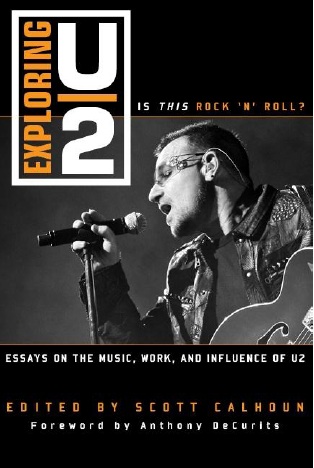
- how U2 memorialise the dead (Taylor, S. (2015). Transmitting Memories: U2′s Rituals for Creating Communal History. In Scott Calhoun, ed. U2 Above, Across, and Beyond: Interdisciplinary Assessments
, Lanham, Maryland, USA: Lexington Books, pp. 105-121.)
 , Lanham, Maryland, USA: Lexington Books, pp. 105-121.)
Sunday, January 22, 2017
writing in 2016
Writing is essential to my role as teacher and academic. Writing allows me to place ideas in the public domain. It is one thing to develop ideas in front of students and over the water cooler at work. It is quite another to discipline these into a coherent whole. Writing invites me to be accountable, exposes my ideas to review, comment and feedback. It is a discipline, one I have worked on cultivating over the past few years.
So as the 2016 year ticks over, it is always interesting to reflect on progress. During 2016, I had five things published, including one book and four printed articles. Each had a unique journey, which in itself says something about my location and how I work.
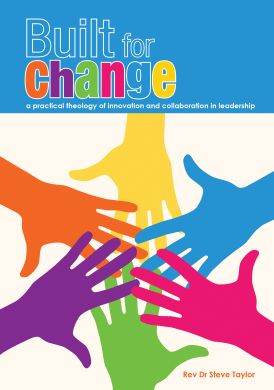
The book – Built for Change: A Practical Theology of Innovation and Collaboration

Since then it has gained 7 reviews, including from two Moderators, a Director of Mission for a not-for-profit agency and two academic lecturers. All have been very complimentary.
The four articles were all “industry” related. I had two short articles published in SPANZ, the quarterly publication of the Presbyterian Church of Aotearoa New Zealand.
It takes a church to raise a minister. SPANZ, 65 (Summer), page 18.
A theology of strategic planning? Yeah right! SPANZ, 67 (Spring) page 18.
I had a further piece published in Candour, an online publication of the the Presbyterian Church of Aotearoa New Zealand. This was a requested piece, to write something theological about rejuvenation and the church.
Rejuvenation in the Church: some theological notes. Candour, March 2016
In describing them as “industry” related, I am making a distinction between writing for my academic peers and writing for key “industry” stakeholders, which in my case involve ministers and church leaders. “Industry writing” requires taking theological ideas I am wrestling with, but trying to explain them directly, without footnotes and reference to all the background. The writing needs to be differently structured, to capture and maintain interest.
As the year ending, I had a further article published in Refresh: Journal of Contemplative Spirituality.
Mission possible: Becoming intercultural by becoming children, Refresh: Journal of Contemplative Spirituality 17 (2) Summer 2016, 42-44
This was an unexpected surprise, a piece of writing that had begun life as a graduation sermon and then a spoken presentation in Auckland, which I summarised on my blog. The editor of Refresh spotted the piece and a few months later, sent me a lightly edited copy, noting how it fitted the upcoming theme of the journal and asking if they could publish it. So a very easy “writing” birth, because of the interplay between speaking, blogging and a good editor! It is yet another “industry” publication, but emerging as a result of various speaking opportunities.
During 2016, I also continued to write monthly film reviews, which at 500 words a pop, amount to 11 published pieces totaling 5,500 words. These appear in Touchstone magazine and I am then allowed to place them at a later date on my blog.
In 2016, I also had a book chapter accepted for a book on religion and U2 with Bloomsbury. This involved responding to a call for papers with a 300 word chapter proposal in January. This is a much more “academic” piece of writing. My proposal was accepted in March and I supplied a complete draft of around 8,500 words in mid-December. It has bounced back with editorial comment and all going well, will be published later in 2017.
So looking back over the 2016 year, one book, four “industry” publications and eleven film reviews means 16 pieces of work totalling some 63,000 published words across the year. The “industry” focus, along with the demands of writing a book, have meant I have not had as much opportunity to write academically.
I have however, over the 2016 year, worked up three complete-draft journal articles, which I hope to submit to various journals in the coming months. Plus I have a book chapter to write as a result of a paper I presented (The complexity of being woven together: A microhistory of Talua Ministry Training Centre) at Woven Together: Christianity and the Pacific conference, which was subsequently accepted by the conference organisors. I have also been asked to deliver two keynote addresses at Wondering about God together in late April, which the conference organisers have already asked me to prepare for publication.
Once those I done, well …
Monday, December 19, 2016
Christmas greetings from KCML
 I write to offer you Christmas greetings from KCML. Thanks for your support, encouragement, advocacy and input over the 2016 year.
For KCML it has been year of growth. Some highlights include
• The shift of Malcolm Gordon to Dunedin and the blessing of KCML corridors filled with creativity and music
• Six graduating interns from 4 different cultures
• A block course in Wellington for the first time ever
• Four new babies born to the ministry intern cohort
• The first ever Local Ordained Ministry resourcing conference
• A hard-working Faculty who have published 3 books and 2 resources, all engaged with aspects of the church in mission and ministry
• The Christianity and Cultures in Asia lecture series
• A significant increase in funding from Presbyterian Development Society in support of New Mission Seedlings
• The approval of the Thornton Blair Christian Education Research Fellow to guide the development of life-learning
• Two online learning experiments to explore being national in our training
• Partnerships in Alpine and Otago and Southland Presbyteries in establishing New Mission Seedlings.
It has also been a year of challenges. These include
• A new team still learning how to pace ourselves
• A number of our graduating interns as yet unplaced
• The ongoing challenge of living out the bicultural and intercultural commitments of the PCANZ
A recent lectionary Psalm speaks to our highlights and our challenges. In Psalm 67, the Psalmist is full of praise, for God’s face shines. It is an echo of the blessing of Numbers 6:24-26, a God of blessing, protection and grace. For the Psalmist, this blessing applies not to Israel but to all the nations. The potential internal and exclusive focus of Israel is re-shaped by this universal love of God. It is this God that we affirm at KCML and as a church look to celebrate this Christmas.
Thanks for your partnership with us. We’re better together.
May you and yours experience the shining face of grace this Christmas,
Steve Taylor
Saturday, December 17, 2016
a moderators re-view of Built for change
 Here is the 8th review of my book, Built for Change. This one is by Rev Sue Ellis, the current Moderator of the Uniting Church of South Australia. It’s also the first review from the South Australian church community where many of the practical stories in Built for Change took place. So it’s an important authenticity check.
I really liked the way Steve Taylor addressed the changing dimensions of church life in this interesting volume. As a ministry agent involved with growing the church into its new era of life for today’s world, he has picked up the duality of change that goes outward into church life and community and the change that needs to journey inwardly challenging my own beliefs and practices both individually and corporately.
Steve explores some Pauline descriptors of models for change. We need to apply different models for different situations. I identified with his descriptors of at times bring a builder or a servant; a gardener or a parent; a resource manager or fool. I could remember how change I had engaged in had me preferring one of these roles. Living in South Australia, I had seen some of the journeys he described in the Uniting Church. Hence, I was on familiar ground.
The book is well grounded in practical application, but it does need some navigating. Beginning at the end was an initial challenge. I used the book for my ‘breakfast read’ – intentionally digesting its offering for each day. It is a volume I will keep for ready reference, as I believe strongly in the need for creative innovation within western churches.
“Built for Change” by Rev Dr Steve Taylor is available in Australia through MediaCom Education Inc. or New Zealand through Angelwingsresources@gmail.com. Review 1 here. Review 2 here. Review 3 here. Review 4 is here. Review 5 is here. Review 6 is here. Review 7 by Darren Cronshaw is here.
Friday, December 16, 2016
Seeing Silence: Interdisciplinary perspectives symposium
Friday 7:30 pm, March 17, until 1 pm, Saturday, March 18, 2017.
Venue: Otago University

Call for papers: Silence: A Novel (Picador Modern Classics)
The book is currently being made into a movie, directed by Martin Scorsese. Due for New Zealand release on February 17, it stars Andrew Garfield and Liam Neeson. Scorsese considers his movie-making an act of prayer, writing “I wanted to be a priest. My whole life has been movies and religion. That’s it. Nothing else” (Detweiler and Taylor 2003: 155).
This symposium welcomes a wide range of disciplinary perspectives on the themes of Silence. Contributors could focus on Silence as film, the history of 17th century Japan, the diversity of indigenous Japanese responses to Christianity and Empire, Jesuit approaches to mission, the ethics and limits of conversion, cross-cultural interactions, the writing of Endo, the missiological and theological challenges presented when faith suffers.
Papers of 20 minutes in length are sought. The deadline for 250 word abstracts is Friday 20th January, 2017. Enquiries and abstracts to Kevin Ward kevin@knoxcentre.ac.nz. Presenters will informed on 31 January, 2017. Papers will be streamed if needed.
Programme (draft):
Friday evening March 17 – Special viewing of Silence and conference meal.
Saturday morning March 18
9-9:45 am Panel discussion: Asian history, film studies, history, missiology (tbc)
9:45 – 10:45 am PapersMorning tea
11:15 am – 12:15 pm Papers
12:15 -1 pm Concluding comments
The symposium has been timetabled with a view to presenters watching the film after release on February 17 and having time to develop papers for the symposium.
This event is a programme of the Christianity and Cultures in Asia series, sponsored by Knox Centre for Ministry and Leadership, the Otago University Department of Theology and Religion, and Presbyterian Research Centre.


 )
)