Friday, September 25, 2015
ministry + art + story: Living Libraries innovation
Living Libraries
BYO lunch and join Cogs Smith, Sil Hein and Linda Forsyth for a conversation about the Art of Pastoral Care. The artists will tell the stories behind their artwork, which will lead to a conversation about the intersection of art and pastoral care. This is the culmination of The Art of Pastoral Care Exhibition currently being shown in the Adelaide Theological Library. Tea and coffee available.
Thursday 8th October 12.30-1.30pm – Adelaide Theological Library
Tuesday, September 22, 2015
My HERGA 2015 (Higher Education Research Group Adelaide) paper
 I spoke at HERGA 2015 (Higher Education Research Group Adelaide) today. It was a well run, high quality event, from the free coffee cup and conference bag, to the excellent catering, to the range of intensity and passion brought to bear on education in higher education.
The room was packed for my presentation, although I think it was for the presentation after mine. Here is my spoken paper, titled – A class above: Evidence based action research into teaching that is connected, mobile and accessible in a higher education context
Keywords: flipped learning, e-learning, higher education
Introduction
The Brave New World of higher education faces an inherent conflict. Standardised frameworks encourage one-size fits all. At the same time, the student body is increasingly diversity.
In 2014, I participated in a Flinders University Community of Practice. The focus was on learning that is connective, mobile and personalised. I made changes to what was a core Bachelor of Theology topic. It had historically been taught in traditional ways that focused on the technical language of systematic approaches to the theology. I made 5 changes
• Changed assessment to expect student to student interaction outside the gathered lecture (connective)
• Placed all lecture content online (mobile)
• Introduced students to Blooms taxonomy as a theoretical frame to negotiate the change with students
• Shifted the contact time from lecturer-driven to student-choice of small group activities linked to Blooms taxonomy (personalised)
• Introduced indigenous voices to enhance diversity (illustrations on personalised)
This can be theorised using Garrison’s community of inquiry model, which argues that communities of inquiry are built using social, cognitive and teaching presence. Social presence requires me to cultivate within myself and the class effective communication and group cohesion (in this case via the change to the assessment). Cognitive presence involves, through exploration, assignment and evaluation, integration and confirmation of understanding (in this case through student choice group work and through indigenous voices). Teaching presence includes course design, facilitation and direction (in this case through the use both theoretically and pedagogically of Blooms taxonomy)
The Community of Practice sought learner feedback by asking the same four questions start, middle and end of our diverse topics. What are you most interested in learning? What resources will best support your learning? How valuable is it to have choice? What aspects of the topic are you concerned about (if at all)?
Results
At the start, students identified that they were most interested in the content of the subject – the theology of Jesus. They were excited about choice. Some had concerns, not in relation to “flipped learning” but with their ability to master the online technologies.
At the mid-point, three significant shifts had occurred in the class. First, students had moved from a 100% anticipation of content, to a 50% content and 50% consideration of how they were learning. This was evident in comments focused on the learning dynamic of the class and the diversity of their peers. Second, students felt supported in their learning by the resources and through the lecturer engagement (teaching presence). Third, choice continued to be seen as positive, in extending learning and enhancing motivation.
By the end of the course, the mid-point patterns remained. Student responses continued to indicated not only appreciation of content but also included reflection on how they were learning. The role of fellow students remained significant with the diversity of the class named as a significant factor in learning. (“It has helped me be able to see different points of view and helped me to realise that we all are able to “do” Christology from our own background.”) Choice continued to be seen as a positive. It was perceived to increased engagement and have a positive impact on learning. In analysing the responses linguistically, theology was not only being used as a word linked to content. It was also being used as a verb, a “doing,” an active, engaged process in which students participate, in contrast to what is contained in set texts. Students made links between personalisation, diversity and this “doing” of theology. (“Yes it has helped me to understand Jesus in a more relevant way for a 21st century setting.)
Discussion
Haythornthwaite and Andrews, E-learning Theory and Practice
• E-facilitators provide interim summaries and influence the trajectory of the discussion.
• Braiders reinterpret the online debate in different styles.
• Accomplished fellows take initiatives that invite participants to explore a subject in more depth.
This provides a way to theorise my data. Take this introduction to a final assignment by one student. “I … was inspired by the presentations of [two indigenous church ministers] …. This stemmed from the group activity, where … I was asked by one of my classmates to connect liberation theology to my culture.” Using Haythornthwaite and Andrews’s theoretical categories, the learning begins because of two accomplished fellows (two indigenous church ministers). Challenge came from the group activity, in which a classmate (not the lecturer) acts as both a facilitator, influencing the discussion and a braider, re-interpreting lecture material during a group discussion and inviting a different style, in this case of application.
Haythornthwaite and Andrews also argue that e-learning is “an inextricably social act.” It increases connection with the local, as “learning gets re-embedded.” It expects a greater focus on “learner agency.”
“In conventional learning and scholarship, there is an authoritative, hierarchical power system at work. The teacher acts as mediator for the student between the body of knowledge … In e-learning the canonical texts are themselves committed to digital format and thus become at once more malleable, more open to critique … The ‘voice(s)’ of the original author can be placed alongside the student voice or voices. The learning process becomes … more democratic .. less hieararchical.” (E-learning Theory and Practice
This is certainly consistent with my data. Teaching theology involves engagement with significant texts – including the Gospels, to the Christological debates of the Early Church, the challenges of modernity and post-colonial critiques. For an individual student to engage a lecturer in a traditional lecture setting requires speaking in front of their peers, with the expectation of being knowledge in front of a more experienced academic. However, if engagement with lecture material and readings is shifted to group activities, students have space to process among peers.
This makes sense of the student assignment. It is one thing for a lecturer to ask a student to apply what this means. There is a different weight altogether when a student asks their peer to “connect [their] own culture and Christ.” In this moment, another student has become the “learner agency” that invites a “re-embedding in new local environments.”
Conclusion
My research is a limited sample – of one class in one semester. But it provides evidence that the use of teaching that is mobile, accessible and connective reshapes the student learning experience. Flipped learning enhances student agency and increases appreciation for diversity among the student cohort. It can turn the entire student cohort into teachers, inhabiting different roles in the “conditions” of learning. In other words, students as well as teachers are essential to the learning processes.
References
Garrison, D. R. (2007). Online community of inquiry review: Social, cognitive, and teaching presence issues. Journal of Asynchronous Learning Networks, 11(1), 61-72
Haythornthwaite, C. & Andrews, R. (2011). E-learning Theory and Practice
McInnis, C. (2005). “The Governance and Management of Student Learning in Universities.” In Governing Knowledge. A Study of Continuity and Change in Higher Education. Edited by Ivar Bleiklie and Mary Henkel. The Netherlands: Springer. file:///C:/Users/jong0009/AppData/Local/Downloads/0deec520376135d76b000000.pdf.
Preston, C. J. (2008). Braided Learning: An emerging process observed in e-communities of practice. International Journal of Web Based Communities, 4 (2): 220-43).
Saturday, September 19, 2015
backpacking transitions
Lindisfarne was a great place to process transition. I asked the taxi to drop me off early so that I could walk in. With a heavy back pack, the act of taking it off when I sat down for lunch became a rich bodily reminder of what I am processing. I am taking off the Principal “back pack.” As I do, a certain level of weight and responsibility is removed.
Yet I’m still me, with or without back pack. I am still graced by God, bound by family relationships, gifted with certain insights. It was a rich insight to realise that I am still vital, still loved, despite the demands of the Principal placement over the last three years.
There was great joy over the rest of the day, walking back pack free, enjoying being me.
During the second day, the backpack was worn constantly. This was partly reality, that I had no where to store it. But I could have asked the pub where I was staying. I chose not too. The task of this day was to look ahead, to begin to hear God for this next season. That required the back pack on, for it is in the middle of things that God speaks.
Carrying a back pack produces initial soreness of muscle. But over time, the body will harden. This is encouragement for the next season. In a few weeks, having taken one back pack off, I will put on another one. It was helpful to realise that the initial days of new responsibility are in one sense a temporary soreness.
Thursday, September 17, 2015
spirituality of transitions: Lindisfarne

Today I head to Lindisfarne, Holy Island. It has a rich and deep spiritual history. I went there in 2012 for a time of retreat at a number of significant life junctures. I was in a process of call to be Principal of Uniting College. So the time on Lindisfarne was important in terms of prayer and reflection.
On Holy Island, I encountered another transition. Here is what I wrote –
Inside the church, St Marys, I came across my fathers death. A lifesize sculpture, four men carrying a coffin stands inside the door. It is black, carved in stone. Cold, enduring. It is a confronting moment, facing death. Enclosed within ancient stone walls, it makes the church feel like a tomb.
The moment was more confronting, for my father’s name is Cuthbert. Entering that church, in that retreat of transition, I faced the reality that one day, I would carry my father’s coffin.
So, some four years later, I am returning. I’m wanting to place myself again in that rich and deep history. I go expecting to be prayerful about the ending of one season of being Principal (at Uniting College) and the start of another (at Knox Centre for Ministry and Leadership). I go expecting to honour my father, whose name is Cuthbert and to be glad of his ordinary saintliness in my life.
I’m taking Praying Our Goodbyes: A Spiritual Companion Through Life’s Losses and Sorrows
Monday, September 14, 2015
Last Cab to Darwin: a theological meditation on outback place
Monthly I publish a film review for Touchstone (the New Zealand Methodist magazine). Stretching back to 2005, some 90 plus films later, here is the review for September 2015, of Australian film, Last Cab to Darwin.
Last Cab to Darwin
A film review by Rev Dr Steve Taylor
Last Cab to Darwin is a visual introduction to contemporary Australian stereotypes. Indigenous men drink and fight. White fella Australians drink and fumble emotionally. English women tourists are blondes willing to sleep around.
Death strides into the midst of these caricatures. Rex (Michael Caton), a taxi driver from Broken Hill, is diagnosed with terminal cancer. With three months to live and afraid of hospitals, he hears of Dr Farmer (Jacki Weaver), advocating in the Northern Territory of Australia for the right to euthanise.
Last Cab to Darwin is based on a true story, including the gaps in Australian law between Territory, State and Federal parliaments. It offers the potential to dwell in complexity. The reality is that the road trip genre becomes an excuse to speed past rich cultural complexity.
Driving his cab to find Dr Farmer, Rex encounters Tilly (Mark Coles Smith), who proceeds to fight and drink his way with Rex toward Darwin. Their narrative journey is broken by a set of clichés, including watches that stop, feral cats hung from outback trees and Tilly’s salvation through sport, if he can beat the bottle. Speeding toward yet another stereotypical scene (Darwin sunsets), Tilly has a one night stand with English barmaid, Julie (Emma Hamilton), who wraps herself into their journey. These images, of indigenous men, white fella Australians and blonde English women tourists simplify the complexity that could ennoble Australia today.
I refer to the lens through which the outback is viewed. The desert landscape depicted in Last Cab to Darwin is simply a dusty red backdrop through which visitors pass, collecting experiences on a road to somewhere. There is no sense of another story, of “anhangha idla ngukanandhakai,” the indigenous (Adnyamathanha) understanding of living in memory.
This understanding of outback is beautifully depicted in the recently published Yarta Wandatha. It is a rarity, a theology book with colour photographs of outback landscape. Unlike Last Cab to Darwin, these scenes are never backdrop on a trip to somewhere. Rather, each is story, around which memory is wrapped. Interpreted in Yarta Wandatha by indigenous woman Denise Champion in creative dialogue with the Christian story, we find the unfolding of a very different outback story.
Last Cab to Darwin introduces two indigenous women. Polly (Ningali Lawford) is Rex’s neighbor, having an affair they are both scared to make public. Sally (Leah Purcell) is Tilly’s wife. The movie provides stereotypical similarities of these indigenous woman. Both are abandoned by their menfolk. Both approach conflict by shouting angrily at those they love.
Such is the simplicity of stereotype. In contrast, when Denise Champion tells the story of Awi-irtanha, the Rain Bird, we encounter a more complex story, in which indigenous resources, considered in light of Jesus, avoid the ugly consequences of unresolved conflict.
Watching Last Cab to Darwin I kept waiting for the road trip to engage these stories on the road between Broken Hill and Darwin. The only hint is when Tilly locates Sally’s mob as fighters against colonial invasion. Once again, 40,000 years of rich and storied memory is lost, replaced by the stereotypes of recent arrival.
Rev Dr Steve Taylor is becoming of Knox College for Ministry and Leadership, Dunedin. He is the author of The Out of Bounds Church? (Zondervan, 2005) and writes widely in areas of theology and popular culture, including regularly at www.emergentkiwi.org.nz.
Wednesday, September 09, 2015
a parting gift: lecturer and Principal wordle
What words describe Steve as a lecturer and Principal? 22 random students were polled and asked to share three words each. Most responded and provided 40 words that create a word picture.

Steve, thank you for taking your call so seriously, and bringing your whole self to this placement. You have and will continue to be a profound influence on us all.
Thursday, September 03, 2015
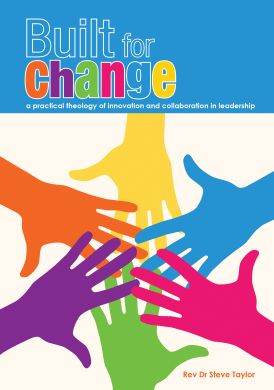
Built for change: Innovation and collaboration in leadership book contract

I was delighted last week to sign a book contract with Mediacom for what will be my second book, tentatively titled “Built for change: innovation and collaboration in leadership.”
It will be a book about innovation. There are many books of theory about innovation and many books from overseas about leadership. (Hence I deliberately sought out a local ie Australasian publisher). I want to write a book that emerges from a context of reality, from a real life situation of change. (Mainly the last three years as Principal of Uniting College). I want to provide some practical stories of change and then consider them, first with the wisdom of hindsight, second with the theological probing that is the gift of the Christian tradition.
I hope the book offers an understanding of change that is both practical and possible, in ways that celebrate collaboration, enhance equality and make access possible.
It is a project I’ve been mulling over for the last few months. My first days writing in June is described here. As I processed the shape of the project over two days in July with my supervisor, I asked myself “Why write?.”
Wednesday, September 02, 2015
My close of placement service
Close of Placement Service: Rev. Dr. Steve Taylor
Time: 3:00 pm
Date: Monday 7 September 2015
Where: Chapel of Reconciliation, Uniting College, Adelaide College of Divinity (34 Lipsett Terrace, Brooklyn Park)
Everyone Welcome.
Please join us afterwards in the College Common Space for drinks and nibbles from 4pm-5:30pm, where there will be the chance to say farewell to Steve, Lynne and Kaylee, to hear some words of thanks and enjoy a glass of wine or juice and some local cheeses.
RSVP 3 September 2015 to denise.boyland@flinders.edu.au
Friday, August 28, 2015
missional theology of sacraments and the church
Thesis 1 – The sacraments are about the Spirit, not the church. This initial move establishes God as the rightful author and agent of sacramental theology.
Thesis 2 – The Spirit can fall on who and whatever it wants. This is consistent with the Biblical data, in which God keeps surprising. We see this in the ministry of Jesus, most particularly the encounter with the Syro-phonecian woman. Interestingly, this has links with sacramental theology, in the reference to crumbs from the table. We see this also in Peter’s encounter in Acts. Again, I note that this also has links with sacramental theology, in the invitation to eat.
Thesis 3 – The role of the church is thus not to define sacramentality, but to discern sacramentality. The church remains essential to a sacramental theology, not as a definer and defender of boundaries, but as an ongoing discerner. David Ford, in Self and Salvation: Being Transformed
Thesis 4 – This requires a rich and complex set of tools. We see this move (struggle even) toward discernment, in both the narratives mentioned above, as Jesus affirms the great faith of the Syro-phonecian woman and Peter discerns freshly the work of God. Both of this moves require a process of reflection – in community, by grace, with coherence to the interweaving of experience and tradition. The role of missional theological education necessitates developing skills in these processes. It is this that will enable sacramental practice to emerge from those gathered in community gardens, around skate parks and amid the tables of messy church. The result will be that indeed, in bread, wine and water, Christ will feed the church.
Thursday, August 27, 2015
Dunedin property owners
Our quick jump across the ditch has proved remarkably successful. We looked at 8 properties in Dunedin over the weekend. We were accompanied by a Dunedin local, who was invaluable in terms of local knowledge and insight. The upshot was that we made an offer on a property on Monday, which was accepted on Tuesday (subject to building inspection).
It’s a great place that all four of Team Taylor fell in love with pretty much from the moment we walked in the door. It is architecturally designed with lots of character spots to sit and connect. It’s got sea views over the Otago Harbour, yet is set in native bush. It’s close to work, yet has a drive home with harbour views that will be important in creating the necessary distance. It’s not got a lot of room for garden due to the bush, but a glass house should really help and there is plenty of room for chickens and perhaps even a beehive or 3.
Practically, it has 3 bedrooms and 5 different configurations of living areas, which should well suit the needs of our family. We expect to be able to take possession on the date we wanted – the 5th of October – which gives us a week to settle before I start at Knox and Kayli starts at her new school on the 12th of October.
It is a great relief psychologically to know where we are going, stopping and staying for this next chapter of our lives. It’s difficult to express how important this is for our family.
Wednesday, August 26, 2015
Wanted: Director of Missiology
This was my old job – with a nice twist – church engagement! The last two applicants have been Kiwi’s. Third time ….?
Director of Missiology
Uniting College and Mission Resourcing South Australia together partner in mission. We are seeking a lecturer and leader to develop missiology within the life of both the Uniting Church in South Australia and the College. This will involve forming leaders, educating in its best and broadest sense and fieldwork participation in applied missiology projects. Tasks will include:
1. Developing the Uniting College missiology stream at under-graduate, post-graduate and VET level
2. Lecturing in areas of missiology, contextual mission and innovation
3. Providing research leadership in missiology, including supervision at post-graduate level and connecting research with community stakeholders
4. Working strategically with Mission Resourcing to support and develop mission projects among congregations, communities, regions and networks
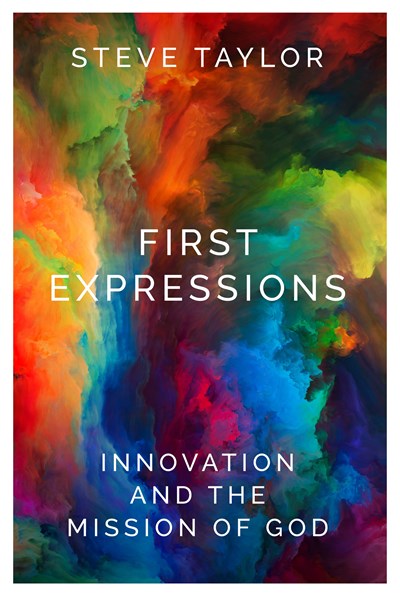
5. Strengthen pioneering and fresh expressions as contextual mission
6. Participate in the life of the College, including the formation of leaders in mission
The successful applicant will have a unique skill set that should include experience in education and formation, leadership skills in mission, community mission experience, post-graduate qualifications and an ability to innovate within the faith and polity expressed in the Basis of Union of the Uniting Church in Australia.
A position description is available from: either Steve Taylor, Principal Uniting College, 34 Lipsett Terrace, Brooklyn Park, SA 5032, steve.taylor@flinders.edu.au or Amelia Koh-Butler, Executive Officer, Mission Resourcing, 212 Pirie Street, Adelaide SA 5000, akoh-butler@sa.uca.org.au
Applications close 5 pm, 8 September 2015, with interviews Wednesday September 23 and expected commencement at the beginning of Semester 1, 2016.
Friday, August 21, 2015
Quick jump across the ditch
Team Taylor are re-uniting across the ditch for a few days. Friday is a flight from Adelaide to Christchurch, where we pick up our New Zealand recently purchased car and drive to Dunedin.
Over Saturday and Sunday, we are house hunting. (Hence the need for the car, to drive around a string of open homes). We have this idealistic little plan; that we would buy a house in Dunedin in time for us to move in when we start my new role as Principal at Knox Centre for Ministry and Leadership in early October. To do that requires buying a house about 6 weeks prior, that is about now in August. To do that requires selling a house in Adelaide in late July. We’ve done the house selling in Adelaide, so lets see if the house buying in Dunedin part happens. No worries if it doesn’t, but lets at least have a go.
Then Monday through Wednesday, I get to connect with my new work team. They have an annual retreat about this time of year and have invited me to join them. It will be two days of getting to know and starting to build connections. It’s all part of the transition and I’m looking forward to starting a new role with this sort of relaxed, relational, future facing occasion. As a team, we will also be connecting with quite a few Presbyterian church leaders from different cultures around New Zealand, in particular Pacific and Asian. So that’s a very rich introduction to a new community I’m called to serve among.
However, it has meant an unbelievably late night at work, clearing the desk. This week has involved Monday through Wednesday facing our five year Finders Departmental Review, on top of a monthly Board meeting and lecturing.
It will be lovely to take that jump …
Thursday, August 20, 2015
how to read: 4 tools that will enhance the study skill of reading
reading tools from steve taylor on Vimeo.
How to read? Four essential tools – pen, highlighter, texting, telling – are introduced and explained. But first, a 10 question quiz on Time Magazine’s 1962 Cover Story, Religion: Witness to an Ancient Truth, on Karl Barth.
A follow up to the theology tools video.
Wednesday, August 19, 2015
innovation in education paper accepted
My paper proposal, seeking to present at HERGA (Higher Education Research Group Adelaide), September 21-22, has been accepted. HERGA aims to bring together colleagues from the higher education sector to discuss best practice and new approaches to teaching in the tertiary environment. So it’s a great opportunity to present some of my action-research to a more general, non-theological audience. (When people ask me what I’ve gained from the move to Australia, things like this are part of the answer. The chance to be connected to a major University, Flinders, which enabled me to participate in the 2014 Community of Practice and now conference presentation opportunities like this that help me take steps outside the “theological” bubble.)
The conference paper proposal I put up was a followup to what I presented at ANZATS (Australia New Zealand Association of Theological Schools). An unexpected bonus was that in accepting, HERGA also provided me with the peer review feedback. So I have critical comment from two independent readers. I’ve had that consistently for journal articles submissions but never on a conference paper abstract. So that’s gold in terms of catching a glimpse of how my proposal abstracts are read.
Here’s the abstract I presented.
A class above: Evidence based action research into teaching that is connected, mobile and accessible in a higher education context
The Brave New World of higher education faces a number of inherent conflicts. Standardised frameworks encourage a one-size fits all approach to teaching and learning, while the makeup of the student body shows an increased diversity. This has implications for teaching and learning in higher education contexts.
This paper will explore a pedagogical innovation in teaching that was undertaken as part of a 2014 Flinders University Faculty of Education, Humanities and Law Community of Practice. This Community of Practice involved research into student experience in response to the implementation of teaching methods that sought to be mobile, accessible and connective.
E-learning technologies, including video conferencing and Moodle, were introduced. A shift in the use of contact time, from lecturer-driven content to student-centred small group activities, was made. Changes were made to assessment, shifting participation from face to face to digital in order to enable connectivity. Indigenous voices were introduced into the curriculum to enhance access. Bloom’s taxonomy was deployed as a theoretical frame to negotiate the change with students.
McInnis (2005) argued that education can be analysed using a three-fold framework that includes curriculum, learning community and organizational infrastructure. This research project engaged all three, with an infrastructure innovation making possible the curriculum change, and the results tested by researching the experience of the learning community.
Students completed a written survey at three points during the course. The results indicated that a significant shift had occurred in the class. Students had moved from an initial appreciation of content, to a consideration of how they learn from the diversity inherent among their peers. Students perceived that the changes had enhanced their ability to communicate effectively. They expressed a preference for choice, collaboration and diversity.
The research data can be helpfully theorised in conversation with Haythornthwaite and Andrews (2011) who have argued that e-learning is a social act that enhances learner agency. They draw on Preston (2008) who observed that students fill different roles in an on-line learning community. Some act as e-facilitators, others as braiders, others as accomplished fellows. These categories are evident in the research data generated by the Community of Practice.
It can thus be argued that the use of teaching that is mobile, accessible and connective reshapes the student learning experience. Flipped learning enhances student agency and increases appreciation for diversity among the student cohort. Such pedagogical innovations turn the student cohort into a class above, in which students find themselves inhabiting teaching roles among their peers.
A mechanism for this process, drawing on Haythornthwaite and Andrews, is proposed. This involves understanding how digital texts change notions of authorship and thus contribute to learning process that are more democratic and less hierarchical. The argument is that technologies, when underpinned by explicit pedagogical care, are essential elements in “re-humanising” the brave new world of higher education.
References
Haythornthwaite and Andrews, 2011. E-learning Theory and PracticeMcInnis, Craig, 2005. “The Governance and Management of Student Learning in Universities.” In Governing Knowledge. A Study of Continuity and Change in Higher Education, edited by Ivar Bleiklie and Mary Henkel. The Netherlands: Springer. file:///C:/Users/jong0009/AppData/Local/Downloads/0deec520376135d76b000000.pdf.
Preston, C .J. (2008). “Braided Learning: An emerging process observed in e-communities of practice.” International Journal of Web Based Communities, 4 (2): 220-43.


 )
)