Monday, August 17, 2015
Europe study leave: Amsterdam, Durham, Holy Island, Adelaide
My tickets for Europe arrived this week. I have some study leave I need to take before I finish as Principal of Uniting College and I’ve been working toward presenting some of my research overseas for a few months. They come together in the following:
- Friday, 11 September – Fly to Amsterdam via Dubai.
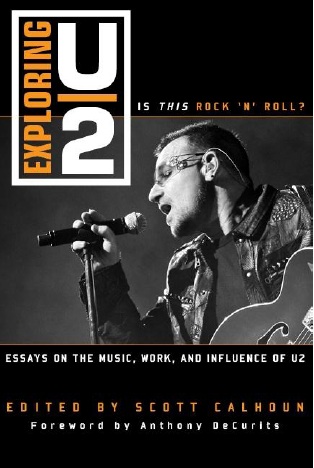
- Sunday, 13 September – Research. Since I’m now a well-published U2 scholar, I need to keep up with a changing field. In other words, attend the U2 innocence and experience tour for the purpose of remaining abreast of a changing field.
- Monday, 14 September – Fly to Manchester, then train to Durham
- Tuesday – Thursday, 15-17 September – Symposium on Ecclesiology and ethnography, Durham. I am presenting a paper titled Activist research: an examination of lived practices in ethnography and ecclesiology. The abstract is here but in summary I want to explore some complexity that surround ethnographic research of the church today – when our participants are still shaping the research process. I will do this by examining a range of case studies from across the academic “habitus” – employment, writing, research and teaching. During this time I will also be connecting with a journal editor hoping to secure a “downunder” journal edition of empirical ecclesial research, linked to the ANZATS 2016 conference.
- Friday, 16 September – Visit to Holy Island, which was such a helpful pilgrim place a few years ago, as I considered a transition to become Principal of Uniting College. It seems appropriate to visit it again as I consider the move to become Principal of Knox Centre for Ministry and Leadership
- Saturday, 17 September – Return to Adelaide via Manchester and Dubai.
- Tuesday, 19 September – Research presentation at HERGA Adelaide. Under the theme – Brave New World: The Future of Teaching and Learning, I hope to present a paper titled. A class above: Evidence based action research into teaching that is connected, mobile and accessible in a higher education context. I will be sharing results from my research into flipped learning. This is a further presentation of the Evidence based action research paper I presented at ANZATS in Sydney in June, 2015.
I am grateful for the Award for Excellence in Teaching from the Faculty of Education, Humanities and Law at Flinders University that makes this possible, by providing provision for attending conferences.
.
Wednesday, August 12, 2015
living bread stations
I was asked to lead worship twice this week. Monday was with our Certificate in Bible and Leadership ESL course, which has 7 cultures present. Wednesday was with our regular College chapel. I wanted to link them both, so I sought to mirror the worship.
 I also wanted to engage with weeks lectionary texts, with the focus on living bread. I had this creative spark, to actually write on bread. Some cocktail rolls, slightly overcooked, worked well. This then allowed different activities at different stations, people writing different things on the rolls. They became living, shaped by our prayer and our memory. These were then collected up at the end from each station as part of closing the worship, so our living bread coming together. Even better, the bread from Monday’s worship was added into Wednesday’s worship. In so doing, both communities are reminded they are part of a bigger story, the many diverse ways that College is engaged in teaching and growing people.

The full order of service is as follows: (more…)
Friday, August 07, 2015
theology tools: video introduction to theology tools
Just as a carpenter has tools, so do theologians. This 15 minute video introduces some basic tools. The books mentioned in the video are provided below. Explore them, try them, see what feels comfortable.
Tools for theology from steve taylor on Vimeo.
Experience considers your life and the life of others.
Scripture looks at God’s revelation.
John Drane, Introducing the New Testament
Robert Tannehill, Abingdon New Testament Commentaries: Luke
Tradition considers those who’ve done theology before us
Alister McGrath, Zondervan Handbook of Christian Beliefs
Alister McGrath. The Christian Theology Reader
Alister McGrath, Christian History: An Introduction
Mark. A. McIntosh, Divine Teaching: An Introduction to Christian Theology
Ian Markham, The Student’s Companion to the Theologians
Reason is coherent and contextual
Denise Champion with Rosemary Dewerse, Yarta Wandatha, Adelaide: Denise Champion 2014.
Charry, Ellen T. Inquiring After God: Classic and Contemporary Readings (Blackwell Readings in Modern Theology)
Thursday, August 06, 2015
Inside out film review: orthopathy – a theology of emotions
Monthly I publish a film review for Touchstone (the New Zealand Methodist magazine). Stretching back to 2005, some 90 plus films later, here is the review for August 2015, of Inside Out.
Inside Out
A film review by Rev Dr Steve Taylor
“Inside Out” is a 21st century Psalm. It animates the reality that each of us are fearfully and wonderfully made (as it affirms in Psalm 139:14). Both words help us describe the impact of “Inside out.”
The plot runs on two tracks. In the outside world, eleven-year old Riley is uprooted by her parents. The transition from rural Minnesota to urban San Francisco involves new school, house and hockey team.
The circumstances unleash inside Riley an inevitable surge of feelings. Five core emotions – Joy, Sadness, Anger, Fear, and Disgust – are given character. They become the heroes of “Inside Out”, essential in Riley’s growth and development.
This is the genius of “Inside Out.” We meet memories, both short and long term. We encounter imaginary friends, dreams and nightmares, the latter lurking within the dark depths that are Riley’s subconscious. There’s even a train of thought. Each of these are wonderfully animated, a reminder of the complexity inside every human being.
“Inside Out” is made by Pixar. Begun in 1979 as a high-end computer hardware company, it found, in 1995, with “Toy Story, a way to merge computer with art. In the 20 years since, it has produced 15 feature films. Almost all have not only been blockbusters, but have also gained a string of industry awards, including 15 Academy Awards, 7 Golden Globes and 11 Grammy’s.
To make “Inside Out,” Director Pete Docter recruited not only animators and storyteller, but also psychologists, including Dacher Keltner, from the University of California. It ensures that the unfolding narrative provides a view of being human that fills us with both wonder and fear. Wonder, at the emotional complexity that is inside each of us, children and adult. Fear, at how this complexity might be parented, especially in the face of life’s inevitable transitions.
So is “Inside Out” a children’s movie for parents? Not according to film scholar, Nicholas Sammond, who argued that Walt Disney always argued that he was making films for families, not for children. This insight makes sense of the emotional twist that ends “Inside Out.”
Joy comes to realise that for Riley, there are times when sadness is needed in order that joy might be felt. In a world of Hollywood happy endings, this is a surprising reality check. Every parent wants their children’s childhood to be a playground of joyful memories. Yet in “Inside Out,” Joy as a character must also develop emotionally. She must step back and allow sadness room inside Riley. The result is empathy and the creation of a whole new set of memories for Riley and her family.
This is orthopathy (defined as right feelings). It is as important as orthodoxy (right doctrine) and orthopraxis (right actions). This climax ensures that Inside out is thus not only a 21st century psalm of childlike wonder at human complexity. It is also a petition, for parents and teachers and all those charged with the fearful responsibility of nurturing eleven-year olds in their inside out journey toward orthopathy.
Tuesday, August 04, 2015
feel the seasons change
I’ve been loving the winter flowers in my garden. When we brought the house three years ago, one of the first things I did was plant a large part of the front lawn in natives. Practically, it saved on lawn mowing. Spiritually, it was a way of earthing, of grounding faith in this land, this place.

This winter, many of the natives have flowered for the first time. There’s something immensely rewarding about seeing something that you planted three years ago flower for the first time.
It’s also a reminder of the upside down spirituality that is so intrinsic to the Southern part of Australia. Here native plants tend to flower in winter, not in summer. It’s the logical response to summer heat and winter rain. It makes what is normally the bleakest season visually into the opposite.
What is also worth pondering is how small native flowers tend to be. These are not flamboyant bursts of colour, but tiny points of beauty. There is an understatedness about these expressions of life. They don’t jump into your vision. Rather they require you to notice, as a deliberate action. In a world of instant gratification and in your face marketing, that’s certainly an upside down approach to spirituality.
Sunday, August 02, 2015
playing the fool
I was speaking at the annual gathering of the 3D mission network on Friday evening. Around 100 folk had gathered to hear me reflect on leadership and change, using my time as Principal of Uniting College as a case study. The session was going well. Those gathered seem engaged. There was laughter at my jokes.
I navigated my way through a section on out of the box leadership. I drew on Paul’s description of himself as fool in 1 Corinthians 4 and linked it with notions of clown. Clowns stand outside what is normal and expected. They are allowed to say and do unexpected things. They provide fresh eyes to see new things. It involves risk and it might not work. But, I suggested, it is a Biblical understanding of one dimension of leadership.
I moved to my next point. It involved a slide image. Staring at the image being projected in front of me (but behind the audience), I found myself disappointed with how small it was. How would anyone see. I got out my infrared laser, pointed it at the image and began to explain what was happening and who was speaking to whom.
Gently, my audience interrupted me. Politely they asked if rather than point to the image they couldn’t see because it was behind them, if perhaps I could point to the image they could see, behind me! Which, when I turned to look, was of course plenty big enough.
Sprung. Playing the fool indeed. Without even trying!
Tuesday, July 28, 2015
Creative renewal through action
I’m speaking this Friday, 6 pm, 31 July, Burnside Uniting Church. Here’s the blurb
Rev Dr Steve Taylor is a world leader in missional thinking and sadly is leaving Australia to return to New Zealand in
August(September actually) this year. We are indeed very fortunate Steve has agreed to lead our next metro Gathering teaching sessions.Creative renewal is only possible through action. What actions lead to renewal?
I will be reflecting on leadership lessons from my years as Principal at Uniting College and offering some reflection on the Uniting church into the future. (If I can find the words. I’m still quite unclear on how I want to say what I want to say.)
Saturday, July 25, 2015
Yarta Wandatha by Denise Champion: book review
Originally published in Uniting Church Studies, 20(2) pp. 69-71.

Review Yarta Wandatha, Denise Champion with Rosemary Dewerse, Adelaide: Denise Champion 2014.
Yarta Wandatha by Denise Champion is a rich addition to the doing of theology in Australia. As such, it should be compulsory reading for all Australian Christians and a set text for all Christology classes taught in Australia.
The title is derived from Champion’s mother tongue, Adnyamathanha, the language of her people from the Flinders Ranges, in South Australia. It means “the land is speaking, the people are speaking.” As a title, it provides a concise summary of the theological method that integrates book. Second, in using language, it suggests a theology of the heart, a following of God integrated with language and culture, working from place and people.
The book has ten chapters, two introductions, one song (a contemporisation of the Magnificat) and one prayer (Lords Prayer). It is sixty-six pages, attractively presented with colour photographs of the landscape around the Flinders Ranges, the land from which this theology is speaking. While landscape photographs are not standard in academic texts, they are essential to this book, congruent with the theological method being articulated.
Each chapter (except the brief chapter provided by Rosemary Dewerse) is centred around a story. These include Awi-irtanha (The Rain Bird), Yurndu Akanandha (The Creation of the First Day) and Wida Ardupa (The Gum Tree Couple). These stories, located in land, become essential to the theology being advanced.
Despite the variety of stories, a coherent and considered theology is evident. This is summarised in the phrase ngakarra nguniangkulu, God is revealing so that we can see (28). It is a theology that assumes revelation and respectfully seeks to listen to revelation. It suggests that theology is action, of seeing, in order to act in response to what is seen.
One way to explore the theological methodology of Yarta Wandatha is through the lens of the Wesleyan Quadrilateral. Experience is a key theme. It is evident, first in Champion’s self-location in relation to land, second in her integration with a history of decolonisation. This is a theological method that thus begins with lament, with yulupunha vadiangkapala, the deep sadness that results from a long time of suffering.
With regard to Scripture, Yarta Wandatha starts with the Magnificat (6-7) and ends with the Lord’s Prayer (62-3). There is repeated engagement chapter by chapter with Biblical stories and themes.
Reason is evident, most clearly in the use of story. Champion utilises a tri-partite hermeneutic by which to interpret story (29). Stories teach rules for living, instruct has about the environment and provide insight into the spiritual world. Champion applies these three themes consistently (reason-ably) throughout the book as a way to interpret story.
Tradition is present, although in ways perhaps not immediately evident to a Western reader. Denise tells the story of how her father drew on memory as part of his learning (28). She tells of hearing her mother ask Wanangha nai, (Where are you going?) to which her father would reply Anhangha idla ngukanandhakai (I’m going back to this place). As a result, learning from tradition, in the form of memories linked to places, occurs. Land and people are speaking, past to present, as people practise living in their memories. It is an innovative approach to notions of tradition.
It suggests a way by which indigenous theologies can engage with other indigenous theologies. In making this argument, it is important to note that all theologies, whether Western, liberationist or indigenous, are contextual, emerging from a particular time and place. However, Duncan Forrester (Globalisation and Difference: Practical Theology in a World Context
Reading Yarta Wandatha, I wondered if a way to approach any tradition could be Anhangha idla ngukanandhakai (28). In other words, could acts of “living in the memories”, of going back to the particular places from which the traditions speaks, be applied not only by Denise’s father to access the wisdom of his elders, but by anyone reading Augustine or Aquinas? Theological reflection on tradition would thus become a “living in the memories”, contextually located, place based, a learning from stories from other places and all spaces. Such an approach could allow the memories from other traditions to be woven into indigenous theological work, whether Western, liberationist or indigenous.
Together, Champion’s use of reason and tradition allow her to work fluently between past, present and future, between theory and ethics. To be a person “living in the memories” is also be a person considering how to live and act into the future. This is most clearly seen in the story of Awi-irtanha, the Rain Bird (40-42). Champion uses the story to critique how indigenous cultures from the past are presented today and to consider how she might live in conflict situations into the future.
Yarta Wandatha emerged in a partnership, as Uniting College Director of Missiology, Rosemary Dewerse, built a relationship with Aunty Denise Champion. In time, Dewerse made the offer, to serve Champion by hearing her oral stories and in partnership arranging them in ways that were true to her indigenous voice. The location of copyright, not with a known academic publisher, but with Denise Champion, is deliberate, in the hope that all proceeds from sales might be returned to indigenous people, not to publishing companies.
This partnership raises some provocative questions regarding the role of scholars and the place of scholarship in the Uniting Church today. Paragraph 11 of the Basis of Union acknowledges that God gives to the church “faithful and scholarly interpreters of Scripture.” A consequence of current relationships between the theological colleges of the Uniting Church and various Universities is the pressure for scholars to write in academic journals and “world-class” (read Western) publishing presses. Applying these standards, the “faithful and scholarly” role undertaken by Dewerse in Yarta Wandatha will not gain her any credit from the contemporary academic world.
At the same time, the Revised Preamble commits the Uniting Church to partnership with first peoples. The mutual authoring and assigning of copyright in Yarta Wandatha is surely an embodiment of the Revised Preamble. Returning to Paragraph 11 of the Basis of Union, it is a work of scholarship that has indeed resulted in “fresh words and deeds.” The tension between being scholars faithful to church or academy is brought into stark relief by Yarta Wandatha.
In summary, while some might be tempted by a first glance at the length of, and the pictures in, Yarta Wandatha, to dismiss it as less than theological, a closer look, using Wesley’s Quadrilateral, reveals a unique, coherent and potentially transformative approach to theology: one that is ethically and eschatologically mature. This is most particularly evident in the application of reason and the framing of tradition as the stories of “yarta wandatatha,” a living in the memories. If this is one of the first fruits of the Revised Preamble, then the church in Australia is entering a rich and blessed season of theological scholarship.
Rev Dr Steve Taylor
Principal, Uniting College for Leadership and Theology, South Australia
Thursday, July 23, 2015
transitions: sabbatical liturgy
A feature of academic life is the sabbatical. It involves time away from the rhythm of teaching. It clears space for research and professional development. It is like compost. Adding layers of material, that over time, can be added to gardens; that over time, slowly add structure, enhance water retention and provide nutrients. So a sabbatical provides layers, that over the next season of teaching, enrich and advance.
At Uniting College, faculty can apply for sabbatical after six semesters. I’ve been thinking for a while that we need some sort of team liturgy that marks the transition that is inevitable around sabbatical. This would help the person going and the people staying, providing a theological frame to a transition and underling values important to the organisation.
So last night I created a transition into sabbatical liturgy. Since the Uniting College is a Uniting Church College, it involved a mixing of Basis of Union and some Scripture (Psalm 42), along with the core values of UCLT. It’s new (and undoubtedly can be improved), but here is what it looks like. (more…)
Sunday, July 19, 2015
a “working” holiday – run: write: relax: renovate
The last week has been “working” holiday. It’s been rich and intense. The week followed a daily pattern – Run. Write. Relax. Renovate. It’s a pattern I’d recommend.
In regard to renovate, we have some tasks that have to be completed before we can put the house up for sale. We brought a real do-up a few years back, and the return to New Zealand has placed a deadline on the project. So the week began with a to do list on the family white-board and away we went.

Over the week, we completed 7 of the 11 projects, and made significant progress on 10. The entire outside of the house is now painted. The laundry has a new ceiling, which is painted, along with the walls. A new set of front steps has been framed, cut and concreted. The rear side door has a fresh external coat. The front deck is scrubbed, cleaned and prepared for painting. There has been a really good sort of the garage and kitchen, with some stuff cleaned and packed ready to shift and other stuff taken to the Red Cross.
As well as the 11 tasks, there have also been lots of other tasks done along on the way – a new exterior barge board, stain on a small piece of inside skirting and a side garden built. There are still odd little tasks to do, but we think it’s time to call the agent and hold a “finishing party.”
In regard to write, I have some writing tasks that, like the house, also need to be completed. They include my research on sustainability and fresh expressions. I completed a set of interviews back in 2013. I’ve continued to write but the project remains unfinished. I enjoy writing, so I decided to use the “working” week to experiment with different approach, that of snack-writing. Snack writing involves writing little and often. The idea is that it is better to snack than binge, it is better to write little and often rather than seek big blocks of time.
Practically, snack writing involves trying to write five days a week, first thing in the morning, for no less than 45 minutes and never any more than two hours. The theory is that big blocks are virtually impossible to find in the pressures of contemporary academic world. Also, the brain writes better when it is asked to work little and often. You are more likely to be in a good flow by the end of two hours. That gives the brain something to chew on during the rest of the day. It also raises levels of motivation when you return the next morning as it is easier to return to something that your brain recalls as being in a sweet spot. Finally, a research project found that people who shifted from binge writing to snack writing increased in both quantity and quality. (They produced 2 more peer reviewed articles per year).
So I wrote each day, never for more than two hours. Over the week, I wrote 2,500 words, an average of 500 words a day. I made good progress on a significant chapter that I’ve been struggling with. By the end of the week, I felt I had an significant new section and an overall argument for that chapter. I also realised I had gained greater clarity on the entire project and a clearer, more defined argument has emerged. It had provided a way to ease back into what is currently 9 draft chapters written at various times over the last two years. The result is that I can now tell you in 150 words what the book is about, which is very good thing. For me, for the acquisitions editor and eventually for you, the reader :).
Hence the pattern of the “working” holiday week. Run to pray. Write to snack. Relax with coffee (at our local cafe 3 blocks away). Renovate to return (to New Zealand).
I’d not recommend it as a pattern for every week of my holiday. But it certainly helped me put aside my day job as a Principal. And it provided a lovely pattern that generated momentum and progress on a number of fronts.
Thursday, July 16, 2015
valuing empirical research in the study of fresh expressions
This is a section I wrote today, part of Part 3 of the Sustainability and fresh expressions book project –
Third, the argument – as to the presence of both sect and mystic types – emerges from a study of one community. In so doing, the value of empirical research is evident. The experience of Matthew Guest, gained by the repetition inherent in ethnography, the repeated experiences of engaging Visions, generate the insights regarding the social boundaries, unseen but present. His interviews provide a depth of insight, probing the complexity of participant experience (Evangelical Identity and Contemporary Culture: A Congregational Study in Innovation
Yet every move toward such depth comes at the expense of breadth. It is an inevitable limitation. We gain insight into Visions, but are left needing to contrast with other comparable communities. This becomes possible by comparison with other empirical studies. The researchers might be different, but the data can be examined, probed for evidence of internal identity and the manner in which relationships with culture are being mediated. This returns us to my data presented earlier, the ten fresh expressions presented in Part 1.
Monday, July 13, 2015
Tomorrowland: a theological film review
Monthly I publish a film review for Touchstone (the New Zealand Methodist magazine). Stretching back to 2005, some 90 plus films later, here is the review for July 2015, of Tomorrowland.
Tomorrowland
Jesus told stories. The technical word is parable. The Kingdom of heaven was like a mustard seed. What starts small will become a shelter for all. The Kingdom of heaven is like a net. It catches everything for final judgement.
The parables act as extended metaphors. They invite a new imagination and suggest a new attitude. Invest in small seeds, for from little things God’s big things grow. Act now your preferred future, because all actions will be caught up into God’s all embracing net.
Like all metaphors, when pushed too hard, they begin to break down under a literal gaze. What if the mustard seed died during drought or was dug up by the neighbours dog? If the net is cut by a glass bottle, won’t the fish escape? The reality is that metaphors are not maths equations. They are not meant for literalists. Rather, they function to change the hearer and how the hearer acts.
Tomorrowland performs a similar function. It is a metaphor, albiet extended for 130 minutes. To use the words of Jesus, the Kingdom of heaven is like a lapel pin. Touch it and you enter another world. The hearer needs to change. Act now, with hope, for climate change is not inevitable. Trust science and the optimism of the young, for they can save.
Tomorrowland moves between times. It is framed, start and finish, by the cynicism of Frank Walker (played by George Clooney) and the optimism of Casey Newton (Britt Robertson), viewing a set of screens documenting global disaster. It is a visual and storified explanation of hermeneutics, two different standpoints viewing the same world.
The movie then interweaves two storylines. In New York in 1964, a young Frank Walker displays his scientific invention. In Florida, a teenage Casey Newton works to halt the decommissioning of a NASA scientific space exploration site.
Touching a lapel pen, she finds herself in a different world, that of “tomorrowland”. To save her world, she must convince a now old Frank Walker to act again in hope. Acting accolades go not to star George Clooney, but to Raffey Cassidy as Athena. Her wide-eyed stare makes her the perfect child robot. Aged 11, she carries much of the comedy that drives the middle section of the movie.
As with all metaphors, the plot suffers when a literal gaze is applied. Why are the robots chasing Casey not present in “tomorrowland”? How is the final scene possible, given all the characters appear in the same field that Casey had earlier experienced as limited by the confines of her Florida house?
Perhaps the animation genre of Ratatouille, The Simpsons and The Incredibles is still shaping the directorial work of Brad Bird. More likely, such questions miss the metaphor. Tomorrowland is an extended motivational speech encouraging action to halt climate change. It hits all the right notes. The future will be safe if optimistic, can-do, young females are willing to place their faith in science to save.
A film review by Rev Dr Steve Taylor
Saturday, July 04, 2015
a super semester
It’s been an exceptional first semester for Uniting College. This is a summary from an email I sent to the team this week:
I wanted to take a moment to thank you all for your contributions over this Semester. On top of the regular demands of teaching, supervision, administration and student support, we’ve pulled off some very significant developments in our life as a College. I’d suggest it’s worth pausing, looking back and recalling what we have achieved over the last six months.
Team wise – We’ve welcomed five new folk – Tanya Wittwer (Postgraduate Coordinator), Danika Patselia (Big Year Out Coordinator), Denise Boyland (Principal’s PA maternity), Nadia Boscaini (Marketing Coordinator), Kerry Pierce (Lecturer Pastoral Care). Each have settled well and made important contributions to our life. We’ve been able to appreciate new personalities and worked in different ways to clarify our values, vision and establish new sets of working relationships as a team. We’ve stood with each other through some significant moments of sadness, stress and grief.
Student wise – We’ve seen our first English as a Second Language cohort begin our Certificate in Bible and Ministry. We’ve seen Big Year Out begin a second year, with an increased cohort, in both number and cultural diversity. In these two programmes are the seeds of a very different student profile – younger and far more multi-cultural. We’ve experienced what many felt was our best ever Walking on Country indigenous immersion experience. We’ve celebrated our most successful ACD graduate, including two Doctors in Ministry and our first ever cohort of Cert IV/Big Year Out Students. We’ve experienced our largest ever cohort of Bachelor Theology honours.
Blended education wise – Now into our third semester, we are looking more and more comfortable across our system with ACD Online and video-conferencing. The resourcing provided by Adam Jessep (Blended Education Design Coordinator) continues to serve us exceptionally well, in teaching and education development. This has included exciting progress on the VET Online project.
Development wise – We’ve successfully launched a Diploma of Ministry hub on the Gold Coast, with 17 students now studying with us through New Life College. This has required inducting new adjuncts, developing new relationships and systems of administration and accountability. We’ve put significant work into our Flinders University Department of Theology Review and in the process, found ways to re-imagine and re-dream what world-class theology programmes might look like. We’ve made significant strides in promotion, including an improved social media presence, the return of a regular email to stakeholders, improved brochures and a sharper, clearer look for ACD.
In short, it’s been an exceptional semester for us as a Uniting College. Thanks for all your work, commitment, creativity, energy and persistence. I’m grateful to you all for what you’ve contributed and I’m excited about what we are becoming.
Friday, July 03, 2015
Why write?
Today is a second day of study leave, a few days in which I am seeking to write about, and reflect upon, my learnings in leadership from recent years of ministry.
 I am in the Blue Mountains, surrounded by bush and quiet. I am staying with my supervisor, who continues his delightful ministry of naming reality, asking provocative questions, helping me circle around my worlds, both inner and outer.
The Old Testament lectionary reading for today, and in particular four phrases, proves strangely clarifying.
I will stand at my watch-post
Write the vision
Make it plain
So that a runner may read it.
Let me explore these phrases from the bottom back up to the top.
I write for a person. A runner. For individuals and teams, whether wondering, willing, or wanting, running the journey of innovate. I write that they might run sustainably, strategically. I want to offer them some signs that point to processes of innovation that have reality, integrity, creativity and a deep compassion and care for people and places.
I write with a purpose. I seek to avoid fancy words, clever theories and quick quotes from leadership heroes. Instead, with honesty and integrity, I want to make as plain as possible the real life learnings from innovation. I want to share stories that offer hope. Organisations do change. People do grow. Resources can be aligned. Access can be enhanced.
I write by choosing to stand at the watchpost. Rather than look forward, rather than theorise, I choose to look back, to particularise. In standing, I find myself slowing and as I slow, I feel once again the particular emotions, demands and experiences of leading an organisation in a complex system in a rapidly changing world. It is hard to stand. It is hard to lead. It is costly to innovate. Yet such is the place from which these words, these leadership learnings, must emerge.
I stand.


 )
)