Thursday, March 19, 2015
Authenticity in Religious Innovation: “Alternative Worship” and “Fresh Expressions”
My journal article – The Complexity of Authenticity in Religious Innovation: “Alternative Worship” and Its Appropriation as “Fresh Expressions” – has now been published in Media and Culture. Because it’s not only a publication that is peer reviewed, but also online, it is available for free – here.
In the article, I begin with an introduction to three thinkers who analyse the place of authenticity in contemporary culture. They are Charles Taylor (The Ethics of Authenticity


I then explore the rise of alternative worship and Fresh Expressions under three heading:
- Generation of Authenticity-as-Originality
- Mainstream Appropriation
- Consequent Complexification
This generates what I think is the guts of my argument –
Both “alternative worship” and Fresh Expressions are religious innovations. But Fresh Expressions defined itself in a way that conflated the space. It meant that the boundary marking so essential to “alternative worship” was lost. Some gained from this. Others struggled with a loss of imaginative and cultural creativity, a softening of authenticity-as-originality.
More importantly, the discourse around Fresh Expressions also introduced authenticity-as-sincerity as a value that could be used to contest authenticity-as-originality. Whether intended or not, this also challenged the ethic of authenticity already created by these “alternative worship” communities. Their authenticity-as-originality was already a practicing of an ethic of authenticity. They were already sharing a “horizon of significance” with humanity, entering into “dialogical relations with others” that were a contemporary expression of the church as one, holy, catholic and apostolic (Taylor The Ethics of Authenticity
A colleague who read it last night called the article “brilliant.” A practitioner responded that it made sense of a ministry context they were part of. So that’s very encouraging.
I’ve blogged about some more of the journey to publication here. But in essence, during Presbytery and Synod last year, I pulled together a paper proposal from a part of my PhD thesis that I’d always wanted to develop further. The abstract was accepted, which forced me to write a 1500 word paper for TASA (The Australian Sociological Australian). The feedback was very positive and that gave me enough momentum to turn the spoken words into written words. The peer reviewers used words like “insightful … well-researched … innovative … an original use of Charles Taylor’s” and it was accepted with minor editorial comments.
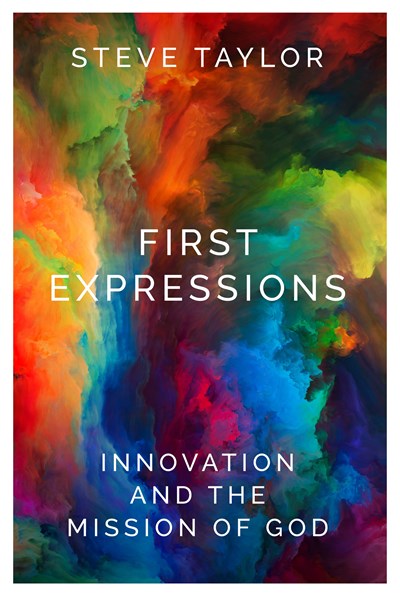
It is the first publication resulting from my fresh expressions 10 years on research project and I hope becomes a spring board to complete the book (just write Steve). Or in the words of one peer-reviewer – “I get the impression that this is part of a wider study, and, if so, it is one that I look forward to reading.”
Monday, March 16, 2015
Tweeting Charles Taylor missionally: discussion questions
This semester, I’m Reading Charles Taylor missionally. Taylor’s work has been called “the most the academic event of the decade.” (here). He’s one of the most insightful cultural thinkers of our time and so I’ve offered a learning party – a invitation to read Taylor in community and to consider what it thus means to speak of church, mission and faith in a secular age?
On Wednesday, we focus on Taylor’s, The Ethics of Authenticity
I chose to start here first because it’s short. At 120 pages, it is a much more achievable place to start than the 900 pages of Taylor’s, A Secular Age
Today I emailed the class with some preparation: my (current) list of questions I’ll be using to start discussion.
- Can you think of a story from your experience that illustrates one of the three malaises of society described by Taylor in chapter 1.
- Can you each please bring one quote (printed on a separate sheet of paper) that you really liked.
- “Each of us has an original way of being human.” (page 28; page 61). Discuss.
- What is one question from the book you would most like to ask the group to explain to you.
- I have a friend who last year had a go at tweeting (160 characters max), a summary of every book of the Bible. It was a great exercise in summarising. So together, we will work on Wednesday on a twitter summary (160 characters) of each chapter. So bring a draft prepared. I hope we’ll actually enjoy this enough that we’ll decide we’ll actually tweet them.
I do hope that this last question will not only be fun, but will also develop student skills in summary. And it might well yield some terrific tweets on my twitter feed come Wednesday!
Thursday, March 12, 2015
minding the gap in team formation
Minding the gap can build teams and form cultures. Let me tell you what happened, then unpack the learnings.
It began yesterday during chapel. The reader of the Gospel reading missed some words. Instead of
For God so loved the world
that he gave his one and only Son
that whoever believes in him shall not perish but have eternal life. (John 3:16)
the reader initially offered us
For God so loved the world
that whoever believes in him shall not perish but have eternal life. (John 3:16)
Realising the gap, the reader quickly, and appropriately, corrected themselves.
The missing words got me thinking. Those 8 words. What would it mean if they were not just missing, but actually absent. What type of faith would we have if those words were not in the Bible? What type of life might be lived, if there really was no “that he gave his one and only Son”?
To put it another way. Christ-centred is one of the core values of Uniting College. So, if we as a College had no Christ, would it make any tangible difference to life, to our teaching and the way we treat each other?
I decided to make this the focus of our team devotions today. It would offer a continuity with what was a great chapel. It would allow us to explore a core value. In addition, we also have four folk new to our team in the last 3 months. So this conversation might enable them to be drawn more deeply into our team culture.
So I began the devotion, by pointing out the gap. I’d produced the words, the complete verse and the verse with the words missing, on a sheet of paper for folk to hold and handle. In pairs I invited them to reflect on what happened if those words went missing and on whether faith would be different. Each pair fed back, ensuring a shared voice across the team. And then together as a whole group, I asked if the presence of Jesus does in any way affect our workplace.
The conversation was excellent, animated and intense. A newcomer observed that the missing 8 words spoke of love. And her experience of our workplace was of nurture. Which could only come from love. So yes, Jesus obviously was important. Another noted that these words were an invitation, not an imposition. So our commitment to Christ could be done in way in which faith need not be forced. Others noted they had no interest in teaching leadership without Christ and that without Jesus, homiletics was simply motivational speaking. Which they were not in the least interested in teaching. So yes, Jesus was important.
So what did I learn about team formation?
- First, that the most effective teaching tool can be a question. In this case “do those missing words matter?”
- Second, that observation can open up significant learning. In this case one simple observation – of 8 missing words; followed by the question – resulted in an excellent collaborative discussion.
- Third, that those new to a team, as they find their voice, can add important richness and perspective to a team discussion.
- Fourth, that team culture is never static. It requires constant work. Tonight, the Uniting College team culture is richer than it was this morning. Because I minded the gap.
Tuesday, March 10, 2015
Hauerwas: A (Very) Critical Introduction Book review
“[H]ow remarkably easy it is for middle-class white Americans to be pacifist, since for many it need involve little beyond talking correctly.” So observes Healy, Hauerwas: A (Very) Critical Introduction

Nicholas Healy is interested in what he calls the concrete church. What actually happens in churches and how can that enhance our theological study and method? In order to help him think through what he is doing, he engages with the prolific pen of Stanley Hauerwas. On the surface, both might seem friendly. They both care about the church, about the realities of being Christian in contemporary life.
But Healy’s Hauerwas: A (Very) Critical Introduction
The book has five chapters. The first, an introduction, sets out how Healy plans to read Hauerwas. It is a methodology for theological critique, one that seeks a respectful, yet rigorous engagement. The second chapter works across 26 books written by Hauerwas, to argue that Hauerwas’s theology is church focused. The third chapter reads Hauerwas in conversation with Schlieirmacher. While at first an unlikely theological conversation partner, Healy argues that both have a turn toward the subjective and the church.
The fourth chapter reads Hauerwas in light of ecclesiology and ethnography. It argues that Hauerwas deals with ideals. The result is a set of distortions that ignore the complex and often rather messy realities of the churches’ actual existence, creates unrealistic patterns of discipleship that in fact unhinge from historic Christian understandings of salvation and grace. The fifth chapter develops in depth the impact of these theological distortions, mapping out the ways in which Hauerwas’s turn toward the ideal church is in fact deeply problematic, most particularly in relation to Scripture, authority and Christology.
I first came across Healy in my research into fresh expressions of church. I was looking for ways to develop ethnography to explore ecclesiology. (See Perspectives on Ecclesiology and Ethnography

- He helps me think theologically. “Church practices therefore require us to reflect upon who God is and how God acts toward us.” (119)
- He allows me to consider the work of God missionally, with the Spirit’s activity inside and outside the church. “If our intentionality is Christian, we can bend almost any socially-sanctioned practice into a Christian practice, even if it is not such to most people.” (119)
- He reminds me that apologetics has taken a particular shape in contemporary culture, one that risks losing the value of apologetics as helping the church understand its own faith better. “Only in the modern period, when theologians seemingly lost confidence … did they mount cross-traditional arguments for our beliefs. (107)”
- He pushes me to consider not only faith practiced well, but faith practiced badly. This includes ways to allow for the differences between and within church communities, to be honest about the multiple communities and relationships humans experience and the need for a “theological understanding of failure and mediocrity” (107) as part of being honest about being church.
Saturday, March 07, 2015
Selma: a theological film review
Monthly I publish a film review for Touchstone (the New Zealand Methodist magazine). Stretching back to 2005, some 90 plus films later, here is the review for February 2015, of Selma.
Selma
A film review by Rev Dr Steve Taylor
At the end of “Selma,” no one moved. As, the final credits rolled, those present remained seated, motionless and silent. Only as the cinema cleaner entered did people finally collect their belongings and begin to exit.
It was a fitting tribute to a moving story, powerfully told. “Selma” documents the American Civil Rights movement, in particular the period during 1965 when Dr. Martin Luther King, Jr worked in the town of Selma, Alabama, to galvanise protest over the right to enrol to vote. We witness the tactics of non-violence, the hostility of Southern white response and the unfolding story, which resulted in the Voting Rights Act and the provision of Federal Government enforcement of voting fights for all minorities.
What is striking in “Selma” is how these acts of protest were shaped by a faith as political as it was domestic. In prison, pondering his decision to picket around voting rights rather than protesting poverty, King is reminded by his advisers of Scripture (Matthew 6:26-27). Needing courage, King calls a friend, seeking solace in the singing of an old Negro spiritual. Preaching in Selma, at the funeral of a protestor, King asks who murdered Jimmie Lee Jackson?
“Every white lawman who abuses the law to terrorize. Every white politician who feeds on prejudice and hatred. Every white preacher who preaches the bible and stays silent before his white congregation.”
It is a powerful reminder that in the hands of the church, Bible study has at times magnified injustice, rather than worked to further God’s dreams of justice and liberation. “Selma” is a powerful reminder of how faith is political, both for good and bad.
The movie is well made, including the clever mix of actual black and white footage of protest along with the typewritten telegraph text documenting FBI surveillance. David Oyelowo is superb as Martin Luther King, as is Carmen Eiogo as King’s wife, Coretta. However, they are shaded by the standout performance of Henry G. Sanders as Cager Lee, mourning in the morgue his murdered grandson, Jimmie Lee Jackson.
It is a predominantly male cast, with King constantly surrounded by male leaders. It is a visual reminder that following the gaining of civil rights would need to come the struggle for gender equality.
This interweaves with another prominent theme, faith domestic as well as political. Time and again, Selma locates us, the viewer, in the ordinary. The movie begins with Luther worried about his tie and dreaming with Coretta of being a pastor somewhere small, with a house to call their own.
It is these domestic touches – the kitchen scenes of Southern hospitality, the putting out of the rubbish, the tucking the children into bed– that drive the humanity of the narrative. They create the empathy against which the violence that was the Civil Rights movement can be projected large.
This is “Selma” and this is why no one in the movie theatre moved. Faith, powerfully presented, with hope, that the eyes of all peoples in all of life may indeed see the glory of the coming of the Lord.
Rev Dr Steve Taylor is Principal at the Uniting College for Leadership and Theology, Adelaide. He is the author of The Out of Bounds Church?: Learning to Create a Community of Faith in a Culture of Change
Wednesday, March 04, 2015
lectio decorio (reading the skin)
A creationary: a space to be creative with the lectionary. For more resources go here.
Lectio divina (divine reading) is a practice by which Scripture is read slowly, seeking for God’s voice. Today I invited the community at worship at Uniting College to enter into lectio decorio (reading the skin). (Decorio is latin for skin).
The spark was the lectionary text – John 2:13-22, when Jesus cleanses the temple. Searching google, I found the work of Amanda Galloway. As a way to connect with women in India, a system of Biblical story telling has been developed. It uses the traditional henna process to symbolize biblical stories (I’ve blogged about henna and Biblical storytelling before). Henna, a temporary artwork drawn on hands and other parts of the body, is a popular beauty technique in parts of Asia, Africa and the Middle East. As the story is told, the images are drawn onto the hand and arm.

I didn’t have the time (chapel is 20 minutes, including communion), nor the materials (henna), to literally use henna. But I loved the way the Amanda Galloway’s design told the story, and told it onto skin. It seeemed to also connect with the Biblical text, which was all about whips and overturned tables and thus a story about skin in the game of justice.
So, after reading the lectionary text, I introduced the design. I noted how it is used. I then invited folk to trace the design onto their skin. Not with henna, but by using their finger, while I read the text (slowly enough to give time for the tracing).
And so skin touched skin, as the Bible story was heard and traced (decorio).
I then repeated the process, inviting folk to trace to design on their other hand. Given that folk most likely initially chose their dominant hand, it felt deeply gospel to trace the design again, this time using a weaker finger. This also created links between the two contexts – us in the first week of the semester, with all the new learning that a semester involves, women in India, unable to read, but still opening themselves to learning.
I then moved into the six minute communion. And suddenly the passing of the peace had new meaning. It was another moment of lectio decorio, reading the skin, as the gospel story traced on my hand touched the gospel story traced on the hand on another.
I’m still to unpack with those gathered what the experience meant for them.
But for me, the invitation three times to hear a Gospel story, the deeper sense of connection as that gospel was traced on my skin, the sharing of a practice from another cultural context as an expression of solidarity in learning – felt very embodied.
So there we are, lectio decorio (reading the skin).
Tuesday, March 03, 2015
Worth coming for the creative resources alone
“It’s worth coming for the creative resources alone,” said a happy punter as they tucked the order of worship into their bag. Yesterday we kicked off at Uniting College another year of Leadership Formation Days.
These aim to build community among individuals on the journey to ordination. So yesterday in small groups and with the aid of colour chips of paint, relationships were built.
They invite reflection on the practice of ministry. So yesterday input on Pauline spirituality and adaptive leadership in resource poor congregations. A rich, deep study of how Paul’s spirituality of ministry connected with the work of Heifetz (Leadership on the Line: Staying Alive through the Dangers of Leading
They provide prayer and worship – in ways that are “worth coming for the creative resources alone.” So yesterday praise, for the generations before who had formed us, and intercession, for the generations we are involved in forming.

Names written on yellow and orange post-it notes, placed around the edge of the communion table. On which some godly play around the lectionary text was done, the giving of the 10 commandments. On which the communion elements, bread and wine were shared.

They share stories, in order to build our ability to work with the living documents that are the lives of people. So yesterday, two stories of the journey to ministry and the journey in ministry. A few tears, as redemption was enfleshed.
Sunday, March 01, 2015
Revaluing the lives we teach: the pedagogies we employ and the Gospel truths they deploy
I’ve just submitted the following abstract for a theology conference later this year. It emerges from my teaching last year and my participation in a Flinders University Community of Practice during which I did research, seeking student feedback on the changes I was making – in particular implementing flipped learning and making a focus on indigenous Christologies. It’s good to take the next step, from doing research, to presenting research
Revaluing the lives we teach: the pedagogies we employ and the Gospel truths they deploy
One way to “revalue” the worth of the lives we teach is to examine the pedagogies we employ. Educational research reminds us that all pedagogies speak, offering a “hidden curriculum.” What are the truths expressed in the “babble of information” that originates from our teaching? Is e-learning a pandering toward “endless opportunities for self-gratification”?
This paper will explore pedagogical innovation in teaching. Participation in a Flinders University Community of Practice in 2014 provided an opportunity to research student experience when teaching is approached as mobile, accessible and connective.
A core topic (Theology of Jesus Christ) was taught using e-learning technologies, including video conferencing and Moodle. Blooms taxonomy was used as a theoretical frame to negotiate the change with students and the shift in contact time from lecturer-driven content to student-centred small group activities. Changes were made to assessment, shifting participation from face to face to digital, in order to enable connectivity. Indigenous voices were introduced to enhance access.
Students completed a written survey at three points during the course. The results demonstrate that a significant shift had occcured in the class, with students moving from an appreciation of content, to a consideration of how they learn from the diversity inherent among their peers. Students felt the changes enhanced their ability to communicate effectively, appreciate collaborative learning and connect across boundaries.
Haythornthwaite and Andrews (E-learning Theory and Practice
This suggests that the pedagogies we deploy do indeed have the potential to “revalue” the worth of the lives of those we teach.
Friday, February 27, 2015
beginnings 2015
A great lunch at Uniting College yesterday as we celebrated a whole range of beginnings. There was food and conversation and great joy across the campus as we named a number of new beginnings for people, in partnerships, in presence.
New Life College – New Life Uniting is the largest Uniting Church in Australia. Located on the Gold Coast, we have been working with them on leadership development for the last few years. This has involved teaching one intensive a year on leadership from our Bachelor of Ministry suite of leadership topics. The feedback has been very positive. The partnership is now growing, with a three way commitment between New Life, Adelaide College of Divinity and Uniting College, to offer a range of not only leadership but ministry topics on the Gold Coast. Some taught by Adelaide faculty, some taught by Gold Coast folk. Yesterday Shahn Dee, who is a key administrator at the New Life College end, was down to meet folk and build relationships. It was great to welcome her and name the new beginning in her relationship.
Big Year Out 2015 – We have the numbers to form a viable learning community and so Big Year Out in 2015 is a go. That means that Danica Patselis and a bunch of young adults will be with us for the year, growing around discipleship and mission immersion experiences. It’s now the second year running for the programme, which is so important in building a presence and pattern in South Australia for young adult discipleship.
Marketing – This week we welcomed a new Marketing Officer, Nadia Boscaini. She will work 0.4 for Uniting College and 0.2 for Adelaide College of Divinity. Historically we as a College have been strong on teaching and on administration but not as strong on telling our story beyond ourselves. So Nadia arrives with drive, energy and expertise in these areas.
Principals PA – Denise Boyland is beginning as Principal’s PA Maternity on Monday. Eloise Scherer is on 12 months maternity leave. After meticulous long range plan in August and September 2014 to ensure a smooth transition, an unexpected health concern, meant that I’ve been PA-less for the last month. And a highly stressed bunny have I been! The rest of the administration team have been incredibly helpful, but I’m very relieved with the support that will now flow as Denise settles into her role.
Post-graduate beginnings – with a growing post-graduate programme, including our largest Bachelor of Theology honours cohort, a larger space has been created. It’s great to be able to have the presence of post-graduate students permanently among us, joining us for chapel, morning tea, interaction. There are desks for four, with room for more …

Wednesday, February 25, 2015
Reading Charles Taylor missionally: learning party
What does it mean to speak of church, mission and faith in a secular age?
I am offering a reading group to engage theologically and missionally with Charles Taylor, one of the most insightful cultural thinkers of our time. We will focus on four key books
- James McEvoy, Leaving Christendom for Good: Church-World Dialogue in a Secular Age
, 2014.
- James Smith, How (Not) to Be Secular: Reading Charles Taylor
, 2014.
- Charles Taylor, The Ethics of Authenticity
- Charles Taylor, A Secular Age
The aim will be to absorb, to reflect and to consider the implications for mission and ministry.
Wednesdays, 5.15 – 6.45pm, fortnightly from Wednesday 4 March at Uniting College. Seven sessions, finishing June 10. For information, please comment or email steve dot taylor at flinders dot edu do au.
Tuesday, February 24, 2015
Research Mondays monthly
The Uniting College team have developed a new initiative to help further enhance the research culture of UCLT/ACD/Flinders; an initiative that post-grads are invited to participate in and contribute to.
March 2 Research programme
Research Hour – Dr Vicky Balabanski, Where is Philemon? The case for a logical fallacy in the correlation of the data in Philemon and Colossians 1.1-2; 4.7-18.
Post-graduate Research Seminars – John Littleton, The Learning-Community: Learning enhancement Parish. Emergent Patterns in Parish learning
Research Hour is an opportunity to hear and discuss some current research being undertaken by faculty and post-grad students. It will run from 4pm to 5pm on selected Mondays, and be followed by drinks and nibbles. (This year the dates are 2nd March; 4th May; 1st June; 3rd August; 7th September; 2nd November.)
Research Hour will be held in the UCLT Common Space, downstairs in the NW corner (onsite at ACD, 34 Lipsett Terrace, Brooklyn Park). Post-grad students will be welcome to present their research, and you should make contact with new Post-graduate Coordinator (Tanya Wittwer) if you have something you would like to present.
Post-graduate Research Seminars will continue in 2015, but at a different time and following a slightly different format to how they have run previously. They will run from 2.45pm to 4pm on the SAME days as Research Hour (These seminars will be held in W3, upstairs). They will follow this (approximate, and very adjustable!) schedule:
2.45-3.00 Coffee/tea (yes, and hedgehog slice/nuts :))
3.00-3.10 Introductions and updates: who we are and what we’re studying
3.10-3.30 One post-grad will present from their research: 10-15 minutes of presentation, followed by 5-10 minutes of questions.
3.30-3.55 Opportunity for anyone to share one joy and one struggle from your research and/or one insight from a recent reading/discovery (what it is, why it is helpful to you). There is also potential for some professional development to be offered in this slot, so if there’s something you would like considered for inclusion, let me know.
3.55-4.00 Sorting out who will present at the next Post-grad Research Seminar and heading down to the UCLT Common Space for Research Hour
Friday, February 20, 2015
Welcome home: A song in which I keep finding added layers
It was announced yesterday that I’ve been appointed the new Principal of Knox Centre for Ministry and Leadership, serving the Presbyterian Church of Aotearoa New Zealand. (The Uniting Church announcement has been emailed but is not yet online). I was in meetings yesterday, but here is some of the personal story behind that announcement:
In 2010, Team Taylor crossed the ditch, moving from New Zealand to Australia, from pastoral ministry in the Baptist church to founding Director of Missiology, Uniting College for Leadership and Theology.
The most helpful way I found to understand this call at the time was through the narrative of the man from Macedonia in Acts 16, who appears to the Apostle Paul saying “Come on over.” Paul is a missionary on pilgrimage and the shift “across the ditch” is the next step in an unfolding journey. There would be different cultures, but – like any missionary – the expectation of listening, serving, partnering with what God is already doing.
So began a season first as founding Director of Missiology, then from 2012, as Principal of Uniting College. In May 2014, we indicated to the Leadership Development Council of Uniting College that we would not be seeking an extension of placement in the Uniting church at the end of my fixed three-year term as Principal. It had been an enormous privilege to serve in the Uniting Church. It is very humbling to be invited to lead a different Denomination’s College, candidates and theological education. That’s a lot of trust.
But for family reasons we felt we needed to return to New Zealand. We had nothing to go to, but hoped that making this clear to the LDC would help with their ongoing planning. In order to give the LDC time to quietly do the long range planning they needed, while I informed the Uniting College team, it was news I did not at the time make widely known.
In October 2014, I spoke at General Assembly of the Presbyterian Church of Aotearoa New Zealand. A number of things happened during that time that I found unsettling.
First, I was surprised how many people I knew, how many now ministers in the Presbyterian Church I’d been part of training during my time as Lecturer at Laidlaw College, Christchurch.
Second, I took a photo on my cell phone that would grow increasingly important over the next months. It was of two non-Anglo ordinands training for Presbyterian ministry, sitting together, leaning against a side wall of the hall where Assembly was taking place. At the time the photo was for me prayer; of thanks that God is raising up leaders across cultures, of petition that all leaders would find ways to move from leaning against the wall to the centre of the life of their church.
 Third, at the end, I was given a thankyou gift, a Maori toki. I can’t recall the exact words from the Moderator of the Church, but it was something along the lines that even though I was “across the ditch”, New Zealand was still home and so this gift was given in the building of friendship. The gift and words meant a lot at a relational level (and in hindsight, at a prophetic level).
In November 2014, the then Principal of Knox Centre for Ministry and Leadership (KCML) announced he was moving to a new placement.
A number of folk from New Zealand contacted me in the following days suggesting I consider applying.
I did and was interviewed in late January. This involved a formal interview, a 50 minute lecture, a 50 minute presentation on current research followed by 50 minutes of questions and a number of informal conversations with key stakeholders. It was a very thorough process.
The vision of KCML, to equip church leaders for today’s world and their recent change journey around internships excited me.
Our oldest daughter, Shannon was moving to Dunedin to study Medical Science at Otago University. So the whole of Team Taylor visited Dunedin during the interview process, to provide moral support, to show Shannon around her new city and to wonder if we could imagine ourselves in this Southern clime. Kayli liked the feel of Logan Park High School. Lynne can complete her PhD (in missiology) from Dunedin.
The last 10 months have been difficult for Team Taylor. We’ve had to close a door, with no clarity about the future. We’ve had to live in an in-between space, at times quietly, while church processes moved at their pace.
Looking back now, we can so clearly see God’s love – to end up serving in a similar role (leading an organisation that forms leaders across a church system), in our home country, in the city where our oldest is already at University, feels a great gift.
“Crossing the ditch” back, I suspect I’m a few years “out of touch” with New Zealand culture. We’ve undoubtedly picked up a few Australian, a few Uniting Church, vowel sounds!
Our commitment is to do what we did when we came to serve the Uniting Church, to seek, across difference in cultures and denominations, to – like any missionary – to listen, serve, partner with what God is doing.
Thursday, February 19, 2015
Why BYO?
As a Uniting College, we invested last year in Big Year Out (BYO). It’s a one year program for young adults. It can be done alongside work or University. It offers teaching in discipleship and leadership, mission immersion and young adult community. Tonight at an information evening, I was asked why a College would get involved in something like this.
First, it fits with our mission. We as Uniting College have a mandate to grow life-long disciples and effective leaders. We have a highly talented team who have gathered a wealth of resources. So to offer that team and teaching into a young adult space makes total sense.
Second, as a Uniting College we’re in a partner relationship with Adelaide College of Divinity. The sole purpose of ACD is to be an ecumenical space, bringing different denominations to learn together. So last year the BYO had young adults from Baptists, Uniting, Churches of Christ and Catholic churches growing together. That’s a really rich learning environment. Sometimes people say to me “Why doesn’t the Uniting College go alone?” And my response is to point to the richness offered by an ecumenical space.
Third my story. I left school intending to be an auditor for the Government. Anyone who knows me well knows that would have been a disaster. By some act of mercy, I decided to pause the scholarship I’d been awarded to study and take some time to think about my vocational path. I found myself in a young adult community, that mixed discipleship and leadership challenges. It was transformative. Who I am now owes a lot to those experiences, not that I would have known it then. So I pray that the BYO has a similar impact on the lives of young adults like me, searching for purpose.
Fourth, it is good for the College. That might seem a bit selfish. But we need the energy, passion and vibrancy that young adults bring. Last year I arrived at work to find a pair of boots sticking out a car window. I could not see a head or body, just a pair of brightly coloured boots – black, with purple, yellow, white stripes. It was a BYO student, preparing for a lecture. We as a College need people like that – free and willing to be themselves.
BYO starts in a few weeks. The BYO Coordinator for 2015, Danica Patselis, has done a fantastic job of planning and organising. She’s available to talk to anyone in Adelaide who wants to know more – danica dot patselis at flinders dot edu dot au.
Tuesday, February 17, 2015
The complexity of authenticity in religious innovation: “alternative worship” and its appropriation as “Fresh expressions”
Yes, yes, yes.
I was delighted with the news today that my journal article The complexity of authenticity in religious innovation: “alternative worship” and its appropriation as “Fresh expressions” has been accepted for publication in mcjournal, an online peer-reviewed journal of Media and Culture. It will be published in late March, 2015, as part of an edition devoted to the theme of authenticity.
There were some lovely comments from the reviewers – “good quality … insightful points … well-researched … the analysis is innovative … an original use of Charles Taylor’s concept of the ethic of authenticity combined with Vanini’s parsing of the word.”
Here’s the abstract for my article:
Philip Vanini’s theorising of authenticity as original and sincere helps parse the complexity of contemporary religious innovation.
Ethnographic research into new expressions of church (“alternative worship”) showed that authenticity was a generative word, a discourse deployed in these communities to justify innovation. Sarah Thornton’s research (Club Cultures: Music, Media, and Subcultural Capital
Such acts of self-location, so essential for innovation and identity, were complexified when appropriated by the mainstream (“Fresh expressions” of church). The generative energy therein became focused not around originality but in maintaining the sincerities of existing institutional life.
This article began life as part of a foray I did late last year, taking my research on sustainability and fresh expressions into a sociology context. I had been reading in sociology of religion and so wanted to get some feedback from that particular discipline in terms of how I was utilising their categories in my research.
So I presented two conference papers, this one on the complexity of innovation, and a second one on the sociological parsing of fresh expressions. I was very encouraged with the response to my two presentations. I worked over my study leave in December to turn the paper into an article. And now the news of acceptance for publication.
This was one reviewers concluding comment – “I get the impression that this is part of a wider study, and, if so, it is one that I look forward to reading.” Too right 🙂


 )
)