Saturday, February 14, 2015
from “they” to “we” in mission
This week I was asked to present some thoughts on a missiology of placements. Placements are the process by which the Uniting Church works with minister and congregations.
In preparation, I found myself reflecting on the Biblical narrative in Acts 16:6-10. It is the story of the gospel crossing cultures, taking root in Roman cultures. It becomes the story of the first church planted in Greece by Paul. Philippi is located on a boundary between two provinces. “This narrative is an important one for Luke because it shows the mission’s encounter with the Roman world.” (Witherington, The Acts of the Apostles : A Socio-Rhetorical Commentary
A feature of the narrative is the way that the initiating action comes not from the missionaries, but from the local community. The call comes from a dream from the man from Macedonia (16:9) to come on over. In other words, the call begins in mission. At Philippi, Lydia is already praying by the river bank and Paul joins this already praying community. Lydia opens her home, and thus provides space, both physical and and social, for this new community. In terms of my topic – a missiology of placement – it is a reminder that placements of ministers begin in mission, initiated by the call of community.
Re-reading the Biblical text, I was struck by a further thought. The text has a fascinating change in language, from “they” to “we.” Paul and Timothy are “they” in 16:6, 7, 8. They are seeking direction, they are struggling to discern a way forward, they hear the call from the man from Macedonia.
And then in 16:10, 11, 12 and ongoing, we are leaving for Macedonia, we are sailing, we are church planting in Philippi. The usual explanation is that the writer of Acts, Luke, has joined the team and thus the language changes from they to we.
But I wonder if there’s more going on than simple grammar. I wonder if there’s something about the nature of mission, especially mission that crosses cultures. The invitation is to move from them and us, to interdependent we partnership.
This will become a feature of Paul’s ministry. Paul works tirelessly with these newly planted churches to express partnership and inter-connectedness (the famine collection in 2 Corinthians, a prime example). In other words, placements begin with mission Dei, and work towards we toward partnerships and interdependence.
This works against two traditional approaches to pioneer planting. The first, that the church is unable, because of Christendom and geographic parish mentalities, to respond to the mission call. Second, that this misison call is for solo operators, for new forms of church that separate themselves from what has gone before.
But the Acts 16 story, suggests that instead, the mission is always calling and that pioneers are always working toward the we. Thus a missiology of placements today will work toward ways to discern calls from outside the church, and the build expressions that are interdependent partnerships. These include relationships, supervision, wider church combined celebrations – that flows both wides.
Such is the “they” to “we” in mission placements.
Tuesday, February 10, 2015
The Water Diviner: a theological film review
Monthly I publish a film review for Touchstone (the New Zealand Methodist magazine). Stretching back to 2005, some 85 plus films later, here is the review for January 2015, of Water Diviner.
The Water Diviner
A film review by Rev Dr Steve Taylor
“your sons … have become our sons as well.” Ataturk, 1934
One hundred years ago, New Zealand invaded another country. It was an unprovoked act of war that many argue gave our country the twentyfirst keys to nationhood. Soldiers went as the boys from Taihape, Clive or Ashburton. They returned as New Zealanders.
Perhaps it was the fact that war touched almost everyone. One in seventeen New Zealanders died or were wounded in WW1. Perhaps it was that sense of participation. Mate with mate in the trenches. Values of solidarity and loyalty and courage under fire.
Whatever the reasons, it was the nation we invaded that in time would show us how to remember. Ataturk, present at Gallipoli, who became leader of modern day Turkey, would inform us in 1934 that “your sons … have become our sons as well.” It remains a gracious and compelling way to respond to those who invade you.
In this centenary year, New Zealanders are invited to return to Gallipoli. Organisers have limited attendance to 10,500, a sign first of the enduring place that Gallipoli still holds in ANZAC memories and second, of the narrow beach and steep terrain on which so many died.
The Water Diviner provides a mature addition to the inevitable national discussion that continues to flow in regard to Gallipoli. Russell Crowe not only directs, but also acts as Connor, an Australian father who in 1919 journeys to Turkey, searching for his three sons, all reported lost at Gallipoli.
The story that unfolds provides a rich intercultural study of the impact of war. The plot is helped by character: the pairing of Connor with Ayshe (Olga Kurylenko), a Turkish widow and also with Hassan (Yilmaz Erdogan), a Turkish soldier. This provides a Turkish perspective on the events of Gallipoli, including their death toll (70,000 in comparison to 10,000 Anzacs) and their descent into civil war in the years following our invasion of Gallipoli.
While the plot was compellingly mature, the acting is limited at times. One reunion scene in particular, involving Russell Crowe, was strangely wooden.
From a theological perspective, three threads intrigue. First, the comment made of Connor’s search, that “the father looks.” It is one way to understand God, as One who looks. Connor’s actions through the movie can thus be read as a contemporisation of Luke 15; the shepherd who looks for lost sheep, the housewife who looks for the lost coin.
Secondly, the role of the church. Connor’s priest (played by Damon Herriman) portrays, in contrast to Connor, a religion more intent on doctrinal precision than pastoral care. The heartlessness of the priest is accentuated by a masterful moment of cinema, in which the sound of the grave being dug outside carries forward the plot, rather than what is happening onscreen in the church. Sound is the generator of action, rather than dialogue or visual symbolism.
Third, the comment made by Hassan, that it is not forgiveness or redemption that is needed after Gallipoli. Rather it is truthful memory. In that sense, it is fitting that The Water Diviner was released not only on ANZAC soils, but also in Turkey (titled Son Umut which means “The Last Hope”)
For surely all sons, yours and ours, Turkish and ANZAC, deserve to be remembered rightly. Such is the work of The Water Diviner.
For more Anzac Day resources, including worship, sermons and others of my writings, go here.
Rev Dr Steve Taylor is Principal at the Uniting College for Leadership and Theology, Adelaide. He is the author of The Out of Bounds Church? (Zondervan, 2005) and writes widely in areas of theology and popular culture, including regularly at www.emergentkiwi.org.nz.
Saturday, February 07, 2015
missional practices
“The missional theologian and the practical theologian must work together to make sure congregations … are prepared to address and engage their post-Christendom setting. A missional theological conception of Christian practices offers a new paradigm for understanding the church’s ministry in the world since the old role of chaplain to society is no longer viable or defensible. Through missional Christian practices all members of the congregation take up their place of responsibility, as those strategically placed and adequately equipped to witness to the reign of God. Through participation in Christian practices that are formative and performative, congregations can practice their faith and practice witness.” (Practicing Witness: A Missional Vision of Christian Practices
)
I came across this quote in preparing this week for next week’s Mission and Community Service/Diaconal intensive. Rather than do the teaching myself, I have pulled together five case studies from five very diverse contexts in which Christians exercise community service. They are
- the complexity of interface between church and agency (Peter McDonald case study 1)
- agency as a place of service (Peter McDonald case study 2)
- powerful question as a practice of community ministry (Joanna Hubbard case study)
- ministry as chaplain in Mainstreet communities (Bruce Grindlay case study)
- the processes as community ministry engages with agency (Ian Bedford case study)
It promises to be a real feast, a lovely mix of practitioners and reflection. Two of the participants bring Doctoral study of their areas to the conversation, all four bring years of practical ministry immersion.
My role will be to work with participants to do ongoing reflection, exploring the questions raised for them by the case studies. To better resource that reflection, I’ve been doing some literature searching, exploring writing in this space. (I’ve found some real gems, including Connor’s Practicing Witness: A Missional Vision of Christian Practices

I highlight the quote by Benjamin Connor for a number of reasons.
First, because it makes sense of our Faculty at Uniting College, and the emphasis we have put in recruitment on expertise in missiology and practical theology with a congregational and “practice” focus. So it is comforting to have that affirmed.
Second, it chimes with a 50 minute research presentation I did last week, in which I explored theology “face to face” in order to analyse ecclesial innovation. I ended up using the notion of performance, which attracted lengthy discussion from those present. Had I considered the downsides of performance? I suspect that had I used missional Christian practices that are “formative and performative” it would have been helpful for us all.
Third, it provides a theoretical framework for the work we did at Opawa Baptist when I was Minister there, in which we clarified seven missional practices, initially for Lent, but in an ongoing way for those exploring membership. In other words, joining Opawa was about the practice of mission. We worked to frame these practices missionally, which chimes with what Connor is arguing – that Christian practices can’t involve the simple use of what we practised before. Rather, in a new context, a missional context, they will need reworking in light of the missio Dei.
Wednesday, February 04, 2015
Certificate in Bible and Leadership for ESL: new in 2015
I’m so excited by this. Last year I found a funding source and presented a proposal to employ a person at Uniting College to work developing leadership among migrant communities. We made an appointment in July 2014, and since then, Karen Vanlint has been researching what is happening in this area around Australia, plus networking and listening in and around Adelaide.
The result is this: Certificate in Bible and Leadership for ESL: new in 2015
Is English your second language? Do you want to study the Bible? Would you like to learn new skills to serve in your church? This course could be what you have been waiting for!
• 8 subjects over two years, one subject per term
• New entry available each school term
• One 2 ½ -hour session per week, venue to be confirmed
• Subjects include Old and New Testament, Living the Christian Life, Leadership in the Church, Christian Beliefs and more!
• Cost: $50 per subject (including GST)Enrol now for Certificate in Bible and Leadership for ESL with Karen Vanlint. Karen is an experienced teacher in ESL who wants migrants to have the same opportunity as others to study the Bible.
Email Karen: karen at vanlint dot flinders dot edu dot au or call her on 8416 8420 if you would like more information or to register.
So Adelaide folks, if you know Christians who want to grow in discipleship, leadership and in their English capacities, and who want to learn not in their own ethnic communities, but in contact with the wider church, then please point them toward the Certificate in Bible and Leadership for ESL.
Monday, February 02, 2015
team time
Today the Uniting College team takes time out. Not to sit in the naughty corner, but to renew and refocus.
Half of our time will be spent on spiritual renewal. We want to be a team that not only works but also worships. So together during the retreat we will enjoy some Godly play, with a Children’s ministry leader from a local church present to invite us to wonder at the Biblical story we find ourselves in. Individually, people have also been asked to bring what renews them. There is space for folk to do that and then to gather and share that with each other, underlining our diversity as a community.
The other half of our time will be spent on planning. We have two tasks. One is to take forward the Capacity Builder strategic plan that guides and holds us. 2015 is the last year of the (four year) plan, and there are some as yet untouched areas that we need to focus on. We have done some parts of our plan superbly, but there at some areas we have yet to touch. These include
- Faculty increasing their research output
- Student formation enhanced through the use of journals in which they share courageous attempts to integrate learning with practice
- Every ordination candidate able to articulate a plan toward innovation and invigoration
- Regional delivery, taking College to the local church
So I will be suggesting a process whereby the structures we have created over the last few years can be deployed to enable us to achieve these agreed goals. (It is so good having a plan, which means we gather around already agreed momentum).
We also have to re-tell the story of our team culture. We have a set of team values that we continue to articulate and revisit. We will do that again, pausing to check that these values say all that needs to be said about how we want to “be” and “do” with each other in this current season. This is also an act of hospitality, allowing those new to the team to hear if you like, part of our family story.
Thursday, January 29, 2015
colouring my leadership
Over my recent summer holidays, I appreciated the New Zealand landscape. Four colours in particular grabbed me. They were the grey of alpine stone, the blue of glacial water, the green of Westcoast forest and the yellow of the alpine daisy, each an important memory in a road trip that Team Taylor took to the Westcoast.

I pondered some way to take these holiday experiences into my working year. The process began by reflecting on the emotion that each colour generated in me, those feelings of concrete stability (alpine grey), of awe at nature (glacier blue), at the outrageous growth possible due to West coast rain (forest green), at the joy of exploration that meant an encounter with the very rare alpine daisies that grow around Castle Hill.
I then sought to reduce each colour to a word. One word. This was difficult, but the work paid off.
- grey=clarity
- blue=wonder
- yellow=explore
- green=create
As I pondered these words, I realised that each word, each colour, could actually be applied to my vocation as Principal.
- grey=clarity, as I communicate, chair meetings, conduct performance appraisals, ask questions
- blue=wonder, as I ask “what is God up to?” in the candidates I am part of forming, in the classes I teach, in the team I lead
- yellow=explore, as I seek in my research and reading to keep addressing the questions of mission and ministry
- green=create, as I have some specific writing projects that I want to deliver on
In turn, I then began to imagine how my weekly diary might look. Grey (clarity) and blue (wonder) are the colours of my day to day work. Yellow (explore) is the research time that I programme into my Fridays. Green (create) is what happens in study leave and with my “hour a day” of writing habit that while I struggle to maintain, has a been a great help in enhancing my writing output in recent years.
The colours have changed my attitudes to work. As I journal at the end of each day, I focus now not only on what happened, but on the colour. How have I been part of bringing clarity? Where have I seen wonder? As I turn to write for an hour a day, often tiredly, I am refreshed by thinking of green, the invitation to create.
To give one specific example, the day I arrived back from holiday, my PA regretfully told me that she needed to resign, due to personal reasons relating to an unexpected and critical health concern in the family. The colours shaped my response. How could I bring grey/clarity in my communication with team and wider? What, I wonder, might God be doing in this totally unexpected news?
The colours helped me look at life in new ways. It enabled me to pray in new ways. Equally importantly, I have a deep sense that the joy of recreation that is part of summer is continuing with me into my working week.
Each of us will have different colours. Each of us have different ways to recreate. Each of us have different working weeks. But I wonder what your colours would be? And how they might shape how you engage with your working place?
Wednesday, January 28, 2015
the mindfulness of vocation
I love the way the prophets’ call begins (Old Testament Lectionary reading for Sunday 25 January 2015). In Jeremiah 1:4, “Now the word of the Lord came …”
Now.
Not yesterday or tomorrow, but now.
There is a time-bound, fully present, mindfulness to this call.
The entire passage in Jeremiah 1:4-10 is laced with God’s action. Considers the verbs – forms, knows, consecrates, appoints, sends, commands, delivers, touches (mouth), appoints. The whole process is about God’s actions.
The prophet is only a participant. What that requires of the human in response to God’s action, is a participation in the now.
One contemporary word to describe this is mindfulness. It’s common in schools and wellbeing workshops. It’s the intentional focus of one’s attention on the emotions, thoughts and sensations occurring in the present moment.
On the now. This body, this community, this set of challenges, these invitations. I know churches and organisations caught up in God’s action yesterday. I know leaders who live constantly for the future. The challenge of Jeremiah 1:4 is for leaders to be in the now, responding to God’s actions in and around them.
This brings into play two essential practices of mission, those of listening and discernment. Listening, in order to pay attention to the “now” of God’s action; discerning, naming what it might mean to participate in what God is doing. Both of these practices, what Rowan Williams calls the first acts of mission, are “now” activities.
They will bring an alternative tomorrow, they will draw wisdom from yesterday. But they begin with the “now” of God’s action.
Sunday, January 25, 2015
five year work anniversary
Linkedin congratulated me a few days ago on my work anniversary. Which led to a lovely comment from Aaron Chalmers, Head of School of Ministry, Theology and Culture at Tabor, Adelaide.
“Congrats and well done Steve! You have really made a positive contribution to ministry / theological training here in Adelaide.”
It was five years since I walked in the door at Uniting College. I perched in a temporary office for six months while a colleague prepared for sabbatical. I was given four courses to teach, which I realised after about a month was actually a full years work in the space of six months. It was in a different culture, which I had underestimated in thinking about the transition. In my first class I followed the rules I’d been told, regarding no food in class, which led to a candidate, telling me that while the place had rules, no lecturer had ever enforced that them! The upshot was a negotiation by which they drank their precious cup of coffee just outside the classroom with the door open so they could hear the lecture!
But God was good and the College was in such an exploring, outward space. There was so much room to innovate – the Missional masters, the pioneering stream within the newly worked BMin, the development of mission-shaped ministry, both in Adelaide and nationally through Australia. There were some post-graduate students with really interesting questions they wanted to explore.
A work anniversary in which I’m deeply thankful.
Friday, January 23, 2015
The use of Psalm 23 in the TV series Lost
(This is part of a lecture I gave in Bible and Popular culture, in which I explore reception history, the way Bible texts are re-presented in different cultural forms over time).
Lost ran over six years (series). In this episode from the second series, titled “The Twenty Third Psalm,” we are introduced to the back story of a character, Mr Eko. It involves his past in Nigeria and a number of times and ways in which he “walks through the valley of the shadow of death.” First, as he acts to save (be a shepherd for) his younger brother from Nigerian guerillas, later as he seeks to use his brother, now grown, and a Catholic priest (a shepherd) to export drugs.
The episode is laced with religious imagery. Both Eko and Charlie carry religious symbolism. Eko has a piece of wood which he has called his “Jesus stick” which is marked with Scripture. Charlie carrys a Virgin Mary statue which is filled with heroin.
So in plot and character, the episode is an intriguing example of reception history, of the search for salvation in the very dark places of human experience. Karl Jacobson, argues that “in the various musical and theatrical encounters with Ps 23, an interpretive and pedagogical force that wrestles the psalm out of any flat or smooth reading and presses it into the service of disbelieving faith, seeking trust.”[1] This is what is happening in Lost. The words on a page are given contemporary relevance.
The episode ends with Charlie and Eko the saying of Psalm 23. Eko is the leader, yet is joined, falteringly by Charlie. Both men have difficult relationships with their brothers, tied together by drugs. Bringing them together allows them to face their failures, to experience “their souls restored.”
When we engage in reception history, is it possible that the pop culture readings might in fact read insight back into the text. We see this in this episode, which starts with a discussion of two brothers – Aaron and Moses. They are brothers in the Exodus story.
As the episode proceeds, we see more brothers. The difficult relationships experienced by Charlie and Eko invite us to consider the relationship between Aaron and Moses, to pull it “out of any flat or smooth reading.” In what ways might the Biblical characters have wrestled with each other?
The ending, as Psalm 23 is said together by Eko and Charlie, involves inter-cutting of scenes with other characters from Lost. The actions and interplay are each an acting out of the Psalm, not as per the Bible but in the contemporary world created in Lost.
The fish, given on the beach, is an offer of peace between people previously estranged. (a table before me, in the presence of my enemies). Lost is a mysterious island, a place of valleys of death. Yet perhaps, if these people act toward each other in forgiving and ennobling ways, is might indeed be a place of “goodness and mercy.” Heaven (the house of the Lord) is as real as these people might want to make it.
By paying attention to plot and character, this Lost epiosode does indeed provide “an interpretive and pedagogical force that wrestles the psalm out of any flat or smooth reading.”
[1]Karl Jacobson, “Through the Pistol Smoke Dimly: Psalm 23 in Contemporary Film and Song,” http://sbl-site.org/publications/article.aspx?articleId=796
Tuesday, January 20, 2015
Mission and Community Service Intensive
A course I’m developing this year … Mission and Community Service Intensive

Explore the promise, possibilities and tensions in the relationship between mission, church and social service agencies in contemporary Australia. Can there be a place for Christian faith and historic identities in the contemporary funding climate? Must faith and spirituality live in contradiction? Are words and deeds mutually exclusive? How might professionalism, power and the prophetic be negotiated?
The course will utilise a practical theology model, seeking a critical, theological reflection on lived experience. This will involve a case study approach, through which questions are identified, and a dialogue created with current research.
The learning will occur in three phases:
- Phase one – Sharing case studies. Four evenings, February 9-12, 7-9 pm.
- Phase two – Reflecting. Participants will isolate a question emerging from a case study and undertake wider research.
- Phase three – Workshop days. Participants will present their case study, sharing with one another, insights that have emerged as they have read and thought more widely, May 15-16, 9am-4:30pm (tbc)
Course facilitators will include Dr Steve Taylor, Rev Peter McDonald and Joanna Hubbard (tbc). Case studies presenters will include Dr Bruce Grindlay, Dr Ian Bedford (more to be confirmed). Options for enrolment include professional development, audit and credit.
Enrol at Student Services
P: 08 8416 8400
E: college dot divinity at flinders dot edu dot au
Venue: Pilgrim Uniting Church, 12 Flinders St, Adelaide.
Sunday, January 18, 2015
best fixed term role in Adelaide: PA to the Principal
First day back at work, my PA regretfully told me that she needed to resign, due to personal reasons relating to an unexpected and critical health concern in the family. While a real blow for us all, I do want to affirm the values she displayed, in particular the priority on family.
So my (unexpected) priority for my first weeks back is to find another PA (9 month contract (0.8FTE) (maternity leave))
It’s an excellent opportunity for a senior level Personal Assistant to join a highly focused team and work for a creative, passionate Principal. The successful applicant will need to be well organised, proactive and able to think for themselves. The role includes organising meetings, agendas, papers, taking minutes, keep my diary and communication flowing around a busy work team.
Proven experience in supporting a busy executive is required and support of the ethos and mission of the Uniting Church is essential. More information is here, with applications close Monday, February 2, 2015.
Monday, January 12, 2015
footnote 29 My thanks to Shannon Taylor
 Waiting for me when I got back home from holidays was Colonial Contexts and Postcolonial Theologies: Storyweaving in the Asia-Pacific
Like the U2 book from a few weeks ago, this -hard- cover also is stunningly, beautiful – a painting by Mark Yettica-Paulsen (who also has a great chapter on Mission in the Great South Land. An Indigenous perspective, which will be compulsory reading for my mission classes from now on.)
I have a chapter, which I co-wrote with Uniting Church Congress Minister Tim Matton-Johnson. Titled “This is my body? A postcolonial investigation of indigenous Australian Communion Practice,” it explores the elements – bread and wine – and the shapes they take (or can not take) as they move between cultures. It is a dialogue with William Cavanaugh’s Being Consumed: Economics and Christian Desire

It is a chapter which, when I sat down to re-read it tonight, I decided I was very, very pleased with. Including footnote 29 “My thanks to Shannon Taylor for her research assistance in this section.”! She had done some initial literature searching in one section of the paper and so it was a great thrill to acknowledge that as the article was written.
Wednesday, December 24, 2014
Scholars worship too
It has been an extremely productive year for me in terms of writing. I have just completed my seventh piece of work which, considering my day job as a Principal, and when placed alongside regular monthly film reviews, makes for an extremely productive year.
At church on Sunday, the phrase “scholars” lept out at me. The Magi, scholars from the East, come to worship. There was a sense that scholarship was welcome around the Christmas child. Thanks Jesus.
What I submitted today was a journal article to M/C Journal, a fully blind peer-reviewed journal for media and culture. It is my first publication attempt in relation to my fresh expressions: ten years old research project.
Here is the title and abstract.
The complexity of authenticity in religious innovation: “alternative worship” and its appropriation as Fresh expressions
Philip Vanini’s theorising of authenticity as original and sincere helps parse the complexity of contemporary religious innovation. Ethnographic research into new expressions of church (“alternative worship”) showed that authenticity was a generative word, a discourse deployed in these communities to justify innovation. Sarah Thornton’s research into club cultures similarly demonstrated an entwining of marginal self-location with a privileging of authenticity. Such acts of self-location, so essential for innovation and identity, were complexified when appropriated by the mainstream (“Fresh expressions” of church). The generative energy therein became focused not around originality but in maintaining the sincerities of existing institutional life.
The seven pieces for 2014 are as follows (four have already been published, which leaves three moving at various rates of speed with editors, which is quite standard).
Two peer-reviewed journal articles
“The Congregation in a Pluralist Society: Rereading Newbigin for Missional Churches Today,” Pacifica: Australasian Theological Studies, 27(2), (2014), 1-24, (co-authored with D. Cronshaw).“The complexity of authenticity in religious innovation: “alternative worship” and its appropriation as Fresh expressions.” (Under review, M/C Journal)
Three peer-reviewed book chapters
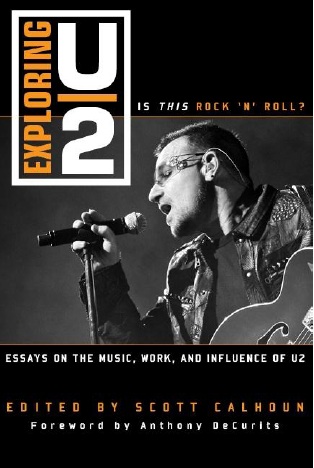
“Let “us” in the sound: the transformative elements in U2’s live concert experience,” U2: TRANS- , Going Across, Above, and Beyond with U2, edited by S Calhoun, Lexington Books. (Published).“Embodiment and transformation in the context of e-learning,” Learning and Teaching Theology: Some Ways Ahead, edited by In Les Ball and J. Harrison, Morning Star, 2014, 171-184. (Published)
“Inhabiting Our Neighbourhoods: Plot by plot, plant by plant,” for “Inhabiting Our Neighbourhoods”: a flagship publication of Urban Seed’s new Urban Studies Centre. (Under review).
Two “Other public research outputs”
(In other words they might be important but not in the eyes of the University “peer review” machine.)Colouring outside the lines (Mediacom).
“Carrying Cuth,” for Farewelling Our Fathers. (It is a “Men’s Studies” take on how men of my generation (40 and up) process the death of our dad’s. (under review).
Now to enter the Sabbath re-creation offered by the entry of the Christ-child into our world
Sunday, December 21, 2014
Interstellar: a Christmas reading
Monthly I publish a film review for Touchstone (the New Zealand Methodist magazine). Stretching back to 2005, some 85 plus films later, here is the review for Dececmber 2014, of Interstellar. In particular I play with Dr Mann and Christ as the new Adam.
Interstellar
A film review by Steve Taylor
Interstellar begins on earth, in order to send us to space. Human love becomes a fifth dimension, able to guide the human heart through the final frontier. So suggests Interstellar, which offers a visually stunning, but emotionally overbalanced meditation on the perils of climate change.
The film begins in rural America. Cooper (Matthew McConaughey), once an astronaut, is now grounded. He farms an ever-decreasing crop of corn, bitten by blight, shredded by dust. Facing starvation, the only hope for earth becomes the finding of another planet. Cooper is sent spaceward, the one pilot able to guide earth’s last hope through a wormhole, in the search for a new earth.
Interstellar is great entertainment. Directed by Christopher Nolan, the sights and sounds are simply stunning. The multiple dimensions of space, digitally manipulated, become objects of stark and starlit beauty.
The cast is similarly star, including Matthew McConaughey as Cooper, Jessica Chastain as Murph (Cooper’s adult daughter), Anne Hathaway as fellow astronaut Brand and Michael Caine as her scientist father.
In order to enable an emotional intensity through the voids that are outer space, Christopher Nolan uses the opening scenes to establishes a depth of relationship between father (Cooper) and his adolescent daughter Murph (McKenzie Foy). While this provides emotional intensity, it reduces the other characters to cardboard cutouts. This includes the role played by Cooper’s son, Tom (Timothy Chalamet). It also makes cold the movies’ other father and daughter relationship, between Hathaway and Michael Caine.
The film seeks an intellectual sophistication. Symbolic meanings abound. The space ship Cooper will pilot is named Endurance. He will seek a Dr Mann (Matt Damon), who has gone before, and if found, might offer hope of a better place. The dialogue references Joseph Conrad’s Heart of Darkness and name drops Lazarus. The dust storms that blow through Cooper’s rural cornfields echo John Steinbeek’s Oaklhoma dustbowl.
Theologically, the move in Interstellar from earth to heaven invites some rich reflection on the opposite move in Christianity from heaven to earth.
A central character in Interstellar is the mysterious Dr Mann, sent from earth to heaven, in the hope of saving humanity. It provides a contrast to the development in the New Testament of Jesus as the new Adam, sent from heaven to earth, a new human through whom humanity will be saved.
As Interstellar unfolds, Mann’s character flaws put in stark relief the sacrificial life and love of Christ. Dr Mann will end his life in selfish pursuit of his own ends. In contrast, Christ ends his life praying not my will but yours be done.
Such is the Interstellar Christ of Christmas, revealing the love of God in every dimension, whether first or fifth, of human reality.
Rev Dr Steve Taylor is Principal at the Uniting College for Leadership and Theology, Adelaide. He writes widely in areas of theology and popular culture, including regularly at www.emergentkiwi.org.nz.


 )
)