Saturday, July 03, 2010
God at feast, a further re-imagining of God and creativity
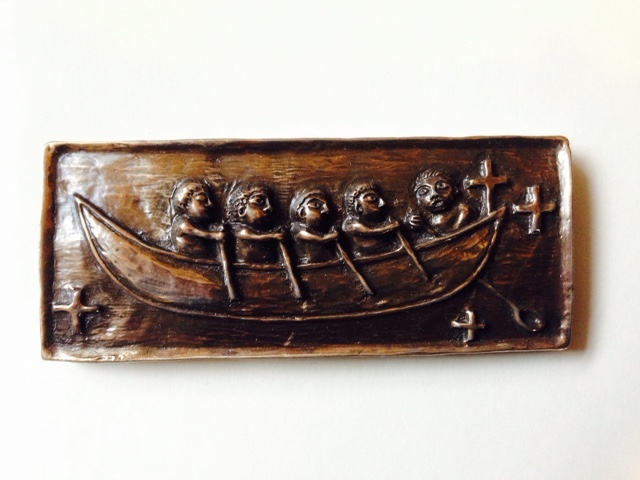
Following on from the image of God as musician, here’s one about God at feast – What does this quote say about God? What does it say about being human?
“All the senses are involved in a good feast. We taste, touch, smell, see, hear. Salvation as health is here vividly physical. Anything that heals and enhances savouring the world through our senses may feed into a salvation that culminates in feasting ….
As millions starve, ought anyone to be feasting? Ought there not to be a long detour of working to feed anyone, postponing the feasting till that has been achieved? Or should we keep alive the hope of food for all by working for justice, and, if we have food, simultaneously celebrating the goodness of God? Can we even sustain work of compassion and justice in the right spirit if we are not also having some celebratory foretaste of the Kingdom of God? …
That combination of sharing and celebrating is, perhaps, the most radical of all the implications of the teaching of practice of Jesus. Feeding the hungry is not a matter of the well-fed offering handouts and getting on with their private feasting: the vision is of everyone around the same table, face to face. Even to imagine sitting like that gently but inexorably exposes injustice, exploitation, sexism, hard-heartedness, and the multiple ways of rejecting the other …
To envisage the ultimate feasting is to imagine an endless overflow of communication between those who love and enjoy each other. It embraces body language, facial expressions, the ways we eat, drink, toast, dance and sing; and accompanying every course, encounter and artistic performance are conversations taken up into celebration.”
David Ford; in Theological Aesthetics: A Reader
Friday, July 02, 2010
God the musician compliments of 4th century poet Paulinus of Nola
Imaging God, imaging humans – What does the following quote say about God? What does it say about being human?
“Think of a man playing a harp, plucking strings producing different sounds by striking them with one quill … This is how God works … the Musician who controls that universal-sounding harmony … God is the Craftsman of all creation natural and contrived … Like a musician strumming the strings of the lyre with fluent quill, the Spirit proclaimed the same message in different tongues, instilling into men’s ears the varying sounds.”
From Paulinus of Nola, a Bishop around the 4th century, most famous not for his name, but for his poetry. (In Theological Aesthetics: A Reader
Thursday, July 01, 2010
Ecclesiology and discernment: a case study regarding the emerging church
Explanatory note: An abstract I’ve just written, trying to get my head around some future research offerings that I would like to be involved in.
Ecclesiology and discernment: a case study regarding the emerging church
Dr Steve Taylor
Discernment is named by the Apostle Paul as one of the gifts given to the body of Christ (1 Corinthians 12:10). In the tradition of the church, it has at times taken different trajectories, from The Spiritual Exercises of Ignatius Loyola, to the Pentecostal movement, to the Brazos Introduction to Christian Spirituality (Howard, 2008), in which it gains an entire chapter of coverage.
One way to understand discernment is to consider it as both a gift and a practice, a charism originating in the grace of God, yet a practice nourish by human skills and capacities. Using this understanding, the performing of discernment can then be analysed.
This paper will analyse attempts at the performance of discernment in relation to ecclesiological innovation, in particular to discerning of the phenomenon termed the “emerging church”. A number of attempts have been made in recent years to discern this phenomenon. Some examples include:
- Don Carson, Becoming Conversant with the Emerging Church, Zondervan, 2005.
- John Drane, “Looking for Maturity in the emerging church,” Mission-shaped Questions. Defining Issues for Today’s Church. Edited by Steven Croft, Church House Publishing, 2008.
- LeRon Schults, “Reforming Ecclesiology in Emerging churches,” Theology Today (January 2009).
- Kevin Ward, It Might Be Emerging, but Is It Church? Stimulus 17, 4 (November 2009).
This paper will explore a number of these case studies, paying particular attention to the performance of the practice of discernment. What has each attended to? What are the sources being engaged? What might be the strengths and weaknesses of each approach?
The aim of the paper is to provide some analysis of the processes by which discernment happens, to provide some commentary on contemporary ecclesiological developments and to nuance and deepen trajectories surrounding ecclesiological innovation.
Wednesday, June 30, 2010
eyes wide open: a visual of out of bounds church
I was bored last night. I should have been marking, but I was looking begging for a distraction. I found it by plugging various bits of my writing into wordle. Very sad I know.
Now again tonight I should be marking. Again I’m looking begging for a distraction. So why not blog the result. Even sadder I know.
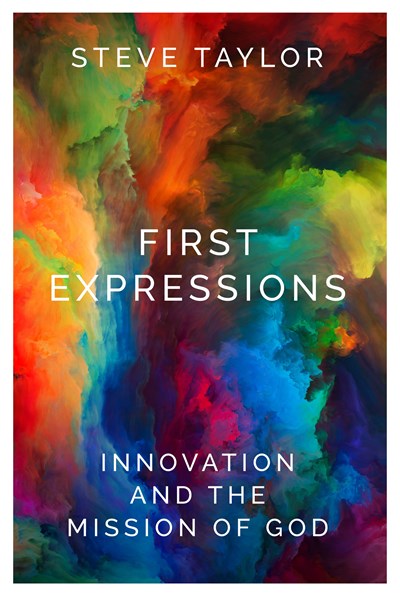
Here’s chapter 3 of my Out of Bounds Church?

And here’s my sermon, a chapter, in Proclaiming the Scandal of the Cross: Contemporary Images of the Atonement


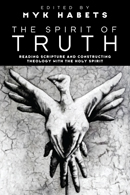
And here’s my chapter on Spirit with popular culture, in The Spirit of Truth: Reading Scripture and Constructing Theology With the Holy Spirit


I like Wordle. But now I have run out of distractions ….
Tuesday, June 29, 2010
when home is a pain: church being in exile?
“I yearn for home” is a line by Pádraig Ó Tuama from the Ikon Dubh album. Hearing it today is a reminder of pain, of the profound disorientation that’s taken place in my understanding of home, caused by the move from New Zealand to Australia. Home used to be a place of comfort, of acceptance, of belonging, found among my previous Opawa church community with creative, intelligent, relational companions, found seated at our South Island holiday home, with those broad vistas to lake and mountains.
But by coming to Australia, the Taylor family has been forced away from home. We believe it’s the call of God, asking us to leave home. So now the concept of home is simply a pain, a reminder both of isolation and distance, and of obedience. And part of me fights against ever wanting to call this Australian land home!
I think, intuitively this is actually really helpful. You see, isn’t there a danger of home being domesticated around what is familiar and comfortable. I was struck by this when reading Luke 19:1-10 recently, and realising that Jesus does mission not in his home, but in the home of Zacchues. Incarnational mission in this text was not about being comfortable, but about being in someone else’s home, seated at another’s table. It’s meant to be uncomfortable and alien.
Pádraig Ó Tuama has another song, Maranatha, in which he sings “I found my home in Babylon.” (more…)
Saturday, June 26, 2010
the rabbit holes of research: how I prepare an academic paper for presentation
For the last few days I’ve been, like Alice, falling down the proverbial rabbit hole. Not, for me, the wonderland of mad hatters and Cheshire cats, but the wonderland that is research.
It began on Wednesday. Half way through having to move my office, complete with books, filing cabinets and notes, a random conversation with a fellow lecturer brought me to a halt.
I am due to give a paper at the Centenary celebrations of the Melbourne College of Divinity in a few weeks. (more here). The conference theme is The future of religion. It’s a fairly important conference, so they demand all presenters submit their papers prior. I thought it was due Monday 2 weeks away. Standing in my colleagues office, I realised my mistake. My 12 days to write had suddenly become 5 days.
And so begins the wonderland that is research.
A possibility. As an academic, I get a regular stream of emails advertising conferences. Most get deleted, but some look a possibility – location, time, theme – seem to mesh.
A possibility. If you want to deliver a paper, you are requested to submit a proposal, a few hundred words outlining what you might speak out. This is when you begin the fall into wonderland. Because the conference is months away, you have no idea what you will actually say. You expect you will have time to do some research. So you lob in a proposal, your potential argument. It needs to sound good, even though you have not yet actually done the research to be sure.
A poke around. And so you seek to clarify a research question. It needs to be original, but respect your discipline. I consider it the spiritual practise of honouring the saints, those who have gone before. And so you take your question and poke around a few books, and a few things click and you get excited and you send in the proposal.
The process. And then you get engulfed again by the daily demands – lecturing, marking, meetings. At some point you wriggle free (to be honest most of my marking is actually still in a pile somewhere in my half-moved office!) and you begin to research. For me, this involves following the white rabbit. To quote, Alberto Manguel.
I like discovering places haphazardly .. I have not attempted .. a systematic method .. I was guided..by curiousity.
I am not systematic. (Is anyone?) I have an idea, I go to the library and I start reading and wrestling.
Today there are 20 books on my floor – for this project some Bible commentaries of the book of Judges, Aboriginal mission history, scholarly articles on how people read. You have to keep your eye on the time – the “Monday 5 days away.” So you can’t read everything. Instead you are looking for data to build your argument – quotes, insights – and connection with the discipline – key scholars, history of the argument.
And writing. Because the goal is not reading, but writing, organising your data in a way that is honest and comprehensible. It’s exhilirating. It’s agonising. You have to keep your eye on the conference theme and your initial abstract. Some flexibility is expected. Too much and I am potentially becoming rude to my audience and the expectations already created.
The presentation. This is the goal. Speaking should be different from writing. This is how the academy works. You submit your ideas to your peers (at conferences and in research journals). Just like artists look at the art of others and mechanics comment on another’s work, so your ideas are offered to the guild.
The probing. Following your paper comes the question time. And the comments in the corridor. And the coffees after. The questions. The testing for logical consistency. The linking with another book, author, idea. This is really why you present. In your paper, you have placed your clay on the potters wheel. It needs to be wet, so that it can be moulded by the community of your peers.
The publication. A conference invites the spoken word. It allows you to test ideas and fly kites. It gets you started. Generally you speak for about 20-30 minutes and take questions for 10-15. So a conference paper is around 2,000 to 3,000 words. And it only reaches those who are present. So the hope is that the conference paper becomes a publication. That usually means expansion (you need to write about 5,000 words) and clarification (picking up).
But that’s another whole story/post. For now, for today, my focus is simply Monday.
Friday, June 25, 2010
fascinating resource for postmodern preaching: Blackwell Bible commentaries
In doing some research this week – indigenous responses to colonisation; how colonised people’s use the book of the coloniser (the Bible ) – I stumbled across a fascinating resource – the Blackwell Bible Commentaries.
To quote from the commentary on the book of Judges
In other words, while most commentaries focus on the Bible text, this commentary series explores how people have interpreted the Biblical text, from the church fathers through to current popular culture. It dips into literature, art, politics, comics, hymns and official church statements. It’s classically post-modern in focusing on reader-response, but it’s fascinating. It’s even got pictures! How cool is that in a Biblical commentary.
So in my research I am looking at the Samson story in Judges 14 and in particular how a Maori leader (Te Whiti O Rongomai of Parihaka) used that text to encourage non-violent resistance. Turning to Judges Through the Centuries
Which serves to underline how radical and innovative was the theological work of Te Whiti – some 100 years ahead of other Biblical interpreters of that text. There are commentaries on John


Thursday, June 24, 2010
developing change leaders book review – Ch 6 The evolution of a change leader
A book review of Paul Aitken and Malcolm Higgs, Developing Change Leaders: The principles and practices of change leadership development
Becoming an effective change leader takes time and requires change in the leader themselves. It begins with reflective practise. While authoritarian command type leaders are most appealing in a crisis (page 121), the most appropriate skills are those of questioning and reflection.
Research on change leaders show they hardly ever grow by formal development. Rather, they grow through things like watching leaders, affirmation of their own ability in the midst of conflict, first-hand experiences of the mis/use of power, leadership opportunities and facilitated reflection on their lived experience. This comes best through coaching. This should also include coaching others, due to the giving of compassion becoming a personal healing agency.
The book then summarises 10 dynamic capabilities for change leaders as follows:
1 – Develop decision making – specifically the ability to wait and see, keep an open mind and be comfortable with contradictions. Central to this is the ability to inquire, to accept that you are not the expert and that someone in your team may have a better insight.
2 – Access capability from across the team
3 – Become a co-creator of a learning culture
4 – Combine future-sensemaking with strategic thinking – digging deeper, reading widely, in a desire to appreciate the system and not just the events.
5 – Develop ‘total’ leadership – including authenticity, integrity and experimentation, at all levels of a person’s life
6 – Develop competency to work in diverse cultures
7 – Develop 1-1 coaching skills – eg micro-skills of building rapport, active listening, attention, sensitivity.
8 – Develop 1-many skills – eg micro-skills of dialogue, facilitation, process consulting, because leadership is about responding to real lived relationships.
9 – Emotional intelligence including self-awareness, emotional resilience, sensitivity, influence, intuition and conscientiousness.
10- Dialogue on performance.
The next 2 chapters set out to explore how to develop these capabilities. In the meantime, take some time to reflect on a change leader you admire. In what ways were these capacities in evidence?
Wednesday, June 23, 2010
stories, stories everywhere: 2010 storytelling conference
The 10th National Biblical Storytelling Gathering is happening on 24 – 26 September 2010, and for the first time ever, in South Australia. The gatherings have a reputation of being times of rich community, vibrant creativity; full of inspirational, renewal and fun.
I am one of the speakers and my task is to reflect on the place of storytelling as it relates to ministry in communities of faith. I will tell some gospel stories reimagined, and discuss the processes by which they emerged.
Each year participants are also invited to take part in an Epic Telling – a longer story is broken into smaller portions that each person prepares and then tells in order. It is a remarkable way to tell and to hear the biblical stories and this year will focus of the gospel of Matthew.
Workshops will also build up skills in telling the biblical story, including using different media and Godly Play; reflect on story and healing; explore story and music, story and worship and how to help people to shape and tell their own stories.
So, who among your communities tells the biblical story and would appreciate the opportunity to gather with others who tell the story, the opportunity to build up their skills? Who among your communities is passionate about the role that story plays in the wholeness of our humanity? Pass on to them the registration form … application form
Tuesday, June 22, 2010
haunted hope
A poem that give might give some expression to my current stage of being. Or it might not.
home
is there
while i am here
changing
home
becomes then
and i am here
now
changing
memories seep
to faded deeds
haunted
coloniser to migrant
tongued tied, in
church, old,
thriving to dying
grief to grow
time ticks
to new hopes
Saturday, June 19, 2010
Fresh expressions formalised in South Australia: updated
Exciting weekend here in South Australia, with the Uniting Church Synod (council of all Uniting churches in South Australia), voting to accept a number of resolutions including the following:
- develop Fresh Expressions and Church Plants throughout South Australia
- develop a network/community of Pioneer Ministers
- ask the Uniting College (of which I am a part) to take the lead in developing training for Pioneer Ministry, both for lay people and for those wanting to live out their ordination as Pioneer Ministers
(Updated: full resolutions here)
So there we are – a church denomination making Fresh expressions a priority, and formally charging it’s training arm to train pioneer leaders.
It dovetails beautifully with the fact that as a Uniting College staff, we’ve been putting in hours of work in the last few months into developing a unique pathway by which to train pioneer leaders. This will be as part of our new B.Min degree programme. If our application is successful it will mean we are offering two training paths. One path will be a more conventional mission and ministry degree.
The other path will also offer a B.Min degree, but with a focus on innovation and pioneering. It will offer learning by doing, in situ in a fresh expression, observational intensives so people can broaden their vision and practice of ministry, expect mentoring – both individual and in community – along with integration through study in areas of leadership, mission, Bible and Christian discipleship. So if you sense God calling you to train as a fresh expressions pioneer leader, we at Uniting College just may be able to help you.
All quite exciting.
Friday, June 18, 2010
new forms of church: eco-festivals
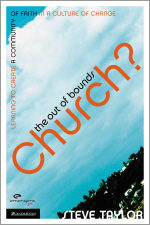
In my The Out of Bounds Church?: Learning to Create a Community of Faith in a Culture of Change
- Art collectives
- Postmodern monasteries
- Weekly participative communities
- Festival spirituality
Some were dreams, needing legs. So it was wonderful to see this …
an ecofestival
(hat tip Michael)
St Johns, Durham, 11am-5 pm, in the church grounds, with locally sourced food, live music, a range of activities for all ages including stalls with info about renewable energy, where cyclists can have their bike serviced, learn more about Durham Wildlife Trust, buy Fairtrade, take part in craft activities. The afternoon will end with beer and hymns. There’s even public intercession (a balloon release with prizes, with the balloons carrying messages of how visitors would like the world to be in years to come)!
Fantastic. Outside the church, resourcing body, mind and soul. All age friendly.
This from the 2008 church Annual report:
A final mention must go to the Neville’s Cross ’08 EcoFestival. This was an ambitious
undertaking on the part of St John’s to conceive, plan and bring to fruition a large-scale
community festival. The event was entirely planned by church members and took place in and
around the church buildings. A variety of events, activities, stalls, games, music, debate, advice
and so on was on offer, all relating to the themes of Trade Justice and Climate Change (which had
grown out of a parish away-weekend 10 months earlier). On the day we were blessed with
splendid weather alongside the dedicated enthusiasm of all involved, and it was a delight to see the
whole church precinct alive with people of all ages throughout the day.
It all sounds grand, but it emerged so simply. Chew over an idea. Commit to give it legs in a way that involves a variety of gifts. Take a deep breath and have a go!
Thursday, June 17, 2010
leading from your strengths. gift or curse?
What if you are really good at something. You have a passion for it and over time you invest in it. You develop skills and you become good at it.
Really good.
But over time you begin to wonder if there are some potential downsides to your gift.
Some people tell you they could never do what you do. That your gift leaves them feeling somehow inadequate and so they close down.
Still others begin to place you on a pedestal. In your presence they become less forthcoming with their opinions.
Still others ask what happens when you leave, with the assumption that somehow you are invaluable, that things should continue with, or without you.
Such reactions, observed as I watch people respond to creative people, leave me wondering. What do gifted people do with their strengths? Should Da Vinci have used his gifts less? Or differently? How much of how a creative person is perceived and processed is their responsibility? What is involved in the shift from creative individuals to creative communities?
Wednesday, June 16, 2010
faith outback: planting rural fresh expressions

The feature story in the Australian Outback magazine (June 2010) is titled Faith:Belief in the bush. It’s pretty hefty – 22 pages – and explores how people have coped with the adversity of recent drought. There’s an appeal to a faith rooted in land and that is sensitive to indigenous issues. And all as the lead article in a commercial magazine. Secular Australia? Really?
There’s some challenges to theology.
For rural Australia to succeed and grow we need people who are prepared to take risks and try different approaches. Faith can be a huge driver for change. Equally it can be a form of avoidance. There are some who put all their faith in God or industry leaders to fix the problems. Having faith in yourself, your family and your community means accepting that you are accountable. Cheryl Philips.
There’s a nice nod to fresh expressions – rural style – including the rise of lay ministry, discussion groups and home churches.
For rural people, having their lives enriched spiritually through their relationships with others is where it’s at. If that leads to going to church, then that’s an added benefit. The church now wants to be a legitimate working part of the community. Ross Neville, Uniting church rural consultant.
A few weekends ago I taught at a lay training event called Grow and Go. My topic was Mission-shaped community. To break up the monotony of Steve Taylor talking for 8 hours, each person was given an overhead projector acetate. Each acetate had the following headings:
- A new insight:
- A new idea and/or resource:
- An inspirational story:
And I spread a whole lot of resources around the table – short articles, booklets, a few computers with websites to browse. The group had 30 minutes to browse, read and fill in the acetate if they found a new insight, idea or story. And then we had a great reporting back session – various ones sharing with the group a resource they had discovered. The most popular resource were those I dug out on rural ministry. Like the Grove Books – a veritable treasure trove – for example some of these. Rural ministry in Australia dying? Really?


 )
)