Tuesday, April 20, 2010
Anzac Day resources
 I’ve had a number of people email requesting info regarding Anzac Day and worship: for the record
- the journal article I wrote on the subject is Steve Taylor, “Scars on the Australasian Heart: Anzac Day as a Contextual Atonement Image,” New Zealand Journal of Baptist Research 6 (2001): 48-74
- here is a sermon (2004)
- here is my reflections on being part of a Dawn Parade in 2007
- and here is some worship (2009)
Monday, April 19, 2010
future of religion in australian society paper acceptance
Email today from Melbourne College of Divinity, notifying me that my paper proposal – The art of gentle space-making: responding to a de/colonizing God – has been accepted. It is part of their 2010 Centenary Conference, with the grand title ” The Future of Religion in Australian Society.” Being held 4th to 7th of July 2010, they have billed it as a seminal event in theological reflection in Australia. Nice to have landed a paper, only now, in the midst of all the other things I’m juggling, I have to find time to write it! For those interested, here was the proposal I sent it back in February … (more…)
Sunday, April 18, 2010
ethnicity and the emerging church: context Cabramata

Fascinating day today in Sydney, exploring Cabramata: entering under an Asian arch (I love the fact that the arch has koalas, kangaroos ie Australian animals), walking down street after street of Vietnamese shops, looking for a place to eat that at least had English subtitles on the menu. A very rich and multi-sensory day.
All this while the emerging church in the US fights over ethnicity and racial identity.
In Cabramata it’s hard to imagine an emerging church that would be white, Western, or any shade of colour apart from Vietnamese. Hooray for Cabramata Uniting Church, with a Vietnamese pastor and church worship in multiple languages.
Looking forward to discussing these type of issues – youth cultures, ethnicity, 2nd generation migrant patterns, glocalisation (koalas in Asian arches) – with various folk from the New South Wales Synod on Thursday and Friday.
Saturday, April 17, 2010
developing change leaders book review of chapter 2
A book review of Paul Aitken and Malcolm Higgs, Developing Change Leaders: The principles and practices of change leadership development
Chapter 2 The Challenge of change
This chapter explores the challenge of change. It provides a helpful diagram, linking change to what looks like a grief cycle – shock, anger, resistance, acceptance, hope. As with grief, people need time.
This includes noting the potential of resistance:
“Whilst resistance is generally perceived as being a negative within a change process, it is important to consider that resistance can be an indicator that change is having an impact. Furthermore, it surfaces the key issues and concerns which need to be addressed in order to ensure the effective implementation in the long run. Finally, resistance can play a positive role in surfacing challenge and insights which can prove beneficial in achieving the change goals or indeed discovering more appropriate ones.” (31)
Of course, to respond to resistance in this way, and be able to surface such positive possibilities for a change process requires a fairly unique skillset, far removed from “Well, this is what we have decided.”
It also depends on the approach to change, of which 5 are noted:
- Directive: the leader’s right to impose change, which has the disadvantage of breeding strong resentment
- Expert: generally applied to more technical problems, in which a specialist team leads
- Negotiating: accepts that those involved in the change have the right to a say in how the changes are made. It takes longer, but equally is more likely to last longer
- Educative: changing people’s hearts and minds. Again, takes longer but is more likely to last
- Participative: while driven by leaders, all views are considered as change occurs. Again, takes longer but has far greater by in.
They note the shift from linear and programmatic notions, to emergent notions of change, characterised by the appreciation of the entire system, the acceptance that change can start anywhere (and the larger the system, the more likely that large changes begin at the edge), leaders as facilitators instead of drivers of change.
They then analyse over 100 change stories to conclude that change was successful when:
- it was understood as complex
- processes were used that genuinely involve people
- change leaders have the skills to involve people.
Friday, April 16, 2010
re-framing the prodigal in regard to fresh expressions and established church
Ben Edson has re-written the parable of the Prodigal son/Waiting Father/Faithful son/absent prodigal daughter (choose your title with care, because each character opens up a different interpretive lens).
There was a mother who had two sons. The youngest one said to his mother, mother thanks for the years that you’ve looked after me, thanks for all that you’ve give me, but I think that you’ve got it wrong. I’m going to take all that I have inherited from you and go off to country foreign to you and experiment.
After being away for sometime the younger son started to recognise that he had been foolish and needed the love and support of the mother. He decided to go home back to the mother. He would say to her: I am sorry that I left you, your resources are so diverse, I miss you and I want to be part of your family.
The first part is here. The conclusion, offering 3 alternative endings
- the institutional church’s slow grinding to death of innovation
- the arrogance of fresh expressions
- an embrace between margin and centre
is here. It’s a wonderful example of re-framing and re-creating, and a fascinating use of Scripture.
Initially I loved it, the creativity, the multiplicity of endings. But now I’m not at all sure. When I have the words to name my unease, I’ll try to complete this post by explaining why … (more…)
Thursday, April 15, 2010
fresh expressions regenerate discussion
re-generate is a series of pub conversations, begun in the creative mind of Craig Mitchell, providing an interactive space around the meal table for those wanting to be involved in being church that is thriving and connected to the culture. (I’ve been the speaker at a couple here in Adelaide, then hosted another with Jonny Baker in March).
There was another on Monday night, not with a speaker, but an open invitation to any Adelaide locals who have begun to create or lead a fresh expression, those who have an urge to do so, and those who have an interest in this movement to come and share their experiences and dreams.
About 20 people gathered. Over food we shared what had drawn us to the table. As the night evolved it seemed there were two groups of people: those looking for ideas or stimulus for their life of their congregation; and those already engaged who want to wrestle with issues like funding, sustainability, the journey to faith, developing leaders, etc.
The upshot was enthusiasm to begin a series of regular pub conversations based around participant questions (people add their questions to a bowl from which we could draw a topic for the following gathering – wonder who suggested that idea :)).
The next one is planned for early June (details coming) and will focus on two issues
– how to fund a fresh expression
– how to sustain a fresh expression
The hope is that it’s not just Uniting church and perhaps the fact that it’s question based from those who gather will help to include other denominations.
It was an exciting night to be part of!
sara coakley and the future of theology symposium
On 12-13 July 2010, in Sydney, an international symposium on “Sarah Coakley and the Future of Systematic Theology”.

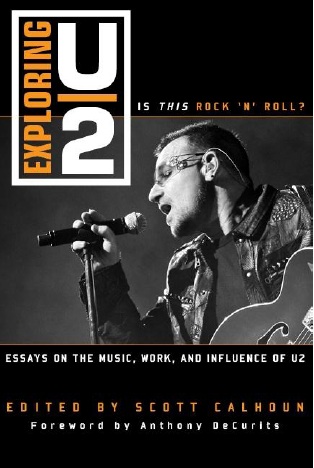
Organised by Ben Myers, with contributors from around Australia, New Zealand, United States, United Kingdom, Rome. And one Kiwi-in-exile – me! (I’m doing a paper wanting to have a conversation between prayer and the Spirit as it happens outside the faith community – Bono’s public invoking of the Spirit to be present at their concerts is what has got me pondering).
Topics being covered include:
- Does systematic theology have a future?
- Trinity and mysticism
- Priestly and non-priestly prayer
- Embodiment and the body of Christ
- Analytic theology
- Subjectivity and responsibility
- Praying theology
- and a public lecture by Sarah Coakley
More details are here, with a full list of abstracts here.
Wednesday, April 14, 2010
sydney bound for mission, discipling, leadership
The Taylor family head for Sydney on Friday. We have two weekends of “exploring Sydney time.” In between, I am working, teaching a 3 day intensive for ACOM (Australian College of Ministry).
Here is the blurb:
We are living in times of rapid change. Many existing patterns and paradigms face challenges. This course will explore the implications of ministry in a culture of change, with a specific focus on local church ministry. It provides practical case studies on mission, discipleship and leadership and subject these to theological reflection, in order to encourage creative and critical thinking on the nature of mission and ministry today. It will not be prescriptive but will encourage participants in their ability to dialogue between context and Christian texts, offering theological imagination in response to what God is doing in the lives of individuals and communities.
And here is the lecture outline.
I normally accept one “academic” intensive outside New Zealand a year, so when ACOM asked about 18 months ago, I said yes, little knowing that by the time to course rolled around, I would be living in Australia and trying to settle. So the timing for me is less than ideal. I need a break during study break, not more teaching!
Nevertheless, there 15-20 students, which is a great sized group to work with. And as per usual for the creative Steve, every course presents a chance to update my material in light of current reading and refecting. So this will be an essentially new course for me – one that is pulling from Missional Church Leadership, Sociology for Ministry and the Breathe intensive last year.
I’m looking forward to being around a Sydney-side table with some keen minds working on mission, discipling, leadership.
And for the rest of the Taylor family – it’s a holiday in Sydney. I will absorb their joy!
Tuesday, April 13, 2010
saying thanks: turning practices into missional life

This is a most excellent example of helping a community give thanks. It is a church wall at Church of the Trinity Uniting, Goodwood. People are being given (paper) flowers and invited to give thanks.
Over weeks the wall is growing, an emerging symphony of colour. Over weeks what people write seems to be deepening. Over the weeks, people are commenting they are finding themselves becoming more and more intentional about looking for reasons to be thankful in their daily lives. Good stuff. (The pastor, very wisely IMHO, is photographing the wall each week, planning to make it into a movie, to play at years end.)
This became an excellent learning moment in our Missional Church Leadership class (3rd gathering of 10). We were looking at ways to listen and I was talking about appreciative inquiry, the simple practice of saying thanks, as a window into where God’s Spirit might be active. And how the simple act of naming ie saying thanks, gives people an opportunity to further participate.
And at that moment, the photo got passed around and we admired the colour and the effective, yet creative way, of helping people worship.
What intrigues me is how this simple, yet intentional, worship practice might actually be part of the church’s ongoing intentional mission life.
For example: Why not take a note of the recurring themes. Then invite all those who gave thanks over a year to a gathering. Share with them the themes. Get people in groups around questions like what surprises you? Then ask them to think about ways the community could further develop this theme ie be yet more thankful. Perhaps they are thankful for family. Get them to brainstorm ideas, ways they could focus their energy on families. Record the findings and ask if any people want to part of giving their dreams legs.
Start a second year with a second wall. See what happens as you gather people intentionally around what they have identified as important and significant.
Such, I would suggest, is the task of missional leadership:
1. Invite people into missional practices
2. Mirror back to people what is emerging as the practices are lived.
3. Gather conversations about next steps: how then shall we live?
4. Record the findings and return to 1.
It was a great class! (Even without the learning that emerged as another student talked about farm gates. But that’s for another post.)
Sunday, April 11, 2010
the use of art in growing a fresh expression: being church in a time of cultural change
Church as rugby club? Or touch team? I referred last week to this question, quoting an article by Kevin Ward, in which he explores changes in voluntary groups and ways people belong. (Kevin’s article is here, my post last week is here). As I wrote in the Sociology for Ministry lecture:
So, consider that alongside the decline in church, is a widespread decline in all voluntary associations: from Lions to labour unions, from political parties to bowling clubs.
In New Zealand in 1970’s about 400,000 people played rugby. By 1990’s it had plummeted to 100,000.
Why? Factors include authoritarian and controlling environment, rigid structures, high institutional overheads, dress code, conformist culture, lack of choice, repression of individual for sake of community.
At the same time, touch rugby, while only started in an organised sense in 1990, had by the year 2000 over 272, 000 registered participants.
Why? It is minimalist, gender inclusive. Individuals can choose their own team, while teams can choose their uniform and name. Time is limited and there is a high value on socialising and fun.
In other words, traditional structures based on long-term commitment and exclusive loyalties are less attractive than single stranded, less formal, smaller groupings.
It helped me make sense of a most stimulating Sunday afternoon I’ve just had at a Resurrection and Art seminar. It’s one of four Sunday afternoons being offered by the local Catholic Theological College, exploring Jesus passion and art; resurrection and art; Mary and art; Trinity and art.
Two hours, great visuals, a mix of history, theology and spirituality. Along with a nice afternoon tea. It was a most worthwhile afternoon.
I came away reflecting that here was an institution (Catholic Church) providing a way to play touch, resourcing people’s spirituality without requiring them to in any way be part of the institution.
What intrigues me is how this can be self-resourcing and self-starting. There were about 40 people booked, each paying $20 a session. Take out a bit for facilities (which would be unused in most churches at this time of day anyhow, the advertising (which is giving you profile even if no-one turns up), and the morning tea and you still have around 30 hours for a staff person to work up a lecture. That’s enough time to put together a pretty good talk.
(I tried to do this a number of times at Opawa, but the person I kept tried to lure to start the conversation was too booked up and I was too busy and the energy required by the Easter and Christmas Journey made other forms of creativity harder to initiate).
Do it for Easter/Pentecost. Do it again at Advent. Do it again on Waitangi Day/Australia Day, using indigenous art.
Each time, provide a set of art pieces as postcards. After a time, invite people to do more research on the artist and the theology and meet again to share their findings. Or simply to gather in a few weeks to reflect on how their artpiece as helped their journey. Slowly you are building a new community – being church in a new form in a time of cultural change.
Saturday, April 10, 2010
women and the emerging church. a bibliography
For a number of months I’ve been meaning to compile a list of missional and emerging church writers who are female. I’ve been prompted by a colleague who is doing a post-graduate project on women and the missional church, plus a glance over my Missional Church Leadership bibliography and the realisation that it is still overwhelmingly male. Plus stumbling across this podcast, which is me interviewing Jenny McIntosh back in 2006, on the topic of gender and the emerging church conversation.
Which prompted a brief literature search. My criteria included being recently published and with a focus on mission/evangelism/leadership. Here is the list. Who am I missing? (more…)
Friday, April 09, 2010
developing change leaders: book review of chapter 1
While nearly 2000 books were recently written on leadership in an 18 month period, very few address the question:
How do we develop effective change leaders?
Such is the task attempted by business lecturers, Paul Aitken and Malcolm Higgs in their Developing Change Leaders: The principles and practices of change leadership development
(Given that church’s and church leaders are meant to be into life change, I began to flick through the book. The more I browsed, the more intrigued I was, both by the clarity of the material, and by the extensive reading and practical case studies the author’s draw on. Thinking this might be a good resource, I opened my wallet.)
Aitken and Higgs use a key image, that of “sense-making” to argue that the challenge is not to find some yet to be discovered new golden bullet. Rather the challenge is to make sense of what we know. In chapter one, this focuses on the impact of organisational culture on leadership.
“In broad terms, our framing of effective leadership has shifted notably from the ‘Heroic’, leader-centric viewpoint to a more ‘Engaging’ one which focuses on working with followers to address the leadership of organizational challenges … In today’s complex environment, an approach to leadership which is more ‘Engaging’ appears to offer some useful pointers to more sustainable success.” (13-14, 20).
They suggest leadership is a triangle, made up of thinking, doing and being.
- thinking is about a range of intelligences – evaluating, decision-making, planning.
- doing is about the skills and competencies to envision, engage, enable, inquire, develop.
- being is about authenticity, integrity, will, self-belief and self-awareness.
They then suggest the same triangle for the organisation, in which
- thinking is in fact strategy
- doing is policies and practices
- being is culture, the social glue and the way things are done around here
This introduces the challenges of effective change. Research shows very clear links between an organisations culture and it’s performance. Other research shows that leaders have a strong impact on an organisation’s culture. This sets up chapter 2, which describes the challenges involved in implementing change.
Thursday, April 08, 2010
the spirit today: a theology with popular culture
“a work of outstanding scholarship”
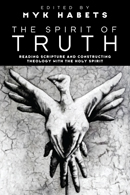
That’s the blurb for a book just out, The Spirit of Truth: Reading Scripture and Constructing Theology with the Holy Spirit, in which I have a chapter.

The book began as a conference, back in 2008, which gathered around what is one of the most interesting and growing fields in theology at the moment, that of the study of the Spirit. My chapter sought to provide a theological method by which one might read popular culture. I argue, drawing on Luke 10 and art in relation to the Transfiguration, that in the action of the Spirit in the New Testament, we see that God likes material things – wombs and water, bodies and bread – and this can be applied to help us understand a theology of popular culture and in a more naunced way than if we use an Incarnational approach.
The book has got some great endorsements:
“This ‘pneumatology from below’-not in the methodological but in the geographical sense: from New Zealand-extends the contemporary renaissance of the discussion on the doctrine of the Holy Spirit across the theological loci and disciplines. A veritable pneumatological contribution indeed by Myk Habets and his colleagues from Down Under.”
—Amos Yong, J. Rodman Williams Professor of Theology, Regent University
“There has been a resurgence of interest in the Holy Spirit in recent years and this wide-ranging book edited by Myk Habets, who is quickly becoming a major contributor to discussions of the Spirit in contemporary theology, offers reflections that are profoundly theological and sometimes provocatively challenging but always helpful in pushing theologians to think more precisely about the pneumatological dimensions of theology”
—Paul D. Molnar, Professor of Systematic Theology, St. John’s University, New York
“The theology of the Holy Spirit has undergone something of a renaissance in recent times: this collection reflects a valuable contribution to that cause. These are stimulating essays on a range of vital topics in biblical, dogmatic, and practical pneumatology-scripturally responsible, historically informed, and justly conscious of the potentially transformative significance of their theme for Christian existence in the world.”
—Ivor J. Davidson, Professor of Systematic & Historical Theology, University of St. Andrews
Wednesday, April 07, 2010
being church in a time of cultural change
Flat out preparing for a class on changes in religion in Australia. Amid all the sociological theories and depression over declining numbers, the work by Kevin Ward back in 2002 stood out.
“One of the great points of hope for the church is that sociologists suggest we are moving away from an era of rampant individualism into a new communitarian era .. one in which people bring a strong sense of individuality and will therefore be marked by a high degree of diversity and variety … We urgently need to finds forms of church life that resemble a community of touch teams much more than they resemble the local rugby club … If we are willing not only to give the freedom for this kind of evolution to occur, but also to provide resources to foster it, we may find not only a form of church life that actually engages with and incarnates the gospel into the culture in which we are placed, but also, surprisingly, one that more resembles in essence the church we find in the pages of the New Testament.”
Probably the last thing exhausted ministers might want to read this side of Easter. But it does provide a window on the appearances of Jesus after the resurrection, that sense of impermanence and willingness to meet Thomas in a different way than Mary, in a different way than Peter.


 )
)