Wednesday, March 17, 2010
a contemporary cry of Old Testament Hannah, the poetry of Kate Tempest
One of the highlights for me of Spirit of Wonder (week on ) was discovering the poetry of Kate Tempest. Care of (Jonny’s Thursdaysession on Spirit and pop culture.)
The night before I’d been teaching a (Sociology of Ministry) class. We’d been talking about different ways the church relates to society and as part of that, exploring Hannah’s song in 1 Samuel 2:1-10. The context is a society in transition, moving from tribe to state, from judge to king, from charismatic to bureaucratic. In this transition, comes the song of a barren mother, a speech from the margins of that world, with a dream rejoicing in a swift transition, the rapid and abrupt inversion of the upside-down Kingdom.
The Lord makes poor and makes rich
He brings low, he also exalts
He raises the poor from the dust
He lifts the needy from the ash heap
To make them sit with princes
And inherit seats of honor.
The song anticipates a new social reality, a radical change. It comes not as a memo or a legal document but as a poetic “song.” Such is the power of poetry and causes Brueggemann to write that “liturgy and all artistic acts as crucial for mission.” (Brueggemann, Walter A. “The Bible and Mission: Some Interdisciplinary Implications for Teaching.” Missiology 10, 1989, 397-412.)
And the next day, Jonny played some Kate Tempest poetry. And it felt like a contemporary Hannah, crying for justice, dreaming of an upside down world, not in dusty Palestine, but consumerist urban cities. Have a listen, it’s powerful stuff.
Tuesday, March 16, 2010
Church as community partnership: great article on Opawa Baptist
We got posted over the weekend a Christchurch newspaper article (thanks Mum), profiling Opawa Baptist. It’s a neat snapshot, so encouraging, that is some evidence of what God’s been up to the last 6 years at Opawa – partnerships with local community groups, new initatives, an outward focus.
Church has long-established partnership with community (Observer, Sunday February 21)
By Nick Tolerton
Opawa Baptist church will celebrate its centenary next year, but there is nothing old fashioned about what it offers the community.
And the completion next month of a new $500,000 seminar, office and kitchen facility will make its partnership with the community even stronger.
The church and its neighbour Waltham Community Cottage (two doors away), are the heart for one of Christchurch’s poorer communities.
Associate pastor Paul McMahon points out that Waltham, slashed by the Brougham motorway, lacks a hub.
The church and the Community Cottage worked together to build on the strengths of Waltham, and tried not to duplicate what the other offered, he said.
He is proud of Waltham’s strengths: “The good thing about Waltham is that people have time for one another and people have time for community stuff, “ he said. “We have no real gang problems. We’ve got a great pool – the most well used community pool in Christchurch – and we have a really good school.”
And school, church and Community Cottage have worked together for Waltham, he said.
Hundreds of residents enjoy the church’s weekly English classes, craft classes, music classes, and indoor bowls for only $2 or $3 a session. And its monthly movie night – BYO dinner 0- draws dozens of people who can’t afford to go to the cinema. Women’s groups and a book club also meet monthly.
Last year the Shiloh programme to teach life and relationship skills for nine to 12-year-old girls from Waltham School also [re]started (editor correction) and has proved a big success, and the church is also the home for Koru (year seven to eight) and boys and girls brigade programmes for Waltham youngsters.
The church also hosts six-week courses blending both religion and life skills, including parenting.
And with the new facilities set to be completed early next month as well as its old hall across the road, the church is now even better placed to be a strong partner for the Waltham community.
For more
for more on the building project go here.
Monday, March 15, 2010
here’s my current definition of leadership
I’m reading a great set of participant responses to the first set of Missional Church Leadership readings – thoughtful, honest, passionate, astute. I’m responding personally to each one and I just wrote the following:
leadership is being deeply aware of the gap between what is, and what is not yet, and having the courage to attend to the gap.
What do you think? Resonate with your experience?
Friday, March 12, 2010
creativity, spirituality and mental health (and the prodigal son)
What is the place of spirituality and creativity in making mental illness more manageable and aiding recovery? Should God-stuff be allowed in the treatment?
That is the question asked by academic and clinician, Kelley Raab Mayo in her new book, Creativity, Spirituality, and Mental Health: Exploring Connections
As one specific example, she notes how hope is considered essential for healing from mental illness. She then considers imagination, and how it can be fostered by story and then uses the Prodigal Son as a case study. It offers hope, of a different future. It also hopes in the way it allows identification with different characters – those who feel cut off can identify with the younger son, those who grieve lost relationships can identify with the father, those who feel treated unfairly by life can identify with the elder brother. Thus the story reduces a sense of aloneness and offers meaning.
Whlle she sounds a note of caution –
“An approach centred on human depravity and an authoritarian God can take away personal agency rather than promote it. In contrast, a perspective centred on the loving, forgiving divine nature … is wholesome, healing, and entertains a hopeful future. Fostering hope is a core feature of any spiritual intervention.” (79)
– her conclusion is an overwhelming yes. That while drugs and therapy have a place, so do the resources of church attendance, prayer, meditation, dreams and working with sacred texts and these need to be facilitated in our work with those suffering mental illness.
“cultivating a rapprochment between psychiatry and spirituality is essential, I believe, to the future of treatment for mental illness.” (143)
This will include listening, encouraging healthy spirituality and challenging unhealthy spirituality. In so doing, we are taking seriously people as integrated whole and this is a key challenge facing both the church and the current medical profession.

Wednesday, March 10, 2010
pass the peace in God’s world as acts of prodigal fathering
I fumbled the benediction in chapel today. Life’s a bit full at the moment, so I was bound to fumble something at some point and life’s like that.
The Biblical text was the prodigal son and around that Jonny Baker and I framed call to worship, an imaginative engagement with the text, some stations to allow reflection, confession, intercession and communion.
I was aware that there was no “passing of the peace” and aware that this has been a feature of various Uniting College chapel service’s I’ve been a part of. I’d been teaching just before chapel, looking at New Testament images of church. Which include the new creation and salt, as an image for a church deeply immersed in the world.
So it seemed to me in light of that impulse, that passing the peace could thus be an act of benediction, an invitation to mission as Christ’s reconciling people, offering the embrace of the father as an act of prodigal fathering.
So I decided in the midst of the service to conclude with a benediction, “Go, Pass the peace, in God’s world.”
So I invited people to face the door. But all that came out was the word “peace.” I waited for more. So did those gathered. I knew I had more to say, but my brain had simply stopped working. And so we all exited, knowing that something had not quite been completed.
Life’s like that sometimes.
So I simply note it here for completeness, for humour and as a theological and liturgical question:
What are the implications of making the passing of the peace the benediction, rather than an act in worship and after confession?
Monday, March 08, 2010
when the lectionary text is Luke 15
Luke 15, the parable of the prodigal son/waiting father, is the upcoming lectionary text. I know this not because I am a Baptist, but because of the increase in traffic to a sermon I preaching on Luke 15 back in 2004. It was a sort of lectio divina approach, drawing heavily on the world of the day. It is here for those interested.
Saturday, March 06, 2010
the curse of creativity: all those voices in my head
I am creative.
It took me many years to discover this. When I was 13, I went from 29th, out of 29 students, in the compulsory music class at the start of the year, to 28th equal at the end of the year. Since creativity was linked to music and art, and at the age of 13 I couldn’t sing, strum nor draw, I realised I was not creative.
It took me many years to recognise I actually was creative, and to begin to re-right (pun intended) the voices in my head.
The realisation began to dawn as I began to write sermons. Firstly, I found I was loving the writing – the crafting of words, the building of rhythm – the creative task. Secondly, I started to realise the curse of creativity. When I started writing sermons too early, I kept wanting to fiddle, change, re-create them. They felt boring once they’d sat on the shelf for a day or three. Such was the curse, the need to feel my material was fresh, connective and so something I could get passionate about.
This week I am participating in Spirit of Wonder, what should be a great week that will mix multisensory multimedia, worship, conversation and creative input. I have been asked to speak two times, once on creativity and leadership (on Tuesday) and again on Spirit and culture and creativity (on Thursday).
And I am facing the curse of creativity.
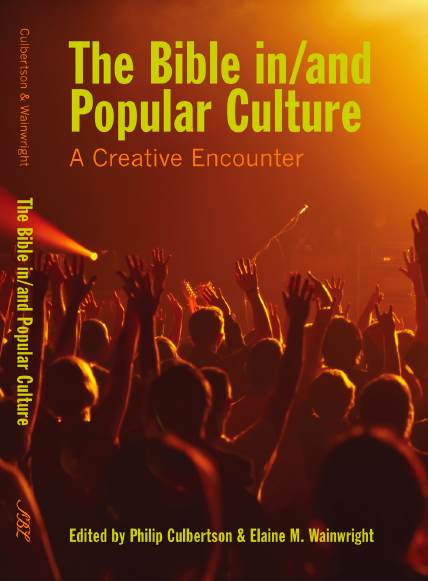
You see, 18 months ago I wrote a presentation that directly addressed the Thursday topic, on Spirit and culture and creativity. 12 months ago I turned that into a book chapter. This week the book, with my chapter, has been published and my copy should arrive any day. It’s a big deal!
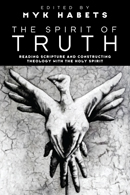
The book has been called a work of “outstanding scholarship”; “profoundly theological and sometimes provactively challenging”; “scripturally responsible, historically informed.” And my chapter exactly addresses the topic I’ve been asked to speak to on Thursday.
But in my head, it’s like 18 months old. Boring. Dated. Such is the curse of creativity.
I’ve tried to play with it – considered using godly play, written a new introduction – twice, sought a new integrative metaphor – and nothing clicks. The chapter stands now as it stood, than, as a fine piece of work that makes sense best when presented as written.
But it’s still so long ago, so dated, so 2008 ….
Friday, March 05, 2010
praying the psalm? or the moment?
My Paraclete Psalter: A 4-Week Cycle for Daily Prayer
The Psalms are arranged according to the time of day, which makes for a lovely resonance.
Until I went swimming.
And then my Psalter suddenly felt a bit sloshy – in a good, yet provoking, way.
The sun was setting into the sea and I just floated, watching this golden orb drop away. It all got pretty spiritual. It even got captured in a prayer: Swimming this evening; Sun dropping gold orbed into summer sea, God of full immersion, Swirl in, on, around me; Your resting child.
Which got me wondering about the place of spiritual disciplines in life. Was this not my “evening Psalm prayer”; the giving of my day, what was done and undone, to God? Wasn’t that Psalm, waiting in my Psalter, crafted out of a moment exactly like this? How do these natural and unexpected moments of our lives align themselves with the “stones worn smooth” of the church’s history? How often is our worship captured in a building and a book, strained through someone else’s words, in a way that alienates us from the moments of life?
Thursday, March 04, 2010
blokes in church? growing petrol heads and art lovers
A really thoughtful post on blokes and church here, from Dr Richard Beck here. The whole piece is fascinating, using Mark Driscoll’s views on masculinity as a starting point for the suggestion that we have an educated/uneducated split that creates deep fissures in our church communities.
The educated [men] teach, preach, and have the public leadership roles. The uneducated [men] are marginalized. Worse, if you are an uneducated male, you are force-fed those feminine metaphors. Educated males, being chickified, don’t mind or even notice the feminine metaphors. But Joe Six Pack notices the metaphors. All this creates a disjoint in the church. Two groups of males who find each other alien and weird.
Which is further clarified here.
people tend to focus on four big issues when it comes to church life: Gender, socioeconomic status, race, and sexual orientation. But I think one of the most pernicious fissures is the education issue. This problem is particularly acute in Christian churches as Christianity has been, from its earliest days, unapologeticly cerebral and intellectual.
He names something that is pretty real and was certainly my experience at Opawa, the challenge to form men spiritually, whether petrol head or art lover. And why I found the Opawa men’s camp last year so moving, the way that the repeated use of lecto divina (of which this is an outcome), inviting men to use their diverse hobbies, their relationships and life experience, their “caves”, as ways into sharing faith and life. People were asked to bring something from their shed, which equalised and normalised everyone, from petrol head to art lover. And that became the starting point “going to your favorite spot in your “shed”” for engaging the Biblical text. Which is such a long way from cerebral and intellectual.
The most helpful book I’ve found in framing this for me is Phil Culbertson’s New Adam: The Future of Male Spirituality
- Abraham struggling to connect with his son from his first “marriage”;
- David, and whether can we let him enjoy a deep male friendship with Jonathan without it becoming homosexualised in innuendo;
- David who hides behind his work desk when his family comes crashing in
The author (and friend), Phil Culbertson, comes back to Jesus, who he explores from the angle of a person who enjoys deep male friendships, with working class fishermen and with budding intellectuals and poets (like John).
“Jesus appears to have modeled a style of male-male friendship that was committed, intimate, honest, open and even dependent … But there is no record that Jesus and his male followers did “men’s things” together. They did not go hunting together … nor did they share off-color jokes. They did not compete with each other … Christians can recognize the new Adam in Jesus insofar as he was willing to cherish his own human nature, in all its vulnerability, and yet to turn his face bravely toward an unknown future in which he and the world that he knew would be very different.” (105, 106).
It’s such a missionary challenge and we desperately need some working-class missional churches working in and around these issues.
Tuesday, March 02, 2010
masters of ministry and the revolution that is practical, not applied, theology
Yesterday included the beginning of the 2010 teaching program here in Adelaide with regard to the Master of Ministry (of which I am the Co-ordinator). It’s a quite unique post-graduate program that I am beginning to really admire.
Most post-grad qualifications are shaped around a variety of taught papers plus a larger body of work in the form of a thesis. The Master of Ministry here offers a number of innovations.
First, it is totally ministry focused, given that it can only be taken part-time, and after 4 years in ministry, making it only available to people who are actually in ministry. This brings a wonderful groundedness into discussion and interaction and into research.
Second, is the Program Seminar. Every student has to complete 21 Program Seminars over the duration of their study. Each seminar involves a student sharing some of their work and in response each participant must write a 1,000 word reflection piece. Thus it builds a collegiality, is constantly developing ability to reflect theologically on current ministry practice and potentially provides a rich source of written material on ministry today.
Third, is a paper titled Theology of Ministry Practice. This must be done early in the student’s study and simply expects them to write a 6,000 word thought piece describing their theology of ministry. This is such a valuable exercise, emerging not in theory, but out of their life experience that they bring to the table.
In recent years what was applied theology has sought to rename itself as practical theology. The change of name is about a revolution. Rather than a two-stage process, that of getting one’s intellectual ducks in a row (Biblical studies and theology) and then making application to ministry (applied), practical theology argues for a three stage process. First, to listen to lived experience that is the practice of ministry. Second, to reflect on that in light of Biblical studies and theology. Third, to bring that learning back to the practice of ministry (applied).
This is a revolution because it tips traditional study on it’s head. Rather than move from theory to practice, it suggests a move from practice to theory and back to practice again. That requires a new set of skills, practises and disciplines. It seems to me that the innovations implemented in the Masters of Ministry programme are a significant step in this direction and one I’m excited to be part of.
Saturday, February 27, 2010
lectio lenten offerings: men and the Easter story
When you leave a church, you always wonder what will emerge, especially in the interim space while the search for new leaders takes shape.
So a great delight to get an email last nite from friends at Opawa Baptist, with news of a new initiative, a group for men, using lectio divino, with a particular focus on men and the Easter story. A sort of baptist approach to Lent!
The three guys organising it all have their own story: one baptised the last Sunday I was at Opawa, one blossoming in his creative writing, abilities, another recent to Opawa. So great to see some men coming together to simply making space to sit around the Bible. Classy visuals, which include some personally crafted opening and closing prayers.
Great stuff. Wish I was there!

Friday, February 26, 2010
one day while talking
So we sat. She was Aboriginal and waiting for a meeting. We’d met a few times in the last month and so this was a chance to be relational.
So we sat. And we talked. About life and change. About cultures and crossing. About relationships and pain. It was such a hopeful, empowering conversation and I came away with two gifts, two words: replacement and process.
When you lose something, you need to have it replaced. So what needs to be replaced in the lives of so many people, particularly Aboriginal men, who have lost so much? We can’t go back. We don’t want to stay stuck in a moment. So how can we replace what’s lost?
And process. It takes time to replace something. Just like becoming a Christian. Sure you say the words, but discipleship is a life long journey. And so the replacement needs to be a process. Saying sorry is a start. A very important start. But only as part of a process.
Thursday, February 25, 2010
images of church in society: Why we need salt not exodus
Exodus is a powerful and repeated Biblical motif. For Israel, and for many oppressed people’s through time, it has defined a profound liberation from bondage and a life of service in response to a God who led through perils to a new land.
But spatially, Exodus relies on a “going out.” The people are to leave behind what is bad.
 Contrast the metaphor of exodus with the metaphor of salt and leaven, which work only by staying within. Salt needs meat, leaven needs dough and so the metaphor acts spatially, in a startlingly different way than Exodus. Rather than leave in order to become God’s community, we become God’s community from within, by digging in and staying put, by infiltration, rather than by separation and removal.
Marianne Sawicki suggests that this metaphor, of salt and leaven, was actually the dominant metaphor for the very early church.
“Jesus’ first followers knew that there was no escape, no place to get away from the civil war and personal evils confronting them. They had to figure out how to live in a landscape compromised by colonial oppressions. They would seek and find God’s kingdom precisely in the midst of that.” (Marianne Sawicki, Crossing Galilee: Architectures of Contact in the Occupied Land of Jesus
, 155)
She describes this as a “stealth operation” that looks for the Kingdom of God in the midst of (Roman) oppression. “It presumes that imperial structures will remain intact so that they can be infiltrated. This is a resistance that exploits the empire; it does not defeat, neutralize, kill, or escape from its host.” (162) She draws both on the parables and on the missionary text that is Luke 10, in which the disciples “indigenize themselves by attaching to the family that employs them.” (163)
This is a pattern of cultural immersion. It’s deliberate.
It’s also a pattern of cultural resistance. Salt not only preserves, it also corrodes. In other words using the metaphor of salt and leaven to understand ourselves as the church, allows “the gospel to be both corrosive and preservative like salt … to be infectious, expansive and profane like leaven.” (155) As a metaphor it still encourages the church as a contrast community, refusing to bless the culture.
Sawicki suggests that perhaps the church today – globalized, enmeshed in consumerism – might find the salt and leaven metaphor a most useful stance in relation to our world:
The kingdom of God is not free-standing. It has to be sought in the middle of something else … [it] can take the form of small-scale refusals to comply with the alleged inevitability of the pomps and glamours of middle-class life … the commuting lifestyle; so-called “life insurance” and retirement funds; careerism; the “soccer mom” syndrome and the overscheduling of adolescent activities; fast food; fashionable clothing … (174, 175)
It strikes me as a fantastically practical, deeply Biblical way for Christians to see ourselves in the world today.
Wednesday, February 24, 2010
How are you finding things? strange ways in fastforward
I feel like I’m watching a movie,
that I’m really enjoying.
But it’s stuck on fastforward.
It’s also a foreign language feature.
Thankfully most scenes have subtitles
but every now and again I feel just like this …


 )
)