Monday, April 22, 2013
In sure and certain hope
Andrew Dutney, President of the Uniting Church, dropped in on my Sustainability and the mission of God presentation at the Australian Association of Mission Studies (Adelaide chapter) today, when I presented some of my findings from research into UK fresh expressions ten years on.
Andrew offers a fascinating followup reflection, pondering further some of my ruminations around the implications for a church that seeks to live in response to an Easter story of death and resurrection.
One of the interesting things [Steve] found is that there’s about a 50% attrition rate in the Fresh Expressions he’s followed over the last decade. He checked this against other writers’ lists of innovative faith communities like that and found a similar “death” rate.
But he also found significant signs of new life – resurrection even – associated with those short-lived churches. Individual participants report being transformed by the experience and prepared to offer significant leadership in mission after the demise of the Fresh Expression they were part of. Other faith communities – both established congregations and other Fresh Expressions have learned from the experience and example of the community that has wound up. And many of those communities have left behind “products” generated in their years of vitality – art, liturgical resources, training modules etc.
So, Steve told us, that 50% attrition rate doesn’t mean that half of the Fresh Expressions initiated weren’t worth the effort. Not at all. They are integral to the dynamic of the church’s discernment of and participation in the life of the Holy Spirit in the world. They too embody the One Holy Catholic and Apostolic movement.
You’d think a movement oriented around the death and resurrection of Jesus would get that intuitively.
Andrew then moves from fresh expressions to ponder the implications for inherited expressions, particularly churches facing death. It’s really interesting. More here
Sunday, April 21, 2013
the challenges in fresh expressions: a counter spirituality
“For the essence of modernity is economic development, the vast transformation of society precipitated by the emergence of the capitalist world market. And capital accumulation … requires the constant revolutionising of production, the ceaseless transformation of the innovative into the obsolescent.” (Paul Connerton, How Societies Remember (Themes in the Social Sciences)
, 64)
I wandered my garden over the weekend.
Recently planted broccoli seeds are up, tiny leaves seeking light. The blessing of something planted days ago, which in time will yield nourishment for the Taylor table.
The leaves of kale, seedlings planted some two months ago, now stand proud, nourishment now for the Taylor table. The blessing of something planted months ago.
Some autumn bulbs have suddenly flowered. A dash of crimson, fragile and beautiful, has emerged from what was dry. The blessing of something planted years ago.
Pioneers like to plant. I noted last week the challenge of fresh expressions. How much of fresh expressions is simply the church entering into “the constant revolutionising of production, the ceaseless transformation of the innovative”? What does it mean talk fresh and emerging in a culture that plans obsolence, privileging the new in a relentless search of the next fashion trend?
Yet such analysis ignores a significant dimension of the practice of fresh expression. I’m talking about the emerging trend of recapturing the ancient, when what is new is in fact a deliberate reaching for what is old.
Doug Gay captures this superbly in his book, Remixing The Church: Towards an Emerging Ecclesiology.
This move stands at odds with Connerton’s analysis – of “the constant revolutionising of production, the ceaseless transformation of the innovative into the obsolescent.” (Paul Connerton, How Societies Remember (Themes in the Social Sciences)
(Although it could still be a problematic manifestation of postmodern consumer culture – for more on this see my discussion of the ethics of sampling in my The Out of Bounds Church?: Learning to Create a Community of Faith in a Culture of Change
Which returns me to my garden. The bulbs are an ancient planting, the kale an earlier planting, the broccoli recent. They involve multiple moments of planting. They rely on more than one pioneer.
This is one posture by which pioneers might respond to the spirituality of our age. We will cultivate crops recent and ancient. We will consider as important the seeds that yield instant results as the seeds that might take months to grow. We will plant in expectation of seasons with rain and without. We will partner with other pioneers, honour their historic acts of grace, deliberately plant things we know that we will never harvest, glad that another will enjoy our fruit.
Such is God’s economy.
Thursday, April 18, 2013
consensus and decisionmaking
The Uniting church seeks to work by consensus. It relies on a lot of people working very hard, willing to listen deeply, and skillful chairing, to help the process. When it is found, especially in larger groupings, it is a joy to behold.
So here’s a really interesting counter view, from Michael Stiassny, at the Institute of Directors annual conference in New Zealand yesterday.
consensus allowed directors to hide from making tough decisions. “I think it is time we toughened up. We need to be stronger and share our views.” …. passionate people needed clear boundaries … boards and chief executives needed to have full and frank discussions … “If the chair and CEO are holding hands – how on earth are the board going to have a frank discussion?”
I’m not saying I like all the corporate language. Nor am I saying I agree. But it’s worth a read and to consider if at times, consensus leads to poorer decisionmaking and less truth telling in an organisation. Full article here.
Wednesday, April 17, 2013
talking sustainability and mission
A cancelled appointment, combined with a decision to start early, has meant a valuable few hours in a cafe working on my
Sustainability and the mission of God: a case study of fresh (and failed) expression
presentation for the upcoming South Australian Mission Studies Network Gathering.
It’s a chance for me to present some of my sabbatical data, to be accountable for the gift of time I get given, plus an ongoing chance to process the resultant book project. Today involved trying to extract some clarity from what is currently 32,000 words, spread across 11 chapters.
Here are the six headings/highlights which I hope to address.
1. Defining mission and fresh expressions
2. Describing fresh expressions today
Hearing from the House of Lords. Seeing the impact of fresh expressions in three Dioceses
3. Discerning Rowan’s theo-ecclesio-missi-ology
The impact of Rowan Williams doing theology, being church, practising leadership on the evolution of fresh expressions and the development of Fresh Expressions.
4. Tracing Fresh Expressions
Eleven key leadership strengths supplied by one Bishop, one Archbishop, one funding body, one book, one DVD. Note – eleven, but not twelve!
5. Learning Ten years on
The stories of ten new forms of community and the four ecclesial layers that emerge when fresh becomes failed, yet failed becomes fresh
6. Four insights for sustainability and mission
- the power of top down and bottom up
- the place of the whole body in mission
- the potential of buildings when mission trumps worship
- sustainability in a divine economy
The event is open to all mission-minded individuals, including scholars, reflective practitioners and teachers.
Monday 22nd April @ 12.30 pm (until 2:00 pm) in S1, Adelaide College of Divinity, 34 Lipsett Terrace, Brooklyn Park, SA. BYO Lunch but Tea and Coffee provided. To RSVP by Friday 19th April or want further information, then contact David Turnbull on 8373 8775 or dturnbull at adelaide dot tabor dot edu dot au
Monday, April 15, 2013
the fraility of Follow me
The Bible reading for Sunday, from John 21, got me thinking about aging. It is Jesus encounter with Peter after the resurrection and it is interesting the way discipleship looks both backward and forward.
Backward, to Peter’s denial, as three times Jesus questions Peter’s loyalty.
Forward, as Jesus looks to Peter’s future.
“Very truly, I tell you, when you were younger, you used to fasten your own belt and to go wherever you wished. But when you grow old, you will stretch out your hands, and someone else will fasten a belt around you and take you where you do not wish to go.” John 21:18
This is often taken by commentators to refer to how Peter will die. But it is a fairly standard description of aging. The reading occurred in a church service in which an elderly minister, with significant health concerns, was presiding over what might in fact be their last ever time to lead communion.
Hence my connection with the aging dimension of the text, the inevitably of time in which all of us no longer be able to dress ourselves and rely on others to walk us.
What left me pondering was how the call to discipleship in the text, both forward and backward, is the same: “Follow me.” Whether to previous denial or to a less than mobile future, God invites us into discipleship.
We live in a society that prioritises youth. I like that Jesus calls folk, no matter their age, to discipleship. I see this as encouraging, a reminder that we’re invited into God’s purposes no matter our faculties, that God does not put people on the shelf as their bodies waste.
All this has echoes with a book on my beside table, John Swinton’s Dementia: Living in the Memories of God
Which is exactly what is happening in John 21. Peter has been frail, in denial. Peter will be frail, in the future. Both are held by God in Jesus, in the practicalities of food, in the warmth of fire, in the invitation to discipleship no matter one’s age and stage.
Friday, April 12, 2013
the challenges in fresh expressions
“For the essence of modernity is economic development, the vast transformation of society precipitated by the emergence of the capitalist world market. And capital accumulation … requires the constant revolutionising of production, the ceaseless transformation of the innovative into the obsolescent.” (Paul Connerton, How Societies Remember (Themes in the Social Sciences)
This raises the question – how much of fresh expressions is simply a reflection of capitalism? Are new forms of church simply a reflection of a cultural privileging of the search for the next new thing? Are we replacing the ever changing fashion hunt for clothes, gadgets, machines, neighbourhoods, with the fashion hunt for churches, spiritual experiences, worship ideas?
This, in a nutshell is a significant challenge to fresh expressions. We are all deeply enmeshed in this cycle, this economy. Our culture has deep and powerful subterranean currents that push us to prize innovation, the new.
As my family joke to each other as something new distracts us in the shops: “Oh, shiny.”
In our pursuit of mission, we need a depth of cultural analysis, an ability to more clearly recognise the deep and powerful subterranean currents that carry us as individuals and communities. The cultural tools to do this can be found in the world of mission, which has 2,000 years of experience in reading cultures.
We also need a theological understanding of gospel and culture, and awareness of the multiple postures by which the church in history has engaged with the deeper currents of culture. Mission history is a rich resource for such insights, for again, it has 2,000 years of seeking to find the Spirit in the outworking of cultures.
As we have these conversations, we can begin to frame a divine economy, a way of seeing our past, the places we walk, the people we engage that is neither free market capitalist nor historic rural idyll.
Armed with cultural awareness, mission insights and a theology of God, we might then begin to work toward a richer theology and missiology of fresh expressions.
Thursday, April 11, 2013
Les Miserables – father daughter team review
Each month I publish a film review, for Touchstone (the New Zealand Methodist magazine). Stretching back to 2005, some 80 plus films later, here is the review for March. It’s a team effort with my daughter
Les Miserables
A film review by S(hannon) and S(teve) Taylor.
Les Miserables needs little introduction. It is a book, written by Victor Hugo, set during the French Revolution, a tale of courage, hope and redemptive love amidst poverty and power. It is a film, of at least ten versions, stretching back to 1934. It is a musical, first staged in 1985, now one of the world’s longest running, which has given us the timeless tunes, including “I Dreamed a Dream” and “Do You Hear the People Sing?”
All of this means that Les Miserables (2012) a film of the musical of the book, carries a considerable burden, a weight of expectation carried by both audience and cast.
For the audience, musicals are an acquired taste. Les Miserables (2012) is “sung-through.” No line of dialogue is spoken. Songs allow a long and lengthy story to be woven in ways that offer continuity yet introduce complexity. The opening chorus “Look down” suggests subservience when sung convicts. The same line when latter sung by beggars in Paris becomes a cry for justice. However, such advantages are based on a suspension of reality, a willingness to take seriously a tightly uniformed Javert exercising authority (“You are a thief”) through melody. One S Taylor went hesitant, a musical agnostic. The other S Taylor went expectant, a lover of song.
For the cast, could the Hollywood A-listers, the likes of Russell Crowe (Javert), Anne Hathaway (Fantine) and Hugh Jackman (Valjean), sing as well as they have been seen to act?
The answer is no. Which, apparently is deliberate. Russell Crowe responded to one vocal critic (American Idol runner-up Adam Lambert), that the goal was a performance that was “raw and real”. The cast refused any tweaking at a latter date in the studio editing suite, rejected any offers of overdubbing by professional singers.
At times these flaws, all ‘raw and real’, worked. They pointed to humanity, reminded us of reality, increase the intensity of emotion.
But only sometimes. Some performances deepened the emotional intensity (Marius’ (Eddie Raymond) “Empty Chairs at Empty Tables” a case in point). In other songs the intensity leaked, the arrogant melody of Javert’s “You are a thief” diluted by a voice more ordinary than operatic.
The attempt at the twisting of genre, the filming of a score of songs, has gained mixed critical reception. Well known film critic Anthony Lane, panned it with the memorable line: “I screamed a scream as time went by.” Yet the Academy awarded Anne Hathaway Best Supporting Actress for her heart wrenching rendition of this very song, while the film also achieved Best Makeup and Hairstyling and Best Sound Mixing.
Those with a theological ear will find a wealth of material in Les Miserables, whether in book, film or musical. God is with the poor. The poor are grace bearers. Prayer is preferable to violence.
These themes remain as radical in the 21st century as in the 19th when Victor Hugo dreamed his final dream: “I leave 50 000 francs to the poor … I believe in God.” (Victor Hugo’s official will).
Tuesday, April 09, 2013
Festival spirituality, mission and ministry
I’m speaking tomorrow at the National Uniting Church Rural Ministry Conference, at Barmera, which is about 3 hours drive north of Adelaide, in the Riverlands.
My topic is festival spirituality. It’s a significant development of some ideas I sketched in my The Out of Bounds Church?: Learning to Create a Community of Faith in a Culture of Change
Here’s my conclusion.
I have wanted to engage with two problems. First, the perception of Christianity as urban, a move which can downplay the vitality of rural ministry. Second, the perception of church as building, geographic and Vicar led.
I have deployed the Old Testament to suggest different modes of gathering, around sacred sites, on pilgrimage, in festivals, around tables. I would suggest these are more congruent with the needs of rural folk, in current patterns of belonging, in ways of participation and the existence already of festivals.
Finally, two examples have been provided, which show current examples of rural churches embracing these new/old forms. My suggestion is that these patterns are more likely to be life-giving for a rural church. Rather than a weekly habit, they provide ways to participate in the rhythm of a community, to embrace sense of place and to offer spirituality for the road trips so integral to rural life.
It should be a fun day.
Monday, April 08, 2013
-Beautiful day. Don’t let it get away

Today is my last day of sabbatical. After six months, spread over two blocks, one April-June 2012, another January-April 2013, like all good things, it comes to an end.
I will spend it preparing for a presentation at a national conference, writing my sabbatical report as an accountability for my Board and summarising my two book projects for a different style of writing. Not the “whole day in a whole week” approach, but the “early start in a cafe for a few hours twice a week” approach.
It is a beautiful day. I must be careful not to “let it get away,” eroded with too much nostalgia.
Update: It was a very profitable day. I prepared a paper, for a talk I am to deliver at a national conference on Wednesday. I prepared it with an eye to journal publication, in a particular journal. Ended up with 3,000 word complete draft.
Sunday, April 07, 2013
Feed my sheep: Jesus deck reading
It is post-resurrection and as a spiritual discipline, I’m reading each day from the Jesus Deck. The focus is the gospel of John, and each card reads a text using the lens of the Resurrection. (Mark uses the Passion, Matthew the birth, Luke the life).
Here is the card I turned over today, John 10.

As I sat with the card, the word that seemed to come to my consciousness was warmth. From so many different places – the fire which Jesus has lit, the arm around Peter (imagine that, the arm of Jesus around your shoulder), the orangish colour of the sand of the beach, the disciples watching, all close and warm.
I began to reflect on the places, things, people that warm me. On Tuesday, I return to my office as Principal. I reflected that this team was warmth for me, their diverse gifts, the relationships I have with each one of them, the time I’ve spent with each of them in 1-1 listening, the friendliness and respect we share.
These are God’s gifts for me. These people provide guidance, renewal and company.
I find being Principal a tough, demanding job. This card gives me another perspective on the role. Yes, I am called to feed sheep, yet I do that with and through God’s warmth.
Thursday, April 04, 2013
Sustainability and the mission of God: a case study of fresh (and failed) expression
I’m presenting to the South Australian Mission Studies Network Gathering on the topic:
Sustainability and the mission of God: a case study of fresh (and failed) expression
I’ll be reflecting on my findings emerging from my UK sabbatical interview research. The event is open to all mission-minded individuals, including scholars, reflective practitioners and teachers.
Here is the blurb (not written by me!):
Rev Dr Steve Taylor (Principal of Uniting College of Leadership and Theology, writer and blogger. He has published numerous articles and chapters, especially in regards to developing healthy, missional communities. His main publication is The Out of Bounds Church? Learning to Create a Community of Faith in a Culture of Change, (Zondervan, 2005). He has recently been on Sabbatical in the UK and writing his second book.)
Monday 22nd April @ 12.30 pm (until 2:00 pm) in S1, Adelaide College of Divinity, 34 Lipsett Terrace, Brooklyn Park, SA.
BYO Lunch but Tea and Coffee provided. To RSVP by Friday 19th April or want further information, then contact David Turnbull on 8373 8775 or dturnbull at adelaide dot tabor dot edu dot au
Wednesday, April 03, 2013
Easter with U2: overview
It began with a question.
As many things do.
As I walked into church for Maundy Thursday, I wondered what U2 song, if any, might connect with the themes of this day? Which quickly prompted another question, could this extend over Easter? Which made for a personally rich Easter, as I found new ways to understand and appreciate the Christian story.
Here is the result:
- Maundy Thursday – Until the End of the World
- Good Friday – Pride (In the name of love
- Holy Saturday – Wake up Dead Man
- Easter Sunday – Windows in the Sky
- Easter Monday – Lord make me an instrument
Overall, looking back, I was surprised at the personal connections I made through the process. For example, Easter Monday and the image that emerged around busking as a kingdom sign – the improvisation, the public witness, the fleeting nature. Another example was Easter Sunday and seeing the Resurrection with the saints, the importance of belief as it is embodied in another.
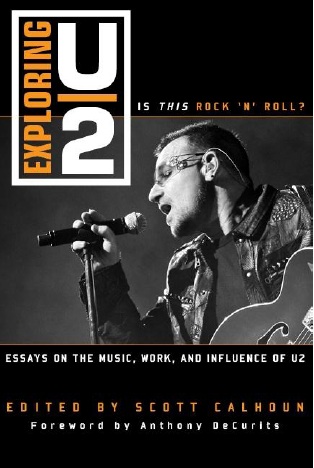
Another surprise was the serendipity of the internet. I discovered on Sunday that Steve Stockman, author of Walk on: The Spiritual Journey of U2
But could I do it again? If Easter with U2 (Easter@U2) was a pop culture lectionary, could it sustain a 3 year cycle? I doubt it, not without heading into abstract themes – betrayal, sacrifice, loss, surprise – that would have no specific lyrical references to Easter. Which has left me pondering. For all the hype in some Christian circles about the “spirituality” of U2, this snapshot would suggest they are hardly drawing from the Christian narrative.
U2 have produced 12 studio albums, at an average of 10 songs an album, that means a total of 120 songs. I drew on 4. That is not many, especially when the Easter narrative is so central to the Christian story.
I am not saying they need to. Christian art doesn’t need a cross to make it Christian. And I might be missing some other songs. But 4 out of 120 is not many. Which means I end where I began. With a question! 🙂 (But a great soundtrack to keep me company.)
Creationary: a space to be creative with the lectionary (in this case, visual images on themes of pilgrimage). For more resources go here.
Monday, April 01, 2013
Easter Monday with U2 (Bono and Glenn Hansard actually)
Make me a channel of your peace.
Where there is hatred let me bring your love.
Where there is injury, your pardon, Lord
At the funeral of Sargent Shriver, in January, 2011, Bono sung. It was an old Franciscan prayer, in a duet with Irish busker, Glen Hansard (of Once fame). Glen and Bono blog together each Christmas in Dublin, raising money for charity (see here for an example).
But this is a very different affair. This is a funeral, and together they offer us Resurrection hope. “And in dying that we’re born to eternal life”. (Full lyrics here of the song here).
Sargent Shriver was married to Eunice Shriver, and the U2 song “With our without you,” that appears on the U22 CD, the official record of the 360 tour is dedicated to her. She died in August 2009, during the 360 tour. It was Eunice, a tireless worker for justice, who opened doors for Bono when he fronted the Jubilee 2000 campaign.
Since Resurrection is not only for life, but also for living, it is an important reminder on Easter Monday – a call to be peace makers and healers.
For entire U2 at Easter catalogue
For more of my U2 and theology reflections check the backcatalogue. For another popular culture take on Easter, see my Holy week at the movies.
Sunday, March 31, 2013
Easter Sunday with U2
U2, “Window in the Skies,” off 18 album
The shackles are undone, the bullets quit the gun
The heat that’s in the sun will keep us when there’s none
The rule has been disproved, the stone it has been moved
The grave is now a groove, all debts are removed
Chorus: Oh can’t you see what love has done?
This song is from the more obscure end of the U2 catalogue. It appears on the 18 album which has 16 old songs, followed by two new ones, “Window in the Skies,” and “The Saints are Coming” (with Green Day). An album saved from being greatest hits! The song was released as a single, making it to number 1 in Canada and only sung live once.
While obscure, theologically the lyrics do a lot of work. They speak of resurrection – “stone it has been moved, the grave is now a groove.” They pick up a number of Old Testament motifs – “bullets quit the gun” has echoes of swords into ploughshares (Isaiah 2:4), while “the debts are removed” clicks with Jubilee images, words which introduce Jesus ministry (Luke 4:18-19), and echo the dreams of Isaiah ( Isaiah 61:1,2; 58:6). Resurrection begins God’s new reign of peace and justice. Everything changes.
Interestingly, it might be that for U2, Resurrection is tied very tightly to Ascension with the line “love left a window in the skies.” While traditionally Christians celebrate 40 days between Resurrection and before Ascension, this is based on the Acts narrative. Different Gospels are more ambiguous about an actual timeline, making worth pondering a closer tying together of Resurrection and Ascension as a fused activity.
There are two videos of “Window in the skies.” One uses footage of nearly 100 clips of other famous musicians performing in concert. The clips are, very cleverly, edited together so that their movements match up with the U2 song, while U2 appear in the crowds as fans. It suggests that U2 are playing homage to a long line of music history. (Or, cynically, that U2 are placing themselves in a long history of famous musicians.)
Again, this is interesting theologically, for it suggests another way to understand resurrection, through a long history, a tradition not musical but saint. Not saint as in perfect, but saint as in fellow believer. Faith in resurrection comes not just because I believe in “stone it has been moved” some 2000 years ago. I believe because I see resurrection life in others, in acts of grace and compassion, in love of enemies (“love makes strange enemies”). Those early disciples, together, through each others trembling testimony, gradually come to believe. In so doing, “can’t you see what love has done” is expressed, personified even, through a long history. That’s the wonder of resurrection.
Something not only for life, but for living.
For entire U2 at Easter catalogue keep coming back over next few days of Easter (Maundy Thursday is here, Good Friday is here, Holy Saturday is here). For more of my U2 and theology reflections check the backcatalogue. For another popular culture take on Easter, see my Holy week at the movies.


 )
)