Tuesday, September 07, 2010
creationary: lost coins, lost sheep
A creationary: a space to be creative with the lectionary. For more resources go here.
With the lectionary text for Sunday being Luke 15:1-10 or Luke 15:1-32, here are some resources I’ve used previously, buried in my blog archives, that might be useful.
First, here is a missional pondering on Luke 15, in which I tease out some of the potentially unhelpful mission and ministry images that might be at play.
Then Jesus told them this parable: “Suppose one of you has a hundred sheep and loses one of them. Doesn’t she leave the ninety-nine in the open country and go after the lost sheep until she finds it? And when she finds it, she joyfully sits down. Then she calls the friends and neighbors of the lost sheep together. And as this moment, as a new missional congregation is planted, the shepherd and existing congregation burst out ‘Rejoice; the lost sheep is found.’ I tell you that in the same way there will be more rejoicing in heaven over one sinner who repents than over ninety-nine righteous persons who do not need to repent.
Second, a gender in ministry reflection emerging from the lost coin parable on Jesus as the good woman. Here’s an excerpt:
Luke 15:1-7 presents Jesus as like a good shepherd, searching for a lost sheep. Luke 15:8-10 presents Jesus as like a good woman, searching for a lost coin. The church has been very happy to tell me about the first, Jesus as good shepherd. But why has the church been strangely silent about the second, Jesus as a good woman? As Kenneth Bailey, Finding the Lost, notes, Jesus is remarkable for the way he affirms both women and men as “full and equal participants in the kingdom of God.” Surely this pairing has something to say about women in ministry.
Third, some potential worship stations.
Sheep station – with a metal fencing and gate, and the invitation to
Look: at the fence and the gates.
Act: by sitting inside the sheep pen.
Reflect: How would you feel if you were ninety-nine? Pray for us at Opawa, and for what your feelings mean for the future of the church.
Art station – an invitation to
Look: at the art image, Woman Sweeping, by Jean Vuillard; which portrays God as an ordinary house-keeper in everyday life.
Reflect: on the following poem
I was passionate,
filled with longing,
I searched
far and wide
But the day
that the Truthful One
found me,
I was at home.
by Lal DedCoin station: – with a whole lot of coins scattered around
Act: by holding a coin. On one side of the coin is a name of a child in our community. Pray that they will be found.
The other side of the coin is blank. It might be your name. What does it mean for you to know that God, like the woman, searching is for you? It might be someone you know. You might want to pray for them by writing their name (permanent marker supplied).
Whatever you do, take the coin with you into your week.
For more go here.
Finally, for those who need a bit of a light relief, here is the true story of what happened one Sunday in worship (ending with a reflection on leadership). Like all good Kiwi stories, it started with a sheep. (more…)
Tuesday, August 24, 2010
resources used in hospitality for mission weekend
This post also might be useful for those working on Luke 14 lectionary text ie the Banquet Parables.
Pre-engagement
In order to create curiosity and pre-engagement with the your place or mine? hospitality as mission theme, I invited people to send in cell phone pictures of their tables. During the weekend I made this into a Quicktime movie which looped. It was very useful in terms of reminding us of the diversity of tables we dwell at, in which our “hospitality as mission” takes shape.
Luke 10 talk – theme hospitality as mission at their place
- The story of Brendan and it’s link to mission came via Mark Berry’s Safe Space community and the words for the soundtrack being played are available here.
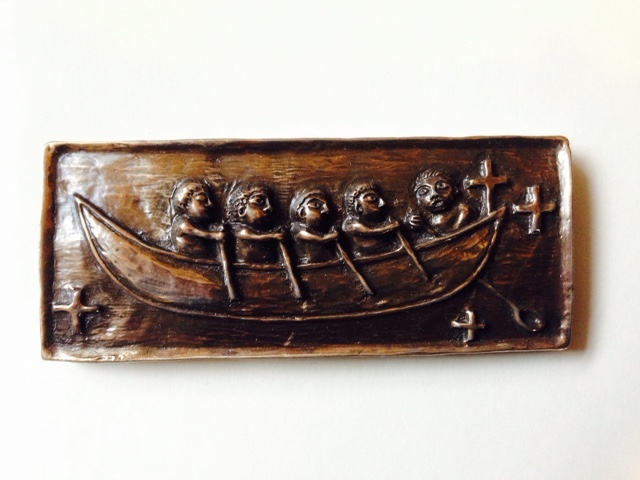
- Boats, on which to write the name of your church and the “word of mission” for you, are here.
- Lots and lots more information about the story and development of Opawa and espresso can be found here – start at the end and work forward!
Luke 14 talk – theme banquets as mission, their place and ours
- Quiz was taken from a book about meals from around the world
- The images of “church at table” were from Steve Collins website, particularly here.
- The Benched video, which was used as a way of reflecting on hospitality in shared community projects.
- The list of 4 hospitality practices which we used to evaluate the video (and thus our congregational life and hopes in general) was a summary of a chapter from Soul Banquets: How Meals Become Mission in the Local Congregation
. This also has the (fantastic) story of the response of a New York church to 9/11. The specific practices (as I reworded them) are as follows:
- Practice: serving graciously by finding ways to encourage eye contact and genuine conversation.
- Practice: setting tables in ways and places that reflect God’s abundance and creativity.
- Practice: seek role reversals by finding ways for all to contribute (a diversity of gifts, each has its corresponding service.)
- Practice: committing to a long-term, intentional project.
- For more about Richard Passmore go here, with the Abs and Flow story (which is one of the best example of Western contextualisation I have seen) here
- The cartoons were from Dave Walker, in particular here
Benched from Brandon McCormick on Vimeo.
Luke 19 talk – theme the gospel at their place
Wrap up summary
Information about Lumina Domestica, God’s light potentially transforming the ordinary and everyday of our hospitality, here.
Two books I’ve found most helpful have been Amos Yong’sHospitality and the Other: Pentecost, Christian Practices, and the Neighbor
Friday, August 06, 2010
your place or mine? hospitality as mission
I’ve been asked to offer some input to a gathering of church leaders in Tasmania in a few weeks (August 20-22). The title they’ve given me is this: Your place or mine: hospitality as mission. I said yes because I think it names a fascinating tension and one that has been nagging at me in recent days.
Back in April I was pondering mission in relation to the Zaccheus story in Luke 19. I was struck by how Jesus does mission at Zaccheus place, at his table, inside his home. Which, when I thought about it, was the dominant way the Gospel stories portray Jesus. He doesn’t give hospitality. He receives hospitality.
The exception is the Waiting Father/Prodigal Son in Luke 15, which has often used to frame mission and encourage the church to open it’s arms in embrace. Yet note the context in which the story is told – Jesus accepting hospitality, not giving it. Fascinating stuff.
I took this insight to my bookshelf and went through all my books on hospitality. Wonderful books on the banquet of God and the embrace of God at the Eucharist. But sure enough, almost all are about hospitality at our place. We are the host and they focus on how we give hospitality.
Which can so easily become occupied with mission as people coming to us, our turf, our churches, our terms, our worship, our welcome, our websites.
Which leaves a wonderful tension: How to integrate hospitality with the pattern of Jesus? What does hospitality in Western culture mean at their place, not mine! Any insights welcome as I begin my preparation.
Wednesday, August 04, 2010
global missiology and church change: updated with visuals
Updated: For those interested, here is my powerpoint (mission and innovation for web) and (here) are my notes. There was a LOT of energy around especially the mission stories in history. It is so easy for Westerners to slip into mission as definitions and yet the use of stories in history brought a lot of energy and challenge into the room and ensured that discussion of innovation and leadership had a global God of mission framework.
Question: Where was the best place to train as a missionary in the 5th century?
I’ve had a wonderful few days, weaving up some new material for a pastors training day tomorrow. The theme is mission and innovation and I’ve had some time to do two things.
First, to integrate some current reading around innovation, change and leadership (see here for more).
Second, to add a global mission framework. It is so easy for church ministers to focus on church and so I’ve enjoyed exploring some global mission. Specifically to add a quiz, using the first thousand years of church history, which is an Asian, African and Middle Eastern history. And to add some stories, of wandering Celts and the first missionary to Vietnam in the 16th century. It is important to see fresh expressions and church change as powered by missio Dei and I’m hoping that this global mission horizon does that. This is in 4 pieces, so for those interested (more…)
Tuesday, August 03, 2010
developing change leaders book review – Ch 7 Developmental approaches
I’m speaking to a group of church leaders on Thursday on the topic of mission as innovation, and again in a few weeks to another group on change, so it’s back to a book review of Paul Aitken and Malcolm Higgs Developing Change Leaders: The principles and practices of change leadership development
First, great (amazing really) to see an opening quote (from Dance of Leadership, The: The Call for Soul in 21st Century Leadership
Leadership is a dance, in which leaders and followers jointly respond to the rhythm and call of a particular social context, within which leaders draw from deep wells of collective experience and energy, to engage followers around transforming visions of change and lead them in the collective creation of compelling futures.
This suggests a focus away from leader-centric models of leadership, to the relational aspects of collective change leadership. Collins is cited, that great leaders have two essential dimensions – humilty and persistence.
Then comes a fascinating section (165-173) naming ways leaders can develop. Things like move to a foreign culture, shadow an arbitrator, become a volunteer.
This is followed by a number of case studies of leadership development within organisations. Let me take one, that of developing emerging leaders in the New Zealand public sector. This involved a development centre and a leadership program. The focus was based around a set of leadership competencies. The focus was an experiential learning through peer challenge, self-revelation and team learning in a safe environment.
Each person developed a portfolio, to document their learning over 9 months through the following stages.
- Stage 1 involved identifying prior leadership experience
- Stage 2 involved some input (a 1 week course) combined with personal goal setting around “lever” activity (self-awareness, learning as a leader, values and beliefs, interpersonal intelligence, communication skills, behaviour modeling)
- Stage 3 involved leading a strategic change project
I can’t help putting all this alongside the leadership training I experienced, which was mainly lectures on the importance of vision and how it worked in a large church.
I begin to reflect that some of the “lever” activities are to some extent embedded in some dimensions of ministerial training, but need to be made more explicit and clear. I see the challenge of the modernist mindset that equates teaching with content rather than learning. I see echoes between what we hope to do with our new Innovation stream in the new Bachelor of Ministry, especially Stage 1, the Introduction to Formation topic and Stage 3, the invitation into a practical project over the course of the training. I wonder what it would look like for a denomination to do this with their existing ministers and to think about the Missional Church Leadership course I offer, and did offer to ministers in New Zealand. What was the fruit and what changes could be made?
Monday, August 02, 2010
Joining in with God’s Spirit: a great missional resource
God’s mission is greater than any church, and it is in this wider movement of the Spirit that all the churches in the world participate. It is within the greater purposes of God that we find our unity. The missio Dei is not confined to any locality; it spills over, crosses boundaries and is carried across the world by the wind of the Spirit. It does not have a single origin or one direction but comes and goes as the Spirit wills. However, it is one movement because the Spirit witnesses to a unique person, Jesus Christ of Nazareth, crucified and raised, who reveals the Father in heaven, source of all things. We have yet to realize that the cosmic Christ is manifested in the unity of local churches in the mission of the Spirit. When we do, we will connect world church with local mission. We will be able to join with the Spirit who moves over the earth sustaining our world and our life – the Spirit of Jesus Christ, who is given to bring about good news in the whole creation.
Conclusion from Kirsteen Kim’s Joining in with the Spirit
Books like these are essential to the missional church conversation. They offer the Western missional church the gift of dislocation. When you read chapters that start with the insights from contemporary mission in Africa and Korea and India, you are offered a missiology that is so much richer than your own. You are reminded that the missional God is up to so much more than patching up a declining Western church. That mission is so much deeper, richer and wider than bringing back the young people!
So I used Kirsteen Kim’s quote as a devotional beginning at our Masters of Ministry class last Monday. Each of us were invited to sit with the quote and as we did, to identify the phrase that most spoke to us. After sharing, we then prayed for the person on our right. Then together we said the Lord’s Prayer. Just a few minutes, but a great way to place ourselves, each other and our ministries in the caring context of God’s globally local mission.
Friday, July 30, 2010
planting fresh expressions down under: a tale of seven churches
Here in South Australia we recently enjoyed the visit by Dave Male. One of the big helps for me was when Dave talked about the size of the core team in planting fresh expressions. He was making the point that the smaller the team, the slower the progress, but the more likely it would be radical re-expression of missional life. In contrast, the larger the core team, the more quickly the plant might grow, yet the more likely the new plant can end up look like it’s planting parent.
It helped me make sense of my fresh expressions experience.
My partner and I planted Graceway in 1994. That was last millennium, when noone was talking about fresh expressions or emerging church. But we knew that our mates were dialling out of church, yet still were encountering God. We started reading the literature on cultural shift and out of that emerged Graceway. We had values of community and creativity and participation, so we met cafe style, always had food, had a barstool for open sharing and explored the whole-body in worship. The planting team was small and it was such a long, hard slog, real pioneering.
There was simply none of the infrastructure and conversations and books that there are around now. We endured at times quite active hostility. But we learnt heaps and plugged away. We made mistakes but we saw God move. We saw some unchurched find faith, developed a distinctive way of life, built networks with the community and found ways to serve and love people. After 9 years we moved on. Graceway was fragile but had some good leaders.
We moved to Opawa in 2004. We were at Opawa six years and in that time had a go a planting six fresh expressions. One per year is good going when you think about it! (I talk about the multi-congregational ethos, which gave this initial shape elsewhere on this blog).
First was espresso, a Tuesday night discussion community for those wanting to explore faith questions is a conversational, open way.
Then came the hymn service, soup on Sunday afternoon, choosing of favourite hymns, a testimony and a sermon. connecting with those for whom hymns was an important part of faith formation.
We tried a number of experiments for spiritual seekers, running a journalling course in a local cafe, offering Sense Making Faith course. Each was important in connecting us with spiritual seekers, but none developed into a cohesive congregation. (Still important, still a great learning, still saw folk baptised.)
We re-planted our evening service in two different forms. One was a monthly Soak service, as a time to “soak” in God. Not so much a pioneering work, but more a contemplative space for people to make time to engage (soak in) God. Sung worship, lectio divina and then a range of stations. Lot of attention paid to the space, which, being in main auditorium was always big and worked really well in terms of contemplation.
The other was Grow which used the table as the main metaphor. People gathered in groups and on each table was an A3 sheet of paper in which people were invited to reflect on two theological questions – who is God and who are humans. Grow had a three week focus and each evening used multiple inputs – video clips, interviews, during the week challenges, top 10 quiz, sermon, prayer.
Another trial was made with the Gathering, which used a local community cottage to work with folks local and close to the church building. Lots of food, gathered around a big wooden table, Bible open.
Looking back, using Dave Male’s lens, helped me see that Opawa was a totally different way of planting fresh expressions than Graceway. Rather than lone “ordained” pioneers, we were involving teams of lay people. (Which you simply don’t have when you are the lone pioneer). Each expression looked for 4-5 people who gathered around an “itch” to explore new possibilities. Each faced the downside, the danger, of becoming a new form of worship, rather than a genuinely missional new form of church.
As Dave says, both types have their strengths and weaknesses. Multiple congregational planting with lay teams is much easier, while pioneering is much more radical.
I’m not sure what the point of this post is. (In fact, I’m not actually often sure what the point of this blog is.) Perhaps someone might find some resonance in one of these tales of seven fresh expression churches.
Wednesday, July 28, 2010
Missional church, missional liturgy
“For several years, I have offered workshops and classes on “missional liturgy.” A frequent response has been, “How can I make my church’s liturgy missional?” As I listened to these questions and probed more deeply, it has seemed as though people were asking about techniques … I began to realize that it was the wrong question.” (44-45).
There is a helpful article in the latest edition of Theology today, by Ruth A. Meyers on the shape of worship in missional church, which I will be adding it to my list of compulsory readings for the Missional Church Leadership courses I teach.
The article starts with a real life story of a missional community. Always a good sign, because a key theology underpinning missional church is the focus on lived communities and their practices, in contrast to starting first with elaborate theories. The article then places their lived practices alongside existing understandings of worship.
- Inside and outside – gathered public worship builds up and resources Christians who then go out to serve in mission
- Outside in – gathered public worship is seen as mission, attracting people who are changed by the worship experience
- Inside out – worship is mission, not as an instrument to change people as with “outside in”, but as an full expression of God’s mission
The article then argues that all, and yet none, of these three categories describe missional worship. After a helpful survey of recent shifts in mission – mission is a partnering with a Trinitarian God rather than humans taking initiatives – she then outlines a number of concrete practices, in which mission is worship and worship is mission. The list sounds traditional, yet has an intentional reframing.
- Reconciling community – the more diverse the worshipping community, the more worship is missional, showing forth God’s reconciling love
- Hospitality – welcoming those not yet active members with a focus on who is not here from our neighbourhood? Hence, what might need to change in us?
- Symbol – using language of the people
- Proclamation – seeing all the acts of gathered public worship as educational
- Intercession – praying beyond our narrow parochial concerns, which in turns open those who pray to transformation
- Offering – worship engaging the whole of life and all the people
- Thanksgiving – simple gratitude
Monday, July 26, 2010
a new semester postgraduate focus
A new semester starts here at Uniting College today. The focus for me this Semester is the post-graduate area and it’s so nice to be building on foundations, rather than heading into unknown and uncharted terrain.
First is the continuation of Program seminars. I’ve blogged about these before, noting with excitement how these build collegiality and are constantly developing people’s ability to reflect theologically on current ministry practice. We’ve got new students and a really rich denominational environment – Salvation Army, Anglican, Lutheran, Churches of Christ, Catholic, Uniting – at play.
Second is the continuation of Missional Church Leadership. Students are at the half-way stage of the course. That means that today we are gathering around presentations of their listening in their unique contexts. As they present, I am working with the class developing their capacities to engage in processes of discernment. This is not theory, but requires stepping into real, living mission contexts and together exploring what God might be up to.
Third, the icing on the cake, is the post-graduate distance course I’m co-teaching for Otago University. It’s a “foreigner”, on my own time as it were. The topic is contemporary preaching and I am looking forward to co-teaching with Lynne Baab. The students have set up their own blogs and with the wonders of modern technology, I in Adelaide, will be engaging with Kiwi students throughout Aotearoa. It’s nice to realise that I might have left New Zealand, but in the grace of God, I can continue to be involved in my home!
Saturday, July 24, 2010
FOSMT (free and open source missiology textbooks)
Helpful post here by AKMA on steps to an open source theology. He is discussing the Old Testament, but so very easy to apply to missiology. In sum
- First, work out an overall structure and uniform presentation.
- Second, find authors to write initial chapters to flesh out the structure
- Third, edit chapters for uniformity and place on web.
- Four, arrange a PoD publisher to sell papercopy
- Five, encourage uploading of alternate points of view.
The result:
Bing, bang, bong, you have an open-source, free as in beer, free-to-reconfigure, free-to-supplement or even -alter (provided you give credit and don’t offer the altered version commercially without the author’s agreement) textbook. And that textbook is now useable anywhere English is read, for free. And that textbook is putting your name(s) in front of students and teachers all over the world, especially in places where they can’t necessarily afford the doorstop hardbacks that the textbook publishers love to charge so much for. And that textbook can easily be kept up-to-date. And if some agency were to fund it (and such funding needn’t even come to very much, in the world of granting — small to moderate honoraria for authors, editorial/production support, and so on), they could slap their name (or a prominent donor’s name) right there on the cover and on every title page
So I am wanting to develop for next year
a) mission-shaped course for Australasia
b) Mission then and now history and theology paper.
I wonder what these would look like FOSMT. Anyone want to partner in either step one, work out an overall structure and uniform presentation; or on step two, author a chapter; or on step three, being an editor, or on step zero – being the initial funder in order to position/brand your organisation as an innovative, missionary-focused, partnering type?
Tuesday, July 20, 2010
wind of Spirit blows on and on and on: valuing takeaways

Tim Keel just dropped me a line to share a lovely story of the gracious, caring, unpredictable Spirit. He describes being part of a worship experience I lead in Pasadena, back in 2005. (I blogged about it back here.) The story then blows on, taking shape some 5 years later. Tim writes …
I returned to my office to clean it out. That involved box a lot of things up. But I also took the opportunity to go through old files to see what I wanted to keep and what could be thrown away. Going through old conference files, I found this postcard. Because of the impression Steve’s prayer made on me at the time of the conference, I wrote it out on the back of the postcard … To randomly find a postcard from a place I would soon being leaving for…I can’t adequately describe how powerful it was to read and then pray that prayer at a time when everything in my life felt like it was being blown apart.
It’s a lovely, encouraging, inspiring story. What strikes me is the importance of things that make worship tangible. I talk about this in my book, The Out of Bounds Church?: Learning to Create a Community of Faith in a Culture of Change
Walter Brueggemann describes the task of mission in a postmodern world as one of funding, of providing the bits and pieces out of which a new world can be imagined. The emergent church needs to see itself as “funding” tourists, providing a deep and wide enough passage to enable postmodern people to navigate their way to God.
Sourcing tourism through the provision of spiritual products can be a key mission task of the emerging church. This builds on some of the current worshipping practices of the emerging church. It invites a move beyond gathered worship to consider how the church can be missionary, offering its spirituality resources as spiritual product to a spiritually hungry world, without expecting the crossing of a threshold of a church door. Let me give a few practical examples.
Most tourists buy souvenirs. When I talk of souvenirs, I am not thinking of kitsch. I’m thinking of photographs, personal mementos, shopping bags and those soaps, shampoos, and sugar packets from hotel rooms. These are souvenirs. When the tourist returns home, the handling of these takeaway souvenirs rekindles memories. The emerging church is asking itself what kind of physical souvenirs we can send home with those who journey with us.
For the last few years, churches like Graceway and Cityside have used art as part of the Advent experience in the Sundays leading up to Christmas. Each Sunday, a different piece of art was introduced and reflected upon. The art pieces were printed on postcards and distributed. Attendees could take them home as a spiritual memento for the week and perhaps return to the reflections of Sunday’s experience. They served as spiritual takeaway, a souvenir to hang on the fridge door.
At this juncture, the souvenirs become missionary. Everyone remotely connected with the church can be sent a pack of four postcards. The church as tour guide is now offering spirituality to people both gathered and scattered. The e-mails and letters of gratitude flow in.When churches start adding physical souvenirs, people have access to spiritual resources without having to open a church door. A theological stake has been driven into the ground. The church has recognized that people are at different places in their spiritual journeys. The church is loving people enough to go into the “highways and byways,” trusting the wind of the Spirit to do its work in people’s lives.
Five years on from when I wrote that, my thinking still holds. Our worship needs tangible shape. I don’t see a separation between the wind of the Spirit and the practicality of a takeway. Rather, drawing on Eugune Rogers, After The Spirit: A Constructive Pneumatology From Resources Outside The Modern West
This wind of the Spirit blows on the material world, and essential to our engaging the Spirit is our working with God’s creation. Like postcards.

Thursday, July 01, 2010
Ecclesiology and discernment: a case study regarding the emerging church
Explanatory note: An abstract I’ve just written, trying to get my head around some future research offerings that I would like to be involved in.
Ecclesiology and discernment: a case study regarding the emerging church
Dr Steve Taylor
Discernment is named by the Apostle Paul as one of the gifts given to the body of Christ (1 Corinthians 12:10). In the tradition of the church, it has at times taken different trajectories, from The Spiritual Exercises of Ignatius Loyola, to the Pentecostal movement, to the Brazos Introduction to Christian Spirituality (Howard, 2008), in which it gains an entire chapter of coverage.
One way to understand discernment is to consider it as both a gift and a practice, a charism originating in the grace of God, yet a practice nourish by human skills and capacities. Using this understanding, the performing of discernment can then be analysed.
This paper will analyse attempts at the performance of discernment in relation to ecclesiological innovation, in particular to discerning of the phenomenon termed the “emerging church”. A number of attempts have been made in recent years to discern this phenomenon. Some examples include:
- Don Carson, Becoming Conversant with the Emerging Church, Zondervan, 2005.
- John Drane, “Looking for Maturity in the emerging church,” Mission-shaped Questions. Defining Issues for Today’s Church. Edited by Steven Croft, Church House Publishing, 2008.
- LeRon Schults, “Reforming Ecclesiology in Emerging churches,” Theology Today (January 2009).
- Kevin Ward, It Might Be Emerging, but Is It Church? Stimulus 17, 4 (November 2009).
This paper will explore a number of these case studies, paying particular attention to the performance of the practice of discernment. What has each attended to? What are the sources being engaged? What might be the strengths and weaknesses of each approach?
The aim of the paper is to provide some analysis of the processes by which discernment happens, to provide some commentary on contemporary ecclesiological developments and to nuance and deepen trajectories surrounding ecclesiological innovation.
Tuesday, June 29, 2010
when home is a pain: church being in exile?
“I yearn for home” is a line by Pádraig Ó Tuama from the Ikon Dubh album. Hearing it today is a reminder of pain, of the profound disorientation that’s taken place in my understanding of home, caused by the move from New Zealand to Australia. Home used to be a place of comfort, of acceptance, of belonging, found among my previous Opawa church community with creative, intelligent, relational companions, found seated at our South Island holiday home, with those broad vistas to lake and mountains.
But by coming to Australia, the Taylor family has been forced away from home. We believe it’s the call of God, asking us to leave home. So now the concept of home is simply a pain, a reminder both of isolation and distance, and of obedience. And part of me fights against ever wanting to call this Australian land home!
I think, intuitively this is actually really helpful. You see, isn’t there a danger of home being domesticated around what is familiar and comfortable. I was struck by this when reading Luke 19:1-10 recently, and realising that Jesus does mission not in his home, but in the home of Zacchues. Incarnational mission in this text was not about being comfortable, but about being in someone else’s home, seated at another’s table. It’s meant to be uncomfortable and alien.
Pádraig Ó Tuama has another song, Maranatha, in which he sings “I found my home in Babylon.” (more…)
Thursday, June 24, 2010
developing change leaders book review – Ch 6 The evolution of a change leader
A book review of Paul Aitken and Malcolm Higgs, Developing Change Leaders: The principles and practices of change leadership development
Becoming an effective change leader takes time and requires change in the leader themselves. It begins with reflective practise. While authoritarian command type leaders are most appealing in a crisis (page 121), the most appropriate skills are those of questioning and reflection.
Research on change leaders show they hardly ever grow by formal development. Rather, they grow through things like watching leaders, affirmation of their own ability in the midst of conflict, first-hand experiences of the mis/use of power, leadership opportunities and facilitated reflection on their lived experience. This comes best through coaching. This should also include coaching others, due to the giving of compassion becoming a personal healing agency.
The book then summarises 10 dynamic capabilities for change leaders as follows:
1 – Develop decision making – specifically the ability to wait and see, keep an open mind and be comfortable with contradictions. Central to this is the ability to inquire, to accept that you are not the expert and that someone in your team may have a better insight.
2 – Access capability from across the team
3 – Become a co-creator of a learning culture
4 – Combine future-sensemaking with strategic thinking – digging deeper, reading widely, in a desire to appreciate the system and not just the events.
5 – Develop ‘total’ leadership – including authenticity, integrity and experimentation, at all levels of a person’s life
6 – Develop competency to work in diverse cultures
7 – Develop 1-1 coaching skills – eg micro-skills of building rapport, active listening, attention, sensitivity.
8 – Develop 1-many skills – eg micro-skills of dialogue, facilitation, process consulting, because leadership is about responding to real lived relationships.
9 – Emotional intelligence including self-awareness, emotional resilience, sensitivity, influence, intuition and conscientiousness.
10- Dialogue on performance.
The next 2 chapters set out to explore how to develop these capabilities. In the meantime, take some time to reflect on a change leader you admire. In what ways were these capacities in evidence?


 )
)