Monday, December 23, 2013
postgraduate affirmation with TEQSA accreditation
Big news for us at ACD/Uniting College: TEQSA (Tertiary Education Qualifications Standards Authority) in Australia has accredited our post-graduate courses for another 7 years, with no conditions attached.
That’s like getting A+ for an exam, the best result possible.
TEQSA ensure quality control for all universities and higher education providers in Australia. On a regular basis, they audit courses, asking for extensive evidence of what we are providing and the quality standards we are working toward.
This is followed by a site visit (ours was held in October) before review by an independent panel of academics from three other providers, before a report is provided to their Commission. It is an ardurous process, one that has taken a huge amount of time and energy over the 2013 year.
In making our application for ongoing accreditation, we also decided as a College to take the opportunity to innovate, proposing a number of significant changes. In no particular order
- we created a Graduate Diploma in Ministry, a one year (full-time equivalent) offering, including an entry point for those who have not done theology study before. This arose out of a desire to provide pathways for lay training, particularly those who want to focus on ministry in all spheres of life
- we standardised the former 1, 3 and 6 credit point structure of our post-graduate programmes into 4.5 credits. This makes our postgraduate offerings consistent with our undergraduate offerings and with Flinders University, allowing smoother cross-crediting pathways for students
- we clarified the research focus of our Doctor of Ministry. Recently TEQSA announced changes to ensure that professional doctorates across all education spheres maintain a research focus. They wanted to see a professional doctorate as a research degree of excellence. We welcomed these changes, as they fit with our ethos, a practical theology that seeks a rigour of action and theory reflection. While other Christian theology providers have responded by moving out of the DMin arena, we argued to TEQSA that our existing structures, with a few modifications and clarifications, met these research standards. We’re delighted that TEQSA agree with us and that we can continue to offer a DMin with a high quality research focus on ministry practice
- at the same time, we wanted to maintain and underline our collegial approach to post-graduate ministry. The student working alone on an extended project is in sharp contrast to the realities of ministry, which require peer learning. So in making our application to TEQSA, we proposed a pathway which will ensure all our post-graduate (Diploma, Master and Doctor) form a regular peer learning community, in which they gain encouragement and peer review. We believe this will lift standards, enhance the experience of participation in a learning community, in a way consistent with the collegial nature of ministry. In other words, degrees to serve the church in ministry and mission, through high quality, creatively rigorous practical theology.
The response by TEQSA – 7 years accreditation and no conditions – we take as a huge endorsement of our direction, our standards and the research community with the focus on a high quality practical theology we are creating.
And a great Christmas present to ACD, Uniting College and our post-graduate community.
Saturday, December 21, 2013
An excellent writing week
I’ve had an excellent writing week, holed up in our shack/bach, no wireless, a flock of black swans for company and inspiration.
I’ve got my head back into the emerging 10 years on research project, which I’ve not been able to engage since Dad died. I’ve written three frames for analysing various aspects of the data. I’ve now got four almost complete chapters, with good work on another three. I’ve now written 40,000 words in relation to the 20 UK interviews.
Key moments this week included
- Finding a way to link the local stories with the recent World Council of Churches statement on mission and evangelism
- Finding five layers of church in Philippians
- Framing the local stories around images of God, patterns of growth, understandings of mission
- Realising again how rich the data set is
- Loving the humanity of each fresh expression story – like the moment when one community moved the photo of Rowan Williams to make way for their data projector screen!
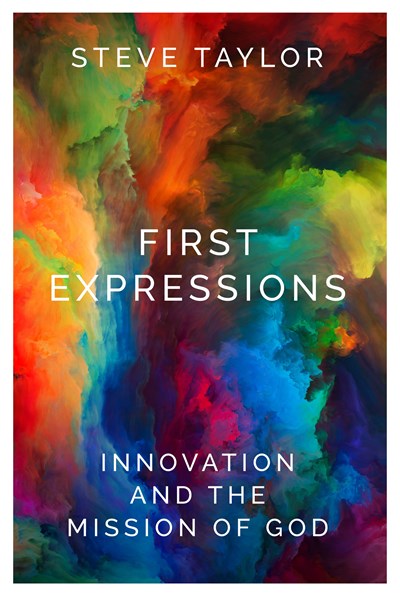
It feels like a book.
Wednesday, May 08, 2013
Ecclesiology and Ethnography: a “down under” perspective
News today that my academic paper for the ANZATS (Australia New Zealand Association Theological Schools) combined conference 29 June-2 July, in Auckland, New Zealand, has been accepted. The conference theme is Christians in Communities – Christians as Communities.
Ecclesiology and Ethnography: a “down under” perspective
The aim of this paper is to introduce a new area of theological investigation and offer a “down under” response. It will be argued that a new Eerdmans Studies series, launched with paired volumes, Perspectives on Ecclesiology and Ethnography

The first section of this paper will outline this new Studies series and a number of theoretical moves, including the use of empirical research as a theological necessity, appreciating knowledge as a perichoretic practice and valuing ecclesial situatedness.
The second section of the paper will offer a “down under” response to what has initially been a trans-Atlantic conversation. This will include a methodological engagement with indigenous perspectives on qualitative research. It will demonstrate similarities between the Studies in Ecclesiology and Ethnography series and themes articulated by Linda Tuhiwai Smith (recently honoured as a Companion of the New Zealand Order of Merit), including valuing qualitative research, seeking community transformation and encouraging research situated in communities of tradition.
However Smith also identifies ways in which research has been an instrument of colonization. Hence a third section of this paper will employ Smith’s “Community up” framework for researcher conduct to analyse a number of case studies present in the Studies in Ecclesiology and Ethnography series. It will be argued that a pivotal point exists in the work of Paul Murray and Matthew Guest, in which the ethnographer is freed to offer the marginalized a new voice and consequently bring change to ecclesial communities.
Dr Steve Taylor
Senior Lecturer, Flinders University
Principal, Uniting College
Thursday, April 04, 2013
Sustainability and the mission of God: a case study of fresh (and failed) expression
I’m presenting to the South Australian Mission Studies Network Gathering on the topic:
Sustainability and the mission of God: a case study of fresh (and failed) expression
I’ll be reflecting on my findings emerging from my UK sabbatical interview research. The event is open to all mission-minded individuals, including scholars, reflective practitioners and teachers.
Here is the blurb (not written by me!):
Rev Dr Steve Taylor (Principal of Uniting College of Leadership and Theology, writer and blogger. He has published numerous articles and chapters, especially in regards to developing healthy, missional communities. His main publication is The Out of Bounds Church? Learning to Create a Community of Faith in a Culture of Change, (Zondervan, 2005). He has recently been on Sabbatical in the UK and writing his second book.)
Monday 22nd April @ 12.30 pm (until 2:00 pm) in S1, Adelaide College of Divinity, 34 Lipsett Terrace, Brooklyn Park, SA.
BYO Lunch but Tea and Coffee provided. To RSVP by Friday 19th April or want further information, then contact David Turnbull on 8373 8775 or dturnbull at adelaide dot tabor dot edu dot au
Thursday, January 17, 2013
Let me in the sound – not! U2 conference paper proposal
I was informed (graciously) today that my U2 conference paper (April 2013) proposal was not accepted. No explanation as to why. For the record (pun intended), here was my proposal (it makes the title even more poignant!).
Update: An invitation, on 6 March 2013. Due to a late withdrawal, might I be interested, despite the late notice, in presenting my paper! Let me in the sound is, after all, a live performance option.
The paper emerged from this moment of listening pleasure, which was deemed “perceptive” by well known U2 scholar, Beth Maynard. In terms of theorising, I consider their would be some real insight to read U2 against the work of Martin Stringer, UK social anthropologist, who has a body of research applying sociology to live liturgy.
Let me in the sound: the role of one liners in the live concert experience of U2
This paper will analyse the use of one-liners in U2’s live concert performance. It will explore the differences between U2‘s known songs from their studio albums and live performances (as recorded in the limited U22 CD that resulted from their most recent 360 degree tour). The paper will catalogue the one-liners and outline how they serve as a significant dimension of the live concert experience.
Three dimensions of these one-liners will be explored. First, how they particularise, offering a unique concert experience. Second, how they reframe, providing a different hermeneutical lens by which a song might be interpreted. Third, how they humanise, enhancing the connection between the band and the feelings of concert-goers.
An example is illustrative. During the live performance on U22 of “Until The End Of The World,” the following one-liner is employed: “Where’s Frank? 13 years ago, this very evening, we said goodbye to Frank Sinatra.”
This one-liner served to particularise, marking this concert (live from Mexico) as occurring on an anniversary of significance. It served to reframe, linking the song with a legend in rock music. It served to humanise, crafting a respectful memory with regard to those who have gone before.
This analysis will be placed alongside recent liturgical writing, in particular the work of Martin Stringer, On the Perception of Worship
and his argument that with regard to ritual, it is in the irregularities that significance is generated.
Monday, July 23, 2012
defining theological research
Tonight I attended, with my daughter, a high school careers night. One of the presentations outlined the Research Project, a final year independent study. It is described as an opportunity to:
- research something you are interested in
- decide how you carry out your research
- decide on the way you produce your findings
- make judgements about how successful you’ve been
The presenter noted that a new feature for 2013 includes local universities offering students the chance to join one of their projects, in areas like health and medicine. The student works with the University in one of their projects and gets named in the research as it is written up.
On the way home, the following conversation ensued.
Daughter: I liked the idea of doing research with a university.
Dad: Yes, when they talked about that, I wondered about theology offering a research project.
Daughter: Now that would be cool. They could start new types of churches and explore how people engage with those new forms.
Dad grins, pondering the rather unique view of theological research – the mix of research and practicum, thinking and doing, university and church – the daughter has grown up with.
Wednesday, May 16, 2012
a big day: social innovation research funding bid

Today I ticked off one of my study leave goals, submitting a funding bid to do some research into pioneering (social innovation) in Australia. It has involved a lot of work, a few late nights, some 5,000 words, spread over 26 pages of application and pulling together support from 4 different partners.
The bid is titled “Social innovation within religious communities in Australia.” The aims are “to undertake an analysis of quantitative data, and gather further qualitative data in order to analyse the skills and capacities required to catalyse and sustain innovations that build social capital and enhance the public good in the not-for-profit sector.”
It has involved negotiating with various partners, trying to think about their needs and how they might link with the aims of the University (research). The intended outcomes (if the bid is successful) will include a mix of articles, book, video and help in our post-graduate research.
It’s a highly competitive process, so I’m not holding my breath.
But it’s been fascinating to try to explain pioneering and fresh expressions in publicly accessible language (almost mission in itself perhaps?). And it’s been great to have the space of sabbatical to write and re-write. It’s allowed me to met some new people, be stretched in new areas and be very glad that Uniting College has a relationship with Flinders University, that makes such collaboration even a possibility.
But it’s left me stuffed.
Tuesday, May 01, 2012
intuition and anecdotes in theology
 A playful moment today. I am working this week on a chapter on emerging church practices. In trying to make sense of how to proceed, I have been enjoying a book by Max Van Manen, Researching Lived Experience: Human Science for an Action Sensitive Pedagogy
The book explores how to use lived experience – ours and others – not for mere academic interest, but to be part of transformation – in us and in our spheres of influence. In the book, Van Manen seeks a method by which to be systematic and critically rigorous about lived experience. One way he suggests is by the use of anecdotes. He notes how so often in conversations, people use short stories to make a point.
Anecdotes connect us to real life. They can provide concrete demonstrations of wisdom. They provide experiential case studies. Each anecdote is unique and particular, yet often each anecdote is addressing matters of universal importance.
So I have been looking through my interview data, looking for anecdotes. Surprise, surprise, I found that in the 5 focus group interviews I did, 45 anecdotes were used. Previously I might have dismissed these as examples, difficult to make into nice little sound bites. So probably I would have walked past them.
Instead, today I have grouped these 45 anecdotes and begun to analyse them, each particular, for the emerging practices present in them.
As I have worked, I have also been thinking about the Gospels. And I began to wonder if perhaps they too are in fact a collection, artfully chosen, of anecdotes about Jesus. In John 20:30, we are told that “Jesus performed many other signs in the presence of his disciples, which are not recorded in this book.” In describing these signs to each other, the disciples used anecdotes. Which John then declares that he has selected, edited and artfully arranged so that the reader “may believe” and “by believing … may have life.” I love that sense of the Gospel writer daring to tell a universal story by gathering a particular set of particular anecdotes.
But how to connect some anecdotes from an emerging church today with these Gospels as anecdotes?
So this afternoon I spread out the Jesus Deck on the office floor. The Jesus Deck has 52 cards. In other words, 52 anecdotes from the life of Jesus! I spread out these Gospel anecdotes alongside the anecdotes from my interviews.
It is certainly not an approach I’ve used in research before. But it has begun to generate some really interesting conversations. Whether they are dead ends or not, we will see in the coming days.
Thursday, April 12, 2012
wanted dead and alive: UK alt.worship communities
As part of my PhD research (what became “A New Way of Being Church”, University of Otago, 2004), I conducted research during March – June, 2001 into mission experimentation in the UK. This was focused on alternative worship communities and included both participant observation and interviews with both leaders and laity.
Some ten years on from that research, I have been reflecting on sustainability. As any parent will know, it’s one thing to birth a child. It’s quite another to do the early mornings and late nights, to piece your way through the ups and downs.
So I have begun a “Sustainability in new mission initiatives” Research Project. This first part has focused on the church that was the major focus of my research, Cityside Baptist. I have returned to participate in worship, to interview key leaders, to re-survey the congregation, and to conduct focus groups in response to reflect upon their data. Currently I’m writing up the results.
The next stage of the project involves wanting to explore the sustainability of the UK alt.worship communities I had researched back in 2001.
Here I need some help. Some initial website research has revealed that of the twelve I researched, four six continue today (two three under another name). Two Four appear closed. I remain unsure about six two of the communities. They look to have little web presence and so perhaps are closed.
So I have two requests. First, can any of my UK readers check the table here and provide any further information on the current status of any of these groups. I’m particular after information on
- Late Late Service, Glasgow
- Sanctuary, Bath (Updated: website found)
- Resonance, Bristol (Updated: renamed as Foundation in 2005. Thanks Paul )
- The Bigger Picture, London
- Graceland, Cardiff (Updated: according to a blog comment (thanks heaps), has closed, although relational connections continue.
- Holy Joes, London (Updated: Maggi Dawn thinks this group is currently in recess)
Second, I am interested in trying to interview all these groups, or representatives (whether dead or alive!). We need to learn from all our experiments, no matter their current status. I am working toward a research visit to the UK (December 2012-February 2013). So I would like to locate folk, particularly from those that are closed, or appear to be. So can any of my UK readers provide any followup or contact details?
Thanks, in hope 🙂
Friday, February 24, 2012
ethnography as pastoral practice
I’m finding Mary Clark Moschella, Ethnography As A Pastoral Practice: An Introduction
It offers a way of bringing about change, in which the leader becomes an ethnographer, a listener to the patterns and habits that form a group. It provides case study after case study, of ministers who listened, who were surprised by what they heard, who fed back their surprise and as a result, change occurred.
Ethnography is a set of habits and processes and thus the book gives a really clear way of embarking on change. Some leaders do this intuitively. But for those who don’t, this book is gold. It explores the ethical boundaries, developing questions, offering feedback – all written in accessible manner, with story after story.
The book is thus an excellent resource for post-graduate students and for any minister or leader thinking about how to be part of change. It will be especially helpful for those folk put off by CEO and hierarchical models of leadership, but still wanting to be part of transformation of their community, and communities.
Monday, January 23, 2012
this is my body? paper update
My paper presentation today, shared with Tim Matton-Johnson, from Congress Tasmania, seemed to go OK. Having two voices was certainly nice in an afternoon session.
Some really useful questions in response, which will help to clarify and make it sharper. It’s the most developed of papers I’ve done in recent times, so it should be an easy task to make publishable – the plan as a result of the confernece is to produce both a set of DVD’s, plus a book as a result, with Palgrave publishers. So hoping for that …
for now, after a 5.45 am start, it’s goodnight …
Monday, October 31, 2011
the good company of obsessives
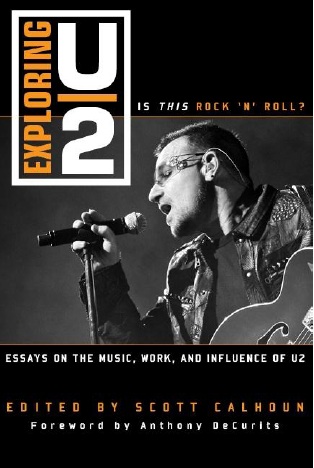
“In this book, I feel I am in the good company of obsessives.” (Exploring U2

My copy of Exploring U2: Is This Rock ‘n’ Roll?: Essays on the Music, Work, and Influence of U2
“U2 is best understood in decibels and LED lights seen through fog machines, not by reading a book. Still, what happens after listening to a U2 album or attending a concert is just as real as the music itself, and U2’s fans know that things have changed for the better because of U2. What makes this happen, why and how it happens, and how U2 has become so good at doing it are the guiding questions here. In this book, I feel I am in the good company of obsessives, and it is a delight to present them as furthering the field of U2 studies.” (xxvi-xxvii)
This time last year I was published for work on TV animation show, Bro’town. Now U2. Such are some of the fertile theological fields I drift upon 🙂
Friday, October 07, 2011
Study leave report September 2011
 For those interested, here is my September 2011, Study leave report. In some ways it is a summary of the UK Adventures blog series. But it also develops a bit more clearly some of what I reflected upon and raises some possibilities that might be part of 2012 (more…)
Thursday, October 06, 2011
emerging Baptists and the other that is contemporary culture
In 2009, I presented an academic paper at the International Conference on Baptist studies in Melbourne. In late July I received notification that my paper had been accepted in a volume of publications (Interfaces: Baptists and Others) arising from the conference. My chapter is (currently) titled – Baptist Worship and Contemporary Culture: A New Zealand Case Study.
In the chapter, I outline a Baptist understanding of theology and church identity. (Note: For mainline church readers who might not know much about Baptist ecclesiology –
Martin Sutherland (“Gathering, Sacrament and Baptist Theological Method,” The Pacific Journal of Baptist Research 3, 2 (October, 2007)) argues for a distinct Baptist way of doing theology, based on the dynamics of church as becoming. He argues that for Baptists, “the gathering is the sacrament, the moment of Christ’s presence, the telos at once for the church and the world.” (53) Baptist theology thus becomes “the dynamic interplay of two stories – the contemporary, local, ‘gathered’ one, and the Christ story as revealed in scripture … The story itself calls us forward and outwards rather than backwards … Theology’s task is to facilitate this harmonization, to bring us into consonance with Christ.” (54-5) For Sutherland, Baptist theology is to be found not in dialogue with philosophy, but embodied in local life, in things such as the church members meeting or in the formation of church structures.
I then employ this Baptist method to first, analyse an act of worship of a particular “emerging” Baptist Church. I argue that a creative and engaged approach to contemporary culture provided huge resources for this congregation. Second, I engage this “Baptist theology” with current discussion on the relationship between gospel and culture, including Graham Ward, Cultural Transformation and Religious Practice


The volume, edited by David Bebbington (Stirling University) and Martin Sutherland (Laidlaw College), part of the Studies in Baptist Thought and History, is due to be published with Paternoster Press, in September 2012.
A collection of essays which includes relations with other Christians, other faiths and other movements such as the Enlightenment. What has been the Baptist experience of engaging with different groups and developments? The theme will be explored by means of case studies, some of which will be very specific in time and place while others will cover long periods, and more than one country.
With 400 years of history, and over 150,000 churches and 37 million members spanning 6 continents, and with conference speakers from England, US, Australian, New Zealand, Irian Jaya, Papua New Guinea, Aboriginal, Nigeria, India, Burma, the volume should be a rich deposit of history and Christian practice.


 )
)