Friday, August 26, 2011
September UK trip planning
Here are my current details for my UK September 2011 trip. The trip is a mix of research presentation plus some relaxation and exploration. So, if there are people that would like to connect with me, show me their city, go hiking in the Lakes, all over conversation about mission, pioneering and leadership formation, then do drop me a line.
Leaving Adelaide Thursday 15 September, arriving Manchester Friday 16 September. Returning evening, September 28, from Manchester.
Weekend free. Explore Manchester? Or hike into Lakes District?
September 20-22. Ecclesiology and Ethnography network, St Johns College, Durham, UK. Present research. “Finding fresh expression ten years on? Initial findings from a longitudinal study of emerging churches in New Zealand.”
Weekend free. Explore Lindisfarne and Northumbria coast?
September 27, Cliff College, Master of mission input day
- Session 1 and 2. Emerging church in history – stories from a global mission tour. Galilee to Azherbijan to Vietnam to Aotearoa New Zealand.
September 28, Cliff College, Doctor of Missiology research day
- Session 1 – Bible, culture and history – “Bible, Ploughs and damper: responding to a de/colonizing God”
- Session 2 – Ecclesiology as ethnography – “Finding fresh expression ten years on?”
- Session 3 – Liturgical rupture – “Even the dogs eat the crumbs that fall from their masters’ table”
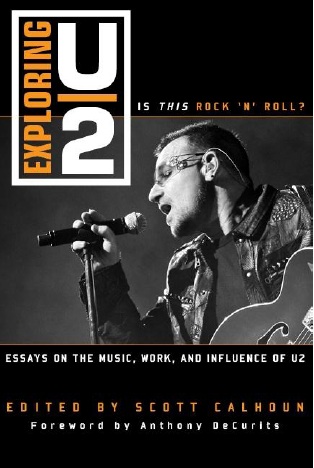
- Session 4 – Pop culture – U2’s “Bullet the Blue Sky” as an Evolving Performance
On the 27th I plan to offer some global mission history, using storytelling to explore how the church has emerged in history, followed by discussion of implications for church, Spirit, Jesus, gospel/culture.
On the 28th I will offer some of my recent research. I will be drawing on Rowan Williams definition of Christian mission as “finding out where the Holy Spirit is at work and joining it.” I will do this by offering a range of ways that research as listening can actually happen – in history, in church practices, in contemporary culture.
Tuesday, August 23, 2011
5:30 am start
My very full long weekend in Auckland came to a grinding halt today with a 5:30 am start in order to catch a flight back to Adelaide. Always a tough one, given that it’s not only early, but works out to be 3 am by Adelaide time, making for a very long day.
Anyhow, a brief update on the long Auckland weekend. First, some great times catching up with friends. It so nice to see people with whom I have a back story, in which conversations can loiter around prior history and shared memories, with people you know well enough for their to be pauses and space.
Second, my research paper – Feeling for a theology: an exploration of the place of “sense-gesis” in theological reading – on Friday went well. (Apart from my copy of the Saint John’s Bible: Gospels and Acts
And it generated some really, really interesting responses. (Brief excerpt from the paper, on using the sense of touch to intercede with Jesus for the hard stuff of life is here). Not the normal academic responses, comparing footnotes or authors. Rather the sharing of some deep heart places. And some intense discussion of the implications for ministry. Fascinating. I need to ponder this some more.
Third, the Cityside research went well. I ended up with over 6 hours of interview data from a variety of perspectives. I am even more excited than ever about the importance of the research. Just one example. 10 years ago, this community had few kids. Now they have around 70. So one of their challenges over this last decade has been working out how their values of community, creativity and cultural engagement work not only as younger adults, but as busy families and among their children. It is so fascinating to listen to them articulate their insights, joys and struggles.
Thankfully a common response at the end of the interviews was also their appreciation, how they had found it helpful. Mutually beneficial research.
Now back to my day job. Including transcribing and beginning to write up some thoughts. (The first presentation of data will be in Durham, UK, at an Ecclesiology and ethnography conference in about a month). But first, a few more coffees to keep me awake! And a quiet night in.
Thursday, August 18, 2011
Feeling for a theology: a “sense-xegesis” of Mark 14
As I mentioned in my previous post, I am presenting a paper as part of a Colloquium on Theological Interpretation, at Laidlaw College on August 19-20. My title is: Feeling for a theology: an exploration of the place of “sense-gesis” in theological reading.
So here is one small section, in which I use senses, in particular the sense of touch, to help me as I processed the Christchurch earthquake. (more…)
Wednesday, August 17, 2011
feeling toward a theology of senses
I’ll be in Auckland for the next few days and into the weekend. Firstly, catching up with friends – Tony, Jan, Callum, Joseph, Paul, Fred, Paul, Mark, former colleagues at Carey Baptist and Laidlaw College.
Second, doing more emerging church research (see here for more detail).
Thirdly, to present a paper as part of a Colloquium on Theological Interpretation, at Laidlaw College. It features Joel Green and Murray Rae as keynote speakers and respondents, along with other scholars from around the Pacific Rim. Together we will be exploring the theory and practice of the theological interpretation of Scripture.
I’ve been working on the paper for the last few weeks.
Feeling for a theology: an exploration of the place of “sense-gesis” in theological reading
But the more I’ve written, the more I’ve become aware I’ve actually been working on it for 4 years, if not all my ministry. More later, but for those interested, here was my initial abstract. (more…)
Tuesday, August 09, 2011
data, data everywhere: an emerging picture of an emerging church 10 years on
Babies become toddlers, toddlers head off to school, children become teenagers, teenagers become young adults, who ponder the dilemna of getting a hair cut and a real job.
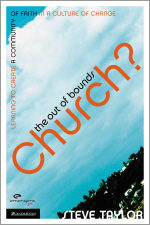
Ten years ago I did some research on a toddler. More specifically, a group of people, Cityside Baptist Church. With a great tagline – Cityside: thinking allowed; thinking aloud allowed – they were exploring the shape of faith in contemporary culture. They graciously let me join their worship, then survey and interview them (individually and communally.) The research ended up being a major part of my PhD and sparked some ideas which became a book (Out of Bounds Church?: Learning to Create a Community of Faith in a Culture of Change)
Ten years later you begin to wonder what happened to that toddler. Has time been kind? How has it survived being a teenager?
Again, graciously, they let me return. Again, to join their worship, then survey and interview them (individually and communally). (I think it’s a world first, a (longitudinal) study of an emerging church over time.)
Today I’ve been wading through some of the data. This includes 47 completed survey forms, with 22 questions, that explore the shape of their spirituality. The same questions as I asked 10 years, ago, so this allows some fascinating comparisons, to a time before 9/11 and iPhone’s and fears of global warming. There’s so much information, so much really interesting things to probe and ponder.
Ten years ago, this piece of the data alone became two chapters of 20,000 plus words. So after one day of analysis there are no clear trends.
But an intuitive sense – that this community has changed. And that part of the change is a faith that is more integrated, with a greater depth, that is more willing to express Christian faith in word and deed.
Which is a pretty encouraging thing to say about anyone, whether toddler or teen.
Wednesday, July 20, 2011
would folk in ministry value this?
Our Master/Doctor of Ministry includes Guided Reading units, in which folk explore an individual learning project. For example, in Semester one, folk were exploring hospitality practices in Lent, images of God for folk who are differently abled, resources for people in depression, being church today and how to train people in Christian education.
Yet this exploration remains read only by them, their supervisor and perhaps an examiner. It is essentially unavailable to the wider public.
So what about a “Research Output Strategy”? This would involve anyone who has done a Guided Reading writing their research up as a 800-1,000 word newspaper article. This would be critiqued at our post-graduate colloquim (Program Seminar) and would serve as that person’s regular contribution to the group.
Over a year, these could be collected and perhaps published as a “Ministry Practice Journal”. It could be augmented by summaries (or interviews) of examined theses from the year. The aim would not be to write journal articles per se, as students can pursue this anyhow. Rather the aim would be to make research accessible and to resource ministers and leaders in their practice of ministry, to expose them to what we are reading and thinking. Available as an e-publication.
In essence, not as heavy as an academic journal nor as light as a blog, but short articles that consider ministry practice in light of current reading. Would this be a useful resource for those in ministry?
Sunday, February 13, 2011
emerging churches 10 years on: progress update
Today was another step in my research into emerging churches 10 years on. This is involving interviews, surveys and focus groups.
Today I visited Cityside Baptist in Auckland. They had very kindly offered me their “sermon slot.” So I took some time to introduce myself and my research with them 10 years ago, and then gave them some space to fill out a 22 question survey form.
The questions are grouped in three categories
- some are taken from the national census and thus allow comparison of the congregation against their suburb, city and country
- some are taken from the National Church Life Survey and thus allow comparison against their denomination and the church in general
- some are uniquely related to questions about faith and culture today
At the end of the day, 47 people completed survey forms.
What is amazing is that ten years ago when I conducted a similar survey at Cityside, guess how many people completed survey forms?
You guessed it. 47!
Amazing.
The next step is to start to analyse the data. The plan is to return perhaps in the middle of the year to run some focus groups – to present the survey data and invite them to help me interpret it. Plus I am aiming to present the research more formally at an Ecclesiology and ethnography academic conference in Durham, UK, in mid-September. And then, if all goes really well, I’ll roll it together with my PhD and look for a publisher.
But for today, I thankful for Cityside and pondering with amazement the number 47.
Friday, February 11, 2011
lament: the conference in one corner, the colloquim in another
Here in Auckland I’ve been attending the theology of lament academic event. We’ve bounced between Isaiah, Maori lament, new media, rock concerts, liturgy and responses to Middle East. We’ve got folk from Scotland, England, US, Australia and New Zealand.
What I’m loving is that this event is a colloquium format, in contrast to the traditional conference. The colloquium format asked for a full paper, ideally a month prior. This gives time to read the papers prior. Come the colloquium, there is time for a brief 5-10 minute introduction of the paper, which is then followed by 20 minutes of discussion. This starts to allow significant time for interaction and cross-fertilisation. Common themes begin to emerge. Repeated questions surfaced. Motifs recur.
The input I shared in seemed to go well. Got to show a U2 and a Paul Kelly videos 🙂 I love being a serious scholar :). It produced a really rich discussion.
- how to tease out the fusion in Biblical lament of nation and faith, with the fact that contemporary society separates sacred and secular?
- is protest another space in which contemporary lament is occurring?
- is the occurrence of lament outside sacred space in danger of reducing lament to a commercial transaction?
- how important is it to ensure the space for multiple responses and postures within lament?
- is lament a genre in terms of a form, or function in terms of common human experiences of unique episodes of human suffering?
The goal is a book, not of disparate papers pushed together under a theme, but coherent threads, links that enable the chapters to keep talking to each other.
The take home memory is of rich discussion that moved constantly between Biblical (OK Old Testament) material, human experience and pastoral practice.
Friday, February 04, 2011
whinging with U2 and Paul Kelly in Auckland
I’m in Auckland later next week, at a research conference exploring the cultural and theological implications of lament. The two day conference (Thursday 10th and Friday 11th) involves discussion of a range of papers on themes including:
- Spiritual Complaint and Lament
- Lament in the Global Village
- Job the Lamenter
- Lament in Music
- Lamentation and Liturgy
- Lament and Penitential Prayer
- Contemporary Conceptions of Lament
I’m co-presenting a paper with my Old Testament colleague here at Uniting College, Liz Boase. We are bringing contemporary lament into conversation with Biblical lament. Specifically looking at how U2 (responding to the Pike River tragedy) and Paul Kelly (responding to 2009 bushfires in Victoria) “whinge” publicly before God.
I’ll also be catching up with one of the D.Min candidates I supervise, taking another research step in the emerging church 10 years on project and sharing a K1 Shiraz 2008 with good friends.
It should be a busy, yet rich time. (Apart from the humidity – Auckland in early February can be pretty awful)
Saturday, June 26, 2010
the rabbit holes of research: how I prepare an academic paper for presentation
For the last few days I’ve been, like Alice, falling down the proverbial rabbit hole. Not, for me, the wonderland of mad hatters and Cheshire cats, but the wonderland that is research.
It began on Wednesday. Half way through having to move my office, complete with books, filing cabinets and notes, a random conversation with a fellow lecturer brought me to a halt.
I am due to give a paper at the Centenary celebrations of the Melbourne College of Divinity in a few weeks. (more here). The conference theme is The future of religion. It’s a fairly important conference, so they demand all presenters submit their papers prior. I thought it was due Monday 2 weeks away. Standing in my colleagues office, I realised my mistake. My 12 days to write had suddenly become 5 days.
And so begins the wonderland that is research.
A possibility. As an academic, I get a regular stream of emails advertising conferences. Most get deleted, but some look a possibility – location, time, theme – seem to mesh.
A possibility. If you want to deliver a paper, you are requested to submit a proposal, a few hundred words outlining what you might speak out. This is when you begin the fall into wonderland. Because the conference is months away, you have no idea what you will actually say. You expect you will have time to do some research. So you lob in a proposal, your potential argument. It needs to sound good, even though you have not yet actually done the research to be sure.
A poke around. And so you seek to clarify a research question. It needs to be original, but respect your discipline. I consider it the spiritual practise of honouring the saints, those who have gone before. And so you take your question and poke around a few books, and a few things click and you get excited and you send in the proposal.
The process. And then you get engulfed again by the daily demands – lecturing, marking, meetings. At some point you wriggle free (to be honest most of my marking is actually still in a pile somewhere in my half-moved office!) and you begin to research. For me, this involves following the white rabbit. To quote, Alberto Manguel.
I like discovering places haphazardly .. I have not attempted .. a systematic method .. I was guided..by curiousity.
I am not systematic. (Is anyone?) I have an idea, I go to the library and I start reading and wrestling.
Today there are 20 books on my floor – for this project some Bible commentaries of the book of Judges, Aboriginal mission history, scholarly articles on how people read. You have to keep your eye on the time – the “Monday 5 days away.” So you can’t read everything. Instead you are looking for data to build your argument – quotes, insights – and connection with the discipline – key scholars, history of the argument.
And writing. Because the goal is not reading, but writing, organising your data in a way that is honest and comprehensible. It’s exhilirating. It’s agonising. You have to keep your eye on the conference theme and your initial abstract. Some flexibility is expected. Too much and I am potentially becoming rude to my audience and the expectations already created.
The presentation. This is the goal. Speaking should be different from writing. This is how the academy works. You submit your ideas to your peers (at conferences and in research journals). Just like artists look at the art of others and mechanics comment on another’s work, so your ideas are offered to the guild.
The probing. Following your paper comes the question time. And the comments in the corridor. And the coffees after. The questions. The testing for logical consistency. The linking with another book, author, idea. This is really why you present. In your paper, you have placed your clay on the potters wheel. It needs to be wet, so that it can be moulded by the community of your peers.
The publication. A conference invites the spoken word. It allows you to test ideas and fly kites. It gets you started. Generally you speak for about 20-30 minutes and take questions for 10-15. So a conference paper is around 2,000 to 3,000 words. And it only reaches those who are present. So the hope is that the conference paper becomes a publication. That usually means expansion (you need to write about 5,000 words) and clarification (picking up).
But that’s another whole story/post. For now, for today, my focus is simply Monday.


 )
)