Friday, March 25, 2022
Belfast: a theological mediation on film and music
Monthly I write a film review for Touchstone (the New Zealand Methodist magazine). Stretching back to 2005, some 165 plus films later, here is the review for March 2022.
Belfast
Reviewed by Rev Dr Steve Taylor
In 2001, our family enjoyed study leave in the United Kingdom. Top of the bucket list was Ireland. Arriving in Belfast by ferry, we went looking for a rental car.
The car we hired had a CD player, resulting in a search for Belfast music at a second-hand record shop stop. With Van Morrison turned up loud, we headed north, seeking links with ancestors and a Giant’s Causeway.
Belfast the movie is filled with Van Morrison songs, from well-known favourites like “Bright Side of the Road” to new songs specially written, like “Down To Joy.” For music journalist Stuart Bailie, Van Morrison’s Belfast is a “microcosmos of innocence and child-like visions” (Trouble Songs, 2018, 30).
Apt, given the way Belfast, the movie views the conflicts in Ireland through the eyes of 8-year old Buddy and his Protestant family. All the innocent Buddy wants is to talk with his dying grandfather (Ciarán Hinds) and walk to school with Catherine (Olive Tennant), a classroom crush. Instead, he must navigate life by avoiding armed soldiers and dodging religious tribalism.
“Belfast” is an ode to place. Central is a scene in which Buddy’s Ma (Caitríona Balfe) describes her street as a microcosmos. Every person is known, every child looked after by neighbours. It is these bonds of community that are being torn apart by
bigotry.
The perverse ways that nationalism and historical grievance can distort Christian faith is seen early in a fire and brimstone sermon. For weeks after, Buddy draws forked roads. But which, he asks his older brother (Lewis McAskie), is the narrow road?
Buddy draws with pencil and paper the existential challenge for his family. One response to violence is to fight and around Buddy and his family circle recruiters and troublemakers. Another is to flee. Buddy’s Da (Jamie Dornan) is offered work and accommodation in England. Such is the forked road for Buddy’s family and for all whose micro cosmoses are disturbed by bigotry and violence.
Fleeing Belfast is a recurring theme in the music of Van Morrison. His Astral Weeks album was released around the time Belfast the movie was set. “Madame George” is a song about leaving, while “Austral Weeks” paints visions of another world, another time, another land. Van Morrison uses Christian texts – a home on high, a stranger in this land, going to heaven – to justify a fleeing from reality.
Fleeing this world is a temptation ever-present in Christian theology. But what if the home on high that God is preparing is peace and goodwill in the here and now? What if, in the new song Van Morrison crafts for Belfast, faith is about coming down with joy? Such lyrics certainly harmonise with the glad tidings surrounding Christ at Christmas.
I returned to Belfast in 2018 to speak at an academic conference alongside music journalist Stuart Bailie. During my stay, I shared lunch with Presbyterian minister Rev Steve Stockman. Together with Fr Martin Magill, a Catholic parish priest, Stockman began 4 Corners Festival. Across religious tribes, they chose to neither fight nor flee. Instead, they offered innovative events that celebrate with joy the unique places that are Belfast.
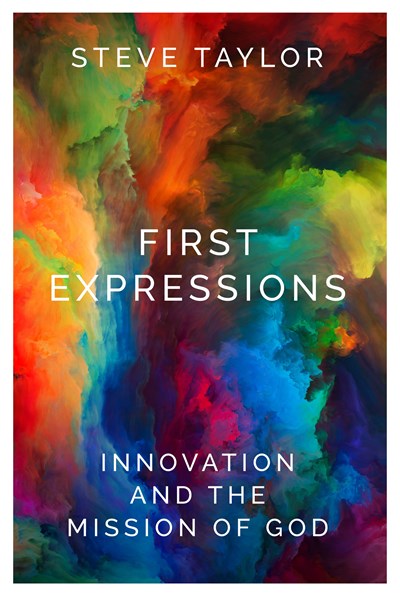
Rev Dr Steve Taylor is author of “First Expressions” (2019) and writes widely in theology and popular culture, including regularly at www.emergentkiwi.org.nz.
Sunday, February 27, 2022
Don’t Look Up: a theological film review
Monthly I write a film review for Touchstone (the New Zealand Methodist magazine). Stretching back to 2005, some 165 plus films later, here is the review for February 2022.
Don’t Look Up
Reviewed by Steve Taylor
As the world is ending, a meal is enjoyed. With the table set, words of gratefulness are spoken, then those gathered are blessed by a simple prayer. It’s a compelling scene, a moment of slow and meditative grace, amid the biting political satire that is Don’t Look Up.
Kate Dibiasky (Jennifer Lawrence) a Ph.D. candidate in Michigan State’s astronomy department, discovers a comet. During the celebrations, her professor Dr. Randall Mindy (Leonardo DiCaprio), calculates that life on earth will end for all when the comet strikes in six months and fourteen days.
Some truth is hard to share, let alone like. In a world willing to amuse itself in death, news of a comet is spun, memed, then polarised for political purposes. Peter Isherwell (Mark Rylance), the CEO of fictional tech giant Bash Digital, markets innovative technologies at the expense of scientific collaboration. “Don’t Look Up” rallies are political tools to revive the scandal-ridden career of President Orlean (Meryl Streep). Much of Don’t Look Up runs as a smart, funny, yet depressing mirror on our world today.
Although never mentioned, the polarisations around climate change motivate the movie. Adam McKay wanted to direct a film about the impending climate apocalypse. Hence the challenging line by Randall “We really did have everything, didn’t we?” When set alongside the moving shots of whales, bees, and birds, it’s a poignant reminder of the beauty of creation humans are called to till and tend (Genesis 2:15).
Amid the ironic commentary on contemporary life, Don’t Look Up does significant theological work. The ending contemplates two futures. One is the hope of another planet, a second garden of Eden, in which new life can begin again. Peter Isherwell and President Orlean flee the comet on a spaceship, frozen in cryo chambers. The musical score is an original composition by composers Nicholas Britell and Bon Iver. Titled “Second Nature,” a new earth is sought, not as a refuge for all. Rather as an outworking of a Darwinian survival of the wealthiest.
A second future involves prayerful thanksgiving. Kate and Randall gather with those they love. There are echoes of thanksgiving in the meal and thankfulness, the North American tradition of gratitude for new and shared beginnings. In Don’t Look Up, thanksgiving becomes an ending. Waiting for their world to die, Kate’s boyfriend, Yule (Timothée Chalamet), asks to pray. Raised evangelical, finding an adult relationship with God, he speaks
“Dearest Father and almighty Creator,
We ask for your grace, despite our pride
Your forgiveness, despite our doubt
Most of all, Lord, we ask for your love to soothe us through these dark times
May we face whatever is to come in your divine will, with courage, in open hearts of acceptance. Amen.”
Don’t Look Up is a contemplation of endings. Do we try in the hope of a better world for an elite few somewhere else? Or do we gather, after we have tilled and tended the gift of this world, in quiet trust in God?
(Don’t Look Up is available on Netflix, rated M for mature audiences).
Rev Dr Steve Taylor is author of “First Expressions” (2019) and writes widely in theology and popular culture, including regularly at www.emergentkiwi.org.nz.
Friday, February 25, 2022
making endings visible
Part of my current life includes research projects for industry partners. Organisations have questions about their future and I set about finding ways to explore those questions. I conduct feasibility studies, undertake co-design or interview people for reviews. It’s the type of work I love – in rapidly changing times, finding creative ways to help organisations clarify their futures.
One of the realities of this work is that endings are fuzzy. Let me explain.
- As a project ends, I write a report.
- This is often sent to a key individual, for fact-checking. They need time to digest.
- Often there is a follow-up meeting, for them to clarify the report.
- Sometimes there are changes made.
- Next the report is circulated to a group. They again need time to digest.
- Often there is a meeting with that group, during which I present a brief summary and respond to questions.
- After I leave, the meeting continues with decisions needing to be made. I often offer to conduct other work outside, in case they have a specific question. Sometimes this offer is accepted, other times not.
- Sometimes I found out after the meeting what happened after, other times not.
- Sometimes the decisions made include asking for more work from me, for example, conversations with those impacted by the review or preparing a public statement. Other times not.
So the endings are fuzzy. There is the adrenaline of the final draft, the finished report, the meeting. But when is the project ended? When do I actually celebrate a job I consider well done?
To help with fuzzy endings, I’ve taken to making the project personally visible in other ways. This involves going looking for an object, generally in a second-hand shop, that symbolises the project. It might be a pottery cup, a handmade brass jug, or a clay person. Ideally, it is cheap. Ideally, it is whimsical. Ideally, it captures something of the project. Here is a recent project symbol.
 I like the unique handmadeness of this brass object. I like the slender fragility, how it was small in size, yet graceful in shape. The object is made for pouring and as I brought it, I prayed that the mission I was researching would indeed find ways to pour out grace and love for community.
I brought this around 3 February, the day I submitted a 23 page, 10,000-word review, to a funder. I scoped the project and wrote a brief in early October. The project was commissioned in mid-October, projected to require 11 days of work. Over the next 4 months, in between a range of other tasks, I interviewed 9 people, initiated an online participant survey and prepared an annotated bibliography summarising current best practices. I then spoke to the report on 24 February, responding for an hour to questions from the funding committee.
This object now sits on my desk. It reminds me of work done – the craft of interviewing, the skill of question selection, the creating of safe space in caring for participants, the organising of words to tell a story that is contextually located, the developing of recommendations to help sift future possibilities. It invites me to keep praying for the project. It feels good to make a project visible.
Tuesday, February 08, 2022
the soul and the student experience
 I was delighted last week, in my role as Director of AngelWings Ltd, to submit a missional review of a university campus church. This is the type of work that AngelWings Ltd loves to do – in rapidly changing times, helping organisations clarify their futures.
The initial request was to offer a missional vision for a campus church for the next season of their life. For me as a reviewer, it was a thrill to bring together a range of skills – gaining participant feedback, engaging key stakeholders, synthesising current research on the university student experience and generating future possibilities. This was about working ground up, listening local, in seeking to discern ways forward.
The review drew together interviews with 8 key stakeholders, an online survey of participants, a specialist conversation to clarify the feasibility of a specific recommendation, along with an annotated bibliography of current trends. This bibliography sets the local within wider trends and provides avenues for further reading and reflection.
The report was 24-pages in length, with 9 recommendations, submitted to the organisation that commissioned the research. The review even had some pictures, which I had commissioned specially for this project, summarising some of the data.
Thursday, January 20, 2022
90 plus research interviews in 2021
As I head into the 2022 working year, I’m reflecting not only on writing done in the 2021 year gone. I’m also reflecting on research undertaken.
A highlight of 2021 was being able to conduct over 90 research interviews. This involved four different projects, for four different church denominations. In my role as Director of AngelWings Ltd I conduct quality research. In 2021, this involved requests to conduct research into future church and change, theological education, student mission and craft in mission. Most was by zoom, working internationally with folk in USA, Samoa, Fiji and Australia. There were also multiple interviews across Aotearoa both face to face and by zoom.

Photo by Chris Montgomery on Unsplash
My rough rule of thumb is that one interview involves 4 to 6 hours of work, excluding travel time. There is about 30 minutes to write introducing the project, suggesting boundaries and seeking to set up an interview. There is about 60 minutes of interview. There is about 30 minutes to individually process the interview, to either walk or journal my impressions in a research memo. Then there is the interview writeup. For most of these interviews, I compiled not a transcript but a 2-3 page summary. This is sent back to the person interviewed, so they are aware of what was heard. This also includes time if the feedback process involves corrections or suggestions for improvement. (A full transcript takes a lot longer and very few industry groups see the need for that depth of accuracy). The write-up takes about 2 hours for a 1-1 interview, longer for a focus group.
So 90 interviews, each at around 5 hours of work, meant some 450 hours of work, over 11 weeks full-time equivalent for me in 2021. What a privilege, to engage, listen and learn from thoughtful, caring and passionate people.
Interviews make knowledge. You literally see wisdom emerge in front of your eyes, as people pause and say “I’d not really thought of it like this before but …” Such is the power of qualitative research to individuals and communities.
Interviews invite diverse voices to the table. When people begin with “I’m not sure I have much to say …” you realise that unless invited, so much insight is never shared. Such is the gift of qualitative research to organisations and groups.
In 2021, I was blessed to conduct over 90 interviews, across multiple projects and diverse cultures, as part of AngelWings providing quality knowledge and insight to individuals, organisations, church denominations and theological providers.
Tuesday, January 18, 2022
22 in 21: published pieces in 2021

(Photo by Mika Baumeister on Unsplash )
As I head into the 2022 working year, I’m glad of the work of the year gone. Much to reflect on, including the opportunity to write. Numbers-wise, in 2021, I had 22 pieces of written work published. 11 were academic pieces and columns, 11 were film reviews. It’s a mix of scholarly and accessible that I really like.
Academic pieces – 2 peer-reviewed articles, 2 book chapters, 1 editorial;
“Courageous, purposeful, and reflexive; Writing as a missional and emergent task,” Ecclesial Futures 2 (2), (2021), 99-120, (co-authored with Lynne Taylor, Elaine Heath and Nigel Rooms).
“Jesus as a socially (ir)responsible innovator: seeking the common good in a dialogue between wisdom Christologies and social entrepreneurship,” International Journal of Public Theology 15 (1), (2021), 119–143, (co-authored with Christine Woods).
“Unbounding learning communities: An Educational Strategy for the Future of Life-long learning,” God’s Exemplary Graduates. Character-Oriented Graduate Attributes in Theological Education, edited by Les Ball and Peter Bolt, SCD Press (2021), 420–434, (co-authored with Rosemary Dewerse).
“Faith in the boardroom: seeking wisdom in governing for innovation,” In Reimagining Faith and Management: The Impact of faith in the workplace, edited by Edwina Pio, Robert Kilpatrick and Timothy Pratt, Routledge, (2021), 90–103.
“Editorial Volume 2 Issue 2,” Ecclesial Futures 2 (2), 2021, 1-6.
Book reviews – 2 reviews in academic journals;
“Book Review: Imagining Mission with John V. Taylor.” Stimulus 28 (1) June 2021 – reviewed here.
“The colouring of grey literature. A review of “JVT quotes” and “Answers on a Postcard.”” Ecclesial Futures 2 (1) June 2021, 165¬9.
Journalism – 4 columns;
“Aging,” Zadok 2021.
“Female Christ figures,” Zadok 2021.
“Signs, wonders and the economics of hanky power,” Zadok 2021 (4).
“Walking as Resistance,” Zadok 149, 2021 (4).
Film reviews – 11 reviews, of 500 words each, in Touchstone magazine, some on this blog …
The Power of the Dog – here.
Squid Game (Reviewed by Kayli Taylor) – here
Upstream
The Panthers
Black Widow
Deliver us from evil – here.
The First Cow – here.
Easter in Art –here
Cousins – here.
Dawn Raid –
From the vine –
Saturday, January 15, 2022
journal article acceptance – Ordinary Time Festivals: an Application of Wisdom Ecclesiology
“a thing well made.” It’s a line from a song by Don McGlashan and it’s been an earworm since I received news this week that my journal article “Ordinary Time Festivals: An Application of Wisdom Ecclesiology” has been accepted for publication by Theology Today, an international academic journal out of Princeton. It’s my 23rd accepted academic journal and the news got me thinking – Can journal articles be a thing well made?”
Reflecting on a journal article as a “thing well made”:
- First, the organising of 5,000 words in a logical and coherent way.
- Second, the attention to both detail (footnotes, grammar, spelling) and big picture (one coherent argument that connects with the real world).
- Third, pitching to the right journal. This involves researching the aims and objectives of the journal, working to align the abstract and argument with those aims and then writing a pitch.
- Fourth, responding to feedback. Submitting your work to multiple blind reviewers takes courage. You open yourself to critique.
Four reasons. What reasons might you add? Can a journal article be a thing well made? While you think, here’s the “Ordinary Time Festivals” abstract —
Feasts and festivals enliven the Christian life. Given Easter, Christmas and Pentecost cluster around the nineteen weeks of Christmastide and Eastertide, the thirty-three weeks of ordinary time are disconnected from these celebrations. The theological impact is considered in light of Amy Plantinga Pauw’s wisdom ecclesiology. For Pauw, the church has largely neglected the ordinary-time dimension of the Christian life. The result is a Christian life disconnected from creaturely existence and God’s ongoing work of creation.
This paper explores the possibility of ordinary time festivals as a way to embody Pauw’s wisdom ecclesiology. A harvest festival in Scotland, a spin and fibre festival in Australia and a local community festival in Aotearoa New Zealand are analyzed. These festivals are argued to embody Pauw’s themes of making new, longing, giving, suffering, rejoicing and joining hands. Hence, ordinary time festivals offer ecclesiologically formed ways for the church to embody wisdom ecclesiology. They enable a theological formed way of joining hands with God’s ongoing work in creation during ordinary time.
Thursday, January 13, 2022
Built for Change resourcing Transformative Possibilities for Christian Leadership in Higher Education
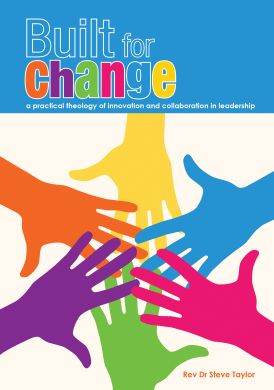
Lovely to see my 2016 book, Built for change: A practical theology of innovation and collaboration, referenced in a recent journal article in Black Theology out of South Africa.
Gordon E. Dames, “Transformative Possibilities of Pedagogics for Christian Leadership in Higher Education – a South African Practical Theology Perspective,” Black Theology here.
Built for change gets a nod in footnote 2 (of 176!) to support Gordon Dames’ claim that “The question of what we teach in the Christian academy presupposes collaboration and innovation.” The article goes on to argue for a new approach to leadership education, using an educational praxis to teach dispositions of ethical-justice and peace.
Gordon Dames is a Professor in Practical Theology at the University of South Africa and it’s just lovely to have my book being read in the context of educational transformation in the cultural complexity of South Africa.
Wednesday, January 05, 2022
The Power of the Dog: a theological film review
Monthly I write a film review for Touchstone (the New Zealand Methodist magazine). Stretching back to 2005, some 165 plus films later, here is the review for December 2021.
The Power of the Dog
Reviewed by Steve Taylor
After a twelve-year silence, New Zealand director, Jane Campion, plays again. Acclaimed for her work on The Piano, Campion takes us to 1920’s Montana. Phil (Benedict Cumberbatch) and George (Jesse Plemons) are brothers. Strikingly different, they share the lonely task of raising cattle on their parents’ ranch. Tensions are heightened when George marries, bringing Rose (Kirsten Dunst) to the family homestead.
A star cast offers powerful performances. Highlights include Benedict Cumberbatch, who plays the talented, yet grief-stricken Phil, and Peter (Kodi Smit-McPhee), Rose’s enigmatic son.
Amid a star cast, the films’ most important character is never seen. In a cowboy world of word of few words, the death twenty-five years ago of ranchhand Bronco Henry is a grief that refuses to be forgotten. It is intriguing to watch a film haunted by the main character’s absence, the unprocessed grief a festering wound, demanding attention.
The film is based on a novel by Thomas Savage. In books, words provide interior insight into motives. In films, the inner monologue can either be verbalised or visualised. Or, as in The Power of the Dog, a lack of words becomes a deliberate tool that deepens mystery and builds suspense.
In 1920’s Montana, anthrax is a killer, deadly to cows and humans. In a scene-setting cattle drive, a dead cow draws the attention of Phil and his faithful cattle dog. It wasn’t until 1937 that Max Sterne developed a vaccine. While this new vaccine was to bring immediate good news for humans working with cattle, its’ development was a few years after the movie’s final dramatic scenes.
The movies’ title is a quoting of Christian Scripture. In a final dramatic scene, Peter reads the words from a Funeral Order of the Service. Psalm 22:20 become the last words spoken in the movie: “Deliver my soul from the sword; my darling from the power of the dog.”
Psalm 22 is a Psalm of lament. The hearer is invited to share in the experiences of a man needing deliverance, a person surrounded by enemies like prowling dogs (verse 16).
In history, the Christian church has connected Psalm 22 with the death of Jesus. In the drama of the cross, Jesus’ last words include the voicing of verse 1: “My God, my God, why hast thou forsaken me?” Yet in the drama of Jesus’ death, his final words also include a prayer that enemies might be forgiven.
The crucifixion thus presents a compelling contrast with the dramatic scenes that end The Power of the Dog. What emerges in the life and death of Jesus is a radically different understanding of justice. Isolated like Rose, Jesus offers a cry of forsakenness rather than a cry for rescue. Mocked like Peter, Jesus places the demand for justice in the hands of God. Such radical trust challenges the human seeking of deliverance, so dramatically enacted in The Power of the Dog.
(For those placed in Covid-19 red traffic lights, The Power of the Dog is available on Netflix from 1 December).
Thursday, December 23, 2021
conference proposal: Missions in Digital Culture: A Transforming Shift
Missions in Digital Culture: A Transforming Shift
by Rev Dr Steve Taylor, AngelWings Ltd, Flinders University
IAMS 2022 conference paper proposal
The digital is a rapidly morphing field. Technology impacts our work and homes and changes health care, leisure, and religious practice. Digital missiology examines how mission intersects with the internet, digital culture, and other forms of digital technology. The IAMS conference themes – of power, inequalities, vulnerabilities – provide a valuable hermeneutical frame to overview the current state of research, assess the contributions, and consider future directions for research in digital missiology.
This paper aims to discern how digitalization is changing the methods and conditions of mission. Particular attention is given to empirical research and ethnographic studies of digital resourcing, including trans-national studies of ecclesial innovation in Aotearoa New Zealand, and the United States. These experiments in digital missions will be analysed missiologically. If, as Marshall McLuhan claims, the medium is the message, then how is the vulnerable Christ present as an animating presence in these digital experiences and networks? The analysis will include dialogue with two recent reappraisals of McLuhan by Douglas Coupland (2011)) and Nick Ripatrazone (2022), as part of a reappraisal of embodiment and participation, informing theologies by which mission might be understood as being re-contextualised for an emerging digital world
This work is part of a larger project seeking to re-theorise Bosch’s notion of paradigm shifts. While Bosch focused on paradigms, the argument is that transforming generativities occur in shifts rather than paradigms. Hence digital cultures offer significant resources for indwelling and embodying missio Dei as transforming shifts in mission.
Wednesday, December 22, 2021
a year today at AngelWings Ltd
A year ago today, I began at AngelWings Ltd in a more full-time way. AngelWings Ltd was a company Lynne Taylor and I formally established in 2002 to share demographic resources, research services, and writing across the church.
Through 2020, as we together reflected on the impact of Covid on the church, we sensed a hunger for resourcing and research. We observed how the enforced online environment drew on skills that I had been honing for many years. We also recognised that the continuous reviews at KCML – begun in 2018, still ongoing – were consuming creative time and emotion, while the “no new initiatives” frameworks made innovation from within KCML and the PCANZ very difficult. So we made the decision to take a leap and use the platform of AngelWings Ltd to offer experience, skill and passion more widely across the diversity of the church.
It’s been an exciting year.
As a snapshot, in the last week, my work included Advent online resourcing, preaching on mission in a local church, working on two different research projects for two denominations, individual minister supervision, preparing to export Learn Local overseas, agreeing to provide theological course design for an Australian denomination offering complex change resourcing, co-workshopping a column for a US magazine, and examining a PhD. Plus some probono input into the local missional community I’m part of, along with progressing a number of academic research projects on innovation and mission.
Over the week, the snapshot involved serving 10 different organisations in 4 countries among folk from at least 5 distinct denominations. It was an exciting week in what has been an exciting year.
Thankful for the year gone, excited about the year ahead.
Tuesday, December 21, 2021
Learn Local in Community Mission
Back in October, as part of AngelWings Ltd and with the generosity of the Synod of Otago Southland, I ran Learn Local as a mission learning opportunity. One of the participants, Lisa Wells, has written up some of her learnings, for her church newsletter and also for the Southern Presbytery newsletter.
For those who don’t get either newsletter, here with Lisa’s permission is her response to Learn Local. It includes her reflections on some of her visual attending (taking photographs) from the Learn Local experience ……….
Learn Local in Community Mission
Back in October, which seems so long ago now, I was one of the curious people who attended “Learn Local”, which is a new event, funded by the Synod of Otago and Southland, seeking to explore community mission through local story telling.
Led by Rev Dr Steve Taylor (former Principal of KCML and daring missiologist) and members of two local faith communities, the course involved a day spent in two communities and four weekly teaching and reflection on-line sessions.
It was a rainy South Dunedin day as we met with the people involved in “The Seedling”, a place-based mission experiment in South D, which is discovering different ways to be in community, be church and care for each other and the neighbourhood. The plan for the day was that course participants walked the streets of South D as Seedling members unrolled the story of how they came to be and how they discerned where God was already working and inviting them to join in. This approach is consistent with the idea of Missio Dei (God in the World). It is not about designing programmes and hoping people will come. In fact, it’s not about programmes at all. It is both contemplative and active. Walking, using all our senses, is not only a grounding thing to do, but it slows us down and helps us notice things we would usually hurry past.
Like most things related to community mission, plans had to be put aside and our physical walk became a virtual thing as we “walked” from one stage of the Seedling journey to another. And still it poured!
It cleared up after lunch and we were in North Dunedin, the University area specifically. We met at the café Student Soul uses for its weekly services. We heard how it had changed over the years and the amazing plans for the future, utilising Web 3 technology for teaching, discipling and pastoral care. We were invited to go out and listen and discover what Student Soul’s mission context was. These are some photos I took and how I wondered about them as a reflection of a student’s journey.

I’ll tell you more about the on-line teaching someday, but I want to jump to the end! Each of us committed to walking in our own neighbourhood (both a spiritual discipline and a means of discernment) and sharing our discovering with the group. As we did this the seed of an idea took root in my mind.
What if … others might be interested in this too?
What if … it wasn’t about walking, but wandering and wondering?
What if … we looked at the small signs of God’s work?
For me taking photos of details and patterns is a way to keep my mind on what’s in front of me.)
Then … what would our story be? Is this a story God is opening up?
So now my curiosity and desire to be a learner has led me to more questions. Who would be interested in “wandering and wondering”? Can taking photos be a way to share God’s presence and creation?
Finding God in all things is at the core of Ignatian Spirituality and is rooted in our growing awareness that God can found in everyone, in every place and in everything. When we learn to pay more attention to God, we become more thankful and reverent, and through this we become more devoted to God, more deeply in love with our Creator.
So, I’m wondering … are there others who would like to see where this might lead?
Lisa Wells
(with Lisa’s permission)
Tuesday, December 07, 2021
workplace whole of life resourcing with Advent Tiredly
“Come to me, all you who are weary and burdened, and I will give you rest.” Matthew 11:28
I recently initiated a new online offering. Called Advent Tiredly, I wanted to offer online spiritual resourcing during December for those feeling ragged as a tough year ends. It was an innovation as part of my role as Director of AngelWings Ltd.

In 30 minutes, Advent Tiredly offers space to breathe in, to pause (with Anna, Mary, Elizabeth and Wisdom) and to breathe out with a story of contemporary Advent innovation. I offered it on Zoom, with the invitation to bring a “light” of choice – it could be the light switch in your room, a desk lamp or a specially chosen candle.
Watching participants in the moments of silence, I realised that a number were connecting in from their workplaces. Their zoom backgrounds were not lounge room sofas or kitchen tables. Instead what was behind them were office noticeboards and workplace glass partitions. This meant Advent Tiredly was enabling me to read Scripture, the stories of Anna, Mary, Elizabeth and Women Wisdom, in peoples’ workplaces.
After the first week, one participant, Lynne Taylor, posted this photo on her facebook.

Notice the open work diary on the right, the computer keyboard front and centre, the monitor to the back. Advent Tiredly spiritual resourcing occurs within her everyday working world.
She wrote the following words on her facebook:
“Blessed by a moment to breathe. Advent tiredly … Leaving a reminder for tomorrow.”
As she enters her work the next day, spiritual resourcing will be remembered. Faith will greet her as she opens her office door.
This online resourcing stands in stark contrast to so much religious resourcing. As a church minister, I would normally read the story of Anna in a church building not in a persons’ workplace. If I was pastorally visiting during the week, I would most likely catch up with a Monday to Friday worker in a cafe. I’ve never read Scripture in their working office. Yet here, through online resourcing, I was holding sacred space for people amid their computers and filing cabinets and work place diary appointments. It was a wonderful reminder of the everyday and whole of life potential of online resourcing.
Advent Tiredly runs for the 4 weeks of December. Wednesday’s 1, 8, 15, 22 Dec, 30 mins from 4:45 -5:15 pm (New Zealand time). A $5 cost per session is suggested. To register click here.
Friday, November 26, 2021
squid game – a theological film review
I sent off a film review (The Power of the Dog) to Touchstone magazine today. In 2005, the editor rang and asked me to theologically review a film of interest to their readers. 500 words please. And offered to pay! The editor liked the review so much, he asked again next month.
It’s now my 15th year of film reviewing. 11 reviews a year. 500 words a film review. Now over 82,000 words! Writing to a deadline month by month has been such a wonderful challenge. Viewing a film theologically, yet needing to be respectful of the art. This month, it was the realisation that the title – The Power of the Dog – was a quote from Scripture (Psalm 22:20). Last month, with Squid Game, a co-written review with my daughter, pondering the harrowing of hell …
Squid Game
Reviewed by Kayli Taylor and Steve Taylor
Squid Game is a survival drama television series streaming on Netflix. Hundreds of cash-strapped contestants compete in children’s games for a winner take all prize. Yet, the stakes are deadly. Directed by Hwang Dong-hyuk, set in South Korea, it has become a Netflix sensation. Rated R16, it is a dark and compelling mediation on contemporary life.
Central to Squid Game are children’s games. Episode 1 centres around Red Light, Green Light, also known as Statues. Participants run on the call of “Green Light” and must freeze on the call of “Red Light.” Any movement during “Red Light” results in elimination. At this point, the story shifts, and it becomes evident that in Squid Game, this children’s game involves real-life survival.
Children’s games should evoke the sounds of gentle laughter. In Squid Game, they illuminate the worst qualities of human character, holding a mirror on the desperation that results from lack of choice.
The lack of choice is brilliantly depicted. Participants begin each game by walking through a hallway of staircases. Painted in pink, yellow and green, it is similar to Dutch artist M. C. Escher’s famed Relativity. At first glance, Escher’s woodcut suggests an idyllic community in which participants enjoy life. Yet all the figures are featureless and identical in dress. The seven staircases are positioned in ways that evoke feelings of being trapped. None of the figures can move freely or escape the image.
The participants in Squid Game are similarly featureless and trapped. They are numbered, not named. Each has been selected based on an assessment of their debt. Yet each number is a person.
Episode 2, intriguingly titled “Hell,” shines a light on the lives of individual numbers. The main character, 456 (played by Lee Jung-jae) is a man caught in a gambling addiction. Number 199 (played by Anupam Tripathi) is a Pakistani migrant caught in an exploitive working environment. Number 067 (played by HoYeon Jung) is desperately trying to reconnect with her family stuck in North Korea – a reunion that comes with heavy costs. Hell exists in the here and now as the circumstances of life’s realities and the consequences of desperate choices play out in human relationships.
A masked man controls Squid Game, watching the carnage from a distance. The notion of an omnipotent being, usually male, controlling the game played by lesser mortals is a familiar image of the Christian God.
Where is God in Squid Game? Christian theology argues that in Jesus, God refuses to watch from a distance. Instead, God gambles by entering the game of life. Christ becomes a number, participating to repay the debts of those trapped by their human choices. An unknown fourth-century sermon describes the events of Easter as God being “swallowed” by Hades. This swallowing occurs so that Christ might search the very depths of human hell. Could God take the number of another human player inside the game of life, even to death?
Kayli Taylor is a Masters student at the University of Otago and researches queer feminist social histories.
Rev Dr Steve Taylor is author of “First Expressions” (2019) and Director AngelWings Ltd, resourcing churches in mission.


 )
)